NYC 30 Jan – Martin Mosebach – “The Old Roman Missal: Loss and Rediscovery”

Mark your calendar for two events, in NYC and in nearby Norwalk, CT.

Martin Mosebach, author of The Heresy of Formlessness, will be giving talks following celebrations of Holy Mass in the Extraordinary Form.

New York
Solemn Mass:    Fourth Sunday after Epiphany
Lecture:    “The Old Roman Missal:  Loss and Rediscovery”
Date:        Sunday, January 30
Time:        Mass at 5:00 PM; Lecture at 7:00 PM
Location:    The Church of Our Saviour, New York, NY (59 Park Avenue)
Music for the Mass: Missa Ave maris stella by Tomás Luis de Victoria.

Connecticut
Solemn Mass:    Candlemas (The Feast of the Purification of the Blessed Virgin Mary)
Reading:    “‘Tear the Images out of Their Hearts’:  Liturgy and the Campaign against Images”
Date:        Wednesday, February 2
Time:        Mass at 6:00 PM; Reading at 8:00 PM
Location:    St. Mary Church, Norwalk, CT (669 West Avenue)
Music for the Mass: Premiere of David Hughes’ Missa de Beata Maria.

Posted in The Campus Telephone Pole |
3 Comments

Translating the remains of Bl. John Paul II into the Basilica

The other day Rome Reports posted a video of a screen set up around the altar of Bl. Innocent XI in the Vatican Basilica.  It was immediately assumed that that is where the body of Bl. John Paul II would be placed.

L’Osservatore Romano of 15 Jan 2011 has a brief statement that the remains of soon-to-blessed John Paul II will be translated (“translate” is a technical term for the moving of the body or relics) from the crypt below up to the Chapel of St. Sebastian in the Vatican Basilica itself, where at the moment is the altar and tomb of Bl. Innocent XI.  This chapel is, as you walk into St. Peter’s, in the right hand nave, passed the Pietà.  I have said Mass there many times.

However, the body of the blessed will not be exposed.  It will be enclosed in a simple tomb of marble with the inscription: Beatus Ioannes Paulus ii.

At one time or another during the cause of Bl. John Paul there would have to have been a formal opening of the coffin and an examination of the remains, both to see what condition they were in and also to gather relics.

La salma
sarà traslata
nella basilica Vaticana

Saranno traslate dalle Grotte alla basilica Vaticana le spoglie di Giovanni Paolo II. In occasione della beatificazione del Pontefice, infatti, ne è stata decisa la collocazione nella cappella di San Sebastiano all’altare del beato Innocenzo xi, situata nella navata destra della basilica, tra le cappelle della Pietà e del Santissimo Sacramento. La traslazione della bara avverrà senza esumazione:  quindi il corpo di Papa Wojtyla non sarà esposto, ma si troverà in un vano chiuso da una semplice lapide di marmo con la scritta:  Beatus Ioannes Paulus ii.

It is probable that Bl Innocent will be moved to the crypt, but – I am guessing – not to the niche where Bl. John Paul still is.

Posted in Saints: Stories & Symbols | Tagged , , , ,
21 Comments

Coincidence by date: 1 May

Concerning the 1 May Beatification of John Paul II.

A reader sent the following:

May 1st the prayers for Santo Subito will be rejoiced The Universal Church will lift up one of the greatest men of modern times.

May 1 is an interesting date which is fitting for what it had been and what it this beatification now models for us who remain militant.

Liturgical
• 880 – The Nea Ekklesia is inaugurated in Constantinople, setting the model for all later cross-in-square Orthodox churches
• Memorial of Saint Joseph the Worker
• Beginning of Mary’s Month
• England Plough Day (after which new seeds were sown)
• 1987 – Pope John Paul II beatifies Edith Stein, a Jewish-born Carmelite nun who was gassed in the Nazi concentration camp at Auschwitz.
• 2011 – Pope Benedict XVI will beatify Pope John Paul II, a great servant of the Lord who garnered many souls, had great public piety, met the world and stood up against some of its greatest enemies as a true prince of the Church.

Extra-Liturgical
• May Crowning of Mother Mary
• May Morning is an annual event in Oxford, England, on May Day (1 May). It starts early at 6am with the Magdalen College Choir singing a hymn, the Hymnus Eucharisticus, from the top of Magdalen Tower, a tradition of over 500 years

Deaths
• 1572 – Death of Saint Pope Pius V (b. 1504)
• 1731 – Johann Ludwig Bach, German composer (b. 1677)
• 1904 – Antonín Dvo?ák, Czech composer (b. 1841)
• 1945 – Joseph Goebbels, Nazi Minister of Propaganda (b. 1897)

Births
• 1218 – Birthday of Rudolph I of Germany, Emperor of the Holy Roman Empire (d. 1291)

Healing
• 1956 – The polio vaccine developed by Jonas Salk is made available to the public.

Fun Facts
• 1751 – The first cricket match is played in America.
• 1921 – Americanization Day. In 1958, due in part to the appropriation of May Day by the Soviet Union, the US Congress declared that Loyalty Day be observed on May 1 in the United States. It is a day set aside for the reaffirmation of loyalty to the United States and for the recognition of the heritage of American freedom.

Wars of suppression and oppression and persecution Events
• 305 – Diocletian and Maximian retire from the office of Roman Emperor
• 1328 – Wars of Scottish Independence end: Treaty of Edinburgh-Northampton – the Kingdom of England recognizes the Kingdom of Scotland as an independent state.
• 1576 – Stefan Batory, the reigning Prince of Transylvania, marries Anna Jagiellon and they become the co-rulers of the Polish-Lithuanian Commonwealth and later entreaty with Sweden to help stem off the advance from Ivan the Terrible, allowing the retaking of Livonia and preserving Poland and Lithuania.
• 1707 – The Act of Union joins the Kingdom of England and Kingdom of Scotland to form the Kingdom of Great Britain.
• 1834 – The British colonies abolish slavery

Ancient Pagan significance
• England – Month of three Milkings
– various fertility rites
• Gaelic – feast of (the) Bealtaine (end of the “year”)
• Roman- Festival of Flora, the Roman Goddess of flowers
• Europe – Walpurgis Night (folk festivals) commemorating what was the first day of Summer (Feb 1 being 1st day of Spring and thus Summer solstice being midsummer)
• Neopagan – cross-quarter day tied to astrology (midway form spring equinox to Summer solstice)

Workers Rights
• 1884 – Proclamation of the demand for eight-hour workday in the United States.
1886 – Rallies were held throughout the United States demanding the eight-hour work day culminating in the Haymarket Affair

Modern Communist/Socialist Actions to which JPII fought his entire life
• 1945 – The Yugoslav partisans (aka Yugoslav People’s Army = communists) “free” Trieste from Axis Germany, will later lead to Tito and a Communist tyranny that even stood up to Stalin
• 1948 – The Democratic People’s Republic of Korea (North Korea) is established, with Kim Il-sung as leader.
• 1961 – The Prime Minister of Cuba, Fidel Castro, proclaims Cuba a socialist nation and abolishes elections.
• 1971 – Amtrak (the National Railroad Passenger Corporation) is formed to take over U.S. passenger rail service.
• May Day = International Workers Day

May we be blessed by Blessed-designate John Paul’s intercession for a faithful and true unity until we meet him in the presence of our Lord.

Posted in Just Too Cool, Saints: Stories & Symbols | Tagged , ,
24 Comments

Ven. Nelson Baker

Among the various decrees promulgated by His Holiness was that confirming the heroic virtues of an American diocesan priest:

– le virtù eroiche del Servo di Dio Nelson Baker, Sacerdote diocesano; nato a Buffalo (Stati Uniti d’America) il 16 febbraio 1842 ed morto a Limestone Hill (Stati Uniti d’America) il 29 luglio 1936…

Posted in Saints: Stories & Symbols |
12 Comments

Observations about the speed of some causes for beatification

In the combox of this blog some people are expressing confusion or dismay about the rapid beatification of Ven. John Paul II.

As you know, it was announced that the Beatification will take place on 1 May.  This is just over six years since the late Pope’s death.

Pretty speedy.

The process of cause of a saint or the examination of a claimed miracle or the investigation of a possible martyrdom are “processes”.  I don’t mean to be circular.  A “process” in this sense is like a legal process, it is like a trial.

Evidence is gathered according to a rigorous standard of documentation, people are deposed under oath, and a case is presented.  Others examine the methods by which everything is gathered and they study the content.  They conduct their own investigations to find if anything important might be missing, by accident or on purpose.  Various commissions, scientific, historical, and theological give opinions.  Eventually everything is presented before members of the Congregation, cardinals and bishops, who give their opinion, much as a jury would.  If they give their approval, a decision is issued in the form of a decree – Congregations have jurisdiction to issue decrees – and it goes to the Church’s highest judge, the Roman Pontiff.

At that point the Roman Pontiff can choose to promulgate the decree or not.

This is like a juridical process or case because a claim has been made and,  in justice, they truth of the claim has to be determined.  It is a matter of justice for the one who made the claim in the first place and was the “actor” (from Latin ago) for the cause.  He has a support staff, as a client would have lawyers and experts.

Sometimes it take years, decades, to assemble the proofs for a cause.  It often depends not just on the date of death of the servant of God in question, but also, particularly, on the resources of the actor.  The actor has to provide all the money for research, travel, documentation, copies, translations, scientific studies, etc. etc.  This can be very costly, especially if the person was very famous and had a large quantity of of writings, speeches, many people knew him.  Sometimes the actor has to provide the motivation to move forward as well.  He will get someone to oversee the mechanics of the process and keep it going.

Consider that in the case of John Paul II, there were literally kilometers of documents from his pontificate, many thousands of speeches, he lived a long life and many people knew him, etc. However, the actor in this cause had tremendous resources and was able to get a strong team together and get everything done.  On the other hand, in the case of Fr. McGiveny, founder of the Knights of Columbus, there were so few writings, letters, sermons, personal materials, that that part of the cause went quickly.

I was at the press conference many years ago for the beatification of Jose Maria Escriva de Balaguer.  Someone asked how his beatification went forward so quickly.  The Prefect answered that Opus Dei was very well organized.   In other words, they had huge resources and therefore put the case together quickly.

There were great resources available for the cause of John Paul II, which was carried forward by the Diocese of Rome.   The greater the manpower and expertise, the swifter the work, the better (hopefully)  the preparation, the better the case, the faster the process can move forward.

In any case, from the point of view of the Congregation, if the cause is brought to a conclusion, then in justice the decree should not be delayed.

Then there is the factor of the Roman Pontiff.

The Pope decides when it is opportune to promulgate a decree or go ahead with a beatification or a canonization.  The Congregation does its part, in seeing to the cause and making sure that, within a reasonable doubt, the truth has been ferreted out and justice is done for the one who proposed the cause in the first place.

The Roman Pontiff looks at the determinations of the Congregation, which is there to serve him and the Church, and then decides what is best for the Church, the salvation of souls and the glory of God.

It may be that the Pope will determine that, for the good of the Church, it is not opportune to promulgate a decree.  He may, for example, delay doing something which may have consequences for Catholics in a country such as China or in Iraq.  He may accept a decree from the Congregation about, for example the heroic virtues of Pius XII and then delay in its promulgation until he deems the time is right.  A Pope may dispense with part of the process, as a matter of fact, for the good of the Church as, for example, when John Paul II moved the cause of Juan Diego forward without the usual miracle.   Similarly, Benedict XVI dispensed from the five year delay before the process for beatification of John Paul II could begin.

The main points here, for your understanding of what goes on in these causes, is that there is a trial, a case, a process.  If a good case has been made and the Congregation determines within reasonable doubt that what the actor proposed is true (a person lived a life of heroic virtue, there was a miracle obtained through some person’s intercession, that a person was killed out of hatred for Christ, the Church or some virtue that cannot be separated from them) then it would be wrong to delay moving to the next step.

The Vicar of Christ does the rest.

Posted in ASK FATHER Question Box, Saints: Stories & Symbols | Tagged , , ,
124 Comments

QUAERITUR: How can a new deacon learn his role in a Solemn TLM?

From a reader:

Fr. Z, my dad has recently been ordained to the permanent diaconate; however, he was never instructed in the Extraordinary Form. Are there detailed rubrics for the role of deacon in the EF, and where could I find them? My dad has a pastor who is willing to celebrate the Holy Sacrifice of the Mass in the Extraordinary Form.

Congratulations to your father.

deacon in dalmaticThe role of deacon is, frankly, the most demanding of the three sacred ministers during a Solemn Mass.  Having a live tutor will help for the trickier parts.

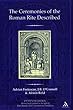
You can find fairly detailed descriptions of what deacons are to do during Solemn TLM’s in the reworking of Fortescue/O’Connells’ Ceremonies of the Roman Rite Described done by Alcuin Reid.

One of the best ways, however, would be to work with a priest or deacon, who himself as taken the role.

In the meantime, I would get busy learning to sing Gospel tones and making sure to know the different forms of the Ite for the end.  The Ite is normally the same tone as the Kyrie at the beginning.  And there is always the Exsultet if you need something to work on.

Another point I would think about ahead of time would be what to do with a biretta, putting it on the right way, getting used to taking it off before standing up, not sitting on it, that sort of thing.  There are few sounds as disappointing as that crunching sound.

And avoid moving too stiffly or with too many sharp angles like a wind-up toy, or rushing around as if there were a fire … Vigil of Easter notwithstanding.

Posted in "How To..." - Practical Notes, ASK FATHER Question Box |
12 Comments

ALERT! Blogger’s Choice Award for 2011

Can you help?

When awards for websites come around, we want a Catholic blog to make a good showing.

Please consider voting for WDTPRS in the Blogger’s Choice Award for 2011 in the Religious Blog category.  Given the number of readers here, you can help a Catholic blog do well.

Bloggers Choice Award

Take a look at the others near the top of the list and then decide.

Posted in The Campus Telephone Pole |
14 Comments

The Catholic Herald’s William Oddie about critics of Benedict XVI’s Assisi confab

In the UK’s best Catholic weekly, The Catholic Herald, columnist William Oddie opines about people who are having a nutty over the Pope’s plan for an ecumenical meeting in Assisi… Assisi III.

Before we plunge in, I must say that I am not a fan of these ecumenical confabs.  Do they lead to anything substantive?  Not from where I am sitting.

But I am not sitting in the Chair of Peter either.

I have been saying all long that Benedict XVI is the Pope of Christian Unity.  He is drawing individuals and groups closer to the Church.  He has a perspective I can’t possibly have.  These ecumenical meetings… well….

Enough of my thoughts.  Here is Oddie’s piece with my emphases and comments.

If you really think you’re more Catholic than the pope, you’re on your way to the funny farm

The interfaith pilgrimage to Assisi doesn’t compromise a single Catholic belief

By William Oddie

As my readers will have gathered by now, I worry about Catholics who think that the Magisterium of the Church is just one opinion among many, and that it is up to them to decide what a Catholic may or may not believe. But at least their view is comprehensible, if defective. To put it crudely, they may be Catholic; they’re just not Catholic enough. [In some cases they are not Christian either.]

I am much more puzzled by those who think that the Pope himself is open to criticism on the ground that he isn’t Catholic enough, and certainly much less Catholic than they are. Predictably, perhaps, the present Pope’s decision to commemorate the 25th anniversary of Pope John Paul II’s meeting with leaders of other world religions to pray for peace has drawn fire from the SSPX, who have recalled Archbishop Lefebvre’s attack on that event: the Church, he pronounced, had never before been “humiliated to such an extent in the course of her history” and that “the scandal given to Catholic souls cannot be measured”. “The Church,” said the archbishop, “is shaken to its very foundations”. [There is a touch of the drama-queen in that statement.  At the same time, I think people can express opinions about that disastrous meeting in Assisi.  One reason they can express opinions about it is that it has actually taken place and is in the past.  We have some perspective about it.]

Well, it was rubbish then and it‘s rubbish now. The Church wasn’t shaken to its foundations. [But…. but…tens of people were!] On the contrary, John Paul II was the pope who, more than any other in this century, strengthened those foundations. I have to admit that I’m not particularly keen on what I have heard called “interfaith interface”. I think other religions are just wrong. [Do I hear an “Amen!”?] But if those who adhere to them are sincerely praying for peace within their own religious traditions, however they may understand what the word “God” may mean, who am I to say that He, the one true God, Father, Son and Holy Spirit, won’t listen to their prayers? I don’t know what good the Assisi meeting did, who can? But it can surely hardly be argued that it did any harm.  [Not so sure about that.  I don’t the Church was rocked on its foundations.  Still, that was a real low point in ecumenism, in my view.]

The fact is that Pope John Paul did more to defend Catholic orthodoxy than Lefebvre could have in a thousand years: [I can hear the howls of protest already…] for, the fact is that Lefebvre, in separating himself from the successor of Peter in the name of orthodox Catholic belief and practice, did nothing but encourage the notion that orthodoxy, far from being the same thing as ultimate sanity, is on the contrary the mark of the extremist and the nutter. [True.  The late-Archbishop, for whatever good he did, also left the looney left with a sturdy club with which to beat actually faithful Catholics.]

What is the Pope risking by praying with those whose beliefs he does not share? This isn’t an interfaith doctrinal negotiation: he won’t compromise a single Catholic teaching. [Exactly.] This isn’t like inviting a Muslim to contribute a prayer in the context of the Mass (as has been done in Westminster Cathedral) on the ground that “we all worship the same God”, when clearly we don’t. [Another great topic…. for another entry (not here).]

This is the way Pope Benedict understands this event: [I think we can take the Pope at his word…] “I will make a pilgrimage to the town of St Francis,” he said, “inviting my Christian brethren of different confessions, leaders of the world’s religious traditions and, in their hearts, all men and women of good will, to join me on this journey in order to commemorate that important historical gesture of my predecessor, and solemnly to renew the commitment of believers of all religions to live their religious faith as a service to the cause of peace.”

Well? And how is that a betrayal of the Catholic faith? You may think I’m taking the SSPX too seriously. But there are plenty of people in communion with the Holy See who think they’re more Catholic than the pope on this and other issues; if you doubt that, just look at some of the half-crazed comments to be found under the Herald’s online story headlined “SSPX leader criticises Pope’s plan to hold inter-religious meeting”[Or in my inbox at some of the email arriving from the fever-swamp!]

Being a Catholic means believing many things, some of them more important than others. But one core principle is surely indispensable. Quite simply, you trust the pope. For, once you start thinking you are a better and more faithful Catholic than he is, you are well on your way to the funny farm.

I am not sure I would trust every Pope about every issue.

But I think we can trust this Pope on this issue.

Posted in Pope of Christian Unity, The Drill, Throwing a Nutty | Tagged , , ,
65 Comments

Trappists make and donate a casket for the little girl killed in Tucson

Via BadgerCatholic on Twitter I learned from the blog Sub Tuum, of the Cistercian monks at the Abbey of Our Lady of Spring Bank, that the Trappist’s of New Melleray in Iowa made and donated a casket for little Christina Green, killed in Tucson.

Monks make, donate casket for youngest victim in Arizona shooting

CNN is carrying this story on the monks of New Mellary donating a casket for the youngest shooting victim in Arizona. As I said in my last post, these are good men.

By Eric Marrapodi and Kara Devlin

A group of Trappist monks in Iowa have donated a handmade casket to bury 9-year-old Christina Green, the youngest victim in the Saturday attack that killed six and wounded 13 others in Arizona.

Sam Mulgrew, the general manager of Trappist Caskets in Peosta, Iowa, told CNN a family representative of the Greens reached out to the monks at New Melleray Abbey near Dubuque after her death. The custom-made casket arrived in Tucson, Arizona, Wednesday morning.

“We didn’t want to send an adult coffin that would be too big, we wanted something just for her,” said Mulgrew, who is not a monk but who manages the 11-year-old casket business that is part of the abbey.

The casket, crafted from red oak, was made especially for 9-year-old Christina, Mulgrew said. She died after a gunman opened fire at a constituents event held by U.S. Rep. Gabrielle Giffords, who was critically wounded in the shooting.

Christina’s funeral is scheduled for Thursday in Tucson.

The lid of the casket was inscribed with her name, date of birth and death, and a cross. The family also will receive five small keepsake crosses hewn from the same wood as the casket, Mulgrew said.

Before the casket was sent from the monastery in Iowa to Arizona, the monks gave the casket a special blessing inside their chapel on Tuesday.

The monks are Roman Catholic and are part of the Order of Cistercians of the Strict Observance. They make and sell custom caskets with “reverence for nature,” according to the Trappist Caskets website.

“Along with prayer and study, our casket ministry is an extension of our sacred work. We labor quietly with our hands in support of our life of simplicity,” says a statement on the website.

Mulgrew said when a child dies it hits the monks particularly hard. He said they don’t like to sell children’s caskets; instead, a “child casket fund” they started often covers the costs.

WDTPRS KUDOS.

Posted in Fr. Z KUDOS, Just Too Cool | Tagged , , ,
13 Comments

2011 About.com Catholicism Readers’ Choice Awards

I bring this to the attention of the readership:

About.com’s 2011 Readers’ Choice Awards will showcase the best products, features and services in multiple categories, from technology to hobbies to parenting to religion. Nominations are now open, and will be accepted from 12:00 A.M. EST on January 13, 2011, until 11:59 P.M. EST on February 4, 2011.

On the About.com Catholicism GuideSite, we are accepting nominations in the ten categories listed below. Nominations can be entered in each of the categories using a single nomination form, though you can feel free to leave some of the fields blank; you are not required to make a nomination in every category. If you want to make more than one nomination in a particular category, simply fill the nomination form out twice.

Feel free to nominate yourself or your product for any of the appropriate awards, and spread the news to your friends. Finalists are chosen based on popularity, as long as they meet the eligibility requirements listed in each category.

Up to five finalists in each category will be announced on February 11, and voting will run from February 11 through March 8. (To be notified automatically when voting opens, simply sign up for the About.com Catholicism Newsletter). The winners will be announced on March 15.

1. Best Catholic Book of 2010

Nonfiction, fiction, theology, apologetics, devotionals—any type of Catholic book, in any language, is eligible for the About.com Catholicism Readers’ Choice Award for Best Catholic Book of 2010, as long as it was published in 2010. Have the exact title of the book and the author’s name ready when you go to fill out the nomination form.

2. Best Catholic Blog

Catholic blogs come in all shapes and sizes—some written by laymen, some by priests, others by religious; some are attached to broader Catholic websites (see the next category), and some stand on their own. They can be funny or serious; devoted to apologetics or news; written by a single person or by a group. The only requirement for eligibility for the About.com Catholicism Readers’ Choice Award for Best Catholic Blog is that the blog be identifiably Catholic. Have the exact name of the blog and its URL ready when you go to fill out the nomination form.

Make Your Nomination Now!

3. Best Catholic Website

Like Catholic blogs, Catholic websites come in many different forms. Some, in fact, include blogs as well as other content. If you want to nominate a specific blog on a Catholic website, nominate it for Best Catholic Blog; if you want to nominate the entire website, nominate it for Best Catholic Website. (You can even nominate a blog on a particular website for Best Catholic Blog, and then nominate the website as a whole for Best Catholic Website.) As with the Best Catholic Blog, the only requirement for eligibility for the About.com Catholicism Readers’ Choice Award for Best Catholic Website is that the website be identifiably Catholic. Have the exact name of the website and its URL ready when you go to fill out the nomination form. Make Your Nomination Now!

4. Best Catholic Podcast

Podcasts have become increasingly popular over the past several years, and Catholic podcasts are no exception. From the daily readings for Mass to saint-of-the-day podcasts, from devotionals to Catholic news and commentary, there is a remarkable variety of Catholic material available in podcast form. The only requirement for eligibility for the About.com Catholicism Readers’ Choice Award for Best Catholic Podcast is that the podcast be identifiably Catholic. Have the exact title of the podcast ready when you go to fill out the nomination form.

5. Best Catholic Magazine

There aren’t as many Catholic magazines today as there used to be, but the ones that survive need our support. And nominating them for the About.com Catholicism Readers’ Choice Award for Best Catholic Magazine is one way to show it! The magazine can be in any language, and published in any country; the only two requirements for eligibility for the About.com Catholicism Readers’ Choice Award for Best Catholic Magazine are that it be identifiably Catholic and come out on a regular basis. Have the exact title of the magazine ready when you go to fill out the nomination form.

6. Best Catholic Newspaper

Catholic newspapers are even more of an endangered species than Catholic magazines. Bring some well-needed recognition to your favorite Catholic newspaper by nominating it for the About.com Catholicism Readers’ Choice Award for Best Catholic Newspaper. The newspaper can be a daily or a weekly; can be published in any country; and can be in any language. The only requirement for eligibility for the About.com Catholicism Readers’ Choice Award for Best Catholic Newspaper is that the newspaper be identifiably Catholic. Have the exact title of the newspaper ready when you go to fill out the nomination form.

7. Best Catholic iPhone App

A quick search for “Catholic” on the iTunes Store returns over 350 Catholic iPhone apps. Do you have a favorite? Nominate it for the About.com Catholicism Readers’ Choice Award for Best Catholic iPhone App! Have the exact title of the iPhone app ready when you go to fill out the nomination form.

8. Best Catholic iPad App

There aren’t quite as many Catholic iPad apps are there are Catholic iPhone apps; a quick search on the iTunes Store finds about 90. But that’s enough to provide a lot of variety. Do you have a favorite? Nominate it for the About.com Catholicism Readers’ Choice Award for Best Catholic iPad App! Have the exact title of the iPad app ready when you go to fill out the nomination form.

9. Best Catholic to Follow on Twitter

There are a lot of Catholics on Twitter—too many, in fact, to know which ones are really worth following. That’s where the About.com Catholicism Readers’ Choice Award for Best Catholic to Follow on Twitter comes in. Nominate your favorite Catholic Twitterer, and share him or her with the readers of the About.com GuideSite to Catholicism! The only two requirements for eligibility for the About.com Catholicism Readers’ Choice Award for Best Catholic to Follow on Twitter are that the person be identifiably Catholic and tweet about Catholic topics on a regular basis. Have the person’s name and Twitter username ready when you go to fill out the nomination form.

10. Best Catholic Facebook Page

If you think it’s hard to separate the wheat from the chaff on Twitter, try finding the best Catholic pages on Facebook. More spring up every day. The only two requirements for the About.com Catholicism Readers’ Choice Award for Best Catholic Facebook Page are that the page be identifiably Catholic and actively updated. Have the page name and URL ready when you go to fill out the nomination form.
Posted in The Campus Telephone Pole |
2 Comments