The religion of the New York Times, “a hell of a thing”

Long-time readers of WDTPRS have read my constant reference to The New York Times as "Hell’s Bible".  Over the top?  I don’t think so. 

I pick up a little support for that nickname from a fascinating column by Kenneth Woodward in, of all places, Commonweal.  No fan of Commonweal I, I nevertheless think this column is a home run.  You should read it carefully.

In his piece entitle "The Church of the Times", Mr. Woodward makes a well-argued comparision of the NYT and the Catholic Church, showing how they hold to parallel and rival religions.  Thought-provoking fare.

A quote or two with my emphases:

Again like the Church of Rome, the Times exercises a powerful magisterium or teaching authority through its editorial board. There is no issue, local or global, on which these (usually anonymous) writers do not pronounce with a papal-like editorial “we.” Like the Vatican’s Congregation for the Doctrine of the Faith, the editorial board is there to defend received truth as well as advance the paper’s political, social, and cultural agendas. One can no more imagine a Times editorial opposing any form of abortion—to take just one of that magisterium’s articles of faith—than imagine a papal encyclical in favor.

The Times, of course, does not claim to speak infallibly in its judgments on current events. (Neither does the pope.) But to the truly orthodox believers in the Times, its editorials carry the burden of liberal holy writ. As the paper’s first and most acute public editor, Daniel Okrent, once put it, the editorial page is “so thoroughly saturated in liberal theology that when it occasionally strays from that point of view the shocked yelps from the left overwhelm even the ceaseless rumble of disapproval from the right.” Okrent’s now famous column was published in 2004 under the headline “Is the New York Times a Liberal Newspaper?” and I will cite Okrent more than once because he, too, reached repeatedly for religious metaphors to describe the ambient culture of the paper.


And:


Why is it then, that the devout of any religion should find the newsroom culture of the Times (Okrent again) “a strange and forbidding world”?

For that we have to look at the family dynasty that made the Times the nation’s establishment newspaper. After seven years of researching the Ochs-Sulzberger clan, biographers Susan E. Tifft and her husband Alex S. Jones concluded that “it has become increasingly apparent that the family’s self-image as Jews has profoundly shaped the paper.” The story that Tifft and Jones tell in their extraordinary family biography The Trust is a narrative of social assimilation by the paper’s publishing clan, a determination not to espouse Jewish causes in its newspaper, and the family’s progressive ambivalence toward religion of any kind.

Much of this attitude was an understandable reaction to the pervasive and unapologetic anti-Semitism that characterized American culture at least until after World War II. And even today, of course, there is much criticism of the Times that smacks of The Protocols of the Elders of Zion, especially when it comes to the newspaper’s coverage of the Middle East. Still, the paper’s institutional suspicion of traditional religions, especially when they assert themselves in public affairs, makes Orthodox Jews as well as conservative Evangelicals and Catholics feel like barbarians at the gates. The most telling comment Tifft and Jones elicited in this regard was from the current publisher, Arthur Ochs “Pinch” Sulzberger Jr. He described his personal faith this way: “I have the Times. That’s my religion. That’s what I believe in, and it’s a hell of a thing to hold on to.” 


Indeed… a "hell of a thing".  But I do call that paper "Hell’s Bible", don’t I?

Woodward’s column is too long for a well-shaped blog entry, though a thorough fisking of this one would be a good project.  There is a great deal in it to discuss, especially in reference to Hell’s Bible’s redredging of the clerical sexual abuse crisis.

But do go read the piece at Commonweal and come back to discuss it.  It is worth your valuable time.

Posted in Biased Media Coverage, The Drill, The Last Acceptable Prejudice | Tagged , ,
6 Comments

NCR “analysis” of the Pontifical Mass in Washington, DC. Wrong again.

The dissenters of National Catholic Reporter have an analysis piece about the Pontifical Mass in Washington DC on 24 Saturday.

Included in the body of their piece are some splendid photos.  A redeeming point.

Let’s have a look with my emphases and comments:

DC liturgy: cappa magna, glorious music, Latin glitches

Apr. 26, 2010
By Jerry Filteau

WASHINGTON
Analysis

Die 24 Aprile, [Aprilis] A.D. MMX, Eduardus Jacobus Slattery, episcopus dioeceseos [diocesanus] Tulsensis in Oklahoma, Missam sacram in lingua Latina secundum formam extraordinariam – id est, secundum ordinem Ritus Romani Tridentinam [well… not really, but let that pass, and ordo is masculine, therefore Tridentinum…] – in Basilica Sanctuarii Nationalis Conceptionis Immaculatae celebravit. Sermonem suam in lingua Anglica praedicavit. Plus quam tres milia in liturgia sacra participavunt. [participaverunt… Also, I prefer Iacobus to Jacobus. And I think we should include the many people who watched on TV and over the internet.]

For the (I’m sure very few) NCR readers who have a little trouble with Latin – and with apologies to Latin experts who may find a minor error or two in the above [apology accepted] – “On April 24, 2010, Edward James Slattery, bishop of Tulsa, Okla., celebrated the Mass in Latin in the extraordinary form – that is, in the Tridentine Rite – in the Basilica of the National Shrine of the Immaculate Conception. He delivered his homily in English. More than 3,000 people attended the liturgy.”

More relevant to me in the April 24 event in Washington were several elements:

First, there were no demonstrations outside or inside the shrine by clergy sex abuse victims after retired Colombian Cardinal Dario Castrillon Hoyos withdrew as principal celebrant of the Mass.

Castrillon, former prefect of the Vatican’s Congregation for the Clergy and former president of the Pontifical Commission “Ecclesia Dei,” which oversees and promotes use of the Latin Tridentine rite [I think we need to move Mr. Filteau beyond this terminology, but let’s go on…] in the Roman Church, made major news just a week before the shrine Mass when a French newspaper revealed that in 2001 he had praised a French bishop for breaking the law [Is that really the best way to phrase that?] and refusing to turn over to civil authorities a priest engaged in sexual abuse of minors. Castrillon not only did not apologize for his letter; he reaffirmed it and said John Paul II had urged him to send it to bishops around the world.

Second, for the first time in my life – although as an altar boy in the 1950s into the late ’60s and as a seminarian for nearly 12 years I participated in numerous pontifical liturgies the Upper Midwest and in Washington – on April 24 this year I finally saw the grandiose display of the “cappa magna,” the 20-yard-long [actually close to 30 feet, 10 yards] brilliant red [actually closer to magenta, or techincally paonazza] train behind a bishop or cardinal that has come to be one of the symbols of the revival of the Tridentine Mass. [Is it?]

Fifteen minutes before the Mass, Slattery processed up the shrine’s main aisle wearing the extravagant cloak, held up in back by a young altar server; before the main altar, there was a magnificent turn to exit stage left, at which point the cappa magna stretched almost the entire width of the sanctuary in front of the main altar. [Yep.  That was pretty flashy.]

In the actual liturgical procession starting the Mass 15 minutes later, Slattery was dressed not in the cappa magna but in normal liturgical robes, [normal for the older, traditional form of Mass, that is.  What Mr. Filteau could not see while in the basilica was the bishop vesting.  That was, however, seen on the telecast.] walking up the aisle in an alb and chasuble [and buskins, and dalmatic, and tunic, and gloves, etc.] and carrying a crosier.

Third, and to me most important, throughout more than half an hour of pre-Mass entertainment [?!?  A little dismissive, no?] with beautiful Latin music by an a capella choir (including Giovanni Pierluigi Palestrina’s Tu Es Petrus and Thomas Tallis’s O Sacrum Convivium) and into the full first half-hour of the Mass, the entire basilica congregation of more than 3,000 sat passively [NO! TOTAL FAIL!] as an audience to a musical concert, with nary a word to say in the liturgy. [This shows something of the writer’s lack of understanding what what authentic "active participation" is.  I think were you to talk to the people he is describing, you would find that they were carefully following and praying during the entirely of the Mass.  They were no "passive".  They were actively engaging their minds and hearts to unite themselves with the sacred action.  The writer’s analysis fails here.  Big time.]

The shrine’s magnificent pipe organ played instrumental accompaniment to the nearly 20-minute processional as altar servers of all ages (but only males), knights of various Catholic organizations, deacons, priests and a variety of other ministers processed to the altar. [So, Mass hadn’t yet commenced.] Many of the priests and deacons bore pomped [Is that a word?] birettas, the stiff square black caps once [and still] worn by all priests and seminarians in choir.

As the procession ended, the choir began to sing the Introit as the ministers accompanying Slattery engaged in a slow, silent pageant [First, "entertainment" and now "pageant.] around the altar that included the old “Introibo ad altare Dei” antiphon from Psalm 42 (now 43) and extended to the Introit, Kyrie Eleison and Gloria, with some incense thrown in between. ["thrown in"?  A little dismissive, no?]

It wasn’t until the Collect that any of the 3,000-plus Catholics filling the shrine’s pews and aisles actually heard a voice from somewhere near the altar.

By that point I had come to realize that this Tridentine liturgy was an elaborate ritual manifestation of ecclesiastical rank, not a Mass in conformity with the fundamental Vatican II mandate for full, active participation by the faithful[TOTAL FAIL.  He is simply poorly formed on this point.  Too bad.  Maybe someday he will get it.]

A minor complaint, but certainly relevant for the Paulus Institute, which is devoted to promoting the Tridentine Rite [That really isn’t what anyone who knows much about this calls this form of liturgy.] and sponsored the Shrine Mass: The pamphlet for the Mass had several egregious typos in the Latin versions of the Mass’s prayers and Scripture passages.  [Given the egregious errors in the Latin at the top, I think the writer shouldn’t be tossing rocks, but… his comment is fair enough.  My favorite glitch was the the greeting the writer of 1 Peter sent to "Galactic".]

In a quick reading before the Mass, I noticed that it had, in the prayer following the Confiteor, “Et plebs tea laetabitur in te” (obviously, “tua” was intended); [That looks like one of those spell-checker problems.] and in the Introit, “et omnis mansuetudinus eius” – obviously should have been “mansuetudinis” – and in Peter’s epistle “Galatic” instead of “Galatiae” and “varlis” instead of “variis.” Also obvious in the Alleluia before the Gospel was the misprint “flilis” instead of filiis for reference to “the children of men.”  [Okay… is this really what he wanted to focus on?]

The Mass marked the fifth anniversary of Pope Benedict XVI’s formal inauguration into his ministry as pope.

Jerry Filteau is NCR Washington correspondent.


So, the writer doesn’t really understand what he attended.  He is dwells on cliches (a false notion of "active participation") and is dismissive of the externals ("entertainment").  He doesn’t have a firm grasp of what the rite is called, and uses out-dated and inaccurate terms to describe it ("Tridentine").   Then he focuses on the errors in the program as if they somehow detracted from the Mass.  That said, the program should have been proof-read ahead of time by someone who knew Latin.

He liked the music.  What he didn’t understand is that the sacred music was prayer, not diversion or entertainment.

I suspect that he is so mired in the rubbish he – and he is not alone – has heard nearly exclusively for decades that he was nearly impervious to what was going on.  Either that or he realized that this is going to catch on.  Such a fear would lead to his approach in this "analysis".

We have to be patient with these folks and help them along.

The walls in their minds and hearts need to be dismantled… brick by brick, even as we slowly rebuild.

I think his "analysis" was very useful.

I am wondering if his description coincides with the experience of others who attended.  That I why I asked for feedback, posted here.

Your reactions to the Pontifical Mass in Washington

Posted in Biased Media Coverage, Brick by Brick, SUMMORUM PONTIFICUM, The Drill | Tagged
67 Comments

The Feeder Feed: new bird!

TwitterIt is an exciting moment when you spot your "first" bird of the season.  Your breath catches for a moment when you realize what you are seeing.

Even better is when you spot your first ever at your feeder.

This is about the time of year when Orioles return.  Therefore, this morning I cut up some oranges and filled the grape jelly cups.  Within 20 minutes I had not an Oriole, but this fellow.

Meet Sphyrapicus varius, better known as Yellow-Bellied Sapsucker.

This is the first time I have ever seen one!

The Orioles will have some competition for their favorite nosh.

Here you can see some of the yellow tinge.

The oranges are appreciated. And not only by Sphyrapicus varius

This is Mr. House Finch.  The Mrs. was also there.

It must be "Hyphen Day" at the Feeders, as various specially-bellied birds belly up for food.

Here is Red-Bellied Woodpecker, or Melanerpes carolinus.

And here is Red-Breasted Nuthatch, Sitta canadensis.

In the meantime the various finches and sparrows continue to amuse.

American Goldfinch, channeling his inner Hitchcock.

Purple Finch.

I put out a special feeder with just millet with the hope of attracting more Indigo Buntings, when they finally show up.

In the meantime, here is Mr. Chips, Chipping Sparrow, with the great name Spizella passerina.

Finally, during the great Washington DC blognic, I was surprised at how many people made a point to express how much they enjoyed these bird feeder posts as well as the live stream of the feeders on Father Z TV, the Z-Cam.  Thanks for that!  I feeder these ravenous eating machines for my own pleasure at watching them, to help them, and to be able to share something of their ways with you.  However, they eat a lot. Before I left for D.C., I had filled all the feeders, including the large square one you see in photos from time to time, thinking that that would suffice for my relatively short trip.  No dice.  They stripped them clean before I got home.  Perhaps this is an especially hungry time since many species are nesting. 

I am therefore grateful when some of you use the donation button.  I feed them solely from your donations. Thus, I shamelessly beg. Now I see I will be buying more oranges and grapejelly.  I would also like to be able to set up a couple more feeders with specialized feed to attract different species. 

Finally, I have put out a little humming bird feeder in front of one of the webcams, just outside my office window.  We will keep an eye on that and switch the cam on when I start getting some action.  The Orioles also went to it last year.

Posted in The Feeder Feed |
13 Comments

Your reactions to the Pontifical Mass in Washington

I had asked readers for reactions to the Pontifical Mass in the Traditional, Extraordinary Form celebrated in Washington DC for the 5th anniversary of the pontificate of Pope Benedict.

Here are some of your responses:

Being 16 years old I had never seen this type of Mass celebrated before. I love how the Latin Mass is celebrated even though I have never been to one in my life! I liked it when they put the vestments on the Bishop , and the procession. I only saw about one hour of the mass on EWTN but I thought it was pretty cool. More of our Bishops should do this type of thing. However I can’t imagine Cardinal Mahony wearing some traditional vestments[Let’s pray for that.]

___

The Pontifical Mass was my first experience of Mass in the older form. I was very fortunate to be able to view the entire Mass on EWTN. I especially enjoyed your commentary and also that of the other priest (unfortunately I don’t recall his name.) [Fr. Goodwin of the FSSP.] The commentary was just right – not too much and just enough to instruct.

The Mass was a profound, mystical experience despite the fact that wasn’t there in person. Everything from the vestments to the beautiful singing by the choirs was an encounter with mystery we hope to have at each Mass.

Just a few things I noticed and enjoyed:

   1.       the removal of birettas at the mention of Jesus’ name
   2.       the vesting prayers
   3.       the blessed silence
   4.      Bishop Slattery’s homily – naturally!

Yes, I would love to be able to attend a traditional Mass. I also realized that my own dear parish priest does a wonderful job celebrating the NO Mass. Seeing this Mass made me appreciate that “my” priest is also a very humble man who does indeed do his very best to make worship a mystical experience.

Thank you, Father, and may God bless you for all you do to add “soul” to the internet.

____

I brought a co-worker of mine who is a very traditionalist Russian Orthodox (outside of Russia).  He is quite anti-Catholic, even for an Orthodox.  He thinks the Latin Patriarchy is in schism from Orthodoxy, and in heresy due to filioque. 

Anyway, he had never been to a TLM before.  He was awestruck with it.  He noticed how similar the basic order and some details were to the Divine Liturgy.  He gathered a new respect for the Latin Rite and the Catholic Church he never had before.  He even got respect for our ability to kneel (he is wont to brag about his ability to stand for long periods).  This was truly ecumenism at work, all because our Catholic identity was strengthened.

I then took him on a Shrine tour (I went to CUA and know the place well).  His face sunk when he saw the Cranmer table returned to the sanctuary.

Oh well.  Brick by brick.

I’m also the guy who let you into the bar ahead of me at the Dubliner as an act of filial piety to my blog chaplain. [Thanks!]

____

I attended the Solemn Pontifical Mass and later watched most of it from a TiVo’d recording. It was the first Pontifical Mass I have ever attended and it was absolutely magnificent!  I am profoundly grateful to all who made possible that glorious celebration of the Mass!  What we were unable to see at the Mass was the actual vesting of the celebrant after the procession in the cappa magna. That was seen on EWTN and it was wonderfully educational. I very much hope that EWTN and the Paulus Institute can make available a DVD of that Mass. [Do I hear an "Amen!"?] I would purchase several copies for myself and family.

I live in the DC area and have attended many Masses at the Shrine. Not long after Summorum Pontificum was issued, I visited the office of the rector, and also approached staff at a Shrine information table, regarding the possibility of celebrating any Extraordinary Form Masses, perhaps at least in the Crypt Church.  I was assured that it was highly unlikely that any such Masses would ever be celebrated at the Shrine. My thought at that time was that they had vastly underestimated the desire for the “old Mass.”  I think that is essentially what was demonstrated at the Saturday Mass. There is a strong desire for it, but more importantly, not only among “nostalgic, older” Catholics (like me). There were many, many young people, and families with young children, and many young women and girls with mantillas and chapel veils.  My gratitude for the celebration of the Solemn Pontifical Mass in the Great Upper Church on Saturday extends also to the Shrine rector and staff, and to the gift shop, which had, prominently placed, a new selection of quality Spanish lace mantillas!

I will mention also a story I heard some years ago. I have no idea whether it is all true or not. I attended a solemn Novus Ordo Mass (do not now recall whether it was Latin or not) in the Crypt Church at the Shrine some years ago. As best I recall, it was an anniversary Mass for a cardinal, and I think it was Cardinal Baum.  What I heard was that the cardinal had asked permission that his anniversary Mass be celebrated as a traditional Latin Mass (now the EF Mass), but that his request was refused.  If that is true, then I am also particularly gratified that Cardinal Baum was able to attend the Saturday Solemn Pontifical Mass in the Great Upper Church. I also read that our Archbishop Donald Wuerl was instrumental in the decision of Bishop Slattery to celebrate our Mass, and if true, for that I am also deeply grateful.

And what I managed to forget to convey to you at the blognic: THANK YOU, Father Zuhlsdorf, for everything YOU do for us.  I know it has to be a great deal of work, but it keeps some of us sane.   [You are welcome.]

____

While I would have loved to have been there in person, I watched the Pontifical Mass at the National Shrine on EWTN.

While I usually prefer the Novus Ordo Mass ad orientem in Latin, I am very supportive of  Mass in the Extraordinary Form as I believe it has a positive effect on the Ordinary Form as well.  This particular Mass was particularly inspiring to me.  The music was very well executed (from the children’s choir before the Mass, the schola, and the organ) and Bishop Slattery’s homily was one of the best I had heard and very apropos, considering the current state of the Church.   Current liturgical directives state that the cappa magna should only be used for very solemn occasions, and this was certainly an appropriate time to use it.  It was the first time I had the opportunity to see it used.  The presence of His Eminence, Cardinal Baum, was icing on the cake.  All in all, it was the best Mass I had ever seen celebrated at the Shrine of the Immaculate Conception

That said, I would have preferred that Bishop Slattery had made use of the microphone for the singing of the orations (Collect and Post-Communion).  I would have also preferred that the propers of the Mass been in Gregorian Chant [They were.  The Ordinary was in polyphony, however.] and not polyphony, but that’s just my personal preference.  I was disappointed, but not surprised, to not see more bishops in attendance.

I am confident that this Mass will have far reaching positive influences on the liturgical life of the Church in the United States and am thankful to all who made this significant event in the life of our Church happen.

____

I watched the mass on TV. This was my second encounter with the Tridentine Rite. I was blown away by it! The solemnity of the ritual was amazing – the multiple processions – the formality – the wonderful progression into the silence and awe of the consecration –  the glorious music – oh that music!!!!! – the sermon – such preaching – so uplifting – it was just astounding. The commentary was very helpful and answered quite a few questions for me. How on earth was this abandoned for what passes for liturgy in so many places now?  I thank the Almighty for our beloved Pope!

____

I recorded the Mass and watched it later Saturday afternoon.
 
I am 53 and have little recall of the traditional Mass.  It is all pretty new to me.
 
My reactions:
 
I was absorbed by the spectacle.  The vestments ,“liturgical dance” as you aptly put it, and the music.  It brought home that our current Mass is more Protestant than Catholic. No wonder people, like my own dad, were so distraught when everything was changed!  It is such a striking difference!  [So many things were imposed on people who had never asked for any of the changes.]
 
 I also thought, as I was viewing, that this Mass would never be accepted by the general Catholic populace again. Many things seemed too fussy and distracting to me, such as the doffing of birettas.  And the readings in Latin? I can’t see it happening. 
 
 However, I can see how some things we have lost could be/should be brought back, like kneeling for communion.  In fact, the Dominican parish in Youngstown,Ohio is reinstalling the altar rail next week, and this will become a reality there!  I can’t wait!  I was happy to see some young Dominicans in attendance…There is a small movement in the Eastern Province to relearn the old Dominican rite…brick by brick.

___

I attended the mass on Saturday with my wife. We’re new Catholics, and attend a parish in Northern Virginia. We’ve been to three masses (one high) in the extraordinary form before Saturday. Granted, we were seated near the very back, so it was somewhat difficult to see the front of the church.

I’d like to share two impressions with you.

First, the homily was stunning. It was the first time I had heard/seen a homily delivered from a chair, and I think that the bishop’s position (and the position of those scattered around him) heightened the majestic feeling of the whole thing. For whatever reason, it struck me that I was indeed listening to a successor of the apostles who passed on the faith, once delivered.

Second, it occurred to me that what was going on at the altar was very important. Granted, I believe this on a theological level at any mass, but I really believed it in a different way on Saturday. It was somehow easier to understand that I was truly observing a very sacred mystery.

___

My brief background is that I was baptized and raised catholic.  I attended the Catholic Church until college.  I’ve been an Evangelical since 1981.  I live in the Washington DC suburbs with my wife and three children and attend a large conservative Evangelical church.  There’s a lot more to the journey but I want to be brief.  I keep up and enjoy yours and other conservative Catholic blogs.  I’ve never been to a TLM and this was the first entire one that I’ve watch on TV.  I watched the encore presentation on EWTN.

OBSERVATION #1 – No Dispute that this was Catholic
The reverence, the prayers, the clergy, the “participation”, the homily, all revealed the strong history and identity of the Catholic Faith.  No question.   Compare this to a Mass “in the round” in a “gathering space”.   I truly watched with a prayerful heart being more aware of my need for God with each moment.  It drew my heart closer to our Saviour.

OBVERSATION #2 – What’s so difficult to understand about the TLM?
I had no difficulty understanding what was going on at all.  Your commentaries did help but even without them I’m baffled on what the whole kerfuffle is regarding the TLM.  “It’s so hard to understand”, “I don’t know Latin”, “it’s too much ritual”, yatta, yatta, yatta.  I was expecting something so foreign but it made total sense to me.

Anyone who has gone to the NO and knows the prayers and order of the Mass (in English) can easily follow along in my opinion.  I had no trouble at all and I didn’t have a Missal to follow.  Sure there are some differences.  But you don’t need to know Latin to experience God in the Mass.  As previously stated, the beauty, mystery, and history of the TLM drew me into a deeper revelation of God.

____

I viewed the Pontifical Mass on EWTN.  Having never assisted at an EF Mass of such grandeur, the experience was wonderful.  While I thanked God for Bishop Slattery and his wonderful homily, the Mass also made me grateful for the Holy Father.  When he was elected, I feared he was not charismatic enough to bring non-believers into the Church.  Masses like this demonstrate his brilliance: liturgy that can unite us with God will win more converts than anything a Pope could say. [See my Liturgico-Political Manifesto.]

The Mass also made me decide to find and contribute to a traditional liturgical music group.  While I appreciate the quiet beauty of Low Mass, the music at the Pontifical Mass made it truly spectacular.  I would like to help spread the EF, and as a happily married man, music seems like a good way to do this.

While I wish I could have been in Washington, the TV commentary added much to the Mass.  Without it, I wouldn’t have appreciated many of the details that make a Pontifical Mass so unique.  I hope the Paulus Institute releases the Mass on DVD. [Do I hear an "Amen!"?]

___

I watched the Pontifical Mass on EWTN when it was rebroadcast in the wee hours on Monday morning. It was the first time I had experienced anything of the sort, and it was a truly uplifting and eye-opening experience for me. To keep things brief, I just want to point out two things I learned from the event (even though I could write a lot about the whole experience).

1. During the vesting of the bishop before the mass, I was at first taken aback by what seemed like the worldliness of it all to me. One of the commentators mentioned that "the bishop doesn’t do this for his own glory but for God’s" and at first I reacted the way any red-blooded American college-aged male would: I thought it smacked of self-aggrandizement, with the cappa magna and the lace, and the assisting priests doing everything while Bp. Slattery looked on. But I began to think about how I can’t even bear to wear a button up shirt and tie, and I thought, "You know, if I were called to vest myself in that way, I would feel very burdened and a little silly, but I would do it for the solemnity of the occasion, to honor Christ." It really made me think about how even though a lot of Catholic tradition may seem worldly and self-seeking, I think it’s because our society gone the opposite direction of idealizing the "down-to-earth" and the "folksy" (and denigrating anything "uppity"), which is surely not how we should approach the Maker of Heaven and Earth!

2. The fact that the EWTN broadcast featured commentary explaining every moment and gesture and formality showed just how rich the liturgy is. I can understand why people suggest that the complicatedness of it all kept the average laymen unknowing historically, but in our age of mass communication and with the ease of education that our technology engenders, I think we should be actively pursuing the richest expressions of our faith and making sure people have access to the widest range of catechetical information possible. Just watching the two-and-a-half hours or so of the EWTN broadcast taught me more about the mass than I imagined I could ever learn, and it’s sad that the Church’s catechists don’t make fuller use of these technologies to bring to life every moment of the mass and every aspect of our faith. I felt closer to God, in a way, by watching this Pontifical Mass online than I often do even when I’m physically present at mass, and it’s a shame that some suggest that these "stilted" masses keep people away from God – quite the opposite!

___

The Mass was beautiful. I learned a few things, such as that a bishop processes in a long cape. Never knew that before. The music and the audible liturgy was salve for the heart. And, of course, Bishop Slattery’s homily was everything one hopes to hear in church but seldom does. I will keep a copy and read it over many times I’m sure. He is a blessing, as is Pope Benedict, and as are all faithful priests.
 
One thing that I thought about after it was over, was what the Lord Jesus would have thought had he been in human form in the pews. Although I think all the pomp and circumstance as well as the beautiful church glorify God (the Trinity), Jesus was not one for great formality. [Oh?] I imagine Him observing and am of two minds about whether He would approve. And this thought from a non-Catholic Christian who loves the traditions of the Catholic Church and hopes the Mass in the Extraordinary Form will indeed become more common.

____

What a glorious day!  The best we have to offer joined with God’s infinite gift of the Incarnation and Redemption, all in one place! It was a tremendous blessing to attend – I sat in the pews.
 
 My thoughts on last Saturday:
•    The Mass demonstrated Pope Benedict’s pastoral care and charity for priests.  I counted (probably undercounted) 50 priests and religious (about 20 in Dominican habits) processing in to serve in choro.  This is huge, and portends well for the future.
•    The Mass had a profound impact on the laity in the pews, as was obvious by their prayerful demeanor and participation.
•    Bishop Slattery’s homily will be remembered and quoted for years.  The Paulus Institute and Abp. Wuerl are to be commended for asking him – both the choice of Celebrant and his homily completely undermined the potential press-fed frenzy that might have occurred, especially given Bishop Slattery’s strong actions in the face of the abuse scandal in the US a few years ago.
•    Someone in the comboxes got it exactly right – in the NO, priests tend to come across more like laypeople and bishops come across as priests.  The ceremonies of the Solemn Pontifical Mass are truly befitting a successor to the Apostles.
•    The joy and charity were palpable.
•    May God give us the grace to witness a Solemn Papal Mass in the Extraordinary Form!

____

My brother and I (Ruthenian Byzantine Catholic) were invited by a friend (Roman Extraordinary Form) to come with him and his wife to the Shrine for the Pontifical Extraordinary Mass.  We sat half way back on the left.  None of us have every seen a magna cappa.  I hope I spelled it right.  Very impressive!   The reverence was fantastic!  The people really prayed hard!  It was so edifying!   The vestments were great and music was heavenly.  We were pleased that they had the Mass printed in booklets for everyone to follow.  The one thing that we wished was that the volume on the microphones would have been turned up  a lot. We could hardly hear the music or the bishop speaking and we have good hearing.   The bishop should have been given a microphone to wear.   After the Mass we went to the Shrine bookstore.  We meet a habitless nun who said that the Mass was too "posh".  Another man said that they should say the Extraordinary form using the facing altar most times and the high altar only for special occasions.  We had to keep our mouths shut  so we didn’t get into a fight with them.  We also had to pull our Extraordinary form friend away from them to keep them from fighting.   Overall we thought the day was historic and beautiful.  

____

I’m a grad student in the department of Semitics at CUA and attended the Mass.  I brought along a Catholic friend who had never been to a traditional liturgy (his parish is a very folk-Mass type of parish).  We were accompanied by a Mormon friend in RCIA and a Protestant classmate and his wife.  I personally was delighted to see the sheer number of people assisting at Mass and the range of ages from the very old to the very young.  The rest of my party seemed to enjoy it very much – it was very different than anything they had attended before.  The reaction of my Protestant friends in particular was interesting – once I explained that many of the prayers were said quietly because the priest was addressing God, not the congregation, at those points, it seemed to click instantly for them and it was appreciated.  It was a very positive experience for all of us, and I pray it bears good spiritual fruit!

____

I watched the replay of the Pontifical Mass on EWTN Saturday night, thanks to one of your bloggers who provided info on the replay. On Low Sunday, I attended my first EF mass, probably the first TLM mass for me in at least 8-9 years.  I believe having recently attended the EF, I was better able to appreciate the Pontifical Mass as I was not expecting to be able to follow every word and understand every tiny thing that was going on during the Mass.  As a scientist, I like to understand everything and I’m finally understanding that sometimes one just has to BE.  Take in the mystery and pray along with the priest to almighty God who comes[Do i hear an "Amen!"?] Having commentary during the Mass (but you were quiet when you should have been) helped me pay attention.   There was so much gold and expensive vestments, but it didn’t bother me as much as I thought it would since it was all for God.  I think the Mass gave me a better appreciation for the TLM.  The homily was excellent as you said, but I need to read it again to really absorb it as it was past 1 am by the time the homily started on EWTN so I didn’t catch everything.

____

1. I vaguely remember the liturgy before Vatican II (I was born in 1957) – my parish was one of the first to implement progressive changes to the Mass, accompanied by a radical (ugly) makeover of our sanctuary, so this technically was not my first encounter with the traditional Mass.
2. I watched the program on my computer on EWTN.
3. I was especially thrilled to have the excellent, non-distracting but helpful commentary throughout the proceedings. I didn’t realize until the very end that you were one of the commentators – I think you did a great job and I want to thank you for your time and effort.
4. My first reaction to seeing the various layers of vestments, etc, was to be turned off, but then when I heard the reasons behind each piece, and especially the fact that "nothing is left to chance", I appreciated everything so much more. It makes so much sense. The mystical aspects of the Mass are so clearly evident here. Also the reverence due to God alone…
5. This might sounds strange, but it motivated me to make bread for my family, to share in our family dinner/"banquet" on Sunday. It brought be back to a desire to serve others, beginning with my family, in very real and tangible ways…  [What a great comment.]
  
Overall, my reaction was a very reverent Wow! and I praise you, O Lord!

____

I watched it on TV, for i was sick that day. I am a mid-aged teenager, I have always heard about a TLM, but never went to one, though, I LOVE Latin and the Extraordinary form of the mass, from what i hear. But now that I got to see it, it was so…. Words can not even describe how i felt. I thank God EWTN was there to broadcast it, they also had good commentary on it too.

If you would care to write some reactions to the Pontifical Mass at the Shrine of the Immaculate Conception for the anniversary of the Holy Father’s pontificate… if you watched it on TV or especially if you were there in person… whether you are a lay person or cleric… whether you were a server or observer….  I would be pleased to receive your thoughts by E-MAIL.

  • Please keep them short, to the point…. maybe 200 words?
  • Please say in what manner you participated.
  • Please put in the e-mail SUBJECT LINE: My thoughts on the Pontifical Mass (IMPORTANT)

I am particularly interested in the reactions of those for whom this was their first encounter in some way with a Mass in the older, traditional form.

I probably won’t respond to your e-mails.  I may not post yours.  I will read it. 

Thanks in advance and brick by brick!
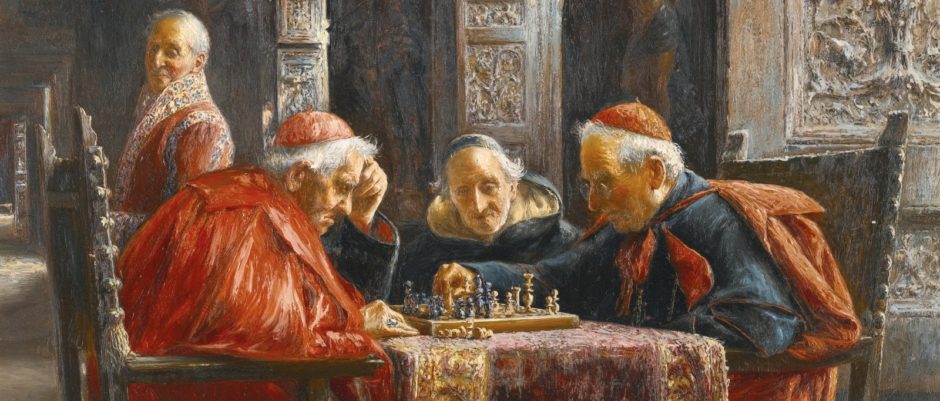
Posted in Brick by Brick |
Comments Off on Your reactions to the Pontifical Mass in Washington

Something new found on Shroud of Turin, WDTPRS POLL!

I find it fascinating that as new technology develops, we start finding new things in the Shroud of Turin.

As you may know the Shroud of Turin was recently placed on display in Turin, Italy.  Here is an interesting story about a feature of the Shroud.

There is a WDTPRS POLL below.

MAN OF THE CLOTH
WorldNetDaily Exclusive
‘2nd face’ on Shroud points to supernatural origin …
Another image of crucified man revealed during restoration

By Jerome R. Corsi

WorldNetDaily


Second face on backside of Shroud of Turin

Scientists examining the Shroud of Turin since the restoration that began in 2000 have found a "second face" on its reverse "hidden side," a discovery they believe adds evidence to the argument it is not a medieval painting or  photographic rendering.

As part of the restoration undertaken in the summer of 2002, the Holland cloth – the backing cloth placed on the shroud by the Poor Clare Nuns to preserve it after the 1532 fire – was removed, permitting for the first time in centuries an examination of the back side.

In 2004, Professors Giulio Fanti and Roberto Maggiolo of the Department of Mechanical Engineering at the University of Padua in Italy published in the peer-reviewed Journal of Optics their study, "The Double Superficiality of the Frontal Image of the Turin Shroud." They concluded there exists a second, even fainter face image on the backside of the Shroud of Turin, corresponding but not identical to the face image of the crucified man seen in head-to-head dorsal and ventral views on the front side.

The second face image on the back of the shroud was hidden for centuries, until the 2002 restoration when the Holland cloth was removed.

Fanti and Maggiolo used image-processing techniques, including Gaussian filters and Fourier transformations to highlight the extremely faint second face on the backside of the shroud, including details of a nose, eyes, hair, beard and mustache.

To the naked eye, the backside of the shroud appears to show no image whatsoever.

Like the face image on the front side of the shroud, the previously hidden image on the backside is a superficial image that exists only on the topmost linen fibers, created by the same dehydration process characteristic of the face and body image on the front.

Negative of image on front of Shroud of Turin

The backside of the shroud contains only a limited ventral image of the crucified man in which a stain appears to correspond to the crossed hands seen on the front.

Fanti and Maggiolo found no dorsal image of the crucified man on the shroud’s back side.

The researchers concluded the image of the face on the backside of the shroud was not created by a process of painting in which the facial image on the front "bled through" to create an image on the reverse side.

Similarly, if a photographic process created the image of the face, the photographic emulsion on the shroud must have been applied separately on the front and reverse surfaces, without any photographic emulsion soaking through the linen fibers at the center.

The two scientists demonstrated this by noting the image of the face impressed on the backside has "some slight differences" from the front image.

For instance, the nose on the back presents "the same extension of both nostrils, unlike the front side, in which the right nostril is less evident."

Moreover, Fanti and Maggiolo concluded "the central part of the fabric was clearly not involved in the creation of the image [on the backside] – i.e., the internal part of the linen fabric does not have an image."

The researchers, other words, found a "doubly superficial" face image on both the front and back sides such that "if a cross-section of the fabric is made, one extremely superficial image appears above and one below, but there is nothing in the middle."

The shroud, therefore, they concluded, was not created by paint soaking through the linen or by a photographic image printing through to the reverse side, because the front and back facial images are not identical and the center fibers show no image creation whatsoever.

Fanti and Maggiolo concluded the shroud image was created by a "corona discharge," understood as a radiant burst of light and energy that scorched the body image of the crucified man on the topmost fibers of the shroud’s front and back sides, without producing any image on the centermost of its linen fibers.

"Imagine slicing a human hair lengthwise, from end to end, into 100 long thin slices; each slice one-tenth the width of a single red blood cell," writes Daniel Porter, editor of ShroudStory.com. "The images on the Shroud of Turin, at their thickest, are this thin."

Fanti and Maggiolo found the faint image of the face on the reverse side of the shroud contained the same 3D information contained in the face and body image of the crucified man seen on the shroud’s front side.

The current Exposition of the Shroud in Turin, underway until May 23, is the first time the Shroud of Turin has been displayed since the 2002 restoration.

The back side of the shroud is not being shown for public observation; a new backing cloth has been sewn on to replace the Holland cloth, hiding the reverse side once again.

Here is a WDTPRS POLL:

{democracy:55}

Posted in Just Too Cool | Tagged
35 Comments

Beautiful and above all strong rosaries

I keep my eye open for nice rosaries, probably because I have a penchant for giving them away.

Years ago I encouraged a member of the old COL Forum on Compuserve to start a rosary making business.  Her work was simply stunning.  They were not only beautiful, they were stong enough that you could pull a trailer with them.  She did, and eventually made a pretty good go of it.  It is great to see someone do well with something so important as making beautiful – and above all strong – rosaries.  Alas, she does not make rosaries these days and my source for wedding and ordination gifts is no longer available.

However, one of our frequent participants here at WDTPRS, Henry Edwards, clued me in to another makers of fine rosaries, made in a way similar to those I spoke of above.  I received one recently.  It comes from Immaculata Rosaries.

In a closer view, you see that at the connections the wire is wrapped around a couple times, which makes the whole thing far less likely to pull apart.

If you are interested in seeing more of these nice rosaries, check out Immaculata Rosaries.

Posted in REVIEWS |
32 Comments

New ICEL translation has been approved

To the joy of most and the dismay of a few, it looks as if the new ICEL translation has been approved, though it won’t be available for a while yet.

The Vox Clara commission, formed as a liaison between ICEL and the Congregation for Divine Worship and Discipline of the Sacraments, met in Rome.  Here are the Holy Father’s remarks to the group as they completed their work.

From the VIS:

Dear Cardinals,

Dear Brother Bishops and Priests,

Members and Consultors of the Vox Clara Committee,

I thank you for the work that Vox Clara has done over the last eight years, assisting and advising the Congregation for Divine Worship and the Discipline of the Sacraments in fulfilling its responsibilities with regard to the English translations of liturgical texts. This has been a truly collegial enterprise. Not only are all five continents represented in the membership of the Committee, but you have been assiduous in drawing together contributions from Bishops’ Conferences in English-speaking territories all over the world. I thank you for the great labour you have expended in your study of the translations and in processing the results of the many consultations that have been conducted. I thank the expert assistants for offering the fruits of their scholarship in order to render a service to the universal Church. And I thank the Superiors and Officials of the Congregation for their daily, painstaking work of overseeing the preparation and translation of texts that proclaim the truth of our redemption in Christ, the Incarnate Word of God.

Saint Augustine spoke beautifully of the relation between John the Baptist, the vox clara that resounded on the banks of the Jordan, and the Word that he spoke. A voice, he said, serves to share with the listener the message that is already in the speaker’s heart. Once the word has been spoken, it is present in the hearts of both, and so the voice, its task having been completed, can fade away (cf. Sermon 293). [HERE IT IS…] I welcome the news that the English translation of the Roman Missal will soon be ready for publication, [That means approval.] so that the texts you have worked so hard to prepare may be proclaimed in the liturgy that is celebrated across the anglophone world. Through these sacred texts and the actions that accompany them, Christ will be made present and active in the midst of his people. The voice that helped bring these words to birth will have completed its task.

[NB:] A new task will then present itself, one which falls outside the direct competence of Vox Clara, but which in one way or another will involve all of you – the task of preparing for the reception of the new translation by clergy and lay faithful. Many will find it hard to adjust to unfamiliar texts after nearly forty years of continuous use of the previous translation. The change will need to be introduced with due sensitivity, and the opportunity for catechesis that it presents will need to be firmly grasped. I pray that in this way any risk of confusion or bewilderment will be averted, and the change will serve instead as a springboard for a renewal and a deepening of Eucharistic devotion all over the English-speaking world. [But it is going to happen.]

Dear Brother Bishops, Reverend Fathers, Friends, I want you to know how much I appreciate the great collaborative endeavour to which you have contributed. Soon the fruits of your labours will be made available to English-speaking congregations everywhere. As the prayers of God’s people rise before him like incense (cf. Psalm 140:2), may the Lord’s blessing come down upon all who have contributed their time and expertise to crafting the texts in which those prayers are expressed. Thank you, and may you be abundantly rewarded for your generous service to God’s people.


The following comes from the National Catholic Register (the good "NCR"):

Cardinal George Pell, chairman of the Vox Clara Committee, the international group of bishops advising the Vatican about the translation, told the Register yesterday that although formal approval will be given today, the new Missal certainly won’t be available before 2011.

Posted in Brick by Brick, Pope of Christian Unity, WDTPRS |
52 Comments

Finding a fellow traveller… no coincidence! Fr. Nichols on secularism

I found a great quote toward the end of Fr. Aidan Nichols new Criticising the Critics, which I wrote about here.  This would be a good book to own and read carefully. Order from Amazon UK click HERE.

"Secularization is the work of elites who want to free themselves and the world they inhabit from any appeal to an authority that invokes transcendence."


At the end of his exceptional new book, Fr. Nichols has a chapter which suggests that he and I are so much in sync about the "identity" issue I have been writing for so long that I got shivers.

He is writing in the first place about England, the English, English culture and society, but his work is clearly appropriate for many other nations.  Eerily so for the United States, which hasn’t gone as far down the dismal road Fr. Nichols mapped.

In his last chapter: For Critics of Christendom (Secularization: A Catholic Response), and the subheading "The role of English Catholicism", he writes:


[T]he strategy I advocate is one which might be called ‘in depth re-confessionalisation’.  In this slogan, the adverbial phrase – ‘in depth’ and the noun – ‘re-confessionalisation’ – should be given equal weight.  ‘Re-confessionalisation’ speaks of the renaissance of a kind of Catholicism that would be more secure in its own identity, both doctrinal and cultural, than has been the case in recent decades, where milk has been split in the name of ecumenical adjustment and accomodation to the social life-ways of others.  That more secure identity is needed, not least, in order the better to counter the force of secularism.  …


A necessary component is "a re-enchanting of the Liturgy which is our primary induction into the nature of prayer and so the mystical".

Apropos… Pope Benedict is going to create a new dicastery of the Holy See, the Pontifical Council for New Evangelization.

Order from Amazon UK click HERE.


Posted in Brick by Brick, On the road, Our Catholic Identity | Tagged
21 Comments

Looking for reactions to the Pontifical Mass at the Shrine

I would like to ask your help.

If you would care to write some reactions to the Pontifical Mass at the Shrine of the Immaculate Conception for the anniversary of the Holy Father’s pontificate… if you watched it on TV or especially if you were there in person… whether you are a lay person or cleric… whether you were a server or observer….  I would be pleased to receive your thoughts by E-MAIL.

  • Please keep them short, to the point…. maybe 200 words?
  • Please say in what manner you participated.
  • Please put in the e-mail SUBJECT LINE: My thoughts on the Pontifical Mass (IMPORTANT)

I am particularly interested in the reactions of those for whom this was their first encounter in some way with a Mass in the older, traditional form.

I probably won’t respond to your e-mails.  I may not post yours.  I will read it. 

Thanks in advance and brick by brick!

Posted in Brick by Brick |
Comments Off on Looking for reactions to the Pontifical Mass at the Shrine

If on the East coast, then why not the West coast?

L.A. Catholic wrote about the spectacular Traditional Pontifical Mass at the Shrine of the Immaculate Conception in Washington DC and then mused:

Wonder when the Latin Mass will next be celebrated at the Cathedral of Our Lady of the Angels here in ole L.A.?

Infernal climate change may need to be monitored for a long time.

Brick by brick, folks.

Bp. Slattery’s Sermon in Washington DC – unforgettable

Posted in Brick by Brick |
39 Comments

























