In these final days of Advent preparation, the Church prays with great intensity. It is one of the “greater feria” of Advent, the home stretch, as it were.
Here is today’s
COLLECT (2002MR):
Concede, quaesumus, omnipotens Deus,
ut, qui sub peccati iugo ex vetusta servitute deprimimur,
expectata Unigeniti tui nova nativitate liberemur.
This was in the 1962MR on Ember Saturday of Advent. It was before that in the Veronese, Gelasian and Gregorian Sacramentaries. These advent prayers often refer to the “state of oldness”, which pertains to the “old man” afflicted by the sin of our First Parents.
WDTPRS LITERAL VERSION:
Grant, we beseech You, Almighty God,
that we who are oppressed under the yoke of sin from the servitude of the old man,
may be freed bu the long awaited new Nativity of Your Only-Begotten.
NEW CORRECTED ICEL (2011):
Grant, we pray, almighty God,
that we, who are weighed down from of old
by slavery beneath the yoke of sin,
may be set free by the newness
of the long-awaited Nativity
of your Only Begotten Son.
Christ came to set us free from sin. He is the great Liberator. The Collect reflects this. In a sense, it is a true “liberation theology”.
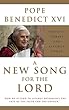
In one of his books about liturgy, A New Song For The Lord, Joseph Ratzinger took a cue from Liberation Theology as a starting point. Consider that as Prefect of the CDF, which dealt with Liberation Theology gone wild and wrong, Papa Ratzinger knows Liberation Theology better than most Liberation Theologians. He knows what the good points of it are as well as where it goes wrong.
Christ frees us in our liturgical encounters the transcendent, with mystery. Our liturgical worship takes on greater urgency when considered in light our are profound need, how small we are, what a vast gulf lies between us and God, source of our being and goal toward whom we return. Consider this passage from the above mentioned book by Ratzinger, A New Song for the Lord, p. 40:
“… [W]e can explain the fundamental change in the understanding of ritual and liturgy that has recently come about after a long time in the making: the primary subject of the liturgy is neither God nor Christ, but the ‘we’ of the ones celebrating. [So reinforced by versus populum celebration of Mass and the “gimme” gesture of Communion in the hand, not to mention the lyrics of ditties sung ad nauseum.] And liturgy cannot of course have adoration as its primary content since, according to the deistic understanding of God, there is no reason for it. There is just as little reason for it to be concerned with atonement, sacrifice, or the forgiveness of sin. Instead, the point for those celebrating is to secure community with each other and thereby escape the isolation into which modern existence forces them. The point is to communicate experiences of liberation, joy, and reconciliation; denounce what is harmful; and provide impulses for action. For this reason the community has to create its own liturgy and not just receive it from traditions that have become unintelligible; it portrays itself and celebrates itself. Admittedly, we must not overlook a countermovement that is becoming ever more evident, particularly among the younger generation. To an increasing degree people are seeing through the banality and the childish rationalism of the pathetic homemade liturgies with their artificial theatrics; it is becoming obvious how trivial they are. [NB] The authority of mystery has disappeared, and the tiny self-affirmations with which one tries to make good this loss cannot even satisfy the functionaries in the long run, let alone those to whom such activities are supposed to appeal. Hence, the search for a true presence of redemption grows. Admittedly it does lead in very diverse directions. The huge rock festivals are occasions for letting existence run wild; they are raging antiliturgies where people are yanked out of themselves and where they can forget the dullness and commonness of everyday life. Drugs, too, belong to this category. On the other hand people are increasingly attracted to the magical and esoteric as the place where mystery supposedly reaches out to humans. Finally we can say that new places for faith emerge again where the liturgy is lit up by mystery”.
Reason #2 for Summorum Pontificum to be implemented in as many places as possible.
I urge all priests and bishops who read this blog with any slight quaver of resonance or benevolence, to consider this with care:
If you sense that something quite serious and important is going on right now, for the love of God rethink your approach to how you foster Holy Church’s proper public worship.
Do all in your power and through your influence to foster a worship of God which conforms not to worldly goals – as praiseworthy as they may be in a world still dominated by its dire prince – but rather to the real point of religion: an encounter with mystery.
Our worship must become more and more focused on the one who is Other. Seek what is truly above in your rites and raise people to encounter mystery.
You will be challenged and reviled, blocked and attacked as you do. You will be worn down and afraid under the weight of resistance.
But I think that to free and to save the world we must save the liturgy.




 I have a Facebook page