
For big Masses with Popes the Vatican’s Office for Liturgical Celebrations issues a booklet. We find in the booklet for Pentecost (19 May 2024) that, in the text for the consecration of the chalice, there has been a reversion:

Thus, at least for the sake of this Sunday, the choice was made to force a a Latin word to mean something it has never meant in the history of that language because a Greek word (polloí) had been made by Lutheran Scripture scholar Joachim Jeremias to mean something it had never meant before. All this was based on Jeremias’ guess about a word Jesus might have said in yet another language read through a lens designed correct an offense to Protestants implicit in the Church’s consecration formula. That’s what ICEL did back in the 70’s, though it was corrected by Benedict XVI in the wake of Liturgiam authenticam. ICEL and others set aside the probability that Evangelists and Paul knew what they were doing and meant what they wrote (with the Holy Spirit’s help). Never mind the Fathers of the Church. Never mind the explicit teaching in the authoritative Catechism of the Council of Trent, Part II, 4, which states that the Church cannot say pro universis.
It’s Back To The Future.
In other news, the document with the new Norms of the Dicastery for the Doctrine of the Faith for proceeding in the discernment of alleged supernatural phenomena has been released. HERE It was announced on 13 May, last Monday, the Feast of Our Lady of Fatima. That immediately set of the spidey senses of molti (maybe not tutti). Some suspected that this move was designed to reduce criticism of the Holy See aroused by negative implications in the messages of apparitions. Some alleged Marian apparitions have not been positive about what’s going on. One is, of course, forced to wonder why the Mother of God would appear just to say, “Everything’s fine. Keep doin’ whatchyer doin’! You’re okay just the way you are.”
The last norms were issued by Paul VI in 1978.
Some suspected that the move was designed also to cast doubts, or undermine, previously studied and approved apparitions, perhaps because they, too, were not wholly positive about what is going on.
Indeed, the new norms do not provide for approval of apparitions or messages, etc. They merely provide for a nihil obstat statement, that something is free from error. There is to be no determination that some event is of divine origin.
As I understand the norms, the role of diocesan bishops has been attenuated. In effect, the diocesan bishop is no longer free to make a determination on his own without, first, consulting the Holy See and, next, agreeing with what the Holy See concludes. The bishop can investigate and so forth, but in the end his hands are pretty much tied.
Also, I read at CNA that Francis did an interview for 60 Minutes (the long-running CBS interview/investigative show). That piece posted a tweet (yes, I know it’s X now). Apparently this is what the producers of 60 Minutes wants us all to take away:
The Pope addresses his conservative critics in the church.
“Conservative is one who clings to something and does not want to see beyond that. It is a suicidal attitude,” says Pope Francis. This Sunday on 60 Minutes, the Pope sits down with @NorahODonnell. https://t.co/mEN4CWeXMW pic.twitter.com/HPYgVm4kIp
— 60 Minutes (@60Minutes) May 16, 2024
Conservatives are suicidal!
“Because one thing is to take tradition into account, to consider situations from the past, but quite another is to be closed up inside a dogmatic box.”
The comments under that tweet express some disagreement with Francis.












 May 12th, 2024
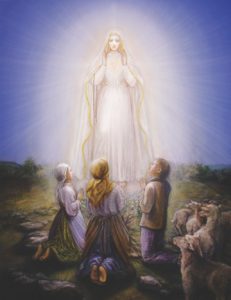 On this Feast of Our Lady of Fatima, I give you three points to consider.




 maternalView on Catholics must read the entire Tradition in light of the Council in order to remain within the Church.: “My thoughts in parentheses. Catholics must read the entire Tradition in light of the Council. He claims this is necessary…”

























