Sins of the tongue

My post for the 11th Sunday after Pentecost, at One Peter Five, “This Sunday’s Gospel Has a Word that “Sums up the Whole Message and the Whole Work of Christ”” begins with a digression.

Because the Gospel for this 11th Sunday after Pentecost concerns the miraculous healing of a man’s deafness and inability to talk, before I drill into the Sunday passage and risk losing most of you because I go on and on and on, let me offer this from the top.

St. Gregory Nazianzen (+390) says that half of all vices may be charged to the account of the tongue. It would be better for many persons to have no tongue and to be unable to talk from their birth, for then they would be miserable only for this life, whereas owing to the sins of their tongue they plunge themselves into eternal damnation. Talk not inconsiderately, but bear in mind that you have to give an account of every idle word you speak.

How many sins could we avoid, if we would bridle our tongues! Or, rather, sheath them. The 17th c. Protestant preacher Thomas Brooks (+1680) said, our tongues can be likened to three fatal weapons, a razor, a sword and an arrow: the tongue slashes reputations, wounds deeply and can strike from afar. By our speech we reveal our inner selves to others. Thus, Brooks:

When the Pumpe goes you may quickly know whether the water that is in the Fountain or Well, be clear or muddy, sweet or stinking; and when the clapper strikes, you may soon guess of what mettal the Bell is made of: and so by mens tongues you may easily guess what is in their hearts; if the tongue be vil’d, the heart is so; if the tongue be bloody, the heart is so; if the tongue be adulterous, the heart is so; if the tongue be malicious, the heart is so; if the tongue be covetous, the heart is so; and if the tongue be cruel, the heart is so, &c. Mens minds are known by their mouthes; if the mouth be bad, the mind is not good; he that is rotten in his talk, is commonly rotten in the heart. Of all the members of the body, there is none so serviceable to Satan as an evil tongue….

With that in mind, I proceed in my weekly task invoking St. Francis de Sales, who wrote:

“I wish I had buttons on both lips [hands?], which I should be obliged to unfasten when I had an occasion to speak [write?], for I should then gain more time to reflect, and to consider.”

Let us now consider together the context of this Sunday’s Holy Mass and its readings.

Even as he warns against assuming conscious organization of the themes of Sundays of Ordered Time after Pentecost, the great commentator of the 20th century Liturgical Movement Pius Parsch suggests that…

[…]

Posted in Liturgy Science Theatre 3000 |
3 Comments

Daily Rome Shot 539, etc.

Fifty years ago today, in Reykjavík, Game 16 took place between Bobby Fischer and Boris Spassky. Fischer brought the Ruy Lopez to the board. They played to a draw by move 34. However, Spassky prolonged the game to move 60 as psychological torture. It ended in the inevitable draw.  Fischer is winning in the match, of course.

Did you know that the common opening called the Ruy Lopez, aka The Spanish Game, is named after a priest? Ruy López de Segura (+1580 at only 50 years old). In Rome, for dealings with Pius IV (Medici), he learned to play chess. “When in Rome…”. He apparently read Damiano da Odemira’s book about chess and, being unimpressed, penned his own. Later, my favorite chess guys, the Modenese Masters, including Fr. Ponziani, thought rather little of his writings. However, in his time, López beat everyone alive. You can see some of his games HERE.

In any event, you might say a “Hail, Mary” for the repose of the soul of Fr. Ruy López de Segura.  Priests need prayers, living and dead. I hope you will pray for me, living and dead.

Click!
There’s a back story, too.

Back story HERE. It’s about you.

Here’s a painting by Luigi Mussini of the Spanish Court and Fr. Ruy López de Segura playing chess.

The dogs have been shown the consistory list by their cruel mistress and her conniving maid.

Your use of my Amazon link is a major part of my income. It helps to pay for insurance, groceries, everything. Please remember me when shopping online. Thanks in advance.  US HERE – UK HERE

I created a search link at wdtprs dot com slash shop dot htm

Enter anything and search.  You might get a window that “The information you’re about to submit is not secure”. Ignore that and “send anyway”.

Finally, in honor of the long lost Semper Gumby, there’s THIS.

Which leads to this.

Posted in SESSIUNCULA |
1 Comment

Hard prophecy from St. Francis of Assisi

UPDATE: NB: After the The Great Roman™ saw this he offered:

That I recall it was not included in the Franciscan Sources and it is believed to have been written at the time of Boniface VIII who suppressed a Franciscan branch authorized by Celestine V. Not sure of the details though.


Some people have a false notion of St. Francis of Assisi.  They see garden statues of Francis with birdies.  They saw Brother Sun, Sister Moon.  They’ve heard, or said, the prayer he didn’t write.  You get the idea.  Being Christian means rolling in the grass and hugging lambs as bluebirds flit around you.

In fact, Francis was a serious hard ass.  The writings of Francis show that he had lofty ideas about the sacrality of sacred worship – HERE – and other matters.  He would have been appalled, I think, at the Novus Ordo as it is employed.

Also from the accounts this great saint comes a prophecy of a false Pope.  Biretta tip to a reader.

Shortly before he died, St. Francis of Assisi called together his followers and warned them of the coming troubles, saying:


1. The time is fast approaching in which there will be great trials and afflictions; perplexities and dissensions, both spiritual and temporal, will abound; the charity of many will grow cold, and the malice of the wicked will increase.

2. The devils will have unusual power, the immaculate purity of our Order, and of others, will be so much obscured that there will be very few Christians who will obey the true Sovereign Pontiff and the Roman Church with loyal hearts and perfect charity. At the time of this tribulation a man, not canonically elected, will be raised to the Pontificate, who, by his cunning, will endeavor to draw many into error and death.

+++

3. Then scandals will be multiplied, our Order will be divided, and many others will be entirely destroyed, because they will consent to error instead of opposing it.

4. There will be such diversity of opinions and schisms among the people, the religious and the clergy, that, except those days were shortened, according to the words of the Gospel, even the elect would be led into error, were they not specially guided, amid such great confusion, by the immense mercy of God.

5. Then our Rule and manner of life will be violently opposed by some, and terrible trials will come upon us. Those who are found faithful will receive the crown of life; but woe to those who, trusting solely in their Order, shall fall into tepidity, for they will not be able to support the temptations permitted for the proving of the elect.

6. Those who preserve their fervor and adhere to virtue with love and zeal for the truth, will suffer injuries and, persecutions as rebels and schismatics; for their persecutors, urged on by the evil spirits, will say they are rendering a great service to God by destroying such pestilent men from the face of the earth. But the Lord will be the refuge of the afflicted, and will save all who trust in Him. And in order to be like their Head, [Christ] these, the elect, will act with confidence, and by their death will purchase for themselves eternal life; choosing to obey God rather than man, they will fear nothing, and they will prefer to perish rather than consent to falsehood and perfidy.

7. Some preachers will keep silence about the truth, and others will trample it under foot and deny it. Sanctity of life will be held in derision even by those who outwardly profess it, for in those days Jesus Christ will send them not a true Pastor, but a destroyer.”

(Except for breaking up the narrative into numbered paragraphs and adding bold print for emphasis, the prophecy is presented without any alteration, as given in the Works of the Seraphic Father St. Francis Of Assisi, Washbourne, 1882, p. 248.)

Posted in Francis, Saints: Stories & Symbols, The future and our choices | Tagged
21 Comments

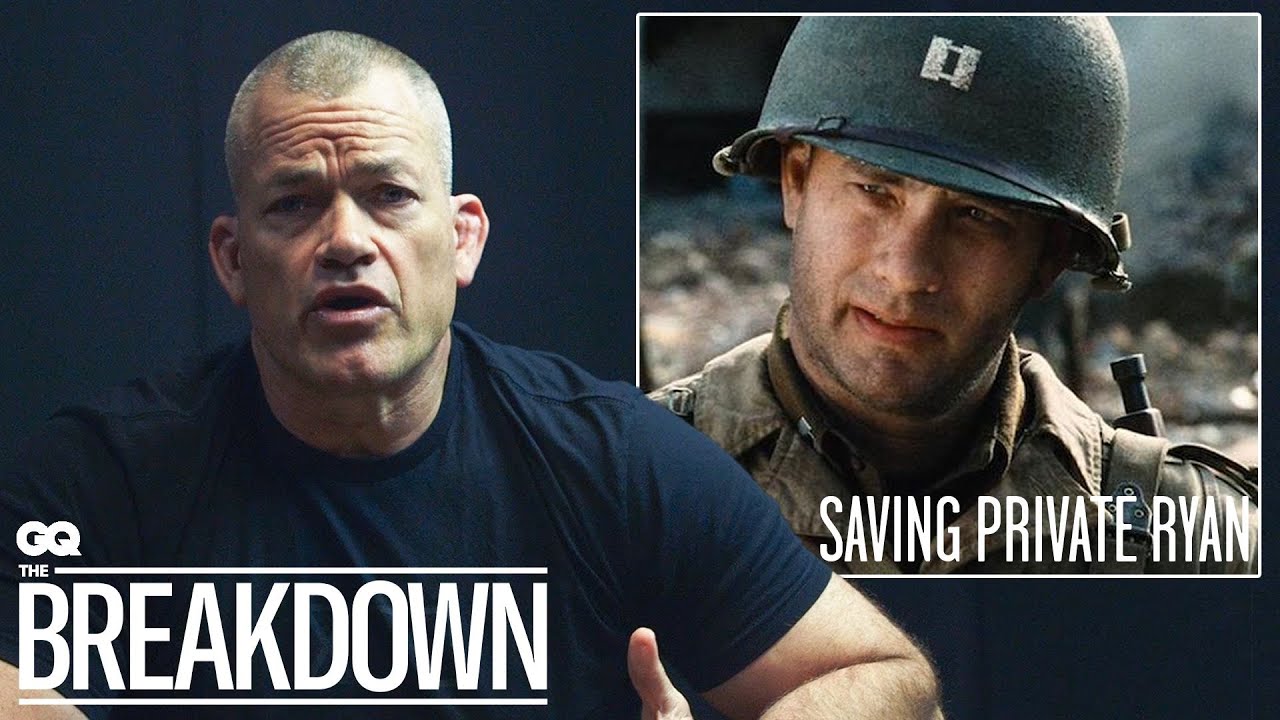
Jocko gives advice about, indirectly, leadership in the Church

If you are thoughtful, there are applications from this video to your local situation. Never mind that an idiot or two launch intellectually STUPID attacks on the Church as Militant.

Think of every scene as a metaphor. This is about being prepared and reacting to attacks. Translate the scenarios into real time parish and diocese issues.

YouTube thumbnailYouTube icon

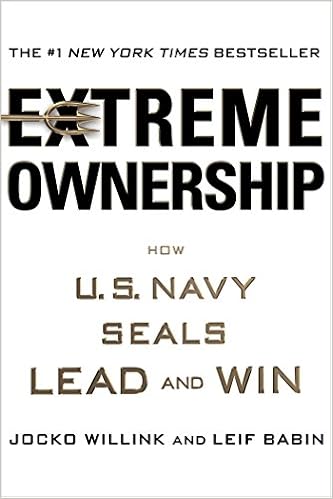
PS: I recommended one of Jocko’s books on leadership, for the sake of his parish, to a priest, once thought of as a friend and who dumped me when I was canceled. To this day, the problems HE is causing in the parish, as he parasites off own group for the sake of popularity with the other, persist.

This is a note to BISHOPS too..  US HERE – UK HERE.  The Directory for Priests and your vague notions of bishop/priest relations are fantasy.   What we need are leaders.

When we are Pope, Clemeny XIV2, we shall send prospective bishops to a kind of BUD/S, yes, also physical with carefully considered exceptions due to sheer holiness and merit apart of physical aptitude.  And the physical qualifications are not the point.

Am I wrong?   Do bishops not have to be courageous leaders?

Posted in Hard-Identity Catholicism, The future and our choices | Tagged
11 Comments

19 August – Sixtus III (Pelagian heretic?), other Sixti, and correspondence with Augustine

It is nice to make connections which show us how the Church was always alive throughout the centuries before our own time.  This is what the ideologues of the “spirit” of the Council want to disconnect and rupture.

There are various Papi Sisti in our histri.  You will recalled that Sixtus I (+115) is the sixth after Peter, and is celebrated on 6 April and was succeeded by Telephorus, whom hardly anyone prays to for help.  You will recall that Sixtus II (+257) was Rome’s bishop in the time of the Valerianic persecution when he and St. Lawrence were martyred.  He is the Sixtus in the Roman Canon.  He established that only sacred ministers should touch holy vessels.  Sixtus IV (+1484 della Rovere) built the “Ponte Sisto” which we looked at together in a Rome post with video.  You will recall that Sixtus V (+1590 Piergentile), an old Franciscan with two canes, on his election threw aside the canes and stripped cardinals of their benefices, closed the dome of St. Peter’s, started the Library, drained swamps, rearranged the city according to his coat of arms, set up obelisks, engaged Palestrina to form the Graduale Romanum, excommunicated Henry IV of France, published the Latin vulgate, and was suspicious of the Jesuits.  All in all, a great Pope.  He was Pope for only 5 years.

Alas, probably the last to choose the regnal name “Sixtus”.

What about Sixtus III (+440)?

Today is the feast of St. Pope Sixtus III, whom you will remember as having been involved with the “Liberian Basilica”, more commonly known as St. Mary Major in Rome.

Pope Sixtus has an entry in the Roman Martyrology:

6. Romae via Tiburtina iuxta Sanctum Laurentium, depositio sancti Xysti papae Tertii, qui inter Antiochenum patriarchatum et Alexandrinum dissensiones composuit atque in Urbe beatae Mariae basilicam plebi Dei dedit in Exquiliis. …

At Rome in the Via Tiburtina near (the Basilica of) Saint Lawrence (outside the walls) the Deposition (of the body) of Saint Sixtus III, pope, who resolved the disagreements between the Patriarchs of Antioch and of Alexandria, and gave to the people of God the Basilica of Blessed Mary on the Esquiline Hill.

Sixtus tried to heal a rift between St. Cyril of Alexandria and John of Antioch, who had aligned himself with the Nestorians.

Tracking back to the dedication of S.M. Maggiore,  the Basilica was completed by Pope Sixtus III and his archdeacon Leo (later Pope Leo I “the Great”).  Leo suceeded Sixtus.

Here is what the Roman Martyrology says about that:

Dedicatio basilicae Sanctae Mariae, Romae in Exquilis conditae, quam in memoriam Concilii Ephesini, in quo Maria Virgo Dei Genetrix salutata est, Xystus papa Tertius plebi Dei obtulit….

The dedication of the basilica of Saint Mary founded in Rome on the Esquiline hill, which Sixtus III, Pope consecrated for God’s People as a memorial of the Council of Ephesus during which the Virgin Mary was hailed as Mother of God.

In the basilica you can see the great triumphal arch decorated with beautiful mosaics prepared and directed by the future Pope Leo I having anti-Manichean themes.

On the summit of the curve of the arch you see the name of “Xystus Episcopus Plebi Dei” even to this day.  Sixtus III.

Here is the old Catholic Encylopedia entry for Sixtus III (emphasis mine):

Consecrated 31 July, 432; d. 440. Previous to his accession he was prominent among the Roman clergy and in correspondence with St. Augustine. He reigned during the Nestorian and Pelagian controversies, and it was probably owing to his conciliatory disposition that he was falsely accused of leanings towards these heresies. As pope he approved the Acts of the Council of Ephesus and endeavoured to restore peace between Cyril of Alexandria and John of Antioch. In the Pelagian controversy he frustrated the attempt of Julian of Eclanum to be readmitted to communion with the Catholic Church. He defended the pope’s right of supremacy over Illyricum against the local bishops and the ambitious designs of Proclus of Constantinople. At Rome he restored the Basilica of Liberius, now known as St. Mary Major, enlarged the Basilica of St. Lawrence-Without-the-Walls, and obtained precious gifts from the Emperor Valentinian III for St. Peter’s and the Lateran Basilica. The work which asserts that the consul Bassus accused him of crime is a forgery. He is the author of eight letters (in P.L., L, 583 sqq.), but he did not write the works “On Riches”, “On False Teachers”, and “On Chastity” (“De divitiis”, “De malis doctoribus”, “De castitate”) attributed to him. His feast is kept on 28 March.

Well… his feast is now today in the Novus Ordo calendar, not 28 March.  I believe he is not in the calendar of the 1962 Missale, since today is St. John Eudes.

Sixtus corresponded with Augustine! Let’s see if we can find a letter. Yes, indeed, here it is.

You see, Sixtus (before his ascent to the See of Rome) was thought to be a supporter of Pelagius.

Augustine get’s into it with him in ep. 194 written in 418. Augustine had also written ep. 191 to him some time before. We need some background into the fascinating time in our family the Church’s history.

Ep. 194 was addressed to Sixtus, who was at the time a priest of the clergy of Rome. Sixtus would not be elected Pope until 432. Augustine wrote to Sixtus about Pelagian issues, since Sixtus was thought to be a supporter of Pelagius. Augustine pressed Sixtus to silence, on the one hand, but to instruct the heretics, on the other.  Thus, he gave Sixtus some talking points about the absolute gratuity of the election of the predestined to salvation.

Pope Sixtus III was not a Pelagian heretic when he was Bishop of Rome.

The issue of predestination and grace would be at the heart of the so-called “Semi-Pelagian” controversy. And it was this very letter, ep. 192 from Augustine to Sixtus, which eventually would spark a real controversy for the monks of Adrumentum in North Africa.

One of the monks of Hadrumentum, Florus found a copy of the letter in the library of Evodius the Bishop of Uzalis.  Florus sent a copy to the monks back home in Hadrumentum and they got all riled up about predestination and grace.

They were shocked by what Augustine was saying and concluded that, for example, there superior shouldn’t punish them if they didn’t pray or if they behaved badly, but should rather simply pray that God would give them the grace they were apparently lacking.

The monks were wondering what good it was to pray, etc., if everything was predestined.

These monks wrote to Augustine for a clarification about what he had written to Sixtus. Augustine responded to their abbot with two works, On Grace and Free Will and On Correction and Grace. Augustine’s letters 214 and 215 have more on all this business.

The letter itself, ep. 192, starts with Augustine saying how happy he is that Sixtus was against the Pelagians. He distinguishes the different types of Pelagians and how to deal with them. Some ought to be silenced and some instructed. He then says in a nutshell that because of Adam’s sin everyone deserves damnation. Through the Sacrifice of the Cross Christ’s merits and justification are extended to us sinners. Since none of us deserve grace on our own, we are justly damned, except for Christ’s merits. We cannot in ourselves merit even the choice of who will receive grace, either because of what we might have done in the past or what God foresees we will do in the future. God saves some out of mercy and He is just when people are damned. He uses the example of infants who die, some baptized and some not baptized. God foresees all outcomes and in mercy provides baptism for some and not for others. It is divine providence, not luck or fate or destiny outside of what God foresees. Similarly, God allows some who hear the Good News to convert and be justified, and to others he does not extend this grace. Even our prayers for mercy and our faith are graces. This is where we get the famous concept that God crowns his own merits in us.

Let us see some of ep. 194 from Augustine to Sixtus, later St. Pope Sixtus III.

18. … But we must confess that God helps us in one way before he dwells in a person and in another way when He dwells in a person. For, when He dwells in a person, he helps a person who is already a believer.

19. What merit, then, does a human being have before grace so that by that merit he may recieve grace, since only grace produces us us every good merit of our and since, when God crowns our merits, He crowns His own gifts?

Does that phrase about crowning his own gifts in us sound familiar? It ought to. It is in one of the new Prefaces, de sanctis” – (De gloria Sanctorum), in the Novus Ordo Missale Romanum which in English is called the Preface “of Holy Men and Women”:

Vere dignum et iustum est, aequum et salutare, nos tibi semper et ubique gratias agere: Domine, sancte Pater, omnipotens aeterne Deus: Qui in Sanctorum concilio celebraris, et eorum coronando merita tua dona coronas. Qui nobis eorum conversatione largiris exemplum, et communione consortium, et intercessione subsidium; ut, tantis testibus confirmati, ad propositum certamen curramus invicti et immarcescibilem cum eis coronam gloriae consequamur, per Christum Dominum nostrum. Et ideo cum Angelis et Archangelis, cumque multiplici congregatione Sanctorum, hymnum laudis tibi canimus, sine fine dicentes: …

It is truly right and just, our duty and our salvation,
always and everywhere to give you thanks,
Lord, holy Father, almighty and eternal God.
For you are praised in the company of your Saints
and, in crowning their merits, you crown your own gifts.
By their way of life you offer us an example,
by communion with them you give us companionship,
by their intercession, sure support,
so that, encouraged by so great a cloud of witnesses,
we may run as victors in the race before us
and win with them the imperishable crown of glory,
through Christ our Lord.
And so, with the Angels and Archangels,
and with the great multitude of the Saints,
we sing the hymn of your praise,
as without end we acclaim:
Holy, Holy, Holy Lord God of hosts . . .

Posted in Patristiblogging, Saints: Stories & Symbols | Tagged , ,
4 Comments

19 August – St. John Eudes: “Bad priests are a sign of God’s anger”

Today is the Feast of St. John Eudes, a great saint of the 17th c.  A great missionary. He was a promoter of devotion to the Most Sacred Heart of Jesus and spiritual writer. Canonized in 1920’s, he has a gigantic statue in a niche in Saint Peter’s Basilica.  He founded the “Eudist” fathers.

I have posted this from St. John Eudes before, from The Priest: His Dignity and Obligations

On bad priests…

Bad priests are a sign of God’s anger

The most evident mark of God’s anger and the most terrible castigation He can inflict upon the world are manifested when He permits His people to fall into the hands of clerics who are priests more in name than in deed, priests who practice the cruelty of ravening wolves rather than the charity and affection of devoted shepherds. Instead of nourishing those committed to their care, they rend and devour them brutally. Instead of leading their people to God, they drag Christian souls into hell in their train. Instead of being the salt of the earth and the light of the world, they are its innocuous poison and its murky darkness. St. Gregory the Great says that priests and pastors will stand condemned before God as the murderers of any souls lost through neglect or silence….

When God permits such things, it is a very positive proof that He is thoroughly angry with His people, and is visiting His most dreadful anger upon them. That is why He cries unceasingly to Christians, “Return, 0 ye revolting children . . . and I will give you pastors according to my own heart” (Jer. 3, 14-15). Thus, irregularities in the lives of priests constitute a scourge visited upon the people in consequence of sin.

A good priest…

He is an ever burning and shining light set in the candelabra of Mother Church, burning before God and shining before men: burning in his own love for God, shining by his charity for his fellow man; burning with the perfection of his inner life, shining by the perfection of his exterior deportment; burning in fervent prayer for his people, shining by his preaching of the word of God. The priest is a sun cheering the world by his presence and bearing. He brings heavenly blessings into every heart. He dispels the ignorance and darkness of error and radiates on every side bright beams of celestial light. He extinguishes sin and gives life and grace to the multitudes. He imparts new life to the weak, inflames the lukewarm, fires more ardently those who are aglow with the sacred flame of divine love. He is an angel purifying, illuminating and perfecting the souls that God has entrusted to him. He is a seraph sent by God to teach men the science of salvation which is concerned only with knowing and loving Almighty God and His Divine Son, Jesus Christ. The priest is an archangel and a prince of the heavenly militia, waging constant war against the devil who strives to drag countless souls into the depths of hell. He is the real father of the children of God, with a heart filled with love which is truly paternal. That love urges him to work unceasingly to nourish his flock with the bread U the sacred word and of the sacraments, to clothe the faithful with Christ and the Holy Ghost, to enrich them with celestial blessings and to secure for them every possible assistance in the salvation of their souls. …

He is a captain in the mighty army of God, always ready to battle for the glory of God and the defense of Holy Mother Church. He is ever prepared to lay siege to the world, the flesh and the devil. For him the conquest of kingdoms means only the salvation of souls for each soul is a kingdom more precious than all the empires of the world.

Please pray for priests.  Pray for me.

Always on the right sidebar.

Posted in Priests and Priesthood, Saints: Stories & Symbols | Tagged ,
5 Comments

Daily Rome Shot 538, etc. “Fifty years ago…”

Please remember me when shopping online. Thanks in advance.  US HERE – UK HERE

Priestly chess players, drop me a line. HERE

Black to move.

Fifty years ago in Reykjavík, the controversy raged behind the scenes about the venue, the Laugardalshöll arena. Fischer was claiming that the noise from spectators in the area was turning the match into a farce and started demanding that he and Spassky play in a closed room. Meanwhile, the Icelandic Chess Federation had already taken rows of seats out, banned the sale of anything wrapped in cellophane and denied entry to children under 10, which surely upset a lot of people.  Game 16 is on the horizon tomorrow, 20 August 1972.

Spassky will, himself, apply some psyops.

Meanwhile, in our own day in Reykjavík, it was announced that the FIDE Fischer Random World Championship will start with qualifiers on 22 August (which is the anniversary of the Battle of Bosworth Field before which you can bet some of the participants played chess, but before the powerful Queen developed).   I can hear some of you wags into the chessy thing muttering, “A horse!  A horse!…”.  Which leads me to imagine that someone out there has at some point made a Richard III v. Henry Tudor or at least a War of the Roses set.

“Fischer Random” (aka “Chess960”, because there seem to be 960 setups possible) is a variant game which rearranges the pieces on the 1st and 8th ranks such that it is still possible to castle and there are bishops of opposite colors.  Fischer wanted a kind of pure game which didn’t involve memorization of openings and lines.  Other than the setup, the regular rules of chess are followed.

Today, software will instantly calculate and place the pieces.  However, in the absence of computer engines – remember this for the time of the zombie apocalypse when the dems announce lockdown for COVID-960 and they turn of the internet – there is a formula that can be used… which I don’t understand.  It can involve either coin tosses, the use of a standard die or polyhedral dice, or shuffling cards or scrabble letters.   Strange stuff.  For example, in 2018 in a Fischer Random Blitz tournament – and I’m struggling to get my head around that, Carlson and Nakamura both were able to castle on their first moves, having their kings and rooks on f1/g1 and f8/g8.  In other words, on both sides the kings and rooks were next to each other, so they swapped squares, putting their kings in the corners. Recorded games have to, of course, include the opening position with a PGN or FEN.

Fischer announced his variant after his second match with Spassky in 1992.  And in 1993 Fischer went to Hungary to consult (read: “hide out”) with the legendary chess Polgár family, László Polgár and his chess playing daughters Judit, Zsuzsa and Zsófia. Judit had broken Fischer’s record for becoming the youngest grandmaster. Zsófia wound up beating Fischer at his own game several times. László showed Fischer a book from the early 20th century which already had proposed something similar, which prompted Fischer to change the rules to his version.

Some people think that Chess960 is the future of chess, because it lends itself to greater pure creativity without the book openings and theory. To quote USA supergrandmaster Wesley So (today playing in the Winners Bracket in the Rapid Chess Championship):

“My favorite form of chess is actually chess960. Because there’s not much theory, not much preparation, it’s very original. With the traditional format, the engines are just getting super strong, and it feels like you have to memorize the first 20-25 moves just to get a game. Bobby Fischer once said that the problem with chess is that you get the same exact starting position over and over. These days, there’s 10 million games in the database already, so it’s very hard to create original play, while chess960 is really your brain against mine. After the first or second move, you’re already thinking.”

Here’s an example of what chess960 looks like from a game between Wesley So and veteran Garry Kasparov.

“There is nothing wrong with your screen. Do not attempt to adjust the setup. We are now controlling the position. We control the horizontal and the vertical. We can deluge you with a thousand positions or expand one single move to crystal clarity and beyond. We can shape your vision to anything our imagination can conceive.”

And to think that I struggle to play normal chess with non-Staunton pieces!

(PS: Deep thanks to a reader here who sent me replicas of the Lewis chessmen. They are at present on the board I refurbished some time ago. As a matter of fact, there was once a game arranged between Nigel Short and Judit Polgár using the 12th c. Lewis chessmen but the British Museum backed out even though they were assured that chess is not a contacts sport. Not usually, at least.)

Posted in SESSIUNCULA |
3 Comments

Daily Rome Shot 537, etc.

Your use of my Amazon affiliate link is a major part of my income. It helps to pay for insurance, groceries, everything. Please remember me when shopping online. Thanks in advance.  US HERE – UK HERE  And if you use Amazon quite a bit, I have another, secret way.  Drop me a line.

White to move and force mate in two.

Posted in SESSIUNCULA |
2 Comments

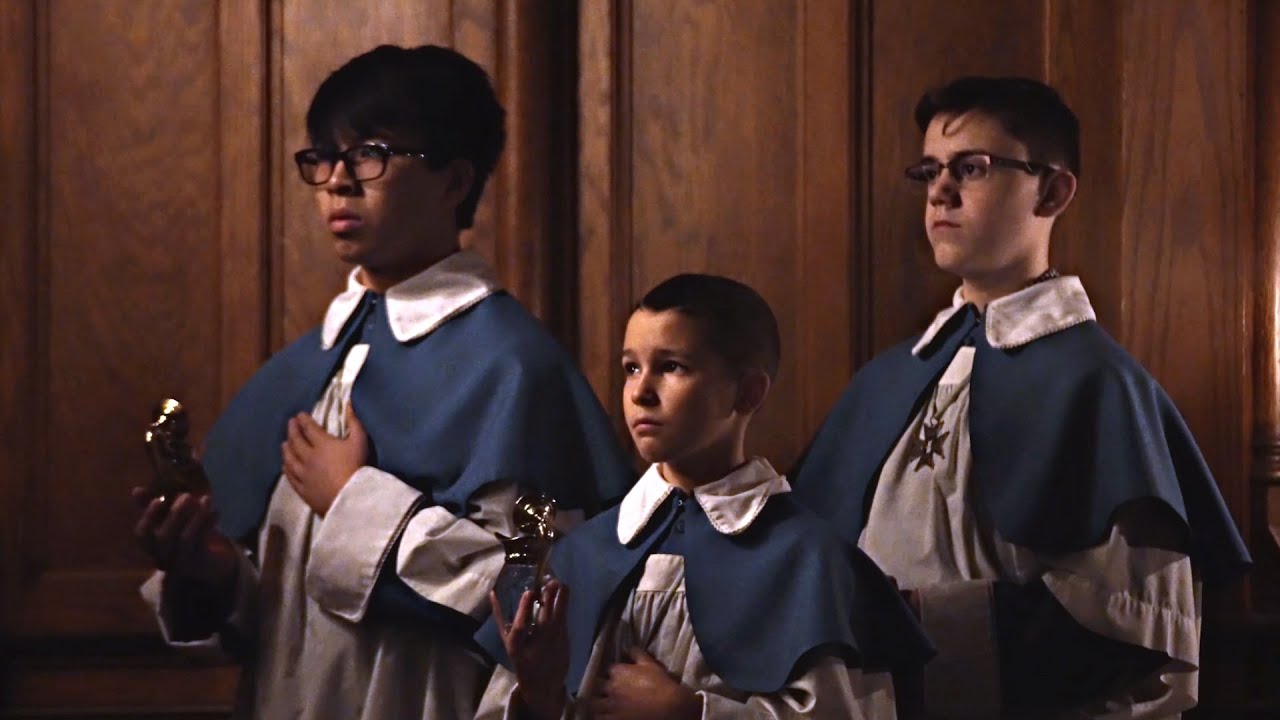
The Vetus Ordo shall not go away and for good reasons. VIDEO. Wherein Fr. Z rants about the Vetus and the Novus.

The Vetus Ordo is not going away.  No matter how much pressure and repression, no matter how much persecution of priests and marginalization of lay people certain “shepherds” apply, it will remain and grow stronger in ways they fear more than anything but bankruptcy.   And I am not talking about their squandered moral capital.

Mind you, what you will see in this video, can be applied, and ought to be applied, to the Novus Ordo and the churches where it is celebrated.

You will see beautiful vestments and their restoration.  Check.  The installation of important sacramental architectural elements.  Check.   Eucharistic processions.  Check.  First Communion.  Check.   Incense swathed sacral glimpses.  Check.  Candles and lace and flowers and bells and chapel veils and choral music … and … and.  Check.

Right away people will ask, “If that can all be done with the Novus Ordo, then why not just have the Novus Ordo?”

Right away we respond, “If the Novus Ordo is better the more it is enriched by what the Vetus Ordo can give it, then why not just have the Traditional Latin Mass?”

The longer response is deeper and has to do with a perceived– by some – theology, especially claims made about the theology of the Church, ecclesiology, of Vatican II.  The longer response entails getting into the “Paschal Mystery” (Passion and Death and Resurrection and Ascension) and the “People of God”.

Suffice to say that, by a shorter answer, the Vetus Ordo already has both of those things and, I think, in a way more complete than the perceived ecclesiology of Vatican II.

For example, in the matter of the Paschal Mystery, in the prayers of the Novus Ordo those things having to do with the Passion and Death of the Lord (propitiation, guilt, sin, sacrifice) were systematically excised so as to emphasize the Resurrection and joy of Heaven to come.    The problem is, you can’t have Resurrection without the Passion and Death.  To get to Heaven we have to deal with propitiation, guilt, sin, and sacrifice in a serious way.  The Vetus Ordo handles this with a healthy and commonsense emphasis, which sounds today to some people as heavy handed but only because they’re ecclesiology, picked up from the way they have been worshipping for decades, is heavily sprinkled with daisies and kitties and affirmation without judgmentalism by friendly “Just call me ‘Bob'” presiders.

Oh, yes… the shifted content of the Novus Ordo orations, too.  Are the Novus Ordo prayers bad.  No.  They, cumulatively, just give you part of what you need.  We should have all of it.  IT… the Catholic Thing… the complete Paschal Mystery… the whole megillah.

We are our rites.  The way we pray has a reciprocal relationship with what we believe.  Change the one, and the other will inevitably change.

So, by all means, everything in the video ought be applied to the Novus Ordo also.  

That doesn’t mean everything has to look the same everywhere.

What it means is giving our churches and our liturgical worship the very best that we can humanly imagine and making sacrifices so that it will be so. Across cultures and economic divides… the best we can do.

Is the Novus Ordo, ultimately, the best we can do?  I am not sure that the commonly cited stats hold up when we consider that.

Hence, maybe we need the Vetus Ordo to get back our bearings, back to our roots, … to get It back, that Catholic Thing.

The video has a in medias res feeling and, by the end, we are left with a deep desire to have seen the part that preceded and what followed, … at least from the beginning of the Lauridsen, O Magnum Mysterium.  Are there motets more beautiful that that?   Convince me.

YouTube thumbnailYouTube icon

Posted in "How To..." - Practical Notes, Liturgy Science Theatre 3000, Save The Liturgy - Save The World, The Coming Storm, The future and our choices, Wherein Fr. Z Rants |
14 Comments

ASK FATHER: For a wake, Sister did a “prayer service”.

From a reader…

QUAERITUR:

At the visitation at a funeral home for an elderly male relative of mine, instead of a family rosary being said, the local parish sent a nondescript religious Sister, who said she’d conduct a prayer service.  She advised at the outset that the Sign of the Cross would not be made at the beginning of the funeral Mass today because that would be taken care of at her proceedings, and that her event and the Mass were all of a piece.  She then launched into an introductory prayer as one does at the beginning of Mass, without her or us making the sign of the cross.  At one point in this proceeding, she announced she would inscribe a cross on the forehead of the deceased, and then did so.

Is this something that the Church really promotes nowadays, or is it all a nostrum of the Sister’s Pastor, who was once described by our disgraced, former Bishop, unironically, as “an innovative liturgist”?

GUEST PRIEST RESPONSE: Fr. Tim Ferguson

The “wake” service is authentic (although I always prefer the rosary) and the whole concept of it being one continuous liturgy – from the wake, through the funeral, through the burial – is there in the books. It’s an innovation to explain each step along the way what one is doing, but that is consistent with the liturgical books – it is an option, if a stupid one. “now I’m making the sign of the cross. Now I’m sitting down. Now I’m twirling like a whirling dervish.” And it is authorized in the books that the wake and the burial can be done by someone other than a priest (which, to me, is inconsistent with the principle that it’s one liturgy – if it’s one continuous liturgy, then it should have one consistent “presider,” but logical coherence isn’t a hallmark of the reformed liturgical rites).

Fr. Z adds:

From my old pastor, I learned that a wake is the Rosary, speaking for maybe a minute, talking to the family, and getting out of the way.

Posted in "How To..." - Practical Notes, ASK FATHER Question Box, HONORED GUESTS, Liturgy Science Theatre 3000 | Tagged
19 Comments