ROME 22/6 – DAY 10: Wherein a rock evaporated a lot of my time

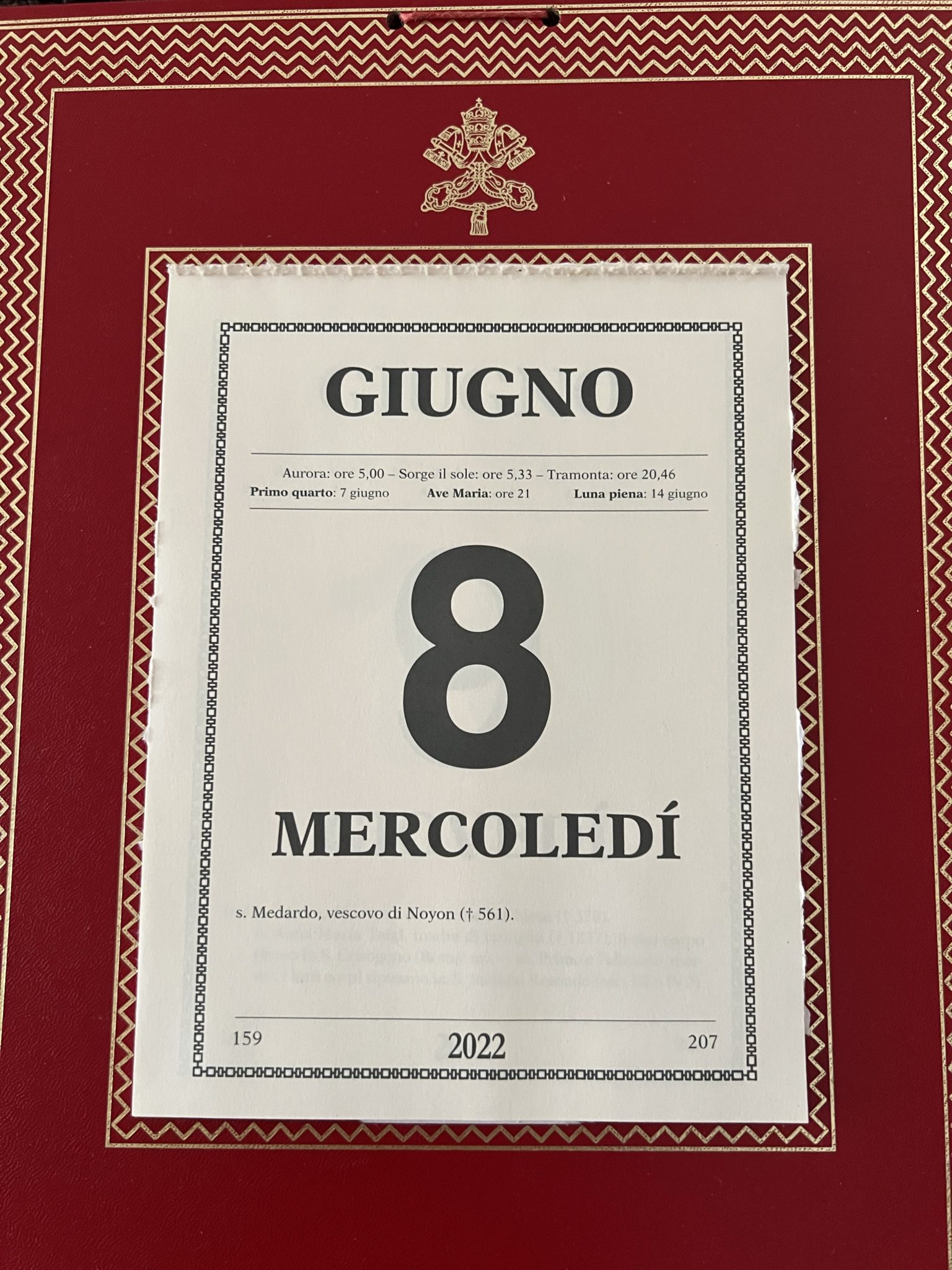
Sunrise…. sunset… 5:32… 20:48

Ave Maria?  21:15


I committed a crime against humanity here.

I have been sketching as I go about. The results have not been good. But here… as I regarded my scratchings… I nearly wept for sorrow for my unspeakable sin against all that is good, true and beautiful. I considered sepuku via my pencil, but that would mean not having another bowl of spaghetti alle vongole.

Only the warnings of the Most Illustrious Monsignor President of the Streets kept me from throwing my sketch down and stomping off.   I remember injunctions about “qualsivoglia” and “scudi”.

You might be wondering what a “scudo” is, by which people paid their littering and dumping fines (when punishment didn’t involve being hung up by the wrists in the square).  I wrote about scudi once before, at length.   Suffice here to say that, in 1758 when Clement XIII was reigning felicitously (even though he protected the Jesuits), a gold scudo was about 3.39-3.40 g.

Just up from where I nearly murdered art, is the place where the Roman poet and all-around fascinating bloke, Giuseppe Gioachino Belli, “Er Belli”, was born.

He had a poem about a “scudo” which is in its typical style a bit racy:

Here is the Great Roman™ reading it in impeccable Romanaccio.  It has the names of other coins of the Papal States, such as the quadrino, paolo, grosso, testone, lustrino, papetto.

ER CONTO TRA PPADRE E FFIJJO

Che? stammatina t’ho ddato uno scudo,
e ggià stasera nun ciài ppiú un quadrino?!
Rennéte conto, alò, ssor assassino:
cqua, pperch’io nu li zappo: io me li sudo.

Sú: ttre ppavoli er pranzo: dua de vino
tra ggiorno; e cquesti ggià nnun ve l’escrudo.
Avanti. Un grosso p’er modello ar nudo.
Bbe’: un antro ar teatrin de Cassandrino.

Sò ssei pavoli. Eppoi? Mezzo testone
de sigari: un lustrino er pan der cane…
E er papetto c’avanza, sor cojjone?

Nò, ppranz’e vvino ve l’ho mmesso in cima.
Dunque? Ah, l’hai speso per annà a pputtane.
Va bbene, via: potevi díllo prima.

THE ACCOUNT BETWEEN FATHER AND SON

What? This morning I gave you a scudo,
And this evening you are already left without a quattrino?!
Give account of it right now, you squanderer:
Come here, ’cause I don’t grow money: I earn it working hard.

Come on, three paoli for the lunch, two for wine
During the day; and I’m not complaining about these.
Well then. One grosso for the nude model at the Academy.
What else: another one for the theatre of Cassandrino

Makes six paoli. And then? Half testone
For cigars: one lustrino the bread for the dog…
And what about the spare papetto, you blockhead?

No, I counted food and wine as first,
So then? Ah, you spent it on prostitutes.
Well, it’s OK: you should have told me before.

A while later I was at S. Lorenzo in Lucina, with its lovely campanile.  I left it unmolested with my graphite assault weapon.

YouTube thumbnailYouTube icon

You get the distinct feeling that the people in charge of some of these churches in Rome do not have the slightest idea about what things are or where to put them.

Speaking of art, the monument of the painter Nicholas Poussin from François-René, Vicomte de Chateaubriand, who among other roles was French Ambassador to the Papal States. The tomb as a relief of the painting “Et in Arcadia Ego

There’s some Latin at the bottom, a lovely epitaph:

PARCE PIIS LACRIMIS VIVIT PUSSINUS IN URNA
VIVERE QUI DEDERAT NESCIUS IPSE MORI
HIC TAMEN IPSE SILET SI VIS AUDIRE LOQUENTEM
MIRUM EST IN TABULIS VIVIT ET ELOQUITUR

Spare your devoted tears. In this tomb lives Poussin, who gave his life not knowing how to die. Here, however, he is silent. If you want to hear him speak, it is a marvel that he lives and speaks in his paintings.

There’s interesting speculation about how the placement of the letters of the monument is fraught with meaning, having even to do with the alignment of the tomb with one of the meridians of the sundial of Augustus Caesar, remains of which runs directly under this church and this precise spot.

We have to get our minds around what really smart men were doing in days when they read books, had to remember things, discussed deep issues into the night. Discoveries of ancient things were being made, new ideas were cropping up… some of them really bad. Amazing people converged on Rome and their paths crossed. Today, people walk by the tomb of Poussin and maybe they have a notion of who he was. But the very idea that there could be patterns and shapes hidden in the words wouldn’t occur in a hundred views.

The Crucifixion by Guido Reni.

In the back corner, near a little Marian chapel, I spotted this, in the shadows. My phone camera did a good job.  It is an unusual subject, old Simeon with the baby Jesus.

A sad sight.  This altar, neglected, is literally falling apart.  Even sadder is the fact that it is a “privileged” altar, as the massive Latin inscriptions attest.   I’ve already been too pedantic in this post but suffice to say that special indulgences were attached to saying Mass at these altars, which were often associated with particular altars of another church (such as S. Gregorio on the Caelian Hill).  By saying Mass here, a priest could free a soul from Purgatory.

Near the door to the church … a sight both sweet and sharp.

Here, the fruit of an old wave of disease.

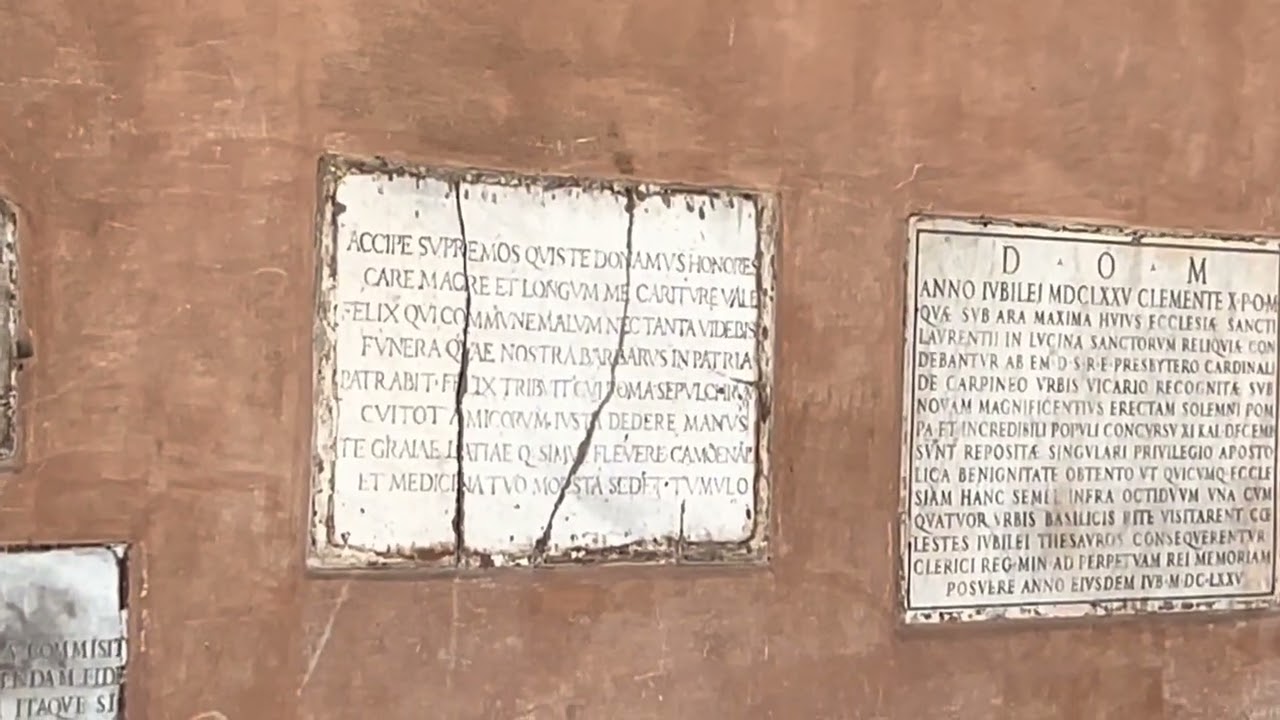
And then there is this.  I’ve been confused by this darn thing for years, so I decided to get to the bottom of it.

I’ve added some punctuation… [.]

ACCIPE SUPREMOS QUIS TE DONAMUS HONORES
CARE MACRE ET LONGUM ME CARITURE VALE[.]
FELIX QUI COMMUNE MALUM NEC TANTA VIDEBIS
FUNERA QUAE NOSTRA BARBARUS IN PATRIA
PATRABIT[.] FELIX TRIBUIT CUI ROMA SEPULCHRUM
CUITOT AMICORUM IUSTA DEDERE MANUS[.]
TE GRAIAE LATIAE Q SIMUL FLEVERE CAMOENAE
ET MEDICINA TUO MOESTA SEDET TUMULO[.]

This is a curious inscription.  It is an epigraph for a certain physician named “Macro” (as in “care Macre”).  And the stone has some errors of spelling: e.g., “TE GRAECE LATIAEQUE}

Can anyone puzzle this out?

I wasted a bunch of time on this stupid rock, to nearly no avail, but I did find this:

So, we now sort of know who this guy was.  Maybe.

HERE I found some explanation of the inscription in the image above. It has to do with figures from Vicenza.  Pardon if I leave it in Italian.

Noi troviamo accop- ?piati in questa iscrizione i nomi di due nostri concittadini celebri, ?e ricordato il sacco fatale ed i mali, a cui dal 1509 al 1517 an- ?dava soggetta la nostra patria. Alemanni, Borgognoni, Francesi, ?Spagnuoli, secondati da bande di fuorusciti e di confinati per ?enormi delitti, corsero e ricorsero la città ed il territorio. In quel ?trambusto non vi fu luogo su cui non piombassero gli orrori della ?strage e della licenza, non angolo, che andasse immune da sac- ?cheggi e da incendii. A fuggir tali sventure molti Vicentini esu- ?larono e tra questi il Magrè, di cui parla il cenotafio. Nato in ?Vicenza nel 1475 ben presto divenne intimo del Trissino e degli ?altri belli ingegni, di cui fu ricca anche da noi queir età. Lo ?troviamo presente alle adunanze accademiche del Trissino con ?Galeazzo Thiene e Battista Graziani. E fu forse allora che si ad- ?dentrò nelle lettere classiche, per cui fu ammirato dai contempo- ?ranei, oltre chè come medico valente, qual distinto conoscitore del ?greco, del latino e della filosofia. Tanta era la fiducia del Trissino ?in lui, che durante la prima dimora in Milano gli avea affidato, ?quasi a un altro sè stesso, la cura della madre, dei figli e della ?casa domestica. Ed appunto a Milano il Magrè mandava a Gian- ?giorgio le due lettere, unici scritti, che rimangono di lui e che ?furono stampate nel 1878. La fuga dal ferro nemico non. valse ?a preservare Vincenzo dalla peste, che lo colse in Roma in età ?di soli trentacinque anni. Il Trissino ne pianse la morte in un ????181 ??pietoso epitaffio, che egli fece murare più tardi nella Chiesa di ?s. Lorenzo in Lucina, ove il Magrè fu sepolto. E' quello che ho ?riportato qui sopra, e che Giambattista Magrè nel 1632 facea ?ripetere in S. Corona. A quello posto in Roma il Trissino aggiun- ?gea : In questa piccola pietra, ottimo Macro, sta zi monumento e ?V ultimo pegno di una grande amicizia. Lacchè mi li tolse una ?morte immatura, o caro a me più dell' anima mia, io non ti ri- ?corderò mai senza pianto ; mai non lascierò di amarti e di por- ?gere doni al tuo caro sepolcro. ?

There it is.

I had better wrap this up and think about lunch.


Posted in On the road, What Fr. Z is up to | Tagged
1 Comment

FRANCIS (I’m not making this up) says that lace… lace… is against the Council and the Church. Lace.

From Vatican News: “Pope to Sicilian priests: ‘Embrace bitterness with tenderness'”

Do they hear themselves? No. They are the masters of shouting down a well.

Francis spoke to Sicilian priests. He said… I am not making this up…

I don’t want to finish without talking about something that worries me, worries me quite a bit. I ask myself: the reform that the Council has initiated, how are you doing with it? [Wait for it….] Popular piety is a great wealth and we must guard it, accompany it so that it is not lost. Even educate it. [Okaaaay. If this means dealing with things that verge on superstition.] On this read n. 48 of Evangelii nuntiandi which is fully topical, what St. Paul VI told us about popular piety: free it from every superstitious gesture and take the substance it has inside. But the liturgy, how is it going? And there I don’t know, why I don’t go to Mass in Sicily and I don’t know how Sicilian priests preach, if they preach as suggested in Evangelii gaudium [‘Cause, you know, that’s the be all and end all of preaching, as if no one has ever preached before in the Church’s history.  And didn’t he just admit that he doesn’t know how they preach?] or if they preach in such a way that people go out to smoke a cigarette and then come back … [Lot’s of people showing up for your Masses? Let’s quiz them after about what the homily was about.] Those sermons in which we talk about everything and nothing. [The exact summation of many of these rambling digressions.] Keep in mind that after eight minutes, attention drops, and people want substance. [At this point he is 1766 some words into his talk with an average reading rate of 9 min 49 secs… maybe a little faster for a real Italian speaker.] A thought, a feeling and an image, and he carries that for the whole week. But how do they celebrate? I don’t go to Mass there, but I have seen some photographs. [?!?] I speak clearly. [?!?!?] But my dears, still the lace, the bonetas [birettas… what is it with this guy?] …, but where are we? Sixty years after the Council! A little updating also in liturgical art, in liturgical “fashion”! [Like concelebrating at the Gesù with no vestments and just a stole? Is that it?] Yes, sometimes bring some grandma’s lace goes, but sometimes. It’s to pay homage to the grandmother, isn’t it? [My heaven’s how condescending.] You understand everything, right? You understand. It is nice to pay homage to the grandmother, but it is better to celebrate the mother, the holy mother Church, and how the mother Church wants to be celebrated. And that insularity does not prevent the true liturgical reform that the Council has put forward. And don’t stay quiet.

Lace is against the Church.

I won’t stay quite.

I am going on a pogrom against LACE. Lace is against the COUNCIL! Lace is against our MOTHERS! It’s fine for grandmothers…. but AGAINST MOTHERS!

This is crazy talk.

To repeat, the news headline: “Pope to Sicilian priests: ‘Embrace bitterness with tenderness'”

Yeah… which is this, I wonder?

BTW… my alb now… no evil counter-Conciliar lace!


Posted in Francis, You must be joking! | Tagged
32 Comments

ROME 22/6 – DAY 9: A pair of Pii

When was sunrise in Rome?  5:32  When is sunset?  20:47   When should the Ave Maria Bell ring?  21:00.

NO!

21:15!  We are in a new cycle for the Ave Maria bell.  The time of the ringing moves by 15 minute increments every once in a while.   The 21:00 cycle went from 24 May – 11 June. … No, wait.  11 June?  Today is 10 June, so why the day discrepancy?  Also, my old table says “8.-” and “8.15”, but that doesn’t take Daylight Savings Time into account.  So, the table is off (I doubt it) or the calendar is off (I sort of doubt it).  There must be some explanation.

Orrrrr… we can say, “Big deal!”, and move on with our day.  I’ll bet one of you clever boots out there will figure it out.

Church architecture and art, music and vestments, ceremonies reflect the over-arching Catholic identity of the time.

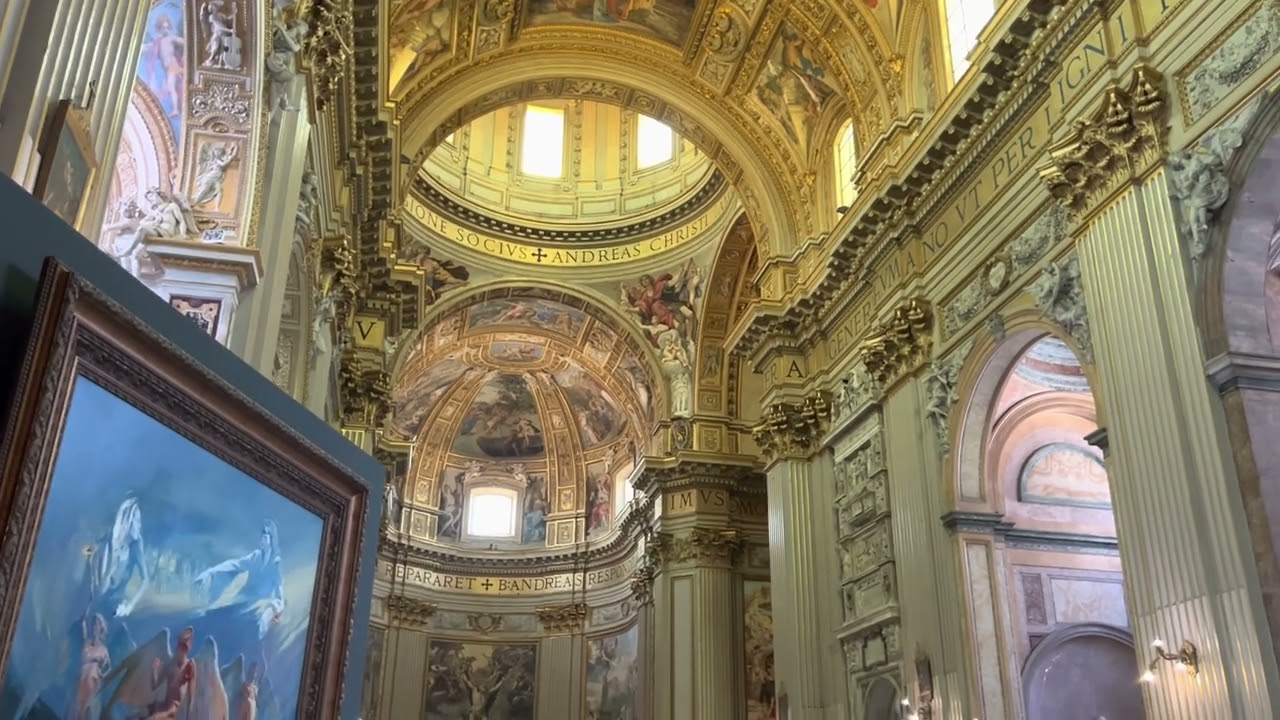
Welcome to Sant’Andrea della Valle, one of the great Counter-Reformation churches of Rome.

NB: It doesn’t look like a municipal airport or a doctors’ group office building.

Alas, when the “small men” get in charge and the dumbing down begins, this is what follows.   Happily it is not much more than a few strong guys with pry-bars and wheel-barrows can’t deal with someday.

This sort of crap has been going on all over Rome since about 2013.

Hmmm…. the colors are a little odd.  I must have hit some setting on the phone that I was unaware off.

The tomb of one of my favorite Popes, Pius II (Piccolomini… and I don’t mean “little man” in sense I used, above).   His relative, Pius III is directly across the nave in pretty much identical digs.

An interesting story about how they got here.  Pius II died in Ancona in 1464 and Pius III in Rome in 1503 after less than a month of pontificate.   There were both buried in the Gregorian chapel in the old St. Peter’s near their funerary monuments.  Near.  They were buried in earth under a slab.  The monuments were brought to St. Andrea della Valle in 1614 by Paul V, Borghese and their bodies were brought in 1623 by Gregory XV (Ludovisi) in the middle of the night and without any sort of ceremony.  They were put into the floor by the tribunes and rediscovered in 1758 when they were doing work on the pavement, moved and lost again.   So the sarcophagi way up there in Sant’Andrea never had bodies in them.  Such an ignominious end for one of the great humanists of the renaissance and his papal nephew who reigned for 26 days.

Pius III, by the way, was the successor of Alexander VI (Borgia) – whose tomb we saw recently – and was a compromise candidate between powerful families and factions.  From the first day of his election he was beset with military threats from various directions.  He was elected on 25 September, had an operation on his leg on 26 September was ordained to the priesthood on 30 September was crowned on 8 October caught a fever and was dead by 18 October.


YouTube thumbnailYouTube icon

YouTube thumbnailYouTube icon

The Zeffirelli production of Tosca was magnificent, especially with the Te Deum at the end against that dour motif. Wow.

YouTube thumbnailYouTube icon

Act II of Tosca takes place just up the street from where I write and Act III is just across the Tiber at Castel Sant’Angelo.

Posted in On the road, What Fr. Z is up to |
1 Comment

ASK FATHER: No… FATHER ASKS YOU…. 1st Holy Communion traditions

I have recently seen, popping into churches, practice for 1st Holy Communion.  Novus Ordo, of course.  Moreover, I’ve had questions about gifts for 1st Communion.

Moments like this have some customs that die hard because of the memories of parents and grandparents.

I’d like to query the readership about 1st Communion practices where you are.  I’m asking about the Traditional Latin Mass especially, so if there is anything about the Novus Ordo, please specify.  Specify in any case.

What am I looking for?

1) Ideas for gifts for 1st Communicants (for children, for adults).

2) Practices.  For example,…

Do they sit together?
Process in together?
Do the Communicants have a candle?
Is Communion given to them at the rail or in the sanctuary?
Particular dress?  I suppose for girls, it’s common to have the white dress. For boys?

I’ve been looking around online and see pretty widely varying practices.

So, dear readers, what’s up?   You might include the place you are talking about.

Feel free to describe your own 1st Holy Communion from back in 1952 when Sr. Mary Deusdedit was watching like a hawk for any illicit sips of water before Mass.

Posted in "How To..." - Practical Notes, ASK FATHER Question Box | Tagged
28 Comments

European Parliament criticizes the USA because of the leaked draft of the Roe v. Wade challenge

The European Parliament intends to discuss – to censure – the USA because of something that hasn’t happened yet.

Namely: ““the impact of a leaked draft opinion of the U.S. Supreme Court concerning abortion.”

CNA story HERE

[…]

The European Parliament is one of two legislative bodies of the EU, a political and economic union of 27 member states. Earlier this month, a motion for a resolution was introduced on the topic “Global threats to abortion rights: the possible overturning of abortion rights in the U.S. by the Supreme Court.”

The 32-point resolution, due to be discussed on June 8 and voted on a day later, states that the European Parliament “is deeply concerned about the potential consequences for women’s rights worldwide, should the U.S. Supreme Court overturn Roe v Wade.”

It also expresses fear that the overturning of the 1973 decision that legalized abortion nationwide would have “a chilling effect on prioritizing and funding” abortion lobally.

It says that the parliament “strongly encourages the US government and/or other relevant US authorities also to remove all barriers to abortion services, including third party consent or notification, mandatory waiting periods and authorization by judges or medical panels, and to guarantee timely access to abortion care across the country.”

The European Parliament voted in 2021 in favor of a report describing abortion as “essential healthcare” and seeking to redefine conscientious objection as a “denial of medical care.”

[…]

Abortion is the sacrament of the Left. This is why even Catholics in the USA will seek always to shove the right to be born down lower on the hierarchy of human rights. When you hear accusations from the Left about “single issues” or “single voter issues” this is code. When you hear talk about how nuanced we ought to be, about abortion and not to allow our selves to be distracted from other rights issues, that’s code. It is a canard that people who are “pro-life” don’t care about the poor, the imprisoned, etc. However, every poor person or imprisoned person was born.

By the way… yesterday the EU Parliament voted to outlaw the sale of gasoline engine cars by 2035.


Posted in Emanations from Penumbras, Liberals, You must be joking! | Tagged , ,
9 Comments

ROME 22/6 – DAY 8: A Spanish Saint, Tomato & Pig Cheek Sauce, Brutal Self-Assessment

In Rome sunrise was at 5:32 and, though we may not see it for the clouds, sunset is scheduled for 20:47.   The Ave Maria bell ought to be a 21:00.

This is the splendidly illuminated S. Maria in Monserrato, named for the famous Spanish sanctuary near Barcelona.  It is one of the best illuminated interiors in Rome.  As the Spanish national church, they have taken great pride in it.

To the right, in the first chapel, is the tomb of the infamous Rodrigo Borgia, Pope Alexander VI (+1503) and another Borgia, Rodrigo’s uncle, Callixtus III (+1458).

Apart from having a several children and couple of mistresses, Alexander was from all accounts, and from the assessment of a couple of his successors a highly successful Pope.  The fantastical, dramatized accounts of him have little or nothing to do with the man himself or his pontificate.   His life makes for fascinating reading.

Meanwhile, look at the beautiful, even illumination in this church.

What you see below might leave you slightly puzzled.

This is St. Raymond Penyafort (+1275), whose tomb you visit in Barcelona.  He was a great canonist and is patron of canon lawyers.  With St. Peter Nolasco he founded the Mercedarians.

St. Raymond had gone to Majora (lower left corner of the painting) to convert the Moors.  As it happened King James I of Aragon was hanging out there with his mistress… speaking of Spanish rulers and their extracurricular activities. Channeling his inner John the Baptist, St. Raymond demanded that King send her away.  The King refused and Raymond said that he would return to Barcelona.  However, the King blocked Raymond’s departure, forbidding any boat to bear him away.   In the presence of Dominican as a witness, Raymond went to the shore, took off his clock and put the end over his staff as a sail, stepped on to the trailing part and zoomed off 160 miles to Barcelona.  The King was impressed, it seems, and mended his ways.

Part of the Via Giulia.

This, on a porta-potty.  I thought the “heart” was rather clever.

There is now a great little shop in a side street close to Ss. Trinità dei Pellegrini which has excellent cheeses and meats.

Last night I had a craving for bucatini all’amatriciana.  Hence, I got some guanciale – so easy to get here, so hard in the US. I already had pecorino and little tomatoes, very sweet, just enough of them.  As they were small, I didn’t bother with peeling them.

Out comes the guanciale and in go the fruit.

Some white wine to reduce.

Join in the guanciale.

Add the mostly cooked pasta and some starchy water and give it a little time.

With parsley and pecorino.  Alas, I don’t have nice dishes in this apartment.  It’s a lacuna.

Dessert: itty bitty strawberries “del bosco” from Nemi.  Just a touch of lemon.   Another classic way to dress them is with balsamic vinegar or a little white wine.

And so another day wound to a close.

During the unchronicled hours I played a little online chess, against the engine at about 1800 with the clock set for 10 minutes and mostly got my backside kicked all over the board by getting into time trouble and letting pieces hang. DANG! γνῶθι σεαυτόν! I’d like to join in for a occasional game with the guys at P.za der Fico, but I need to scrape some barnacles and get used to playing rapid games.   And openings.  Sheesh.  I so regret having stopped playing in my 20s.  Chess is a wholly different pursuit now and I am woefully out of step.   It was on my bucket list to play again, and I am, sort of.  But I need a challenge.  Perhaps I should set myself the goal of regaining an rating and getting to 2000 before I die.   Gotta have goals.

BTW… in Italian, a bishop is an alfiere, which translates roughly as junior officer, like a US Navy Ensign or perhaps a “butter bar”.

Posted in Chess, On the road, What Fr. Z is up to | Tagged , ,
1 Comment

The gnostic ways of Francisism on full display

Fishwrap (aka the National Sodomitic Reporter) has been too creepily disgusting lately even to peruse lately, what with the list of for the upcoming consistory.

However, a friend did some toxic-waste diving and came up with an observation about one the hierophants of the cult of Francis, Austen Ivereigh.

Ivereigh, fully adept now in the gnostic ways of Francisism gave a talk somewhere to someone we don’t care about which wound up for obvious reasons in Fishwrap.   I suppose it was greeted with the usual bark of approval and automatic hand clapping, a la the Great Hall of El Pueblo.

Apparently one of the points of the talk was to show how horribly repressive the previous papal regimes were – interesting that is on the heels of the death of Sodano – and how wonderfully free and open all things are now in these halcyon days of transparency, freedom and synodical (“walking together”) consultation.

So, my friend the toxic-bin diver – thank you, dear friend for making it unnecessary to go there – points out something that perhaps resonates with you.  Some of the details in this excerpt are not relevant.  You’ll see it when you see it.

From the Ivereigh talk to whatever Red Guard squad it was [my emphasis]:

Maccise in 2003 indicted the way documents flooded out of the Vatican that touched directly on the lives of the faithful yet who were never consulted in their drafting: Not one of the 775 convents of the Discalced Carmelites was consulted during the preparation of Verbi Sponsa, the 1999 document on contemplative life and enclosure. Sodano’s Curia also exercised “habitual forms of authoritarian violence”: using anonymous delations (accusations) to Rome to denounce “heterodox” people, and famously hounding theologians accused of heresy by curial officials who cloaked themselves in sacred power.

Among these “habitual forms” of violence, Maccise wrote, was “a dogmatism that refuses to admit that in a pluralist world it is not possible to impose single religious, cultural and theological standpoints,” confusing what is essential in doctrine and its relative theological expressions. The Maccise article also called out the attempt to eliminate tensions and conflicts in the church by suppressing dialogue, creating a climate of fear that permitted a rigid uniformity to be imposed in the name of a false idea of unity.

Francis’ Curia is barely recognizable from this description. Vatican documents, vastly reduced in number, are (generally) these days the fruit of painstaking and lengthy consultations. The days of anonymous denunciations and heresy trials are long gone.

Uh huh.

Some comments from the friend in the haz-mat suit:

What sad irony, through and through.

Were the hundreds of traditional parishes and TLM communities consulted for TC?  Mine wasn’t.  Those parishes where my friends attend Mass were also not consulted.

The annulment procedural reforms of 2015?  No one was consulted on that either — PF just said “the Synod (2014) Fathers wanted it,” and it appeared the next summer.

Both are similar:  It seems just to be Francis channeling whatever frustrations he encountered in his time in Buenos Aries, frustrations toward things he did not understand and/or could not wield control over.

It reminds me of the guy who, having only a 4 lbs club hammer, has undertaken to fit some delicate interwoven lattice work.  After due consideration, hence no consultation about possible alternative tools, he just beats the hell out of it.

We’ve entered into a kind of fantasy stage, wherein people still know the truth, but the Ministry of Truth is gaining ground and the governing sector of the Church has almost reached its Omega Point and transmogrification into a global population control NGO.

What will stop this?

I pray that the Lord will return.  Please, Lord, now.

In the meantime, Lord, is it out of the question to ask that you raise up for us a few great epoch-defining saints, capable of moving people back to the Catholic Faith against all the odds and obstacles?   Decades of brain numbing education systems… though enervating screens… entertainment industry that has worked to reduce about half the population to disrespected objects and the other half to distracted game players?

What will it take, Lord?

In times past, reform, though hard, must have been easier because people weren’t as… well… numb and vacant, so inured to immediate satisfactions.

This age is unlike any we have ever seen in history, which makes it more dangerous and more likely that katechon will stop katechoning.


Posted in Cri de Coeur, New catholic Red Guards, The Coming Storm, The Drill, The future and our choices | Tagged ,
13 Comments

ROME 22/6 – DAY 7: Food for the journey

Sunrise in Rome today was at 5:33 and sunset will be at 20:46.   We are still lengthening in our days as we head toward ‘na ciumacata of the Feast of St. John the Baptist.  It’s been a long time since I’ve been in Rome at this time of year.   The Ave Maria is supposed to chime its 3-4-5-1 at 2100.   But it won’t… in the Roma Curia, at least.

I’ve been buying flowers for the apartment.  They make me happy.

I’ve written about the Vicolo del Bollo before.  This street, near the Roman Chancery and near where there were quite a few jewelers and smiths of precious metals, was where silver objects were stamped with the mark of the Papal States.  I have an old chalice from that time with just such a stamp.  I imagine it was once here in this street to received its mark.

There’s a phrase in Roman for “the genuine article”: “oro del bollo”

And… imagine… your baptism – confirmation – perhaps priesthood for those ordained reading this – is even more indelible than a silver stamp.   You can melt down the chalice and it is going.   But souls don’t melt… even in Hell.   You are marked for eternity.

I found my chess guys.  They’ve been gathering here for a long time at the Piazza der Fico.   

These fellows are very interactive with the board and commentary no matter which of them are playing.  In the past I’ve seen several boards out.  Don’t know why they had only one yesterday.  I’ll have to go for a game some time.  One guy I observed in a 10 min rapid, clearly has his openings well in hand and has developed a somewhat eccentric way of moving pieces.  He could be a challenge.

The mondazzaro signs are among my favorite daily sights in Rome.  Over the years I have developed a great affection for the “Illustrious Monsignor President of the Streets” with his various fines and threats of corporal punishment for people who dumped garbage.

This is still a problem in Rome: garbage and graffiti in spray paint.  It’s EVERYWHERE.   I would be very much in favor of corporal punishment in public for these selfish dog-piddling vandals.

Sant’ Andrea della Valle.  Think Tosca.

Piazza del Biscione.  The building in the center was once where a good-hearted 19th c. fellow – “Tata Giovanni” – took in urchins, abandoned children, callarelli, and made sure they learned a trade, making them less likely to be running about like dogs piddling their spray paint on the walls.  My guess is that he did this also as part of a confraternity.   In the day, people didn’t depend on the government. They organized and performed works of mercy.  These confraternities were comprised of nobility and ordinary folk alike.  An interesting point about the Roman nobility: they spoke the same style of Roman as those in streets, probably because they were in the streets too, doing things.

I mentioned that the nobility did their share of mixing with the “common” people.  In the time that “Pops” Giovanni was at work with abandoned kids, the Popes of the day could be seen strolling about or having a carriage ride.   A couple streets over, still near Campo de’ Fiori, you see a sign about how Bl. Pope Pius IX, wandering about, ran into a priest bringing Viaticum to a dying man.  The Pope followed and was at the dying man’s bedside in a little dwelling in the Via dei Giubbonari to give someone last rites.

On 28 March 1851
Pope Pius IX
meeting by chance the Viaticum
followed along.
He crossed this threshold
and the Family of Vincent Cacace
was visited and blessed by the Savior of the World
and by His Vicar on Earth.

Food for the journey and food for thought.

From Viaticum to victuals.

Sorry, if I am getting repetitive with caprese.  It has been too hot to eat much more than a cool repast in the evening.  And it is hard to beat.  I bought some nice porchetta last night, but in the end, it was too heavy in the heat.  It has been a real challenge to stay hydrated.

Posted in On the road, What Fr. Z is up to |
7 Comments

What US Churches could look like. What would it take?

In the US Archdioceses like.. New York… ordain, what, a three guys a year?

This is Guadalajara … 70

Posted in Save The Liturgy - Save The World, The future and our choices |
1 Comment

Archd. of Chicago: bubbles

In Chicago, the Traditional Mass is being suppressed.   No.  The people who want the TLM are being suppressed: lots of large young families of committed Catholics, etc.

But this…

Posted in Liturgy Science Theatre 3000, SESSIUNCULA, You must be joking! | Tagged
15 Comments