
Photo by Jacob Stein
WORDLE


Terrific beer and you help the traditional Benedictines in Norcia build their monastery in the place St. Benedict came from!
I’m working on the UK.

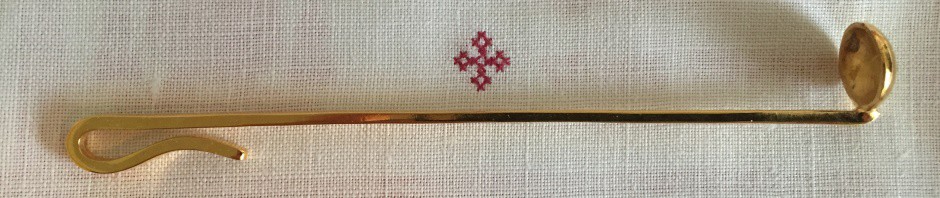
Photo by Jacob Stein
WORDLE
Terrific beer and you help the traditional Benedictines in Norcia build their monastery in the place St. Benedict came from!
I’m working on the UK.
From a reader…
QUAERITUR:
Could you talk about the responsibilities of godparents when their godchildren are not in close proximity? My wife and I have a goddaughter who lives halfway across the country, and we pray for her every day, but I’m wondering to what extent my responsibilities extend if her parents were to stray from the faith but we still lived several states away.
GUEST PRIEST RESPONSE: Fr Timothy Ferguson
There isn’t clear legislation, or even customary practice on what exactly constitutes the role of godparents (although in some countries and cultures there may be certain expectations) and perhaps that is regrettable. The only clear role for the godparents is to witness the actual baptism (and in these days, it might be good for the godparents to be particularly vigilant in making sure that Father, or Deacon, says the black words and does the red things properly – watch closely!), and to “assist” the parents in raising the baptized child in the faith. That assistance is probably going to vary broadly depending on the situation.
In the first place, there should be good communication with the parents, and expectations laid down prior to the baptism, so that everyone is on the same page. As a potential godparent, I think one has every right to say, “If I’m going to be godfather for little Eusebius here, you better be committed to bringing him to Mass every Sunday, or I’ll feel the need to come over, wake the whole neighborhood up by honking the horn on my monster truck and taking the little tyke myself.”
Depending on your relationship with the parents (are you family? Close friends? Simply someone you know from the parish? A big wig in the local olive oil import business?) your obligations may vary. I think, especially if there’s a geographic distance, one can do one’s duty by the occasional phone call, deftly inquiring about the parents’ practice of the faith (“Ooof! My pastor preached a barn-burner of a sermon this Sunday about loving our enemies, even when they fail to use the Oxford comma. About what did your priest preach?”). Sending gifts to the little one, specifically religious gifts, and in observance of the child’s baptism rather than birthday, can be a solid option. Holy cards, books, statues, can all spark a child’s religious imagination and, if the parents are neglecting their obligations to bring him up in the faith, can sometimes spark a little good guilt in their hearts (“Uncle Peter sent me this cool statue of a guy holding his shirt open and you can see his heart! That’s so cool. Who is this guy, Mom? Is it from a movie? Can we go see it?”). Ask if the parents have a savings account in place to help offset the cost of (good) Catholic schooling for the rugrat.
Lastly, and most importantly, praying for the child and his parents. Maybe even, for special occasions, having a Mass offered for him. To quote Tennyson,
“More things are wrought by prayer
Than this world dreams of. Wherefore, let thy voice
Rise like a fountain for me night and day.
For what are men better than sheep or goats
That nourish a blind life within the brain,
If, knowing God, they lift not hands of prayer
Both for themselves and those who call them friend?”

Forty Hours at Ss. Trinità dei Pellegrini.
Photo by The Great Roman™
Fervorino from today’s Requiem Mass. HERE
WORDLE

I lost in Latin today. Grrr.

Use your phone’s camera!
For your edification…


Too many people today are without good, strong preaching, to the detriment of all. Share the good stuff.
Was there a GOOD point made in the sermon you heard at the Masses for the Septuagesima Sunday (Novus Ordo: 6th Ordinary Sunday).
Tell about attendance especially for the Traditional Latin Mass. I hear that it is growing. Of COURSE.
Any local changes or (hopefully good) news?
Those of you who regularly viewed my live-streamed daily Masses – with their fervorini – for over a year, you might drop me a line.
I have some written remarks about the TLM Mass for this Sunday – HERE
AND…. did you know that these Gesima Sundays have Roman Station churches assigned to them?
 Fellow hams, here’s a reminder about ZedNet for Sunday 27 February ’22 – evening at 2000h EST. (0100h ZULU Monday).
We now have the site running: http://zednet.xyz
Zednet exists on the…
Fellow hams who have access locally to a Yaesu System Fusion repeater, a repeater on the BM network, or a multi-mode hotspot registered with BM can get on and have a rag chew…. 24/7/365
Want to get involved? WB0YLE provided a Bill Of Materials, with links, for what you need. HERE THIS WAS UPDATED on 22 March 2021
I created a page for the List of YOUR callsigns. HERE Chime in or drop me a note if your call doesn’t appear in the list.

A little over a year ago, I read something from one of the foremost of the “self-promoting through papalotry” voices of the ecclesiologically progressive gang. It was alarming in its implications.
What I had read was a claim that Vatican II was the interpretive principle through which all of Tradition had to be reinterpreted.
I have been mulling this over for a long time now.
The alarm went off again this week when I saw this tweet from Beans.

What Beans is talking about here is the important address Benedict XVI gave to the Roman Curia before Christmas in 2005, his talk about how to interpret the Second Vatican Council. Benedict identified an interpretive approach or hermeneutic of continuity against a hermeneutic of discontinuity and rupture.
Here’s some of that talk with my emphases:
The question arises: Why has the implementation of the Council, in large parts of the Church, thus far been so difficult?
Well, it all depends on the correct interpretation of the Council or – as we would say today – on its proper hermeneutics, the correct key to its interpretation and application. The problems in its implementation arose from the fact that two contrary hermeneutics came face to face and quarrelled with each other. One caused confusion, the other, silently but more and more visibly, bore and is bearing fruit.
On the one hand, there is an interpretation that I would call “a hermeneutic of discontinuity and rupture”; it has frequently availed itself of the sympathies of the mass media, and also one trend of modern theology. On the other, there is the “hermeneutic of reform”, of renewal in the continuity of the one subject-Church which the Lord has given to us. She is a subject which increases in time and develops, yet always remaining the same, the one subject of the journeying People of God.
The hermeneutic of discontinuity risks ending in a split between the pre-conciliar Church and the post-conciliar Church. It asserts that the texts of the Council as such do not yet express the true spirit of the Council. It claims that they are the result of compromises in which, to reach unanimity, it was found necessary to keep and reconfirm many old things that are now pointless. However, the true spirit of the Council is not to be found in these compromises but instead in the impulses toward the new that are contained in the texts.
These innovations alone were supposed to represent the true spirit of the Council, and starting from and in conformity with them, it would be possible to move ahead. Precisely because the texts would only imperfectly reflect the true spirit of the Council and its newness, it would be necessary to go courageously beyond the texts and make room for the newness in which the Council’s deepest intention would be expressed, even if it were still vague.
In a word: it would be necessary not to follow the texts of the Council but its spirit. In this way, obviously, a vast margin was left open for the question on how this spirit should subsequently be defined and room was consequently made for every whim.
The nature of a Council as such is therefore basically misunderstood. In this way, it is considered as a sort of constituent that eliminates an old constitution and creates a new one.
This, friends, points in the direction of the foundational ideas of the progressivist attacks on the people who want Traditional sacred liturgical worship.
Eventually the progressivists want to sweep aside Catholic moral teaching, discipline, and worship. Those who desire traditional sacred worship stand in the way of those objectives. This is because “we are our rites”. Worship is doctrine. It is our identity. Therefore, people who want traditional worship must be shoved to the periphery and … over it.
Here is the core of the progressivist complaint against “trads” and, indeed, conservatives in general whom they claim are “against Vatican II”. That’s the constant accusation isn’t it?
Here is the connection with Benedict XVI’s 2005 talk, which Beans mentioned above. Beans gave us the compass for their map.
NB: Benedict XVI’s Christmas Curia talk was a critique of German Jesuit Karl Rahner’s thoughts about the Council, which are the essential fuel driving what progressivists are doing today to bring about their goals, the approval of all manner of innovation from the transformation of the Church into a global NGO to the approval of sodomy.
Beans’ tweet, above, accuses Benedict of not knowing what he was talking about in his own talk. But Benedict’s talk was a criticism of Rahner’s view of the Council. Ergo….!
… we must turn our attention to that monumentally important figure for theology in the second half of the last century, Fr. Karl Rahner, SJ (what else).
To keep this short, here is Rahner’s understanding of Vatican II.
In 1979 Rahner published an article in Theological Studies called “Towards a Fundamental Theological Interpretation of Vatican II”. For Rahner, Vatican II constituted a unique event, tantamount to the foundational “Apostolic” Council of Jerusalem recounted in Acts 15 which, among other concrete issues, dealt with the nascent Church being comprised of both Jews and Gentiles. For Rahner, Vatican II was unique in the sense that the Council of Jerusalem was unique, beginning a new era in the Church. No other Council was like it. The Council of Jerusalem brought in the Gentiles in a way that made the Church essentially Judeo-Hellenic in the Roman world, thus leading to centuries of Eurocentric or Western cultural domination of the Church. Vatican II, for Rahner, shattered that framework, transforming the Eurocentric Church into a “world Church”.
Moreover, Vatican II was such a titanic and dynamic event that it is ongoing. Hence the “impulses”, which Benedict mentioned, are still at work in the ongoing “spirit” of Vatican II. Rahner reiterated his notions about Vatican II in a 1979 talk at the Weston School of Theology in Cambridge, MA, where he argued that Vatican II was the self-actualization of a “world Church”, no longer predominantly Eurocentric, but now influenced and even steered by the Southern Hemisphere, etc.
At the Council of Jerusalem, they had to cope with a shift from a monocultural Church to one that embraced many cultures. Vatican II was another tectonic shift, opening to the whole world and, indeed, letting in the whole world. That has implications, of course. How does such a Church embrace such diversity and still remain the same Church, handed down in continuity? What is inculturation? What if there are conflicts with the world’s ways in culture X or Y?
The progressives, imbued with Rahner’s notion of the Council as a unique and ongoing event, a reimagining of the Church as it were, claim themselves to be justified not just to interpret but to reinterpret all of the Church’s history, liturgy, doctrine and discipline.
Because they stand not on the texts of the Council but the “impulses” they derive from the texts and the “spirit” of those impulses, and because Vatican II is “ongoing”, everything that the Church does in Cult (worship), Code (disciple) and Creed (doctrine) is subject to abolition, transformation, etc. according to the needs of the world.
It makes no difference that John XXIII at the opening of the Council said in his “Gaudet Mater Ecclesia” speech, that this Council, Vatican II, required the same accuracy and precision as Trent and Vatican I, or that certain and immutable doctrines, though expressed in new terms, must remain with their meaning preserved intact.
It is no wonder that Beans and others look condescendingly at Ratzinger, who stands in opposition to Rahner’s false notion of the Council as constituting a tectonic shift in the Church unlike every other Council all the back to the primoradial, pre-ecumenical Council of Jerusalem.
The framework that the progressivists are working from is Rahner’s notion that Vatican II was the self-actualization of a “world Church”, no longer bound by Eurocentric thought or modes of expression. Hence, if celibacy isn’t really a thing in, say, Africa, then celibacy probably has to go. If this is a world Church open to the cultures of non-Westerners, then why can’t you have Pachamama on the altar of St. Peter’s? Why not have all manner of cultural expressions in the Mass? The one thing that is truly questionable is, of course, anything that is done the way things were always done.
You can, from this point of view, see why the Rahnerian framework justifies promotion of … anything… as acceptable, nay rather, obligatory in the Church.
You can see why they fear the Traditional Latin Mass, and all that it stands for.
 From a reader…
QUAERITUR:
I recently attempted to make a good confession. Aside from the fact that the priest literally berated me for confessing “venial sins” which he said “have no place in the confessional”, after my act of contrition he said “your sins are forgiven”. He did not say “I absolve you of your sins in the name for the Father and of the Son and of the Holy Ghost”. Does this failure to obey the proper form make my confession invalid and should I repeat my confession? Thank you in advance for your help.
Okay, I have now calmed down. No longer do I see before my eyes a field of burning hot red.
Bad confessional experiences are truly horrible. I’ve had them myself. Sometimes they happen because the priest is having a bad day, or something is wrong with him. However, most of them would be avoided were the priest to decide not to be a total jackass and remember how vulnerable people can be. As a matter of fact, such treatment in the confessional suggests to me that perhaps the priest hasn’t made his own confession very recerntly.
For consolation for you and for any young priests reading this, I’ll offer a personal note. As a confessor, when a penitent gets into the confessional, the first thing I do is bless the person whether they say “Bless me, Father” or not and I also ask our angels to keep away any interference of demons, fallen angels, who might attempt to distract or hinder the person from making a good confession and me from giving any advice which my 30+ years of experience and guidance of the Holy Spirit might prompt. Also, during confession, I try to keep track at least in a general way what penances I gave so that I, myself, can do them for the people I absolved, in case they forget or neglect to do them. I keep my penances rather consistent anyway, so it is fairly easy to remember based on the number of penitents, that way the special ones stick in my head even though – and priests will tell you this – it is amazing how fast you forget the sins you just heard. It’s a grace. And I scrupulously, punctiliously, say the words of absolution in Latin exactly according to the form, without any deviation.
So, you young priests out there. Bless and bind demons. Be willing to do penance for your penitents. Say The Black and Do The Red.
That was my advice to confessors, especially younger guys.
Here’s advice for penitents.
First, review
Also, dear dear dear readers, for the love of all that is holy, do not ramble. Keep it short and just spit it out. Examine your conscience before getting into the box. Be clear, be brief, be gone.
Enough of the digression.
If, friend, what you have related here is accurate, not embellished, and if you did not go on and on with venial sins for 20 minutes or so, then here is what I, calmly now, have to say.
So, venial sins “have no place in the confessional”, you say? Is that so!
Let’s look at the 1983 Code of Canon Law:
Can. 988 §1. A member of the Christian faithful is obliged to confess in kind and number all grave sins committed after baptism and not yet remitted directly through the keys of the Church nor acknowledged in individual confession, of which the person has knowledge after diligent examination of conscience.
§2. It is recommended to the Christian faithful that they also confess venial sins.
Venial sins merit temporal punishment and, if repeated and not dealt with, dispose a person to sin mortally (CCC 1863). That sounds like confessional material to me.
If there is adequate time, it is entirely proper to confess venial sins, at least those which are most concerning. You might say, “Father, I have two bothersome venial sins, which are [say them], and several others if there is time.”
Nevertheless, the Code of Canon Law makes it clear that a person has the right (not an absolute right, of course) to confess also venial sins, when circumstances allow. You are not obliged to confession venial sins, but it is a good thing to do when you can.
As far as what you say the priest said for the words of absolution: NO. “Your sins are forgiven”, is NOT a valid form of absolution.
I recommend that you go to another confessor, make your good confession of mortal sins in kind and number, and major venial sins, while checking with the priest about time, as I mention above.
A couple other things.
If what you have related here is accurate, if the priest is the pastor of the parish, I would communicate this experience to the local diocesan bishop. Write to him what you wrote to me. Don’t editorialize… unless, perhaps, you can honestly say that you were, indeed, rambling.
If the priest really didn’t use the proper form of absolution, you can and should let the bishop know. If he “berated you”, you should let him know.
The Instruction Redemptionis Sacramentum says that we all have a responsibility to make sure that the liturgical rites of the Church are celebrated properly and without abuses. What happened in that confessional was an abuse of the rite and of you as a penitent. RS says with my emphasis:
[184.] Any Catholic, whether Priest or Deacon or lay member of Christ’s faithful, has the right to lodge a complaint regarding a liturgical abuse to the diocesan Bishop or the competent Ordinary equivalent to him in law, or to the Apostolic See on account of the primacy of the Roman Pontiff. It is fitting, however, insofar as possible, that the report or complaint be submitted first to the diocesan Bishop. This is naturally to be done in truth and charity.
In fact, this goes to the very heart of what that parish priest’s role is in the Church and to the promises me made at his ordination, which he renews at the Chrism Mass. Again, Redemptionis Sacramentum:
[31.] In keeping with the solemn promises that they have made in the rite of Sacred Ordination and renewed each year in the Mass of the Chrism, let Priests celebrate “devoutly and faithfully the mysteries of Christ for the praise of God and the sanctification of the Christian people, according to the tradition of the Church, especially in the Eucharistic Sacrifice and in the Sacrament of Reconciliation”. They ought not to detract from the profound meaning of their own ministry by corrupting the liturgical celebration either through alteration or omission, or through arbitrary additions. For as St. Ambrose said, “It is not in herself . . . but in us that the Church is injured. Let us take care so that our own failure may not cause injury to the Church”. Let the Church of God not be injured, then, by Priests who have so solemnly dedicated themselves to the ministry. Indeed, under the Bishop’s authority let them faithfully seek to prevent others as well from committing this type of distortion.
Mind you, you could also go to the priest himself, and maybe that could be warranted. But you should remember that the priest will be at a disadvantage, because he is bound by the Seal of Confession. He cannot, must not, say anything about what happened in the confessional. Even if you give him explicit permission to talk about that particular moment in the internal forum of sacramental confession, he should be reticent and circumspect about what he says.
You could, however, simply give him your observations about
Perhaps with those texts on a sheet of paper.
It seems fair also, if you write to the local bishop, to show him what you wrote or, if it was a phone call, a summary of the call.
It also seems appropriate to give him a copy of the proper form of absolution.
God, the Father of mercies, through the death and resurrection of his Son has reconciled the world to himself and sent the Holy Spirit among us for the forgiveness of sins; through the ministry of the Church, may God give you pardon and peace, and I absolve you from your sins in the name of the Father, and of the Son, + and of the Holy Spirit.
Deus, Pater misericordiárum, qui per mortem et resurrectiónem Fílii sui mundum sibi reconciliávit et Spíritum Sanctum effúdit in remissiónem peccatórum, per ministérium Ecclésiæ indulgéntiam tibi tríbuat et pacem. Et ego te absolvo a peccatis tuis in nomine Patris, et Filii,+ et Spiritus Sancti. Amen.
Printable HERE: Form of Absolution English Latin TEXT BOX
Finally, may I suggest that you pray for that priest and take on some mortification for him? It may be that he needs special prayers. Take a look at the Daily Prayer for Priests, which is also always on the sidebar of this blog: HERE
Each year for a while, the inimitable Fr. Hunwicke has been explaining the details about Saturday before Ash Wednesday as Egge Saturday, the Festum Ovorum at Oxford. The discussion of musk and grapes, etc., is … engaging. Yolks not for yokels.
This is not to be confused with the Curate’s Egg.
Moreover, while reading in Card. Pell’s prison diary [US HERE – UK HERE], I was reinforced in the urgency of praying for my personal enemies but also for enemies of the Church, who are inside the gates.
Luke 6:27-28 “Love your enemies, do good to those who hate you, bless those who curse you, pray for those who abuse you.”
Dear enemies, I am still praying for you.
BONUS: All yolks aside, QUAERITUR: Why do the French eat only one egg at a time?

Coat of Arms by D Burkart









A Daily Prayer for Priests


They find you a pro-life agent in your area who commits to giving a portion of the fee to a pro-life group!

PLEASE subscribe via PayPal if it is useful. Zelle and Wise are better, but PayPal is convenient.
A monthly subscription donation means I have steady income I can plan on. I put you my list of benefactors for whom I pray and for whom I often say Holy Mass.
In view of the rapidly changing challenges I now face, I would like to add more $10/month subscribers. Will you please help?
For a one time donation...



Help Monks in Wyoming (coffee – UPDATED LINK) and Norcia (beer) and the wonderful "Soap Sisters" of Summit, NJ!


Please follow me on Twitter!










Visits tracked by Statcounter
since Sat., 25 Nov. 2006:


