Your Sunday Sermon Notes: Octave of Christmas and Holy Name (and – absurdly – Novus Ordo Epiphany)

Too many people today are without good, strong preaching, to the detriment of all. Share the good stuff.

Was there a GOOD point made in the sermon you heard at the Masses for the Octave of Christmas (aka Novus Ordo Mary, Mother of God), and Holy Name (aka – insulting dopey transferred Epiphany in the Novus Ordo) either live or on the internet? Let us know what it was.

Tell about attendance especially for the Traditional Latin Mass.  I was getting reports that it is way up.

Any local changes or news?

Those of you who regularly viewed my live-streamed daily Masses – with their fervorini – for over a year, you might drop me a line.

I have some written remarks about the TLM Mass for Christmas – HERE


Posted in SESSIUNCULA | Tagged
9 Comments

Daily Rome Shot 376

Photo by The Great Roman™

Today’s Fervorino.

Use your phone’s camera!

Posted in SESSIUNCULA | Tagged
1 Comment

A good point about Holy Days of Obligation and our Catholic identity

At The Catholic Thing, John M. Grodelski makes an obvious but NOT thereby less valuable point.  Let’s see.

January 1, 2022 was a Saturday. January 1, 2023 is a Sunday. January 1, 2024 is a Monday.

Only one of those January 1’s will be a holy day of obligation – 2023 – and that’s only because it falls on Sunday.

The mishmash is a result of the “Complementary Norm” adopted by the United States Catholic Conference back in 1991 which abrogated the obligation for the holy days of January 1, August 15, and November 1 if they fell on a Saturday or a Monday.

The logic behind the decision seems to be that, if a feast abuts a Sunday, one would have the obligation to attend two Masses. Apparently, the bishops find that excessive, though it’s not clear for whom: the laity or the diminished numbers of clergy in many American dioceses?

Furthermore, with the post-1969 “vigilization” of Sundays and holy days (Mass being offered the evening before the day itself), there would be liturgical confusion, e.g., is 5 p.m. Mass on Saturday, January 1, 2022 still the Mass for the Solemnity of Mary, Mother of God or anticipating the Solemnity of the Epiphany (which itself has been transferred from January 6 to a Sunday)?

[…]

We live in an increasingly secular society. God is not so much the “enemy” (unless you actually start living like a Catholic in public) as much as irrelevant. Stripping away the religious dimension of January 1 only advances that secularization.

[…]

The bishops have only succeeded in telegraphing to people is that being a Catholic isn’t all that important, not important enough to do anything about.

Some action items come to mind.

  • Restore obligations: Holy Days, longer Eucharistic fast, Friday penance
  • Diminish Saturday vigil Masses
  • Phase out Communion in the hand
  • Sideline Traditionis custodes, etc.
  • Return to ad orientem worship.
  • Multiply devotions: novenas, processions, Forty Hours
  • Overhaul music: repertoire and get choirs out of view
  • Return to traditional confessionals
  • Require silence before and after Mass
  • ¡Hagan lío!


Posted in ¡Hagan lío!, "How To..." - Practical Notes, Liturgy Science Theatre 3000, Our Catholic Identity, Save The Liturgy - Save The World, The Coming Storm, The Drill, The future and our choices | Tagged
17 Comments

Gregorian chant disc by FSSP seminarians tops the charts. I suspect that might annoy some people.

This disc of Gregorian chant and Christmas music has been on the top of the classical charts for weeks.

It’s popularity must be increased.  This is a concrete sign of what people want, not what is being forced by Rome et al.

You can buy this album HERE.

By FSSP seminarians

Now, here is a video that explains the situation. I suspect that those who are arrayed against traditional sacred worship might be pretty annoyed by this.

Posted in ¡Hagan lío!, Just Too Cool, Save The Liturgy - Save The World, Traditionis custodes | Tagged , ,
8 Comments

Disasters always happen to other people… until it’s your turn.

I’m tellin’ ya’, friends, have plans against the day that bad things happen!

Think it through. Game it out. Use your imagination.

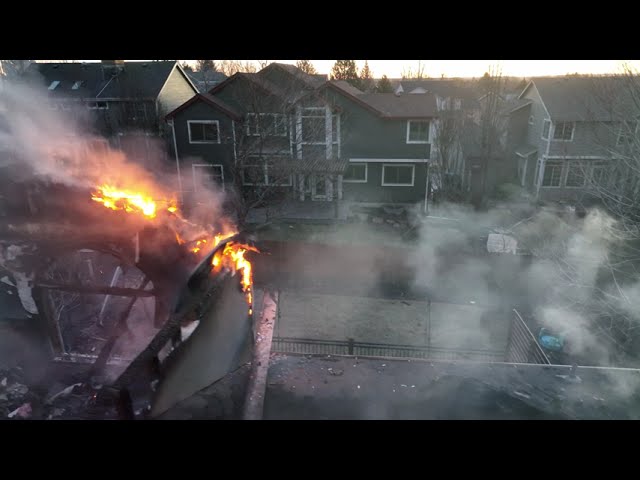
Here’s what Louisville CO looks like now after the Marshall Fire.

YouTube thumbnailYouTube icon

Disasters always happen to other people… until it’s your turn.

You should have plans and backups, especially if you have loved ones to care for.

Food. Water. Power. Defense. Meds. Comms.

Transportation for evacuation.

Know what you have. Know what to do with them.  Know where to go.

Obtain a ham radio license. I am delighted that quite a few readers here have let me about passing their exams! It really isn’t that difficult.  You can have a lot of contacts and information via local hams on repeaters.

Preparing for the worst is the responsible thing to do.

Disasters never happen… until they do.  Therefore,

GO TO CONFESSION!

We do not know the time or place of our death.

One of the most poignant and important petitions in the Litany of Saints is our plea to God:

A subitanea et improvisa morte, libera nos, Domine.

From a sudden and unprovided death, save us, O Lord.

Sudden death is one thing. It can be a grace, as opposed to a long, drawn out agony. On the other hand, for some people the long agony is a grace, for it gives them the chance to repent and offer their suffering in reparation for their sins.

So, sudden or foreseen or long or quick… that’s one thing.

Unprovided is another.

An “unprovided” death is a death without access to the last sacraments, especially absolution from a priest.

That’s a scary thought…. especially if you haven’t been to confession for a long time.

When did you last go to confession?

Dear readers, one of the main reason I put myself into this blog, my force multiplier, is because every single one of you is going to die.

I want every one of you to enjoy the happiness of Heaven. I want my enemies to get to heaven, even if God has to allow them a suffering which will spur conversion.

Some of you haven’t darkened the door of a confessional for a long time.

I tremble for you.

I beg you.

GO TO CONFESSION.

Fathers… if you are responsible for a parish and you are not promoting and making confession available, you are probably on the path to Hell.

Posted in ACTION ITEM!, Global Killer Asteroid Questions |
12 Comments

ASK FATHER: Can Holy Water, Epiphany Water, Easter Water, be diluted and still maintain their efficacy?

I had this question from a reader. I get this every once in a while.

QUAERITUR:

Can Holy Water, Epiphany Water, Easter water, be diluted and still maintain their efficacy? And, if yes, to what extent?

Since I get this once in a while, I’ve also answered it once in a while.

Here is something I posted a few years ago. I repost it now, because there are comments at the beginning (from much happier times) that are important.  They tie into, I think, also the attack on Tradition that is going on.  The attack on the Traditional Latin Mass is also an attack on the priest, as priest, in the Church.  This is because the TLM conveys many things about the priest that the Novus Ordo does not do either well or at all.   Destroy the TLM and the traditional understanding of priesthood is undermined.  They want that.


Originally Posted on 21 September 2018

What are priests for?

Short answer: They offer sacrifice.

The role of the priest is to confect the Eucharist, absolve sins, impart blessings, preside at all manner of approved rites.   The jocular Scriptural basis for this is, of course, “For God so loved the world that he did not send a committee.”   Priests these days are pulled into all sorts of parish activities because of their role of governance in the Church, which goes along with their priestly and prophetic roles.  However, governance has been drawn down into the minutiae which can, if permitted, take him away from what he is really for: offering the Sacrifice, absolutions, blessing.

There has been for many decades now an erosion of the identity of the priest and of the bishop.  As the lodestone of liturgical worship which energized and activated them weakened, other forces drew them in.  Now they are pulled into all sorts of things and away from what they ought to be doing.

This struck me forcefully during the 7.5 hour ceremony for the consecration of the new Gower Abbey church.   There was no other place where it was better for priests and bishops to be.  What was going on there is precisely why we are ordained.  We were kicking the Enemy out of the place with mighty rites of cleansing and exorcising.  We were readying the sacred space for the people to enter.  We were making it into a mighty transceiver of grace and intercession.  That’s what priests and bishops do.  Only they can do it!

Hence, they should be allowed to be free enough to do those things that only they can do, for the sake of the People of God.

This little rant is a prelude to a question I received.

From a reader…

QUAERITUR:

Dear Father,

I was asked to help clean our parish Baptismal font (also use as a holy water font by parishioners). When we finished putting about 30 gallons of fresh water in it I was instructed to get one cup of holy water from the holy water container by the main entrance.

When I placed the cup of holy water in the baptismal font I was told this made all 30 gallons holy water?

It does not seem right to me? Can you tell what is going on?

Your sense did not fail you.  That wasn’t right.

What’s going on?

A couple things.

First, it sounds as if you have one of those “font of living waters” gizmos or one of those “wading pools”.   They are sort of silly, but let that pass.

Some people are under the impression that adding a little Holy Water to a large amount of unblessed water will render the whole into Holy Water.

No.

Some say that you can add some Holy Water to regular water as you describe.  Some will even say that so long as you add the same amount of Holy Water to regular, plus just a bit more – like one percent – and that’ll do the trick.  Thus, you would double the amount.  I think that’s a bad approach.  We should be more prudent and respectful.

The REAL solution I’ll post below.

But, in the meantime, let’s use the analogy of how much water can be, should be, added to the wine at the offertory in the preparation of the chalice.

Manualists say that no more than 1/5 (one fifth) of the volume of the wine should be added  by the water to be sure that the substance of the wine has not been compromised and, therefore, consecration would be invalid.  One fifth.

Let’s now apply this for the combination of Holy Water to water.  I would say that perhaps 1/5 of the volume of the Holy Water in regular water could be added to the Holy Water, in order to increase its volume by 20%.  And I think you could do that once.

You see… I think that Holy Water is important.  You don’t fool around with this stuff because we use Holy Water for serious purposes.  It is not a toy, part of a game, or a souvenir.   Holy Water puts to flight the influence of the Enemy.

That’s why I have never, not even once in 27 years of priesthood, ever used the new prayers for “holy water”.  I have always ever used the older, traditional form, with the exorcisms of the salt and the water before their blessing and mixing.

Here is the REAL solution for the concrete case described above.

Father should get off his backside, go over to the church and BLESS THE WATER (use the the older Ritual, in Latin, TC and the DD be damned).

If Father can’t be bothered because he is involved with more important things, like a committee meeting, then, I contend, his priorities are screwy.  Sure, he might not be able to come at this very minute, but that’s his job: bless stuff.


Posted in "How To..." - Practical Notes, ASK FATHER Question Box, Hard-Identity Catholicism, Mail from priests, Pò sì jiù |
10 Comments

Daily Rome Shot 375

Before

After

Photo by The Great Roman™

Today’s Fervorino.

OPPORTUNITY – 10% off with code: FATHERZ10

Posted in SESSIUNCULA | Tagged
Comments Off on Daily Rome Shot 375

Fr. Z’s Predictions for 2022

2022 Predictions

1) Republicans will sweep the House and win a majority in the Senate.
2) There will be more Traditional Latin Masses celebrated by the end of 2022 than there were in 2021.
3) Liberal, aberrant NO Masses will not be corrected
4) SCOTUS will overturn Roe and return abortion law to the states
4) Francis will appoint commissars over the FSSP and ICK
5) The health of both Pope Benedict and Francis will continue to decline.
6) Women deacons, “deaconettes” will not be approved
7) Card. Burke will publish a book critical of liberal theology
8) More Catholics will be rounded up in China mainland and in Hong Kong and the Holy See will do nothing.
9) The Holy See will make a move against Catholic media sites and blogs
10) Fr. Z will not be made a “Monsignor”

How did I do last year?

2021 Predictions

1. Pres. Trump’s victory in the 2019 election will be acknowledged, even if the loser is installed. [0 – Yes, some are recognizing it, but not enough… yet]
2. Pres. Trump will support primaries of RINOs nationwide to reform the GOP. [-1 – He didn’t campaign much.]
3. Face Diaper Control Religion will continue with the force of 1984 and PsyOps tactics. [+1]
4. More evidence that the Holy See sold out to population control maniacs will emerge. [+1]
5. China will massively attack US interests through internet and undermining trade. [+1]
6. More Fr. Z readers will become Ham Radio Operators. [+1 – I’m getting all sorts of notes that I’ve motivated people to get the license]
7. Exorcists will report even more demonic activity and be overwhelmed in cases. [+1 – sadly true, a strongly so]
8. A small number of courageous bishops will move solidly toward Traditional worship. [+1 a few have stood against the cruel wind from Rome]
9. The “demographic sinkhole” opening under the Church will produce financial disaster for dioceses. [+1 ongoing]
10. Fr. Z will still not be a Monsignor. [+1 – Gosh, who knew?]

Posted in Lighter fare | Tagged
8 Comments

Wherein at the tail-end of 2021 Fr. Z reflects on the phrase “In cauda venenum”

There’s a pattern in papal and curial and chancery documents.  In general, after the salutations and other blah blah, there follow status quaesitionis points which stand as the justification for the correspondence or decree.  However, the business is nearly always towards the end, where, after the stuff up front, the stab comes.

The usual description of this pattern is the Latin “in cauda venenum… the poison is in the tail”, referring to the cuddly scorpion, mentioned by Our Lord as a singularly inappropriate gift from a father to his children (Luke 11:11-13).  Having been distracted by the pinchers, the stinger strikes.   It isn’t just the poison, it’s that the poison goes to the heart.

The pattern reveals itself fairly often in the Church as, for example, in the relationship of bishops to their priests or the Curia with the wider Church.  Trust is given on one side and the deadly, disappointing stab comes.

At least as this year grew into senescence, the situation of “canceled priests” emerged into the light.  Canceled priests have experienced from those who ought to be their fathers in the priesthood, the sting of the scorpion.  The relationship often begins well, and at the end it’s one-way venom, often unexpected.

St. Bernard of Clairvaux, talking about the false teaching of Amaldus of Brixen, says, “conversatio mel et doctrina venenum, cui caput coumbae, cauda scorpionis est”… “his manner is honey and his doctrine poison; his is the head of a dove and the tail is of the scorpion.”  He goes on, “quem Brixia evomuit, Roma exhorruit” … “Whom Brixen vomited, Rome abhors” (Ep. 196, 1).

Venerable Bede wrote: “Recte namquae inmutatio boni praepositi nociva et concupiscentiae carnalis repetitio veneno scorpionis quod retro, id est gestat comparatur cum dicitur: aut si petierit ovum, numquid porriget ille scorpionem? (Homelliarum evangelii II, 14).

Shifting gears but keeping the same idea, Ambrosius Autpertus in his Expositio in Apocalypisin says (2.2): “Apis in ore mel portat, in cauda venenum occultat” … “the bee carries honey in its mouth and hides the poison in its tail”.

At the tail end of 2021, we had a scorpion’s tail from our father figures hidden in loads of honey.

Scorpions are inevitable in the Church. Ask Tertullian.  He wrote Scorpiace against the poison of gnosticism.  That could be helpful today, with the rise of a new type of gnostic in the Church, in places of power.

Regarding the dear and ubiquious ecclesiastical and indeed prelatial scorpion, there are different ways to receive him.  Let’s consider two fables.

Consider the naïve and vulnerable approach and then the suspicious and guarded.  Both are willing to deal with the scorpion, but with differing outcomes.

First, you know the Russian tale of the Frog and the Scorpion. A scorpion wants to cross a river but cannot swim.  He asks a kindly frog to give him a lift.  The frog is afraid that the that the scorpion will sting him, but the scorpion assures him that he won’t using the argument that, the frog’s good is their common good: if he stings the frog in mid-stream, they will both die by drowning!  The frog agrees. Off they go and, of course, the scorpion stings the frog.  With its dying croak the frog asks the scorpion why he stung, given the consequences.   The scorpion replies that he couldn’t help himself, because it is in his nature to sting.

This could be like the lesser, but still mortal, carnal sins people might commit from the appetites that are hard to control because of original sin.

Consider the backgrounds of some of the main figures involved in the Russian level pogrom against the Roman Rite, from the top down to the Curia and then highly visible archbishops.  It’s in their nature.

Next, there is the Indian tale of the Frog and Turtle.  This is similar to the situation of the Frog and the Scorpion, but with a difference.  The turtle is protected by his shell from the scorpion’s repeated stings after his promise of good behavior.  Again, when questioned on the other side of the stream, the scorpion says that it is his nature to sting.  However, the scorpion knew that the turtle’s have protective shells. He stings anyway, knowing that he won’t die with the turtle.  He stings because he is, by nature, a stinger.  Stinging for stinging’s sake.

Again, I direct you to consider the nature of our gracious, pastorally-minded shepherds, with their power to hurt and demoralize, goals worthy of the graver mortal sins of the spirit that begin in lesser, more carnal sins, but move quickly into the graver sins of the mind and heart.  Stinging for stinging’s sake, beyond just the drive to sting.

In cauda venenum.

At the end of this year, I propose to us all that we work on our protective shell.

The scorpions we have with us will do what they are going to do – try to hurt us more – because it is their nature.

In filial piety we might still be able to lend them a measure of trust – as the Lord counsels his disciples about the hypocrites who have the Seat of Moses (Matthew 23:2).  They are owed some obedience, but not unreasoned obedience and not obedience that will kill us (cf. the fate of the trusting and unprotected frog).

The better approach is, sadly now, to expect that they will continue to attack and to hurt us in regard to the Roman Rite.  Their documents will have the “poison in the tail”, just as the last line of Cupich’s scorpion to his spiritual children in Chicago says that the cruel and ultra vires restrictions he intends to impose was signed on Christmas Day.

That’s how they roll.

It’s in their nature.

Get ready for a New Year.  Let us pray for each other and for our pastors.

ACTION ITEM! Be a “Custos Traditionis”! Join an association of prayer for the reversal of “Traditionis custodes”.

Posted in "How To..." - Practical Notes, Hard-Identity Catholicism, Si vis pacem para bellum!, The Coming Storm, The Drill, The future and our choices, Traditionis custodes, What are they REALLY saying? | Tagged , ,
7 Comments

I am in total awe of a piece posted – thank you – at Rorate. A monumental take down of Traditionis custodes and the Dubious Dubia using Francis’ own categorical declarations about freedom, conscience, clericalism, proselytizing, discernment. A Manual for Resistance.

Today, on the last day of this annus terribilis, I am in total awe of a piece posted – thank you! – at RorateHERE

The writer was a lawyer in Buenos Aires, now a priest with a super CV.

The writer goes through all of Francis’ speeches and documents, back to the beginning of his pontificate, to look for principles by which we are to measure both Traditionis custodes (TC) and the Dubious Dubia (DD – Responses to Dubia).

The result is, simply put, devastating.   

Through a systematic presentation of questions and themes that arise from the publication of Traditionis, and the use of Francis’ own words, sometimes strong and even categorical pronouncements about how people really must behave, must think, the writer shows the contradictory disconnect between Francis’ own publicly declared thought and the action his took in TC and the subsequent DD.

This is amazing work.  I won’t try to summarize it here, because the writer did such a good job of leading you step by step through the evidence, each quotation of Francis meticulously footnoted.

I’ll give some a tempting examples, which will immediately drive you to Rorate to read the whole thing and then PRINT IT AND SEND IT TO YOUR BISHOPS.  I am NOT kidding.

I will, with effort, restrain myself!  For example…. (some formatting will be lost):

[…]
Although it is tempting to read these texts (TC and RAD) in a fundamentalist fashion, above all we must avoid interpreting or applying Traditionis Custodes and the Responsa ad dubia rigidly. We must take into account the specific way Francis asks us to interpret and live the law. We must do exegesis in the way the Pope himself has asked us to, with freedom and discernment, giving priority to charity. Above all we must avoid rigidity, insofar as, according to him, “Rigidity is not a gift of God.”[1]

The Holy Father points out that one must be

particularly concerned to offer understanding, comfort, and acceptance, rather than imposing [upon needy souls] straightaway, as if they were a rock, a set of rules [be they liturgical, canonical, or disciplinary] that only lead people to feel judged and abandoned by the very Mother called to show them God’s mercy.[2]

Indeed, many souls (both laymen and priests) feel abandoned by the Church in the face of the publication of Traditionis Custodes and the Responsa.

[…]

Now, the key to interpreting and applying TC and RAD is discernment, which ultimately cannot be applied from the frigidity of a clerical desk (be it Roman, episcopal, or parochial)—since “clericalism is a perversion.”[3] Rather, the priest must go among God’s people as a shepherd among his sheep, willing to give his life for them (cf. John 10:11).

Indeed, as Amoris Laetitia 305 states:

Natural law should not be presented as an already established set of rules that impose themselves a priori on the moral subject; rather, it is a source of objective inspiration for the deeply personal process of making decisions.

This implies that Traditionis Custodes and the Responsa are merely a “source of inspiration for the deeply personal process of making decisions.”[4] Moreover, one must take into account that, as Pope Francis says, the “attitude that would solve everything by applying general rules”[5] is mistaken and that it is “not helpful to try to impose rules by sheer authority.”

[…]

Just as “a pastor cannot feel that it is enough simply to apply moral laws to those living in ‘irregular’ situations, as if they were stones to throw at people’s lives,”[13] neither should bishops think that it is enough merely to apply moral laws to the priests and laymen who live in “irregular” liturgical or ritual situations, as if these las were stones to throw at people’s lives. By analogy with Amoris Laetitia 305, this casting of regulations as if they were stones (be they of TC, RAD, or the Code of Canon Law) at traditional communities “would bespeak the closed heart of one used to hiding behind the Church’s teachings, ‘sitting on the chair of Moses and judging at times with superiority and superficiality difficult cases and wounded families.’”[14]

In the wake of TC and RAD, many families feel hurt because they feel they are being discriminated against when choosing which rite they want their children to be baptized, confessed, or confirmed in. Indeed we can easily imagine difficult cases such as if five brothers are confirmed according to the solemn traditional rite but the sixth, on top of having to wear his older brother’s hand-me-downs, must now be confirmed in a different rite that appears less beautiful to him.

[…]

For Pope Francis, however, the relativity of norms is even more radical. Indeed, he has affirmed that the Ten Commandments are, ultimately, relative, as he stated during a general audience: “Do I despise the Commandments? No. I follow them, but not as absolutes.”[38]

Let the will of Pope Francis when he legislates or gives instructions be clear. If not even the Ten Commandments are absolute, Church norms made by men are even less absolute. What is said by a motu proprio is even less absolute, and what a Cardinal Prefect says in response to dubia is even less absolute than that.

The Pope points out that human precepts must be enforced with moderation:

Saint Thomas Aquinas pointed out that the precepts which Christ and the apostles gave to the people of God “are very few.” Citing Saint Augustine, he noted that the precepts subsequently enjoined by the Church should be insisted upon with moderation “so as not to burden the lives of the faithful” and make our religion a form of servitude, whereas “God’s mercy has willed that we should be free”. This warning, issued many centuries ago, is most timely today. It ought to be one of the criteria to be taken into account in considering a reform of the Church and her preaching which would enable it to reach everyone.[39]

This means that the application of TC and RAD cannot be so demanding that it burdens the life of the faithful. In other words, if the application of this or that precept of TC or RAD in a particular case makes the life of this or that believer burdensome, then those general normals should not be applied.

[…]

The Holy Father also insists on the importance of building bridges instead of walls, as in the following passage:

I remember when I was a child one heard Catholic families say, even my family: “No, we cannot go into their house, because they are not married in the Church, they are socialists, they are atheists, hey!” It was exclusionary. Now—thank God—nobody says these things, right? No one says it! These things were said to defend the faith, but with walls. The Lord, on the other hand, built bridges.[42]

This concept of bridges must be taken into account when discerning how to apply TC and RAD. In other words, bishops and priests must avoid expressions like “no, we cannot allow that rite, because they aren’t attached to Vatican II, to the new Mass, hey!” That would be exclusionary. That would be like defending the new rite and the Council, but with walls. But the Lord, on the other hand, builds bridges.

[…]

.1 The Deliberate Intention of Making a Mess

The Holy Father exhorts the young to “make a mess,”[48] but this papal request actually extends to all of the baptized, since he has thanked certain people for helping him continue making messes.[49] Therefore, Pope Francis invites all Christians to make a mess.

2.2 The “Revolutionary” Character of Faith

The Holy Father not only calls us to synodality, but also to be revolutionaries, since he considers the Catholic faith intrinsically “revolutionary.”[50]

Therefore, abiding by these papal declarations should encourage many Catholics to carry out a kind of “revolution” against TC and RAD, as long as this involves no lack of obedience to the Pope according to their own consciences. Instead, they might see it as an act of profound fidelity to the Pope and of commitment to following the doctrine he teaches, namely, that the faith is revolutionary.

[…]

His Holiness Pope Francis has pointed out that he dislikes young people who do not protest[51] and that he appreciates it when young people are non-conformist, because that is their very essence.[52] Since it would be a hypocritical contradiction to exempt from this judgment those young people who protest against him, or to exempt those young men who are priests, then we cannot but conclude that His Holiness would like to see young priests protesting against TC and RAD.

[…]

the Holy Father asks those who feel discriminated against (socially, liturgically, or in whatever fashion) to raise a prophetic voice against the privileges of the followers of the new Mass, who can attend it anywhere without any restrictions, and who discriminate against them to the point of banning them from receiving the Holy Spirit (in Confirmation) in the rite of their grandparents.

[…]

One of the things the Holy Father most repeatedly condemns is proselytism, which includes liturgical proselytism, which is why all efforts to convince or force those who sympathize with the traditional rite to adhere to the liturgical reform or to accept the Second Vatican Council in its entirely must be rejected and deplored.

The Holy Father affirms that “proselytism is always violent by nature, even when this nature is hidden”[54] and has said that “proselytism is not Christian” and that “the Church does not grow through proselytism, but by attraction.”[55]

Therefore, no bishop should proselytize their priests, trying to convince them to embrace Vatican II or the new Mass, since Pope Francis condemns proselytism. If Pope Francis prohibits us from converting a heretic to the Catholic faith, with all the more reason a bishop is prohibited from trying to persuade a priest refractory to Vatican II. He cannot proselytize.

[…]

There’s so much more I could quote. It is a monumental take down of everything surrounding TC and the DD and all the fake words about unity and accompaniment and Vatican II etc. etc.

I am deeply grate for this GOLD MINE, first published in German at InfoCatholica and now in English, a little abridged, at Rorate.

Be a CUSTOS TRADITIONISHERE

Posted in ACTION ITEM!, Francis, Just Too Cool, Liturgy Science Theatre 3000, The Drill, The future and our choices, Traditionis custodes, What are they REALLY saying? | Tagged , ,
24 Comments