Help the Benedictines of Norcia build their monastery!

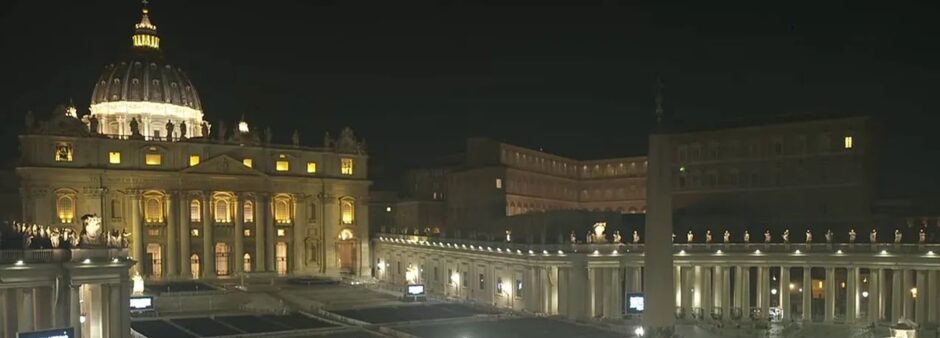
Today is the Feast of the Four Holy Crowned Martyrs. They were sculptors in ancient Rome who refused to carve pagan demon idols. Hence, they were killed by the Emperor Diocletian.
Their remains are in the Roman church of St. Marcellinus and Peter. Greatly venerated by the Romans there is an interesting Basilica dedicated to them on the street that goes up the side of the Caelian Hill from the Colosseum to the Lateran Basilica (of which Dedication we celebrate soon). I used to walk by this church, and San Clemente, every day on the way to university and often stopped in.
These martyrs refused to carve idols.
I wonder what they would think of Pachamama. The garden adulation. Setting up shop in a church. Being carried around in St. Peter’s. A demon idol cult bowl put on the altar of St. Peter’s.
Ponder that.
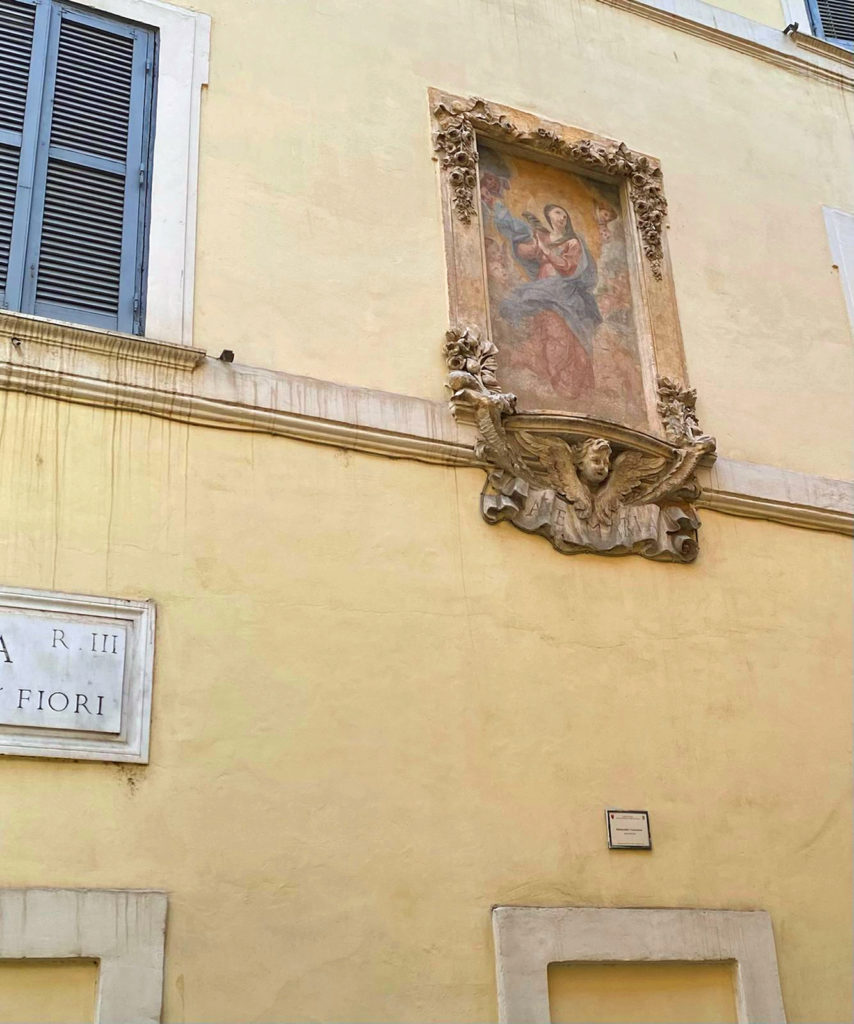
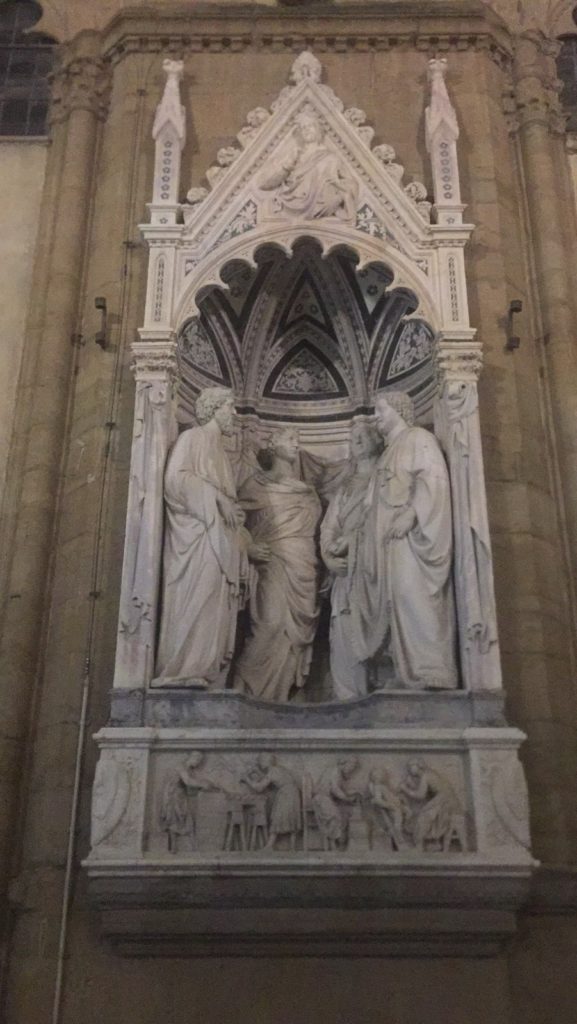
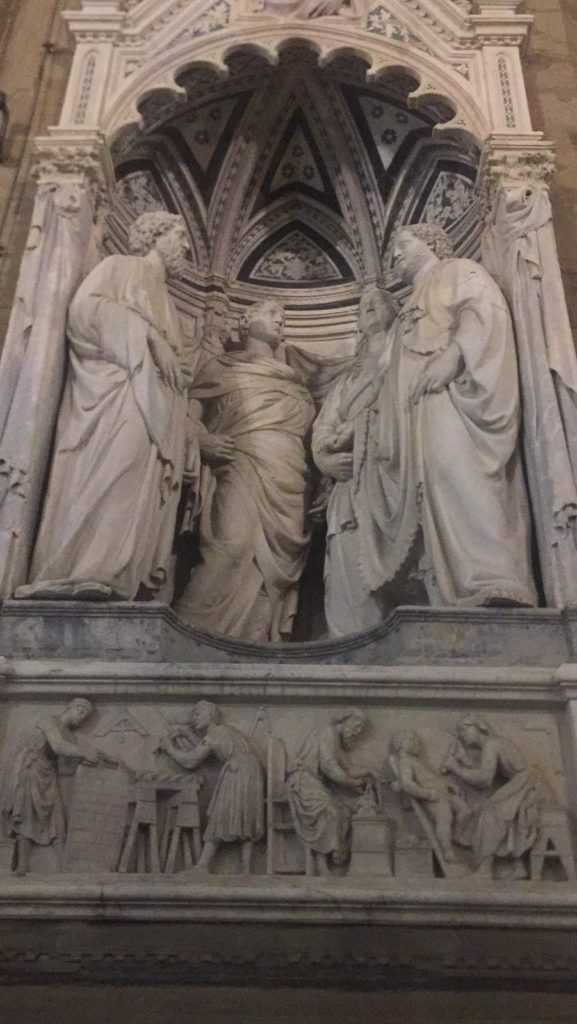
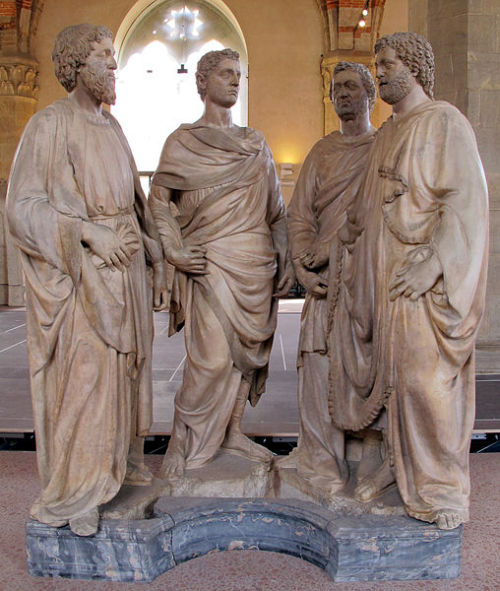
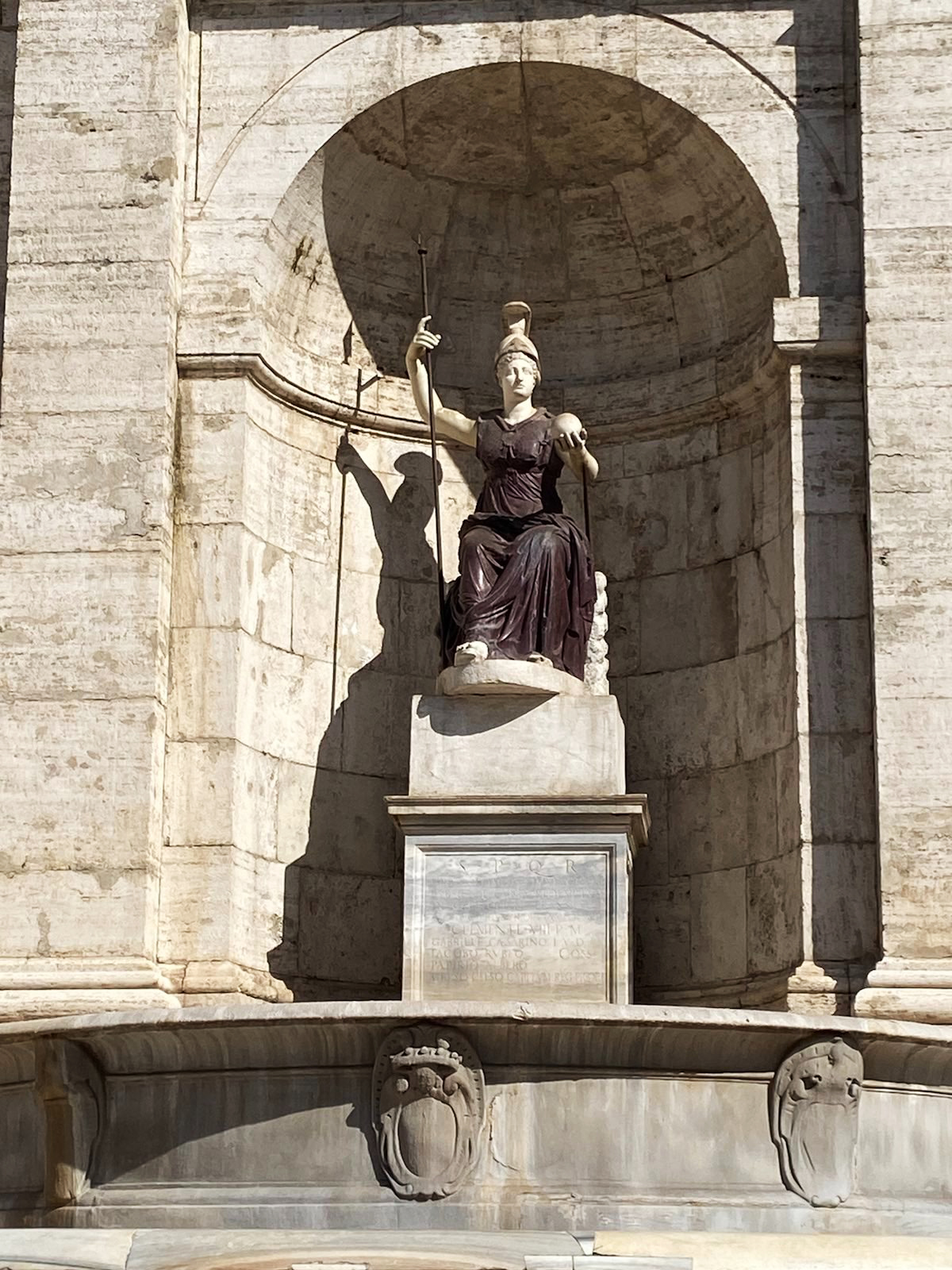
Meanwhile, these sculptors, as patron of sculptors, were highly regarded in the lofty days of Florence. At the Church of Orsanmichele there is a statue group of them in a niche on the outer wall (the originals are inside, in a museum). A friend in Florence sent pics:
In the museum…
In the Philadelphia Museum of Art you find a terrific Medieval collection, including a 15th c. altar piece from the same Orsanmichele. Note that the one in charge over the torturers is being strangled by a demon.
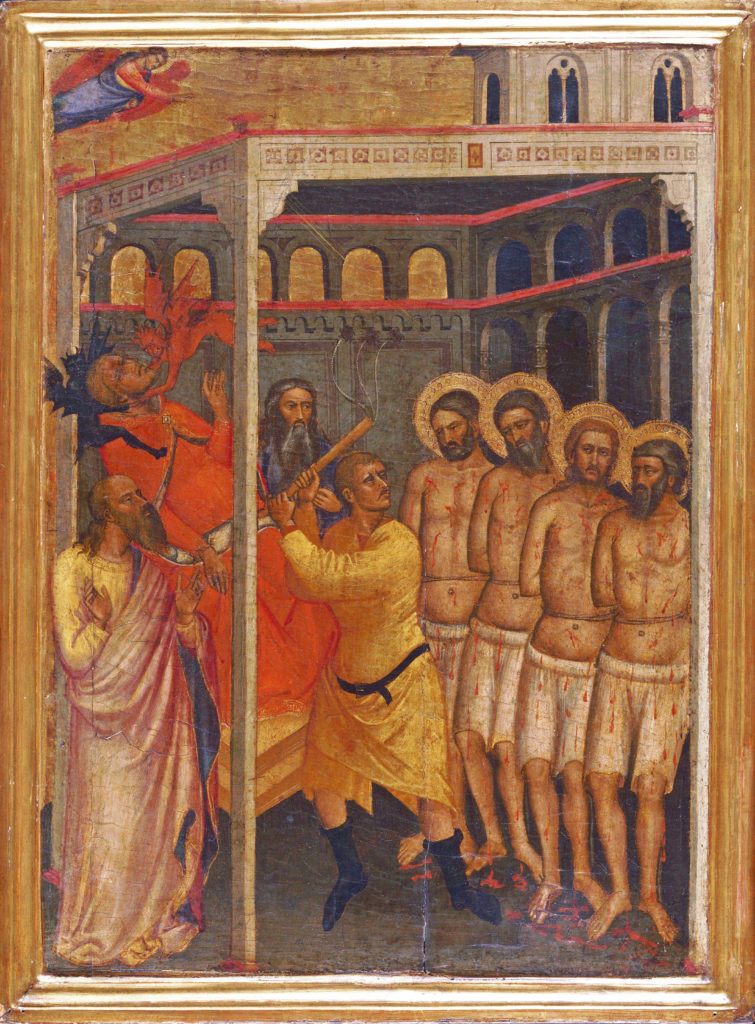
The martyrs refused to have anything to do with idols.
Fool around with demons… you won’t win. And if people on high fool around with demons, lots of people suffer.
I direct the readership’s attention to two brilliant posts by Shawn Tribe at Liturgical Arts Journal.
The first presents music from the 19th c. for the Requiem Mass – appropriate for November – in the Mohawk and Algonquin language. Jesuit missionaries devised a writing scheme the texts, which were set to the Gregorian chant melodies in modern notation. If you are musically inclined, you might take a moment and try to sing it. HERE
It is a fascinating glimpse into inculturation, which the Jesuit missionaries sometimes pushed too far (as in the East when they tried rice cakes instead of wheat for hosts and got seriously slapped down).
Authentic inculturation is both inevitable and desirable. The Word, Love, unflushed itself. We enflesh what we love in the context of our Holy Church. So long as what the Church has to give to the world is given logical priority over what the world has to give to the Church, in this ongoing and simultaneous interchange, inculturation flows in enriching veins. Once the logical priority is given to what the world has to give… game over. Everything will go wrong and the beautiful fruits God gives through the Church will wrinkle, wither and rot.
What can start as a well-meaning desire to make some liturgical rite “more relevant” or “easily understood” can, without great patience and many checks and guard rails, slip out of the lane and then careen into disaster. One can discern in certain efforts to conform the Church’s worship, law and doctrine (Cult, Code and Creed) to the world what Peter Kwasniewski described as “whoring after ephemeral relevance, a prostitution to the present age and its malevolent prince.”
Do not be conformed to this world but be transformed by the renewal of your mind, that you may prove what is the will of God, what is good and acceptable and perfect. (Romans 12:2)
Next, Shawn has a visual feast of information photos about the vestments used by the Roman Pontiff for the celebration of Solemn Papal Mass. There are special items, such as the fanon, which was worn by John Paul II and by Benedict XVI. I don’t think we will see one on Francis any time soon. Neither is he likely to use the subcinctorium. It might clash with whatever that usual thing is that he prefers to wear. HERE
Tribe makes a good point, not original by any means, but well expressed:
No doubt some will consider all of this overly complicated, even ‘fussy’, formed as they are by a certain contemporary mentality that we can find in certain subsets of modern Western thought (though these are thoughts that are generally neither universally applied, nor consistently so, let us make note). However the reality is that each of these carry a particular meaning and symbolism related to theology, ecclesiology and liturgiology. What’s more, they are not the sole prerogative of the Church for throughout the course of human history we find manifest the human need to denote tiers of leadership by means of symbolic ornamentation and decoration. This is manifest not only in the vestments and vesture of popes and prelates, but also civic, military and religious leaders generally, whether within the context of our modern Western societies or within the most remote tribal societies. In that sense, if we divorce ourselves from such symbols, we are essentially attempting to divorce ourselves from humanity and our human instincts.
When you love, you want to do more. You want to know more and understand what you know.
That’s how our theological methodology developed.
That’s why our doctrine organically developed from the Scriptures and Regula Fidei. That’s how our sacred liturgical worship developed… which is doctrine.
Over time, we enriched, each generation adding little touches to compliment rather than detract from what our forebears contributed. To put it another way, regarding development of Cult, Code and Creed, (worship, law, doctrine),
Love is patient and kind; love is not jealous or boastful; it is not arrogant or rude. Love does not insist on its own way; (1 Cor 13)
Our liturgical worship is the glorious and worthy distillation of the Christian experience across many cultures for many generations. Patiently and lovingly it grew and was tended and maintained. This is the Vetus Ordo of the Roman Church.
Then came the reformers who, with the power they usurped and weaponized within the Consilium, using the authority of the Council against the Sacred Congregation for Rites and manipulating in a double-pronged maneuver both Paul VI and the experts of the Consilium, they arrogantly, rudely, imposed their own will on the Church in the construction of a new Rite, the Novus Ordo, abruptly imposed.
And now, their ideological offspring “insist on their own way“.
Traditionis custodes.
Abrupt changes in Cult, Code and Creed are not the Catholic way.
Abrupt changes signal that something has gone very wrong.
In a book over the signature of Annibale Bugnini’s secretary, later papal MC and now Archbp. Piero Marini A Challenging Reform, we read of the machinations of the Consilium of its head Card. Lercaro and Bugnini. Here is a smoking gun quote about how the kingpins of the Consilium were trying to, not fulfil the wishes of the Council Fathers, but impose their own will on the Church’s worship and, therefore , her belief.
Context: The Consilium has just taken a major step in moving from an informally meeting group to an officially and formally established body. They have their first plenary session.
“They met in public to begin one of the greatest liturgical reforms in the history of the Western church. Unlike the reform after Trent, it was all the greater because it also dealt with doctrine.” (p. 46)
They succeeded. The work of the Consilium, in revising the Missale Romanum, did indeed change the Church’s doctrine. Change the way you pray and you change what you believe… and vice versa.

The Memorare in Latin
Too many people today are without good, strong preaching, to the detriment of all. Share the good stuff.
Was there a GOOD point made in the sermon you heard at the Mass for your Sunday obligation (or, maybe still none), either live or on the internet? Let us know what it was.
What was attendance like?
Tell about attendance especially for the Traditional Latin Mass. I was getting reports that it is way up.
Any local changes or news?
For those of you who regularly viewed my live-streamed daily Masses – with their fervorini – for over a year, you might drop me a line. There are developments.
I have some remarks about the TLM – HERE “Sinful Clerics of a Spotless Church”
From a reader…
QUAERITUR:
Card. Cupich, who is a trusted advisor of Pope Francis, issued a document the other day called “The Gift of Traditionis Custodes”. I take it you don’t see it as a gift, but I notice that you didn’t react to it. Not even a word?
Here’s one word:
Contempt.
Eccles did a good job for us all. HERE
At Rorate, Fr. Richard Cipolla had posted a public response to that decidedly deficient essay.
Before making other observations, let’s review to get some context. He was rector at the Josephinum, which was … interesting. In his pastoral care, as Bishop of Rapidopolis Cupich banned children from receiving their 1st Holy Communion at a Vetus Ordo Mass and forbade them from being confirmed. I’m sure those parents and children and confirmands remember his gifts. Cupich locked people out of the church so that they couldn’t celebrate the Triduum. And let’s not forget his abject grovel when the McCarrick (who lifted Cupich up with his own hand) scandal was breaking, as he said that Francis had more important things to worry about, things like the environment and protecting illegal aliens, accusing people of not liking Francis “because he’s Latino.” His interview was on video. Remember his slippery speech in England, recounted by Fr. Hunwicke HERE.
With the exception of an occasional “and” and “the”, just about everything Cupich wrote – actually I’ll bet a shave and a hair cut that that theological bright-light Fr. Louis Cameli wrote it with touch-ups from a certain catholic coyote – is wrong.
This blunder of discontinuity, typical of whom I suspect are his ghost writers, lept off the screen.
“No one would think of arguing that the earlier forms of the Code or the Catechism could still be used, simply because the word reform means something.”
While the 1983 Code supersedes the 1917 Code (CIC 1983 can. 6 §1., 1/), the 1917 Code is still helpful in understanding the 1983 Code. There is nothing, zero, in the Catechism of the Catholic Church that says that abrogates or abolishes or forbids the reading of the Roman Catechism of the Council of Trent or any other catechism.
Just because there was a new Catechism issued in the 20th century, that doesn’t mean that the Roman Catechism ordered by the Council of Trent is no longer useful and true.
“Reform” does not mean “obliterate the past and make up something new”. Sacrosanctum Concilium is crystal clear on that point.
Unless, of course, your ecclesial view does not include anything before the 1960’s.
For these people reform means damnatio memoriae. If they could, they’d hold a book burning.
Another item which proves that the writers and the signer have not the slightest clue what they are talking about – because they are ignorant of the Roman Rite apart from their isolation cell of the Novus Ordo.
“Accompaniment may take the form of visiting with the faithful who have regularly attended Mass and celebrated sacraments with the earlier rituals to help them understand the essential principles of renewal called for in the Second Vatican Council. It must also involve helping people appreciate how the reformed Mass introduces them to a greater use of scripture and prayers from the Roman tradition, as well as an updated liturgical calendar of feasts that includes recently canonized saints. Accompaniment may also mean creatively including in the Mass reformed by the Council elements which people have found nourishing in celebrating the earlier form of the Mass, which has already been an option, e.g., reverent movement and gestures, use of Gregorian chant, Latin and incense and extended periods of silence within the liturgy.”
He leads off with flattering “accompaniment”, like a pinch of incense to the genius of the divine emperor. It’s nearly breathtaking in its unctuous, faux pastoral croon.
People who don’t celebrate the Vetus Ordo really should be telling those who do about their engagement with the Scripture which the Church presented to the faithful for scores of generations in an unbroken line back to, in many euchological forms, the time of Gregory the Great (+604).
And that “accompaniment”… “creavity including …. elements” which those people like to keep them moving in the right direction.
“There, there!”, crooned the prelate as he accompanied the grieving widow across the grass to the newly opened grave. “The Church is here for you. We are here for you.” He twinkled his fingers at the teary-eyed babe she clutched under her unreformed black chapel veil.
Then he gave her his firm pastoral shove.
“Certain elements can now be added for her accompaniment”, he murmered. He tossed in a handful of dirt, to encourage the others. The stony earth didn’t have that usual rattling sound as it landed, due to the fact that the coffin was not only not closed, but the gagged woman and child inside wasn’t dead yet.
Never mind that the very things that he wants to toss like dirt in pastoral accompaniment are mandated by the Second Vatican Council and even still in part in the rubrics of the Novus Ordo.
The fact is that people are attracted to the traditional Vetus Ordo for more than just the externals of vestments, a more solemn ars celebrandi, pretty churches, a certain kind of sacred liturgical music, ad orientem worship (which is theologically significant, as are those other things). The content of the prayers is different. They contain riches…. let’s use the word “elements”… which were systematically removed from the orations of the Novus Ordo, “elements” without which one’s Catholic identity is placed in the hazard. Sine quibus non.
No. Just no.
Contempt.
It is the attitude of Cupich and others, from the top down, that sparks reactions of consternation, sadness and fury.
Watch this serious “¡Hagan lío!” video and then ponder whether Cupich and Co. have truly promoted “unity”, something truly for the good of the Church.

https://www.viacaritatis.us/product/4-bottle-thanksgiving-wine-assortment/?campaign=4-Bottle%20Thanksgiving%20Wine%20Assortment&ref=4
UPDATE 7 Nov 2021:
HERE Fr. Hunwicke has excellent comments on a perhaps mendacious element of the Roche/Nichols square dance, towit, the claim that Paul VI abrogated the 1962 Missal.
He didn’t. That’s false. He knows this.
When did the Congregation for Divine Worship become the Ministry of Truth?
 No, wait. We know that.
If you have not read George Orwell’s 1984, or if you haven’t read it since, say, high school, get a copy – a real book, before it is banned and impossible to buy – and read it. It describes the mind, the world-view, behind much of what we see going on today.
The Ministry of Truth was charged with rewriting, falsifying, history. They found undesirable facts in the records and media and, having rewritten them, they sent the original document down the “memory hole”. The new “fact” becomes the “fact”. At least until the new “fact” is inconvenient. Then the process starts over.
Rather like how the libs in charge of liturgical translation want constant revision of texts to suit current times. Hmmm… who was in charge of ICEL again?
The Ministry wants you to be able to say on one day that 2+2=5 and tomorrow 2+2=7, and then back to 2+2=5. They want you to say that there are five fingers (or lights) when there are truly only four.
If you don’t behave, you get to go to the Ministry of Love. Guess what happens there!
Does the leadership of the Congregation want to change the fact about the 1962 Missale Romanum?
Down the memory hole goes Summorum Pontificum and his magisterium… and the magisterium of John Paul II, which they have been systematically dismantling.
What will happen to priests who do not accept that 2+2=5 and continue to use the 1962 Missale Romanum?
A trip to the Ministry of Mercy?
READ!
1984 by George Orwell
I think many of us have been waiting for the other shoe to drop when it comes to the unusually cruel and unnecessary Traditionis custodes, Francis’ sad legacy document. His Plessy v. Ferguson.
Ironically, these came to me on 5 November, a day for infamous anti-Catholicism in England.
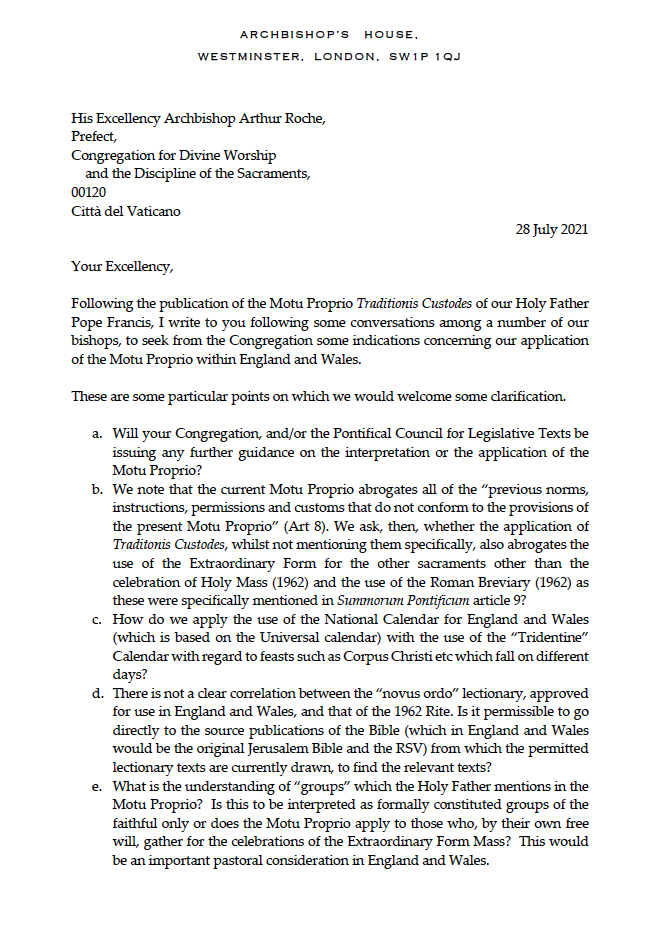
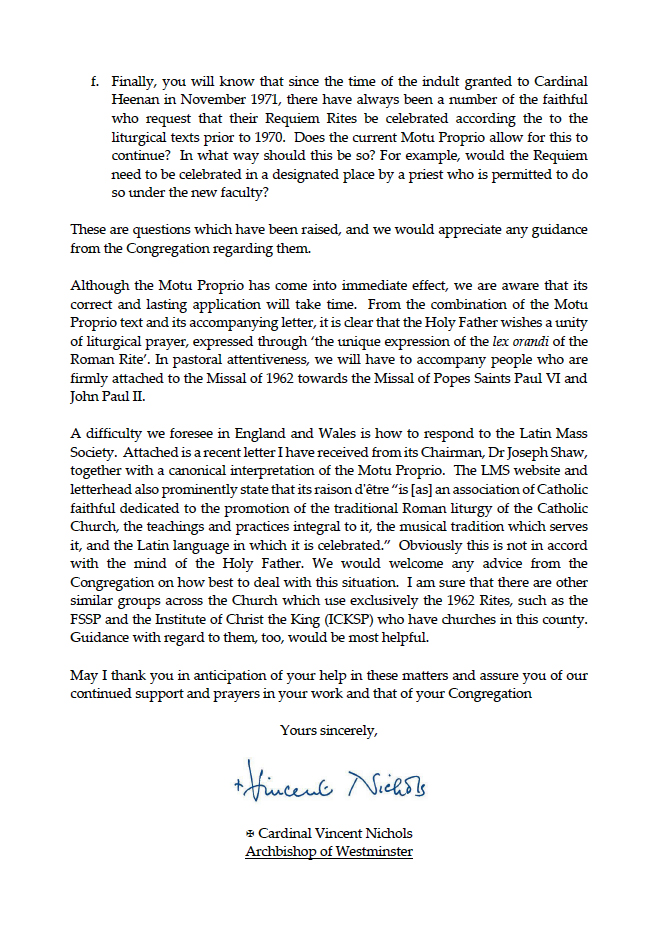
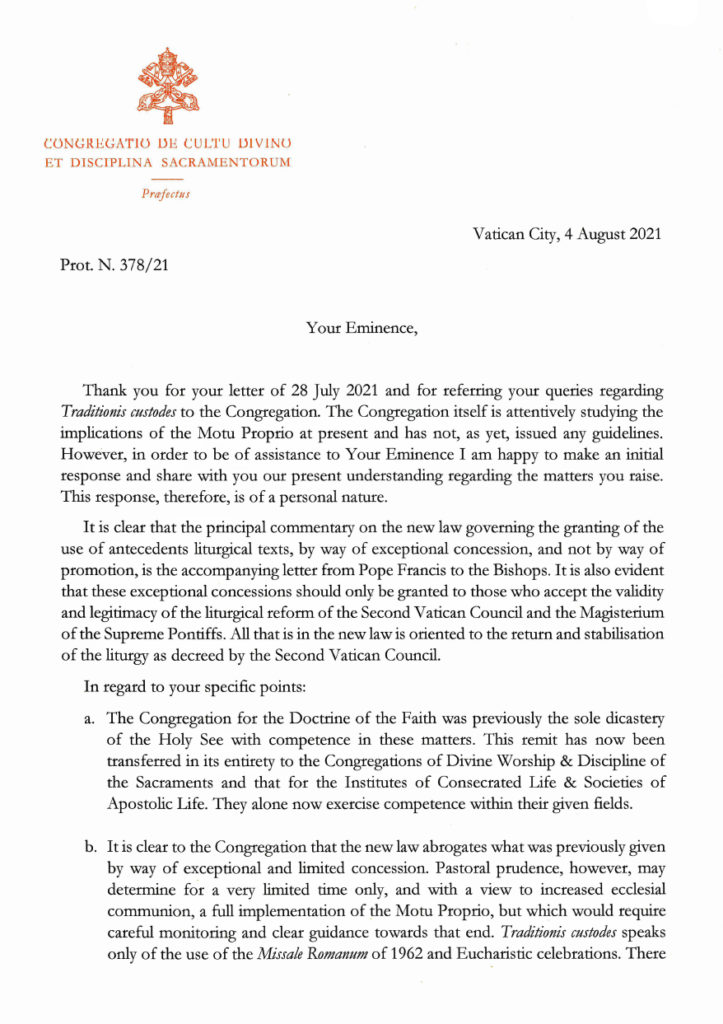
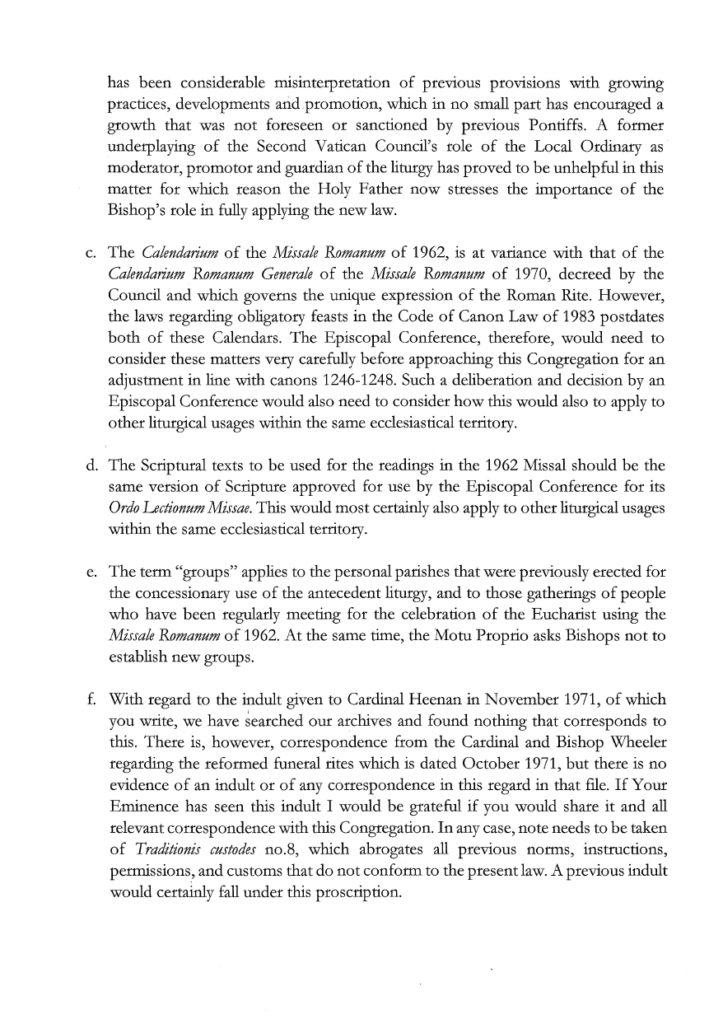
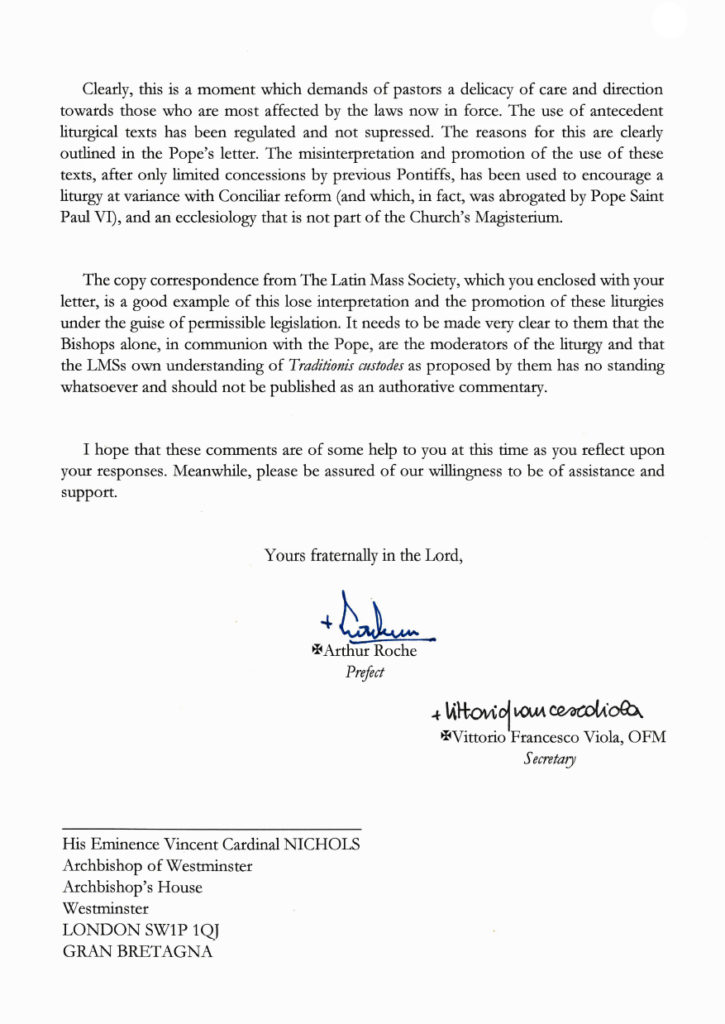
I was sent copies of correspondence between the Archbishop of Westminster, Card. Nichols, and the Prefect of the Congregation for Divine Worship in Rome (which now tragically has competence in matters liturgical for the Vetus Ordo), Archbp. Roche.
It is good for us to know what the Supreme Apparatus is considering for the most severely marginalized group in the Church. Forewarned is forearmed. It is easier to hide flee to the forest, to the Mass stone, and hide your children from harm if you know the riders with the ropes and torches are on their way.
Friends, we prepare for many challenges, if we are smart. We ready our homes for storms and stock up. We save money and make sure our ducks are in a row. We think down the line about how to pay for schooling for children or for a retirement. We make sure that we have replacement parts and tools before we need them. I could multiply examples.
We have to be ready for what they are going to do. If for a hurricane, how not for this storm?
The only way out of this is to endure it.
As you read, do you get a sense of coordination?
It’s as if they had a long talk before anything was put on paper.
UPDATE 7 Nov 2021:
As promised. This seems appropriate for the epistolary dance above.
Another version HERE (from the movie).
And ECCLES is on it. HERE
 From a reader…
QUAERITUR:
A hypothetical: Let’s suppose Pope F decides to resign but for some reason (war, political/religious ) there will not be a conclave. For the time being, could be years , no conclave is in sight. The chair is empty. How are catholics to respond? Are the avenues for catholics open i.e. attending any TLM, up and including sspv etc types. Follow pre vatican ii norms or post vcii? In other words, is it permissible for catholics to follow their consciences.
There are different aspects to consider.
As I have mentioned before many times, for a very long time in the life of the Church your average Catholic and a lot of the clergy didn’t know who was Pope.
For centuries, news travelled at about 5 mph. Not all news travelled everywhere at equal speeds and accuracy.
It was entirely possible that people would learn of the death of, say, Pope Sixtus V (on 27 Aug 1590) and Urban VII elected after the death of of the same Urban VII (27 Sept 1590) and election of Gregory XIV (on 5 Dec 1590). Or they learned about Sixtus or Urban even after the same Gregory XIV had died (on 16 Oct 1591) and Innocent IX elected, who in turn died (30 Dec 1591) and Clement VIII elected (30 Jan 1592). Get it?
In that sort of scenario, priests would be saying the name of Sixtus in the Canon of the Mass when the Pope was actually Urban, Gregory, Innocent or Clement. Priests in different places would be reading different names of the Pope at the very same hour.
And the Church didn’t crumble into rubble.
I remember an older priest who, even toward the end of the 26 year reign of John Paul II, still occasionally slipped into saying “Paul our Pope”.
So, today, would it make a huge difference if a priest would say “Benedict” rather than “Francis”? Or leave out the name? Or during the “sede vacante” period by habit say the name of a Pope who had just died? Or the name of the Pope who had resigned?
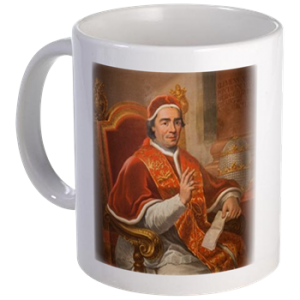
Click for Clement XIV swag!
Come to think of it, after the EMP or Second Carrington Event, it would be pretty handy were a string of Popes to take the same regnal name…. like Clement XIV the II, followed by Clement XIV the III, and Clement XIV the IV, and Clement XIV the V. And each one could, anew, suppress the Jesuits! WIN WIN WIN etc.
Repetita iuvant.
What difference would it make for most Catholics if there were no Pope for a while?
Frankly, we would have lot less rambling to wade through. Blood pressure would fall worldwide. Far fewer distractions would pull us from good spiritual reading.
We wouldn’t have monthly “intentions of the Roman Pontiff” published.
On that score, this month’s intention from Francis is for people suffering from depression, “We pray that people who suffer from depression or burnout will find support and a light that opens them up to life”.
Gee whiz. I can think of one thing Francis could do to help people who are depressed about the Church!
Back on point, there are also the traditional “Pope’s intentions” that were perennially designated.
Click
Because we are Unreconstructed Ossified Manualists, and we love our old dependable compendia of theology with their sober and thorough analyses, we turn to the manual by Prümmer. Prümmer says that the intentions of the Holy Father for which we are to pray have a tradition of five basic categories which were fixed:
1. Exaltatio S. Matris Ecclesiae (Triumph/elevation/stablity/growth of Holy Mother Church)
2. Extirpatio haeresum (Extirpation/rooting out of heresies),
3. Propagatio fidei (Propagation/expansion/spreading of the Faith)
4. Conversio peccatorum (Conversion of sinners),
5. Pax inter principes christianos (Peace between christian rulers).
These five categories were also listed in the older, 1917 Code of Canon Law, which is now superseded by the 1983 Code.
They remain good intentions, all. I’ll leave it to you to determine whether or not the more recent intentions in any way resemble the classic intentions. But we wouldn’t have to fret over intentions about not cutting down trees or bovine flatulence changing the climate, etc.
As far as the present legislation about the Vetus Ordo is concerned, that would, I suppose, stay in force until another Pope dealt with it.
HOWEVER, the other angle here is that laws that aren’t received aren’t really laws at all. This is “reception theory”.
Reception theory states that a law, in order to be a law, a binding law, must be received by the community for which it is intended. If they community does not receive it, that is, they reject it outright or it fails to have any effect on how they live, the presumed law is non-binding and is really no law at all.
This doesn’t apply to moral law, because it flows from above reception or rejection by mere human beings. Reception theory does not apply to moral teaching, but it can apply to certain of the Church’s disciplinary law, which includes liturgical law.
Libs falsely and maliciously tried to apply this to Humanae vitae in the 60’s and 70’s. Even now at places like Fishwrap and Amerika they still are. But the problem is that HV deals with moral law, not positive law, such as liturgical law.
An example of non-reception of positive, liturgical law is when in 1535 Paul III published a new Breviary which departed from tradition. It was criticized and ignored and in 1568 Pius V withdrew it.
See what I mean?
Let’s have a mind exercise and think about reception theory in view of Traditionis custodes (Taurina cacata). If priests were simply to ignore TC with its cruelty and incoherent diktats, and endure patiently but publicly the threats and punishments meted out by rigid and blinkered bishops, the whole thing would just dissolve into a vapor that would, for a while, leave a rather unpleasant but dissipating stink.
What difference would it make for most Catholics if there were no Pope for a while?
Would a long period of sede vacante allow us to go to Sedevacantist chapels?
Hmmm… clever.
I think not.
As far as the conscience question is concerned, I think we have to take into consideration also the concept of sensus fidelium. Conscience does not have absolute freedom, permitting a person to do just anything. A conscience must be properly formed according to right reason and good authority. Error doesn’t have rights, that is, once adequately corrected we must move from error to truth. The tricky thing about sensus fidelium, is that for someone to have that sensus he has to be faithful. It is, after all, the “sense of the faithful” not the “notion of the dissenter”.
What difference would it make for most Catholics if there were no Pope for a while?
A period of time when there is no Pope. Positive? Negative? Neutral?
In some periods people suffered when there was no Pope or no sure way of knowing who was the real Pope. In other periods people suffered when there was a Pope and everyone knew him!
Look at it this way. Without a Pope for a long time, we wouldn’t have wonder reflections like those of Leo XIII on the Blessed Mother, or theological insight like that of Benedict XVI. We also wouldn’t have kissing the Koran, putting demon idols on altars, and cruel attempts to snuff out a thousand years and more of sacred liturgical worship for the sake of personal animus disguised as concern for unity.
In an idea world, we would know who the Pope is, but we would barely have to hear about him.
Think about it.
The role of the Pope, like that of a father, is mainly to say “No!” and also to provide a visible reference point for unity in the Church and then to strengthen (teach, correct) when problems arise. But in an ideal world, not so many problems arise and there is unity. Hence, a Pope could – as We shall when We are elected and take the name of Clement XIV II – disappear into the Vatican Library for periods so long that people shall wonder if We have died. After Our election, occasionally We shall be borne upon Our sedia gestatoria to the central loggia of St. Peter’s Basilica, with or without forewarning, with much finery and those large ostrich plume fans. We shall read something briefly, give the Apostolic Benediction to the City and to the World, and then drop a single sheep of double-spaced Latin text to flutter to the ground, an encyclical on a topic that interests Us or that must be addressed with urgency (rare).
What difference would it make for most Catholics if there were no Pope for a while?
Catholics love their Popes. Sometimes we don’t like them very much, but we try to love them.
Love doesn’t mean we can’t object to certain things that Pope’s might do. It doesn’t mean we have to cling to them as if they were the ninth apparition of Vishnu.
Let’s not make Popes into what they are not, which has been a problem in the last century or so.
In troubling times, perhaps it’s best simply to tune out of certain frequencies and channels.

Coat of Arms by D Burkart
 Fr. Kelly on ASK FATHER: “Are the faithful who go to the SSPX being sacramentally forgiven in confession, or not?”: “The last comment grew too long so I am placing this in a new comment: Lastly, the question of this…” on ASK FATHER: “Are the faithful who go to the SSPX being sacramentally forgiven in confession, or not?”: “This is a delicate topic that requires a measure of precision, precisely because it bears directly on the salvation of…”
 on ROME 26/10– Day 15: munch: “acardnal says: Dachshunds Oh yes, still there! I was just there with them both yesterday and, for a while, today.…”
 on ASK FATHER: “Are the faithful who go to the SSPX being sacramentally forgiven in confession, or not?”: “@WVC Yes, thank you, that does help a little. I still am not clear, then, on why all Anglicans were…”
 on ROME 26/10– Day 15: munch: “Truffle mortadella sounds like heaven. A little crema of pistachio pesto and some stracciatella di bufala and all fear of…”
 on ROME 26/10– Day 15: munch: “Carl E. Olsen’s post quotes Instrumentum laboris”: ” …’The radical call is, therefore, to build together, synodally, an attractive and…”
 on ROME 26/10– Day 15: munch: “Fr. Z, what about the market salesman who had the cute Dachshunds? Are they still around? Would love to see…”
A Daily Prayer for Priests




They find you a pro-life agent in your area who commits to giving a portion of the fee to a pro-life group!
PLEASE subscribe via PayPal if it is useful. Zelle and Wise are better, but PayPal is convenient.
A monthly subscription donation means I have steady income I can plan on. I put you my list of benefactors for whom I pray and for whom I often say Holy Mass.
In view of the rapidly changing challenges I now face, I would like to add more $10/month subscribers. Will you please help?
For a one time donation...

Help Monks in Wyoming (coffee – UPDATED LINK) and Norcia (beer) and the wonderful "Soap Sisters" of Summit, NJ!
Please follow me on Twitter!






Visits tracked by Statcounter
since Sat., 25 Nov. 2006: