HERESY PANDEMIC!

Now that I look at that post title, I can see why you might think that I am channeling the Id of Trad-dom.

In fact, today I had an informal lunch with some young priests: guys drop in between 12-2 for stuff from the grill, etc.   Conversations ranges from “mother of the bride at marriage rehearsal” to “last night’s Brewer’s game” to why “I will never forgive the Dodgers for leaving Vero” to “why hospital layouts are so confusing” … etc.   At last, riffing on that last point, these guys started talking about Pandemic, in a rather jocular tone.  I quickly twigged to the fact that they were talking about a board game called, incredibly, Pandemic.

US HERE – UK HERE

Yes, in our post-modern, deconstructing age, there is a board game called Pandemic.  Who knew?  I’ve read a few books about Pandemic, and it doesn’t sound like a game to me.

They began to describe it.  Players work as a team to stop the spread of disease across the globe.  If enough places get infected, you lose.  Occasionally, different cards throw a curve at you … just to riff off the baseball theme, above.

I opined, without too much objection, that it is sort of Anti-Risk.  In Risk, individuals move little pieces around to dominate all others.  In Pandemic, teams work to stop the little pieces.

Apparently, diseases you are fighting can mutate and other factors and diseases come onto the scene.

That’s when I had An Idea.

I’m getting old, so I don’t know what these young guys do these days, but were I in a group playing Pandemic I would “re-skin” it (I’m proud that I knew that term when they translated into young what I suggested).  Instead of fighting off diseases, why not retool the game so that you are fighting off

HERESIES.

Instead of fighting of, say, Prion Diseases, Plague, or Argentine Hemorragic Fever, you could battle Circumcellions, Cathars and Liberation Theologians.

You could play the game in different ages, wherein teams of Doctors and Fathers could fight off the mutating variations of Gnosticism, such as Valentinianism, Marcionism, Manichaeism.  In another sweep it could be Donatism and its mutations Maximianism and Paremenianism.   How about those Pelagians?  And, later, we would have to fight off all manner of Protestant splintering.

In these modern times, there would be Modernism to combat, in all its virulent forms.  Some card that you draw to change the circumstances could be, with Jesuit themes for today, “Ignatius Loyola converts”… “Clement XIV suppresses Jesuits”… “Karl Rahner is born” or “James Martin publishes books”.  (Hint: Some of those are good and some are not.)

Different players have different specializations on the team: medic, researcher, quarantine specialist, contingency planner….

The INQUISITION Team – just to have a name, you know – would also have to have specialists: theologian, canonist, interrogator, confessor….

We could put our heads together and come up with some great options for …

HERESIES.

¡Hagan lío!

BTW… Pandemic is from – I am not making this up – Z-Man Games.

HERESIES from Fr-Z Games

Posted in ¡Hagan lío!, Lighter fare, Priests and Priesthood, Seminarians and Seminaries | Tagged
14 Comments

“An awful lot of clergy dislike the Novus Ordo, once you add both those opposing groups together”

New Say The Red - Do The Black / New Translation coffee mugThe inimitable Fr. H today has a spiffing piece at his blog Mutual Enrichment.  Let’s have a look.

Taking a breath

We are told that a certain sort of Novus Ordo cleric complains that the current 2010 English translation of the Roman Rite is difficult for him to read. He certainly (judging by two OF Masses I attended last summer) does sometimes have difficulties: taking breath at the right times; pausing; emphasising … all those little tricks by which a crafty hierophant conveys the impression that he understands what he is saying.

The poor dear poppets. They, impoverished souls, may have no ministerial background in delivering liturgically the rolling Tudor periods in Dr Cranmer’s Book of Common Prayer. I pity them. Of course they are going to have trouble with any text that goes on for more than a dozen words without a full stop or colon[That’s our situation now, I’m afraid.  I wonder if it wouldn’t be a good idea to require seminarians, over their years of formation, to have a permanent workshop in which they must stand and recite poetry, passages of mighty prose or famous speeches.]

OK; fair enough. But one thing really does puzzle me. There are four words which they seem so often incapable of saying … three of them monosyllabic … “The Mystery of Faith”[This is, perhaps, a kind of proof that those words shouldn’t be there, in that moment and for that function, in the first place!]

So one gets all sorts of irrelevant nonsense: “Let us proclaim the beauty of our wonderful Catholic Faith”. That sort of thing. My memory is imperfect about details, because, being what PF would call a Rigid Pharisee, my mind tends to be distracted from the interesting and unrigid things the inventive presbyter is saying. Ever a victim to distraction, I am instead caught up in the wonder of the Theophany which he has just brought about upon the Altar. [ROFL!] I can’t help that; I’m too old to change now. But take it from me …

Those four words, of course, are intended to refer to the Mystery of the Great Presence. That is why they were originally within the Verba Domini. [ehem… they still are!] I once wrote a piece about this, which I imagine would be accessible via the Search Engine attached to this blog.

Ah, well. Perhaps things are better in seminaries nowadays. Perhaps the chaps do now get some input, both about the meaning of the Liturgy and how to celebrate it. How to breathe, for example. [See my comments, above.] But what those older clerical chaps do demonstrate, by their endless propensity to change the words, to ad lib their own interminable clevernesses, is this: they obviously find the Novus Ordo (both as composed and as translated) very deeply unsatisfactory; inadequate to meet their own needs and what they assume to be the needs of their people.  [Otherwise, why are they constantly tinkering with it?]

Well … ‘traddies’ find it unsatisfactory … this other ‘trendy’ lot does too … so there seem to be an awful lot of clergy who dislike the OF, once you add both those opposing groups together.

Is there anybody out there who really does like the OF, as opposed to merely tolerating it for pastoral reasons, or using it as the springboard for personal inventiveness?

A challenge!

Posted in Liturgy Science Theatre 3000, Our Catholic Identity | Tagged
15 Comments

ASK FATHER: Extraordinary Ministers and blessings at Communion time

From a reader…

QUAERITUR:

I am a laywoman recently hired by my archdiocese as a sacristan. In this role I am frequently pressed into service as an extraordinary minister. Last Sunday, as I distributed Communion, a young woman approached with her arms across her chest in a manner I recognize as a request for a blessing. [This mysterious gesture has that connotation in some places.  Others use it when they want to receive Communion!] I turned to the priest distributing next to me, but he either ignored or didn’t see me. The young woman looked embarrassed and turned back without being blessed. After Mass I caught her and apologized for making her uncomfortable, offered to get a priest to bless her now, etc. She said she was taught by some nuns in Michigan that she could “do that” – approach a layperson for a blessing. Should I have blessed her? I felt terrible about giving her a traumatic experience.

Don’t feel terrible.  And, no, you should not have blessed her.  Moreover, you did the right thing to offer to get the priest.

This notion that Communion time is a moment for imparting individual blessings originated No-One-Knows-Where.  It is surely as well-intentioned as it is confusing.

Further complicating the issue is the employment of Extraordinary Ministers of Holy Communion who have been instructed – wrongly – to “give blessings” at this moment to those who come forward with their hands crossed across their chest.  Worse yet, people are being told that that is what they should do.

Lay people who are helping with Communion (or doing anything else for that matter) should not make confusing gestures as if they can bless in the manner of a priests.   At the most they might say, “May God bless and keep you,” or something like that.  That’s more of a kind wish than a blessing, so it can be uttered by anyone (without an accompanying sign of the cross).

I remind people that there really is a blessing at the end of Mass.

You can also ask the priest for a blessing outside of Mass.  And you should!

Posted in "How To..." - Practical Notes, ASK FATHER Question Box, Liturgy Science Theatre 3000 | Tagged
36 Comments

BOOKS RECEIVED: 3 new and 2 important reminders

I have received new books.   Recent arrivals include

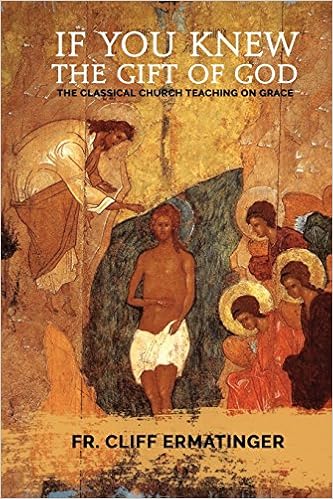
First, from the pen of Fr. Cliff Ermatinger comes If You Knew the Gift of God: Grace: What it is, what it does, and how to cooperate with it according to Church Teaching and Tradition

US HERE – UK HERE

Fr. Ermatinger reminds us that the saints about whom read, impressive figures, were real people just like us. We, too, are called to holiness.

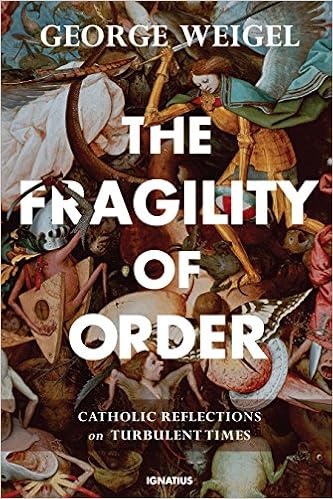
Another title from Ignatius Press and George Weigel is The Fragility of Order: Catholic Reflections On Turbulent Times.  If I remember correctly, he also wrote a book on the “tranquility of order”.

US HERE – UK HERE

The TOC is intriguing:

Introduction: Things Coming Apart?

Part One
A World without Order
with 5 essays

Part Two
A Republic in Disarray
4 essays

Part Three
The Chruch in the Postmodern World
4 essays, two of them about the controversial Synods

Again from Ignatius Press, a book co-authored by a layman and a Jesuit.  Since this is Ignatius Press, we don’t have to be too suspicious!

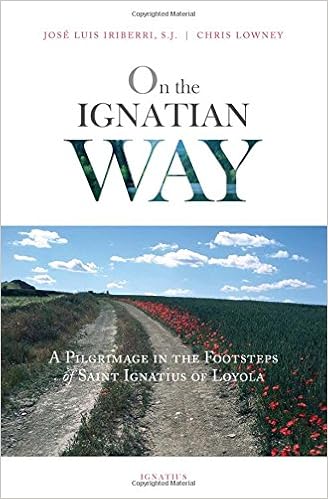
José  Luis Iriberri, SJ and Chris Lowney give us On The Ignatian Way: A Pilgrimage in the Foosteps of Saint Ignatius of Loyola

US HERE – UK HERE

St. Ignatius, whose feast is upon us, made a pilgrimage to Manresa, Spain.   This book intends to help the read plan a pilgrimage.  I includes also essays from several writers.

And two that I have mentioned before but are important.

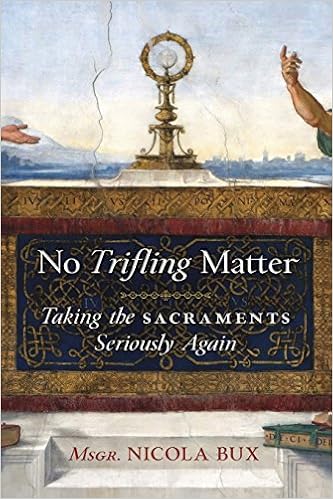
Very exciting is a volume from the mighty Nicola Bux, No Trifling Matter: Taking the Sacraments Seriously Again:

US HERE – UK HERE

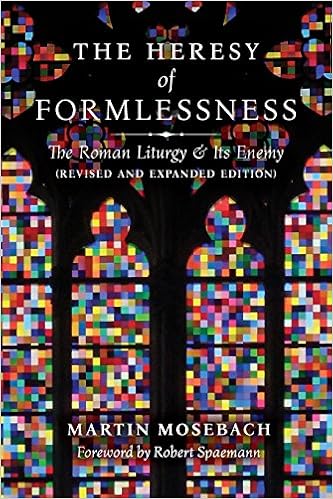
And there’s Martin Mosebach updated The Heresy of Formlessness: The Roman Liturgy and Its Enemy (Revised and Expanded Edition) republished by Angelico.

US HERE – UK HERE

Everyone of you should read Mosebach’s book.

For all your book shopping, or shopping for other things too!, use this search bar as your entry point.


Posted in REVIEWS |
5 Comments

VIDEO: Bishops saying private Masses during Vatican II

This is terrific.  Here is old video of some bishops at the Second Vatican Council saying their private Masses!

The best form of concelebration!

Tip of the biretta to AC.

o{]:¬)

Posted in Just Too Cool, Liturgy Science Theatre 3000 | Tagged ,
15 Comments

Fr. Z CALLS FOR “SPECIAL PROSECUTOR”!

Enough of this!

It’s time for Pope Francis to appoint an “Indagator Particularis… Special Prosecutor”.

He will have to be a “Burke’s Law” kind of guy, who will find out who knew what and when.

A “Burke’s Law” kind of guy.

Who could it be?

We could call it “Burke’s Law”.

YouTube thumbnailYouTube icon

Posted in Lighter fare |
31 Comments

HISTORY: The Rite of Degradation of a Bishop

Something has been nagging me from the back of my mind today.  I finally, late in the evening just as I was about to turn in, dredged it up.

One of my favorite Popes, Papa Lambertini, Pope Benedict XIV, was a great canonist and scholar. Among his many contributions, he established the process for canonization that is still in its major aspects in effect today.  I have some great swag for him!  HERE

He also issued a rite of Degradatio ab ordine pontificali… Degradation from the order of bishop.

If you thought the movie excommunication in Becket was spiffy, get a load of this. In the Pontificale romanum sanctissimi D.N. Benedicti Papae XIV, jussu editum et auctum of 25 March 1752 find the rite of degradation of all the grades of order, major and minor.

In the presence of secular officials. The praenotanda says that the scraping was to be without the drawing of blood. I suspect that there were slips. Even the tonsure was to be scraped. Eventually all clerical clothes are stripped and he puts on lay clothes. However, if later the sentence was found to be unjust, he is to be given back everything publicly, at the altar. The Degrader is to be vested in amice, alb, cincture, stole and red cope, simple miter, holding his crozier in the left hand. The rite is at the faldstool, versus populum, with the secular judge standing nearby and the rest of the clergy surrounding in their grades. They are to announce to the people in the vernacular what was going on. They then read a Latin decree with pretty stern language “… propter ipsius confessionem, vel legitimas probationes, evidenter invenimus eum ipsum crimen commisisse; quod cum non solum grande, sed etiam damnabile, et damnorum fit, et adeo enorme, quod exinde non tantum divina maiestas offensa….”

The is a stripping of the men of symbols for each and every order, major and minor.

Here is the rite for a bishop or archbishop:

Si degrandandus sit Archiepiscopus, Pontifex degradator aufert ab eo pallium, sic dicendo:

Praerogativa Pontificalis dignitatis, quae in pallio designatur, te exuimus, quia male usus es ea.

If the man to be degraded (Degradandus) is an Archbishop, the Bishop Degrader removes the pallium from him, saying in this way:

We strip you of all pontifical prerogative, which is symbolized in the pallium, because you have used it badly.

Deinde, vel si degradandus sit Episcopus tantum, Pontifex degradator amovet ei mitram, dicendo:

Mitra Pontificalis dignitatis videlicet ornatu, quia eam male praesidendo foedasti, tuum caput denudamus.

Then, if the Degradandus is only a bishop, the Bishop Degrader takes the miter from him, saying:

The miter being the symbolic ornament of pontifical dignity, because you besmirched it badly in presiding, we denude your head.

Deinde unus ex Ministris tradit degradando librum Evangeliorum, quem Pontifex degradator aufert de manibus degradandi, dicens:

Redde Evangelium, quia praedicandi officio, quo spreta Dei gratia te indignum fescisti, te juste privamus.

Then one of the ministers gives to the Degradandus a book of the Gospels, which the Bishop Degrader snatches away from the hands of the Degradandus, saying:

Give back the Gospel, because in the office of preaching, having despised the grace of God you made yourself unworthy and we properly deprive you of it.

Deinde Pontifex degradator amovet annulum de digito degradandi, sic dicens:

Annulum, fidei scilicet signaculum, tibi digne subtrahimus, quia ipsam sponsam Dei Ecclesiam temere violasti.

Then the Degrader Bishop takes away the ring from the finger of the Degradandus, saying thusly:

The ring, namely the sign of fidelity, we worthily withdraw from you, because you thoughtlessly violated your very Spouse, the Church of God.

Tum unus ex Ministris tradit degradando in manus baculum pastoralem, quem mox Pontifex degradator tollit de manibus degradandi, dicens:

Auferimus a te baculum pastoralem, ut inde correctionis officium, quod turbasti, non valeas exercere.

Then one of the ministers gives a crozier into the hands of the the Degradandus, which right away the Bishop Degrader takes from the hands of the Degradandus, saying:

We take from you the pastoral staff, that hence you cannot exercise the office of correction, which you have thrown into confusion.

Deinde extractis sibi per Ministros chirothecis, Pontifex degradator abradit degradando pollices et manus leviter cum cultello, aut vitro, dicens:

Sic spiritualis benedictionis, et delibutionis mysticae gratia, quantum in nobis est, te privamus, ut sanctificandi et benedicendi perdas officium, et effectum.

Then the gloves having been removed by ministers, the Bishop Degrader scrapes the thumbs and hands of the Degradandus lightly with a knife or shard of glass, saying:

Insofar as it is in us, thusly we deprive you of the grace of spiritual blessing (ability to bless), and mystical anointing (ability to anoint), so that you lose the office and effectum of sanctifying and blessing.

Post haec Pontifex cum eodem cultello et vitro abradit leviter caput degradandi, dicens:

Consecrationem, et benedictionem, atque unctionem tibi traditam radendo delemus, et te ab ordine Pontificali, quo inhabilis redditus, abdicamus.

After this the Bishop lightly scrapes the head of the Degradandus with the same knife or shard, saying:

By this scraping, we terminate the consecration and blessing and the anointing given to you, and we reject you from the pontifical order, for you are rendered unfit.

Tum degradando per ministros extrabuntur sandalia.

Then the shoes are taken off of the Degradandus by the ministers.

After all this, there follows the Degradation of a Priest.

Horrible.

Help me out if I have typos, etc.  It’s well after midnight and I am rushing in view of a very early Sunday morning rise.

However, make yourself feel a little better by getting some Benedict XIV swag!

In his 1755 document Allatae sunt Benedict, who saw that a terrible practice has slithered in among some Greeks, he in the sternest way forbade “altar girls” and any thought of female deacons.

For this alone, Benedict deserves his very own FR. Z SWAG!

>>HERE<<

Behold…
B14_mug_BackB14_mug_Front

And… wear him with pride!
Posted in ¡Hagan lío!, "How To..." - Practical Notes, Liturgy Science Theatre 3000 | Tagged ,
26 Comments

ASK FATHER: Proper Form of Address for Former Cardinal McCarrick

From a reader…

Following the resignation of Cardinal McCarrick from the College of Cardinals, I have noted various articles that refer to him now as Mr McCarrick.

It occurs to me to wonder what the correct style would be in these circumstances for the former Cardinal. Presumably he remains (at least for the time being) within the estate of archbishop such that one would continue to use the style of ‘Your Grace’ or, I suppose, ‘Excellency’?

I guess so.

I think the style sheet of Hell’s Bible (aka NY Times) often uses “Mr” for just about everyone.  When will they finally embrace toleration and diversity and no longer harass the Masses with these choice-stifling patriarchal modes of oppression?!?

Anyway, how to address former Cardinal McCarrick….. How to address… him.

It sure as hell ain’t “Cardinal Emeritus”.  There’s nothing merited in that one.

How to address … McCarrick….

Lemme see.

How about… “Hey, you!”

Perhaps with a jab of the finger.  Rather… a finger.  A finger-jab.

If you are from S. Philly, S. Boston, or S. Bronx you might try a fervent, “Hey, a******!”  See also finger comment, above.

There is also, I believe, a special greeting sound called the Raspberry (aka Bronx Cheer).   That might work.  If it’s good enough for the Fishwrap, after all, its good enough for him.

If you are from more reticent places, such as Minnesota or Wisconsin, “Ummm, excuse me…?”, might be widely understood, though – as I think about it – also not merited.

For me, however, the best bet would be not to address him at all.  Perhaps a cold and still stare?  People who know me well, well know the stare I’m talking about.

Unless it is in the confessional.  Then I would have a few more things to say.  And, thanks be to God, I’d be behind a grate… for his sake.

In any event, did you know that the index finger was called in Latin by our ancient forebears the digitus salutaris?  The Salutary Finger?  Salute Finger?  Ancient Romans held up their index fingers when greeting people. I believe that in modern usage, at least on roadways, a different finger is more commonly employed.

I’d recommend a return to the use of the digitus salutaris, at least among frequenters of the Traditional Latin Mass.   Be sure that your visitors don’t mistake what is being done.

Posted in "How To..." - Practical Notes, ASK FATHER Question Box | Tagged ,
20 Comments

Signs of the times

Australia passes a law to require priests to violate the Seal of Confession. HERE

Then L’Affaire McCarrick flares.

Today I read that in India, a government agency, the National Commission for Women, wants the Catholic Church to abolish the Sacrament of Penance, confession, in the entire country. Why? Because women have to tell their secrets to a priest. HERE There is a horrid backdrop to this story but…. REALLY?

Extreme emotive reactions often wind up being the opportunity the Devil needs to strike.

Matthew 24:

Jesus left the temple and was going away, when his disciples came to point out to him the buildings of the temple. But he answered them, “You see all these, do you not? Truly, I say to you, there will not be left here one stone upon another, that will not be thrown down.”

Signs of the End of the Age

As he sat on the Mount of Olives, the disciples came to him privately, saying, “Tell us, when will this be, and what will be the sign of your coming and of the close of the age?” And Jesus answered them, “Take heed that no one leads you astray. For many will come in my name, saying, ‘I am the Christ,’ and they will lead many astray. And you will hear of wars and rumors of wars; see that you are not alarmed; for this must take place, but the end is not yet. For nation will rise against nation, and kingdom against kingdom, and there will be famines and earthquakes in various places: all this is but the beginning of the birth-pangs.

Persecutions Foretold

“Then they will deliver you up to tribulation, and put you to death; and you will be hated by all nations for my name’s sake. 10 And then many will fall away, and betray one another, and hate one another. 11 And many false prophets will arise and lead many astray. 12 And because wickedness is multiplied, most men’s love will grow cold. 13 But he who endures to the end will be saved. 14 And this gospel of the kingdom will be preached throughout the whole world, as a testimony to all nations; and then the end will come.

The Desolating Sacrilege

15 “So when you see the desolating sacrilege [“the abomination of desolation”] spoken of by the prophet Daniel, standing in the holy place (let the reader understand), 16 then let those who are in Judea flee to the mountains; 17 let him who is on the housetop not go down to take what is in his house; 18 and let him who is in the field not turn back to take his mantle. 19 And alas for those who are with child and for those who give suck in those days! 20 Pray that your flight may not be in winter or on a sabbath. 21 For then there will be great tribulation, such as has not been from the beginning of the world until now, no, and never will be. 22 And if those days had not been shortened, no human being would be saved; but for the sake of the elect those days will be shortened. 23 Then if any one says to you, ‘Lo, here is the Christ!’ or ‘There he is!’ do not believe it. 24 For false Christs and false prophets will arise and show great signs and wonders, so as to lead astray, if possible, even the elect. 25 Lo, I have told you beforehand. 26 So, if they say to you,

Click

‘Lo, he is in the wilderness,’ do not go out; if they say, ‘Lo, he is in the inner rooms,’ do not believe it. 27 For as the lightning comes from the east and shines as far as the west, so will be the coming of the Son of man28 Wherever the body is, there the eagles will be gathered together.

The Coming of the Son of Man

29 “Immediately after the tribulation of those days the sun will be darkened, and the moon will not give its light, and the stars will fall from heaven, and the powers of the heavens will be shaken; 30 then will appear the sign of the Son of man in heaven, and then all the tribes of the earth will mourn, and they will see the Son of man coming on the clouds of heaven with power and great glory; 31 and he will send out his angels with a loud trumpet call, and they will gather his elect from the four winds, from one end of heaven to the other.

The Lesson of the Fig Tree

32 “From the fig tree learn its lesson: as soon as its branch becomes tender and puts forth its leaves, you know that summer is near. 33 So also, when you see all these things, you know that he is near, at the very gates. 34 Truly, I say to you, this generation will not pass away till all these things take place. 35 Heaven and earth will pass away, but my words will not pass away.

The Necessity for Watchfulness

36 “But of that day and hour no one knows, not even the angels of heaven, nor the Son,[c] but the Father only. 37 As were the days of Noah, so will be the coming of the Son of man. 38 For as in those days before the flood they were eating and drinking, marrying and giving in marriage, until the day when Noah entered the ark, 39 and they did not know until the flood came and swept them all away, so will be the coming of the Son of man. 40 Then two men will be in the field; one is taken and one is left. 41 Two women will be grinding at the mill; one is taken and one is left. 42 Watch therefore, for you do not know on what day your Lord is coming. 43 But know this, that if the householder had known in what part of the night the thief was coming, he would have watched and would not have let his house be broken into. 44 Therefore you also must be ready; for the Son of man is coming at an hour you do not expect.

The Faithful or the Unfaithful Slave

45 “Who then is the faithful and wise servant, whom his master has set over his household, to give them their food at the proper time? 46 Blessed is that servant whom his master when he comes will find so doing. 47 Truly, I say to you, he will set him over all his possessions. 48 But if that wicked servant says to himself, ‘My master is delayed,’ 49 and begins to beat his fellow servants, and eats and drinks with the drunken, 50 the master of that servant will come on a day when he does not expect him and at an hour he does not know, 51 and will punish him, and put him with the hypocrites; there men will weep and gnash their teeth.

Posted in ¡Hagan lío!, The Coming Storm, The future and our choices, The Last Acceptable Prejudice, Turn Towards The Lord |
4 Comments

NRO: The Latin Mass Endures.

From the National Review Online:

Despite Misunderstanding, the Latin Mass Endures
By LIAM WARNER

The same riches that profited Saint Teresa of Ávila and Saint Francis de Sales are available to Catholics today.

Not a small group of people will read the title of this piece and, jadedly rolling their eyes, exhale, “Another one?”

By this they mean, another pathetic ode to the traditional Latin Mass, that unfailing attractor of curmudgeons and weirdos. It may feel as though accounts of the excellence of that Mass are issued weekly and persuade no one, instead merely reminding normal people of the limits of atavism.  [Which is why normal, good-natured lay people need to get organized and get to work.  Which is why normal, well-adjusted priests must at long last put on their big boy pants and start making some changes!  Don’t allow the unfiltered “Id of Traddydom” to be the face and voice of Tradition!]

Defenses of the old liturgy, while not nearly that frequent, [NB] nonetheless do usually fail to reach even conservative Catholics. It seems that the precondition for liking the Latin Mass is found in a recessive allele, [sort of like a “recessive gene”] and that as many people who could like the Latin Mass already attend it. For everyone else, it is too strange, too old, too disconcerting[A good word.  It gets to the heart of the matter: Mass should be disconcerting!]

Yet one recalls, incredulous, that a few decades ago the entire Catholic world was subject to that Tridentine peculiarity. Ditch diggers and policemen loved it well into the 1960s, not to mention the unlettered peasants, many of them saints, who built and attended the great European churches for centuries.

The last 50 years have caused the faithful such an estrangement from their heritage that when the average Catholic sees the ancient Mass today, he recoils as violently as the tautest Genevan. [Geneva… center of virulent anti-Catholic Protestantism.  And note the theme that I am constantly harping on: the violent weakening of our Catholic identity.] John Adams, serving in the first Continental Congress in Philadelphia, visited a “Romish Chappell” and relayed his experience to Abigail in his letter of October 9, 1774:

The poor Wretches, fingering their Beads, chanting Latin, not a Word of which they understood, their Pater Nosters and Ave Maria’s. Their holy Water — their Crossing themselves perpetually — their Bowing to the Name of Jesus, wherever they hear it—their Bowings, and Kneelings, and Genuflections before the Altar. . . . Here is every Thing which can lay hold of the Eye, Ear, and Imagination. Every Thing which can charm and bewitch the simple and ignorant.

Pitying the poor common folk who could be taken in by so overwrought a display, he was grateful that he had been raised in the clear, simple religion befitting a free man. Somehow modernity has gotten the opposite idea, that the overwrought display appeals only to pretentious nostalgiacs who wear bow ties and sing Gregorian chant in the shower. The first response is to be expected from a New England Unitarian, but the second is more unsettling. The Catholic patrimony of 1,900 years is treated as a discarded prototype, flawed and foreign, dialectically superseded by the Novus Ordo[*]

When one considers, however, the faithful’s uneasiness during the transition from the old form, and the wrenching and massaging that were required to acclimate them to their new liturgical environs, one realizes that the average Catholic suffers not from genetic defect or Hegelian synthesis but from a simple lack of exposure. [The writer left out an important one: ecclesial PTSD.  The faithful and priests were traumatized and, often, liturgically abused.]

Tradition is a muscle that requires frequent exercise to avoid atrophy, [YES!  It is work.] and as regards the Latin Mass, Catholics have spent the past half-century emaciating like astronauts in zero gravity. [atrophy… another good word. I often use “enervate”.] No one is born used to altars and sacrifice and Latin and polyphony and weighty silence.  [And yet children, especially boys, take to it like ducklings.  Children seem to have a strong sense of the liturgical.] One must learn over time, acquiring gradually a taste for what one at first cannot understand. [It is hard work.  And it should be!  There is nothing easy about what happens at Mass.] Practices that seem inscrutable or even absurd reveal at length their ancient antecedents. Bemusement dissolves into confidence, boredom yields to rapture, chuckling becomes awe.

The hurdles preventing enjoyment of the Latin Mass are numerous, but they can be overcome. The most intimidating is usually the language, which, it is pointed out, people do not speak. That is true, but Cicero himself would not apprehend everything said by the priest because half of it is inaudible in the first place. Latin is the Church’s language, Roman and catholic as the Church is Roman and Catholic. Something is to be gained from the story of the woman who approached a priest after Mass with the complaint “Father, I didn’t understand a single word you said up there today.” “That’s all right, madam,” he responded; “I wasn’t talking to you.”  [Okay.. that was me.  I relate the anecdote HERE.  Of course it is a great line that any number of priests could have come up with.]

Aside from snark, which is always satisfying, a lesson reveals itself. The priest offers the sacrifice to God on behalf of the faithful; he is our representative to God as were the Levites of the Old Testament, as is Christ even now. Indeed, at Mass the priest acts, per Saint Paul’s phrase, in the person of Christ — that is, as Christ Himself.

That is the reason half the words are inaudible. It is not that the Mass is merely happening to a passive congregation. [Not passive!  Actively receptive!] It is that the priest, our ordained ambassador (or, as the English say, minister), links us to Calvary, and earth to heaven. The traditional form makes this point visually by positioning the priest not “with his back to the people” — as those prone to ecclesiastical glass-half-emptiness like to say [because they are willfully obtuse] — but with his face toward God, as a captain might stand ahead of his men.

What, then, becomes of lay participation, which many Catholics feel is necessary to their benefit from Mass? The answer is that internal participation excels (and is the goal of) external[YES!  The core of the message and the work of many years and many tens of thousands of words!] The faithful unite their intentions to those of the priest; they follow along in the missal or spend time in mental prayer; they weld their souls to the sacrifice. After all, the most active participation there ever was in any Mass was that of the Virgin Mary at the foot of the cross, who neither did nor said anything the Evangelists thought worthy of reporting. In fact the famous hymn says only “Stabat mater dolorosa” — the mournful mother stayed.

Well-catechized Catholics know the foregoing doctrines, which are true of all the different liturgical rites of the Church, yet they shy away from the form that most visibly embodies them. [I think I know why.  It has to do with what I have said about dealing with our “daily winter”, as Augustine called it, our “heims cotidiana”, that is reflection on and preparation for our death.  Mass must help us to get ready to die.  The hard elements of Mass are kenotic aids, in a kind of apophatic way of peering through the cleft in the rock as MYSTERY passes for a transforming glimpse.] That is, I daresay, a spiritual loss. The Latin Mass is certainly intimidating in its solemnity and otherworldliness, but how else should the Holy Sacrifice be than solemn and otherworldly? [YES! As I often point out in sermons, and here, it is wrong-headed to make Mass simpler, immediately understandable.  There is nothing easy about Mass.  During Mass the divine and the human are mysteriously brought together.  How is that easy?] The same riches that profited Saint Teresa of Ávila and Saint Francis de Sales can be available to every Catholic today, and it would be sad indeed to forfeit one’s inheritance because of a little discomfort. St. Josemaría Escrivá, founder of Opus Dei — which uses the Novus Ordo and is wildly popular among conservative Catholics — said the Latin Mass daily until his death in 1975, well after the institution of the new liturgy.

“If it is so,” said Sir Arnold Lunn in the Sixties, “that the Latin Mass is only for the educated few, surely Mother Church in all her charity can find a little place even for the educated few?” Though I applaud the wit I cannot concede the premise: The Latin Mass is, and always has been, for everyone.

Everyone.  Yes.

We need the older form everywhere and often.  We need it for our very identity.

WE ARE OUR RITES!

Fr. Z kudos to the writer.  I suspect he may read this blog.

*“I am of the opinion, to be sure, that the old rite should be granted much more generously to all those who desire it. It’s impossible to see what could be dangerous or unacceptable about that. A community is calling its very being into question when it suddenly declares that what until now was its holiest and highest possession is strictly forbidden, and when it makes the longing for it seem downright indecent. Can it be trusted any more about anything else? Won’t it proscribe tomorrow what it prescribes today?” (Salt of the Earth, 1997)

Posted in Fr. Z KUDOS, Hard-Identity Catholicism, Liturgy Science Theatre 3000, SUMMORUM PONTIFICUM, The future and our choices, The Id of Traddydom | Tagged ,
9 Comments