ASK FATHER: Should a priest have a day off?

From a reader…

QUAERITUR:

I have worked for the Catholic church for over 30 years in various capacities. I taught Religion and worked as a Parish Secretary, as I do now. I have worked for some pretty fabulous “Old School” priests who did not seem to mind that were in the confessional 5- 6 days a week, providing the Sacrament of Penance or that on some days they might say 2 or 3 Masses and maybe more on Holy Days or when needed to say a funeral Mass or wedding Mass. They offered Baptism every Sunday in the parish. Now I see the younger generation of priests always making sure that they have their days off each week…which I do not begrudge them, but if they are called on to maybe meet with a struggling family, then they will take a half day somewhere else. I don’t understand today’s call to vocation! ! In addition to my call to be a wife and mother – from which one does not get a day off. I am on duty to be a wife and mother all the time. What has changed that todays’ priest sees his vocation as a apart-time job? It bothers me greatly.

Wow.  Lot’s of issues here.

Before anything else, I wonder how many people who are against time off for priests also tithe.   Just an initial thought.

That said, yes, there are some priests who should do more priest stuff.  There are also priests who have taken on too much and who burn out.

The individual situation of each priest must be considered.

Priests are not assembled from spare parts, or cut out of homogeneous dough with a shaped cutter.   They have different talents, backgrounds, capabilities.   Some are super high energy and really smart.  Some are not very smart and are more lethargic.  Some were formed by really great priests and seminaries, others not so much.  Some have come to the priesthood later in life, some earlier.

Priests are also men of their age and environment.  They, too, are influenced by society around them.

Priests are human beings.  To be at their best, they too should by allowed their interests and their rest.  We want our priests to be at their best, right?  Right? I am making an assumption that you wish the best for priests.

Priesthood is primarily oriented to sacrifice.  They are ontologically alter Christus (who occasionally went apart from people).  They are not mainly administrators or office sitters.

Priesthood is an ontological, not utilitarian reality.    And yet people want to “use” priests.

That’s both fair and not fair.

Priests are ordained so that people can have teaching, governance and, above all, sanctification.    People are right to expect these things from priests.  Hence, a priest’s main activities should be people oriented.  However, priests are also ordained for themselves, because God wants them to be priests for the sake of their own souls.  Back in the 5th c. Augustine of Hippo wrote about his struggle to find otium in negotio, “time free from busy work in the midst of daily tasks”.  He didn’t want “time off”, but rather time for deeper things, such as refreshing meditation on Scripture, etc.  There’s a tension present in all of our lives.

If people treat priests as if they were any other service providing professional, like their dentist, then they probably shouldn’t gripe if the priest has a day off.

If people treat priests as if they are, spiritually, ontologically, “Father”, then one will have different expectations.

Moreover, Father will begin also to have different expectations of himself.

Should priests be allowed a day off?  Should priests be allowed to retire at 65?

It seems to me that Catholic life, including how priests live, how they interact with other priests and lay people, is an immensely complex Gesamtkunstwerk.  And the Enemy is also working relentlessly to interfere in this totality.

Finally, this made me think of an old chestnut, chain letter:

The Perfect Priest

The results of a computerized survey indicate the perfect priest preaches exactly fifteen minutes. He condemns sins but never upsets anyone. He works from 8:00 AM until midnight and is also a janitor. He makes $50 a week, wears good clothes, buys good books, drives a good car, and gives about $50 weekly to the poor. He is 28 years old and has preached 30 years. He has a burning desire to work with teenagers and spends all of his time with senior citizens.

The perfect priest smiles all the time with a straight face because he has a sense of humor that keeps him seriously dedicated to his work. He makes 15 calls daily on parish families, shut-ins and the hospitalized, and is always in his office when needed.

If your priest does not measure up, simply send this letter to six other churches that are tired of their priest, too. Then bundle up your priest and send him to the church on the top of the list. In one week, you will receive 1,643 priests and one of them will be perfect. Have faith in this procedure.

One parish broke the chain and got its old priest back in less than three weeks.

By the way… it might be a good idea, when you find yourself thinking about a priest – either positively or negatively – to stop yourself and PRAY for him.

Do you pray for priests?  Do you pray for your particular priests?

Posted in "How To..." - Practical Notes, ASK FATHER Question Box, Priests and Priesthood |
51 Comments

A little bright spot for your day, a discrete packet of energy for your mind.

I listen to Great Courses on Audible. It helps to keep my brain working. Right now I am nearing the end of Einstein’s Relativity and the Quantum Revolution: Modern Physics for Non-Scientists. (US HERE – UK HERE) In that context, I also had reason this morning to peruse the must-own book by A.G. Sertillanges, OP,  The Intellectual Life: Its Spirit, Conditions, Methods (US HERE – UK HERE).

I found this in Sertillagnes (p. 116), which dove-tailed with my relativity endeavor:

The intellectual position of Thomism is so well chosen, so removed from all the extremes where abysses of error yawn, so central as regards the heights, that one is logically led up to it from every point of knowledge, and from it one radiates along continuous paths, in every direction of thought and experience.

That was a little bright spot for my day, a discrete packet of energy for my mind.

Posted in Just Too Cool | Tagged
6 Comments

Fr. Perrone: The greatest weapon within the grasp of every Catholic is the keeping of a well-ordered soul

How many times have I written here that, if you are upset with what you see going on in the Church, then “GO TO CONFESSION!”?

I just read a sermon from this last Sunday by Fr. Eduard Perrone of the marvelous Assumption Grotto parish in Detroit.

Let me start with something he concludes with:

I believe that the traditional Mass has all the elements needed for making saintly people: repairing and nourishing the soul.  We are fortunate here to be able to draw from this great source of grace what’s needed in this very upsetting time.  God wills our sanctification, and the Mass, if it is anything profitable to us (as it surely is to God’s exterior glory), it is the outpouring of the transforming grace needed to form holy men and holy women.

Circling backwards, Fr. Perrone says:

While there has never been a time in the Church when both the good and bad have not had to co-exist, yet we seem to be heavily burdened today with so much evil, confusion, scandal, sacrilege, and ignorance as to be discouraging. But what is really happening is that the good and bad crops are both maturing. It must be getting nearer the harvest time — for there has indeed been appointed such a time when all must come to a conclusion.

Fr. Perrone is a fine preacher.  Please look at the whole thing.

Posted in Four Last Things, GO TO CONFESSION, Mail from priests | Tagged ,
9 Comments

“We have to learn how to be Roman priests again.” Wherein Fr. Z rants.

My morning coffee with homemade scone and my side-wise viewing of the Stage 4 of the Tour was enriched by the reading of Fr. Hunwicke’s Mutual Enrichment. He, also in stages, has been commenting on aspects of the Roman Canon (aka 1st Eucharistic Prayer).

In Part 3, Fr. H made a point that is close to my thought about the collision of East and West in our attempts at liturgical revitalization of our Catholic identity. My position is to let East be East and West be West.

Our Catholic identity was devastated after the Council, particularly due to a loss of the sense of the transcendent in our worship and our church buildings. In well-intentioned attempts to undo of the damage, some have thought to appropriate elements of Eastern Christianity, which did not undergo such a dramatic loss of the transcendent. They started to “byzantinize” our Latin churches.

No. We have our own Latin traditions which ought to be recovered. Our Rites can accomplish the same, if they are restored and used. We have our own music, rites, architecture, art. I sincerely admire and enjoy the Eastern Divine Liturgy. For a couple of summers in Rome I lived with Ukrainians and sang with them on a daily basis. I, however, am a Roman and Latin priest. I have my own tradition and identity.

Back to Fr. H and Part 3. He wrote:

[I] would expect an Oriental Christian to feel most at home with the Eastern approach. There is a sense in which I would even agree with the idea that Diversity is essential to Catholicity! What I do wish to highlight is, quite simply, that they are different. And that they can’t just be taken into the kitchen and shoved into the blender and mixed up. One of the very few things I object to very strongly about Orthodoxy is that it sanctions ‘Western Rites’ in which an Oriental Epiclesis has been violently shoved into the Roman Canon. I would complain with no less vigour if some daft Latinising imperialist tried to mangle or eviscerate an Eastern Anaphora. Each of our rites has its own integrity, its own logic, its own grammar. Neither should be bullied into conformity with the other. To do so … I would go so far as to call it sacrilege.

At this point, I will add that I use only the Roman Canon when I happen to say the Novus Ordo.  Only.  I won’t use another Eucharistic Prayer.

Also, at this point, I will remind the readership that in the past I have said that Benedict XVI’s great gift to the Church, Summorum Pontificum, was a juridical approach to a long-standing problem that provided a foundation for a long-term theological goal.

Papa Ratzinger did not solve the historical and theological question of whether or not the Novus Ordo is really in continuity or in discontinuity with the previous iteration of the Roman Rite.

I contend that those questions remain to be studied and weighed.  That said…

Now, moving to Part 4, we find:

If you go to a Novus Ordo Mass, the spine of the Altar Book will make a claim that it is the “Roman Missal”. But is it? Does it … I quote a British Television commercial … do what it says on the tin? [NB]I do not think that anybody who has carefully thought these things through could answer Yes. Fr Joseph Gelineau, described by Bugnini himself as “one of the great masters of the international liturgical world”, a liturgical radical who wholeheartedly applauded what happened after Vatican II, did not make that claim. He wrote “We must say it plainly: the Roman rite as we knew it exists no more. It has gone.” He did not share the ignorant view sometimes put forward, that the post-Conciliar ‘reform’ was analogous to the edition of the Roman Missal published by the orders of S Pius V … (“If it was alright,” people say to us, “for Pius V to bring out his own Missal, why couldn’t B Paul VI do the same?”) You will all have heard and read that sort of thing; but you won’t have heard it from Gelineau. Gelineau was not ‘one of us’, but he was neither ignorant or stupid. He wrote “We must not weep over ruins or dream of a historical reconstruction …. we must open new ways to the sources of life, or we shall be condemned as Jesus condemned the Pharisees. But it would not be right to identify this liturgical renewal with the reform of rites decided on by Vatican II. This reform goes back much further, and forward beyond the conciliar prescriptions”.  [Consider that the Council Fathers gave only a few mandates about the reforms and then hedged them in with cautions about innovations and the true need of the Church.  These mandates were dramatically, callously, systematically violated with the result that, later, Joseph Ratzinger would observe that the “reformed” rites were artificially constructed and suddenly imposed, thus violating the organic growth of worship over time.]

[…]

At the opposite end of the academic spectrum from Gelineau, Fr Aidan Nichols points out that [And here is the link to the stuff about Eastern liturgy with which this post began…] “the Rite of Paul VI contains more features of Oriental provenance than the Roman Rite has ever known historically, and notably in the new anaphoras, for these are central to the definition of any eucharistic style”. (He goes on to suggest how the Novus Ordo could be used, and that it could be renamed as the ritus communis). A very distinguished Anglican liturgical scholar, Dr G G Willis, wrote that “Rome has invented in its recent rites a hybrid form … The Roman rite has hitherto kept out the epiclesis, as being inconsistent with its theory of consecration, and the introduction of Oriental elements (seen also in the acclamations of the people, which the new Roman revisions have introduced) would be better eschewed”. Another mighty Anglican scholar, the late Fr Michael Moreton, was very firm and resolute about the need for the exclusive use of the Roman Canon. So should we Latins all be. The chaps that know, know. [Qui habet aures audiendi audiat!]

The Novus Ordo rite as commonly presented is not the Roman rite. [NB: Fr H inserts a note asserting, of course, the unquestioned validity of the rite, as do I.]  I would grant it to be arguable that if one used only its First Eucharistic Prayer, the Roman Canon, what one celebrated might still … just about … yes, I know there were outrageous tamperings with the Verba Domini … be fairly called the Roman rite, without infringing the Trade Descriptions Act too badly. But not a Mass celebrated using one of the new, Orientalised, epicletified, Eucharistic Prayers. And the pseudo-Hippolytan ultra-short Prayer is the one in almost universal and invariable use throughout the ‘mainstream Church’ … despite the hopes expressed in the GIRM that the Roman Canon be used on Sundays and Festivals. Accordingly, the Roman rite proprie dictus, it has to be admitted, has now almost entirely died out in most of the Latin Church, except in such places as Oratories and Ordinariates and the FSSP and Christ the King parishes. And, of course, the SSPX.  [And if that is the case – and I think that it is – then what are the implications for our identity as Catholics of the Latin Church, Roman Catholics?  More on this below.]

It seems to me a cause worth taking seriously, to restore the Roman Rite to use by using exclusively the Roman Canon. The GIRM itself has pointed to this by saying, in each edition it has been through, that “This Prayer may be always used” (Editio tertia para 365 semper adhiberi potest); a comment it makes about none of the other anaphoras.

Fr. H goes on with a few other concrete suggestions that are well worthy of your time, especially if you are priests or bishops.

Let me circle back to that issue of the Roman Rite having died out in most of the Latin Church.

I remind the readership, especially those readers who are diocesan bishops, that the Code of Canon Law, can. 249, requires – it doesn’t suggest or recommend or propose, but requires – that seminarians be “very well skilled” in the Latin language:

Can. 249 — Institutionis sacerdotalis Ratione provideatur ut alumni non tantum accurate linguam patriam edoceantur, sed etiam linguam latinam bene calleant necnon congruam habeant cognitionem alienarum linguarum, quarum scientia ad eorum formationem aut ad ministerium pastorale exercendum necessaria vel utilis videatur.

How is this translated on the Vatican website?

Can. 249 The program of priestly formation is to provide that students not only are carefully taught their native language but also understand Latin well [FAIL!] and have a suitable understanding of those foreign languages which seem necessary or useful for their formation or for the exercise of pastoral ministry.

Calleo is “to be practiced, to be wise by experience, to be skillful, versed in” or “to know by experience or practice, to know, have the knowledge of, understand”.  Sure, “understand” can translate calleant, but in this context that is the weakest of our choices.  We get the word “callused” from calleo.  We develop calluses when we do something repeatedly.

So, calleo is already “well versed/skilled”. Then bene calleant is “let them be very well versed/skilled”.

Review also Sacrosanctum Concilium 36 and Optatam totius 13, just to point to documents of Vatican II. … unless you “HATE VATICAN II!”, as the libs throw about.

Latin is necessary.

Its benefits are so numerous that they shouldn’t have to be enumerated.

And yet here we are, faced with a clergy of the LATIN Church who are nearly totally ignorant of Latin!

QUAERITUR:

I ask you, Reverend and Most Reverend gentlemen, what does it mean for our Catholic identity if our clergy don’t know the language – and therefore what goes with the language – of their Rite and their Church?

Do you think that that’s a problem?

I do. I think that that vast gap is an opening through which the winds of the world’s ways and the smoke of Satan howl and, eventually, toss priests about on the deck of Peter’s barque with nary a lifeline in sight.

“But Father! But Father!”, some of these priests and bishops will respond, “We have so many more pressing problems to address!”

Is that so?

Our Catholic identity is THE pressing problem.   

Our identity has been severely enervated over the last half dozen decades.  Let’s do something about this, starting with elementary and high schools!  Let’s do something about this starting in homeschooling!

We have to recover these lost tools or we will, very soon, begin to pay even more massively than we do now for the wounds to our identity.

Consider how the demographics of the Church are being reported.  There are now more people who identity as former-Catholics than as Catholics, and the majority of the later barely go to church.  What will that mean for, inter alia, vocations?

Oh… and by the way… when rectors or others stand up during ordinations to attest before God that the men to be ordained for the Latin Church have been properly trained…. is that true if they have no Latin?  No, it is not.

So what are they stating before God and the Church?

In order to revitalize our Catholic identity, we have to revitalize our sacred liturgical worship.   Everything starts there and returns there.   

Our worship, especially in the Eucharistic liturgy around which all other rites orbit, is our source and our goal, our fons et culmen.

We are our rites.

No other activity, pastoral or not, rivals the importance of our sacred liturgical worship.  No other activity, pastoral of not, will succeed if it doesn’t begin in and return to worship of God.

What we do or don’t do, what we lose or what we recover, has long-term impact on our identity and, therefore, on our vocations.

This is why it is so important for priests and bishops to prioritize liturgical renewal.

To do that we have to go beyond just “better” celebrations of the Novus Ordo (which, though valid, is compromised).  Yes, “better” is also needed.  But, what we also need, urgently, is the side-by-side use of our traditional Roman Rite, conducted in a stable manner, without tinkering, for a goodly long period of years.

What popped into my mind is a scene in the movie Seabicuit, in which the crafty trainer figures out why this amazing horse is not performing well. In the movie line, the horse had been treated very badly as a colt, thus limiting his potential.

YouTube thumbnailYouTube icon

Analogies limp, but that clip might give you a sense of what I am talking about.

It seems to me that, these days, priests are so beat up that it’s hard to tell what we are supposed to do.  I can’t help feeling they’ve got us so screwed up running in a circle that we’ve forgotten what we were born to do. We have to learn how to be Roman priests again.

How do you do that?

That requires the Roman Rite in its fullness.

We are our Rites.

Click for a Daily Prayer for Priests

Posted in "How To..." - Practical Notes, Hard-Identity Catholicism, Priests and Priesthood, SUMMORUM PONTIFICUM, The future and our choices, Wherein Fr. Z Rants | Tagged , , ,
21 Comments

New FSSP Superior General elected, SSPX is gathered, CSJC … we shall see.

From the FSSP site:

New Superior General Elected: Fr. Andrzej Komorowski

The General Chapter of the Priestly Fraternity of St. Peter (FSSP), held from July 3rd to July 18th, 2018 at Our Lady of Guadalupe International Seminary in Denton, Nebraska, elected today in plenary session Fr. Andrzej Komorowski as Superior General for 6 years.

A Polish priest born in 1975, Fr. Andrzej Komorowski joined St. Peter’s International Seminary in Wigratzbad after studying economics at the University of Pozna? (Poland). Ordained a priest in June 2006 by H. E. Jorge Cardinal Medina Estévez, he ministered in various apostolates of the Fraternity in Poland, Belgium and the Netherlands. Elected Assistant of the Superior General at the 2012 General Chapter, he held that position at the Fraternity’s General House in Fribourg (Switzerland) whilst fulfilling the duties of General Bursar and frequently providing ministry to the faithful in French-speaking Switzerland.

As successor to Fr. John Berg, Fr. Komorowski is the 4th Superior General of the Priestly Fraternity of St. Peter.

Meanwhile, the group from which the FSSP split, the SSPX, are having their chapter.  HERE

On the evening of July 3, the members of the General Chapter arrived at the Seminary of Econe, the birthplace of the Society of St. Pius X founded by Archbishop Marcel Lefebvre in 1970.

They will follow a priestly retreat to prepare them spiritually for the beginning of the Chapter on July 11.

The retreat is being preached by Fr. Emeric Baudot, currently prior of St. Nicolas du Chardonnet in Paris, and first assistant of the District of France.

Ordained a priest on September 2, 1988, by Bishop Bernard Tissier de Mallerais, Fr. Baudot served as principal of the Sainte-Marie school near Saint-Malo from 1993 to 2001, but also as bursar for the District of France (1990-1993) and General Bursar of the Priestly Society of St. Pius X for 12 years, from 2002 to 2014.

All the members of the Chapter recommend themselves to your charitable prayers.

Also, I believe that the Canons Regular of St. John Cantius in Chicago will have to choose a Superior… or have that Superior chosen for them.  HERE


Posted in Priests and Priesthood, SSPX, SUMMORUM PONTIFICUM | Tagged , ,
1 Comment

A mosque at the site of the Battle of Tours!

I saw a really interesting video at Jihad Watch.  It is about the building of a mosque at the site of the super-important Battle of Tours, 25 October 732, where Charles “the Hammer” Martel routed the Islamic invaders.
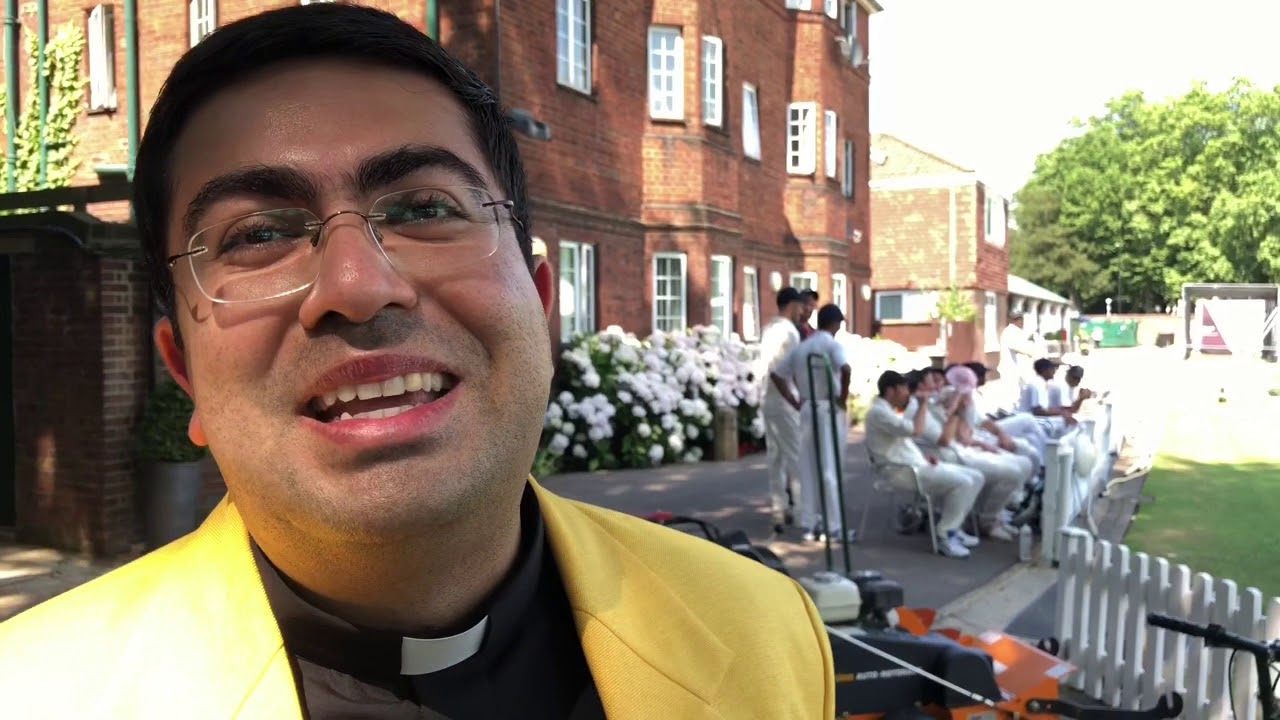
A mosque at the site of the Battle of Tour.

In the video, head of the project (I assume) talks about it also as a cultural center.  That’s when a loud gong went off in my head.

Some years ago I wrote a post about these “cultural centers” and the ribat.  HERE

That post was about the effort to build a mosque at Ground Zero in NYC, where the Twin Towers fell.

In that previous post, I link to commentary by Amir Taheri.   He described the situation of the NYC mosque from the point of view of Islam.  To wit:

Should there be a mosque near Ground Zero? In fact, what is pro posed is not a mosque — nor even an “Islamic cultural center.

In Islam, every structure linked to the faith and its rituals has a precise function and character. A mosque is a one-story gallery built around an atrium with a mihrab (a niche pointing to Mecca) and one, or in the case of Shiites two, minarets.

Other Islamic structures, such as harams, zawiyyahs, husseinyiahs and takiyahs, also obey strict architectural rules. Yet the building used for spreading the faith is known as Dar al-Tabligh, or House of Proselytizing.

[…]

In fact, the proposed structure is known in Islamic history as a rabat — literally a connector. The first rabat appeared at the time of the Prophet.

The Prophet imposed his rule on parts of Arabia through a series of ghazvas, or razzias (the origin of the English word “raid”). The ghazva was designed to terrorize the infidels, convince them that their civilization was doomed and force them to submit to Islamic rule. Those who participated in the ghazva were known as the ghazis, or raiders.

After each ghazva, the Prophet ordered the creation of a rabat — or a point of contact at the heart of the infidel territory raided. The rabat consisted of an area for prayer, a section for the raiders to eat and rest and facilities to train and prepare for future razzias.  Later Muslim rulers used the tactic of ghazva to conquer territory in the Persian and Byzantine empires. After each raid, they built a rabat to prepare for the next razzia.

[…]

I think that is what is going on with this building at the site of the Battle of Tours.

Sts. Nunilo and Alodia, pray for us.


Posted in Our Catholic Identity, Semper Paratus, The Coming Storm, The Drill, The future and our choices, The Religion of Peace | Tagged , , , , ,
9 Comments

07/07/07 – Summorum Pontificum 11 years on – WORK HARDER!

Today is the 11th anniversary of the release of the text of the “Emancipation Proclamation”, Summorum Pontificum, Benedict XVI’s great gift to the whole Church.  It went into effect on 14 Sept 2007.

I’ve called this important Motu Proprio a key element of Benedict’s “Marshall Plan“.

It is working.   Just today, for example, I read a pastoral letter of a diocese which evinces a measure of underlying anxiety: it smacks of concern that, perhaps, people are being attracted to a more traditional way of receiving Communion, and it pushes lots of standing and sticking out of hands and not preaching about Confession.  Interesting.

While Benedict wrote that the two forms of the Roman Rite shouldn’t be mixed, he also clearly indicated that there should be, would be, a “mutual enrichment”.  It was his desire to “jump start”, as it were, the organic development of liturgical worship which the post-Conciliar sudden imposition of an artificially created rite had snuffed out.  What he called “mutual enrichment” I call “gravitational pull”.  As it turns out in the observable world, the greater an object’s mass, the greater its gravitational force.  The more profound and denser “mass” of tradition is producing the stronger gravitational pull on the less profound “mass” of post-Conciliar innovation and liturgical antinomianism.

Does that mean that the gravitational pull is not mutual?  Hardly!  I think that many traditionalists celebrate the older, traditional rites with great devotion now precisely because of our sad experiences since the Council and precisely because they have recovered an accurate application of the important Conciliar message about “active participation” from the wreckage of the intervening decades.

Great strides have been taken in the last 11 years.   The number of places where the older, traditional form of the Roman Rite has grown.  Importantly, many young priests have learned and are learning their traditional rite.  This will have a long-term effect on how they understand themselves as priests.  In turn that will change how they say Mass and preach, which will produce beneficial knock-on effects in their congregations.

It’s all about revitalizing our Catholic identity.  If we don’t know who we are as Catholics, we can’t be effective as Catholics in our families or the public square.

In the next few years we will see a sharp downturn in the numbers of people going to Mass and in the number of priests and, probably, churches available.  We have to start thinking about this.  What are we going to do?   I know one thing: where tradition is tried, tradition seems to succeed.

We need to think inside the box so that we properly think outside the box.  Our sacred liturgical choices matter enormously for our future.

WE ARE OUR RITES!

Say a prayer today for Benedict XVI.  Support your priests and bishops in their good initiatives to restore tradition for the benefit of the whole local Church you belong to.  Promote traditional worship wherever possible.  Work harder!

¡Hagan lío!

Posted in Benedict XVI, Hard-Identity Catholicism, SUMMORUM PONTIFICUM, The future and our choices | Tagged , ,
35 Comments

ASK FATHER: It’s getting hard to find suitable godparents

From a reader…

QUAERITUR:

Thank you for your blog and work. I have frequently found it informative and encouraging.

My wife and I, God willing, expect our third child shortly, but have been in difficulty over selecting suitable godparents.

A married relative would seem ideal, except that I know he dissents from the Church on same-sex marriage and gender theory. Is it permitted to use him and his wife? Would it be prudent? It’s rather challenging to find appropriate godparents and this relative would be a good candidate in other respects.

Congratulations on your growing family!

It seems to me that holding such odd ideas and dissenting from the Church’s teachings would, to my way of thinking, instantly disqualify a person from being a godparent to my child.

It seems that, as families get smaller, and as people move more frequently, and as fewer of our relatives and friends practice their Catholic Faith, it is getting harder and harder to find good godparents.

What to do?

Can. 872 says that there should be a sponsor “insofar as possible” (quantum fieri potest).

This means that a sponsor/godparent isn’t required for the validity of the sacrament.

Nevertheless, it is important to have at least one. Can. 873 makes provision for two, but no more than two.  It also says that if there are two, there must be one male and one female.

Also, keep in mind that, although the present Code is silent on this point, if you have someone in mind who isn’t in the area or who can’t make it to the baptism, the Church has traditionally provided that a proxy can stand in.  This can be done for confirmation as well.  The Code does, however, provide by can. 1104 §1 a proxy for marriage… though that’s for the exchange of matrimonial consent and not for the other important part.

You might talk to your parish priest about this.  It may be that this has come up before and that there are solid people in the parish who have stood in when necessary.

FATHERS!  It could be useful for parishes to provide a roster of good, faithful, committed Catholic parishioners willing to serve as godparents for those, like our interlocutor, who are in a bind.

Perhaps some lay people, with their priest, could start up an apostolate, a Confraternity St. John the Baptist for Baptismal and Confirmation Sponsors.  St. John the Baptist, after all, is the patron saint of godparents.  Although, alternatively, perhaps the apostolate could be named in honor of St. Vito of Corleone.  In a pinch the pastor could run his finger down the list of potential sponsors while muttering, “I’ll give you a sponsor you can’t refuse.”

Posted in "How To..." - Practical Notes, ASK FATHER Question Box, Canon Law, Liturgy Science Theatre 3000 | Tagged , ,
16 Comments

Progress of the Vatican Cricket Team

Here is something fun, from a reader and friend in London (slightly edited):

The Vatican Cricket Team and the Archbishop of Canterbury’s 11 combined to form a Christian Team which played against a multi-faith team made up of Jews Muslims, Sikh and Hindus at the nursery ground at Lord’s today.

The Christian team batted first and in 20 overs scored a mammoth 185 for 4 wickets, which the multi-faith team could not best.

The Vatican team also played against Stonyhurst College yesterday and won.

It’s scheduled to play another game tomorrow at Windsor Castle against the Queen’s Guards, with Her Majesty hosting the team to tea afterwards.

It was a good afternoon of cricket and good spirits. Gin and tonic mainly. With dropped catches by the Christians followed by shouts for ‘excommunication’ of the poor fielder.

Here’s a video I made for Your Reverence.

YouTube thumbnailYouTube icon

Posted in Lighter fare | Tagged
12 Comments

ACTION ITEM! The “Birettas for Seminarians Project” Continues

action-item-buttonPope Francis wants some “lío”.  “¡Hagan lío!”, right?  I’ve got some “lío” right here.


Some time ago I started a project whereby seminarians could contact the great John Hastreiter at Leaflet Missal Co. with their hat size. Meanwhile, you readers get in touch with the same John and you buy a biretta.  John then sends the biretta out.  You remain anonymous to each other.

Thus, the Biretta For Seminarians Project.

I just received a note from John:

I have 23 men on the waiting list for a biretta.

TWENTY-THREE men waiting… waiting… waiting….

YOU, dear readers, have to date supplied 170 birettas to seminarians.  Kudos.  Some thank you notes from seminarians with spiffy new birettas HERE and HERE.

Very often I met seminarians who received your birettas.  They always tell me with big smiles about receiving them.

Seminarians and potential donors…

Contact John in “church goods” at Leaflet Missal in St. Paul – 651-209-1951. 

The phone navigation system at Leaflet isn’t great.  Be patient.

If John is away, leave a voicemail with your phone number and he will call you back ASAP.

DO NOT WRITE TO ME TO ASK FOR A BIRETTA!  (If a seminarian can’t get that straight then… how are your grades?!?)

There is also a SATURNO FOR CLERICS Project.  Ask John about that, too!

Posted in ¡Hagan lío!, "How To..." - Practical Notes, ACTION ITEM!, Seminarians and Seminaries | Tagged ,
2 Comments