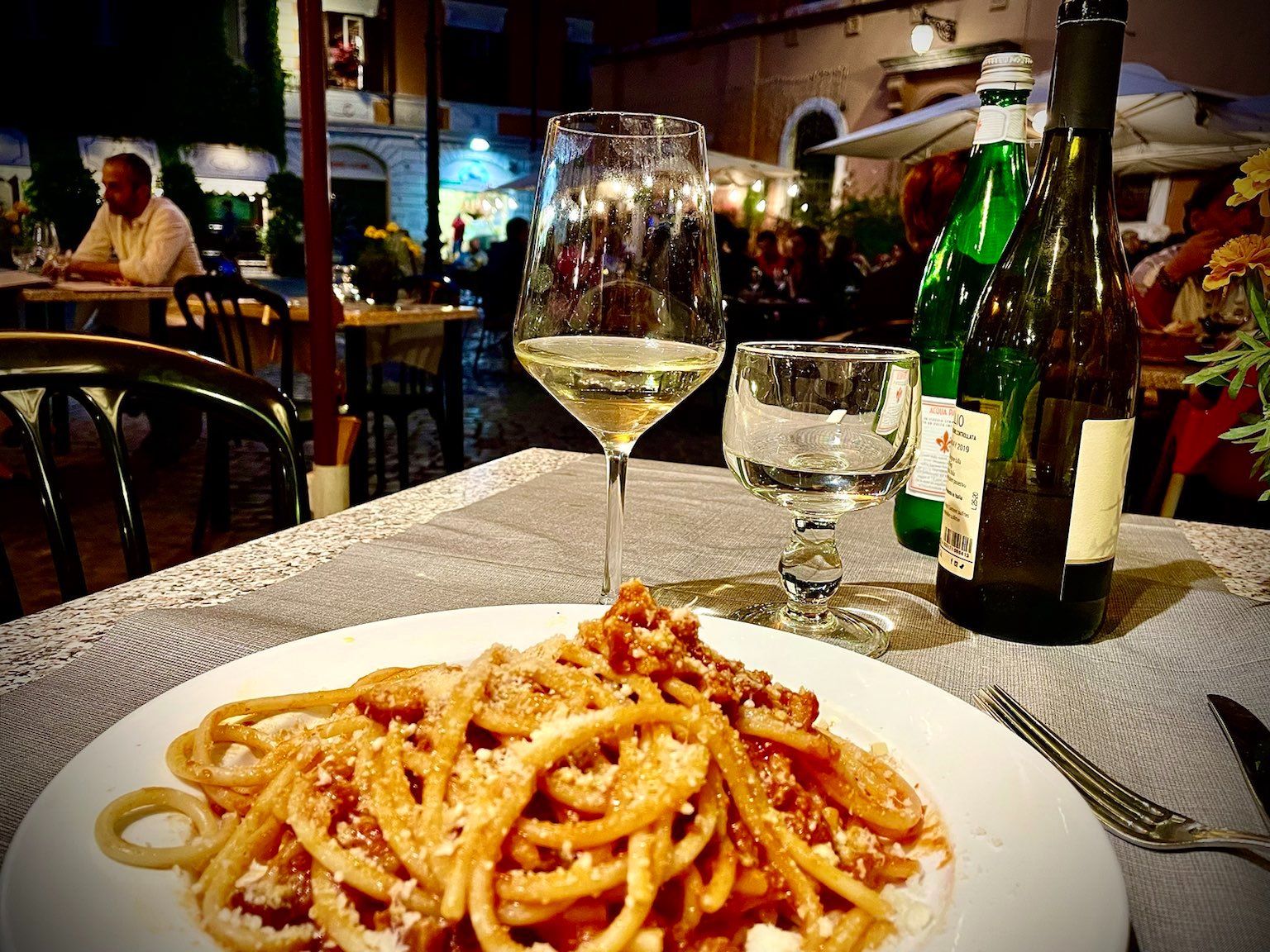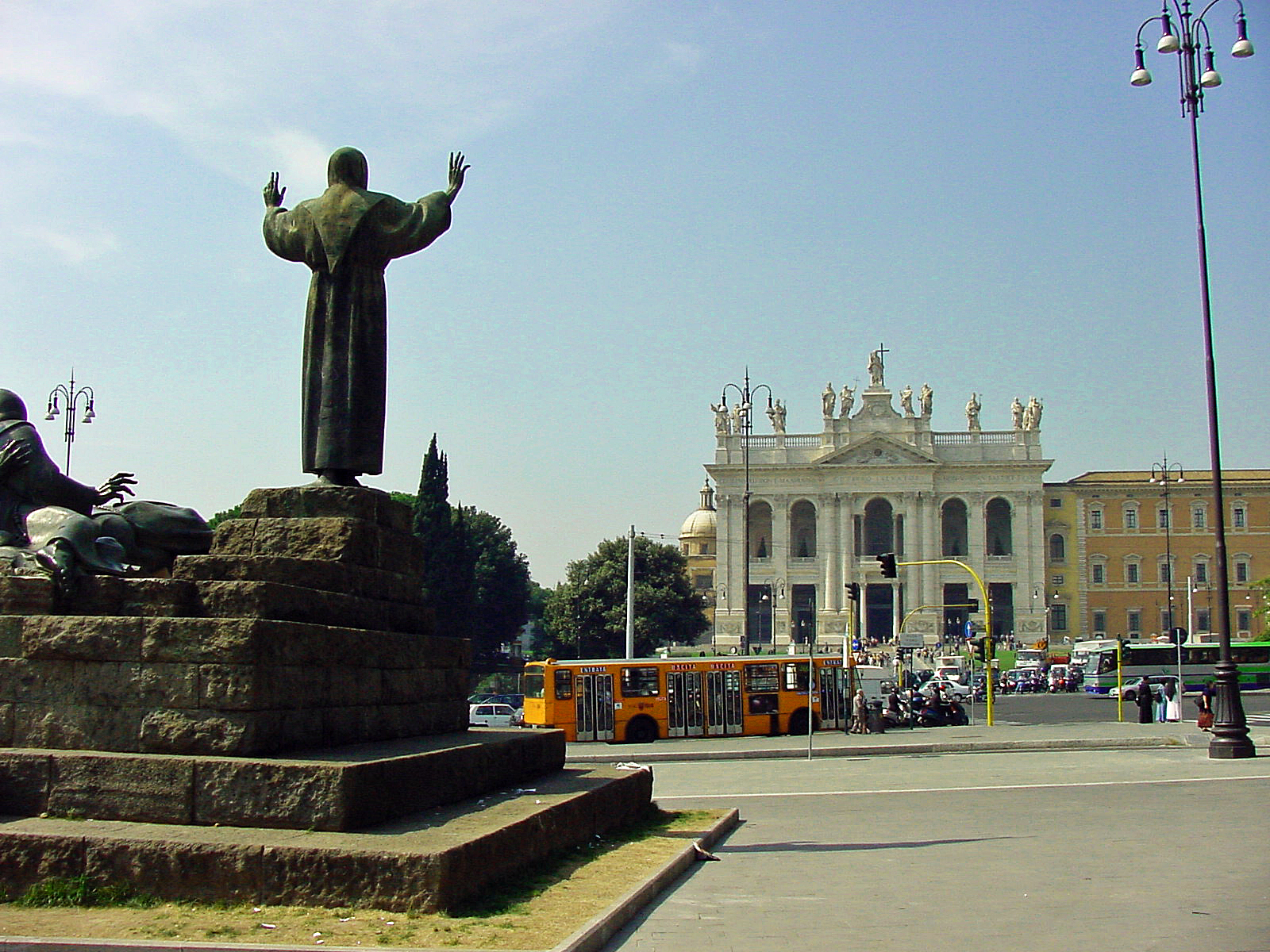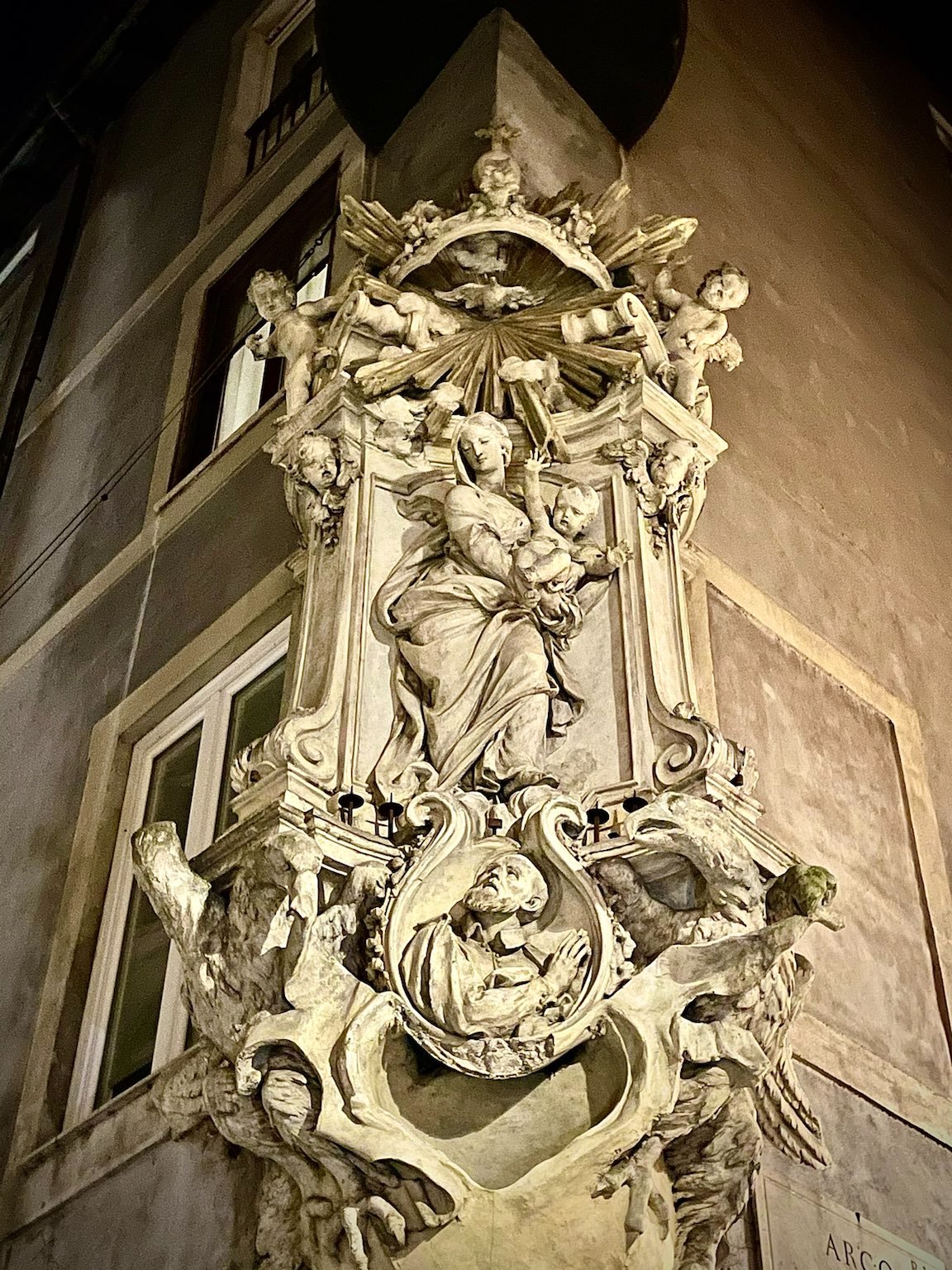
Photo by Bree Dail.

Do you have some good news for the readership? How are things going with churches where you are? Is COVID Theater diminishing? (Good news, please.)
For my part, I am so very grateful for help I have received from people regarding my packing and moving. I see the light at the end of the tunnel. I am grateful to my benefactors and will say Mass for them again today. I am happy that things are loosing up a bit around here. Yesterday at the grocery store and another shop many people were without masks and they were pretty much grinning at everybody.
This is really nice. A little relief from the grim.
I love the Viennese tradition of decorating the monstrance with flowers on the feast of Corpus Christi. pic.twitter.com/QF4o0ER7TV
— Peter Anthony (@FrPeterAnthony) June 3, 2021
“Katonda!”
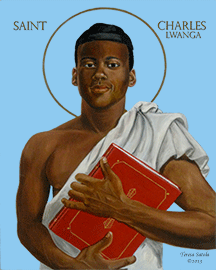
This year today is the Feast of Corpus Christi, but in 2022 I will with real pleasure be able to celebrate, using the Traditional Missale Romanum, the Feast of St. Charles Lwanga. The decree Cum sanctissima allows for the celebration of Saints canonized after 1962 provided that the day is not some feast that would outweigh it.
Here is what I posted on St. Charles in the past.
If you don’t know this saint, be sure to read it. It is powerful.
As “Pride” month continues…
Today is the feast of St. Charles Lwanga and companions, murder victims and martyrs of homosexual depravity.
Today we might also contemplate the various ways in which the State is encroaches in our lives in this regard and tries to force us to do things that are repugnant to nature and to God’s laws.
Today we should especially ask God to forgive and convert all those who in any way have contributed to or succumbed to any aspect of what is rightly called toxic “gender theory” and called demonic, due to its origin.
More on that HERE and HERE and HERE.
Today is the feast day of a saint, who died as a martyr especially because he resisted a sodomite king, who was furious that he and many children wouldn’t have homosexual sex with him.
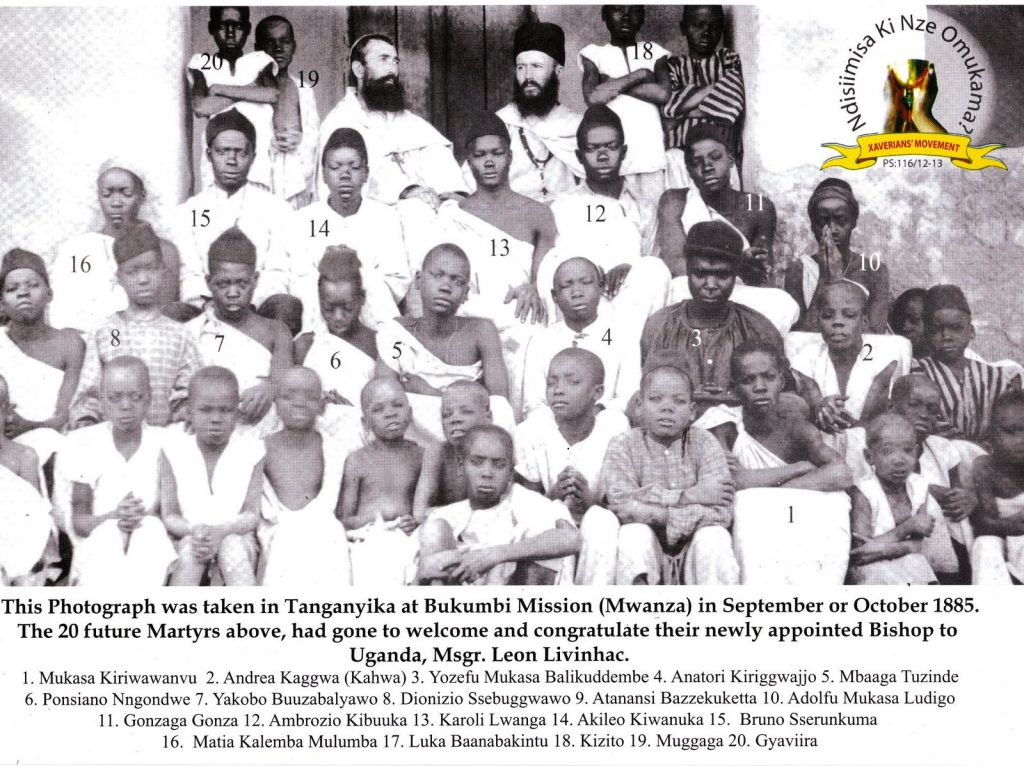
St. Charles Lwanga and many other martyrs died between 1885 and 1887 in Uganda. They were beatified in 1920 and canonized by Pope Paul VI in 1964.
In 1879 the White Fathers were working successfully as missionaries in Uganda. They were, at first well received by King Mutesa.
Then there came a new pharaoh, as it were.
Mutesa died and his son, Mwanga, took over. He was a ritual pedophile.
Charles Lwanga, a 25 year old man who was a catechist, forcefully protected boys in his charge from the king’s sodomite advances.
The king had murdered an Anglican Bishop and tried to get his page, who was protected by Joseph Mukasa, later beheaded for his trouble. On the night of the martyrdom of Joseph Mukasa, Lwanga and other pages sought out the White Fathers for baptism. Some 100 catechumens were baptized.
A few months later, King Mwanga ordered all the pages to be questioned to find out if they were being catechized. 15 Christians 13 and 25 identified themselves. When the King asked them if they were willing to keep their faith, They answered in unison, “Until death!”
They were bound together and force marched for 2 days to Namugongo where they were to be burned at the stake. On the way, Matthias Kalemba, one of the eldest boys, exclaimed, “God will rescue me. But you will not see how he does it, because he will take my soul and leave you only my body.” He was cut to pieces and left him by the road.
When they reached Nanugongo, they were kept tied together for seven days while the executioners prepared the wood for the fire.
On 3 June 1886 (that year the Feast of the Ascension… therefore a Thursday), Charles Lwanga was separated from the others and burned at the stake. The executioners burnt his feet until only the charred stumps remained. He survived. His tormentors promised that they would let him go if he renounced his Faith. Charles refused saying, “You are burning me, but it is as if you are pouring water over my body.” They set him on fire.
As flames engulfed him he said in a loud voice, “Katonda! – My God!”
“Katonda!” … Better than “Wakanda!”
His companions were also burned together the same day. They prayed and sang hymns.
Charles Lwanga and companions died for their Faith and because they resisted the intrinsically evil of homosexual sex.
[…]
Charles Lwanga, pray for us!
Katonda!
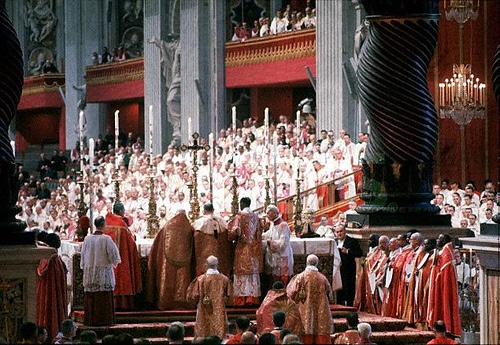
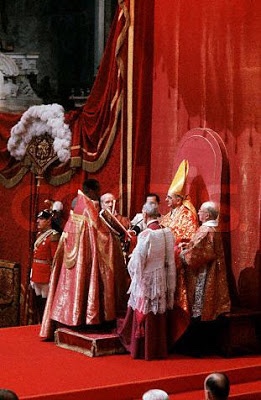
Thanks to the Great Roman™. Here are a couple of shots of the canonization ceremony for St. Charles and companions…. during Vatican II.
Quite self-referential and maybe even neo-Pelagian, I’d say.
Meanwhile….
Regular requests made to the #Vatican asking when the #McCarrickReport will be released have gone unanswered. June 20th will be the 2nd anniversary of his removal from public ministry. The investigation was announced in Oct. 2018. Today is Feast of Sts Charles Lwanga & Companions pic.twitter.com/9m6OQmkwHq
— Edward Pentin (@EdwardPentin) June 3, 2020
From a reader…
QUAERITUR:
Hi Father,
Here is a hard one, and a subject you would probably rather avoid. But I truly need to talk to someone and I hope you can offer a few words of advice.
What happened was that I was using an international dating site and chatting with women around the world, just kind of fun and harmless. A middle aged black women from Sudan messaged me and I responded. We chatted just a few seconds amiably and she asked if I had a picture. Well, stupidly, I sent her a picture of myself and my Golden Retriever. She immediately disconnected from the website. Then a couple days later reappeared there and said “Good Evening. I ran out of airtime.” However that was not the case.
I was now getting red splotches on my arms and hands and just a day after this my back gave out and I have had to begin using a cane to get around. Several times in my house my nose started bleeding spontaneously. I have had a number of very strange uncanny experiences right in my own home (I can send you physical evidence of some of this by email). Worst of all, I am no longer able to sleep at night. I have to take Ambien or there is not one minute of sleep, night after night. Ambien can only be taken short-term.
This will gradually wear me down and I am frankly scared. If this goes on indefinitely my health will collapse. The idea that a woman in Sudan, a witch presumably, can or would do this to an American on the other side of the world for no obvious reason is bizarre I know. But it has happened to me and I don’t know what to do. I need some advice badly.
Many thanks for any insights you may be able to provide.
An “international dating site”. What could go wrong?
Firstly, check in with your doctor.
I took this seriously and consulted an highly experienced exorcist.
His advice.
1. Order this book: HERE
Say the pertinent prayers for your case – there are many there. Do a severance of soul ties. “In the name of our Lord Jesus Christ, I (state his name) renounce and reject all the legitimate soul ties all illegitimate soul ties with the Sudanese witch. Everything I gave her, I take back. Everything she gave me, I return to her. In the name of the father, and of the Son, and of the Holy Spirit. Amen.” (THREE TIMES).
2. Contact the diocese and ask to meet with the diocesan exorcist. If the diocese refuses to help, seek to seek a local priest who is willing to do prayers of deliverance and minor exorcisms, using this book: HERE
3. If they all refuse to help contact the Society of the Most Sorrowful Mother: https://dolorans.org
Comment moderation is ON.
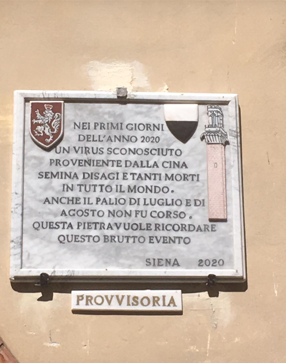
In the first days
of the year 2020
an unknown virus
which came from China
sewed distress and many dead
in the whole world.
Moreover, the Palio of July
and August was not run.
This stone is intended to call to mind
this terrible occurrence.
 At Catholic Culture Phil Lawler has some thoughts about the rumored document that would enervate Benedict XVI’s “emancipation proclamation” Summorum Pontificum. Such a document, as rumor has it, could be a kind of ecclesiastical “slave act of 2021”* which would return diocesan priests to forced servitude to their ring-wearing masters in the big house.
Lawler argues that such a document would be a “disaster”, and not just for those who desire the Traditional Latin Mass, the number of whom is growing very fast. In some places it is the most vibrant sector of the Church’s life due to the increasingly dedicated participation of young people and, especially, young families.
It is Lawler’s view that the “disaster” also resides in the contradiction that the document implies. Benedict XVI said that the TLM was never abrogated and said that “what earlier generations held as sacred, remains sacred and great for us too, and it cannot be all of a sudden entirely forbidden or even considered harmful”.
If this rumored document is released, to the detriment of all these priests and people, a signal of traumatic discontinuity will be sent through the whole Church. As Lawler puts it:
[I]f Pope Francis can contradict the teaching of Pope Benedict, what is to prevent a future Pontiff from contradicting Pope Francis? Anyone who is genuinely interested in preserving papal authority (as opposed to gaining a temporary advantage in intramural debates) should recognize the mischief this draft document could cause.
[…]
If he contradicts the teaching of previous Pontiffs—if he suggests that what was once sacred is sacred no longer—he attacks the base on which his own authority rests.
In Rome there is a saying: “Morto ‘n papa se ne fa un antro. … A Pope dies, you make another.” Popes come and go. If one Pope, through sheer use of force, overturns the work of his predecessor, the next Pope could do the same to his work. And so on and so on. The whole institution is undermined. This works on every level, in the Church: diocesan chanceries… parishes. A new pharaoh bishop or pastor arrives and – BAM! – he overturns what his predecessor worked to build.
Ironically, those who want to bring down a sledge-hammer on the aspirations of young people and so many priests spent the pontificates of John Paul II and Benedict XVI whining about top-down use of power.
But that is the sort of hypocrisy with which the Left rolls.
It is possible that the rumors about a new “slave act of 2021” are part of a “false flag” campaign of disinformation, to discomfit and incite those who have traditional aspirations. It is possible.
But, as the Romans say, “Fidasse è bbene, nun fidasse è mmejo”.
*The Fugitive Slave Act of 1850 was ” arguably the most hated and openly violated piece of federal legislation in the nation’s history.”
Things scroll off the main page pretty quickly, so here is a reminder of some recent posts.
Also, this is an opportunity to thank my benefactors. Some of you have sent things from my wish list. Some of you have signed up for my “200” project. Some of you have sent ad hoc donations. Some of you – I hope more of you! – use my link to enter Amazon for online shopping. Some of you – I hope many more of you! – use my link to buy Mystic Monk Coffee. Thank you VENMO donors!
Use phone camera
Every little bit helps and I am grateful to all of you. As a matter of fact, in this truly chaotic time in my life, lots of big changes, your support – both spiritual and material – is a morale boost as I see it come in.
As a result, for a few weeks now I have been more regularly celebrating Holy Mass for my benefactors, whose names I note when I know them and whose names I don’t I commend to God who does. Today, as a matter of fact, I will say Mass for my benefactors. It is my duty and pleasure.
 Please note that I exclude from the following list of links my daily Rome Shot. Click that to pull them up.
 ASK FATHER: How to make a “Trinitini” Martini for Trinity Sunday and avoid committing heresy?
 St. Gregory VII – “equivalent saint”
 WDTPRS – Pentecost Sunday: Holy Church’s warp and weft remain strong
I am grateful to St. Joseph for his recent aid. Get to know him.
Consecration to St. Joseph: The Wonders of Our Spiritual Father: Calloway, MIC Donald


Coat of Arms by D Burkart
 fac on A matter of grave concern: People who pray together before or after Mass.: “Wouldn’t praying various prayers together, or even one, after Mass be one of those so-called “organic developments” of the liturgy…”
 on WDTPRS – 21st Sunday after Pentecost: My strengths support yours. My sins weaken us all.: “Thank you for the hard work you do in “unpacking” all this and doing it every week. I wouldn’t have…”
 on A matter of grave concern: People who pray together before or after Mass.: “The fact the headline he chose for his letter is “St. Michael the Archangel, pray for us”…….. rude is a…”
 on A matter of grave concern: People who pray together before or after Mass.: “I again return to my hobby horse of questioning whether obedience to the bishop extends to prayers said outside of…”
 on A matter of grave concern: People who pray together before or after Mass.: “Unfortunately, the Catholic Church doesn’t have a “Prayer to St. Michael Problem”. The Catholic Church has a clerical homosexual problem…”
 on ROME 26/10– Day 16: Baronius… and traitors: “Caesar Baronius. His life story is fascinating. We have the same portrait of him in our basement.” on ASK FATHER: “Are the faithful who go to the SSPX being sacramentally forgiven in confession, or not?”: “@WVC and @Fr. Kelly: I really appreciate you taking the time to try to answer my questions. What I now…”
 on A matter of grave concern: People who pray together before or after Mass.: “Here again, it’s the consistency which is truly frightening. A truly random lot of attitudes and dispositions would not generate…”
A Daily Prayer for Priests








They find you a pro-life agent in your area who commits to giving a portion of the fee to a pro-life group!

PLEASE subscribe via PayPal if it is useful. Zelle and Wise are better, but PayPal is convenient.
A monthly subscription donation means I have steady income I can plan on. I put you my list of benefactors for whom I pray and for whom I often say Holy Mass.
In view of the rapidly changing challenges I now face, I would like to add more $10/month subscribers. Will you please help?
For a one time donation...


Help Monks in Wyoming (coffee – UPDATED LINK) and Norcia (beer) and the wonderful "Soap Sisters" of Summit, NJ!


Please follow me on Twitter!








Visits tracked by Statcounter
since Sat., 25 Nov. 2006: