And now a brief glimpse of Rome, sent by a good friend of mine who recently moved there for work.

Photo by Bree Dail.
I hope to post a daily glimpse.
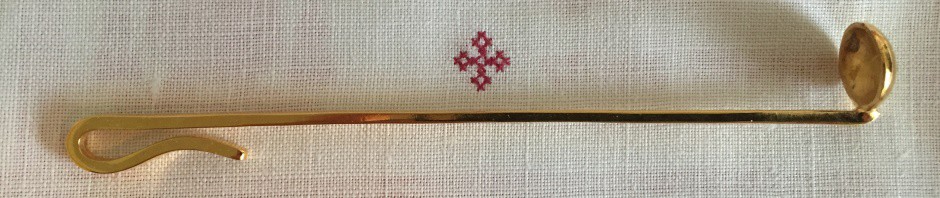
And now a brief glimpse of Rome, sent by a good friend of mine who recently moved there for work.
Photo by Bree Dail.
I hope to post a daily glimpse.
At Crisis there are three article titles that caught my eye and garnered an instant reaction before I read them.
Don’t get into the bad habit (that some of you readers here do have) of reacting to titles without reading the posts. So, do as I say, not as I do. o{]:¬)
In any event the three titles (which the articles are also worth reading)
How Great was John Paul II? by Eric Sammons
The War Has Only Just Begun by Austen Ruse
Will the Bishops Stand Up to Biden? by Crisis editors
To which I respond…
How great was John Paul II? Yes, truly a great and profoundly influential figure in the Church and on the world. Usually we need the perspective of many decades, even centuries to recognize this. However, the confirmation of his greatness can be found in the fact that since about 2013 there has been a systematic program to obscure, erode and dismantle John Paul’s Magisterium. I am reminded of how the Left (Dems, homosexualists, Communists and other totalitarians) obscure by silence about truth, erode by twisting words and laws out of recognition, and dismantle by trying to disarm citizens and marginalize opponents.
The War Has Only Just Begun? Truer words have not been written. The fact is that the war has been going on for a long time. Think Dewey, Gramsci, et al. And in the Church, any number of noxious influences from Tyrell onward. We are witnessing the fruits of their evil seed today.
Will the bishops stand up to Biden?
ROFL!
When have they stood up to anything in the last few decades? Individuals, yes. But the question is about the conference.
At this point on is tempted to introduce a perennial query about collective nouns for bishops.
Seriously, do read articles.
And, viz that final title, I don’t think they are going to have to even be tempted to grovel before Biden. The election isn’t over.
And there’s this.
The Supreme Court of the United States – presently with all the seats filled (thanks to Pres. Trump and the GOP lead Senate) – has allowed the execution of a convicted rapist murderer. The sentence was carried out. Bryer, Sotomayor and Kagan dissented. HERE
That led to this on Twitter.
Jesuit homosexualist James Martin attacked Catholic Justice Amy Coney Barrett. Laura Ingraham (quondam SCOTUS clerk) responded.
This liberal pundit/cleric is both wrong on the substance and wrong in implicitly urging Catholic justices to follow the Pope instead of the Constitution and precedent. https://t.co/qigwjPP8kZ https://t.co/6Obynicy7c
— Laura Ingraham (@IngrahamAngle) November 20, 2020
Justice Barrett co-authored an article in 1998 in Marquette Law Review about Catholic judges and capital cases. (Evangelium vitae was issued in 1995) HERE
They are obliged by oath, professional commitment, and the demands of citizenship to enforce the death penalty. They are also obliged to adhere to their church’s teaching on moral matters.
And…
To anticipate our conclusions just briefly, we believe that Catholic judges (if they are faithful to the teaching of their church) are morally precluded from enforcing the death penalty. This means that they can neither themselves sentence criminals to death nor enforce jury recommendations of death. Whether they may affirm lower court orders of either kind is a question we have the most difficulty in resolving. There are parts of capital cases in which we think orthodox Catholic judges may participate-these include trial on the issue of guilt and collateral review of capital convictions. The moral impossibility of enforcing capital punishment in the first two or three cases (sentencing, enforcing jury recommendations, affirming) is a sufficient reason for recusal under federal law. But mere identification of a judge as Catholic is not a sufficient reason. Indeed, it is constitutionally insufficient.
There is an important footnote about their choice of the word “orthodox” which is worth attention.
And…
Affirming Chandler’s conviction has the effect of sending him to death. And the appellate judge knows this, because he does his job after sentencing (not before, like the trial judge). But his cooperation is also material rather than formal. In reviewing the sufficiency of the indictment, the jury instructions, and the trial procedure he takes no position on the issue of capital punishment. He would reach the same conclusion if the defendant were sentenced to life in prison. Apart from its unintended consequences, his act (reviewing the fairness of the trial) is a good and just thing to do. If he did not sit on the case someone else would, with the same result. On balance, this seems like the kind of material cooperation that is morally acceptable.
To affirm a sentence is not to approve it. To affirm a sentence means that the higher court thought the lower court did its job. It seems that review of a request for a stay of execution would also fall into the shadow of review of a lower court’s sentence.
By the way, Justice Barrett writes in the paper in regard to review of death sentences:
There is a real moral cost to undermining the legal system, even in small ways. If the system were completely corrupt (as, say, the regime in Nazi Germany was) we could ignore this consideration. But it is hardly possible to make that claim about our own legal system. It has flaws-the death penalty is one. On the whole, though, it is a decent and just institution that judges should take care to preserve. If one cannot in conscience affirm a death sentence the proper response is to recuse oneself.’ If the judge does no moral wrong in affirming, he should enforce the law in easy cases, even if he could save a life by cheating.
The whole article is really interesting.
Clearly Justice Barrett has put strenuous effort into working through the dilemma of being Catholic and faithful to the Church’s teachings and being a judge and justice faithful to the Constitution.
I think I’ll go with her on this rather than with the Jesuit’s semi-formed imaginings.
Here’s another thing the Jesuit doesn’t understand.
Just because Francis imposed a self-referential paragraph 2267 in the Catechism of the Catholic Church doesn’t mean that the Church’s teaching on capital punishment has changed.
In Introduction to the Catechism of the Catholic Church (US HERE – UK HERE) Joseph Ratzinger wrote:
The individual doctrines which the Catechism presents receive no other weight than that which they already possess. The weight of the Catechism itself lies in the whole. Since it transmits what the Church teaches, whoever rejects it as a whole separates himself beyond question from the faith and teaching of the Church.
In the same section, Ratzinger said that the CCC is not a “super-dogma”, which can repress theologians in their free explorations.
Let’s stress: “as a whole”.
The Church teaches that capital punishment can be inflicted by the state.
The content of the Catechism is not true because it is the catechism. When you look at the paragraphs in the Catechism you will see that they are founded on Scripture and on what the Church has perennially taught. They are grounded on something solid.
Francis, in changing the paragraph on capital punishment made reference only to something he himself opined shortly before.
I wrote about that HERE.
St. Pope John Paul II taught in Evangelium vitae that capital punishment should not be inflicted in today’s modern context. However, he didn’t try to teach that capital punishment is intrinsically wrong, like abortion or euthanasia. He left the door open, but he said that we shouldn’t go there if at all possible. Catholics in the judiciary have to take that seriously.
Francis, in that murky change to CCC 2267 might have been making a “pastoral plea” to the world, but the language is so confusing that we don’t know what the real impact of the paragraph is. He tried to make it seem like he was saying that the Church changed her teaching because he said something once.
The role of Popes is to make things clearer, not more confusing.
The bottom line is that Laura Ingraham understands this better than the Jesuit… which isn’t a surprise.
Check out also Edward Fesser and Joseph M. Bessette
By Man Shall His Blood Be Shed: A Catholic Defense of Capital Punishment (May 29, 2017)
From a reader comes this apposite passage.
Long-time reader here. Your recent posts (“rants”) about priests
learning Latin and their Rite recalled to mind a passage I believe you will heartily enjoy from an excellent older biography of St. Robert Bellarmine by (Jesuit) Fr. James Brodrick, entitled“Robert Bellarmine Saint and Scholar.” Fr. Brodrick writes of St. Bellarmine’s views on the liturgical fads of his day and on priests learning their Rite. I do believe you have echoed many of his themes with your blog. It seems the Saint’s fellow Jesuits were making mischief even then. The last two paragraphs are too good to pass up.
Enjoy!
———————————- “His scrupulous care for seemliness and exactitude in all the
functions of the Church was evident not only at Capua but throughout his life. Many years later in Rome, he discovered that his brother Jesuits there were not carrying out the prescriptions of the Ceremoniale as accurately as he would have liked. They were addicted to Missae Cantatae in place of High Masses proper with three ministers. Finding that the gentle hints which he gave to the fathers concerned bore no fruit, he addressed the following letter to the General of the Society of Jesus at the time, Mutius Vitelleschi:Rome, May 28, 1617
As the Corpus Christi procession is to take place soon, and as, according to the report, it will be larger and more solemn than ever this year, it seemed to me an opportune moment to set down in writing the reasons why deacons and subdeacons, vested in dalmatics, should officiate at the solemn Masses and take part in the processions.1. This is what is prescribed, without any exception being allowed, by the Ceremonial of Pope Clement VIII and the Ritual of Pope Paul V. That being so, I do not see what right our Society has to adopt a contrary practice, in the view of all Rome. [Plus ça change…]
2. The rite is observed in the churches of the entire Catholic world, in cathedral, collegiate, parish, and conventual churches, no matter to what religious order they may belong. How, then, is our Society to be permitted to act differently, especially since we use the Roman Missal, Breviary, and Ritual, and since we profess to follow in everything the directions of the Holy Apostolic See?
3. It does not look well to see the priest at Masses on solemn occasions taking the deacon’s place in singing the Gospel and the Ite Missa est. This is done, outside our Society, only by country priests, who are not in a position to do otherwise.
4. Important prelates often speak about this novelty and fad of our Society, and I never know what to say in reply.
5. The Society has no constitution nor rule directing us to dispense with deacons and subdeacons. It is nothing more than a local custom. I myself, when in Flanders, have sung Mass with deacon and sub-deacon, and I have acted as sub-deacon when the provincial was celebrant.
[NB] To all these reasons it might be answered that the Society is an active order engaged in external work of a more important kind, and consequently its members have not the time to learn all the ceremonies of High Mass. There are two ways of meeting such a plea. First, the ceremonies are neither so numerous nor so difficult that they could not be learned in half an hour. This I know by experience, as I have sung many pontifical Masses myself in the Pope’s chapel, and also in Capua. The fathers and brothers might learn the ceremonies during a single recreation, if they were coached by someone who knew them well. This might even be a more useful way of spending the time than discussing the gossip of Rome.
In the second place, if it be found too difficult to learn such a
number of ceremonies, why not give up singing Masses and be content with saying Low ones? There is nothing incompatible between a solemn procession and a Low Mass, as may be seen from the example of the Pope on the feast of Corpus Christi. In truth, it is much better not to celebrate solemn Masses at all than to celebrate them unrubrically.”
Quantum potes tantum aude!
That was excellent. Of course Jesuits are infamous when it comes to things liturgical. While there are exceptions to the rule, there is a reason why we designate someone who is bumfuzzled in some matter as being “As lost as a Jesuit in Holy Week.”
Fr. Z kudos to the reader and to St. Robert Bellarmine!
#ASonnetADay – 95. “How sweet and lovely dost thou make the shame…” pic.twitter.com/iXDVqL2Otp
— Fr. John Zuhlsdorf (@fatherz) November 20, 2020
 The Wuhan Devil is intimidating people into suppressing sacred liturgical worship, which is the very life of the Church and of the world. The Eucharist, both Its self and Its celebration, which is Holy Mass and Benediction and Processions, is where we begin and the goal for which we strive. We need Mass, and not just in its minimal expression. For our identity, we need more. Early Christians, as Bp. Schneider reminded us in his book, said, “sine dominico non possumus… without the Sunday Eucharistic liturgy we cannot live”. This is a starting point for our Christian identity in founding or in crisis. Then we need more.
The Tridentine Mass Society of the Diocese of Madison is still working to prepare the tools of the revitalization of our Catholic identity through sacred liturgical worship, sine qua non possumus. Cultus is inseparable from Code and Creed. Our discipline and our doctrine cannot be isolated from our sacred liturgical worship, which is the primary mode by which we fulfill the essential virtue of Religion.
Here are some shots of the new set of violet vestments for Solemn Mass which will arrive on the threshold of Advent. They are from Sacra Domus Aurea (tell her Fr. Z sent you!).

UPDATE: It seems to me that the photos I received were just a little too “warm”, so I “chilled” them a bit to compensate for the yellow cast. I base that on another photo sent at a different time. Here is the result.


The Tridentine Mass Society of the Diocese of Madison receives donations from all over the world. It is a 501(c)(3) organization, can do so without any service fees extracted by mailing a check to:
Tridentine Mass Society of Madison
733 Struck St.
P.O. Box 44603
Madison, WI 53744-4603
Or, you can donate via PayPal (which does extract a service fee), using the button below:
In these days of continuing COVID-1984 we are – for one reason or another, good or bad – struggling just to have Masses, we are nevertheless pushing forward and preparing for the day when things look brighter.
And, one of these days, a new cathedral will be built here. The old one burned in 2005 (arson). A cathedral will need worthy vestments.
And so we keep plugging along, dalmatic by dalmatic. One might say that we are “coping”.
Next… hopefully, a gold Pontifical set.

 From a reader…
QUAERITUR:
I have a friend who is seeking to get married. Due to various factors, the priest doing the marriage doesn’t know enough Latin to do the EF Mass, but could do the EF marriage rite. That said, is it permissible to do an EF wedding rite followed by an OF Mass, either the OF wedding Mass or the OF Mass of the day?
Wellll…. do one or the other.
And, frankly, … excuse me for a moment but…
For the LOVE OF GOD, Fathers! LEARN SOME LATIN.
This is YOUR RITE.
What does it mean for a priest who doesn’t know a) the language of his rite and b) the RITE of his Rite?
“I don’t know Latin!”
Some say this with sincerity and it wasn’t their fault … at first.
But Latin has been around for a while, priests of the Latin Church have known about Latin for a while, and Latin is NOT algebraic geometry.
Forgive me, dear lay readers. I get frustrated when I hear about priests who won’t put their backs into learning some Latin. Little boys can learn the responses, after all.
As I cool a little, I note that the priest in question is willing to do what he can, the marriage rite. And good for him. I’m sure this is a good man – a good and busy priest – with a lot of things on his plate.
Yet another priest who was cheated and lied to in seminary and ripped off in his formation by formators who blatantly violated Canon Law with their eyes wide open and a smirk.
Seminarians and priests… now bishops, too… were victimized. They were cheated of their patrimony.
Men should want to rise up and claim what was uncharitably and illegally denied! Don’t just lie there like a victim.
On the other hand, there are also priests out there who give lip service to tradition and yet do not apply themselves. They talk a lot, but they won’t do the work. And it wouldn’t take them all that long if they would just put a couple of their projects to the side and really go all in. At least for a while.
Some times I hear what is turned into an excuse not to do the work to learn Latin: “St. John Vianney had a hard time learning Latin.. and he’s a saint!”
Well… yeah.. St John Vianney struggled with Latin and other studies. SO?!? That doesn’t mean that he didn’t try. He struggled by he TRIED! He worked on it. He learned enough Latin and his other topics to an adequate point that he could be ordained.
He learned enough Latin to say Mass.
John Vianney didn’t have to learn enough Latin to write odes in Alcmanian strophes or declaim with Ciceronian clausulae. Perhaps if today’s priests are being hampered by, I dunno, something akin to the French Revolution and the Terror or being drafted into the army, we could cut a little slack. St. John struggled, but he tried. In contrast to his exemplary holiness, he may not have been the sharpest knife in the drawer. But saints try. St. John tried. If he could try, then we can try.
Back to the topic. Mechanically, I guess one could have the marriage rite at one point and then a Mass at another point. But…
Fathers. I know that the Latin thing is daunting. It seems to be really hard. All good things worth pursuing are. The Enemy of your soul will try to keep you from it by planting doubts. Muscle through.
Start somewhere. Anywhere. Duolingo. Rosetta stone. Good old dependable Wheelock.
Sorry, dear lay people. Sometimes it just has to come out. Maybe some of you out there will encourage your priests to learn Latin and be willing to provide resources, etc.
Comment moderation is on.
In a moment of madness I tuned in for a few minutes to Fox (which I haven’t looked at since the election with the exception of Tucker… on YouTube). As I tuned in, I took interest because I live in Madison.
Anyone see anything wrong with this?

Good grief.
#ASonnetADay – 94. “They that have power to hurt and will do none…” pic.twitter.com/VwY2NpMSME
— Fr. John Zuhlsdorf (@fatherz) November 19, 2020
If you are wondering, that target was at 30′, Glock 19.
The other day a friend of mine was driving through town on his way to his ancestral place and he dropped by for some supper. Astute and considerate, he had spotted in a used bookstore a slim volume he thought I might enjoy, both for the fact of of the practical application of its contents but also for the sake of its ethos.
I present the Nero Wolfe Cookbook

Less expensive newer edition: HERE and HERE
There are some great breakfast ideas within along with great old photos of New York City.

I’m glad to have this. On Amazon it seems to be pretty spendy, but it could be that you can find a used copy or even get it from a library, which often have lots of cookbooks.
It also spurred in my memory an old post about memorable meals in literature, which I repost hereunder.
___
A friend – quite the eclectic reader – sent an interesting piece from The Telegraph of a few years back.
10 Great Meals In Literature
Wow. Great idea. How did the selector do? Let’s see.
1) Mad Hatters Tea Party in Alice in Wonderland by Lewis Carroll
2) The Episode of the Madeleine in In Search of Lost Time (Remembrance of Things Past) by Marcel Proust
3) Apple Pie and Ice Cream in On The Road by Jack Kerouac
4) Please, Sir, can I have some more from Oliver Twist by Charles Dickens
5) Gifts of Food in To Kill a Mockingbird by Harper Lee
6) Try Pots’ steaming chowder in Moby Dick by Herman Melville
7) Melting Raclette cheese on a fire in Heidi by Johanna Spyri
8) Sandwiches and coffee in Millennium by Stieg Larsson
9) Cheese Sandwich and Malted Milk in The Catcher in the Rye by JD Salinger
10) Avocados in The Bell Jar by Sylvia Plath
How did he do?
I can think of a few others.

Coat of Arms by D Burkart









A Daily Prayer for Priests


They find you a pro-life agent in your area who commits to giving a portion of the fee to a pro-life group!

PLEASE subscribe via PayPal if it is useful. Zelle and Wise are better, but PayPal is convenient.
A monthly subscription donation means I have steady income I can plan on. I put you my list of benefactors for whom I pray and for whom I often say Holy Mass.
In view of the rapidly changing challenges I now face, I would like to add more $10/month subscribers. Will you please help?
For a one time donation...



Help Monks in Wyoming (coffee – UPDATED LINK) and Norcia (beer) and the wonderful "Soap Sisters" of Summit, NJ!


Please follow me on Twitter!










Visits tracked by Statcounter
since Sat., 25 Nov. 2006:


