Shhhh! Don’t tell Beans about the Monitum against Teilhard

From Massimo “Beans” Faggioli today:

Shhhh!

What Beans doesn’t understand is that the Pontifical Council for Culture (soon to be extinct) recognizes that there is a Monitum against Teilhard!

Perhaps this news (and tweet) will alert others who should know that it exists.

And by the way, if the Monitum were inert anyway, as so many liberals claim, why would the PCC draw attention to it and ask that it be revoked?

Shhhh!

Don’t tell anyone, especially the libs.  As they stagger drunkenly once again into their celebratory conga line – which looks a bit incongruous in their Mao Suits – they draw more attention to the fact that the strange Jesuit’s writings contained

“such ambiguities and indeed even serious errors, as to offend Catholic doctrine”.

If they were ambiguous then and seriously erroneous then… they still are.

In 1981, when the same Council observed the 100th anniversary of the Jesuit’s birth, the Congregation for the Doctrine of the Faith reminded everyone about the Monitum and said that it was still in force.

Oh yes, Teilhard de Chardin was a Jesuit.

UPDATE:

Yes… this isn’t exactly a surprise.

If it’s twisted and a little weird, it’s sure to garner full-throated support from certain corners.

Posted in Lighter fare | Tagged ,
19 Comments

A priest takes his parish EAST. AD ORIENTEM!

I found a priest’s blog with a charming name: Father Talks Too Fast

Back in October Fr. Joseph Faulkner preached a sermon about ad orientem worship. It’s a little weird at first, but he gets good points across.  He posted the audio of the sermon.

Fr Faulkner also posted his explanation of what he’s up to.

“I Wish I Had a Hat” — Ad Orientem
This weekend we inaugurated ad orientem worship at St. Wenceslaus—that is to say, the priest and the people face the same direction at Eucharistic Prayer. We are going to do this as a spiritual exercise for at least a year. There were about ten more things I wanted to say, but the homily was already nineteen minutes long. I will post more later in this blog and in our bulletin.

If you are skeptical about this practice or even frustrated by it, I encourage you to read or listen to this homily slowly and prayerfully. And then I encourage you to experience it. Many a person has thought they were going to hate it but once they gave it a chance they even preferred it.

He has a follow up, to which he links.

Father is pastor in… I’m not making this up… WAHOO, Nebraska.

Moving back to ad orientem worship is urgently needed.  We MUST revitalize our sacred liturgical worship.  This is the key to the renewal of our Catholic identity and, hence, our effectiveness in the world around us as individuals and as a Church functioning in the wider world.

Out of appreciation for his efforts, I’ve sent Father one of my coffee mugs.

Posted in ¡Hagan lío!, "How To..." - Practical Notes, Liturgy Science Theatre 3000, Mail from priests, Turn Towards The Lord | Tagged ,
5 Comments

Do you have your 2018 Ordo?

It’s that time of year again.

Time to get your 2018 ORDO.

The new liturgical year begins with Advent on 3 December.canons

“Ordo” is a short way of referring to the booklet called Ordo divini officii recitandi sacrique peragendi” or else “Ordo Missae CElebrandae et divini officii persolvendi…” etc.  In other words, the book tells you what Mass and Office to say each day and what your options are.  It is an indispensable tool.  Each diocese or region has

The Canons at St. John Cantius in Chicago sent me their copy for the Usus Antiquior first, so they get the first mention.  (Take THAT Angelus Press!)

They have included many helpful things in the back of the book, including special prayers, such as the Consecration to be prayed on the Feast of Christ the King.

Here is an English translation of the super important De Defectibus, from the front of the Missale Romanum.

Can English be used?   This tells you how.

How loud can Father be and when?

A fine old custom returning to use.

And, yes, permanent deacons are deacons.

As you can see there are all sorts of goodies in the back.  That is a sampling.

Get your Ordo before Advent, which is coming up fast.


Posted in "How To..." - Practical Notes, Liturgy Science Theatre 3000, SUMMORUM PONTIFICUM, The Campus Telephone Pole | Tagged , ,
2 Comments

Summorum Pontificum in KOREAN

This came in with the huge email bag this morning.

I’m a Canadian living in Korea and I go to the once-a-month TLM every chance I get. I was hoping you could post a link to the Korean translation of Summorum Pontificum from the Korean Bishops Conference on your blog:

https://tinyurl.com/hl9p4n4

Since you have such a large readership, it might help other Koreans (especially priests) find such documents. Sadly the bishops aren’t too keen on it. There is also an audio version here:

https://youtu.be/zheHjU9L1Qk

And of course most important of all please pray for the success of the TLM in Korea (and if you could make a visit here to offer mass!). Take care. God Bless.

I would very much like to visit Korea some day and meet the traditional community there.

Also, for those interested in Korean, there is a Korean version of the Internet Prayer available.

Posted in SUMMORUM PONTIFICUM | Tagged ,
1 Comment

10 Questions for Bishops. Can’t answer? Then perhaps this isn’t your strongest suit.

Originally posted on: Nov 20, 2017 @ 11:03

In my text chats one of my interlocutors proposed:

“Get someone from ACTON INSTITUTE to make a list of 10 questions that any bishop or priest should be able to answer correctly BEFORE opining about economic justice.”

“Great idea!”, quoth I.  “Let’s see what we can come up with! ‘¡Hagan lío!’, after all.”

I put on my thinking cap and spoke with someone who writes about economic issues and came up with the following list.

  • What function do prices play in an economy?
  • What role does the Federal Reserve play in the American economy?
  • What are the three functions of money?
  • What is competitive advantage?
  • What is the average consumption of GDP by governments in OECD countries?
  • In what time period did capitalism first emerge?
  • What is moral hazard and how does it shape economic decision-making?
  • What percentage of taxes are paid by the specific tax bands in the United States? And, by the way, do you know how long the tax code in the United States is?
  • How do you create wealth?

There.  Just a few questions.  They’ll prompt me to review.

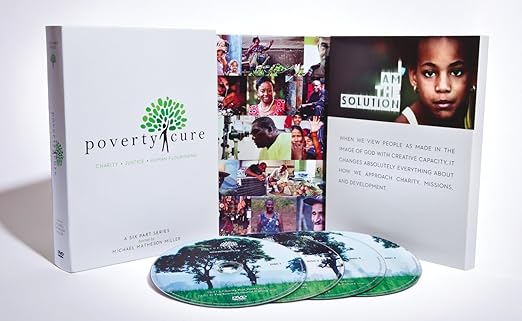
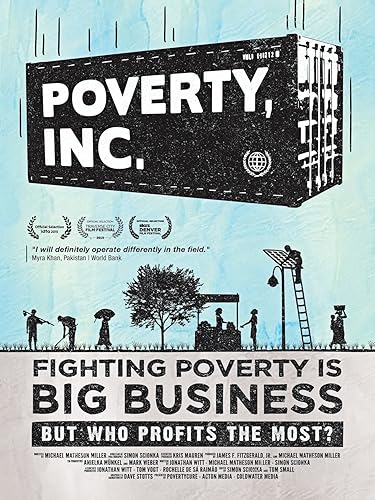
By they way… if you haven’t seen the Poverty Cure series and then Poverty Inc. you are in for an eye-opening experience.  These would be great to show to… a lot of people.

Poverty Cure

US HERE – UK HERE

Poverty Inc.

US HERE – UK HERE

Powerful stuff.

UPDATE:

And this video just arrived in my box. It seems to be related.

YouTube thumbnailYouTube icon

Posted in ¡Hagan lío!, "How To..." - Practical Notes | Tagged , ,
22 Comments

OLDIE POST Hell and the Enemy exist. Priests and bishops who don’t teach about them will probably wind up there.

Originally posted in 2012.  I think it still pertains.

___

Before anything else, let it be said that, “God is faithful, and he will not let you be tempted beyond your strength, but with the temptation will also provide the way of escape, that you may be able to endure it.” (1 Cor 10:13)

Now…

The greatest accomplishment of the Enemy of our souls is to deceive people that the Enemy doesn’t exist … that there is no Hell … that people can’t go to Hell … that no one is in Hell, blah blah blah.

Let’s be clear about this.  Catholics are obliged to believe in the existence of the Devil and of Hell.  These are de fide doctrines taught by the Church without the possibility of error.

The Devil exists.  Fallen angels hate you with a malice no human can imagine.  They have an intellect that surpasses our mere human faculties in a way that we can’t fathom.   They never tire.  They are relentless.  They are real.  If you don’t believe in the existence of malicious fallen angels, you are in serious risk of joining them in Hell.  This is no joke.

Hell is real.   In Hell, the damned suffer the pain of sense and the pain of loss (hint: unending pain is a key feature of your eternity in Hell). We can choose to separate ourselves from God and go to Hell by sinning, by resisting grace, by failing to repent, by failing to do what we ought, by presuming that we are automatically saved.  If, when you die – and you will die – you are not in the state of grace, if, when you die – and it is going to happen to you – you are not living the friendship of God, you will go to Hell.  Once you are there, that’s it.  There is no hope of ever changing your lot.  There is no changing your mind.  There is no possibility of leaving even after a million billion years.

If you don’t believe in Hell, you will probably wind up there. And if you chose that fate, it would be better for you had you never been born (cf Matthew 26:24).

STOP.  Spend a moment to examine your conscience.

NOW.  Try to imagine what goes through the mind of the damned soul during his first 30 seconds in Hell.

I remind you of these harsh realities because I don’t want to go to Hell.

Priests and bishops who don’t teach about Hell will probably wind up there.

It is my job to keep as many of you as possible out of Hell.

I will therefore tell you about Hell and then echo St. Augustine, who told his flock “Nolo salvus esse sine vobis! … I don’t want to be saved without you!” (s. 17.2)

We must be clear about the Four Last Things: Death, Judgment, Heaven, Hell.  Sure, we must also talk about heaven and goodness and joy and kitties and sunshine and birthday cakes.  Let’s get this Hell and Devil thing straightened out because it’s been neglected for far too long.

We must also work to revive the Sacrament of Penance, which was instituted by Christ as the ordinary way our sins would be forgiven.

Going to confession, making a sincere confession of all your mortal sins in kind and number, can keep you out of Hell.  Got that?

GO TO CONFESSION.

What a victory for the demons of Hell it has been to run down the Sacrament of Penance until it is barely thought of in some parishes.

Fathers, if you are parish priests and have the obligation to hear confessions, hearing confessions can help to keep you out of Hell.  If you are parish priests and you don’t hear confessions or you won’t teach about confession, you will probably go to Hell.  Just try to deny it.  Just.  Try.
Posted in Classic Posts, Four Last Things, Hard-Identity Catholicism | Tagged , , , , ,
9 Comments

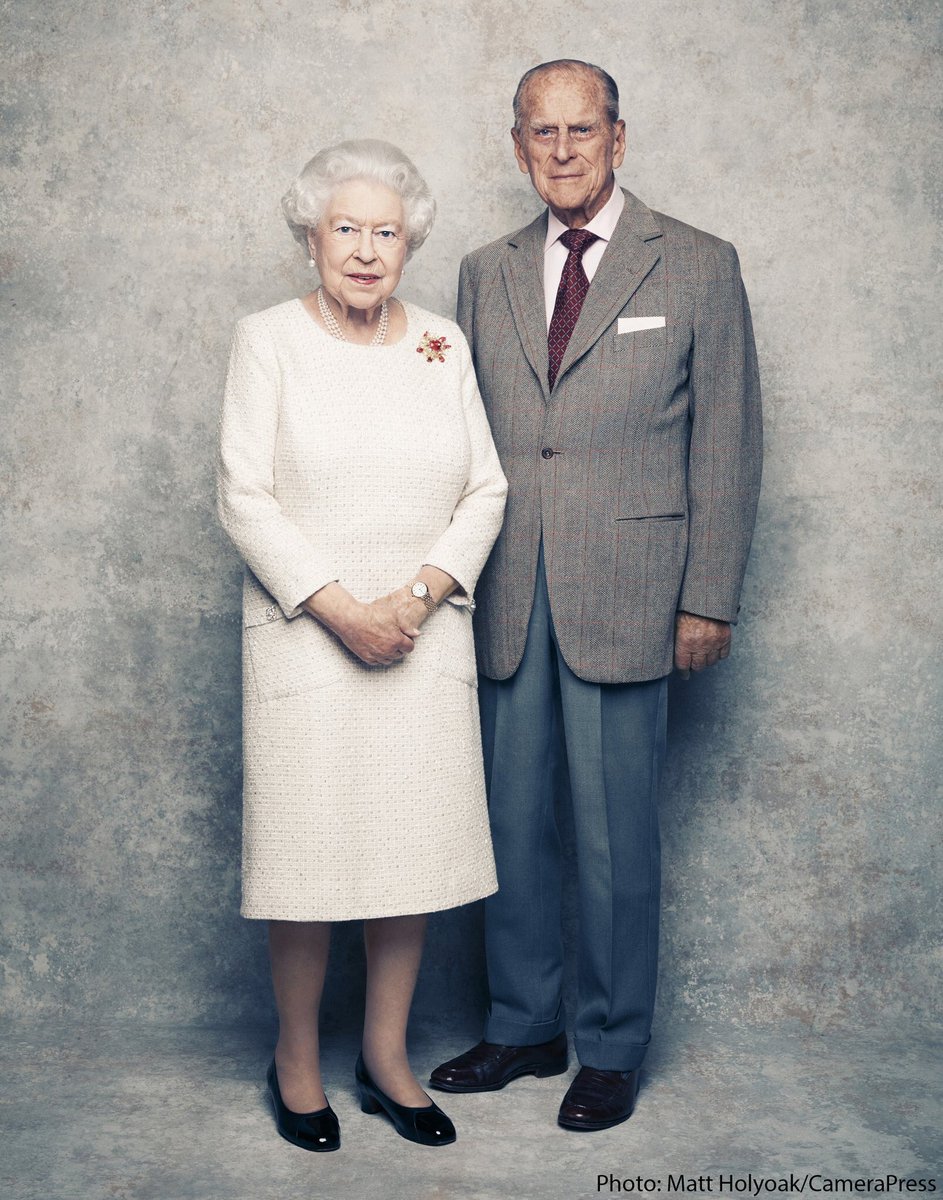
Congratulations to Elizabeth and Philip #70thweddinganniversary

Queen Elizabeth and Prince Philip… 70th wedding anniversary today.

That’s wonderful.  May all marriages be enduring.

I read that the bells of Westminster Abbey would peel for 3 hours today in their honor.  HERE


Posted in Just Too Cool | Tagged ,
1 Comment

Solemn Mass, Traditional Roman Rite at 2017 National Catholic Youth Conference #NCYC2017

I had mentioned elsewhere that there would be a Solemn Mass in the Traditional Roman Rite at the National Catholic Youth Conference last Friday.

You want some lío?

We’ve got your lío right here!

One of the participants sent some photos:

Photos are from Sean Gallagher.

This is how it’s done, people.

¡Hagan lío!

Reason 4 for Summorum Pontificum… YOUNG PEOPLE.

Posted in ¡Hagan lío!, "How To..." - Practical Notes | Tagged
7 Comments

ASK FATHER: Why don’t Catholics sing?

Spirit of Vatican II music personified?
Discuss!

From a reader…

QUAERITUR:

When I go to Mass in the Ordinary Form, I notice that the congregation sings, even if it’s a more traditional parish that sings the ordinaries and the Pater Noster in Gregorian chant in Latin.

Meanwhile, when I go to the Extraordinary Form, the congregation is silent and stoic when it comes to the responses, the Ordinaries and the traditional hymns at the start and end of Mass. Why are Latin Mass Catholics so stubborn when it comes to singing those parts which are proper to the congregation to sing? It seems like the Ordinaries, being of much simpler chant notation than those of the propers, is designed for congregational singing. I know popes in the pre-Vatican II days have even written on this issue. What gives?

I know.  It is like pulling teeth.  As a kid, I remember Lutherans being able to sing in 4 part harmony from the pew hymnals.  Then again, when pretty much all you have is the Word and preaching, that’s what you get.

Catholics have that and a lot more.  That “more” involves mystery, the tremendum et fascinans that drives us to our knees in silent awe and longing.

That’s one reason.

Moreover, it was a clerical thing for centuries to sing texts.  Non clerics were not encouraged to sing Mass texts.  That, of course, went by the wayside a long time ago.  Some priests still bash it into people that they should never make a peep at Mass.

Lately, however, it seems to me that most people – who have some dignity – don’t really want to sing the infantalized slop that passes for church music over the last few decades.  Honestly, most of the dopey ditties have about as much appeal as the theme song to Gilligan’s Island and as must depth as the commercial jingle for My Little Pony.  Remember that?  HERE  Lord have mercy.

Each time you order this great coffee, come first to this blog and click HERE.  That way you’ll get great coffee and, each time, also help me.

And then there are the aging hippy pop combos who are there because “that’s what young people want”. How embarrassing!

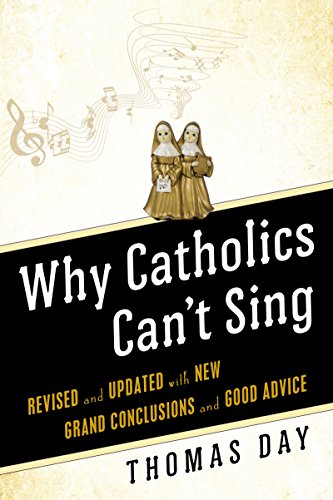
I recommend the classic book, which tackles the issue, by Thomas Day, now revised and updated since it was first released.  He hits the nail on the head many times.

Why Catholics Can’t Sing: Revised and Updated With New Grand Conclusions and Good Advice  

US HERE – UK HERE

Posted in "How To..." - Practical Notes, Liturgy Science Theatre 3000 | Tagged ,
27 Comments

ASK FATHER: Where to get a decent cassock?

From a reader…

QUAERITUR:

My husband serves for the Traditional Latin Mass at our parish. He has mentioned that he’d like his own cassock and surplice for Christmas.

Do you know of a good place to get a nice looking one that won’t break the bank? Thanks and God Bless!

I think it is a good idea for men who serve regularly should have their own cassocks and surplices.

In general, you can go to your local Catholic religious goods store, if there is one where you live.  They should have a range of cassocks and they can order if necessary.

If you are not near such a store, in these USA please contact my friend John in church goods at Leaflet Missal in St. Paul – 651-209-1951 Ext-331. 

John coordinates the Biretta For Seminarians Project.   He is a traditionalist, at heart.  Therefore, he stocks and know how to get the good stuff.  He won’t steer you wrong.

Posted in "How To..." - Practical Notes, ASK FATHER Question Box | Tagged
9 Comments