ASK FATHER: Priest took ill at homily, another priest took over

15_10_06_De_defectibus_03First, I must remind readers that, to ask a question – ASK FATHER Question Box – please use the ASK FATHER contact form in the top menu.  Don’t just send questions, even if you have some prior email contact with me.  I can’t do things that way.  Use the contact form.  I generally just delete what I don’t recognize.  And short is good.

That said, this is one I didn’t delete.

From a reader…

QUAERITUR:

Unfortunately, the Monsignor saying mass yesterday fell ill during the homily. […]

The homilist had been in the confessional during the Mass of the Catechumens before coming out to give the homily. He quickly vested and was able to take over and complete the mass, starting with the Credo.

A question was posed later by a curious parishioner as to whether the priest should have started over from the beginning or if it was ok for him to start at the point Monsignor had gotten to… […]

This situation is foreseen in the document De defectibus … Concerning Defects… that might be encountered during Mass.  It is found in the front part of the traditional Missale Romanum.  It was elminated – to our tragedy, disgrace, and woe – for the “reformed” rites after Vatican II.   I suppose they thought that it was too rigid.  In any event, De defectibus describes all sorts of situations that come up in the course of time and says how they ought to be handled.

I suppose one justification for ejecting De defectibus, apart from the antinomian spirit stemming from an overly optimistic view of man in an era of revolution that was sweeping away order in our worship of God, was that rubrics were long considered the stuff of moral theology.  De defectibus also states that if the priest himself does something wrong, he would sin either venially or mortally.  Indeed, the explicit statement of mortal sin for abuses, kept priests in check.  Granted that, in the hands of some of the Jansenistic tendency that could also lead to scrupulousness and a rigidity that many wanted to throw off when the 60s struck, but there was greater order and reverence in our liturgical worship of God and you didn’t have to wonder what strange variation you would encounter from church to church.

In the case wherein the celebrating priest for some reason or another is impeded from continuing Mass before the consecration, De defectibus instructs that Mass should be broken off… not continued at all.

Here is the text:

33. If before the Consecration the priest becomes seriously ill, or faints, or dies, the Mass is discontinued. [That was the situation described.]  If this happens after the consecration of the Body only and before the consecration of the Blood, or after both have been consecrated, the Mass is to be completed by another priest from the place where the first priest stopped, and in case of necessity even by a priest who is not fasting. If the first priest has not died but has become ill and is still able to receive Communion, and there is no other consecrated host at hand, the priest who is completing the Mass should divide the host, give one part to the sick priest and consume the other part himself. [Do you see the intimate unity of priest and Host?] If the priest has died after half-saying the formula for the consecration of the Body, then there is no Consecration and no need for another priest to complete the Mass. If, on the other hand, the priest has died after half- saying the formula for the consecration of the Blood, then another priest is to complete the Mass, repeating the whole formula over the same chalice from the words Simili modo, postquam cenatum est; or he may say the whole formula over another chalice which has been prepared, and consume the first priest’s host and the Blood consecrated by himself, and then the chalice which was left half-consecrated.
34. If anyone fails to consume the whole Sacrament aside from cases of necessity of this kind, he is guilty of very grave sin.

It goes on to describe the infamous “Spider Dilemma”, about which I have written in a jocular fashion before. HERE

But do you see how logical this is?

And, do you see how important it is all considered?

Can you contrast the spirit in these instructions with the attitude often encountered in many modern priests regarding care of the Eucharist?

So, Father should not have continued the Mass.  Mass is a whole.   Alas, in these days of lax and incomplete instruction – no fault of the priests’ in general – and in these days of rampant concelebration, which give the impression that herds of priests are all doing the same time so what’s the difference who says what, we encounter odd solutions to all too human situations.

Holy Church has been at this Mass thing for a looooong time, and she is the greatest expert in humanity that the world has ever known.  These situations do come up.  If you can think of one, it has probably happened… though I am not sure about whether or not we have had the instance of a priest being abducted by aliens after consecrating the Host but before the chalice… etc.   But De defectibus would probably sort it quickly.

De defectibus is really useful!

Reading De defectibus especially through the lens of Pope Benedict’s Post-Synodal Exhortation Sacramentum caritatis (which presents us with a reflection on the priest’s ars celebrandi) could be of enormous practical use to seminarians and younger priests today.

Posted in "How To..." - Practical Notes, ASK FATHER Question Box, Hard-Identity Catholicism, Liturgy Science Theatre 3000 | Tagged , ,
14 Comments

Your Good News

Do you have some good news for the readership?   It’s Monday, and we all need some.

For my part, Delta finely managed to produce my luggage… at 1:30 AM.  It only took them 5 hours to get it here from the airport, which is 20 minutes away.  But, it came intact and unmolested, or relatively so.   I think Delta should give me the miles that my bag racked up.  Maybe you could suggest the same to @Delta.

Also, this morning I went with friends to a coffee shop for breakfast and, as we were ordering, a young feller entered in a plain black cassock and fascia.  “Hmmm”, quoth I.  After we completed our orders, I marched over to him, introduced myself, and invited him to sit with us, which invitation he accepted.  As it turns out he is a priest of the SSPX, visiting family (hence, not stationed here).  He explained that he had come to the excellent coffee shop with his folks, and didn’t come there alone, but today – fortuitously – he did.  We had a great conversation.   I really like the SSPX priests whom I’ve met.  I look forward to the day we are together and without canonical conundrums.


Posted in On the road, What Fr. Z is up to | Tagged ,
23 Comments

LCWR UPDATE: Fidget Spinner, Mickey Mouse, and interesting gestures

Update from the annual meeting of the LCWR:

Not photoshopped:

17_08_12_LCWR_01

What do you want to bet that some of these same gals back in March 2016, during the political campaign, accused Trump supporters of being Nazis when they raised their hands and promised to vote for him.

17_08_12_LCWR_02

And there’s this:

Sister of Charity of the Incarnate Word Teresa Maya took out a flashing fidget spinner as she closed the annual assembly for the Leadership Conference of Women Religious.

As the conference’s president, she promised the almost 800 sisters gathered before her on Aug. 11 that the presidential triumvirate will be a team that mirrors the trendy gadget: working in unison, producing color.

The ol’ Fidget Spinner approach.  I am reminded of their Great Swirly conflab a couple years ago.  HERE

Another annual gathering concluded on a high note.

Posted in Women Religious | Tagged ,
22 Comments

WDTPRS – 10th Sunday after Pentecost: Mercy and Justice are not opposed

Symbols of Mercy and Justice on the emblem of the Spanish Inquisition

Symbols of Mercy and Justice on the emblem of the Spanish Inquisition

The Collect for the 10th Sunday after Pentecost in the Extraordinary Form survived, sort of survived, to live in the post-Conciliar, reformed Missale Romanum!  You can find it, somewhat wounded, for the 26th Sunday of Ordinary Time in the Ordinary Form Missale Romanum.  I’ll show you the variation, below.

For now, let’s see the Collect as it appears in the 1962 edition.

COLLECT (1962MR)

Deus, qui omnipotentiam tuam parcendo maxime et miserando manifestas: multiplica super nos misericordiam tuam; ut, ad tua promissa currentes, caelestium bonorum facias esse consortes.

In the Novus Ordo version the line “…multiplica super nos misericordiam tuam…” was replaced with “…gratiam tuam super nos indesinenter infunde”.  We will return to see what impact that has on the prayer.

I also looked this prayer up in the ancient Gelasian Sacramentary and found that the version is as it appears in the 1962MR, in not the Novus Ordo.  Sometimes the cutter-snippers of the Consilium restored older readings of ancient prayers that had survived with some changes in the pre-Conciliar Missal.  Not this time.

Let’s now look at some nuts and bolts: vocabulary.

Parco means, “to spare, have mercy, forbear to injure” and by extension, “forgive.”   This verb is used quite frequently in liturgical prayer as, for example, in the responses during the beautiful litanies we sing as Catholics, especially in time of need: “Parce nobis, Domine… Spare us, O Lord!”  During Lent the hauntingly poignant Latin chant informs our penitential spirit: “Parce, Domine… O Lord, spare your people: do not be wrathful with us forever.”

The noun consors comes from the fusion of the preposition for “with” and sors (“lot”), in the sense of a chance or ticket when “casting lots”, destiny, fate).   A consors is someone with whom you share a common destiny.  The densely arranged Lewis & Short Dictionary reveals that consors is “sharing property with one (as brother, sister, relative), living in community of goods, partaking of in common.”  The English word “lot” can be both “fate” and a “parcel of land.”  Having been made in God’s image and likeness, we are to act as God acts: to know, will and love.  Since God spares us and is merciful, then we must be similarly merciful and sparing if we want to be sharers and coheirs in the lot He has prepared for us.

Multiplico, as you might readily guess, means “to multiply, increase, augment”.

Just for kicks, let’s see the obsolete ICEL version we were forced to use for so many dry and uninspiring years.  Remember that a line was changed in the Latin of the Novus Ordo version, as I explained above.

OBSOLETE ICEL (1973):

Father, you show your almighty power, in your mercy and forgiveness. Continue to fill us with your gifts of love. Help us to hurry toward the eternal life you promise and come to share in the joys of your kingdom.

LITERAL TRANSLATION (1962MR)

O God, who manifest Your omnipotence especially by sparing and being merciful, increase Your mercy upon us, [pour Your grace upon us unceasingly, – 2002MRso that You may make those who are rushing to the things You have promised, to be partakers of heavenly benefits.

That “ut, ad tua promissa currentes, caelestium bonorum facias esse consortes” means “so that You may make us, rushing to the things You have promised, to be partakers of heavenly benefits.”  There is a nos in the first part, if not the second.

One of the ways God manifests His almighty nature is by being forgiving and sparing.

God is the creator and ruler, guide and governor of all that is seen and unseen, who keeps everything in existence by an act of His will, and reveals His omnipotence especially (maxime in our Collect) by means of mercy.

By violating God’s will our first parents (the entire human race – which consisted of only two people at the time) opened up an infinite gulf between us and God.  Since the gulf was immeasurable, only an omnipotent God could bridge that gap and repair it.  God did not repair the breach because of justice.  He did so because He loves us and is merciful.

People often slip into the trap of associating justice with manifestations of power.  In this Collect, however, we affirm the other side of power’s coin.  The miracles worked by Jesus in the Gospels, loving gestures to suffering individuals, were acts of mercy often connected to forgiveness of sins.

The affirmation of divine mercy, however, does not diminish God’s justice.  Mercy does not mean turning a blind eye to justice, for that would be tantamount to betraying truth and charity.  Nevertheless, if justice must be upheld because God is Truth, so too must mercy be exercised because God is Love.

For God, balancing justice and mercy is simplicity itself, since He is perfectly simple.  Knowing all things which ever were, are or will be as well as the complexities of each act’s impact and every other throughout history God has no conflicts in the application of merciful justice or just mercy.  He knows who we are, what we need and deserve far better than we do.  Furthermore, in our regard, God acts with perfect love.

For man, especially in times of trial, the simultaneous exercise of mercy and justice is very difficult indeed.  Because of the wounds to our will and intellect, our struggle with passions, it is hard for us at times to see what is good and right and true or rein in our emotions even when we do discern things properly.  We often oscillate between being first just and then merciful. Bringing the two streams of mercy and justice together is a tremendous challenge.  We tend to favor our self-interest, and often balk at what is truly the good for others.

When we encounter a person who can balance justice and mercy together, we are usually impressed by him.  We hold him up as an example of wisdom because he acts more perfectly, more habitually, according to God’s image and likeness.  We are moved by his example because deep inside we know how we ought to be conforming to God’s image in us.  Their example teaches us that it is possible to live according to God’s plan.  The lives of the saints are examples of this.

One way in which we act in harmony with God’s image in us, behaving as the “coheirs” Christ made us to be, authentic Christian consortes, is when we act with compassion.

In biblical terms compassion (Hebrew racham) is often interchangeable with mercy.  The Latin word compassio (from cum,“with” + patior, “to suffer/endure”) means to “suffer with” someone.  Our souls are stirred when we witness suffering and then compassion.  They reveal in a mysterious way who we are as human beings and how we ought to act.  In a now famous passage from the Council’s Gaudium et spes, we are taught that Christ came into the world to reveal man more fully to himself (GS 22).  Christ did this in His every word and deed during His earthly life.  His supreme moment of revelation about who we are was His Passion and death on the Cross.

When we imitate His Passion, in sacrificial love, in genuine “with suffering”, we act as we were made by God to act.   In concrete acts of compassion we, in our own turn, also reveal man more fully to himself!  In our own way we show God’s image to our neighbor and he is moved.  We cannot not be moved unless we are stony and cold and dead.

Pope John Paul II wrote that

“Man cannot live without love […] his life is senseless, if love is not revealed to him, if he does not encounter love, if he does not experience it and make it his own.” (Redemptor hominis 10).

We must experience love, both in giving and receiving. 

When the Enemy planted in the minds of Adam and Eve the doubt that God really loved them, when the certitude of love given and received died, we all died.

The Second Adam offers to bring us back into the certitude of God’s love, through mercy and suffering not only with us, but for us.

Love, given and received, brings us back to life.

Posted in Liturgy Science Theatre 3000, WDTPRS | Tagged , , ,
2 Comments

Concerning concelebration, variety, and fraternity

I have opined that concelebration should be “safe, legal and rare”.  I have, in a jocular mood, posted pics of the sort of concelebration of which I approve. For example:

And here are a couple of guys concelebrating… at different altars.  At this church in Rome this also happens when a scheduled parish Mass is being offered at the main altar.  And nobody freaks out!

17_05_Trin_concelebration

This came to my email today from a reader…

On Friday’s I serve Mass at a side altar while Mass is being said at the high altar. The faithful often see a variety of colors and Masses being said on ferias. [Priests can often say votive Masses, which have different colors for the vestments.]

People who criticize this practice may not realize how beneficial it is for priests in community to say their Masses simultaneously so they can break their fast together afterwards.   [That’s a good point.  And it assumes that priests are fasting before Mass… for more than an hour before Communion as present law stipulates.]

At any rate, today I had the privilege of serving Mass for the feast of St. Philomena.  Common of a virgin martyr with no special collect, it’s rarely said.

St. Philomena has become a patroness of sorts for traditional-minded Catholics, with her relics being discovered at the dawn of Modernity and her feast removed from local calendars a couple years before the Council.

She represents the dichotomy of snobby scholars against popular piety. [Indeed she does.]

We have a number of virgin-martyrs with ancient cults and contemporary accounts.  They’re the most beautiful flowers of the early Church.  Seven are named at the end of the Canon.

There was a time when I was reluctant to embrace her cultus… But St. Philomena, in her obscurity, in her controversy, in her prolific latter-day miraculous activity, convinced me otherwise.

Nice.  Thoughtful.


Posted in Liturgy Science Theatre 3000 | Tagged
28 Comments

North Korea: What to do?

North Korea nightThe present situation with North Korea (NOKO) reminds me of some of the scenarios in the dystopian, apocalyptic and “prepper” genre I sometimes read.   Frankly, the news these days makes me nervous.  I must say I am really glad that the present team is in the White House rather than what we had or what we dodged.  And, yes, I think this would have happened regardless of the administration: the NOKOs are on their own schedule.


So, what to do about North Korea?

Since this blog is probably being monitored by teams from about 17 national security agencies, here’s my idea!

  • Make a deal with China: they annex NOKO.
  • Convince Seoul to agree or at least shut up about it.
  • Give China money to feed the NOKOs for 2-3 years.
  • China allows US and South Korea to invest in economic and commercial infrastructure in China’s new province/protectorate.
  • Result: China gets buffer state it can control (better than it can now), the West gets a place to invest, and the world is rid of a threat.

So, fellas, kick the idea upstairs and see what happens.  This might be better than death and destruction.

And to the teams from the agencies, who probably also watch me through my phone, as I’ve said before, if you send me your addresses, I’ll send you some pizzas!  Deal?

The moderation queue is ON.

Posted in Semper Paratus, Si vis pacem para bellum!, The Coming Storm, The Drill, The future and our choices | Tagged
77 Comments

BOOKS: My recent and future reads

Here are some titles I’ve gotten into lately.

First, this – from my Kindle wishlist – arrived from reader today and I have already started.

The Big Lie: Exposing the Nazi Roots of the American Left by Dinesh D’Souza

US HERE – UK HERE

No, that’s not at all an inflammatory title.

Next I just finished this one. It helped.

Understanding Trump by Newt Gingrich

US HERE – UK HERE

I’ve been scratching my head about Donald Trump for a long time.  Mind you, I would have voted for the corpse of Millard Fillmore in the last election to keep Hillary Clinton out of the White House.  Also, I heard an exasperated Gingrich respond in a TV interview with some talking head that, of course Trump isn’t a “conservative” in the usual sense; he is the natural ally of conservatives and that he would produce more conservative results than republicans who claim to be conservatives.  In any event…

I continue to graze in Cardinal Sarah’s important book.  I finished it some time ago, but you don’t really finish a book like this.

The Power of Silence: Against the Dictatorship of Noise, by Robert Card. Sarah

US HERE – UK HERE

I also finished the following. It was a slog, since it was, well, written in a colloquial style obviously meant for a very broad audience.  The content and concepts were timely, good and inspiring.

Worth Dying For: A Navy Seal’s Call to a Nation by Rorke Denver

US HERE – UK HERE

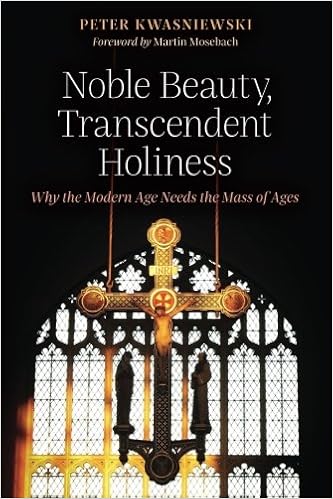
I mentioned already this following book, which is terrific and beautifully written. The author and I are in a virtual, long distance Vulcan mind-meld.

Noble Beauty, Transcendent Holiness: Why the Modern Age Needs the Mass of Ages by Peter Kwasniewski

US HERE – UK HERE

That is one to get and to give, for sure.  I have it also in paperback.  I need to get a copy of this one to the bishop.

Also, to celebrate the centenary of Martin Luther, I’ve now read almost all the essays in this fine collection – which came from a reader via my wishlist

Luther and His Progeny: 500 Years of Protestantism and Its Consequences for Church, State, and Society, edited by John Rao.

US HERE – UK HERE

IMG_1917

Let’s just say that the writers are not about to become Lutherans.

Queued up are

  • The Priest Barracks: Dachau 1938-1945 by Guillaume Zeller (US HERE – UK HERE)
  • The Black Spider by Jeremias Gotthelf (US HERE – UK HERE) – I learned of this author during a lecture at Acton University this year.  I hope the English is as good as I hear the German is.
  • In Defense of Nature: The Catholic Unity of Environmental, Economic, and Moral Ecology by Benjamin Wiker (US HERE – UK HERE) Great writer.  Commonsense and intelligence applied.  His 10 Books That Screwed Up the World: And 5 Others That Didn’t Help is a must.
  • Rediscovering Americanism: And the Tyranny of Progressivism by Mark Levin (US HERE – UK HERE)
  • Benedict XIV and the Enlightenment: Art, Science, and Spirituality by Rebecca Messbarger (US HERE – UK HERE)

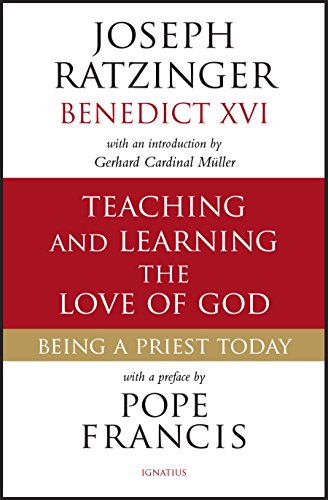
And I must mention:

Teaching and Learning the Love of God: Being a Priest Today

US HERE – UK HERE

I’ll be picking this one up frequently and reading the short offerings within.

Posted in REVIEWS, What Fr. Z is up to | Tagged
2 Comments

ASK FATHER: Can I go with my children to SSPX Masses twice a month?

José Gallegos y Arnosa faithful at massFrom a reader…

QUAERITUR:

Lets cut to the chase my soul is torn. I asked the Blessed Mother to save my children and give them Catholic friends (they know NONE right now) I have lived my whole life without knowing someone who is actually simply up and down Catholic. (The Church teaches it they believe it). I am aware that there are no Conservative, progressive, liberal, or traditional Catholics. There are only people who believe the faith and people who don’t (many of the latter wear collars but lets skip that). I have never had the benefit of a latin mass. Till the other day. SSPX mass. My mind is blown small explosion but there you go. I cannot stop going to the NO. The Blessed Mother has explained to me that they need me. That sounds arrogant but that is not entirely what I mean. They need people attempting to be holy. They need grace and someone to ask the Mother of God to merit it. (my merits tend to be things only a mother could love.) Can I go to this mass part time? technically its Valid but not licit which covers every mass I have ever seen in this desert called Australia. I have never seen a mass that requires and instills so much humility. That drives you to humility. Arrogant people can’t sit through that mass. Prideful people cannot sit though that mass, and if they do their pride will surly begin to die or they will stop going. The mass is only in town 2x a month. Can I go to them half the time and go to the NO the other half? My children are getting old enough that they need to hear the faith from someone other than their father. If they are not supported by at least a sub section of society they won’t make it. What do I do here? What is the smart play?

Clearly you are sincere and earnest.  Clearly are you concerned to fulfill your vocation as a father.  Clearly you have a strong devotion to our Blessed Mother and you approach Holy Mass with piety.

From what you write, I discern that you desire the reverence of the traditional form of Mass.  You don’t seem to seek it out in protest against the Novus Ordo.  You seem to be saying that you would more happy attend the Novus Ordo Masses available to you if they were celebrated with greater fidelity and reverence.

From what you wrote, I don’t see any problem with attending the SSPX Masses occasionally, and as you describe.  I’m glad that you also want to continue to attend your regular parish.

Meanwhile, I can assure you that “arrogant people” can and do “sit through that Mass”.  I sense that you are not one of them.  At the same time, we are all works in progress.  Humble and arrogant alike bend the knee… and learn – some quickly, some over lifetimes – to bend the knee of the heart.  It might be helpful to review Luke 18:9-14 before heading off to Mass.

Be good and give a good example.

Posted in "How To..." - Practical Notes, ASK FATHER Question Box, Liturgy Science Theatre 3000, Our Catholic Identity, SSPX | Tagged ,
9 Comments

Response to Ivereigh, Winters, etc. – Model of behavior for converts rooted in the Apostolic Tradition?

Peter and paul disputingAusten Ivereigh wrote a seriously imprudent piece about converts.  Ed Peters schooled Ivereigh about what converts means.  HERE

However, one of the comments under my post about that deserves special attention.

Saul of Tarsus was an (initially unwilling) convert.  So there.

So there, indeed.

I will add is this, from Galatians 2:11

“And when Cephas came to Antioch, I opposed him to his face because he clearly was wrong.”

Hence, we have Paul’s modelling of appropriate behavior for converts rooted firmly in the Apostolic Tradition!

BTW… for all you converts and potential converts out there, here are all the different versions of the verse, from “Bible Gateway”:

KJ21 But when Peter came to Antioch, I withstood him to his face, because he was to be blamed.
ASV But when Cephas came to Antioch, I resisted him to the face, because he stood condemned.
AMP Now when Cephas (Peter) came to Antioch, I opposed him face to face [about his conduct there], because he stood condemned [by his own actions].
AMPC But when Cephas (Peter) came to Antioch, I protested and opposed him to his face [concerning his conduct there], for he was blameable and stood condemned.
BRG But when Peter was come to Antioch, I withstood him to the face, because he was to be blamed.
CSB But when Cephas came to Antioch, I opposed him to his face because he stood condemned.
CEB But when Cephas came to Antioch, I opposed him to his face, because he was wrong.
CJB Furthermore, when Kefa came to Antioch, I opposed him publicly, because he was clearly in the wrong.
CEV When Peter came to Antioch, I told him face to face that he was wrong.
DARBY But when Peter came to Antioch, I withstood him to [the] face, because he was to be condemned:
DLNT And when Cephas came to Antioch, I opposed him to his face— because he was condemned.
DRA But when Cephas was come to Antioch, I withstood him to the face, because he was to be blamed.
ERV When Peter came to Antioch, he did something that was not right. I stood against him, because he was wrong.
ESV But when Cephas came to Antioch, I opposed him to his face, because he stood condemned.
ESVUK But when Cephas came to Antioch, I opposed him to his face, because he stood condemned.
EXB [L?But] When ·Peter [L?Cephas; C?Peter’s name in Aramaic; 1:18] came to Antioch, I challenged him to his face, because he ·was wrong [L?stood condemned].
GNV ¶ And when Peter was come to Antioch, I withstood him to his face: for he was to be condemned.
GW When Cephas came to Antioch, I had to openly oppose him because he was completely wrong.
GNT But when Peter came to Antioch, I opposed him in public, because he was clearly wrong.
HCSB But when Cephas came to Antioch, I opposed him to his face because he stood condemned.
ICB When Peter came to Antioch, I was against him because he was wrong.
ISV But when Cephas came to Antioch, I opposed him to his face, because he was clearly wrong.
PHILLIPS Later, however, when Peter came to Antioch I had to oppose him publicly, for he was then plainly in the wrong. It happened like this. Until the arrival of some of James’ companions, he, Peter, was in the habit of eating his meals with the Gentiles. After they came, he withdrew and ate separately from the Gentiles—out of sheer fear of what the Jews might think. The other Jewish Christians carried out a similar piece of deception, and the force of their bad example was so great that even Barnabas was affected by it. But when I saw that this behaviour was a contradiction of the truth of the Gospel, I said to Peter so that everyone could hear, “If you, who are a Jew, do not live like a Jew but like a Gentile, why on earth do you try to make Gentiles live like Jews?”
JUB ¶ But when Peter was come to Antioch, I withstood him to the face because he was to be blamed.
KJV But when Peter was come to Antioch, I withstood him to the face, because he was to be blamed.
AKJV But when Peter was come to Antioch, I withstood him to the face, because he was to be blamed.
LEB But when Cephas came to Antioch, I opposed him to his face, because he was condemned.
TLB But when Peter came to Antioch I had to oppose him publicly, speaking strongly against what he was doing, for it was very wrong.
MSG Later, when Peter came to Antioch, I had a face-to-face confrontation with him because he was clearly out of line. Here’s the situation. Earlier, before certain persons had come from James, Peter regularly ate with the non-Jews. But when that conservative group came from Jerusalem, he cautiously pulled back and put as much distance as he could manage between himself and his non-Jewish friends. That’s how fearful he was of the conservative Jewish clique that’s been pushing the old system of circumcision. Unfortunately, the rest of the Jews in the Antioch church joined in that hypocrisy so that even Barnabas was swept along in the charade.
MEV But when Peter came to Antioch, I withstood him face to face, because he stood condemned.
MOUNCE But when Cephas came to Antioch, I opposed him to his face, because he stood condemned.
NOG When Cephas came to Antioch, I had to openly oppose him because he was completely wrong.
NABRE And when Cephas came to Antioch, I opposed him to his face because he clearly was wrong.
NASB But when Cephas came to Antioch, I opposed him to his face, because he stood condemned.
NCV When Peter came to Antioch, I challenged him to his face, because he was wrong.
NET But when Cephas came to Antioch, I opposed him to his face, because he had clearly done wrong.
NIRV When Peter came to Antioch, I told him to his face that I was against what he was doing. He was clearly wrong.
NIV When Cephas came to Antioch, I opposed him to his face, because he stood condemned.
NIVUK When Cephas came to Antioch, I opposed him to his face, because he stood condemned.
NKJV Now when Peter had come to Antioch, I withstood him to his face, because he was to be blamed;
NLV But when Peter came to Antioch, I had to stand up against him because he was guilty.
NLT But when Peter came to Antioch, I had to oppose him to his face, for what he did was very wrong.
NRSV But when Cephas came to Antioch, I opposed him to his face, because he stood self-condemned;
NRSVA But when Cephas came to Antioch, I opposed him to his face, because he stood self-condemned;
NRSVACE But when Cephas came to Antioch, I opposed him to his face, because he stood self-condemned;
NRSVCE But when Cephas came to Antioch, I opposed him to his face, because he stood self-condemned;
NTE But when Cephas came to Antioch, I stood up to him face to face. He was in the wrong.
OJB But when Kefa came to Antioch, I stood against him to his face, because there was found in him a dvar ashmah (a thing of guilt, condemnation).
RSV But when Cephas came to Antioch I opposed him to his face, because he stood condemned.
RSVCE But when Cephas came to Antioch I opposed him to his face, because he stood condemned.
TLV But when Peter came to Antioch, I opposed him to his face, because he was clearly in the wrong—
VOICE But when Cephas came to Antioch, there was a problem. I got in his face and exposed him in front of everyone. He was clearly wrong.
WEB But when Peter came to Antioch, I resisted him to his face, because he stood condemned.
WE One day Peter came to the city of Antioch. Then I had to tell him face to face that he had done wrong. He really was wrong!
WYC But when Peter was come to Antioch, I against-stood him in the face [I stood against him into the face], for he was worthy to be reproved.
YLT And when Peter came to Antioch, to the face I stood up against him, because he was blameworthy,

RIBERA Paul Peter Galatians 2

UPDATE:

At CRUX, Ivereigh issued an apology… sort of.  HERE

Posted in Liberals, Lighter fare | Tagged ,
10 Comments

ASK FATHER: Not adding water to chalices for Mass

CLICK TO BUY

From a reader…

QUAERITUR:

Like many other parishes, we have communion under both species. However, the deacon only adds a water to the chalice that the priest is consecrating. He does not add water to the other chalices on the altar. Are those chalices validly consecrated?

The old manuals such as Sabetti-Barrett  describe as a grave violation of law the failure of the priest to add some water to the chalice.  However, they were describing the addition of water to one chalice, not many… which is an innovation in the Roman Rite.

In the ancient Mediterranean world, wine was always cut with some water.  It is likely that Our Lord did the same at the Last Supper when He instituted the sacrament of the Eucharist.  Since the earliest days, water was added to the wine.  Also, the water is a symbol of our humanity being taken by the Second Person of the Trinity into an indestructible bond with His divinity.  So, the addition of water is also a theological statement against the heresy of monophysitism.

While it is a serious abuse to omit the addition of water to a chalice of wine to be consecrated, the lack of water does not make the wine invalid material for consecration.

On the other hand, if I am not mistaken, the rubrics only mention water being added to a singular chalice.  A solution could be to add water to the source of wine for the chalices to be consecrated.

That said, it is also extremely important not to put too much water into the wine.  Too much water does render the wine invalid matter.  Add a tiny amount of water, and you have a chalice with wine cut with water.  Add a lot of water, and you have a chalice with water cut with wine.

In the manual of dogmatic theology by Tanquerey, that dear tonic for the soul, I found the opinion that “quinta pars aquae ad vinum corrumpendum non sufficiat … a fifth part of water isn’t enough to break [the substance of] the wine”, and thus render it invalid matter for consecration.

20%

Bottom line, we want to have just a tiny bit of water put into the wine.  Ideally, drops.  And we want to make sure that they don’t simply adhere to the inside of the cup of the chalice.

Scruple spoon with friends,
to provide scale.

This is why at the offertory careful, diligent priests will use what is nicknamed a “scruple spoon”, a tiny dipper-shaped tool with with they dip up a tiny quantity of water from the cruet to put into the wine in the chalice.  Use a scruple spoon and you never have to worry that, for reasons of surface tension of the water or the shape of the cruet or the unsteadiness of hand of the priest or deacon, too much water might be inadvertently added to the wine.

BTW… the name “scruple spoon” may come from the unit of measurement, a scruple , rather than qualms or doubts about an action.

Priests must take care to avoid the the Ketchup Bottle Technique of Chalice Preparation™ when the water in the cruet is being stubborn.  You know the poem by Richard Armour (not Ogden Nash):

Shake and shake
the catsup bottle
first none’ll come
and then a lot’ll.

Lot’ll = bad.

When that happens the priest should either add a more wine or even start over.

Why?

Because we never never never fool around with the validity of matter of sacraments.

If there is even the slightest doubt in his mind, Father should act to correct the situation before moving on.

Unreconstructed Ossified Manualists UNITE!

Let Scruple Spoons abound!

Promote the New Evangelization!

IMG_8892

Posted in "How To..." - Practical Notes, ASK FATHER Question Box, Liturgy Science Theatre 3000 | Tagged , , ,
14 Comments