 I am at a point where I can react now, in a measured way, to the astonishing chutzpah of Bp. Peter Christensen of the Diocese of Boise since 2014. Some time back he told priests of that diocese that they cannot celebrate Mass ad orientem and that they should inform him of the use the 1962 Missale Romanum. The paper of the Diocese of Boise has this:
Now that the story is out and about, I think I can write about it, because priests of that diocese had written to me about it. I didn’t want to give them up. Peter Kwasniewski – who has already forgotten more about liturgy than 99.99% of bishops ever knew – reacted HERE.
The first thing Bp. Christensen notes is something from GIRM 387, namely, that bishops should “regulate” and be “vigiliant” over the liturgical life of the diocese. Fine. I wonder how he has dealt with liturgical abuses in the Novus Ordo over the last years, or how he has respected Redemptionis Sacramentum in matters of kneeling and reception of Communion. Just wondering. I wonder, to that end, how vigilant he has been in insuring that the seminarians of the diocese all seven of them in total) have been in a) learning Latin according to the dictates of Sacrosanctum Concilium and the 1983 Code of Canon Law, can. 249, which requires that all in priestly formation be “very well trained” in the Latin language. I wonder if he has qualms when someone attests to him during an ordination that seminarians were well-trained when they don’t know the language of their Rite. So you suppose he will be equally concerned about priests using the short Second Eucharistic Prayer on Sundays? GIRM 365 says it should be used on weekdays. Surely Bp. Christensen saw that when gazing with admiration at GIRM 387.
Rhetorical questions. Perhaps people in his former see of Superior and present see of Boise know. I don’t.
GIRM 387 does NOT make the diocesan bishop into a demi-god.
Next, the bishop says that there is “disinformation regarding liturgical matters” in the diocese and he is – the irony is thick – addressing that…. with his own disinformation.
He goes on.
Under point #1 he says that priests must form the faithful. Okay. However, he adds this: “Sources such as independent websites and social media platforms that are unaffiliated with the Holy See or the USCCB are not to be considered trustworthy or appropriate for catechesis.” Risible. Frankly I and a few others have over the years done a hell of a lot more than either the Holy See or the USCCB in liturgical catechesis. Couple that with the fact that the USCCB still can’t get a key paragraph, GIRM 299, translated correctly – even after Rome explained the Latin to them, leads me to purse my lips and to move along.
Under point #2 he attempts to impose versus populum worship in the Ordinary Mass according to that same GIRM 299. This is a howler. He quotes a faulty translation that the USCCB used and then stuck to – mendaciously – after Rome explained the grammar of the Latin. I know I am “unaffiliated” but I’ve written about that many times over the years. HERE Christensen – or whoever advised him – ignorantly or duplicitously – depended on that faulty and long-exposed translation of GIRM 299. This is not a good situation. If the bishop of a diocese wants to claim powers beyond his station, he would do well to know what he is doing. However, maybe he just consulted a staffer. He picked the wrong guy.
Going on Christensen claims: “[T]he overwhelming experience worldwide after Vatican II is that the priest faces the people for the Mass, and this has contributed to the sanctification of the people.”
WHAT?!?
Can anyone, anywhere, looking around at the state of the Church today, especially in wealthy Western countries, and at the Pew Research survey about belief in the Eucharist, read that claim and not simply laugh aloud? Furthermore, gratis asseritur gratis negatur. There is zero proof to back that up and a heck of a lot of evidence to the contrary.
Christensen goes on with an attempt to parse the rubrics of the Mass, and say: “There has been at attempt to justify the ad orientem practice because the Order of Mass indicates places when the priest should face the people. (However, it never asks him to turn away, as the preconciliar Missal did).” Puhleze. As if he knows the pre-Conciliar Missal. If the bishop read Latin with the comfort that can. 249 requires – and he was ordained in my native place at the disastrous St. Paul Seminary of the day – when the 1983 CIC was in effect, he might be a little less sure of himself.
Later he delivers the chestnut about the priest having his “back to the people” which is too facile for a response here.
And then he lets fall a good one: “It was clearly the mind of the Council that the priest should face the people.” It was? It was also the mind of the Council that Latin and Gregorian chant should be retained, that priests read their office in Latin. The missal used at the Council was John XXIII’s 1962 Missale Romanum. And get this: “During funeral rites the coffin of a deceased cleric is to be positioned in the way he was in life at Mass: facing the people.” PUHLEZE! NO. That’s not why, for centuries, priests and bishops lay in state with their heads toward the altar.
Think about this. The custom of orientation of the body of priests, which has been done for centuries in a certain way, has its origin in the newfangled, modern imposition of Mass facing the people? Does that sound right?
In the Latin tradition, deceased laypeople are usually placed before the altar with their feet toward the altar, that is, their bodies facing toward the liturgical East, whence for some two millennia Christians have believed Christ would return. This orientation of laypeople results from at least the 12th c. The 13th c. liturgist Durandus affirms this usage. For clergy, it is otherwise.
Priests are usually placed in church with their heads toward the altar. This would not have been the way that the priest said Mass, but rather the way that the priest taught and conferred blessings. Also, in the Greek East, the bodies of laypeople and priests and monks were placed in different locations, lay even outside the sacred space. It could be that the Greek use influenced the Latin Church usage through S. Italy, which had a strong Greek presence. However, even in the Catholic Encyclopedia we read: “the bishop (or priest) in death should occupy the same position in the church as during life, i.e. facing his people whom he taught and blessed in Christ’s name.” Again, this was NOT the priest’s position celebrating Mass! Greek priests were, of course, behind a screen, the iconostasis, and Latin priests were at the ad orientem altar, facing together with the people the liturgical East. But they preached and blessed facing the people, to whom they had to turn around to preach and to bless.
But Christensen warns about disinformation.
In #3, Christensen completely blows off the rights of people under the Church’s universal legislation in Redemptionis Sacramentum to kneel for Communion. He says that there should be no prie dieus for people or Communion rails.
In #4, he misses the accurate way of citing Benedict XVI’s Summorum Pontificum and then asks priests as a “matter of courtesy” to be made aware of such celebrations. This on the surface seems reasonable. However, I think there is something else behind it. More later.
In #5, priests are not to add elements of the Extraordinary Form to the Ordinary Form. Okay. However, I would be far more interested in how he is handling the abuses of his priests in celebrating the Ordinary Form, introducing their innovations with no history, rather than fretting about things that priests did at the altar for centuries.
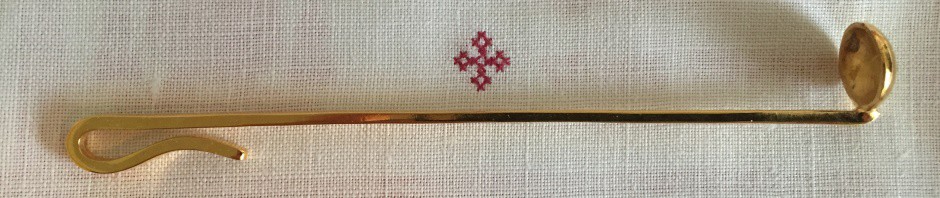
Send this man some emergency drinkware!
Yes, I am piling on a bit here. But for pete’s sake when is the episcopal bullying going to end?
Lemme sum up a few things.
After talking with some canonists and having seen these attempts again and again over the years, this bishop is obviously wrong about a lot of things and he cannot do what he is attempting to do.
However, as one canonist friend said, and this is surely the truth, “he owns all the cards, the dice, the table and the room. It’s not right, but it is what it is.”
About informing the bishop about saying Mass with the 1962 Missale Romanum.
As I have put it, it doesn’t make any difference if the bishop is wrong and operating outside his powers. A priest can have the law and reason and tradition on his side all day long and twice on Sunday. In the end, a bishop who is a bully can crucify a priest in a thousand ways. It comes down to power and the imposition of will through threat of reciprocity. Priests, in the end, barely have the right to Christian burial (with their heads toward the altar), but that’s about it.
Let’s leave this sorry mess and move to happier thoughts, like worldwide pandemic.
I’ll turn on the moderation queue for this.


 Can anyone, anywhere, looking around at the state of the Church today, especially in wealthy Western countries, and at the Pew Research survey about belief in the Eucharist, read that claim and not simply laugh aloud? Furthermore, gratis asseritur gratis negatur. There is zero proof to back that up and a heck of a lot of evidence to the contrary.






























