REMINDER: Pre-order the new book by Card. Sarah and Benedict XVI: From The Depths Of Our Hearts

Before the official 12 March release, today I received from the publisher a hardcover of the new book by Card. Sarah and Pope Benedict XVI.

US – pre-Order with a discount  HERE 

FRENCH HERE

There is AT LAST a UK link HERE

The Church and her priesthood are in a serious crisis.  Card. Sarah and Benedict get into the reasons why while they explore the concept of clerical celibacy.   The book is about more than celibacy.

I think it is likely that this book had an impact on the text of the Post-Synodal (“walking together with Pachamama”) Exhortation Querida Amazonia.  Libs expected their agenda to be executed by Francis.  He backed away.


Posted in Benedict XVI, Priests and Priesthood, The Campus Telephone Pole, The Coming Storm, The future and our choices | Tagged , , ,
2 Comments

Be The Maquis! TRADIVOX – Catechism Restoration Project

I am daily bombarded with “Please promote my book!”, “We need to raise funds to replace our convent’s roof.”, “A seminarian needs to pay off debts.”, “Advertise our liturgy conference!”… to which I haven’t been invited.

Folks, as much as I’d like, I can’t post everything.

This, however, is a worthy project. It could have long lasting benefits.

I have often told you to mount the resistance through reference to sound catechisms. Look at this!

Catechism Restoration Project from Tradivox, Inc. on Vimeo.

Posted in ¡Hagan lío!, "How To..." - Practical Notes, Be The Maquis, Brick by Brick, Just Too Cool, New Evangelization, Si vis pacem para bellum!, The Coming Storm, The future and our choices | Tagged ,
Comments Off on Be The Maquis! TRADIVOX – Catechism Restoration Project

What would 13th c. sacred chant sound like in Hagia Sophia? Find out!

I received various notes about a brief clip on NPR about the making of a recording of Byzantine chant in a virtual, digital, recreation of the interior Hagia Sophia. Somehow they were able to recreate a virtual interior of Hagia Sophia using the sound of a bursting balloon. Then they filled that virtual interior with the chant, thus re-producing the acoustic effect for the listeners within the enormous building.

As Clarke quipped, any sufficiently advanced technology is indistinguishable from magic.

I have the album. Unreal.

Lost Voices of Hagia Sophia

US HERE – UK HERE

The music group has game: Cappella Romana.  WOW.

The liturgical chant they record is for the Exaltation of the Cross, 14 September, introduced in 628.

How to understand what the liturgical experience would have been within Hagia Sophia?  Today, chanting is forbidden within.  It had to be digitally recreated.

For those of you in Columbia Heights, Hagia Sophia – Wisdom of God – was/is the mighty Byzantine cathedral, then a mosque, then a museum, built in Constantinople at the orders of the Emperor Justinian.  It is quite simply enormous.  The dome is higher than all the great, soaring Gothic churches, 56.6m from the floor, and 31.87 in diameter.  The church has 255,800 cubic meters of space, covered in marble.  The reverb is 12 seconds.   The space was designed to create a waterfall of resonant sound, mirroring the book-matching, opened marble sheets on the walls which resemble waves of water.  Just as layers of colors are used in icons to convey deeper realities, so in sound an icon is created.  The sound and building harmonics go to where the human ear can barely reach, to omphe, Greek word meaning a voice beyond human register, thus a divine voice, which rises like axes to the dome to form a cascade back down to the floor, reflecting, like the bright gold mosaics reflect light.

Not too shabby.  Take in that balloon pop!

Posted in Just Too Cool, Liturgy Science Theatre 3000 | Tagged , ,
16 Comments

VIDEO: Building a new, traditional monastery in France!

I bring to your attention a lovely video about the new Benedictine monastery that is to be built for an international, English-speaking monastic community in the Diocese of Fréjus-Toulon, France. They use the Traditional Rites! This is a very good initiative. Bp. Rey, the local bishop, is terrific.

I wrote about these monks in relation to their printing of the traditional prayers before meals. HERE

Learn about their Summer School!  I’d really enjoy that. (11:30)

YouTube thumbnailYouTube icon

Posted in Just Too Cool | Tagged , ,
2 Comments

“Social Justice Warrior Therapist”

I picked this up from the Rush of Madison, the brilliant Vicki Mckenna of WIBA. I quote what she opined: “This parody is so accurate that I couldn’t even laugh. “Social Justice Warrior Therapist”” NB: There are a couple of “F-Bombs”, but – heck – they work.

YouTube thumbnailYouTube icon

Posted in SESSIUNCULA |
3 Comments

ASK FATHER: Can a bishop order Holy Water removed from churches? Wherein Fr. Z URGENTLY rants. ACTION ITEM FOR BISHOPS AND PRIESTS!!

From a reader…

QUAERITUR:

Can a bishop validly restrict or totally eliminate access to holy water during times of flu season or other sickness? Our local bishop just did this, and all of our holy water fonts were GONE this morning.

More corona fallout.

Yes, I believe this sort of thing is, in time of contagion, within a bishop’s authority to restrict, as far as the fonts and stoops are concerned. [Pace Cong. Divine Worship Prot. N. 569/00/L which FORBIDS removal of Holy Water during Lent.] But a bishop really can’t – shouldn’t even think of trying to – forbid priests from blessing and distributing Holy Water in ways other than common stoops or fonts.

What a thought!

Think about this for a moment.  What is the role of a bishop?  What is Holy Water for? 

For the love of all that is holy, how could a bishop… a bishop, mind you… want to ban Holy Water?   I get restricting common stoops such as those which are placed at the ingresses to churches.  But the bishop should also, if he does that, strongly and urgently ask priests to provide alternatives, so that the faithful have access to Holy Water.

It doesn’t make sense at all that a bishop would not make provisions for Holy Water distribution in time of contagion, unless the bishop 1) doesn’t know what Holy Water is, and I don’t rule that out, or 2) he doesn’t believe that it is what the Church says it is, which I suspect may be the case in some instances.

Holy Water is an important sacramental.  Demons hate the stuff.  With the traditional rite, in the older Rituale Romanum,  Holy Water is blessed precisely for the health of spirit and of body.  BODY. 

Consider the mighty prayer for the blessing of Holy Water in the traditional form.  I won’t for an instant consider the new-fangled rite from the Book of Happy Thoughts Blessings.  I re-checked De Benedictionibus and the so-called “blessing” of what is called “holy water”.  It doesn’t bless the water.  Consistent with the other “blessings” in that wretched book, which should be burned, an invocative blessing is asked for rather than a constitutive blessing.

In this time of contagion, Fathers, forget about that dreadful Book of Blessings.  Use the Rituale Romanum to bless Holy Water, the real deal.

What does the traditional blessing prayer really say?

After exorcising the salt, the priest blesses it, saying:

Almighty everlasting God, we humbly appeal to your mercy and goodness to graciously bless ? this creature, salt, which you have given for mankind’s use. May all who use it find in it a remedy for body and mind. And may everything that it touches or sprinkles be freed from uncleanness and any influence of the evil spirit; through Christ our Lord.

After exorcising the water, the priest blesses it, saying:

O God, who for man’s welfare established the most wonderful mysteries in the substance of water, hearken to our prayer, and pour forth your blessing ? on this element now being prepared with various purifying rites. May this creature of yours, when used in your mysteries and endowed with your grace, serve to cast out demons and to banish disease. May everything that this water sprinkles in the homes and gatherings of the faithful be delivered from all that is unclean and hurtful; let no breath of contagion hover there, no taint of corruption; let all the wiles of the lurking enemy come to nothing. By the sprinkling of this water may everything opposed to the safety and peace of the occupants of these homes be banished, so that in calling on your holy name they may know the well-being they desire, and be protected from every peril; through Christ our Lord.

By contrast, what does the making of Happy Water in the modernist Book of Blessings say?  I translate from the Latin one of the several alternative prayers (it wouldn’t be the Novus Ordo without multiple options, right?):

Blessed are you, Lord, Almighty God, who deigned to bless us in Christ, the living water of our salvation, and to reform us interiorly: grant that whoever is fortified (munimur) by the sprinkling or use of this water, may always walk in renewed youthfulness of spirit and in newness of life through the power of the Holy Spirit.

The others are like this. They don’t bless the water.

HOWEVER!… in the Novus Ordo Missale Romanum there is a rite for the blessing of Holy Water especially on Sundays.  In the prayer, and its (of course) optional alternative the priest does bless the water: “dignare, quaesumus, hanc aquam ? benedicere“.  There is also an option (of course) for salt to be blessed and added, though at the mixing nothing is said.  Neither are there exorcisms of the water and salt.

THAT, by the way, the lack of exorcisms, is a problem. 

Since the very beginning of blessings, even in the Old Testament, things, places and people are exorcised before being blessed.  Think about how Isaiah’s lips were purified by an angel with a burning coal before God blessed him with the office of prophet.  Everything in this material cosmos is under the dominion of the Prince of this world, the Enemy, Satan.  We must rip things and places and people from his claims and dominance before we hand them over to the King.  Therefore, in the traditional rites of baptism there are exorcisms before the anointings and baptism.  In the consecration of churches, there are mighty and multiple exorcisms, outside, inside, all around, before blessings and consecrations occur.  So, too, with Holy Water.  The elements – which are addressed in the second person as if they are living creatures! – are torn away from the Devil and only then blessed.

I will never… never… use anything other than the traditional forms of blessings.  Period.  I won’t even consider it for a second.  When you compare even the blessing of water in the Missale Romanum to the rite in the older Rituale Romanum, you can see the poverty of spirit, the arrogance, the tendency to reduce the supernatural that motivated the reformers.

Back to business.

There are alternatives to open, general access, Holy Water stoops or fonts.  I mentioned this in my post about Communion on the hand or on the tongue.  HERE

Click

Rather than just rant, here is a practical solution.  Perhaps readers have practical suggestions, too.

Parishes usually have large Holy Water containers from which people can fill bottles.   I can see people bringing their own bottles and using the Holy Water in them not only as they enter church but then at home as well.

click

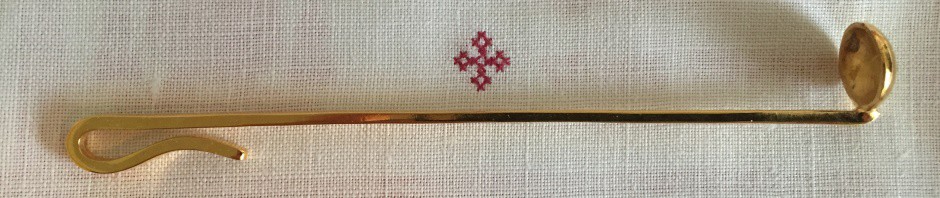
For a couple of years now, I have blessed Epiphany Water at the parish.  The pastor has a kind of assembly line organized to fill small bottles he purchased in quantity. He distributes these bottles of Epiphany Water.   Perhaps something like that might be organized.  I am not sure how he handles the filling of the bottles, but I’ve linked to a filler machine that could do the job.   Get some parishioners together and make it happen.  Put an announcement in the bulletin and say from the pulpit…

“Since the bishop has said that we cannot fill the stoops at the doors of the church, we are distributing Holy Water to you for your own use here and elsewhere.”

BTW… I wonder if any of those bishops who have restricted Holy Water have lately

a) blessed any,
b) used any themselves outside of entering a church, and
c) done a sprinkling rite (aka Asperges) since they made their anti-stoop edicts.

FATHERS!  BISHOPS!  

This is not the time to eliminate Holy Water or to make it harder to obtain and use.  This is the time to put the accelerator to the floor, with good catechesis and practical solutions.

This will require some work.  But that’s what priests and bishops are for in the Church, right?  To make available things like sacramentals, with good catechesis?

Sacrifice a committee meeting about some stupid topic and put people to work filling Holy Water bottles!   

Organize a procession with prayers against disease.   

Have special Masses for “pro salute vivorum” and “pro infirmis” and “tempore mortalitatis“. 

The Church has been there before, in centuries past.  Plague isn’t new.  It is one of the reasons for the development of processions and for the Forty Hours Devotion: time of invasion or of plague or for urgent needs.

We have mighty spiritual tools.  Let’s use them, for the love of God!

Let’s do our part, rather then snivel and cringe and wring our hands and cancel Masses and remove Holy Water from churches.   “We’re sooooo hellllllllplesssss!”

Sure, we have to be prudent in time of disease about public gatherings if things get really bad.  But that doesn’t mean that we can’t, for example, have the Masses anyway!   Even if the church or cathedral is mostly empty or Masses are said at night… who cares? Mass isn’t readers theater that needs an audience. We can say Mass without big congregations. No, really, we can. It’s okay.

Fathers, how about this?   Get together and hear each others confessions, have a Solemn Mass at which some of you could act as servers, and then have a meal together.  Repeat.

Bishops, how about this?  Go to the four compass corners of your dioceses – like tracing the sign of the Cross over them – and do an exorcism over your territory with the older Rituale Romanum (because it works better than the silly new book) and then celebrate Mass for the intention of the protection of your subjects from all spiritual and temporal harm.

Promote the Forty Hours Devotion!

Gee whiz… do these things even when there isn’t the danger of disease!!!

Let’s do what only WE PRIESTS AND BISHOPS can do!   Public authorities and lay people can’t do what we can do.   It would be stingy and cowardly not to do our part.

Do we really believe in the efficacy of our rites and our Masses?

SAVE THE LITURGY!  SAVE THE WORLD!
Posted in ¡Hagan lío!, "How To..." - Practical Notes, ACTION ITEM!, ASK FATHER Question Box, Global Killer Asteroid Questions, Hard-Identity Catholicism, Liturgy Science Theatre 3000, Save The Liturgy - Save The World, Semper Paratus, TEOTWAWKI, The Coming Storm, The future and our choices, Wherein Fr. Z Rants | Tagged ,
16 Comments

Your Sunday Sermon Notes – 1st Sunday of Lent 2020

Was there a good point made in the sermon you heard at the Mass that fulfilled your Sunday Obligation? What was it?

There are a lot of people who don’t get many good points in the sermons they must endure.

For my part…

Posted in SESSIUNCULA |
9 Comments

Communion in the time of Coronavirus. Best Practices, Risk, and You.

My recent voyage to the Holy Land, with many Masses at holy sites and lots and lots of hand sanitizer, and my return home through the massive hub AMS and lots and lots of hand sanitizer, and catching up on email (with eye and brain sanitizer) and then Mass this morning – with hand sanitizer –  has me thinking about Communion in time of contagion.

We’ve been around the block with this before, during other outbreaks of pesky pest.

This time, there is great concern for the spread of what looks to be a highly contagious virus. So much so that in some places there is talk of eliminating holy water from church stoops and fonts and shutting down Masses or Communion.

About Holy Water.

Okay. I get that. So long as they don’t daftly replace it with sand, etc. It is possible that Holy Water (or perhaps “happy water”, depending on the blessing used) is available at your church. That should be okay, because it is in a self-contained dispenser. BYOB, as it were, and use it when entering church if you wish. It might get you to take some home and start new habits of use of this wonderful sacramental.

Now for Communion.

BEFORE ANYTHING ELSE… a bishop cannot, CANNOT, require Communion in the hand at the Traditional Latin Mass.  The legislation of Summorum Pontificum is for the universal Latin Church and bishops cannot override it.  The Instruction Universae Ecclesiae 28 says that Summorum Pontificum derogates from all liturgical law after 1962 that doesn’t agree with the laws of 1962.

ALSO… if this situation gets worse, so that there is truly a great risk of contagion when out and around, A) you don’t have an obligation to fulfill and B) you don’t have to go to Communion to fulfill your obligation.   You can make a spiritual Communion, since you are in the state of grace.  Father could, in fact, opt not to distribute Communion.

Moving along.

Leave aside the issue of Communion under both species, that is also with a chalice with the Precious Blood. This is simply too obvious for comment. Don’t do it.

“But Father! But Father!” some of you libs will swoon, “There’s PROOF that receiving the wine from the cup isn’t risky, because studies prove it with… with proof! It’s the metal… no, glass or ceramic and the, you know, the wiping that does it. It’s safe. But sharing by the tongue! That’s wrong and dangerous but you won’t admit that because YOU HATE VATICAN II!”

I read in email notices that people ought to or even must receive Communion only on the hand to lower the risk of contagion.  Chanceries and parishes are sending out notices and/or edicts.

In some cases, I suspect that is an excuse to prohibit Communion on the tongue. Not in all cases, however. Most, I think, are sincere and founded on a real belief that that will help to lower the risk of contagion.

Frankly, I think they are dead wrong. I don’t think that Communion in the hand is safer than Communion on the tongue. Here’s why.

Let’s leave aside that Communion in the hand increases by orders of magnitude risk of profanation of the Eucharist. Leave that aside. Think only about the infectious disease angle.

In my experience of nearly three decades of distributing Communion in both ways, on the hand and on the tongue, to whole congregations on the hand nearly exclusively with a few exceptions, and also to whole congregations on the tongue nearly exclusively with few exceptions during the Novus Ordo and no exceptions at the TLM, is that rarely – rarely – do my fingers come into contact with tongues but very often, nearly always, there is contact with my fingers and hands.

Let me repeat: When distributing Communion directly on the tongue, I rarely, rarely, have any contact with the tongue. When distributing on the hand, there is often, quite often, contact with the communicant’s fingers or palms.

I’ll add this. If people hold their hands properly to receive on the hand, that helps a lot in avoiding contact. If people don’t receive on the tongue properly that increases the risk of contact.

When both ways are done properly, whereas there is still often contact by Communion on the hand, there is virtually never contact with the tongue.

Therefore, I don’t buy for a moment that pushing for Communion on the hand reduces the risk of spread of disease.  I think that proper Communion on the tongue is safer.

In any event, congregations must be reminded, strongly and clearly, even sternly in some cases, about the proper way to receive Communion, either way. Repetita iuvant.

Fathers, do your duty. Don’t fool around with this. The number of cases where you are will increase and this will become a growing concern.

Another thing.

Sometimes I see a comment here on the blog, or in my email, or elsewhere, that “you can’t pick up a disease from the Host because the Host is Jesus”.

That’s just plain dumb.

The Eucharistic Host is Christ in its substance, but it retains all the accidents of bread. If a regular, unconsecrated host can convey disease, so can a consecrated Host. The same goes for wine and the Precious Blood. Moreover, the priest’s hands are anointed with chrism: that’s doesn’t make them impervious to bacteria or viruses. THINK!

Reminders.

Communion on the hand.  DON’T DO IT.   However, if you insist on this irreverence, hold your hands FLAT, one atop the other.   Don’t use ONE hand.  Hold them flat.  Flat means, not curved.  FLAT means fingers too.  Do NOT curl your fingers.   When holding your hands FLAT, stay STILL.  Don’t be a moving target.

Communion on the tongue.  THIS IS BETTER!   Thank you for choosing the superior, reverent way to receive.  Now, DO IT RIGHT.   In some places communicants take the Host with their teeth.  I really don’t like that.  I get it, but it is, in fact, riskier.  I get why in Italy some are more nervous about Communion, because many there take the Host with their teeth.  To be safer, tilt your head back a little.  You don’t have to point at the ceiling with your chin.  Just a little.  Stick your tongue OUT.  You don’t have to reach for your belt buckle.  Just a little, beyond the teeth and over the lower lip with your mouth open a little.  See?  That’s not too hard.  And STAY STILL.   The intelligent priest will simply place the Host on your tongue and it is quite easy to avoid contact, provided that he holds the Host properly and quite close to its edge, thus leaving the great majority of the underside of the Host exposed and ready for a good placement.  He has his part to play in this as well, but I’ll leave that aside for now.  This is for lay people, primarily.

This graphic is useful.  My notes in red.   The original, without red, in a large format HERE.

Under the housling cloth or not, keep your hands out of the way.  And if you have a babe in arms, hold their wavy little arms.

Friends, if you do as the good little boy on the left does, it is easy to give you Communion and have ZERO contact with your tongue.

BTW… in that graphic, I think Father is doing it wrong.  Why?  There is a long distance between that ciborium and that tongue.  That, firstly, lengthens the time it takes to give Communion and, importantly, increases the risk of a particle dropping.  I think they leave out the communion paten in the graphic in favor of you seeing the proper head and hand position.   I suggest, Fathers, that you keep the ciborium at a lower level, closer to the people.  You’ll figure out why, once you do it.

Friends… do it right.

Wash your hands and avoid touching your face.  It’s quite simply amazing how many times people touch their faces in the course of a day!   Use hand sanitizer.  Consider that people often grab the backs of pews and put their hands on pews, fonts and door handles.  Go ahead and wipe down your area.  These days, people will get it.   When I get on an airplane, I wipe down everything within reach, and clean my hands after shutting the over head.   Windows, seat backs, tray tables, buckles, all get the treatment.  Why not in church, too?  Especially if yours is not the first Mass?

I don’t want to have to hear that any of you are ill from this new disease.  At least, please, cut your risks at church.

Fathers, think about this.  Run through your head about distributing Communion on the hand.  If you are honest, you’ll acknowledge that there is more contact with hands.

Posted in "But Father! But Father!", Liturgy Science Theatre 3000 | Tagged ,
26 Comments

Happy Bissextilis! (No, it’s not a Jesuit holiday.)

It is a Leap Year Day.  In Latin this is bissextilis, and has nothing to do with prominent Jesuits and their abetters.

When there isn’t a 29 February, the saints are observed on 28 February.  For this intercalary day in the Roman Martyrology we find this:

16_02_29_Leap_Day_Bissextilis_01

Click for larger


16_02_29_Leap_Day_Bissextilis

In 46 BC, on the advice of the Alexandrian astronomer Sosigenes, G. Iulius Caesar created a calendar system that added one day every four years to make up for the fact that the Earth’s year is slightly more than 365 days. Your planet circles your yellow Sun in slightly more time than it takes for your Earth to rotate 365 times (365.24219). Calendar years with 365 days drift from the actual year by about 1 day every 4 years.  After a while the month named after Caesar, July, occurred during the winter (in the Northern hemisphere).

Caesar’s Julian Calendar was maintained until 1582 when Pope Gregory XIII determined that in his Gregorian Calendar leap days would not occur in years ending in 00, unless the year is divisible by 400.  And we do have a Jesuit, a serious one, to thank for the Gregorian Calendar.

When the Roman Senate renamed the month Sextilis to honor Augustus, they borrowed time from February to make August longer than July (after Julius, formerly known as the fifth month, Quintilis).  So, February wound up being shortened.

Sextilis, the day, is six days before the kalends (1st) of March (inclusive) which is usually 24 February.  Hence, during a leap year, in the traditional calendar St. Matthias is celebrated on 25 rather than 24 February.

The intercalary month that the Romans used to try to keep the civil calendar in sync with the solar calendar was inserted around the festival of Terminalia on the 23rd. In the reform of the calendar, one day was inserted behind the 23rd of February every three or four years. It was the “double sixth day” or bis sextilis. Bis sextilis and sextilis (the 24th and 25th to us) were considered as one day long day.

Whereas in most years the calendar is advanced one day at a time, in a leap year there is a week in which a day is advanced two days.  In 2012 Christmas (25 December) was a Tuesday.  In 2013 a Wednesday.  In 2014 a Thursday.  In 2015 a Friday.  In 2016 Christmas falls on Sunday, not Saturday.  You can see the “leap” in the calendar.

Anyway… it’s complicated.

Some time ago, I received a good explanation in an email from the British Library:

In 1582, calendrical reform came from Rome again, this time, from Pope Gregory XIII (1502-1585). Gregory realised that because a whole day was added to every fourth year, when in fact it should be a bit less than a day to be accurate, the Julian calendar was 11 days ahead: 15th October in Gregory’s time was, astronomically, 4th October. In order to cut out this accumulated surplus, he issued a Papal directive stating that 4th October in 1582 will be followed by 15th October and the first year of each century will not be a leap year any more, except if it is divisible by 400. So what about the leaping saint? Well, the medieval solution for the leap-year problem was generous. By doubling 24th February the following saints’ feast days could all keep their original date and – because there were two 24ths in the month – February remained 28 days long. In this way, no saint suffered the ignominy of having their feast day celebrated only one year in every four. Instead, there was a gain: in the leap year Saint Matthias was celebrated twice – on the 24th(a) and 24th(b) alike.

Yet curiously, in this overhaul the repeated 24th remained in place. It was only over time that the medieval system of two 24ths was phased out and replaced by a 29th day of the month, but the tradition of having an extra 24th with its leaping saint, the Apostle Matthias, is still preserved in the Catholic liturgy.

Finally, two items of interest.

Ash Wednesday has not yet fallen on a 29 February and it won’t until 2096.

And, as you know, tidal friction in the system of your planet and its moon slows your planet’s rotation down so that a day is lengthened by some 1.4 milliseconds per century. In about 4 million years, we can stop with the bissextilis, though some Jesuits will probably still be saying that it’s okay.

Happy Bissextilis!

Posted in "How To..." - Practical Notes, Just Too Cool, Liturgy Science Theatre 3000 |
4 Comments

27-28 Feb 2020 HOLY LAND TLM PILGRIMAGE – Day 6-7: The Dead Sea and the Holy Sepulcher

From way up in Jerusalem we zoomed way down past sea level to the lowest place on your planet, where the Jordan enters the Dead Sea.

It was a short hike from there to the mountain where the Lord was tempted.  I am struck by Benedict XVI’s reflection on this:

To Qumran, where the famous Dead Sea Scrolls were found, near the ruins of the community of the Essenes.

Cave 4 is where they found the scroll with the Book of Isaiah.

THE NEXT DAY…. EARLY O’CLOCK (we were out the door by 4:15.

On the way to the beginning of the Stations.

We used St. Alphonsus.  My favorite.

Moving inside the Basilica of the Holy Sepulcher we visited Golgotha, and the finished the Stations.

The place of the Crucifixion.

Soon after, vested, the server enters the chapel of the Tomb just before me.


We had roughly 22 pilgrims, and 25 minutes for the Mass.   Let’s just say that I moved rather quickly.  NO… I didn’t use that chalice.

Here’s the note that hangs in the sacristy.

HAH HAH! HAH!

Outside, after.

Posted in On the road, What Fr. Z is up to | Tagged
19 Comments