ASK FATHER: Are “Novus Ordo” ordinations truly valid?

From a reader…

QUAERITUR:

Father, I’ve done some reading on whether Novus Order orders are truly valid or not and am confused. Would love to get your learned comments on the matter. Thanks for your work.

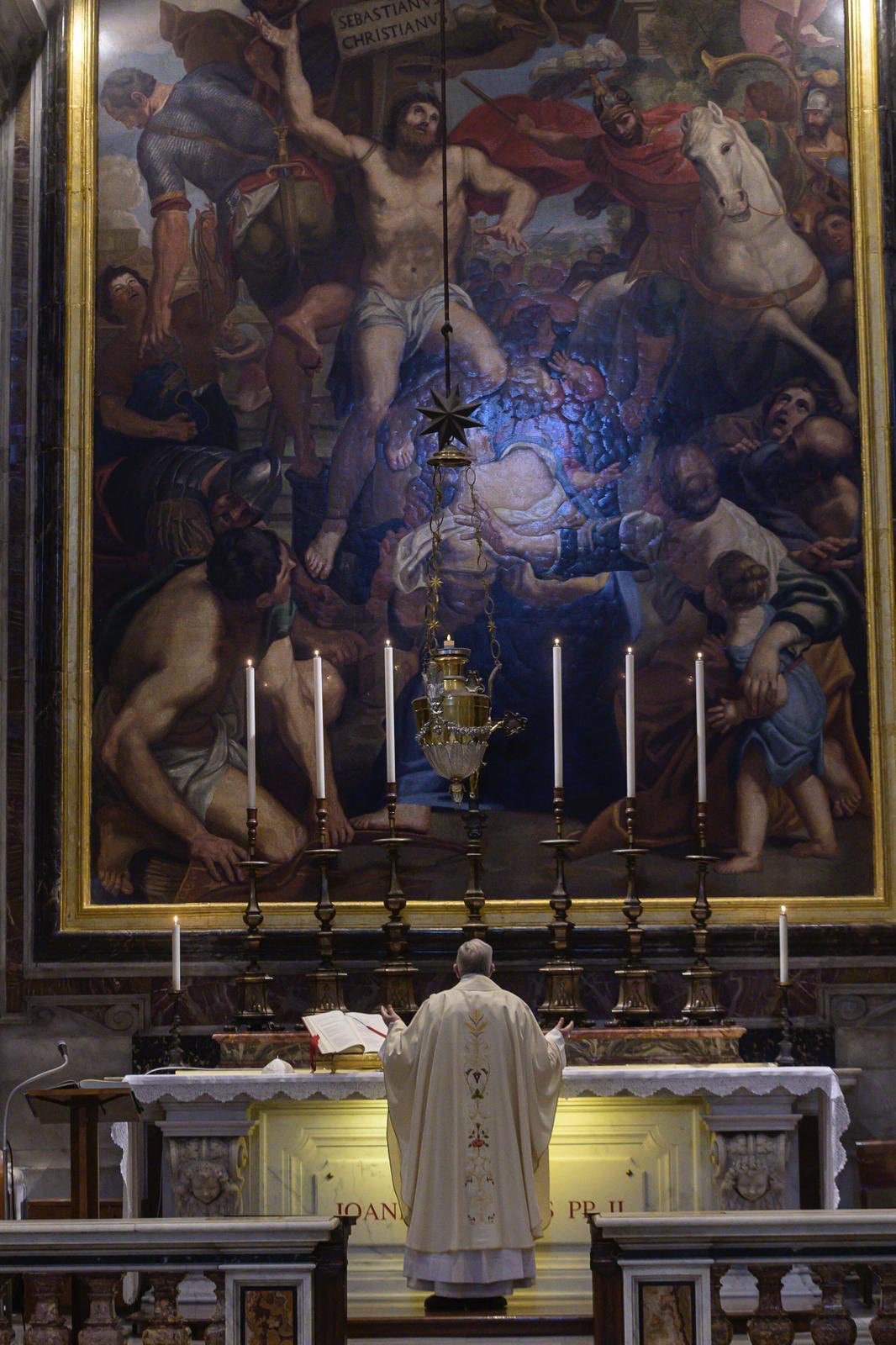
You ask if ordinations to Holy Orders using the post-Conciliar rites implemented by Paul VI, later revised, are valid.

Others have asked the same question.  People worry about these things because everything depends on valid orders for an orderly Church according to the will of the Lord.  No priest – no Eucharist – no Church.

I’ve written on this issue half a dozen times on this blog. I even had a PODCAzT about it.

Back in the day, the late and highly esteemed Michael Davies wrote an alarming book called Order of Melchisedech: A Defence of the Catholic Priesthood. US HERE – UK HERE  It was closely argued and persuasive.

Davies argued, in essence, that in his day – early 90s, there was no question that Latin Church Orders were valid with the “Novus Ordo” Pauline rites.  However, he suggested that in time to come, with the break down of theological formation, more and more bishops would be ignorant, errant, or at least sketchy about Catholic theology of orders.  Hence, they would not have the correct intention to ordain as the Church intended.  In the 90s bishops still got it.  In the future, it would be far less sure.

This is critical because the first edition of the Pauline rites had left out explicit statements about what the priest was ordained to do: say Mass and forgive sins.   Rites should be explicit about what they are doing to convey the proper intention.   That’s why Davies raised the alarm.  If those Pauline rites were kept as they were, and if bishops in the future were sketchy about the priesthood, then they would not confer valid Orders!

Someone in the Vatican figured this out.

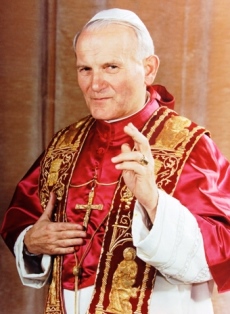
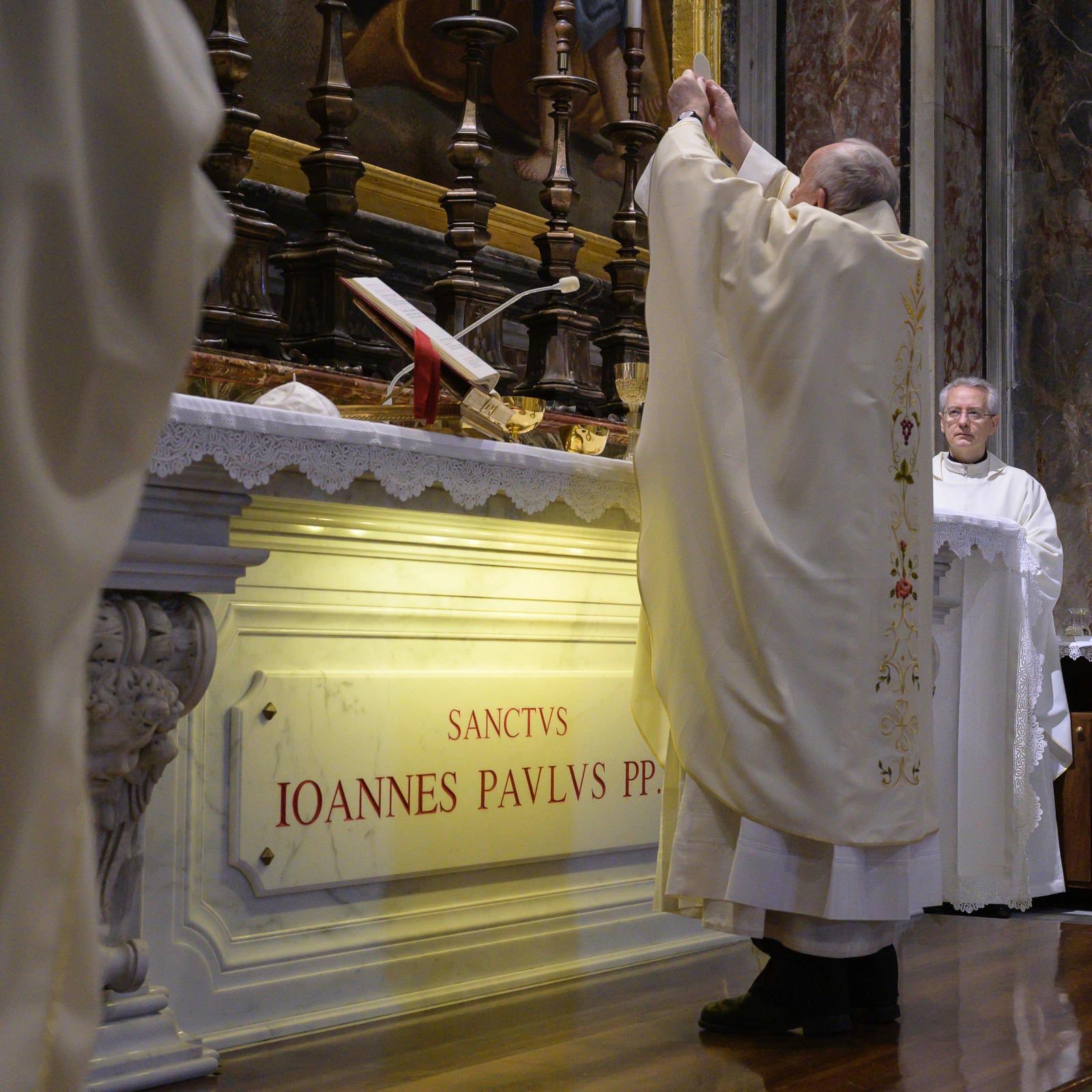
Thus, in 1990 Pope St. John Paul II issued a new edition of the Rites for Ordination of all three orders, diaconate, priesthood and episcopate.  As a matter of fact, I was, I think, the first man in the world ordained with the new rite for diaconate.  Card. Mayer had to get a copy of the new book from the Congregation for Worship because it wasn’t out in circulation yet.  That year, 1990, John Paul ordained priests in the Vatican Basilica with the new book.  I was ordained by him with the new book in 1991. I wonder if that makes me a second class relic.

What was the difference because the Johanno-Pauline edition and the Pauline?   John Paul put back into the rite, in the part with the interrogations of the priesthood ordinandi, specific questions relating to confecting the Eucharist and absolving sins.  He made the rites more specific.  Frankly I didn’t study or compare the rites for the episcopate, since I will never have to undergo them!

There is also the problem of the translation of the rites into English.  That was a mess of galactic magnitude.  As a matter of fact, I believe that the absurd rendering that the earlier incarnation of ICEL did was so bad that the camel’s back was finally broken.  The Congregation issued page after page of scathing comments about the inaccuracies and theological errors their version introduced.  After that ICEL was disbanded and reconstituted under new leaders.   The rites eventually produced in English and in use today are dependable.

At this point I’ll add, because someone will ask, a priest is not more a priest because he is ordained with the older, traditional rite.   Do I wish that I had been ordained with the traditional rites?  Sure!  The rites are far richer and more meaningful, just as the traditional rites are in regard to all the sacraments.  And I wish that I had the same ordaining bishops, too (Card. Mayer – the holiest man I’ve ever known, and John Paul II).  However, as it turns out I was ordained – both times – with the rites entirely in Latin, from the best book available, by the holiest of men.  That’s not bad.

There is no question that the post-Conciliar rites for ordination validly conferred Holy Orders.  That is even more certain with the revisions made by John Paul II in 1990.

Posted in "How To..." - Practical Notes, ASK FATHER Question Box, Liturgy Science Theatre 3000, Our Catholic Identity, Priests and Priesthood | Tagged , , , ,
17 Comments

ASK FATHER: “I dread the Feast of the Holy Family.”

From a reader…

QUAERITUR:

Every year since so returned to the Church I dread the Feast of the Holy Family. I don’t come from a pious family, nor am I married, but instead chose to live a life of perpetual virginity under a private vow. Furthermore, priest after priest at my Latin Mass Parish preach on families, specifically being large, pious, Holy little do-gooders who are the “building blocks of the Church”. Every year I’m left feeling even more like an outsider, despite spending hours each week volunteering my time to our Latin Mass Community to my own personal detriment at times (never once receiving so much as a “thank-you”) who is tolerated at the Latin Mass who should either be married with at least 5 children by now or in a convent. Every year on this Sunday I leave Mass depressed and feeling like a Catholic failure.

Where do Catholics such as myself fit in to the Church? I don’t feel like I belong or am welcomed (unless there’s a need for volunteers, which has left me feeling stressed and stretched thin).

GUEST PRIEST RESPONSE: Fr. T. Ferguson

I hesitate to appear cold and unfeeling, and in some ways, am very sympathetic to the interlocutor. Much of parish life can seem to be focused on families, and those who are not in traditional families can seem to be left out.

Yet, much of parish life is focused on families because much of the parish is taken up by… families. Families, especially large, pious, holy, do-gooder type families ARE the building blocks of the Church. Their involvement in parish life can make or break a parish, and they way they raise their children provide amply for the future of the Church (future husbands and wives, future priests and religious, and yes, future privately vowed virgins).

The one Sunday out of 52 on which the Church focuses on the Holy Family, and sets Jesus, Mary, and Joseph up as the model for all families does not seem to be excessive.

Do lay people feel “left out” on Holy Thursday, when the Church focuses on the great gift of the priesthood? Do those Catholics who are not priests feel like outsiders or failures because they are not priests? I hope not.

Do married people feel left out on the myriad of feast days which celebrate vowed celibate saints? There are only a smattering of saints in the General Roman Calendar who were married, and most of these are saints not because of their marriages, but because of saintly activities after their spouse died (e.g. St. Elizabeth Ann Seton, St. Elizabeth of Hungary)

It is easy to paint oneself into a demographic corner wherein it seems that everyone else gets attention, and everyone else’s efforts are valued, while no one like oneself is honored (and therefore one is not honored). That temptation is from the Evil One, intent on making oneself feel special, unique, and slighted. Where is the day on the calendar in which left-handed, dyspeptic, pluviophile knitters who are lactose intolerant and devoted to Ss. Cunegunda and Eleutherius honored for their contributions to Holy Mother Church? What about asexual agoraphobic counter-tenors? Unhappily married women with halitosis?

Mass is not about us.

If you leave Mass feeling that you and your efforts weren’t properly honored and respected – good! That’s not what the Holy Mass is for.

Perhaps some lines from the Servant of God Raphael Merry del Val’s celebrated litany of humility would be helpful:

O Jesus! meek and humble of heart, Hear me.
From the desire of being esteemed,
Deliver me, Jesus. (repeat after each line)
From the desire of being loved,
From the desire of being extolled,
From the desire of being honored,
From the desire of being praised,
From the desire of being preferred to others,
From the desire of being consulted,
From the desire of being approved,
From the fear of being humiliated,
From the fear of being despised,
From the fear of suffering rebukes,
From the fear of being calumniated,
From the fear of being forgotten,
From the fear of being ridiculed,
From the fear of being wronged,
From the fear of being suspected,
That others may be loved more than I,
Jesus, grant me the grace to desire it. (repeat after each line)
That others may be esteemed more than I ,
That, in the opinion of the world,
others may increase and I may decrease,
That others may be chosen and I set aside,
That others may be praised and I unnoticed,
That others may be preferred to me in everything,
That others may become holier than I, provided that I may become as holy as I should,…

Posted in "How To..." - Practical Notes, ASK FATHER Question Box, HONORED GUESTS, One Man & One Woman | Tagged
59 Comments

Amazonian and Pachamama skúbala in annual Vatican CHRISTMAS CONCERT -VIDEO

More Vatican lunacy.

There was a concert in the Paul VI Audience Hall for Christmas.  On YouTube. It was broadcast on Mondovisione.  In fact, it was a fundraiser for something earth saving.  The broadcast was punctuated with pictures of deforestation, much as the abandoned animal groups show pictures of sad puppies.

Marco Tosatti caught it and it is on Twitter (below). An indigenous woman from the Amazon region got up in front of the camera, had them all cross their arms over their chests (they did it) and explained about Mother Earth and vibrating.  More Pachamama crap.   On Youtube, 1:44:25 in original language.

How ridiculous is this becoming?  If she had told them all to strip naked and hug each other, the prelates in the front row would probably have been the first to comply.

https://twitter.com/i/status/1210261452701011969

Transcripts of what she said.

What is not in the transcript are the idiot words of the Italian celebrity priest at the end, Davide Banzato1:44:25 and following.  At the end of her propaganda, he makes matters worse by drawing an equivalence with the burning forest in the Amazon with how Moses, at the burning bush (GET IT?!?) had to put off his shoes because – I’m not making this up – he was on “sacred ground”.

Dear don Davide, “Fail.”

Posted in Blatteroons, Creation and Environment Stuff, Liberals, Pò sì jiù, You must be joking! | Tagged ,
35 Comments

Harry Potter author vilified by the Left for saying that biological sex can’t change.

As my old pastor put it perfectly, liberal is from the word for “free”.  A liberal is is one with whom you are free to agree.  Scratch one and beneath the veneer you find a nazi.

Check out the Catholic Herald.  Chad Pecknold explains the hornet’s nest which the author of the Harry Potter books, J.K. Rowling, infuriated with a single tweet.  Rowland supported a woman who was fired from her job and excoriated by a British court for saying that biological sex can’t be changed.

I urge you to read Pecknold.

However, before you click away (come back sometime!) let this be a lesson to every reader.

Rowland is no conservative.   Nevertheless, she stated a plain, common sense fact and the lib Left and trans and homosexualists are bringing the sky down on her for it.

This is how fast the lib Left turns on anyone who strays from their ephemeral orthodoxies.

The quasi-religious fanaticism of the lib Left, where abortion is a sacrament, gender is a variable vestment, and sterility a red-hot flaming idol, demands compliance or with your shaven head you will be whipped through the byways.

This is true in the Church as well.

Remember how Fishwrap’s official tricoteuse Madame Defarge called for Pecknold to be fired from his position at CUA.  He had to be made an unperson for his crimethought.

Si vis pacem para bellum!

Merry Christmas!

Posted in Liberals, Si vis pacem para bellum!, Sin That Cries To Heaven, The Coming Storm, The Drill, The future and our choices | Tagged , ,
40 Comments

ASK FATHER: Deacons in the Novus Ordo

From a diaconal reader…

QUAERITUR:

I have begun serving Solemn High Masses, at local parishes near my assignment for a couple of years now. The experience of serving at the Latin Mass has enriched my diaconal ministry in ways that I never imagined.

Which brings me to my two quick questions: First, when I am serving the Mass of Paul VI with a priest that wants me to turn the pages of the Roman Missal is it liturgically proper or appropriate for me to move back and forth, as I would in a Solemn High? If possible, it would seem to me to be precisely the mutual enrichment that is organic within authentic liturgical development and renewal. Perhaps this is done in other parts of the world or country. I have just never seen it done in the NO. Secondly, a deacon friend mentioned that there are rubrics for a deacon to function, at a Missa Cantata; however, I have not been able to find the rubrics. He stated that when done the deacon would function “almost as a blend of and emcee and what you would expect to see a deacon do in the NO.” Are you aware of any such function for a deacon?

Thank you again for your time and for all that you do.

I like this question.  Also, it’s good for St. Stephen’s Day.

I often mention how learning the Vetus Ordo will change the way a priest understands his priesthood.  You have brought in that deacons learn more about themselves in the traditional form.  Thanks for that.   There is no question that the same will be true of all the servers at Mass and all the lay baptized at Mass.

Yes, I think it is fully appropriate to move to the priest’s right for the sake of covering and uncovering the chalice using the pall, and then returning to the book after the consecration if the Eucharistic Prayer is long enough to warrant the trip.  In your absence from the book, another (male) server should come up to turn the pages.  That server would return to the side when you return to the book.

At my home parish in St. Paul, we had always two deacons on for the major Sunday and festal Masses with the Novus Ordo, all ad orientem and in Latin with traditional vestments, etc.  One would read the Gospel and become a kind of subdeacon, and the other would be the deacon “at the altar”, so to speak.  It was a division of roles that worked well.

As far as the deacon at a Missa Cantata is concerned, I won’t go there.  Frankly, I don’t like that set up.  Let the Missa Cantata be what it is.   Let the deacons serve for Solemn Mass.

Posted in "How To..." - Practical Notes, ASK FATHER Question Box, Liturgy Science Theatre 3000 | Tagged ,
4 Comments

Your Christmas Mass 2019 Sermon Notes – VIDEOS

Was there a good point made in the sermon you heard at the Mass that fulfilled your Christmas Mass Obligation? What was it?  There are a lot of people who don’t get many good points in the sermons they must endure.

For my part, 1st Mass of Christmas, Midnight Mass (Dixit Dominus) …

And – on very little sleep – for the 2nd Mass, Mass at Dawn (Lux fulgebit) …

I post these “Sunday Sermon Notes” entries for several reasons. First, as I mentioned, above, there are people who don’t have an opportunity for something edifying in church. You can usually extract with pliers some good point, but often enough these days that can be difficult. Therefore, giving others good points you heard is helpful.

Also, if you are aware of these posts, perhaps you will be inspired to listen more closely and try to remember what Father said more accurately. Everyone wins that way.

Meanwhile, my good friend Fr. Murray was on Fox early this morning. HERE

Posted in Liturgy Science Theatre 3000 |
17 Comments

Terriffic News! Card. Cupich approved the Constitutions of the Canons of St. John Cantius in Chicago

Merry Christmas!

This is from the site of the Canons of St. John Cantius in Chicago:

Cardinal Cupich Approves Constitutions of the Canons Regular of St. John Cantius

On December 23rd, the Feast of St. John Cantius, the documents and Constitutions of the first General Chapter of the Canons Regular of St. John Cantius were signed and approved by Cardinal Blase Cupich.

At the signing Cardinal Cupich stated “I hope you continue to prosper and grow. I am really pleased to sign this decree accepting the Acts of the General Chapter and updating the Constitution and also the Ratio Formationis that you have for your community.”

These documents update and expand upon the Constitutions of the Canons Regular of St. John Cantius, begun in 1998 and approved by Cardinal Francis George in 2003. The Constitutions guide the community as they live their charism of ‘Restoration of the Sacred’ in service to the Church and the people of God.

Since their founding over 20 years ago, the Canons Regular have grown to 21 members in three houses in the midwest, staffing St. John Cantius parish in Chicago, St. Peter Parish in Volo, and two parishes in the diocese of Springfield, Illinois.

Cardinal Francis George, O.M.I., Archbishop of Chicago stated in 2003, “Here are the beginnings of an order, founded to make available to the people of God, the heritage and gifts of the universal Church in all their forms and all their splendor.”

In October of 2019, Cardinal Blase Cupich, authorized the first General Chapter of the Canons Regular, during which members of the community clarified the charism of Restoration of the Sacred given to them by the Holy Spirit through their founder.

During the grace-filled chapter meeting, significant decisions and modifications were made to increase the vitality of the charism and strengthen the identity of the Canons Regular.

For the first time since the community’s founding in 1998, a Superior General and Council were elected. At the concluding solemn vespers for the Chapter, October 10th, 2019, Fr. Joshua Caswell, SJC was installed as the first elected Superior General.

At the signing of the constitution Cardinal Cupich discussed the importance of offering the ‘life giving’ charism of the Canons Regular with the larger presbyterate and local Church.

Fr. Joshua Caswell, SJC, Superior General of the Canons Regular of St. John Cantius closed the event stating “I am very grateful to the Cardinal for his encouragement and support to our community, and for every one of parishioners and benefactors who supported us in so many ways. We couldn’t have done this without you.”

Posted in SESSIUNCULA | Tagged ,
7 Comments

AUDIO: Singing the 2019 Christmas Proclamation – Kalendas – in Latin – TLM Extraordinary Form

Better late than never, for those priests out there who are going to, or want to, chant the annual Christmas Proclamation, or Kalenda.  

The nice folks at Cappella Gregoriana Sanctæ Cæciliæ olim Xicatunensis have a PDF again this year.

Here is a recording to help those who may need to sing or who simply want to know more about this beautiful Roman Catholic jewel.

Posted in "How To..." - Practical Notes, Liturgy Science Theatre 3000 |
Comments Off on AUDIO: Singing the 2019 Christmas Proclamation – Kalendas – in Latin – TLM Extraordinary Form

ASK FATHER: Too much water mixed with the wine in the chalice. Valid?

IMG_8892From a reader…

QUAERITUR:

Your article, “ASK FATHER: Altar boy notices priest skipped the consecration of the Precious Blood” states that Mass is not celebrated until the priest consumes both species of the sacrament. Since our congregation receives under both species, there are three chalices on the altar. No water is mixed with the two smaller chalices, (I know water isn’t required for validity) but sometimes, way too much water is mixed with the wine in the main chalice, winding up with the validity of the matter in doubt. Since the priest only drinks from the main chalice, I can only assume that the Mass may not have been celebrated. The problem of the water/wine mixture is common among both priests and deacons. Once I (very courteously) brought the problem to a deacon’s attention who used more water than wine in the mixture, and he nearly bit my head off. Since that time, I’ve sent documentation to priests and deacons who don’t seem to understand the concept of “valid matter”.

Any suggestions?

Yes.

If you have given them documentation about the issue, and there is still a problem with adding too much water to the wine in the chalice, try once more in writing.  If that doesn’t produce immediate results, then contact your local bishop with a brief description of the problem, some sort of demonstration or proof that it is happening, what you have tried to do, and the documentation that you sent, with copies of any written correspondence.

If the bishop doesn’t get the job done, write to the Congregation for the Doctrine of the Faith.

Also, there are issues of stipends involved.   If Mass isn’t celebrated, then the intention wasn’t fulfilled.   So, we can see that this is serious.

The problem is that people tackle issues like these in parishes or elsewhere and they have no way to substantiate what they say they saw.   For real action to take place in the matter of abuses, people need “proofs”, written, photographic, testimony from more than one person, etc.

Once again I put on my Unreconstructed Ossified Manualist hat to give a more complete answer about this very important issue.

Click me!

As I have written in the past, in the manual of dogmatic theology by Tanquerey, that tonic for the soul, we read that “quinta pars aquae ad vinum corrumpendum non sufficiat … a fifth part of water isn’t enough to break [the substance of] the wine”, and thus render it invalid matter for consecration.  Prümmer is not too lenient is saying a third part water and you have highly doubtful matter, it should not be consecrated, and more wine ought to be added before it is consecrated.  I am inclined to be guided by Tanquerey’s view and never add more than a fifth part.

This is important especially for priests who prefer small quantities of wine for Mass.

It is not a bad idea to use a “scruple spoon”. This has nothing to do with “having scruples” or “being scrupulous”.  This small spoon measures a scruple, an old apothecary measurement for the 24th part of an ounce in weight.  Sometimes an image of a scruple spoon will appear in the header of this blog.

I will grant that there is something proper about the pouring gesture.  However, given the issue of dilution, I think safe is better than iffy.  Sometimes the surface tension of the water can result in the necessity of adjustments with the wine.  Prümmer prudishly posits that the scruple spoon tolerari potest.  Whatever.

Scruple spoon with friends,
to provide scale.

Posted in "How To..." - Practical Notes, ASK FATHER Question Box, Liturgy Science Theatre 3000 | Tagged , , ,
5 Comments

ASK FATHER: What’s up with Francis’ 2019 Christmas address to the Roman Curia?

I am being bombarded by questions from readers, priests included, about Francis’ 2019 Address to the Roman Curia for Christmas.

Here are a few notes.   First, let’s contextualize the speech, which I think is important as it probably signals what’s up for the next year.

You will recall that Francis has used this occasion, the “exchange of greetings” between the Pope and the members of the Roman Curia, to deliver gut punches.

In his first in 2013 Francis was a little more benign, asking for professionalism in their work. In 2014 he blasted away about clericalism for some 30 minutes. In 2015 he delivered a long list of “curial diseases” and 24 virtues based on the acrostic “misericordia” of the Curial official. In 2016 he excoriated anyone resisting change, listing 12 guidelines for reform, going on for 45 minutes, and then gave all the officials present a book: Tricks to cure the sicknesses of the soul by 16th c. Jesuit General Claudio Acquaviva. Merry Christmas. In 2017 invoked the image of cancer of cliques and of traitors and conspiracies for those are ambitious or who resist reform. In 2018 over 40 minutes he dedicated a lot of time to clerical abusers.

This year Francis seems to have given a counter-message to the Curia address which Benedict made in 2005, one of the most important speeches of his entire pontificate. That was the famous “hermeneutics of continuity and discontinuity” speech.  It was also a counter to Jesuit Fr. Rahner’s ongoing but – Deo gratias waning -influence.

In his 30 minute 2019 address Francis mentioned the resignation and new disposition of the Dean of College of Cardinals.  See Sandro Magister for the fascinating backstory on that development.   Surely, that has to do with clearing the deck in the College and readying a conclave: Sodano and Vice-Dean Re are over the age limit for entering a conclave.  The Cardinals will have to test the winds and waters and elect a new Dean.

On an obvious but neuralgic point, Francis (again, citing his favorite source, himself) announced: “Brothers and sisters, Christendom no longer exists!   Today we are no longer the only ones who create culture, nor are we in the forefront or those most listened to.”

Merry Christmas!

What are we to do about that?   We need a ” a change in our pastoral mindset”.  After that he goes into a section changes in the Curia in regard to social communications.

However, Francis also invoked the now proverbial quote from The Leopard: “Se vogliamo che tutto rimanga come è, bisogna che tutto cambi…. If we want everything to remain as it is, then everything must change.”  He went from there to quote radical progressivist and late-former-Archbp. of Milan Carlo Maria Martini (who was in the Bergoglio camp in 2013 but probably engineered the election of Benedict as things deadlocked), saying: “The Church is two hundred years behind the times. Why is she not shaken up? Are we afraid? Fear, instead of courage?”

And of course he got in his usual digs about “rigidity”, a perennial and predictable theme.

Citing an interview he did with Jesuit Antonio Spadaro (who curiously maintains a site about the Italian homoerotic writer Pier Vittorio Tondelli) there is some word salad:

“God manifests himself in historical revelation, in history.  Time initiates processes and space crystalizes them.  God is in history, in the processes.  We must not focus on occupying the spaces where power is exercised, but rather on starting long-run historical processes.  We must initiate processes rather than occupy spaces.  God manifests himself in time and is present in the processes of history.  This gives priority to actions that give birth to new historical dynamics.  And it requires patience, waiting”.

More on this, below.

After citing The Leopard and before launching into the “time is greater than space” stuff, he spoke about “an anthropological conversion.”  I don’t know what that means, but it’s a bit chilling.

There was a interesting citation, in a seeming throw away line.  Most of the address had to do with his ongoing reform of the offices or dicasteries of the Roman Curia.  He is merging and making in his reform.   In the middle of this section he said: “Tutto questo comporta necessariamente dei cambiamenti e delle mutate attenzioni anche nei suindicati Dicasteri, come pure nell’intera Curia[18]. … All of this necessarily entails changes and shifts in focus, both within the above-mentioned Dicasteries and within the Curia as a whole.[18]

That footnote interested me, so I had a look.  Here is footnote 18 in the Vatican translation.  He mentions the 50th anniversary of the imposition of the Novus Ordo:

[18] Saint Paul VI, some fifty years ago, when presenting the new Roman Missal to the faithful, recalled the correspondence between the law of prayer (lex orandi) and the law of faith (lex credendi), and described the Missal as “a demonstration of fidelity and vitality”.  He concluded by saying: “So let us not speak of a ‘new Mass’, but rather of ‘a new age in the life of the Church’” (General Audience, 19 November 1969).  Analogously, we might also say in this case: not a new Roman Curia, but rather a new age [una nuova epoca].

One might discuss the translation of Italian epoca.  How would it go into Latin?  Aevum? Saeculum?  Since there is a clear intent to invoke what Paul VI himself called the Novus Ordo Missae, it is an interesting question to ask.   Novus Ordo… Novum Saeculum?

It’s an amusing question.  I suppose now there will be some strong reactions, so I will turn on the moderation queue in case things get out of hand.

That “time is greater than space” citation in the Curial address drove me to drill.  I found a surprise.

This “time is greater than space” is one of the four principles Francis as deployed elsewhere, this one in Evangelii gaudium, Amoris laetitia, Lumen fidei, and Laudato si’.   Clearly it is central to his thought.  He gathered these four principles from an Argentinian caudillo named Juan Manual de Rosas (+1877) in his letter to another caudillo.

  • time is greater than space
  • unity prevails over conflict
  • reality is more important than ideas
  • and the whole is greater than the parts

These are the principles which govern Francis decision making and governance, so it is said. Pope Francis calls them principles for ‘building a people’. They run though his documents.

I think they boil down to praxis over theory.

As far as “time is greater than space” is concerned, read through a Jesuit lens, I turn to a commentary by Australian Jesuit on the topic at Jesuit.org.au by Fr Frank Brennan SJ who is or was CEO of Catholic Social Services.   Given that these principles are from a caudillo, I suspect that “building a people” is mainly a political reality.  But I don’t know much about de Rosas.

Here’s the core.  Early in Ignatius’ post-conversion career, before ordination and before founding the Society in Paris, Ignatius was at San Esteban in Salamanca under the Dominicans. He got into trouble while preaching around a bit and he was imprisoned and tried.  Eventually they told him that he had to study more and that he couldn’t speak about certain theological topics. That is when he determined to go to Paris, where he roomed with St. Peter Faber and thereafter founded the Jesuits. Brennan wrote:

“At San Esteban in 1527, the Dominicans had the power, the structures, the space. They had the structures of buildings, libraries, a long theological tradition, and the strictures of religious life. Ignatius had none of that. He was a lone individual on a spiritual quest. Developing his Spiritual Exercises, Ignatius was generating new processes and engaging others who were then able to develop to the point where they bore fruit in significant historical events throughout Europe and to the ends of earth then known to Europeans.”

That’s what Jesuit Fr. Brennan wrote.

In Francis’ 2019 Curial address in footnote 19 in the English translation we read:

[19] Evangelii Gaudium states the rule: “to give priority to actions which generate new processes in society and engage other persons and groups who can develop them to the point where they bear fruit in significant historical events.  Without anxiety, but with clear convictions and tenacity” (No. 223).

Brennan:

Ignatius was generating new processes and engaging others who were then able to develop to the point where they bore fruit in significant historical events

Francis footnote:

to give priority to actions which generate new processes in society and engage other persons and groups who can develop them to the point where they bear fruit in significant historical events.

Oddly similar, don’t you think?  The citation within footnote 19 is EG 223.  Check out 222-223 for more disorienting time-space travel.

There might be another way to put one important aspect of this “time/space” phrase: Cunctando regitur mundus… the world is ruled by delaying.  Your opponents may have the upper hand as far as power is concerned, but if you are patient, you will win in the end.

Sapienti pauca.

So, what’s up with the 2019 Curial address?  Some golden oldies and a couple of chilling portents for the coming year.

There are other issues in the speech one could write about but that’s enough. If you read it, watch for his “Dear brothers and sisters” line, which seems to mark off the sections and themes.

I wonder if we will have an explanation of the similarities in those citations.

Posted in Francis, The Coming Storm, The Drill, The future and our choices | Tagged , , ,
27 Comments