 People are asking me about the meaning of a Swiss Bishop, 76 and retiring, who will live with the SSPX at one of their schools. Rorate has a pretty good round up from different stories.
Basically, the Bishop of Chur, Vitus Huonder, wanted to retire some years ago, but Francis kept him on. Now, with Francis’ blessing, he will retire and live at a boarding school of the SSPX in Switzerland.
Chur has had some conservative bishops, including Wolfgang Haas, now in Liechtenstein. Their tenure has been hard.
What does this mean?
First, consider that, years ago, Benedict XVI lifted the excommunications of the SSPX bishops. That didn’t change the status of the priests, who did not have faculties.
In 2007, Benedict issued the “emancipation proclamation”, Summorum Pontificum. That was huge. The impact of that move will have a massive knock-on effect across many sectors of the Church.
Benedict then put the PCED under the aegis of the Congregation for the Doctrine of the Faith, seeing that most of the problems facing the Holy See and the SSPX were now doctrinal.
Then, Francis, in the Year of Mercy, found a sideways method of giving the SSPX faculties hear confessions and absolve. That was big. He extended that indefinitely. Then Francis found a way for SSPX priests to witness marriages, in conjunction with bishops of dioceses.
Recently, Francis suppressed the Pontifical Commission “Ecclesia Dei” (my old gig). It is now wholly subsumed into the CDF as a “section”. Its head is the Cardinal Prefect. The personnel remain in their old digs. The work goes on. If now someone messes with Summorum Pontificum, they are messing not with little PCED, but with La Suprema. Under Francis, the CDF isn’t quite what it once was, but it is still the heaviest of the heavy weight congregations of the Curia.
What we are seeing is a kind of creeping incrementalism. It is commonly used on the Left to obtain permission of abuses, such as communion in the hand, girl altar boys. The usual suspects like James Martin or Phyllis Zagano, are employing it to obtain approval of sodomy and women’s ordination. It is a slow … pick your analogy… drip drip or chip chip or nudge nudge until you get what you want. It is slow and patient and relentless, like cooking the frog in the slowly heating water.
I often say here, “Brick by Brick!” Eventually you have built up the edifice… or have torn it down, without making a dramatic move that everyone notices and fights against.
Small gestures of recognition are being given to the SSPX. Some not so small, when they involve the sacraments of matrimony and of penance, but you get my drift.
The fact is, Francis has okayed that a Bishop live with an SSPX community. That’s not nothing.
If we turn the sock inside out, there could be other elements to this, which will have to be verified over time. For example, if this bishop is with the SSPX, it is possible that he will be called upon to confirm and to ordain for the SSPX. That’s what the other SSPX bishops do, but they are also getting older. That might contain Bp. Huonder within the SSPX. If Huonder were not with the SSPX, might he be – in his retirement at some blah blah place – another Athanasius Schneider (bless him)? Free to travel, pontificate, speak?
In any event, I look forward to seeing what happens next.
It seems to me that we can look with optimism on the recent developments, until anything contrary comes up.
Meanwhile, I believe that these moves, along with what the PCED affirmed in the past, when I was around the place, that the SSPX is not formally schismatic, that you can attend their chapels, that you can fulfill your Sunday obligation at their chapels. Now it is possible to go to confession and to get married in their chapels. Those chapels are not parishes. Their priests are not pastors (parish priests). Hence, they cannot grant certain dispensations or delegations. They don’t have, strictly speaking, the cura animarum as a parish priest does. Nevertheless, you can see which way things are going.

 Since I have been in Tokyo, I haven’t been tracking the US news very much. I’ve only slightly followed the disgusting Covington Matter.


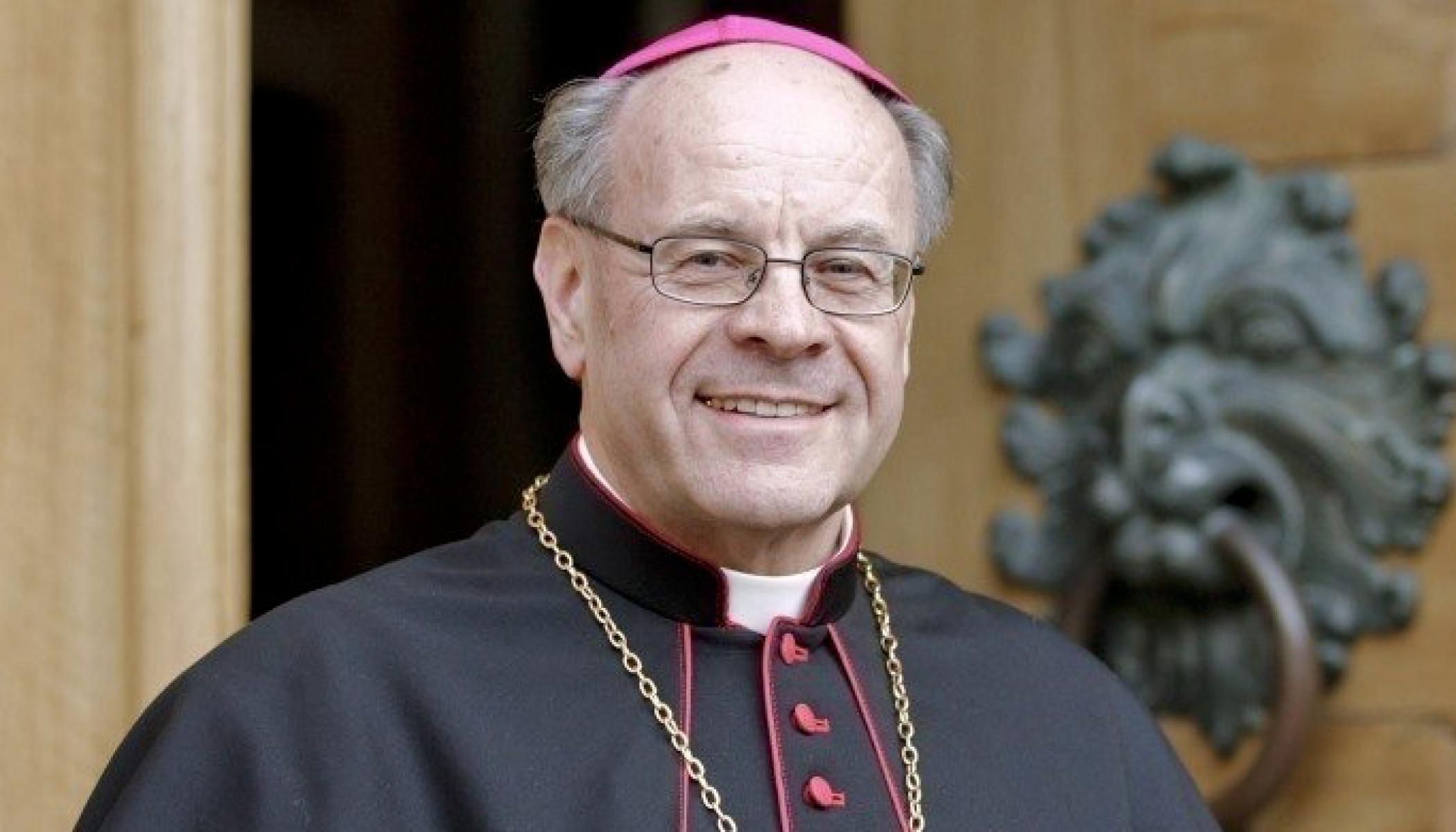 People are asking me about the meaning of a Swiss Bishop, 76 and retiring, who will live with the SSPX at one of their schools. Rorate has a pretty good round up from different stories.





























