As the Christmas Octave continues…

The Christmas Octave is underway.  It is still Christmas!   We should revel in the happy feast and celebrate the mystery of the Word’s incarnation and coming into our midst.  Happily, the Church halts her liturgical clock for this Octave so that we can view the mystery from various angles and absorb what we can for another year.

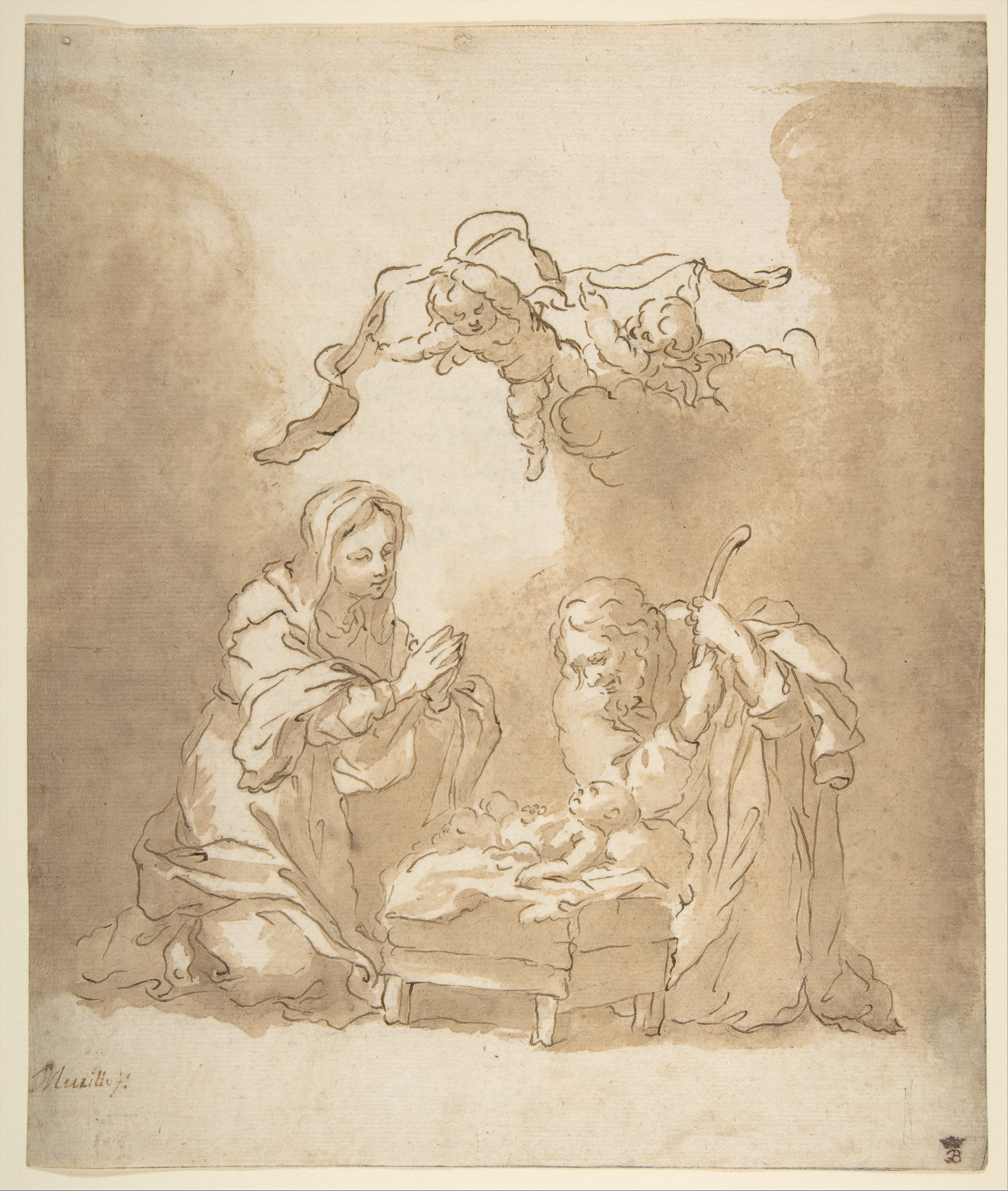
In the spirit of the Octave, here is a piece I wrote for the Christmas issue (21 Dec) of the UK’s best (and now US) Catholic weekly, the Catholic Heraldalong with the image that accompanied it.

The image’s deceptive simplicity is of an order accomplished only by a master. Brown ink pen strokes. Brown wash. Traces of black lead. The economy is illusory, the effect alluring. Just so is Bartolomé Estebán Murillos drawing of the Nativity (c 1665) which I spotted in an otherwise disappointing corridor of frequently changed exhibits at New York’s Metropolitan Museum.

The composition isn’t groundbreaking. Baby Jesus lies in a small manger. On the right, at His head, Joseph kneels, leaning on a staff, bent to look into the Child’s face. He exudes protection. At Jesus’s little feet kneels Mary. Prayerful hands thrust forward, she leans in. She is the epitome of longing. Overhead, chubby putti unfurl a ribbon banner. Were it adorned, we would read, “Glory to God in the highest.” The Child lies back comfortably, rather in the manner of one who has just enjoyed a good meal, near left arm languid, head pillow-propped. You can just see the fingers of His far left hand resting by His belly-button. He gazes straight at His mother.

 The image, so simple, so delicate, shouts, “I’m here at last. Love me!”

Love is here incarnate.  Love is helpless. Love is wholly lovable.

 As I looked at this drawing, I sensed a representation of a personal challenge. Perhaps I read it in that moment through the lens of a recent accident I had, the injuries I sustained which force me daily to rely on the kindness of others. In my independence, the self-sufficiency of routine, I don’t easily ask for help when it comes to personal needs, even when ailing. But now, I am constrained to be helpable. I must let people be good to me. In doing so, I am an opportunity for them to be good to someone.

 The Incarnate Word, as we read in Gaudium et spes 22, took up our humanity to reveal us more fully to ourselves. In being so lovable, Jesus reveals that each of us are lovable. He asks us to allow ourselves to be lovable and freely to accept His love. As St Elizabeth of the Trinity wrote, “Let yourself be loved.”

Christmas presents us with the God who emptied Himself of glory and became lovableness incarnate. Allow God to love you.  Adore and glorify Him in your ways. Love others in words and deeds, especially the love starved. Allow others to love you.

Posted in Liturgy Science Theatre 3000 | Tagged
6 Comments

More thoughts about upcoming Pont. Comm. “Ecclesia Dei” document or suppression

I’ve been thinking quite a bit about the implications of a new Motu Proprio by which the Pontifical Commission “Ecclesia Dei” might be suppressed because the “pastoral emergency” for which it was created is no long present.  It’s brief would, mostly, I suppose, be absorbed by the CDF.  I wrote about it also HERE.

Earlier I wrote about implications for the religious communities under the PCED and about issues like the calendar.  I wasn’t terribly positive about those elements, since other congregations would probably have to get involved.  Not only too many cooks, but not very good cooks.

However, it is a good idea to turn the sock inside out once in a while.

Mind you, this is my speculation based on careful sources sparked by rumor.

What if the text of the Motu Proprio, founded on the idea that the “pastoral emergency” is no longer urgent, instead of being negative, winds up to be positive?

What if Francis surprises everyone as he did when he – admittedly in an oddly non juridical way – made it possible for people to be validly absolved by SSPX priests and then provided for the proper witnessing of marriages with valid form?  Could there be something else in the Motu Proprio regarding them which could make the PCED’s brief less pressing?

I admit that I am now rather conditioned to suspect anything that comes from this pontificate, given the cast of characters involved at various levels.  It is a sad development.  Once upon a time, when I heard that a document was coming, I would look forward to it and, when it arrived, dig to find the gold.  These days, I dread every rumor of a document and, when it comes, I look for the bad rather than the good.  I don’t like this situation.

Hence, I’ll put it out there: if the “pastoral emergency” is over, then what could this mean?

First, consider that in the 10 years from the promulgation of Summorum Pontificum the number of places where the older Mass is in use has exploded, especially in these USA.  Here the number went from some 50 to some 500.

Next, the number of priests saying the older form is increasing with every ordination.

Next, the number of bishops saying the older form is increasing every year.  We now hear of Pontifical Masses all over the place.  Unthinkable 10 years ago.

Next, the number of vocations entering traditional communities is up.  The number of newly ordained for dioceses who say their First Mass in the traditional form is up.

There are positive indications.  It would be extremely foolish to try to suppress this movement now.  The numbers are up and attempts to suppress would fuel huge resistance.

So, maybe the Motu Proprio will be positive rather than negative.

Perhaps it will acknowledge that – with the passing of a pastoral emergency – what is going on is now main stream.

I have several sources of thin information about the document, and I am starting to think that my knee-jerk reaction was in the wrong direction.

Mind you, this is my speculation based on careful sources sparked by rumor.

Please, friends, pray to St. Joseph, the Church’s great Guardian and beautiful builder, to guide the release of the new document.

Moderation queue is ON.

UPDATE

See Edward Pentin on this.  HERE

Posted in "How To..." - Practical Notes, Hard-Identity Catholicism, Liturgy Science Theatre 3000, SSPX, SUMMORUM PONTIFICUM, The Drill, The future and our choices | Tagged , ,
8 Comments

YOUR URGENT PRAYER REQUESTS

Please use the sharing buttons! Thanks!

Registered here or not, will you in your charity please take a moment look at the requests and to pray for the people about whom you read?

Continued from THESE.

I get many requests by email asking for prayers. Some are heart-achingly grave and urgent.

As long as my blog reaches so many readers in so many places, let’s give each other a hand. We should support each other in works of mercy.

If you have some prayer requests, feel free to post them below.

You have to be registered here to be able to post.

I still have pressing personal petitions.

  1. Healing after my accident.
  2. A good bishop for Madison.
  3. Personal.
Posted in SESSIUNCULA |
20 Comments

UPDATE – Portuguese Bishop “corrects” claims about the perpetual virginity of Mary

UPDATE 28 Dec:

My correspondent sent a fast translation a new piece.

Observador has written a new piece explaining the mess and quoting Bishop Linda. He appears as a victim who was unfairly involved in a misunderstanding.

This was put together by a team of three journalists at Observador. They seem keen on keeping this ball in the air.

The Virginity of Mary and the Bishop of Porto


Following a controversy surrounding an article by Observador, Manuel Linda, Bishop of Porto, clarifies that he believes in the “complete physical virginity” of Mary.  What does the Church say about this issue?


The controversy started with an article by Observador published last Sunday, where Bishop Manuel Linda was referred to as denying the virginity of Mary and affirming the natural conception of Jesus, with Mary and Joseph being his biological parents. In a second updated version of the text, that reference was corrected as having been declared only by father Anselmo Borges – who in a second contact with Observador confirmed what he said before – and who was also consulted in the write-up of the article. Observador apologizes for the mistake.


In a new contact with Observador after the controversy, Bishop Linda said he was “sad with the interpretation” of his thought regarding the virginity of Mary, one of the central dogmas of the catholic faith, and he proclaimed his belief in the “complete physical virginity” of the mother of Jesus Christ.


Also the phrase “we should never refer to the physical virginity of the Virgin Mary”, attributed to Bishop Linda, is incomplete in the article. This Wednesday, Bishop Linda explained that he wished to highlight that the virginity of Mary has not only a physical dimension – although this cannot be excluded – but also a theological aspect.


“What I wanted to say is that, beyond this piece of evidence which is merely biological, this girl, Mary, is a woman who gives herself entirely to God, who has her sight fixed on God, who places her existence in God. She is the one who in no aspect is tainted by something more impure”, explained Bishop Linda. “That is why the virginity is not only physical, but no one excludes the physical virginity”, he added.


In respect of the conception of Jesus Christ, Bishop Linda, who says he is devoted to Mary since childhood, explains that he believes in what the doctrine of the Church has always taught: in the conception “by works and grace of the Holy Spirit”. That is, without there having existed sexual relations between Mary and Joseph.


What does the Catholic Church say about the virginity of Mary?


The perpetual virginity of Mary is one of the four dogmas that the Church has proclaimed in reference to the mother of Jesus – together with the divine motherhood (Mary is the mother of God), the Immaculate Conception and the Assumption.


Dogmas are truths of the Church’s faith which are considered fixed, immutable and infallible by the believers, revealing themselves as unquestionable pillars of the catholic faith. It is around the dogmas – most especially the dogma of the perpetual virginity – that revolves most of the devotion catholics have for Mary.


As explained to Observador by Bishop Linda himself, the virginity of Mary is mentioned in the Bible long before its own existence. Already in the book of the prophet Isaiah, in the Old Testament, one of the announcements of the coming of Jesus Christ was: “Therefore the Lord himself will give you a sign: The virgin will conceive and give birth to a son, and will call him Immanuel.”


This passage of the Bible would later be interpreted by the evangelists, the first chroniclers of the life of Christ. When Saint Mathew describes the episode in which the angel Gabriel announces to Mary that she will get pregnant, he says: “All this took place to fulfil what the Lord had said through the prophet: “The virgin will conceive and give birth to a son, and they will call him Immanuel” (which means “God with us”).”


These passages of the Bible have always made christians believe in the virginity of Mary. “In the year 649, the synod of Lateran defined Our Lady as always virgin”, Bishop Linda explains, adding that “although from then on there is that definition, it did not add anything new because the Church always believed this from the text of Isaiah”.


The Catechism of the Catholic Church, a document where all of the Catholic Church’s faith is organized, explains, in number 496, that “From the first formulations of her faith, the Church has confessed that Jesus was conceived solely by the power of the Holy Spirit in the womb of the Virgin Mary, affirming also the corporeal aspect of this event”.


The text, still valid today for catholic doctrine is the one from the synod of Lateran, which affirms Jesus Christ was conceived “absque semine”, that is, “without semen” and by the Holy Spirit.


“The deepening of faith in the virginal motherhood led the Church to confess Mary’s real and perpetual virginity even in the act of giving birth to the Son of God made man. In fact, Christ’s birth “did not diminish his mother’s virginal integrity but sanctified it”, according to the Catechism of the Catholic Church.


More recently, the dogmatic constitution Lumen Gentium (1964), one of the central documents of the Second Vatican Council, describes Mary standing out “ in eminent and singular fashion as exemplar both of virgin and mother”, who by her “belief and obedience, not knowing man but overshadowed by the Holy Spirit, she brought forth on earth the very Son of the Father”.


The Catholic Church’s thinking on this matter has been developed by theologians throughout the recent decades. Joseph Ratzinger, who would become Pope Benedict XVI in 2005, wrote in 1968, in one of his most well-known works, Introduction to Christianity, that “But Christian faith really means precisely the acknowledgement that God is not the prisoner of eternity, not limited to the solely spiritual; that he is capable of operating here and now, in the midst of my world, and that he did operate in it through Jesus, the new Adam, who was born of the Virgin Mary through the creative power of God, whose spirit hovered over the waters at the very beginning, who created being out of nothing”.


According to the Catholic Church, however, the idea of the perpetual virginity of Mary goes beyond the physical dimension and the absence of sexual relations in the conception of Christ. It is also, as Bishop Linda explained to Observador, “the full devotion of that woman to God”.


Why was this such a heated debate?


The article by Observador sparked an intense discussion in the forums connected to the Catholic Church, not only in Portugal, but also in other countries, and in the press. The seeming rejection of the virginity of Mary by a bishop – which the Church considers successor of the apostles of Christ – caused controversy among numerous catholics, precisely because it referred to the denial of a fundamental principle of the catholic faith.


Designated directly by the Pope (be it by proposal of the episcopal conferences of each country thorough the ambassador of the Vatican, or Apostolic Nuncio), the bishops hold the highest degree of the sacrament of the Holy Orders, are in union with the other bishops and with the Pope (bishop of Rome) and are the maximum authority of the Catholic Church in their dioceses, being their exclusive responsibility to ordain new deacons, priests and bishops.


In fact, the Code of Canon Law, in canon 753, sets out that bishops are “authentic teachers and instructors of the faith for the Christian faithful entrusted to their care”.


In this case, the rules of the Catholic Church determine that the denial of the perpetual virginity of Mary is considered a heresy. According to the CCL (canon 751), “Heresy is the obstinate denial or obstinate doubt after the reception of baptism of some truth which is to be believed by divine and Catholic faith”. 


The same document explains that “an apostate from the faith, a heretic, or a schismatic incurs a latae sententiae excommunication” (canon 1364) and that the cleric may be punished with the “privation of a power, office, function, right, privilege, faculty, favor, title, or insignia, even merely honorary” (canon 1336).


Excommunication is the most serious penalty that the justice of the Catholic Church may affect the faithful. In the case of particularly serious situations, among which heresy is included, this excommunication may happen latae sententiae, that is automatically, which can only be lifted by  the Pope himself.


No wonder, then, that among the catholic faithful – especially in Portugal, a country where the devotion to Mary is particularly relevant for the practice of the christian faith – the controversy surrounding the seeming denial of a dogma of the faith by a bishop has grown so far.


This discussion must also be framed in a time when the division between the more traditional faction (more frequently associated with a certain conservatism) and the more progressive faction  grows deeper in the Catholic Church. All this started with the submission of the dubia to Pope Francis by four cardinals, in 2016.


In that document, four cardinals more close to the traditionalist faction of the Church asked Pope Francis to clarify five points in his apostolic exhortation Amoris Laetitia, in which the leader of the catholics opened the door to the reception of communion by faithful catholics who divorced and remarried [opted for a full literal translation here to stay 100% faithful to the Portuguese text].

Originally Published on: Dec 26, 2018

A few days ago, we heard about a bishop and priest in Portugal – Bp. Manuel Linda, Bishop of Porto, and Fr. Anselmo Borges, essayist and university professor at Coimbra University  – in an interview with a prominent media source, denied the perpetual virginity of Mary and the virgin birth of Christ.  Merry Christmas.

I wrote about that HERE and it provoked strong responses.

Then is was reported that Bp. Linda denied saying what he said.  He said that he would “proclaim his total adherence to the faith of the Church regarding the virginity of Our Lady” at Christmas Mass during the Homily, which was broadcast by Radio Renascença Portugal’s Catholic radio.

A reader recorded and transcribed and translated the Bishop’s sermon.  Remember: this is the bishop, not that priest professor.  Here it is.  My correspondent wrote:

Here is the full translation of yesterday’s homily by Bishop Manuel Linda. It is a very literal rendering but I think it is readable enough in English…

Once again apologies for the delay, this is a very – very! – serious matter and it must be handled with total transparency, clarity and rigour.

If Bishop Linda did not really say what Observador (the news outlet) quoted him saying, they must publish a full explanation of why they made it up!

I believe this is a clear example of an occasion where us – the laity – have a strong role in pressuring the media (and the priests) for them to clean up the mess when… the feces impact the propeller!

The bishop’s sermon with my emphases:

These readings we have just heard, could not be comprehended without that clamor that the angels made to the shepherds of Bethlehem: “Do not be afraid. I bring you good news that will cause great joy for all the people. Today in the town of David a Saviour has been born to you; he is the Messiah, the Lord.” (Luke 2:10). But why that “great joy”? What did that birth bring of new to History and to those shepherds life?

Read with the key of Faith, the Gospel gives us the answer: in Jesus and with Jesus, fear and solitude disappear, since God comes to meet his creatures; our world becomes inhabitable, since God makes Himself a co-citizen of man; the reign is now of that light which destroys the darkness of mind and heart; congregates diversity around itself, represented by the almost antipodes of the poor shepherds and the rich wise men from the East, because the the crib is the place where all come together. But, fundamentally, “But as many as received him, he gave them power to be made the sons of God” to use the words we’ve heard. It’s true: you and I dear believer are members of God’s family. Let us not forget this dignity.

It is this, and only this, what the Word born as a Child desires: to enlighten and to make a family from humanity with God, as well as from people between them. Better: to communicate to them its life in order that, with Him and in Him, we become sons of God and brothers amongst ourselves.

It it precisely because of this, that we note a big sadness in the words of the evangelist when he deplores that the Verb, the Messiah, was not duly welcomed by many: “He came to his own, and his own people did not receive him”. Of course, Saint John was thinking about the Jews, a people amongst whom Christ was born. But we could refer this passage to the world at large. Particularly to the world of this time.

From everywhere, voices arise saying that our Christmas is beginning to be buried in the agitation and bustle, in materialism and in consumerism, in a pagan mentality that does not even pronounce the name of Jesus, Son of God. I would rather not be that pessimistic. Notwithstanding, I do recognize a few worrisome signs. In particular, at the level of a merely peripheral experience, without striking at its core, without the enchantment with the profoundness and the tenderness of the mystery which envelops us.

It’s just that Christmas is a complex occurrence. In it the three theological virtues which are the foundations of Christianity are conjugated: faith, hope and charity.

Christmas is faith because it implies that leap of quality that may transport us from the tenderness of the Child to the vision and acceptance of the Son of God, of he who “for us, men, and for our salvation, came down from heaven”, as we profess in the creed. It is the acceptance of the fulfillment of the Scriptures, mentioned in the second reading: “In the past God spoke to our ancestors through the prophets at many times and in various ways, but in these last days he has spoken to us by his Son” (Heb 1, 1-2)

Christmas is hope. How can we abandon ourselves to sadness, to anguish, to fears, to despair, if we know we are loved and accompanied by God? Is salvation is with us and in us, how can we let ourselves submerge by the darkness of discouragement, by the dread of the future, by the weariness of the walk? With Him and in Him, our life acquires a new meaning: that of knowing that the big goal is the happy and venturous encounter with the Father.

Christmas is, still, love or charity. It reveals to us how far God’s love can reach: despite the continuous pride of imagining that we do not need God and even some rebellion against Him, He raises us to the category of his sons in the Son. It is He who communicates to us the divine life, without regard to the price of this offer: it is the price of the cross. For love and only for love.

Because our world has a marked deficit of faith, of hope and of charity, Christmas is thus becoming a merely civil feast and many reject the Child which is at its origin: “He came to that which was his own, but his own did not receive him”. As with in the days of Herod, it is in fact becoming a dangerous world both for the Child and for those who put their hope in Him. A world where it is politically incorrect to demonstrate faith and, through Annas or Caiaphas, some Christians are barred from accessing certain offices; where the institutions of the Church, especially the ones providing assistance and education, are looked down upon, if not ostracized and «legally» persecuted; where at a pretext of secularity it seems that believers lose their condition of citizens and the rights that arise therefrom; a world of cynicism which rejects the great values that are demonstrably useful for society, just because they are linked to the Church, setting up familial and social aridity and fragmenting existence; a world that wishes to bury the Church under a slab of silence, except when some kind of trouble provides the fuel to subject her to a long martyrdom of being burned in fired lit up by the media; a world of world leaders who do not lose their sleep over the christians who are decimated in the Near East, in Africa and around the globe; a world, at last, which seems to be establishing an equation, as gander as it is threatening for the future: «non-christian equals reality under protection; christian equals condemnation to beasts».

Nevertheless, this is not the last word. The final signature in the story is expressed in the certainty proclaimed in the first reading and in the psalm: “all the ends of the earth shall see the salvation of our God”. And salvation is the absence of all evil and of all negativities which oppress us, even if we are not aware of it.

Evidently, there would be no Christmas without the Holy Virgin Mary, She who, in accordance with the faith of the Church -which is also my faith!-, is proclaimed “virgin before, during and after birth”, in an express manner since the Synod of Milan (year 390), or “Mater intacta”, as we say in the litany. We have greeted her and we thank her deeply for her irreplaceable contribution to the history of our salvation.

In this Christmas, with the Virgin Mary and through her eyes, let us turn to her Son. And let us find the profound meaning of the well-known verses of Pierre Mounier, placed in the speech of the God-Child:

“To touch me, set aside your scalpel…
To see me, leave aside your television systems…
To feel the pulsations of the divine in the world,
Do not bind yourselves to instruments of precision…
To read the Scriptures, leave criticism aside…
To savor Me, use some other sensibility…”

In the Child Jesus, happy holy holidays”

Okay, that’s the bishop’s sermon.

I have a sense that that paragraph was dropped in as an afterthought, as it seems hardly integral to the line of thought of the sermon.

But who am I to judge?

Since I put the original story up on this blog, I figured that – in justice to that bishop – I should post his sermon which, I guess, he thought was a clarification of what he seems to have said to that news source.  Namely…

Jesus is not the son of a virgin woman, both Father Borges and Bishop Linda explain. He was conceived by Mary and Joseph like any other person and he is “truly man”. Virginity is only associated with Mary as a metaphor to prove that Jesus was a very special person.

[…]

Regardless of these words, Bp. Linda told Observador that “we should never refer to the physical virginity of the Virgin Mary”

I think Fr. Borges still has a lot of explaining to do.

I’ll turn on the moderation queue for this.


UPDATE

Damn.  This is one of those stories that has no end, it seems.  It is amazing how, for example, when you drop a jar of liquid and it shatters, it goes everywhere.  In an instant, you have to clean up everything for a long time.

From my correspondent.

The article at Observador has been slightly (poorly – very poorly) changed. It is clear this follows some sort of request from the part of Bishop Linda. The new revised text only reflects changes to Bishop Linda’s quotes.

  1. There is one correction: attributing only to Father Anselmo Borges what previously had been attributed to both
  2. There is one insertion: regarding Bishop Linda’s wish NOT to deny the dogma of the perpetual virginity of Mary (regardless of what he says elsewhere…)
  3. One deletion

This text has been altered at 15.00h of the 26th of December of 2018 in order to clarify Bishop Manuel Linda’s position in relation to the dogma of the perpetual virginity of Mary.

This is basically bad cosmetics. Nip and tuck, believing you can sweep the garbage under the bed to get a clean bedroom.

https://observador.pt/especiais/as-respostas-as-questoes-dificeis-sobre-o-natal-mesmo-as-mais-inconvenientes/


Posted in Linking Back, Our Solitary Boast | Tagged ,
13 Comments

RUMOR VOLAT: Buzzing about the suppression of the Pontifical Commission “Ecclesia Dei”

Reports are circulating into my phone, my mail box and onto the interwebs (Messa in Latino and Tossati) that the Pontifical Commission “Ecclesia Dei” (PCED) could be suppressed soon and absorbed into the Congregation for the Doctrine of the Faith (CDF).    Tossati claims that Francis has already signed a Motu Proprio and that it was to be published last Thursday.

The claim is, as Tossati puts it, the PCED was needed due to a “l’emergenza pastorale… pastoral emergency” which no longer exists.  Hence, the PCED isn’t needed.  This is against the backdrop of recent hostile voices in the Italian bishops conference against Benedict and Summorum Pontificum.   Of course that represents a spectacular example of the tightly parochial view of Italian bishops, in the worst sense of that word, a hyper “campanilismo”.

As a matter of fact, the blinkered hostility of Italian bishops demonstrates in a concrete way that there remains a “pastoral emergency”.  And this is a pastoral emergency created by those very bishops… much like they created The Present Crisis with the fecklessness and moral cowardice.

If it is true… if there is a signed Motu Proprio to be published… then there will be some consequences.  What they might be depends on the juridical dispositions made.

My sources – very discreet – say that, at this time, there is no reason for you readers to worry.

To be clear, that doesn’t mean that the rumor, above, has been denied.  My sources offered careful language.

However, I can offer a few thoughts.  Mind you, this is my speculation based on careful sources sparked by rumor.

At first, the PCED was set up as an “ad hoc” Commission.   That meant that it wasn’t intended to be permanent.  However, the “hoc” to which the “ad” pointed includes the reconciliation of the SSPX.   That isn’t going to happen in the near future and the work has been going on since 1988.

Next, the PCED was already absorbed into the CDF.   It still has its brief, with the backing of the CDF.  If it is completely absorbed, then the one responsible for at least some of what the PCED did would be the Cardinal Prefect of the CDF.

Were the PCED to be suppressed and its brief handed over to the CDF, then its disciplinary and juridical brief would more than likely be handed over at least in part to the canonical section of the CDF.   We would have little to worry about there.   If the law says X about something, then that is what those guys will defend.  For sure.

However, the PCED is also studying issues such as the synchronization or harmonization of calendars and so forth.  That work, I suppose, would go over the Cong. for Divine Worship, where also traditional rubrical questions might be answered.  Unless the right people were brought in for that, that could be… bad, given how those hallways were purged after roughly 2013.

Another aspect, an important one, that the PCED handles is the establishment of communities of religious life which want to use the traditional liturgical books and ways.  That part of the brief would probably be handed over to the Cong. for Religious, which, today, would spell…. how to put this… disaster.   Think Franciscan Friars of the Immaculate.   Existing communities would not be eradicated, but they would also not have much support.  Setting up something new, under this regime, would be, to my thinking, next to impossible.  There is too much patent hostility from the top of that Congregation down to imagine anything other.  It would be absurd  to deny it.  Look what they recently did to that group of sisters in France who just wanted the Novus Ordo in a traditional way and to wear habits while they took care of the elderly and infirm.

On the other hand, maybe the entire brief of the PCED will be retained within the CDF and things will go on as usual, except when bishops defy the legislation, they have the Prefect of the CDF to deal with.

Mind you, this is my speculation based on careful sources sparked by rumor.

Imagine the crowing of the libs.

They are not going to defeat tradition.

Dear readers, time and time and time again for years now I have been saying that the true renewal of traditional liturgy will only happen when diocesan priests take it up and go with it.   While I highly admire and appreciate the work of the specialized religious communities and priestly societies, they are nevertheless vulnerable.   When diocesan priests in larger numbers – and I think this is going to happen – take up the call, we shall see something entirely new.

Fathers.  Take this as a clarion call.   You MUST get to work now, to overcome whatever hesitation or fear you have about the work it will entail to learn the traditional rites.  You MUST integrate them into your priestly personal interior landscape, so that they become part of who you are, into your very bones and marrow.

Laypeople.  How many times have I urged you not to be complacent in your parishes where you have the traditional use of the Roman Rite.  I’ve urged you to take part in the life of the parish and, indeed, to make yourselves indispensable.  Do you do that?   If you haven’t, and you lose what you have because the priest doesn’t see you around except for only the things you like, then you have yourselves alone to blame.

We shall see.

Meanwhile, FORWARD.   We do not go backward.  The tank has only one gear.

I suggest that you pray, friends.

Mind you, this is my speculation based on careful sources sparked by rumor.

Posted in ¡Hagan lío!, Si vis pacem para bellum!, The Coming Storm, The future and our choices | Tagged , ,
14 Comments

ASK FATHER: Must we do penance on Friday in the Octave of Christmas?

Some of you, in this busy time of visits and dashing about, may want to plan ahead for Friday of this week.

Inevitably questions come up about penance on Friday during the Christmas (or Easter) Octave.

The Octave of Christmas does not have the liturgical “weight” of the Octave of Easter.  Easter Friday outweighs the penance thing, but Christmas Friday does not.

Note can. 1251 in the 1983 Code.

Can. 1251 Abstinence from meat, or from some other food as determined by the Episcopal Conference, is to be observed on all Fridays, unless a solemnity should fall on a Friday. Abstinence and fasting are to be observed on Ash Wednesday and Good Friday.

Friday in the Octave of Christmas is not a liturgical solemnity.  Hence, we are obliged to do penance today, Friday in the Octave.

However, you can ask your parish priest to dispense you or commute your act of penance.

Can. 1245 Without prejudice to the right of diocesan bishops mentioned in can. 87, for a just cause and according to the prescripts of the diocesan bishop, a pastor [parish priest] can grant in individual cases a dispensation from the obligation of observing a feast day or a day of penance or can grant a commutation of the obligation into other pious works. A superior of a religious institute or society of apostolic life, if they are clerical and of pontifical right, can also do this in regard to his own subjects and others living in the house day and night.

Members of religious communities and third orders should consult their own regulations and review to whom they turn for dispensations.

You can substitute another form of penance for abstaining from meat.  Make it penitential, however.  Abstinence from meat has good reasoning behind it.  For some, however, there abstinence from other things can be of greater spiritual effect.

Also, it may be that some local places have exceptions.   For example, if you belong to Holy Innocents parish, then Friday will be your patronal feast.

Also, perhaps your conference of bishops made another ruling.  I believe that is the case for England and Wales.

Posted in "How To..." - Practical Notes, ASK FATHER Question Box, Canon Law | Tagged
4 Comments

Audio: Politically Correct Night Before Christmas

Here’s something fun.   The Great Roman alerted me to a podcast from Madison’s best radio host – she should be national – Vicki McKenna: the voice of reason in a city of chaos.

POLITICALLY CORRECT NIGHT BEFORE CHRISTMAS

So, word reached me about the local podcast via Rome. Ho ho ho.

Enjoy!

UPDATE:

Also,

Posted in Lighter fare | Tagged
5 Comments

WDTPRS – 2nd Mass of Christmas (1962MR): bathed in new light

Originally, the second Mass of Christmas went together with Lauds.  The antiphons of Lauds form a kind of call and response, or question and answer cant about the experience of the shepherds coming to find the Christ Child.  Sometimes the Second Mass of Christmas is nicknamed the “Mass of the Shepherds” and we call it by the name of the Introit as well.  Lux fulgebit (Isaiah 9 with Ps 92).

COLLECT:

Da nobis, quaesumus, omnipotens Deus: ut, qui nova incarnati Verbi tui luce perfundimur; hoc in nostro resplendeat opere, quod per fidem fulget in mente.

This is an ancient prayer, found in manuscripts of the Gregorian Sacramentary, such as the Hadrianum and  Paduense.  It survived the experts of Bugnini’s Consilium to live on in the same moment in the Novus Ordo.

Your Lewis & Short will enlighten you that perfundo is “to pour over, to wet, moisten, bedew, besprinkle”.  But it comes to mean also, in a poetic sense and in post-Augustan prose, “of the sun’s beams or fire, to flood or fill”.   Thus it also means “to imbue, inspire, fill with any thing”, as with joy or with fear or with awe.

The theme of light plays through all the texts of this Mass, as it does, but in a different sense, in the Mass in Nocte, Dixit Dominus. Playing out through the Mass is the rising sun and the shepherd’s at the manger.

Light in the morning shines through the Mass, as it does right at this moment of writing for me – the sun streaming into the window its low beams in the depths of winter as it rises far toward the south and late in the morning.  Remember also that in the Introit, though we have just a snippet of the Ps 92, we are supposed to remember from that single line the whole of the psalm.  Monks could do that.  Pious Jews could do that.  We should at least look up the psalms cited in the verses of the Antiphon and consider what the Church is saying to us by citing it.

Opus is certainly work or labor, but it goes a bit farther to embrace alse “action” or “business” in the wider sense of all we do outwardly.

LITERAL VERSION:

We beseech You, Almighty God, grant to us
who are bathed in the new light of Your incarnate Word;
that this which gleams in the mind through faith,
may shine brightly in our action.

Note all the “light” words.

Briefly, there is a play between the inward and the outward.  Light can shine in our eyes and it is very visible.  But sacramental grace is “insensible”, but its presence in us is known to others by our outward deeds.

Latch into that word perfundimur, “we are bathed” in new light.  This sounds like baptism, in a sense.

Also, we ask God to illumine our faith.  In this life we walk in darkness.  We see through St. Paul’s glass, “darkly”.  In heaven we will not have faith, but rather knowledge.  But there are those moments of realization, when we have encountered mystery when we we have a transforming or illuminating experience which, as a consequence, changes us in ways that are discernible in our outward lives and inward peace.

Also, remember from all eternity the Word, the Logos, was the perfect invisible image of the invisible Father God.  In the incarnation he becomes the perfect visible image of the invisible God.  We are images of God.  In our words and deeds, that image should shine in us so that others may see it.

We ask for transforming graces.  But in receiving them, we can be a shining mirror, though still dark and cracked in places it is admitted, to reflect God’s light to others.

There is so much more to say about this oration, and all the others, but that’s what we have time for today.

Merry Christmas!

Posted in Christmas and Epiphany, Liturgy Science Theatre 3000, WDTPRS | Tagged ,
3 Comments

ASK FATHER: Your favorite Nativity image

From a reader…

QUAERITUR:

What is your favorite Christmas image?

Well, a rather personal and extremely difficult question.

Without a lot of reflection, what came quickly to mind is the 1597 painting in the Prado by Federico Barocci.

There’s stillness and there’s action.  The composition is simple.  Follow the lines.  Look for the light source!

Favorite?  This is one of them.

Posted in ASK FATHER Question Box | Tagged
12 Comments

Remembering @BishopMorlino at Christmas

The late, great Extraordinary Ordinary, Most Rev. Robert C. Morlino, Bishop of Madison, enjoyed Christmas.   On Christmas Eve he had priest friends come for supper before his vigil Mass.  That’s where, surely, we would be as I type this.

Alas.

A dear friend sent me this video, which I had not seen when it came out. Coming right now, it has a sweetly bitter taste, like the panettone and prosecco which I have unfailingly had at this time of year for some 3o years, remembrance of a bitter sweet Christmas.

YouTube thumbnailYouTube icon

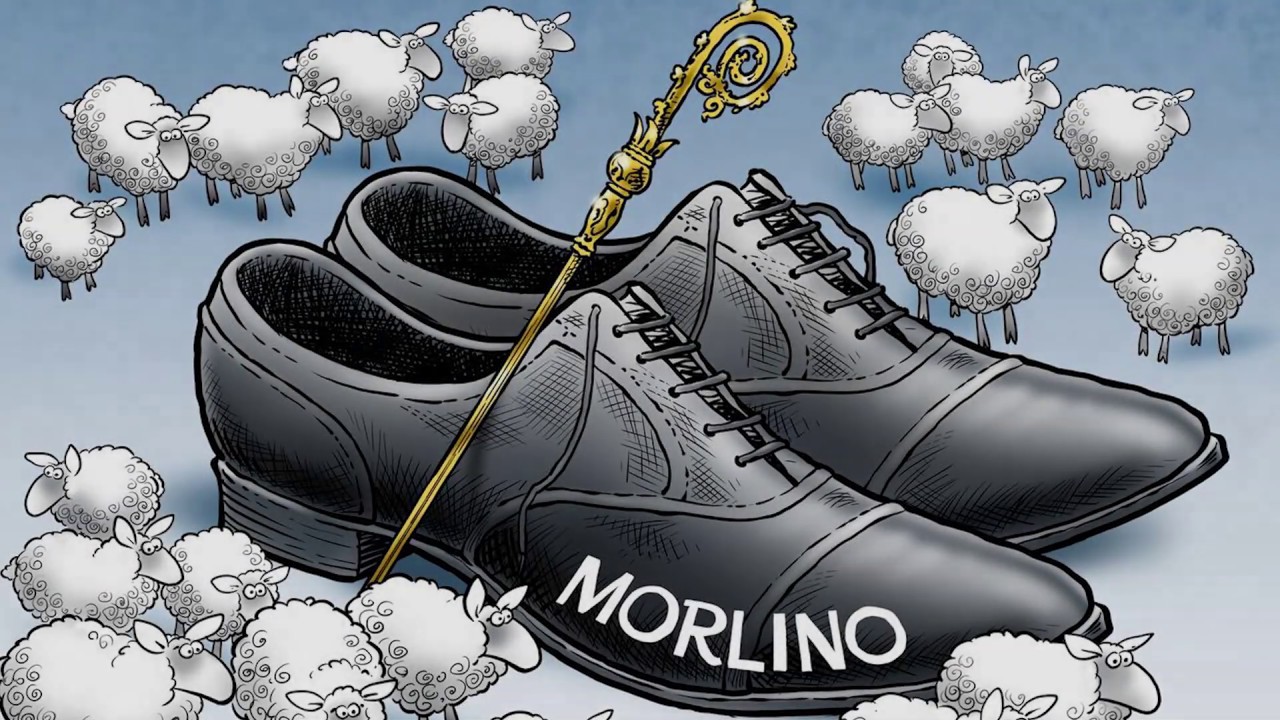
The loss of Bp. Morlino during The Present Crisis was a heavy blow. Many around the world now watch to see whom Rome will select to fill the empty shoes in Madison. I have handed my names up to God and I have offered the sufferings of my last weeks for the sake of his successor’s appointment.

I ask you, too, to pray. Ask God for a beautiful gift.

Thank you to Michael Matt and The Remnant for that video.

Posted in PRAYER REQUEST | Tagged ,
6 Comments