ASK FATHER: ” I feel that my Faith is just being torn apart”

From a reader…

QUAERITUR:

Given with the view of the Holy Father regarding Mary thru this remarks, how should we read between the lines in this statement of the Holy Father? I’m confused.

Yet I am more terrified of what’s happening with the Church and of her future with bad bishops and clergy. I feel that my Faith is just being torn apart, piece by piece. Yet because of the Divine Promise, Tu Es Petrus, I’m assured that this is a storm we need to go under to purify the Church with it’s bad ministers.

You write: “I feel that my Faith is just being torn apart, piece by piece.”

No, dear reader.  It is not.  What you are seeing are the machinations of some highly placed people who are intent on changing the Church from within.   They don’t have THE FAITH to tear it apart.  They can’t tear apart what they don’t have.  That doesn’t mean that they can’t sow confusion.  But they can’t touch THE FAITH.  The FAITH is greater than they are.  The FAITHFUL are too.  You, as a faithful Catholic, have great power with your prayers and your acts of reparation.

If you hear a bunch of rubbish from someone, ignore it.   You can find THE FAITH in the pages of the Catechism of the Council of Trent and in the Catechism of the Catholic Church as well as in a number of other great sources, such as the writings of great saints, especially Doctors of the Church.

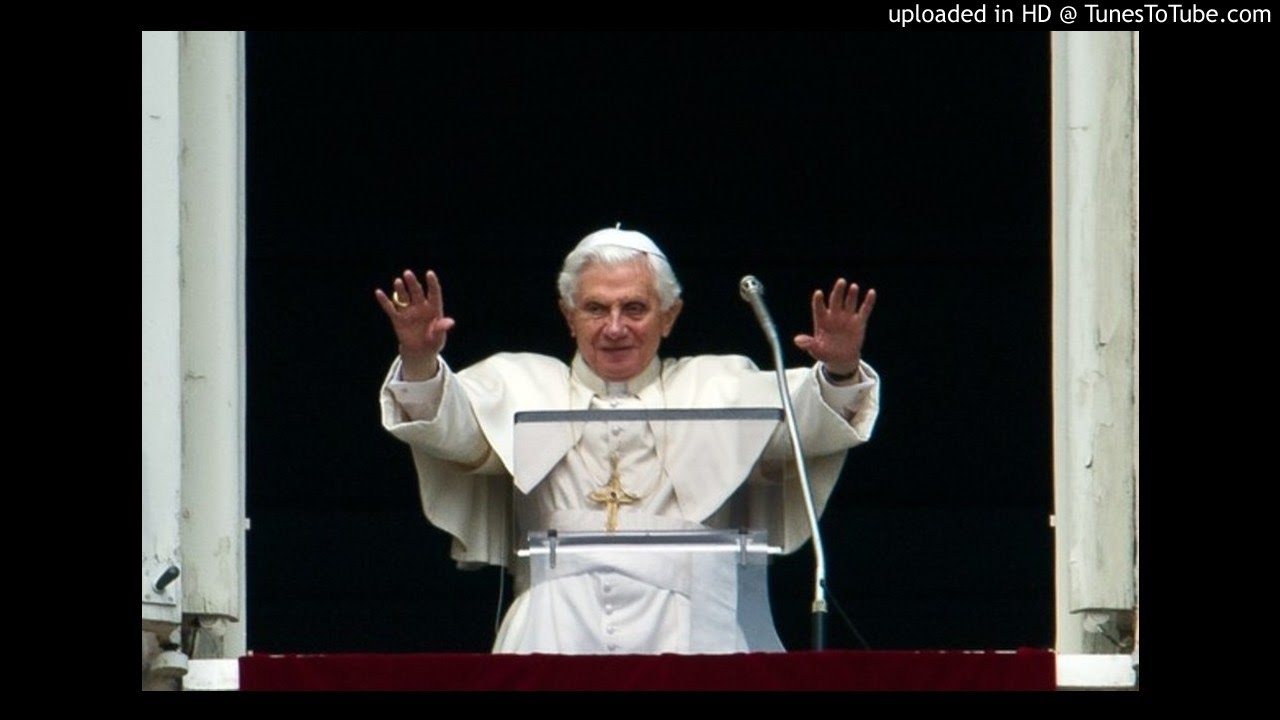
Now to the news, and your concern, that Francis thinks Mary was “a normal girl”.

Let me say from the onset that, in interviews, people can say things that aren’t entirely thought through.  In the moment they intend to underscore something, but, also in the moment, they express themselves awkwardly and, because of time restrictions, can’t add all the caveats and clarifications.

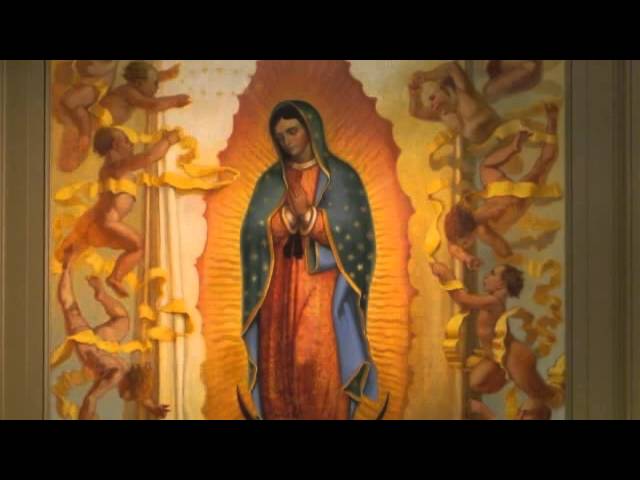
Let me also say that Francis says that he has a devotion to Mary, “Undoer of Knots”.  He stops after trips at Santa Maria Maggiore to visit the wondrous icon of Mary, Salus Populi Romani.    He established the Feast of Mary, Mother of the Church.  TODAY, 12 October, is the Feast of Mary, Mother of the Church.

We read at La Stampa that in a book-interview, Francis described the Blessed Virgin Mary as “a normal girl”.

The Italian daily Corriere della Sera has anticipated some excerpts of Bergoglio’s new book: “From the moment she was born until the Annunciation, to the moment she encountered the angel of God, I imagine her as a normal girl, a girl of today[?!?  Who had never committed even a venial sin.  The only one conceived without any stain of any kind of sin.  Immaculate.  “Singular vessel of devotion… Queen of Angels…”… you know, “normal”.] I can’t say she a city-girl, because she is from a small town, but normal, educated normally, open to marrying, to starting a family. [Is that what “girls of today” are like?] One thing I imagine is that she loved the Scriptures: she knew the Scriptures, she had done catechesis in a family environment, from the heart. [Does that descibe a normal girl of today?   Sorry, but if that’s the case the WHY DID WE NEED THIS SYNOD?!?] Then, after the conception of Jesus, she was still a normal woman: [Who conceived by the Holy Spirit and remained a virgin.] Mary is normal, she is a woman that any woman in this world can imitate. No strange things in life, a normal mother: even in her virginal marriage, chaste in that frame of virginity, Mary was normal. She worked, went shopping, helped her Son, helped her husband: normal”.  [That’s just doing stuff.  Those tasks don’t touch on who she is in a more profound way.  In a way this reflects the thoughts of those who reduce the priesthood to tasks, without consideration of the ontological character of the priest.  If priesthood is to be reduced to stuff the priest does, then it would make sense to choose as priests anyone who could do those things well, man, woman,… indeterminate.]

Emphasizing Mary’s rootedness in the people, Francis takes up one of the recurrent themes of his pontificate. “Normality is living among the people and like the people. It is abnormal to live without roots in a people, without connection with a historical people. In such conditions a sin – very much liked by Satan, , our enemy- is born : the sin of the elite. [?] The elite does not know what it means to live among the people and when I speak of the elite I do not mean a social class: I speak of an attitude of the soul. One can belong to a Church elite. But, as the Council says in Lumen Gentiumthe Church is the faithful holy people of God. The Church is the people, the people of God. And the devil likes the elite. [Sorry… but I can’t help you with that.] 

“The re-creation begins with Mary, with a single woman,” [“single” in what sense?  Single as in “not married”?  Single as in “just one of many”?] says Pope Bergoglio. “Let’s think of the single women who run the house, who alone raise their children. [Whoa!  Mary was NOT a single mother.] Mary is even more alone. Alone, she begins this story, which continues with Joseph and the family; but at the beginning recreation is the dialogue between God and a single woman. Alone in the moment of proclamation and alone the moment her Son died”.  [And yet she is the icon of the Church.]

Were I to be asked to talk about Mary, it wouldn’t even enter into my mind to describe her as “normal”.

Again, in an interview you might want to underscore one issue without having time to add everything else that could be said, especially about a super rich theme.

May we, please, take a moment for the Litany of Loreto on this Feast of Mary, Mother of the Church?

Lord have mercy.
Christ have mercy.
Lord have mercy.
Christ hear us.
Christ graciously hear us.

God, the Father of heaven,
have mercy on us.

God the Son, Redeemer of the world,
God the Holy Spirit,
Holy Trinity, one God,

Holy Mary,
pray for us.
Holy Mother of God,
Holy Virgin of virgins,
Mother of Christ,
Mother of the Church,
Mother of divine grace,
Mother most pure,
Mother most chaste,
Mother inviolate,
Mother undefiled,
Mother most amiable,
Mother admirable,
Mother of good counsel,
Mother of our Creator,
Mother of our Saviour,
Mother of mercy,
Virgin most prudent,
Virgin most venerable,
Virgin most renowned,
Virgin most powerful,
Virgin most merciful,
Virgin most faithful,
Mirror of justice,
Seat of wisdom,
Cause of our joy,
Spiritual vessel,
Vessel of honour,
Singular vessel of devotion,
Mystical rose,
Tower of David,
Tower if ivory,
House of gold,
Ark of the covenant,
Gate of heaven,
Morning star,
Health of the sick,
Refuge of sinners,
Comfort of the afflicted,
Help of Christians,
Queen of Angels,
Queen of Patriarchs,
Queen of Prophets,
Queen of Apostles,
Queen of Martyrs,
Queen of Confessors,
Queen of Virgins,
Queen of all Saints,
Queen conceived without original sin,
Queen assumed into heaven,
Queen of the most holy Rosary,
Queen of families,
Queen of peace.

Lamb of God, who takest away the sins of the world,
spare us, O Lord.

Lamb of God, who takest away the sins of the world,
graciously hear us, O Lord.

Lamb of God, who takest away the sins of the world,
have mercy on us.

Pray for us, O holy Mother of God.
That we may be made worthy of the promises of Christ.

Let us pray.
Grant, we beseech thee,
O Lord God,
that we, your servants,
may enjoy perpetual health of mind and body;
and by the intercession of the Blessed Mary, ever Virgin,
may be delivered from present sorrow,
and obtain eternal joy.
Through Christ our Lord.
Amen.
YouTube thumbnailYouTube icon

Posted in ASK FATHER Question Box, Our Solitary Boast, The Drill |
35 Comments

URGENT PRAYER REQUEST: Australia and removal of all abortion restrictions

From a reader…

Dear Fr Z I read your Blog all the time. At the moment we have some horrendous legislation before our parliament, with voting to commence next week. The vote will be an attempt to remove all legal restrictions concerning abortion (ie., up to term with minimal restrictions and safeguards) It is truly horrendous and soul destroying. Could you please pray and ask your prayer warriors to pray for us here in Australia (QLD) To especially petition Our Lord for a profound change of heart in all of our Politicians and for the defeat of the Legislation.

Posted in Emanations from Penumbras, Urgent Prayer Requests | Tagged ,
7 Comments

Francis accepted Card. Wuerl’s two year old resignation, wrote him a Letter

Today at last Francis accepted the heavily embroiled Card. Wuerl’s resignation.

Card. Wuerl turned 75 over two years ago. As the law requires he was to submit his resignation.    It was not accepted at the time.  Wuerl submitted another in September.

They’ve given it a lot of coverage.

Francis wrote a letter about it.  It’s in Italian.  HERE  The Archdiocese of Washington has it in English HERE.

I’ve read it.  I won’t comment on it, right now, for the sake of my and your blood pressure.  I have a doctor’s appointment coming up this morning.

In the WSJ account, however, I found this interesting line:

Cardinal Wuerl is now the second prominent U.S. Church official to be brought down by the sex-abuse scandal this year.

As one of my correspondents wrote today:

Viganò 2 – Francis 0


Posted in The Coming Storm, The Drill, The future and our choices | Tagged
23 Comments

ASK FATHER: Official Latin of Fatima Rosary Prayer

From a reader…

QUAERITUR:

Is there an official Latin version of the Oratio Fatimae? I have seen different ones online and a fair amount of ambivalence about which to use. Keeping with St Thomas More, it seems to me that a prayer is made of words and that the words matter.

Thank you for your outstanding blog.

Yes, words matter.

No, there isn’t an official version.

However, there are many versions to choose from!

The original is in Portuguese:

O meu Jesus, perdoai-nos e livrai nos do fogo do inferno; levai as alminhas todas para o Ceu, principalmente aquelas que mais precisarem.

Notice that it doesn’t mention “mercy”. However, we are all used to adding that. So, we could say:

O Iesu mi, dimitte nobis peccata nostra, salva nos ab igne inferni, omnes perduc in caelum animas, praesertim (tua) maxime indigentes (misericordia).

There are a lot of versions out there, if memory serves.

This is timely, since Saturday 13 October is the anniversary of the final apparition at Fatima and the Miracle of the Sun.  Where I am, the Extraordinary Ordinary granted, at my request, to the priests in the Diocese of Madison, permission to say a Votive Mass of the Immaculate Heart of Mary as 2nd class, rather than observe the Feast of Edward the Confessor.  As wonderful as Edward is, he is less venerated in Wisconsin than in England.  Hence, we have the option of the Votive Mass.  This is the TLM, mind you, according to the rubrics of the 1962MR 342 & 370-372.

Posted in "How To..." - Practical Notes, ASK FATHER Question Box, Our Solitary Boast | Tagged , ,
4 Comments

NOTE TO READERS about email and contact

Dear readers, I get a huge amount of email.

If you want to write to me, use my CONTACT form.  A link is on the top menu.  If you don’t use that contact form, I may just delete your email if I don’t recognize it.  Really.

If you have ASK FATHER questions, use the ASK FATHER form.  A link is on the top menu.  If you don’t use that form, I may just delete your email.  Really.

Alas, I don’t have a secretary.  I have to do brutal, cold triage on everything that comes in.  If I see stuff floating around in my personal mail that I don’t immediately recognize as being “personal mail”, I have to cut it out and move on.


Posted in SESSIUNCULA |
Comments Off on NOTE TO READERS about email and contact

Anniversary of John XXIII’s 1962 “Gaudet Mater Ecclesia” and how it has been misused #Synod2018 #VaticanII #podcast

Today is the anniversary of the opening of the Second Vatican Council in 1962.  At the opening, John XXIII (whose feast it is today) gave a famous speech which is known by its incipt, Gaudet Mater Ecclesia.

John XXIII’s speech is imbued with a sense of hope and optimism. He described the situation of the Church in the modern world as he saw it. He spoke about how the Council was announced. He described in poetic terms what it felt like to be there in that moment, in the Vatican Basilica.

The most important thing John said, however, was (my emphases):

The manner in which sacred doctrine is spread, this having been established, it becomes clear how much is expected from the Council in regard to doctrine. That is, the Twenty-first Ecumenical Council, which will draw upon the effective and important wealth of juridical, liturgical, apostolic, and administrative experiences, wishes to transmit the doctrine, pure and integral, without any attenuation or distortion, which throughout twenty centuries, notwithstanding difficulties and contrasts, has become the common patrimony of men. It is a patrimony not well received by all, but always a rich treasure available to men of good will.

Our duty is not only to guard this precious treasure, as if we were concerned only with antiquity, but to dedicate ourselves with an earnest will and without fear to that work which our era demands of us, pursuing thus the path which the Church has followed for twenty centuries. […]
… But from the renewed, serene, and tranquil adherence to all the teaching of the Church in its entirety and preciseness, as it still shines forth in the Acts of the Council of Trent and First Vatican Council, the Christian, Catholic, and apostolic spirit of the whole world expects a step forward toward a doctrinal penetration and a formation of consciousness in faithful and perfect conformity to the authentic doctrine, which, however, should be studied and expounded through the methods of research and through the literary forms of modern thought. The substance of the ancient doctrine of the deposit of faith is one thing, and the way in which it is presented is another. And it is the latter that must be taken into great consideration with patience if necessary, everything being measured in the forms and proportions of a magisterium which is predominantly pastoral in character.

He goes on to speak about how in dealing with errors in the past, the Church had often issued severe condemnations.  Now, however, “the Spouse of Christ prefers to make use of the medicine of mercy rather than that of severity.”

Decide for yourselves how well that has worked.

This comes to mind today, especially, because I saw a video in which the Archbishop of Chicago, presently in Rome for the Synod (“walking together”) made a video along with his theological advisor, Fr. Louis Cameli.

“Cameli”, thought I.  The guy who uses Scripture in an odd way so as to undermine Christ’s words about marriage.  HERE

A few years ago, Cameli published something in Jesuit run Amerika in which he quoted Gaudet Mater Ecclesia in such a way as to entirely distort what John XXIII said.  I wrote a post about that HERE.  Let’s see what he did (from that post).  He is writing against the Four Cardinals of the Five Dubia:

Cameli pits St. John XXIII and his opening speech, “Gaudet Mater Ecclesia” at the Second Vatican Council against the Four Cardinals, whom he has already accused of being disingenuous.

I don’t think we should allow St. John XXIII’s words and the Second Vatican Council to be so abused.

Watch how the meaning of Gaudet Mater Ecclesia is completely changed by the cuts Cameli makes.  Read these side by side, taking note of the ellipses (those are the little dots…):

GME 6 used by Cameli GME 6 more accurately translated GME 6 Original Latin
The salient point of this Council is not…a discussion of one article or another of the fundamental doctrine of the Church which has repeatedly been taught by the Fathers and by ancient and modern theologians, and which is presumed to be well known and familiar to all. The salient point of this Council is not, therefore, a discussion of one article or another of the fundamental doctrine of the Church which has repeatedly been taught by the Fathers and by ancient and modern theologians, and which is presumed to be well known and familiar to all. 


Neque opus nostrum, quasi ad finem primarium, eo spectat, ut de quibusdam capitibus praecipuis doctrinae ecclesiasticae disceptetur, atque adeo fusius repetantur ea, quae Patres ac theologi veteres et recentiores tradiderunt, et quae a vobis non ignorari sed in mentibus vestris inhaerere merito putamus.
For this a Council was not necessary

[HERE HE LEAVES A BUNCH OF STUFF OUT]


the Christian, Catholic, and apostolic spirit of the whole world expects a step forward toward doctrinal penetration and a formation of consciousness in faith and perfect conformity to authentic doctrine….

[HERE HE LEAVES MORE STUFF OUT]


For this a council was not necessary. But from the renewed, serene and tranquil adherence to all the teaching of the Church in its entirety and preciseness, as it still shines forth in the acts of the Council of Trent and the First Vatican Council, the Christian, Catholic and apostolic spirit of the whole world expects a step forward toward a doctrinal penetration and a formation of consciences in faithful and perfect conformity to the authentic doctrine which, however, should be studied and expounded through the methods of research and through the literary forms of modern thought. Etenim ad huiusmodi tantum disputationes habendas non opus erat, ut Concilium Oecumenicum indiceretur. Verumtamen in praesenti oportet ut universa doctrina christiana, nulla parte inde detracta, hic temporibus nostris ab omnibus accipiatur novo studio, mentibus serenis atque pacatis, tradita accurata illa ratione verba concipiendi et in formam redigendi, quae ex actis Concilii Tridentini et Vaticani Primi praesertim elucet; oportet ut, quemadmodum cuncti sinceri rei christianae, catholicae, apostolicae fautores vehementer exoptant, eadem doctrina amplius et altius cognoscatur eaque plenius animi imbuantur atque formentur; oportet ut haec doctrina certa et immutabilis, cui fidele obsequium est praestandum, ea ratione pervestigetur et exponatur, quam tempora postulant nostra.
The substance of the ancient doctrine of the deposit of faith is one thing, and the way in which it is presented is another.

[HE LEAVES CRITICALLY IMPORTANT STUFF OUT THIS TIME, AND WITHOUT THE ELLIPSES]


The substance of the ancient doctrine of the deposit of faith or the truths which are contained in our time-honored teaching is one thing, the manner in which these truths are set forthin the same meaning and understanding – is another. Est enim aliud ipsum depositum Fidei, seu veritates, quae veneranda doctrina nostra continentur, aliud modus, quo eaedem enuntiantur, eodem tamen sensu eademque sententia.
And it is the latter that must be taken into great consideration with patience if necessary, everything being measured in the forms and proportions of a magisterium which is predominantly pastoral in character [emphases added]. And it is the latter that must be taken into great consideration, with patience if necessary, everything being measured in the forms and proportions of a magisterium which is predominantly pastoral in character.” Huic quippe modo plurimum tribuendum erit et patienter, si opus fuerit, in eo elaborandum; scilicet eae inducendae erunt rationes res exponendi, quae cum magisterio, cuius indoles praesertim pastoralis est, magis congruant.

Cameli made these cuts not simply because he had a word limitation on his article.  He wanted to diminish the stress that St. John XXIII placed on continuity between the Second Vatican Council and earlier Catholic teaching, including Trent and Vatican I.

In any event, today, the anniversary of the opening of the Council and Gaudet Mater Ecclesia, after seeing Cupich and Cameli from Rome, I thought you might like a fuller picture of what is going on in the minds of those who are involved in the “walking together”.

Lastly, today is also the anniversary of the promulgation of the Catechism of the Catholic Church in 1992.

If you want to hear Gaudet Mater Ecclesia, I made a PODCAzT about it some time back.  I finish reading the speech at about 35:00.  The last part is my rant, which is appropriate also for what is going on today.

Posted in Liberals, Linking Back, Pò sì jiù, PODCAzT, Synod | Tagged , , , ,
7 Comments

ASK FATHER: Is “Amoris laetitia” really translated “The Exuberance of Lust”?

From a reader…

QUAERITUR:

I read in a couple obscure places that the literal translation of Amoris Laetitia (which was originally in Latin) is something along the lines of “the Exuberance of Lust”, based on common usage of the Latin words. Is that true?

A couple of things.

Official Church documents having a certain weight are generally known by their “incipit”, the first two or three words.  Hence, the Apostolic Letter by which John Paul II said that women can’t be ordained begins:

Ordinatio sacerdotalis, per quam munus traditur, quod Christus Apostolis suis concredidit fideles docendi, sanctificandi et regendi, in Ecclesia Catholica inde ab initio semper solis viris reservata est. Quam traditionem Ecclesiae etiam Orientales fideliter retinuerunt.

That’s why it is called: Ordinatio sacerdotalis.

Orthography can vary.  Some publications stick to tradition and use capital letters only when they are in the document.  For example, an ecumenical Council is always capitalized, hence, Sacrosanctum Concilium, but Lumen genitum and Gaudium et spes.  Summorum Pontificum but Amoris laetitia.  Again, depending on a publication’s style sheet this van vary, so that all the words are always capitalized.  But, that’s where the name comes from: the incipit.

In the past, documents were composed mainly in Latin.  Now they aren’t and Latin is relegated to a “translation” at the time it is released to the public in the first form.  However, the final, ultimately official form is to be found, later, in the Acta Apostolica Sedis, the official instrument of promulgation of Church documents.  The versions that appears in the AAS can have been revised.  Hence, it is important always to check the AAS version, in Latin, for Church’s official teaching.  Apropos, the LATIN of the changed CCC paragraph 2267 on capital punishment says something different from the vernacular versions.  This is important stuff.

Today, however, since documents are worked on in some other language than Latin, when the Holy See does something so foolish, so precipitous, so clearly ridiculous as to release the incipit title of a document long before it’s release, we are left to scratch our heads.  We know they aren’t writing in Latin, so why the pretense?

That’s why I almost pulled my hair out in frustration when I saw that the title of the Post-Synodal Apostolic Exhortation had been released – the LATIN title – without the rest of the sentence to which it belonged!  I wrote note after note to the Holy See Press Office hoping for an explanation, but I was ignored.  I even pointed out to them how truly awful that title could be translated without context.  Yes, “Exuberance of Lust” is a possibility.

You can equally say… pick one from one column and another from the other:

Delight
Gladness
Joy

of

Love
Passion
Desire
Lust
Eros/Cupid (personified)

Of course in Latin, “amor” can have all sorts of overtones, as it can in English (depending on the context).  Some of them would be clean and some would be filthy.

About “common usage”.  That varies.

Mind you, if a document is issued by a, say, cooking school or a government office or a car manufacturer, you suspect that the jargon of the document will follow a certain tradition of cooking, officing and manufacturing.

Similarly, you don’t expect that Church documents will have the same tenor as, say, a book by Alex Comfort or Alfred Kinsey.  At least… we never did before.

If you wanted to be creative and also ignore the context, ignore that it’s a papal document, you could render Amoris laetitia as just about anything, including “The Exuberance of Lust”.  And no one could say you were wrong… provided you ignored the context, the genre of the document.  Indeed, Amoris laetitia can mean that.

If we are going to talk about “common usage” through the whole of the history of Latin, then amor and laetitia are going to be connected in quite a few different contexts.   The poems of Catullus and the Imitation of Christ are both in Latin.  If I am reading a work by Theresa of Avila I might get a different overtone of a word like “love” than I would I were reading, say, The Kinsey Report.  (cf. Wiker on that one!)

You can sort of guess that Amoris laetitia wasn’t going to be about Greco-Roman myth and The Delight of Cupid (Amoris laetitia) when he mischievously zaps someone with his arrow, the rascal.  You can sort of guess that it isn’t going to be about orgasms as The Joy of Sex would imply (Amoris laetitia).

But, yes, you could indeed translate Amoris laetitia as “The Exuberance of Lust”.  That’s why it was really stupid of the Holy See to release the incipit title without a context.  People had all sorts of ideas about it.  I even wrote about it on this blog (for example HERE).

Anyway, if you were to have asked me before the document was released I would have responded that I was pretty sure that Amoris laetitia didn’t intend “The Joy of Sex”.   If you were to ask me after I read Chapter 8, I am not entirely sure that I would change my mind, or not.

Now, however, we know that the Exhortation begins:

Amoris laetitia quae in familiis viget laetitia est quoque Ecclesiae.

Which is, according to common use,

“Cupid’s happiness, which is in high esteem in the estate and its properties, is also the joy of the meeting of the senate and the people.”

Fun with Latin.

Then again… the Devil hates Latin.  And the Devil always tells you what he is up to, one way or another.

Posted in "How To..." - Practical Notes, ASK FATHER Question Box | Tagged ,
6 Comments

Certain sins bring infestation of demons: horrid #sodoclericalism “parties” close to the most important places in the Vatican

UPDATE:

Just because a bishop sets a “policy”, that doesn’t mean that the rest of us in a diocese are obliged to follow that “policy” if that policy clearly contradicts the universal law of the Church.

The failure of a bishop properly to act like a bishop does not dispense lay people or priests from acting like lay people and priests.  If a bishop throws Canon Law out the window, we are nevertheless obliged to observe it.

The great Ed Peters explains this in detail at his fine blog HERE.  And, at the end of his post, he asked a really good question.


LifeSite has a gruesome piece today. They report on the claims that a close collaborator of Francis, formerly head of the Pontifical Council for Legislative Texts, Francesco Card. Coccopalmerio, was presiding over the drug and sodomy party in an apartment of the Palazzo Sant’Uffizio (where the CDF and Ecclesia Dei are also housed) where one of the partakers had an overdose. When the Vatican gendarmes or police were called, they had Cocco skedaddle before they got officially to work.

According to German news sources, Cocco was in favor of reinstating a child abuser, Italian Mauro Inzoli, to active ministry.

Also, if you take such things as omens, the roof of the Roman church to which as a cardinal Cocco was assigned collapsed during August 2018. San Giuseppe dei Falegnami (St. Joseph of the Carpenters). This church was new to the list of titular churches for cardinals. Cocco is the first titular. The church stands at the edge of the ancient Roman Forum, above the Mamertine prison where Sts. Peter and Paul were incarcerated.  I don’t think that St. Joseph approve of drug-fueled sodomy parties literally in the shadow of the dome of St. Peter.

You will recall that Cocco wrote a thin booklet in the wake of Amoris laetitia that said that Communion should be given to the divorced and remarried.

Speaking of Communion, we read that Chicago’s Card. Cupich has taken the same position as Cocco also about homosexual couples.  HERE

Cupich has established a “policy” in the Archdiocese of Chicago that they should not be denied, to hell with what canons 915 and 916 say, along with the perennial teaching and practice of the Church.   Apparently policies can override law and doctrine, thus making it possible for unrepentant men who inseminate each others openings to present themselves – scandalously – for Communion and not be denied.  I suppose it isn’t quite a public policy yet to punish priests who chose the Church’s law and teaching.  The treatment of Fr. Kalchik, who participated in the burning of a sacrilegious banner imposing a rainbow on a Cross, suggests that a policy has been formed but not officially promulgated.   After Kalchik, maybe they won’t have to.

I think that an experienced exorcist should go over the whole of the Palazzo Sant’Uffizio, where that party took place.   Demons attach themselves to places where certain sins are committed.  And that exorcist shouldn’t be limited to that one palazzo.  Use Ch. 3 of the title in the Rituale Romanum, for exorcisms of places.  More HERE for priests.

I think that experienced exorcists should go through all the rectories of Chicago, as well as the churches, sacristies, schools and chancery.   That goes for every diocese.

Si vis pacem para bellum!

The Devil is good at what he does and he tells us what he is up to.  Having drug/sodomy parties in the building where the CDF and where the office that oversees the use of the Traditional Roman Rite and the new traditional religious institutes are housed is a dead give away.  THAT’s precisely the sort of place to attach and infest with demonic presence.  It’s a stone’s throw from

a) the very place Peter was crucified
b) the tomb of Peter
c) the Paul VI audience hall, where the Synod (“walking together”) meets
d) the offices of the Congregation for the Doctrine of the Faith which also handles cases of abuse
e) the offices of the Pontifical Commission “Ecclesia Dei” which, reinforced by Benedict XVI’s Summorum Pontificum is providing support for that “Marshall Plan” for rebuilding that I’m always on about.

If I were looking at this from the eyes of an enemy, that’s exactly the sort of place I would seek to infiltrate.

Pray and perform acts of reparation.

Posted in "How To..." - Practical Notes, Si vis pacem para bellum!, Sin That Cries To Heaven | Tagged
8 Comments

VARIA: Concrete parish project of reparation (PDF); Fighting back in Chicago; Disasters, death and YOU!; a little Latin (AUDIO); some super Catholic trivia.

Some various notes.

Today I received the PDF of a booklet made for Sacred Heart parish in Grand Rapids, MI (the city in which you find the HQ of ACTON INSTITUTE).    This is what one parish is doing to respond to and to combat spiritually The Present Crisis.  It is a Parish Booklet of Reparation to be used over the next 9 months.  After I looked it over, I asked if I could make it more widely available.  It is a model for parishes on how to address today’s sin-infested chaos.  HERE  There are explanations, prayers, suggestions for penitential practices.  There are events scheduled at the parish for the whole of the nine months, including a “town hall” style meeting, during which serious issues were addressed.  I’m told that the meeting was… plain spoken.   Moreover, during the whole time, except for Christmas and Easter, they will drape the doors of the church in black.   These folks are doing what they can, and what they can is great.  Quantum potes, tantum aude.  It is a concrete program that could serve as a model for parishes and, indeed, dioceses.

Next, speaking of Acton, those of you in or near or able to get to Chicago in December, you will want to “save the date” for a Gala Dinner celebrating the Reclaiming of Western Civilization initiative of Acton Institute.  P.J. O’Rourke will speak at what looks to be an amazing event on 7 December at the Peninsula.  Visit www.acton.org/chicago or contact Nick Porter at (616) 454-3080.  This isn’t going to be a “walk in” event, I think.  One of the organizers tells me that they are aiming at “black tie” (I will have to make sure my ferraiuolo is in good shape).  There may even be… may.. be skating at the top of the Peninsula.  There are different levels of sponsorship and participation.   This looks exactly like the sort of thing that, right now, Chicago really needs to combat the… you know.

As Hurricane Michael barrels down on the Florida panhandle, I channel my inner Casandra to remind you that disasters always strike other people… until it’s your turn.  Two things about this.  Some disasters are pesky, some are lethal.  In view of a lethal crisis, GO TO CONFESSION.   Nothing scares me more than the thought of a “sudden and unprovided death”.  This is precisely the sort of death that we Catholics prayed about… when Catholics still prayed serious prayers instead of fumbling around with a lot “walking together”  and vain “discernment”.  In the great Litany we pray to God to save us from a “sudden and unprovided death”, unprovided in the sense that we don’t have the chance to receive the last sacraments or even to make an Act of Contrition.  Think about that.  RIGHT NOW, think about that.  It does happen to real people.  But it’s always someone else, right?    So, GO TO CONFESSION.

Together with the spiritual issues of facing disaster, some of you would perhaps like to live through disasters and some of you have the obligation to shepherd your families through to survival.   On this note, there are all sorts of preparations you can make.  The usefulness of “preparation” is found in that “pre”… before hand.  Waiting until something is coming is probably too late.   You have to have plans and prepositioned tools and goods.  We know about this.  However, there is another element of preparation that must be part of your work now.   In last month’s issue of Concealed Carry (August/September) there is an article about how fast things breakdown during a crisis.  It focuses on the “burbs”.  The writer makes the point that part of your preparation must include getting to know your neighbors, networking with them and even reconciling with them if there has been friction.  He cites how, in one place where supplies and groceries and power was lacking, people were stealing from each other within 48 hours.  They hadn’t even experienced true hardship, and yet things were already breaking down.

Next, since the Devil hates Latin, as do libs, it seems good to pray in Latin as often as possible.  A friend of mine who has a really high pressure job in the highest pressure of environments imaginable, asked me for some help with the pronunciation of the Angelus in Latin.  I cobbled up a quick recording, wherein I say the prayers slowly, according to the Roman fashion which includes the 3 Gloria and the prayers for the dead at the end.

In Rome and other places – such as here at the Cupboard Under The Stairs – you can hear the Angelus rung.  Ideally we ring it at 0600 – 1200 – 1800.  The pattern of the bells can vary.  Sometimes there will be three sets of three (or an ascending number) strikes followed by peeling.  Many parish churches still have an “Angelus bell” in their towers, though it may not be used for that purpose any longer.  What a shame.   Only people with bad consciences are bothered by the sound of bells.

On a related note.  Besides the Angelus in Rome, once upon a time you could hear the ringing of the “Ave Maria” bell, especially around the Roman Curia.

This is a relic of time calculation from when accurate clocks were not simply everywhere.

The Ave Maria sounded a single bell struck 3 times, then 4 times, 5 times, and then 1 time.  The Ave Maria indicates the change of the religious day from day to night.

The Ave Maria is rung half an hour after sunset. If the Ave Maria is rung at 1800, as it is from 4-13 October, therefore today, then 1700 starts the 23rd hour of the day and 1900 is the 1st hour of the next day.  (From 13-22 Oct, it’s at 17:45)

When there were large religious communities in Roman churches and chapters of canons, Vespers would be sung an hour before the Ave Maria Bell. Today, for example, they would be sung at 1700.  However, in the Roman Curia, Cardinals and other officials would still receive people in audience for the hour after the Ave Maria Bell rang. An hour after the Ave Maria, a single bell would toll, thus ending all business for the day, since it was the first hour of night.

Thus, the Roman Ave Maria Bell.

There may be some parallels with the naval watches.  I have a ship’s bell that merrily chimes the nautical hours in their pairs of little tones.  It would be fun to have a clock set to ring the ecclesial hours.  It could be programmed also to toll at 3 PM on Friday and, on Saturday evening, to ring for a while to remind us of the coming Sunday.   Nice to think about.

Tempus autem fugit.

GO TO CONFESSION!

YouTube thumbnailYouTube icon

Posted in "How To..." - Practical Notes, SESSIUNCULA | Tagged , , ,
10 Comments

Is watered-down faith of #Synod2018 “worth dying for when the man with the machete shows up at your door?”

Once upon a time I remarked to The Great Roman, raising his children in this increasingly dreadful time, that lay people like him each day face problems that would make most clerics curl up in a ball in the corner of a dark room.

With that as a preface, I would like to reproduce every sobering and mordant word of William Kirkpatrick’s piece today at Crisis about the ongoing Synod (“walking together”) on youth. I shan’t reproduce it all, but I can some. Let’s see the beginning.

My emphases, comments.

The Misplaced Priorities of Youth Synod Organizers
WILLIAM KILPATRICK

Reading through the Instrumentum Laboris (IL)—the working document for the Youth Synod—one gets the impression that the biggest challenge young people face in life is discovering their sexuality. Fortunately, the Synod Fathers stand ready to “accompany” youth on their journey of self-discovery wherever it may lead. The bishops have particular solicitude for LGBT youth who “face inequality and discrimination” because of “sexual orientation” (48).

Meanwhile, quite a few young Christians in Africa and elsewhere have other things to worry about than their sexual orientation. Not only do they face “inequality and discrimination,” they also face machetes and AK-47s. The day before the Synod opened, 17 Christians in Jos, Nigeria were slaughtered by Muslim jihadists. A week before that, 14 Christians, mostly women, were hacked to death by Islamic militants in the Central African Republic.

They were killed not because of their sexual orientation, but because of their faith—the faith that many of the synod bishops seem eager to water down to make it more palatable to youth. One suspects they also hope to make it more palatable to themselves. The language of the IL suggests that the framers of the working document favor “dialogue” over doctrine and non-judgmental flexibility over “unbending” judgment. It’s not surprising that the synod organizers would prefer a less judgmental Church since, as Julia Meloni documents in a recent Crisis piece, many of the key players at the Youth Synod are named in Archbishop Viganò’s testimony as being complicit in sex-abuse cover-ups.

[QUAERITUR:] The question is, is the watered-down form of faith that is proposed in the IL worth dying for when the man with the machete shows up at your door? [There it is.] As a number of others have observed, the IL document suggests that the role of the Church is to listen and accompany, but not to teach. What the document authors envision is the “emergence of a new paradigm of religiosity” which is “not too institutionalized” but “increasingly liquid” (63). [?!?!]

“Increasingly liquid”? Isn’t that just another way of saying “watered-down”? It’s a characteristic of youth—especially of the male variety—that they don’t want to be tied down. And that’s the appeal of this ever-changing liquid faith. It leaves you free to float around. The synod organizers understand this adolescent predisposition and in the IL document they cater to it shamelessly.

One can’t help but wonder if they share the same predisposition. In an intervention critiquing the IL, Archbishop Chaput characterized “developed” societies as being “frozen in a kind of moral adolescence; an adolescence which they’ve chosen for themselves and now seek to impose on others.” Much the same could be said of some of the prominent prelates at the Youth Synod. They seem over-concerned with adolescent wants, and they seem eager to legitimize whatever it is that young people (from whom we have so much to learn) want to be or do.  [Could it be that they, too, have adolescent wants?]

But religion is not a free-flowing, New Age, follow-your-bliss affair. The word “religion” is derived from the Latin “religare”—meaning “to bind fast.” At some point, youth has to grow up. And growing up in the faith means binding yourself to a set of beliefs and behaviors and, above all, to Christ.  [The task of a parent, a father, is to to raise children, from birth through the stages, to growing up and getting out into the world. True fathers don’t infantalize their children.  Instead of walking together, they kick their butts out or thrown them into the drink to swim.]

Even a good many non-religious people understand that growing up means tying yourself down—to your spouse, to your children, and, often, to a 30-year mortgage. It’s not entirely clear, however, that the synod organizers understand this. A main focus of the synod is “vocational discernment,” yet, as Thomas Ascik points out in a review of IL, “the document has nothing to say, recommend, or advocate whatsoever about the prospects, possibilities, or ‘vocational discernment’ of young Catholic women concerning motherhood.”

[…]

A visual aid for the participants of the Synod (“walking together”), in honor of the Great Roman.

YouTube thumbnailYouTube icon

Posted in Synod, The Drill | Tagged
21 Comments