WDTPRS – 5th Sunday after Easter (TLM): Fr. Z rants on liturgical goop, cracks bones

I am going to drag you – again – through my standard and sustained rant about liturgy, punctuated by Latin vocabulary and Neoplatonism.

First, to be grown up Catholics we need a Mass for grown ups.

Our Mass should give us thick red steak and Cabernet, not pureed carrots and milk for baby teeth.

I want meat for you, not goop.   That means I want some of you to grow up into something more than you have hitherto desired.

Goop is fine for babies.  Babies need goop.  But when you grow up, you need more.  Adults can survive on goop, but they won’t thrive.

I want you to thrive through our Mass not just survive.

In the revisions and recreation of new prayers for Novus Ordo we lost most of what could be characterized as “negative” concepts: sin, guilt, penance, propitiation, etc.  But these are vital nutrients for Catholics.  Grown up Catholics, that is.  Catholics who understand that we are sinners, and that one day we are going to die and meet our Maker, who is our Savior and our Judge.   When we deal with very young children we don’t drum on about the Four Last Things.  They shouldn’t be ignorant of them, but we shouldn’t stress them, either.  Let children be children.   But we must not infantilize adults by denying them the sustenance of TRUTH.  “Goo goo ga ga” is not enough for adults. To preach “goo goo” to them is precisely the opposite of charity, which seeks to serve the good of others.

Alas, the Novus Ordo has a lot of “goo goo” built right into now, because the experts who cobbled it together stripped the rites and prayers of many essential nutrients.  The deficiencies can be partly made up for by a good ars celebrandi and good preaching, just as in the TLM some of the optimistic eschatology stressed in the Novus Ordo can be brought in.   But it is far easier to do that with the later than to evolve the former.   But I digress.  Bottom line…

Mass must be succulent, not insipid.

With the help of preachers and devotional reading and some silent contemplation – yes, I mean sitting down and thinking for a while without looking at a screen – we can crack the bones of our prayers and rites open with adult teeth, chew their marrow and gnaw their flesh with benefit.

Moving on to Sunday’s prayer, let’s start cracking those bones for the marrowy goodness within.

In the ancient Gelasian Sacramentary today’s Collect is found on the Fourth Sunday after the close of the Easter Octave. The Gelasian or Liber sacramentorum Romanae ecclesiae (Book of Sacraments of the Church of Rome) was assembled from older material in Paris around 750.

It has elements of both the Roman and Gallican (French) liturgies of the Merovingian period (5th – 8th cc.). This Collect survived the cutters and snippers who pasted the Novus Ordo together on their desks. You hear it now on the 10th Sunday of Ordinary Time.

COLLECT – (1962MR):

Deus, a quo bona cuncta procedunt, largire supplicibus tuis: ut cogitemus, te inspirante, quae recta sunt; et, te gubernante, eadem faciamus.

The Novus Ordo version slightly rearranges the word order, saying “tuis largire supplicibus”, which I actually prefer since it flows better, but the more ancient version in the Gelasian omits the “tuis” altogether.

Our never distant Lewis & Short Dictionary says procedo means “to go forth or before, to go forwards, advance, proceed” and more importantly “to go or come forth or out, to advance, issue” and even “to issue from the mouth, to be uttered”. Largire looks like an infinitive but is really an imperative form of the deponent largior, “to give bountifully, to lavish, bestow, dispense, distribute, impart… to confer, bestow, grant, yield”. The neuter substantive rectum, i (from rego), is “that which is right, good, virtuous; uprightness, rectitude, virtue”. Rego involves “to keep straight or from going wrong, to lead straight; to guide, conduct, direct”. The core concepts are “straight” and “upwards”. In its adjectival form, rectus, a, um, there is a moral content, “right, correct, proper, appropriate, befitting” again having reference to that which is “above”. Cogito is more than simply “to think”. As in Descartes’ often quoted “Cogito ergo sum… I think, therefore I am”, it is really, “to pursue something in the mind” and “to consider thoroughly, to ponder, to weigh, reflect upon”. The English derivative is “cogitate”.

LITERAL VERSION:

O God, from whom all good things issue forth, bountifully grant to Your supplicants, that, You inspiring, we may think things which are right, and, You guiding, we may accomplish the same.

CURRENT ICEL (2011 from the Ordinary Form):

O God, from whom all good things come,
grant that we, who call on you in our need,
may at your prompting discern what is right,
and by your guidance do it
.

Well… okay.

Time to CRACK SOME BONES!

In today’s classically sculpted Collect there is a concept important for theological reflection by the ancient Church through the medieval period.

A theological key helps us to open up what the Church is really saying to God, on our behalf, locked up in words.

Ancient theologians, both pagan and Christian struggled alike for answers to the same questions.

  • If all things come from God, did God create evil?
  • If all things come from God, then are all things, in fact, also God?
  • If in the cosmos there are only God and everything else which is not-God, and if God is the only Good, then are all created not-God things evil?
  • Is matter evil by nature?
  • Are we evil, destined to doom or nothingness?

Pagans and Christians, using the same starting points and categories of thought, came up with differing solutions.

Rejecting the idea of both a good god principle and an evil god principle, pagan theologians of the Platonic stream of thought posited a kind of creation through an endless series of intermediaries to avoid the conclusion that God, the highest good, created evil. For them, the perfectly transcendent One overflowed with being through descending triads of intermediaries down to the corrupt material world from which we must be freed. This solved nothing, of course, because no matter how many hierarchies of intermediaries you propose, those hierarchies always must be further divided into more hierarchies. Christian theologians, who were also Platonists, using the same categories of thought found another solution: creatio ex nihilo… immediate (that is “unmediated”) creation of the universe from nothing. Evil was explained as a deprivation of being, essentially a “nothingness”, not created by God. All things which have being come forth from God, are good, and will go back to God. This is the key for unlocking our prayer.

Let us now look at the lame-duck version people had to hear in church for over thirty years on the 10th Sunday of Ordinary, brought to you by…

OBSOLETE ICEL (1973 10th Ord. Sunday):
God of wisdom and love,
source of all good,
send your Spirit to teach us your truth
and guide our actions
in your way of peace.

BLECH! Did I mention “goo goo ga ga goop?”

Folks, translation is hard but it ain’t that hard.   BTW… I read that a certain American Archbishop wants us to review the current translation.   This same Archbishop was, I believe, at one time in favors of “feedbox” for “manger” and “big boat” for “ark.  But I digress.

If our prayer today is like a nice plate of ossobucco, it’s time to dig out some of that good rich marrow.

When our Sunday Collect was composed, Western theologians (still really Platonists in many respects) were mightily struggling to solve thorny problems about, for example, predestination. This required them to gaze deeply at man’s nature and the problem of evil.

In this titanic theological battle we find on all sides the ancient Platonic view of creation. All creation proceeds (procedo) forth from God in indeterminate form. In a reflection of the eternal procession of uncreated divine Persons of the Trinity, the rational component of creation (man) turned around when proceeding forth in order to regard his Source and, in that turning, that conversio, took determinate form and began to return to God. This going forth and returning, this descent and rising (in theology exitus and reditus or Greek exodos and proodos) is everywhere present in ancient and medieval thought… and in liturgical prayer today when the ancient form was too messed up by the redactors.

For Christians of the Neoplatonic Augustinian tradition, man, the pinnacle of creation, “drags”, as it were, all of created nature with him in a contemplative “conversion” back to God.

Man’s rational nature was not destroyed by sin in the Fall.

However, were it not for the Incarnate Logos, the Word made flesh, the union of uncreated with created, the descent of creation would have simply continued “exiting” away from God for eternity.

If not for the Incarnation man and all creation with him would never turn back, doomed to become ever more indeterminate!

Instead, rational man, the image of the rational Word, and all creation with him can turn back to God.

The Son entered our created realm and made possible man’s conversio after the Fall.

As John Scotus Eriugena (+877) put it, man is “nature’s priest”.

Through rational acts man plays a part in God’s saving plan for creation.

This pattern of exitus and reditus is exemplified in the writings of theologians in a line from pagan Neoplatonic writers like Plotinus (+270), to Christian Platonists like St. Augustine (+430), Boethius (+525), Eriugena, St. Bonaventure (+1274) and St. Thomas Aquinas (+1274). This is the theology behind many ancient prayers.

Our Collect echoes the Neoplationic theology of late antiquity and early Middle Ages together with the Scriptural James 1:17, a text used frequently by these same Merovingian and Carolingian thinkers.

We need what our prayers really say.  They are the bones of our daily lives. We need a Mass for grown ups.

Demand Grown-up Mass.

Lastly, perhaps that Augustinian, Neoplatonic stuff I rattled on about could be the starting point for a serious “theology of ecology”, somewhat more substantial than the pseudo-scientific tripe that’s being peddled today.  You theology students out there: this could provide some starting points for papers and theses.  Go back and read that last part and see what you can think up.

Just don’t attempt this at Villanova or at some Jesuit school unless there is solid faculty member about.

Meanwhile, dear readers, consider this a different sort of “food post”.

Posted in EASTER, Liturgy Science Theatre 3000, WDTPRS | Tagged , , , ,
4 Comments

Brick by brick in @archstl – a lesson in commonsense, prayer and elbow grease

There are entirely understandable reasons why not every church can be grand and beautiful.  For example, sometimes a church is needed quickly and the means are slim.  In many cases, however, a little creativity and a touch more patience – along with belief in God – could have taken the slim means and done more.

And then there are the churches that we beautiful and they were wreckovated.

And then there are the churches that weren’t beautiful and they were, and are, upgraded.

There is a charming tale told at St. Louis Review about the upgrading of a rather ho hum, but typical parish church.

I give strong Fr. Z kudos to the pastor Fr Raymond Hager of St. Barnabas the Apostle in O’Fallon, MO.

Yes, O’Fallon.  I, too, recognized that town’s name because we have read about what’s going on there before.   Back in 2015 I posted about how the same priest implemeneted Summorum Pontificum.  HERE

Back to the story at hand… let’s see what Fr. Hager is up to now, with my classic red and black treatment:

Sanctuary makeover is an extraordinary work of art

With a jar of gold latex paint in hand, Father Raymond Hager carefully applied the finishing touches to a 5-foot statue of St. Barnabas. Within a matter of weeks, the figure was transformed from a solid piece of acacia wood to a work of art.  [It can be done!]

This certainly wasn’t the first time the priest witnessed something transform from ordinary to extraordinary.

St. Barnabas Parish in O’Fallon recently underwent an extreme makeover, with a major remodeling of its sanctuary. Included in the transformation is a newly constructed wooden altar, statues, reredos, communion rail, [Essential!] ambo, side shrines and new marble flooring, made possible in part by help from parishioners and donations.  [Develop a vision, point the way, get it moving, bring it to completion with elbow grease and grace.]

Best of all, said Father Hager, people have commented positively about the church’s new look. “One of the best compliments we got were people who said, ‘Father, it looks like it’s always been here.’”  [I’ll be they also say that it now looks more like a church.”]

[…]

Plans for the transformation began last summer, when Father Hager recognized the need for a new communion rail.  The priest has been offering the Traditional Latin Mass at 10 a.m. Sundays since January 2015. Scheduled between two English-language Masses, they “were starting to run together,” he said.

A longer communion rail was needed to accommodate more people at the Latin Mass. Some Sundays, the Latin Mass is the most well-attended, with an average of 150-200 people, largely younger families. They have contributed to a rejuvenation of the parish, he added.  [Dat’s what I’m talkin’ ’bout!” Remember the story of St. Mary’s in Pine Bluff, WI?  The pastor goes ad orientem and puts in a Communion rail.  Within a few months, everyone is kneeling for Communion at the Novus Ordo Masses.  The average age dropped through the floor.  It’s like day care in there sometimes.]

Father Hager worked with Brendan Hamtil, owner of Fynders Keepers Brokerage of Stilwell, Kan., a company that links buyers and sellers with religious goods, to find a communion rail. Hamtil located one, along with a matching ambo, from a now closed church in Connecticut.

Things just kept falling into place, one thing after another,” Father Hager said. “I was praying about it, not only what would be best for the parish but also what God wanted.”

The other centerpiece of the sanctuary is a rood screen (a large wooden screen used in medieval times to separate the nave of the church from the sanctuary), which Hamtil found at an old Episcopal church in Maine. A carpenter and parishioner, Ted McCullough, transformed it into a reredos with niches for statues, Crucifixion scene and a place for the tabernacle.

The custom altar was constructed by Corey Clark of Clark Carpentry and Woodworking LLC, of Berlin Township, Mich., and designed to match the rest of the woodwork in the sanctuary.

Hamtil of Fynders Keepers also connected Father Hager with a studio in Italy to create the 5-foot statues of St. Barnabas and St. Louis. The priest, a former draftsman and fine arts enthusiast, was assisted by artist Linda Smith of St. Joseph Parish in Cottleville and Darlene Hartman of St. Barnabas in painting the statues.

It’s a craft he’s learned over time, dating to his seminary days, when he rescued a dilapidated statue of St. Aloysius Gonzaga and restored him. “I really didn’t know how to do a lot of this stuff,” he said. “I just prayed. And I was helped on how to do it. It all just kind of came together.”  [Fabricando fabri fimus, right?]

God has put people in my life to help me,” he said. “God knows what I want to do … and what I want to do is glorify Him in any way I can. With the way this has all come together, I see God’s hand in this.”

God bless that priest and his people and a supportive archbishop.

Posted in ¡Hagan lío!, "How To..." - Practical Notes, Brick by Brick, Fr. Z KUDOS, Just Too Cool, Liturgy Science Theatre 3000, Mail from priests, Our Catholic Identity, The future and our choices | Tagged ,
2 Comments

YOUR URGENT PRAYER REQUESTS

Please use the sharing buttons! Thanks!

Registered here or not, will you in your charity please take a moment look at the requests and to pray for the people about whom you read?

Continued from THESE.

I get many requests by email asking for prayers. Some are heart-achingly grave and urgent.

As long as my blog reaches so many readers in so many places, let’s give each other a hand. We should support each other in works of mercy.

If you have some prayer requests, feel free to post them below.

You have to be registered here to be able to post.

I still have three pressing personal petitions.

As I write today, I also ask a prayer for pain relief.

The moderation queue is ON… for ALL posts.

Posted in PRAYER REQUEST |
12 Comments

Fr Z asks a prayer – UPDATE Socks Plot™

UPDATE 5 May

Even times of pain can be amusing.

For example, I was contemplating putting on my socks.  For those of you who have experienced back pain, this is not a small undertaking.

Part of my Socks Plot™ involved the use of one of those long shoe horns that hotels sometimes provide.   Having carefully maneuvered my components into what I deemed the optimal mis en place, I launched my cunning plan.    Just as I began, across the room an alarm went off on my mobile phone with the Mission Impossible ringtone.   The perfect timing compensated for the additional pain that came from laughing out loud.

BTW… for travel, I highly recommend Fox River socks, which are milspec and which dry really fast if you rinse them out frequently.   The black crew dress liner is my summer go-to sock when on the road.  US HERE – UK HERE

You long-time readers might recall that we had a sock drive for soldiers in Afghanistan which was sparked by a chaplain friend of mine.   We exceeded all expectations.  HERE and HERE

__
Originally Published on: May 4, 2018

I had hoped to avoid this.

Friends, I think that with the help of antibiotics I have beaten the crud that infested me.   My eye is also better.

I did something to hurt my back.  It’s not a little discomfort, but rather drive air from the lungs pain when doing things like … moving.   I spent today in a chair.

May I ask your prayers for swift and complete relief?

This is ridiculous.  So far this trip is going well for most people, a few have had relatively controllable issues.  I, on the other hand, have been beset.

However, it is also a 1st Friday and helped my determination even to figure out how to get out of the aforementioned chair and even attempt the putting on of socks.


Posted in SESSIUNCULA |
27 Comments

4 May – St Monica, intercessor for children who have fallen away from the Faith

In the older, traditional Roman calendar today is the feast of the mother of St. Augustine, St. Monnica, widow.  She died in Ostia (Rome’s port) in 387, when she and her family were heading back to North Africa after Augustine’s conversion and baptism by St. Ambrose.  She caught a fever during a blockade of the port.

(Yes, you can spell her name “Monnica”, more consistent with her Punic origins.)

In the chapel of The Cupboard Under The Stairs I have a first-class relic of this marvelous woman.

20130504-094844.jpg

In the post-Conciliar calendar, her feast was moved to be next to that of her son.

As she lay dying in Ostia near Rome, Monnica told Augustine (conf. 9):

“Lay this body anywhere, let not the care for it trouble you at all. This only I ask, that you will remember me at the Lord’s altar, wherever you be.”

She was buried there in Ostia. Her body was later moved to the Church of St. Augustine in Rome across the street from where I lived for many years.

May she pray for us, for widows and for parents of children who have drifted from the Church.

Be sure to pray for the departed. Pray for them! Don’t just remember them. Don’t just think well of them. Don’t just, as the case may be, resent or be angry at them. Pray for them!

Read about St. Augustine

Prayer for the dead is a spiritual work of mercy.

Also, I’ll remind you of a newish book on Augustine:

REVIEW: The book on Augustine which Pope Benedict would have wanted to write.

Also, if you want a really interesting book on the Doctor of Grace, check out Serge Lancel‘s volume.  UK HERE

BTW… read about how here original epitaph inscription was found by some kids.  HERE

Posted in Liturgy Science Theatre 3000, Saints: Stories & Symbols | Tagged
4 Comments

Priests appeal to Bishops about “pastoral crisis”

This comes from the National Catholic Register via ed Pentin:

Priests Appeal to World’s Bishops to Address ‘Pastoral Crisis’ in the Church

A group of priests has issued a plea to all the world’s bishops to “reaffirm Christ’s teaching” in the face of today’s “pastoral crisis” in the Catholic Church.

Fifteen American and European clergy, including Father Gerald Murray, a frequent guest on EWTN’s The World Over program, highlight a resurgence of “gravely harmful moral errors” regarding the feasibility of living Jesus’ teachings, the nature of conscience, and the role of the Church.

With measured and respectful words, A Pastoral Appeal to the Bishops for an Apostolic Reaffirmation of the Gospel expresses the hope that “much of the damage” caused by this trend “could be healed or mitigated” if bishops were to “reaffirm Jesus’ teachings and to correct those errors with the full authority of your apostolic office.”

Doing so would “benefit those entrusted to your care,” they continue, and would “contribute greatly to the unity and well-being of the universal Church.” The priests warn that “without such assistance, this detrimental situation will worsen significantly.”

The priests’ appeal, signed on April 22, Good Shepherd Sunday, comes after frequent statements and actions from some of the hierarchy, theologians and even Pope Francis himself which many of the faithful believe question or even openly contradict the Church’s established teaching and pastoral practice.

Without referencing the Holy Father or any particular document, priest, bishop or theologian, the priests highlight a general “mistaken approach” which asserts that those who “commit objectively evil acts, and judge themselves subjectively free of culpability, must be allowed to receive Holy Communion.”

They argue that this can lead to the mistaken belief that, although certain behaviors are always evil, “in some circumstances those behaviors are the most realistic good that can be achieved or, indeed, are simply good.” Taken even further, they argue that this could lead to believing that such sinful “behaviors can be approved or proposed by God.”

“Christ’s life and moral teachings are thus presented as abstract ideals that must be adjusted to fit our circumstances, rather than as realities already attuned to free us from sin and evil in every situation,” the priests explain.


Filial and Fraternal Spirit

Such thinking is not a “new and legitimate development,” they add, and the Church has always vigorously opposed these theories as “contrary to the Gospel,” especially in the 50 years that have passed since Blessed Paul VI’s 1968 encyclical Humanae Vitae.

The resurgence of these theories shows the need for a “more effective pastoral response” than priests can offer, and so the priests say they wish to call on bishops to exercise their “full apostolic authority” and issue a “formal reaffirmation of the Gospel and correction of these errors.”

In a “filial and fraternal spirit,” they then list 10 “crucial issues” they would like bishops to formally address.

These include the affirmation that “God is love,” meaning that “fidelity to Christ and his teachings is realistic and achievable, not an abstract ideal needing to be adjusted to circumstances of life.”

They ask the bishops to reaffirm that conscience is the “immediate norm of behavior but not the infallible voice of God. It can misjudge… [and therefore is] in need of being conformed to the Gospel.”

The priests also would like bishops to restate that “reception of Holy Communion cannot be reduced to a private act based on a subjective judgment of innocence because it is a public witness to one’s embrace of the communal faith and life of the Church.”

And they underline reception of Holy Communion by those who have divorced and remarried “depends on the objective reality of the bond of their first marriage and on the avoidance of sin and public scandal.”

The priests observe that the Church’s apostolic witness can often be mistaken by both clergy and laity, affected by “secular mentalities and the false moral theology of past decades,” as “outmoded or even cruel” and so mistakenly perceive that witness as legalistic or abstract.

“This is extremely painful for everyone involved,” they go on to say, adding it can be an obstruction to “a clear and authentic presentation of the Gospel.”

But they also recall those clergy and laity who, despite “a deep sense of grief and betrayal” caused by these errors, find hope and offer encouragement in their “unambiguous and loving witness.”

Father Gerald Murray

“All the more, then,” the priests conclude, “would the personal witness of a bishop, expressed with the pastoral care and full authority of a Successor of the Apostles, provide an effective means for Christ to gather, support, and guide his people.”

In May 1 comments to the Register, Father Murray said the appeal is an effort to remind the faithful that “the doctrine of the Faith is a gift from God that allows us to understand his revelation and conform our lives to God’s will.”

He added that the appeal’s public nature is an “exercise of the right of Catholics, set forth in Canon 212, 3, to make known to the Church’s pastors, and to the rest of the faithful, ‘their views on matters which concern the good of the Church.’”

He also stressed that the affirmations presented in the appeal “are drawn from the Magisterium of the Church and are not mere opinions of the signatories.”

Father Murray, a canonist and priest of the Holy Family church, New York, believes one cannot deny or minimize the fact that the current crisis has been “occasioned” by Chapter 8 of Pope Francis’ exhortation Amoris Laetitia. 

“If persons who engage in publicly known adulterous behavior are authorized to receive Holy Communion, then the doctrinal integrity of the Church is under direct threat,” he said.

“If Catholics no longer have to conform their lives to Christ’s teaching on the indissolubility of marriage in order to be considered worthy to receive Holy Communion, then many other sins will be subject to a similar re-consideration. That would be disastrous.”


Cardinal Burke’s Response 

Cardinal Raymond Burke responded to the appeal by telling the Register that it “expresses what I hear repeatedly from good and faithful priests laboring in various parts of the world.”

He said the current “reintroduction of an erroneous moral teaching, which the Church has, at various times in the past, corrected and disciplined, is causing a most grave confusion and division in the Church to the great harm of souls and the hindrance of the Church’s mission to be a ‘light to the nations.’”

The patron of the Order of Malta said “the only remedy” is the “reaffirmation of the Apostolic faith by the Successors to the Apostles.”

The cardinal said he commended the “good priests who have written and signed” the pastoral appeal “out of love for the Church and, in particular, for the portion of the flock of Christ in their priestly care.”

“May their wise and courageous action inspire their bishops to dispel the confusion of the present time in the Church and thus to begin to heal the division regarding the Catholic faith and its practice,” Cardinal Burke said.

The organizers say priests are invited to add their name to the appeal by entering their details on the appeal’s website: www.curapastoralis.org

Update May 3: The organizers say the appeal now has 77 priests who have signed the appeal from over 17 countries on all 6 inhabited continents, up from 15 US and European signers at the beginning. However, they add it is “not a matter of numbers, but of evangelical witness.”

Posted in SESSIUNCULA | Tagged ,
4 Comments

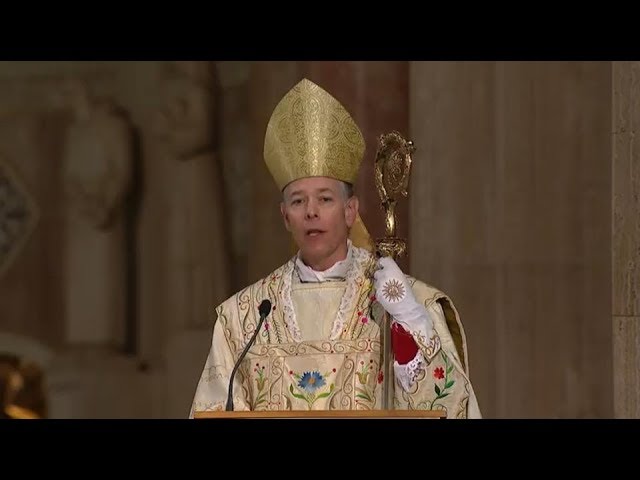
Archbp. Sample’s good sermon at the National Shrine

The other day I posted about the great sermon that Archbp. Sample gave at the National Shrine of the Immaculate Conception for the Pontifical Mass in honor of the 10th Anniversary of Summorum Pontificum.   While I posted a video of the whole Mass and noted the start time of the sermon, here is the sermon itself.

YouTube thumbnailYouTube icon

Posted in SESSIUNCULA | Tagged
17 Comments

ASK FATHER: Traditional Baptism but with parts in English?

From a priestly reader…

QUAERITUR:

I am a parish priest who often does an Ad Orientem Novus Ordo Mass. I was approached by a family asking for a baptism using the Extraordinary Form. I am happy to do so, given the evident power of the prayers, but then they also wondered if it could be done using an English translation they showed me [from sanctamissa.org]. Do you know if that is licet?

First, thank you for being open to doing this!  I must warn you, however, once you start using the traditional rite you are probably going to want to continue to use it all the time.

To the question, yes, much of the older, traditional form of the Latin Church’s rite of baptism can be done in English. This is useful and often disarming for some people in attendance.

However, when permission was given way back when for some vernacular languages to be used for baptism, certain parts had to be done in Latin.  For example, the exorcisms and blessings of salt and water must be in Latin, the exorcism of the one to be baptized, the form of the sacrament, the anointings must be in Latin.  That’s what was in force in 1962 and that’s what Summorum Pontificum designates as our reference point.  Hence, in 1962 that’s what we could do, so that’s what we do today.

Some editions of the Collectio Rituum (a small compilation of the most used items in the more comprehensive Rituale Romanum) have this laid out clearly so that you know which parts can be English and which must be Latin, and also provide the English even of the part that must be in Latin.

There are, or at least were, very good booklets for the participants in the rite published by Angelus Press.  At the time of this writing, I am in a moving vehicle and can’t hunt it up.

I think you and your people will be edified by the older, traditional form of baptism which is richer in its symbols.  Thanks to the provisions of Summorum Pontificum 9  § 1 priests can also use the older Rituale Romanum for this foundational sacrament.

All Roman priests should be familiar with the older books and their Roman rites.   Don’t you think that priests should know the rite for which they were ordained?

Posted in "How To..." - Practical Notes, ASK FATHER Question Box, Liturgy Science Theatre 3000, Mail from priests | Tagged ,
3 Comments

Some Views From The Journey: Castra moventur

Castra moventur.

That shot just about sums up preparation for the transfer to a new statio.

And here’s a statio on the way to the statio.  A nice outdoor lunch.

With hedges of blooming jasmine.

Some lavender.

And even artichokes.

Homemade pasta and eggplant and caccioricotta.

Some grilled veggies.   This food is soooo easy and so easy on you.

Granita di limone.

And off we go again… WESTWARD!

That photo just about sums it up.

Posted in On the road, The Feeder Feed |
7 Comments

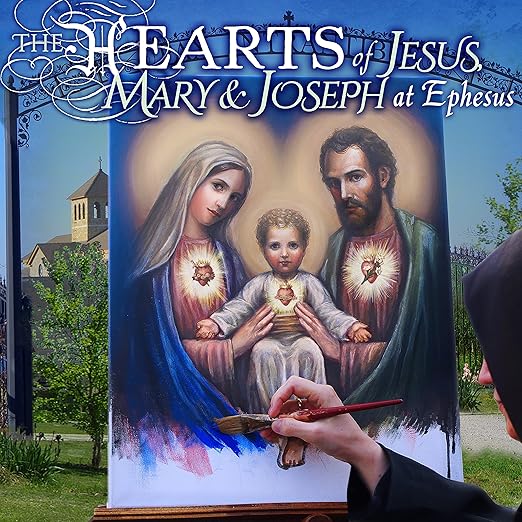
New music disc from the Benedictines of Mary, Queen of Apostles

The wonderful Benedictines of Mary, Queen of Apostles have produced another great CD of music.

The Hearts of Jesus, Mary & Joseph At Ephesus

US HERE – UK HERE

Enjoy this video! You can hear music from the new disc and see shots of the new church they are building.

Posted in Just Too Cool, The Campus Telephone Pole | Tagged
Comments Off on New music disc from the Benedictines of Mary, Queen of Apostles