 From a reader…
QUAERITUR:
My Spiritual Director tells me the NO and TLM are the same. The same amount of grace is dispensed in both. His statement does not give me peace of soul. This priest offers the TLM 1/month for the past 1.5 years. I have attended nearly every one of them. Should I even respond to this, if so, how? Or just pray for him? Does the Lord offer the same amount of grace at every Mass? High Mass vs Low Mass or NO? The amount of grace received depends on the disposition of the person? …I just desire to give the Lord my utmost reverence for all the irreverence He endures. I live in [an admittedly remote place]. Very little TLM support here. Only 2 priests in the diocese offer it. We have requested more from our Bishop to which he says he has no solutions to offer at this time. Please pray for our Bishop and our priests…that they desire the TLM in their own hearts. +JMJ+
Whew. Lots of things going on in there.
I ask the readership to stop and to pray for that bishop and those priests.
There… done.
First, you have an advantage: in though you are in a remote place you have a priest who can and does say the TLM. That’s great. That’s more than many have in less remote places. Perhaps Father can be persuaded to offer the TLM more often.
Second, bishops aren’t always the best people to turn to for solutions. Form a strong group of lay people ready to sacrifice time and spend money and then work with your local priest. Moreover, put some money down on your future by supporting seminarians and other young priests in the diocese.
Third, have your TLM group regularly write kind notes to the bishop and the priest with spiritual bouquets.
Now… the hard stuff.
At both the TLM and the NO the Word of God is proclaimed and the Eucharist is confected according to rites that the Church has approved. Mass is celebrated: the Eucharist is confected in a two-fold consecration and then consumed by the priest. The Sacrifice of Calvary is renewed sacramentally. You are offered the opportunity to receive Communion.
That’s a pretty solid basis.
However, there is more to a rite of Mass than the bare minimum.
Liberals often reduce Mass to what is the minimum for validity and they think that they can do what they want with the rest of the rite.
On the other hand, for centuries the Church thought that even the small elements of Mass are important and meaningful. Everything in Mass works for – or, sometimes, against – authentic full, conscious and active/actual participation in the sacred liturgical rites in which Christ is the true Actor and in which you are – hopefully – brought into a contact with his transforming graces.
Some argue (I am among them) that well-prepared Catholics are provided a greater opportunity to benefit from the older rites and the newer rites.
Moreover, the outward signs of the Solemn Mass bring another level of opportunity, not a guarantee of more.
When the readings are spoken or sung at the TLM or NO, is there more or less “Word of God”? When the Host is elevated at a Solemn Mass is there “more Jesus” present?
The outward sings and rites are there to dispose us – and not just in this Mass but also over the years of our lives – to receiving what the Lord wants to give.
Just as sometimes we have simple meals and sometimes special, or other occasions, so too do we elevate some Masses. Our Catholic instincts, when well-formed, always desire more and more and more glory for our rites, because we know that they reflect the heaven we long for. That said, you can’t always dine on Chateaux Yquem and fois gras. You can give it a try, of course, but I suspect that you will be happier with some variety, including the very simple so that the grand is great rather than “Ho hum, Yquem… again?”
Mind you… not everyone is ready for the Sauternes. They have to get there, and that takes some time.
I can hear people grousing, “But Father! But Father! You think the TLM is like … Chat… Shat… Shatix Whykim and foiz grass… which is unethical and should be banned. You are a horrible person for even thinking about liking that. But that also means you think that the NO is like Diet Coke and cocktail weenies. Do you know why? Because YOU HATE VATICAN II!”
No, I don’t think that the NO is like cocktail weenies, which I like sometimes, or Coke Zero, which I had today at a truck stop. I do, however, think that in the scheme of things, Château d’Yquem is better than Coke Zero. If you don’t get that… and you won’t if you are a liberal… then we can’t help you right now.
Also, I not only don’t hate Vatican II, I respect it enough not to lie about it. The Council called for full, conscious and active/actual participation in the sacred liturgical worship. That’s what I am all about. That’s my relentless effort. I simply think that there is baby food and grown up food. Some rites are better for certain people until others will be better.
Next, there is a phrase from philosophy that applies. You touched on it in your question. “What is received is received in the manner of the one receiving it.” If you are properly disposed, you are able to receive the graces that God wants to give you in the sacred rites of Holy Mass. Does the TLM help you better to receive those graces? It depends. I’ve written a lot about this elsewhere. These days, some are ready for the TLM and some are not.
BTW… I think that some people can get so bogged down in certain aspects of the TLM ritual that their presence at Mass is rather like an aesthetic exercise.
As for quantity of grace… wow. That’s waaaaaay above my pay grade. I’m in sales, of course. I want more graces and, well, better everything for everyone. God gives greater graces to some than to others. That’s clear. But I don’t have a grace calculator. We might be able to make educated guesses. But I am not sure how helpful that is.
It may be best simply to focus on being all that you can be according to your vocation and being as receptive and actively docile as you can as a participant at Holy Mass in whichever of the two forms you find yourself.
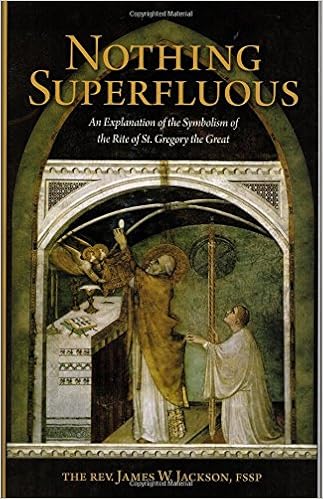
I think you would enjoy reading my friend Fr. Jackson’s book:
Nothing Superfluous: An Explanation of the Symbolism of the Rite of St. Gregory the Great
US HERE UK HERE


 Pray to St. Joseph, especially in your needs concerning your work and your vocation. St. Joseph is a powerful intercessor. He comes through for you especially when you are specific about what you need and when you need it.

 From a reader…
 From a reader…
 From a reader…
 From a reader…




























