My View For Awhile: LAX Adios Edition – UPDATED

UPDATE 11 April

In answer to a couple email’s the “apocalyptic thriller” I was reading was by Joel Rosenberg (US HERE – UK HERE)

I’ve read a couple series by him, including the one starting with The Last Jihad (US HERE – UK HERE) and the one starting with The Twelfth Imam (US HERE – UK HERE)

____ Originally Published on: Apr 10, 2018

Back to the cooler clime.

Yes, that is a police check point on the right.

Last night we met some folks for a dinner party.  These were people I was with on a great pilgrimage a couple years back and who are going to Italy again in … well… about 10 days.

Some tapas.

This is a kind of canneloni with chicken inside.  Great.

Killer shrimp.

Paella Valenciana.

Photos of skylines are tricky, especially with just a phone.

Here’s another view.

This intersection had 6 billboards for the upcoming Avengers movie, though in this shot you can only see four.

LA.   Hrumpf.

Traveling East from here is a bit frustrating.  It takes hours and you lose hours, so your workday is effectively shot.

Perhaps more later.

UPDATE

More…

There’s an extremely unhappy cat onboard.

Why, oh Lord?

UPDATE:

Now people have to be shuffled because of allergies.

I am tempted to bless some water – just a glass and a packet of salt are all that’s needed – and toss it in that direction but the demons in the cat would probably just get more agitated.

UPDATE:

Fluffy did precisely what we all feared within its carrier, thus detracting from the already less than pleasant atmosphere.

UPDATE:

After a surprisingly good hamburger at a fast food joint, I headed to the lounge, where I ran into my good friend Fr Sirico of ACTON INSTITUTE. We caught up on friends and parish news. He is always good value as the Brits say.

And it’s always fun to write ACTON INSTITUTE.

That said, Our connection is late in arriving and so I am enjoying the ambience of MSP Concourse F. I am sure many of you have fond memories of Concourse F. I know I do.

I’ve firmly emplaced my Bose noise reducing gear and will now wade back into my apocalyptic “thriller” by Joel Rosenberg.

Posted in On the road, What Fr. Z is up to |
7 Comments

Fr. Z responds to @JamesMartinSJ about “official” teaching on homosexuality

At Jesuit-run Amerika there is an article by Jesuit homosexualist activist Fr James Martin in which he writes about the “official” teaching, as he puts it, of the Church (he doesn’t use a capital) concerning homosexual inclinations and homosexual acts.

It may be that he has finally had so many challenges thrown at him that he couldn’t dodge them anymore.   He finally decided to stand in the batters box and take a hack.

I haven’t made an extensive study of Martin’s writings.  That said, this is the first time I’ve seen him sidle up to clarity about moral dimension of the aforementioned inclinations and acts.

All in all, Martin’s offering isn’t bad.   He brings up natural law.  He brings up the Catechism of the Catholic Church.  He brings up chastity. He brings up the inherent dignity of all persons. That’s all well and good.

One might fault him a little for suggesting that few Catholics know that treating homosexual persons badly is wrong.   Frankly, I find that absurd.  But, let’s give him a pass on that point.

However, you have to read between the lines. Start with the title.

What is the official church teaching on homosexuality? Responding to a commonly asked question

What is the “official church teaching”…

Later in the piece

… we can perhaps best understand it from the church’s traditional reliance on natural law, which was itself heavily influenced by the writings of St. Thomas Aquinas

… In terms of sexuality, all sex is “ordered” toward what are called the “affective” (love) and “generative” (having children) ends, within the context of a marriage.

official church teaching rules out any sort of sexual activity outside the marriage of a man and a woman

… it is important for the institutional church to understand the lived experiences of lesbian, gay, bisexual and transgender Catholics.

While Martin went a long way toward clarity, I sense a subtle hedge which he is signaling to his base.   For example, among libs you find code language, terms such as the “institutional church”.  Using the small “c” is already a signal.  At outlets like the Fishwrap you constantly find writers pitting an amorphous “spirit-filled” or “prophetic” church against the “institutional church”, as if the former trumps the latter.   Yes, we have to know what the “institutional church” says, or – better “said” (once upon a time), as if studying the history of a topic.  However, we are advancing beyond the merely “institutional”, old hide-bound church shackled by laws and taboos and outdated mores no longer suited to our far more mature era.

Martin uses the word “official” throughout and rightly so.  He is, after all, responding to a question.

QUAERITUR: What is the official church teaching on homosexuality?

Think about that question.  Students ask questions like this.  People who are confused about the facts ask questions like that.   But it seems to me that most people who want to know if the thing they are doing is a sin or not simply ask, “What does the Church teach about homosexuality?”  The heart-searching penitent doesn’t hedge.

Am I being too picky?  I want to be fair to Fr. Martin, whom I’ve beaten up occasionally in these electronic pages.  However, when I start at the top and read to the bottom I wonder if he isn’t signaling that because the teaching is “official” or it is “institutional”, it is also changeable.   

Laws and rules and institutions and “officialdom” can be changed, after all.

The Church doesn’t just have “official” rules about homosexual acts.  What the Church teaches is also rooted both in divine revelation and in natural law.

Martin mentions natural law.  But he writes:

… we can perhaps best understand it from the church’s traditional reliance on natural law…

… according to the traditional interpretation of natural law, homosexual acts are not ordered toward those specific ends and so they are deemed “disordered.”

… That is one reason that it’s important for lesbian, gay, bisexual and transgender people to understand the church’s teaching in its totality—the Gospels, the tradition of natural law and its roots in Thomistic and Aristotelian reasoning, …

So, someone looking for a way out of the Church’s teachings might latch onto that “traditional”.   Traditions aren’t so important are they?  Well, they are important in the sense that we should know what they were.  For example, it is important to know that the Church used Latin for a long time.  But we’ve outgrown all that.  Traditions can be changed, right?   Women traditionally covered their heads in church.  They don’t have to do that anymore.  Traditionally we abstained from meat on all Fridays.  Traditionally, Lent was far more rigorous.  Traditionally, we interpreted natural law to mean that sex acts between persons of the same sex were “disordered”.   But can’t there be non-traditional interpretations of natural law?   The official or institutional church clings to traditions.   But we should be freer in the spirit in a prophetic church that isn’t bound in taboos.

There’s the “traditional” way, and there’s the “contemporary” and “new” and “openminded” etc….

Again, I am glad that Fr. Martin has taken greater steps toward clarity.   And yet his explanation seemed to glide above the bases, rather than touch them as he ran them.   This isn’t a home run for the Jesuit.   It might be a single base because he was hit by a pitch.

Here’s the bottom line for anyone who is scratching her head.

The Church’s official teaching is her official teaching not just because she teaches if officially.   She teaches what she teaches because IT IS TRUE.

The TRUTH is the foundation of the Church’s teaching.

Holy Church must be true to Her Lord who is the Way, the TRUTH, and the Life.

People with homosexual inclinations are PEOPLE.   They are images of God and the dignified subjects of their own acts, worthy of respect, justice, charity, etc., just like every other person.

However, there is no time in the past, present or future of the human race that homosexual acts will be anything other than intrinsically evil.   Why?  Because the are evil in themselves and not just because – right now – we say they are… officially.


Posted in Sin That Cries To Heaven, The Drill | Tagged , ,
37 Comments

The Annunciation – The 1st Joyful Mystery

Because the vagaries of your planet’s progress around your yellow sun, and because of the whirling of it’s largest satellite, this year the Feast of the Annunciation fell on Palm Sunday.  Hence, our celebration of this great mystery has been postponed until today.

And the Word became flesh.

This is from my old Patristic Rosary Project

Once upon a time, I worked my way through the Mysteries of the Rosary offering some comments from the Fathers of the Church.

1st Joyful Mystery: The Annuniciation

Commenting on Luke 1:26-38, the announcement of Jesus’ birth, St. Ambrose of Milan (+397) makes a connection between Mary and the Church.  :

And, therefore, the Evangelist, who had undertaken to prove the incorrupt mystery of the incarnation, thought it fruitless to pursue evidence of Mary’s virginity, lest he be seen as a defender of the Virgin rather than an advocate of the mystery.  Surely, when he taught that Joseph was righteous, he adequately declared that he could not violate the temple of the Holy Spirit, the mother of the Lord, the womb of the mystery.  We have learned the lineage of the Truth.  We have learned its counsel.  Let us learn its mystery.  Fittingly is she espoused, but virgin, because she prefigures the Church which is undefiled (cf. Eph 5:27) yet wed.  A virgin conceived us of the Spirit, a Virgin brings us forth without travail.  And thus perhaps Mary, wed to one, was filled by Another, because also the separate Churches are indeed filled by the Spirit and by grace and yet are joined to the appearance of a temporal Priest.  [Exposition of the Gospel of Luke 2.6-7]

The Marian thought of Ambrose has an ecclesiological dimension.  The Second Vatican Council cited this important passage in Lumen gentium, the dogmatic constitution on the Church:

63. By reason of the gift and role of divine maternity, by which she is united with her Son, the Redeemer, and with His singular graces and functions, the Blessed Virgin is also intimately united with the Church. As St. Ambrose taught, the Mother of God is a type of the Church in the order of faith, charity and perfect union with Christ.  For in the mystery of the Church, which is itself rightly called mother and virgin, the Blessed Virgin stands out in eminent and singular fashion as exemplar both of virgin and mother.  By her belief and obedience, not knowing man but overshadowed by the Holy Spirit, as the new Eve she brought forth on earth the very Son of the Father, showing an undefiled faith, not in the word of the ancient serpent, but in that of God’s messenger. The Son whom she brought forth is He whom God placed as the first-born among many brethren, namely the faithful, in whose birth and education she cooperates with a maternal love.

Because of Mary’s “Fiat mihi“, we can be members of the Church with Mary as our Mother.  Our baptism integrates us into this wondrous bond.  St. Leo the Great (+461) in one of his glorious sermons says:

Each one is a partaker of this spiritual origin in regeneration.  To every one, when he is reborn, the water of baptism is like the Virgin’s womb, for the same Holy Spirit fills the font, who filled the Virgin, that the sin, which that sacred conception overthrew, may be taken away by this mystical washing.  [s. 24.3]

Theopanes BrandedThis is not merely a Western insight.  While it is a little late for our Patristic interests, here is a snip from fascinating Kontakion of the Annunciation by the 9th century Theophanes Graphtos, the Branded:

The Theotokos said: Thou bringest me good tidings of divine joy: that Immaterial Light, in His abundant compassion, will be united to a material body.and now thou criest out to me: all-pure one, blessed is the fruit of thy womb!
The Archangel said: Rejoice, lady; rejoice, most pure virgin! Rejoice, God-containing vessel! Rejoice, candlestick of the light, the restoration of Adam, and the deliverance of Eve! Rejoice, holy mountain, shining sanctuary! Rejoice, bridal chamber of immortality!

The Theotokos said: The descent of the Holy Spirit has purified my soul; it has sanctified my body: it has made me a temple containing God, a divinely adorned tabernacle, a living sanctuary, and the pure Mother of Life.

The Archangel said: I see thee as a lamp with many lights; a bridal chamber made by God! Spotless maiden, as an ark of gold, receive now the Giver of the Law, who through thee has been pleased to deliver mankind’s corrupted nature!

Here the Blessed Virgin represents the Temple, the Tabernacle and the Ark of the Covenant, images of the Church.

Posted in Our Solitary Boast, Patristiblogging, Patristic Rosary Project | Tagged ,
3 Comments

Your Sunday Sermon Notes

Was there a good point made during the sermon you heard for this 2nd Sunday of Easter?
Let us know.


I spoke of the four characteristics of the risen body which we will enjoy: brightness, subtlety, agility and the one I’m really looking forward to, impassability.


Posted in SESSIUNCULA |
7 Comments

L.A. Days 1-3: Of Finches, Bites and Libraries

The Octave of Easter is turning out to be a time of visits with friends, meals and monuments (in a wide sense).

Here is a monumental salad, chopped.  Presentation like this is difficult, by the way.

At the Getty, a lovely bit of glass, with superbly simply lines.   Notice that gentle touch but also the hand raised in blessing.

And we have a Christological Goldfinch sighting!   This is from the brush of Bernardo Fungai in about 1480.

The bird is on the ledge.

You know what the apple means, right?   So, bird v apple.

Off to the Ronald Reagan Presidential Library.   What a pleasure.  It is a great building and grounds in a beautiful spot.

All during his life, Ronald Reagan jotted notes on 3×5 cards.   Some of them are appropriate today.  In particular, enjoy the first remark on this card!

Do I hear an “Amen!”?

And as far as Antonio “2+2=5” Spadaro, SJ, is concerned, Paul V by Bernini is unimpressed.

Reagan’s Oval Office.

My view for a while… a least a couple more days here in El Pueblo de Nuestra Señora la Reina de los Ángeles del Río Porciúncula.

And I may add more food photos later… I have a lot.

Posted in Liturgy Science Theatre 3000, On the road, What Fr. Z is up to | Tagged , ,
14 Comments

YOUR URGENT PRAYER REQUESTS

Please use the sharing buttons! Thanks!

Registered or not, will you in your charity please take a moment look at the requests and to pray for the people about whom you read?

Continued from THESE.

I get many requests by email asking for prayers. Many requests are heart-achingly grave and urgent.

As long as my blog reaches so many readers in so many places, let’s give each other a hand. We should support each other in works of mercy.

If you have some prayer requests, feel free to post them below.

You have to be registered here to be able to post.

I still have three pressings personal petitions.

As I write today, one of them is… very heavy indeed, a strong sense of loss and near betrayal.

The moderation queue is ON… for ALL posts.

Posted in SESSIUNCULA |
38 Comments

ASK FATHER: Extraordinary Form marriage vows but Ordinary Form Mass

From a priest…

QUAERITUR:

A devout Catholic couple would like to get married using the EF vows (in English), but would like to have an Ordinary Form Latin Mass.  Could I do their vows in the EF outside of Mass, and then celebrate a non-wedding Mass in the OF?

As much as I am a proponent of using as much of the Extraordinary Form as possible, it seems to me that in this situation, you should choose one or the other.  Do the whole thing, either in the EF or in the OF.

If you want, you can have the whole of the Ordinary Form in Latin or in English, ad orientem with vestments that please and Gregorian chant, etc.

That said, it is possible to do the Extraordinary nuptial rites outside of Mass as you find them in the Ritual (with the nuptial blessing, etc.) and, then, after an – at least – logical (if not chronological) break, launch into a Mass in the Ordinary Form.

However, that still seems to me to be a less than optimal option, provoking questions that devolve into needless explanations.  If the marriage rite, then why not the Mass too?  Etc.

I am not sure about the reasoning behind such a collision of the rites.  Perhaps this needs to be thought through a bit more.

Posted in "How To..." - Practical Notes, ASK FATHER Question Box, Liturgy Science Theatre 3000 | Tagged ,
13 Comments

Wherein Fr. Z agrees with Fishwrap’s @MichaelSWinters … but…

The other day retired liberal SCOTUS Justice John Paul Stevens issued an op-ed in Hell’s Bible in which he argued for the repeal of the 2nd Amendment.

I’ll get to MSW in a moment.  Bear with me.

A writer for the WaPo, Aaron Blake, reacted with a measure of horror to Steven’s open words:

One of the biggest threats to the recovery of the Democratic Party these days is overreach. Having seen what Republicans have accomplished while pushing to the right, Democrats are debating how hard to push in the opposite direction — on the minimum wage, on abortion, on health care and on education. A party that was once afraid of being saddled with supporting “government-run” health care is increasingly okay with the word “liberal” and even voted in droves for a self-described socialist in 2016. And its 2020 hopefuls are leading the leftward charge.

But rarely do we see such an unhelpful, untimely and fanciful idea as the one put forward by retired Supreme Court justice John Paul Stevens.

In a New York Times op-ed on Tuesday, Stevens calls for a repeal of the Second Amendment. The move might as well be considered an in-kind contribution to the National Rifle Association, to Republicans’ efforts to keep the House and Senate in 2018, and to President Trump’s 2020 reelection bid. In one fell swoop, Stevens has lent credence to the talking point that the left really just wants to get rid of gun ownership and reasserted the need for gun-rights supporters to prevent his ilk from ever being appointed again (with the most obvious answer being: Vote Republican).

In effect, Justice Stevens named the love that dares not speaks its name… repeal of the 2nd Amendment.

Jonah Goldberg, while defending Stevens’ right to call for changes according to the process laid out in the Constitution itself, also noticed that Stevens hurt the liberal cause: “every now and then the mask slips“.  More Goldberg:

Stevens’s argument cuts through all of the fictions and double-talk and says plainly what millions of Americans and lots of politicians and journalists truly believe: Law-abiding citizens shouldn’t be able to buy guns easily, or at all, if it makes it easier or even possible for non-law-abiding citizens to get their hands on them.

But there’s another reason I applaud Stevens’s position. He seeks to change the meaning of the Constitution the way the Founders intended: through the amendment process.

So, Stevens violated the golden rule.  Don’t let the mask slip and say what the true goal is! Stevens named the love that dares not speak its name.

This is the key to understanding the dynamic of what follows.

Shifting gears to another issue, we find the same process at work.   A lib called out a lib for being unhelpful to the cause, for letting the mask slip, for naming the unnamable.

Over at Fishwrap, Michael Sean Winters wrote a blistering piece about the Loon in New Testament Studies at Jesuit-run Holy Cross College, Tat-siong Benny Liew, who suggested Christ might have been a “drag king” who harbored “queer desires.” Winters quotes some horrible stuff from this Loon’s writings. Blech.

Winters really laid into him, and rightly so, adapting a fabled SCOTUS hook of Justice Stewart: “I am no Scripture scholar, but I know one when I see one.”

The Holy Cross Loon let the mask slip and makes the whole lib agenda and homosexualist agenda in the Church look weird.

Just as strategy-minded enemies of the 2nd Amendment never want to admit in public that they want the rights of US citizens abolished, and therefore steer language into bromides like “commonsense gun laws”, etc., even while they advance their true agenda, so too those who have a homosexualist agenda in the Church will focus on certain phrases, all the time avoiding speaking openly what they are after in the long run.

Jesuits are good at this.

In any event, I find myself in agreement with Michael Sean Winters’ assessment of the motives and quality of the Holy Cross Loon’s offerings. Winters even thinks that it was blasphemy. Surely we agree on that.  It was creepy self-promoting blasphemy and it has no place in a Catholic institution.

On another note, Michael Sean is not known as the Wile E. Coyote of the catholic Left for nothing. He is nimble and creative, if generally unsuccessful in avoiding cliffs, falling rocks explosions, etc.

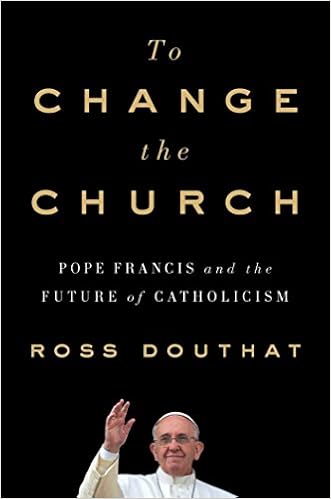
In dragging down the Holy Cross Loon, Wile E. scrambles after Ross “the Roadrunner” Douthat and his good new book on the pontificate of Pope Francis.

Just as I criticized Ross Douthat’s book on Pope Francis because it failed basic journalistic standards, theologians who support academic freedom need to take the lead in differentiating between pushing an envelope and pushing nonsense.

US HERE – UK HERE

This is nearly as funny as watching clips of Wile E. with the open crates of ACME products.

In his critique of Douthat, Winters said that Douthat cited – but didn’t name – certain disgruntled participants in the Synod on the Family. Not naming them, you see, was a journalistic No No. To refute and educate Douthat, however, Winters cited his own entirely gruntled Synod participants but… ooops… didn’t name them, hence hoisting himself on his own petard. But that’s what Wile E. does, right? Agere sequitur esse.

In this new Fishwrap piece about the Holy Cross Loon, on the other hand, Winters covers his ACME rocket burns by mentioning in passing parentheses the not entirely unknown “Chatham House Rule”, whereby those who hear a debate can use the information they hear publicly, but without identifying the people involved. The Chatham House Rule is intended to promote candor and open, honest debate.  In this Fishywrappy context, however, the Rule is probably a mask – a slipped mask – over another which you will recognize.

Rule, #4: “Make the enemy live up to its own book of rules.”

Winters is clearly irritated at what the Holy Cross Loon wrote, because he let the mask slip.  He is also irritated with Douthat because he reached out and yanked the mask off.   Hence, Winters even tries to draw a moral equivalence between the commonest of critters, a blasphemous self-promoting loony lib of bizzare sexual proclivities and Douthat, the rarest  of breeds, a mostly conservative and well-measured opinion writer for the hoary lady, Hell’s Bible.   Remember?   “Just as I criticized Ross Douthat’s book…”.

However, if you really want a sense of whom Wile E. sees as his nemesis, just review his review of Douthat’s book.  Pay attention to the over the top hysteria of his thoughts on Douthat.   Then compare that with language he used about the Holy Cross Loon.  Yes, it too is touchy, harsh and occasionally vitriolic, because… well… that’s our dear Wile E!  But it isn’t nearly as venomous as his treatment of Douthat’s book.

It all makes for another interesting day in the Catholic Church, wherein an observer of human nature will never be bored.

YouTube thumbnailYouTube icon

Posted in Biased Media Coverage, Green Inkers, Liberals, Lighter fare, The Drill | Tagged , , , , , , , ,
10 Comments

WDTPRS – Quasimodo Sunday “in albis”, Low Sunday

Caravaggio_-_The_Incredulity_of_Saint_ThomasIn the post-Conciliar calendar Sunday is technically the “Second Sunday of Easter.”

It is sometimes called “Thomas Sunday” because of the Gospel reading about the doubting Apostle.

It is also famously called “Quasimodo Sunday” for the first word of the opening chant, the Introit (cf. 1 Peter 2:2-3).  Quasimodo and Sicut modo are interchangeable. Quasimodo reflects a Latin Scripture version predating what became the Vulgate. So, today’s Mass begins by exhorting the newly baptized.

It is called “Low Sunday” probably in contrast to the hoopla of last Sunday.

Oh yes… now it is often called “Mercy Sunday” because of the emphasis on the dimension of the mercy of God’s redemptive act celebrated at Easter. The newest, third edition of the Missale Romanum of 2002 specifically labels this Sunday: Dominica II Paschae seu de divina Misericordia.

Most importantly, since ancient times this Sunday is called “Dominica in albis or also “in albis depositis”… the Sunday of the “white robes having been taken off.” 1 Peter 2:2-3 says:

“Like (Sicut modo – Vulgate) newborn babes (infantes), long for the pure spiritual milk, that by it you may grow up to salvation; for you have tasted the kindness of the Lord.”

This is the reading on Saturday “in albis” in the traditional Roman Rite.

Explanation:

In the ancient Church the newly baptized were called infantes. They wore their white baptismal robes for “octave” period after Easter during which they received special instruction from the bishop about the sacred mysteries and Christian life to which they were not admitted before the Vigil rites.

On this Sunday they removed their robes, which were deposited in the cathedral treasury as a perpetual witness to their vows. They were then “out of the nest” of the bishop, as it were, on their own in living their Catholic lives daily. St. Augustine of Hippo (+430), using the imagery of spring, compares the newly baptized to little birds trying to fly from the nest while the parent birds flap around them and chirp noisily to encourage them (s. 376a).

The new Collect for this Sunday (based on a prayer in the Missale Gothicum) for the 1970 and subsequent editions of the Roman Missal begins by calling God merciful.

COLLECT – LATIN TEXT (2002MR):

Deus misericordiae sempiternae,
qui in ipso paschalis festi recursu
fidem sacratae tibi plebis accendis,
auge gratiam quam dedisti,
ut digna omnes intellegentia comprehendant,
quo lavacro abluti, quo spiritu regenerati,
quo sanguine sunt redempti.

In general, when you encounter long, wordy orations, they are of newer composition.  This one is long and wordy.

The use of those clauses starting with quo, having no conjunctions (a trope called asyndeton) gives this prayer force. I like that sole sunt (with abluti…regenerati…redempti) imbedded elegantly in the last phrase.

Recursus is “a running back, return, a returning path.” In reference to sight it is something that has power to bring back an image. Recursus harks to the cyclical, “recurring” nature of the Paschal observance.

We have the opportunity to experience the Paschal mysteries each year. This is more than a memorial or re-enactment. By baptism we participate in mysterious events completed once and for all time, but for us in the liturgical year they sacramentally take place again.

Remember that sacramental reality is not less real that sensible reality.

According to the hardly mysterious Lewis & Short Dictionary, accendo means “to kindle anything above so that it burns downward” (the opposite of succendo or sub-cendo – to kindle from “below”, like the English “burn up” and “burn down”). You kindle a candle from above. Accendo is also “to set on fire, to kindle, light to light up, illuminate, to inflame a person or thing, to incite, to round up.” This word delivers the fiery liturgical imagery of the Vigil: when Christians are baptized the Holy Spirit (depicted as fire) comes to dwell in them. Intellegentia is “the power of discerning or understanding, discernment.”

The vast verb comprehendo is too complex to treat comprehensively. Literally it involves, “to lay hold of something on all sides.” Think of … well… “comprehensive”. Comprehendo also means, “take hold, grasp, seize” or negatively “attack, arrest.” It is also “to perceive with the senses, observe.” Especially it is to grasp with the mind, but in a thorough way (on all sides). In the Collect we want to “grasp with a worthy power of understanding.” This is a profoundly interiorized “grasping” in the sense of true possession.

A lavacrum is a bath. In Titus 3:5 we have, “He saved us, not because of deeds done by us in righteousness, but in virtue of his own mercy (misericordiam), by the washing of regeneration (lavacrum regenerationis) and renewal in the Holy Spirit, which he poured out upon us rightly through Jesus Christ our Savior, so that we might be justified by his grace and become heirs in hope of eternal life (vv. 5-7, RSV).” This refers to both the process and effects of baptism, worked in us by the mercy of God.

Abluo,  “to wash off, wash away, cleanse, purify.” In classical Latin, abluo is used by Cicero (+43 BC) to describe a calming of the passions coming from a religious rite of washing away of sin (Tusc 4, 28, 60) and also by the poet philosopher Lucretius (+ AD 55) in De rerum natura to describe the removal of darkness by the bringing in of light (4, 378).

Early Latin speaking Christians lacked vocabulary to express their faith. Abluo was ready made to be adapted to describe the effects of baptism.

OBSOLETE ICEL (1973):

God of mercy,
you wash away our sins in water,
you give us new birth in the Spirit,
and redeem us in the blood of Christ.
As we celebrate Christ’s resurrection
increase our awareness of these blessings,
and renew your gift of life within us
.

Do you want to know what the Latin prayer really says?

WDTPRS LITERAL TRANSLATION:

O God of eternal mercy,
who on this recurrence of the paschal feast
do kindle the faith of a people sanctified for Yourself,
increase the grace which You have given,
so that all may comprehend with worthy understanding
by what laver they were washed,
by what Spirit they were regenerated,
by what Blood they were redeemed
.

CURRENT ICEL (2011):

God of everlasting mercy,
who in the very recurrence of the paschal feast
kindle the faith of the people you have made your own,
increase, we pray, the grace you have bestowed,
that all may grasp and rightly understand
in what font they have been washed,
by whose Spirit they have been reborn,
by whose Blood they have been redeemed
.

In today’s Collect we pray that by the recurring sacred mysteries we veteran Christians and neophytes together as a People will be continually renewed and that our grasp of how we have been redeemed and the effects of that redemption will continually deepen.

We who were once set on fire with the indwelling of the Spirit, should want each day for God to rekindle us, burn us up again from above. We want an increase of grace, faith that seeks to grasp, comprehend, understand ever more fully who He is, who we have become in Him.

Grace and faith come first, of course. As the ancient adage goes: Nisi credideritis non intellegetis… Unless you will have first believed, you will not understand. We can only go so far on our own. Faith then brings to completion what reason begins to explore.

In a sermon addressed to the catechumens before their baptism at the Easter Vigil, St. Augustine used the imagery of light to help them understand who they were to become (cf. s. 223 and s. 260c):

“Keep the night Vigil humbly. Pray humbly with devoted faith, solid hope, brightly burning charity, pondering what kind of day our splendor will be if our humility can turn night into day. Thus, may God who ordered the light to blaze out of the dark make our hearts blaze brightly, that we may do on the inside something akin to what we have done with the lamps kindled within this house of prayer. Let us furnish the true dwelling place of God, our consciences, with lamps of justice”.

Augustine (and our Church) wants Christians truly to “possess” these mysteries in a way that made a concrete difference.

The newly baptized infantes eventually put off their white robes and get to the business, the work, of living as Catholics.

We who have done this already, perhaps long ago, must continue to wear them in our hearts.

And persevere.

Posted in Liturgy Science Theatre 3000, WDTPRS | Tagged ,
5 Comments

Season Opener: The Eagle Has Landed

You don’t see this every day.   And it is my hometown Twins home opener.

Posted in Just Too Cool | Tagged
11 Comments