YOUR URGENT PRAYER REQUESTS

Please use the sharing buttons! Thanks!

Registered or not, will you in your charity please take a moment look at the requests and to pray for the people about whom you read?

Continued from THESE.

I get many requests by email asking for prayers. Many requests are heart-achingly grave and urgent.

As long as my blog reaches so many readers in so many places, let’s give each other a hand. We should support each other in works of mercy.

If you have some prayer requests, feel free to post them below.

You have to be registered here to be able to post.

I still have three pressings personal petitions.

As I write today, one of them is… very heavy indeed, a strong sense of loss and near betrayal.

The moderation queue is ON… for ALL posts.

Posted in PRAYER REQUEST |
20 Comments

Considering Andy Warhol in view of certain homosexualist activists

At the UK’s best Catholic weekly, the Catholic Herald, there is a great article about the Pop Art icon Andy Warhol and Warhol’s faith and piety.

This may surprise some people: he was devout and practiced his faith… which is rather redundant.

Read the whole thing over there.

However, I thought this bit to be important, especially in light of the efforts of some who endlessly blare homosexual issues but without stressing the necessity of continence, chastity:

Religion kept Warhol from going over the brink. He attended Mass almost daily. Other days he would just slip into St Vincent Ferrer on Lexington Avenue, drop into the back pew and pray. He spent his Thanksgivings, Christmases and Easters volunteering at a soup kitchen, and befriended the homeless and poor whom he served. He put his nephew through seminary. Though openly gay, he endeavoured to remain celibate [read: chaste] throughout his life. When he refused to support the gay rights movement, many of his friends blamed his faith.

He lived with his mother until she died, and every morning they would pray together in Old Slavonic before he left for the Factory. He always carried a rosary and a small missal in his pocket.

What a contrast.

I sincerely believe that people with same-sex attraction, if they strive to be chaste and bear their subsequent suffering, will have a very high place in heaven.  The greater the burden and suffering, the greater the graces and reward.

Support of homosexual persons is obligatory for true Catholics.  However, also obligatory is the whole truth, which necessarily includes the explicit and clear renunciation of same-sex acts, which violate human dignity and do great harm to individuals and society.

Posted in "How To..." - Practical Notes, Just Too Cool, Sin That Cries To Heaven | Tagged , , ,
5 Comments

Pinks and Greens? “Hooah!”

Every time I see stories about the restoration of churches to proper order and purpose after costly wreckovation, the temperature of my beady-black heart warms a bit.

At Stars and Stripes I read that the Army is moving towards a change in uniform again.  This time, however, it forward towards tradition.

The old “Pinks and Greens” with WWII-era belted jackets and brown leather shoes may reappear.

Think about how the sudden and weird changes in the looks of things affected the Catholic identity of the Church Militant.

Tear out statues, whitewash walls, put in carpet, wreck altars…. Of course this did huge damage to our Catholic identity, not just our pocketbooks.  Similarly, uniform changes will affect something of the ethos of those who wear them.

Put priests in polyester gunny sacks and unworthy chasubles, surround them with craftsy projects made by and for 3rd graders, and you will change the presbyterate.

Put priests in cassocks and beautiful vestments, surrounded by precious vessels and art and you will change the men.

Both of those have an effect on congregations.

Which will tend to make a positive knock on effect?  A bunch of guys in shuffling along and grinning at people in the pews with little waves, looking in their loosely-fitting white flour bags with sleeves every bit as if they just got off the night shift at the Tasty Bakery, or a reserved line of men in cassock and surplice looking like they are going to worship the King of Fearful Majesty?

There is a connection between the habitus that is in us, interior disposition, and habitus that is on us, what we wear: habit and habit.  Clothes make the man?

So, Pinks and Greens?  Let’s see if I can translate this into “Army”…

Hooah!

Posted in Hard-Identity Catholicism, Just Too Cool | Tagged
14 Comments

Wherein Archbp. Chaput wins the pastoral Super Bowl in @ArchPhilly

Two items concerning Philadelphia’s Archbishop Charles Chaput have come across my scree in the last few hours.

First, today I received PDF (PDFs are clunky) of a column that that Archbp. Chaput wrote for their archdiocesan newspaper. In this column, the Archbishop explains – in light of recent idiocy in Germany, where Card. Marx (one of the Pope’s closest advisers and one of the most powerful figures in the fabulously wealthy German Church) – how the blessing of same-sex unions (suggested by Card. Marx and others) is a bad idea and must not be done.

Here is a taste. Mind you, the Archbishop addressed this letter to the people of Philadelphia. That said, he references developments outside of Philadelphia and it is for an internet diffused publication. This isn’t reserved or private.

[…]

Over the past few weeks, a number of senior voices in the leadership of the Church in Germany have suggested (or strongly implied) support for the institution of a Catholic blessing rite for same-sex couples who are civilly married or seeking civil marriage. On the surface, the idea may sound generous and reasonable. But the imprudence of such public statements is—and should be—the cause of serious concern. It requires a response because what happens in one local reality of the global Church inevitably resonates elsewhere—including eventually here. [Which is why Archbp. Chaput’s words must be widely diffused.  He should have someone translate it into German: I’ll publish it.]

In the case at hand, any such “blessing rite” would cooperate in a morally forbidden act, no matter how sincere the persons seeking the blessing. Such a rite would undermine the Catholic witness on the nature of marriage and the family. It would confuse and mislead the faithful. And it would wound the unity of our Church, because it could not be ignored or met with silence.

Why would a seemingly merciful act pose such a problem? Blessing persons in their particular form of life effectively encourages them in that state—in this case, same-sex sexual unions. Throughout Christian history, a simple and wise fact applies: lex orandi, lex credendi, i.e., how we worship shapes what and how we believe. Establishing a new rite teaches and advances a new doctrine by its lived effect, i.e., by practice.

There are two principles we need to remember. First, we need to treat all people with the respect and pastoral concern they deserve as children of God with inherent dignity. This emphatically includes persons with same-sex attraction. Second, there is no truth, no real mercy, and no authentic compassion, in blessing a course of action that leads persons away from God. This in no way is a rejection of the persons seeking such a blessing, but rather a refusal to ignore what we know to be true about the nature of marriage, the family, and the dignity of human sexuality.

[…]

That, in itself, was very good.

But wait! There’s more.

Archbp. Chaput also sent a letter to the clergy of that Archdiocese.  He explained, effectively, what he also wrote in his column.  Then he explicitly forbids priests and deacons in any way at all at any civil union of same sex-persons, or in any religious event that seeks to bless such an event.   He clarifies that this doesn’t constitute a rejection of persons, but rather a defense of the truth about marriage, the family and the dignity of human sexuality.

Inter alia, Chaput wrote: “[T]here is no truth, no real mercy, and no authentic compassion in blessing a course of action that leads persons away from God.”

For these two things alone, the column for the diocesan paper and the letter to clergy, Chaput deserves thanks and laurels.  I say “laurels” because the landscape we are working in is more and more like a battlefield that has swept over the vineyard, bringing chaos and ruin.

But wait!  There’s more.

I also read at Catholic World Report a speech that Archbp. Chaput gave to a men’s conference on 3 February in Phoenix.  It’s terrific.

Of special interest is his use of the imagery of Alzheimer’s, Blade Runner, knighthood and the crusades (I can hear arteries popping in lib skulls as I type).  Echoing St. Paul, he talks about the “new man” – the title of the talk is “Memory, Sex, and the Making of “The New Man” – and the armor of God that men must put on “because, like it or not, as Catholic men, we really are engaged in a struggle for the soul of a beautiful but broken world.”

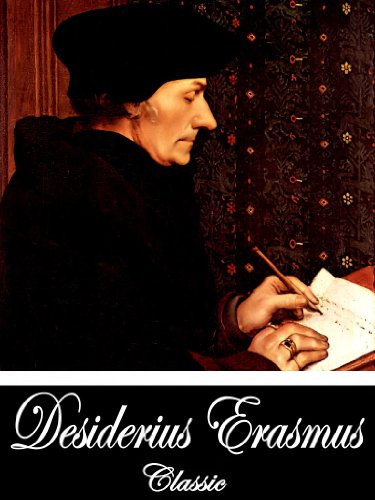
Finally, Chaput lists something that I haven’t seen for many years. He reads off the Renaissance humanist Desiderius Erasmus’ “22 Rules” – in bulletpoints – from his book Enchiridion militis Christiani or The Handbook or Manual of a Christian Knight.

Rule 1: Deepen and increase your faith.

Rule 2: Act on your faith; make it a living witness to others.

Rule 3: Analyze and understand your fears; don’t be ruled by them.

Rule 4: Make Jesus Christ the only guide and the only goal of your life.

Rule 5: Turn away from material things; don’t be owned by them.

Rule 6: Train your mind to distinguish the true nature of good and evil.

Rule 7: Never let any failure or setback turn you away from God.

Rule 8: Face temptation guided by God, not by worry or excuses.

Rule 9: Always be ready for attacks from those who fear the Gospel and resent the good.

Rule 10: Always be prepared for temptation. And do what you can to avoid it.

Rule 11: Be alert to two special dangers: moral cowardice and personal pride.

Rule 12: Face your weaknesses and turn them into strengths.

Rule 13: Treat each battle as if it were your last.

Rule 14: A life of virtue has no room for vice; the little vices we tolerate become the most deadly.

Rule 15: Every important decision has alternatives; think them through clearly and honestly in the light of what’s right.

Rule 16: Never, ever give up or give in on any matter of moral substance.

Rule 17: Always have a plan of action. Battles are often won or lost before they begin.

Rule 18: Always think through, in advance, the consequences of your choices and actions.

Rule 19: Do nothing — in public or private — that the people you love would not hold in esteem.

Rule 20: Virtue is its own reward; it needs no applause.

Rule 21: Life is demanding and brief; make it count.

Rule 22: Admit and repent your wrongs, never lose hope, encourage your brothers, and then begin again.

Finally, he concludes:

Maleness, brothers, is a matter of biology. It just happens. Manhood must be learned and earned and taught. That’s our task. So my prayer for all of us today is that God will plant the seed of a new knighthood in our hearts — and make us the kind of “new men” our families, our Church, our nation, and our world need.

Fr. Z kudos to Archbp. Chaput.

For the work in question.

Manual of the Christian Knight.  (Kindle version is available for next to nothing!)

US HERE – UK HERE
Posted in Fr. Z KUDOS, Hard-Identity Catholicism, Just Too Cool, New Evangelization, One Man & One Woman, Our Catholic Identity, Si vis pacem para bellum!, The Coming Storm, The future and our choices | Tagged , , , , , ,
18 Comments

Look! Up in the sky! Falcon Heavy lifts off.

I’ve been watching the SpaceX launch of the Falcon Heavy rocket. They sent up Elon Musk’s personal Tesla Roadster. This booster can lift 64 metric tons (141,000 lbs), more than a 737 jetliner loaded with passengers, crew, luggage and fuel. The Saturn V lifted more… but we’re not using that one anymore are we!

I have to admit that I had something of the same feeling that I recall when I was little kid, watching TV coverage of Gemini and Apollo missions.

The boosters landed successfully… upright… . Very cool.

Fast forward to about 7:53

YouTube thumbnailYouTube icon

Sitting in the roadster is “Starman”, visible at after 33:55 along with a strong taste of David Bowie’s Life On Mars.

Boosters, side and center core, land at 37:45 and at 38 or so, vibrations screwed up the camera’s antenna on the drone ship.  But it landed.  39:50 you get the car again.

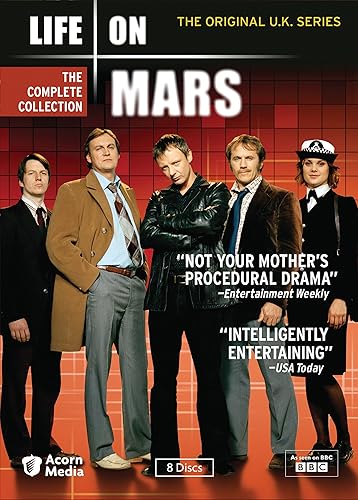
Speaking of Life on Mars… did you see the British series?

US HERE – UK HERE

There was a sequel: Ashes to Ashes, but it might not be in US format.

UPDATE: It seems the center core booster failed.

Posted in Just Too Cool, Look! Up in the sky! | Tagged ,
10 Comments

Brick by brick in Virginia

I am hearing about this sort of thing all over the place.

The first Traditional Latin Mass by this priest at this parish drew
120 people!

This text is from the bulletin of St. Francis Church in Purceville, VA:

About 120 came to celebrate the Traditional Latin Mass (sometimes referred to as the Extraordinary Form of the Mass) in the midst of the 40-Hour Eucharistic devotion.
Father Mullaney spent several days getting his crash-course training to celebrate his first Traditional Mass because the priest who originally was scheduled couldn’t make it due to a scheduling conflict. Father Mullaney did an amazing job with just a few days of practice to celebrate the Latin Mass. Our Director of Religious Education, James Blankenship, served as master of ceremony and trained Father for the Mass. Several who attended their first Latin Mass enjoyed the solemn experience and remarked how different it is from the Ordinary Form that we normally celebrate.
A few were brought to tears as they reminisced last attending this Mass way back in their youth (likely from the AARP eligible crowd).
There were also several who came from other parishes who were grateful that we offered the Mass.

Brick by brick, my readers, brick by brick.

This mentions the AARP crowd.  However, I’ll bet most of the congregation was much younger.

Those people must now get hyper-involved with all the activities of the parish and not just disappear.

And if you go to their website, be sure to click on the “Gregorian Mass” link on the upper menu. Amusing… AND TRUE! I hope that some of you will do the same for me!

UPDATE:

I had an interesting email after posting this.

Apparently, based on stats from a few years ago, the Diocese of Arlington was one of very few dioceses in these USA that was not bleeding red… and I don’t mean rubrical ink.

Another factoid is that of their 70 parishes, some 17 have the TLM, which would probably be the highest percentage of any diocese … anywhere.

Now… I don’t want to stray into post hoc ergo propter hoc fallacious reasoning.  Nor do I want to stray anywhere near a “prosperity” gospel view.  However, I do believe that reverent liturgical worship has its own mighty ripple effects.

I’m just sayin’.

Posted in Brick by Brick, SUMMORUM PONTIFICUM | Tagged
13 Comments

Litany to the Bishop Martyrs for the Bishops of the Church Militant

The Enemy of the soul, the Devil, is a real, personal, fallen angelic being.  He and all the powers of hell, fallen angels of every grade in the hierarchy, hate you.  They work tirelessly to move you away from God so that His glory and our joy will not be increased by your entrance into heaven.

You are hated by hell just because you, an image of God, are alive.
You are hated even more because you are baptized.
You are hated even more because you are confirmed.
You are hated even more because you are married, and parents.
You are hated even more because you are in the state of grace.
You are hated even more because you are a professed religious.
Even more than religious, hell hates priests.
Even more than priests, the Enemy hates bishops.

Leading up to His Passion, the Lord quoted Zechariah 13: “I will strike the shepherd, and the sheep of the flock shall be dispersed.”

Bring down the father of a family the family will suffer.  Bring down fatherhood in a society and look what is happening.  Sr. Lucy of Fatima warned that the Devils great battle in the end will be against the family.  Bring down an officer, and the unit suffers.  Bring down a priest, and the congregation suffers.

Bring down a bishop….  horrors untold result.

There are six Litanies officially approved by the Church for public use.

There is the

  • Litany of Saints, used at the Easter Vigil and during ordinations, Rogation days, exorcisms, etc.
  • Litany of Loreto, the Marian Litany, often recited after the Rosary
  • Litany of the Holy Name of Jesus
  • Litany of the Sacred Heart of Jesus
  • Litany of the Most Precious Blood
  • Litany of St. Joseph

There are other litanies, which have been written by great figures for strictly private use. For example the well-known Litany of Humility which is attributed to Card. Merry del Val, from the time of Pope St. Pius X. I wrote a facetious (sort of) litany: Fr. Z’s Litany for the Conversion of Internet Thugs (2.0)  I have a PODCAzT about how to sing official litanies.

Today I was contacted by Fr. Thomas Hosington, who posted at his site the

Litany to the Bishop Martyrs for the Bishops of the Church Militant

Here it is.   He has offered to everyone.

This Litany to the Bishop Martyrs for the Bishops of the Church Militantis for PRIVATE USE only.  It has not been authorized by the Church for use in the Sacred Liturgy.  If you believe there is a value to praying this Litany, please share it with others.  You can download a Word file with the Litany HERE.

Litany to the Bishop Martyrs
for the Bishops of the Church Militant

Lord, have mercy.     Lord, have mercy.
Christ, have mercy.     Christ, have mercy.
Lord, have mercy.     Lord, have mercy.
Christ, hear us.     Christ, graciously hear us.

God the Father of heaven,     have mercy on us.
God the Son, Redeemer of the world,     have mercy on us.
God the Holy Spirit,     have mercy on us.
Holy Trinity, one God,     have mercy on us.

Our Lady, Queen of Martyrs,     pray for them.
Our Lady, Queen of Popes,     pray for them.
Our Lady, Queen of Bishops,     pray for them.

Pope Saint Fabian,     pray for them.
Pope Saint Martin I,     pray for them.
Pope Saint John I,     pray for them.
Pope Saint Sixtus II,     pray for them.
Pope Saint Pontian,     pray for them.
Pope Saint Cornelius,     pray for them.
Pope Saint Callistus I,     pray for them.
Pope Saint Clement I,     pray for them.

Saint Blaise,     pray for them.
Saint Polycarp,     pray for them.
Saint Stanislaus,     pray for them.
Saint Adalbert,     pray for them.
Saint Boniface,     pray for them.
Saint John Fisher,     pray for them.
Saint Irenaeus,     pray for them.
Saint Apollinaris,     pray for them.
Saint Cyprian,     pray for them.
Saint Januarius,     pray for them.
Saint Ignatius of Antioch,     pray for them.
Saint Josaphat,     pray for them.
Saint Thomas Becket,     pray for them.

Lamb of God, Who takes away the sins of the world, spare us, O Lord.
Lamb of God, Who takes away the sins of the world,
graciously hear us, O Lord.
Lamb of God, Who takes away the sins of the world, have mercy on us.

Pray for us, all you Shepherds who have laid down your lives for the sheep, that we may be made worthy of the promises of Christ.

Let us pray.

O God our Providential Father, look upon the Bishops of your Church on earth in union with the Supreme Pontiff, and increase in them the virtue of fortitude.  Through the intercession of those Holy Shepherds who have already spilt their blood in witness of the Gospel, grant, if your shepherds be struck or struck down, that the sheep may not scatter, but that they may be one, in faith and in the Truth, Who is Jesus Christ our Lord, Who lives and reigns with You, in the unity of the Holy Spirit, one God forever and ever.  Amen.

Click HERE for more.

Posted in ¡Hagan lío!, "How To..." - Practical Notes, Mail from priests, Si vis pacem para bellum!, The Coming Storm, The future and our choices | Tagged , ,
11 Comments

Points of difference, debate, argument. What are we really about? Wherein Fr. Z rants.

At NLM Peter Kwasniewski has a great post in which he lays out the typical debates that engage those who frequent the Traditional Latin Mass and those who attend the Novus Ordo.

Let’s have a taste:

In the world of the usus antiquior, we find certain disagreements. Here are some examples:

  • whether orchestral Masses (e.g., Mozart’s) should be performed, or whether they run contrary to the spirit of the liturgy;
  • whether to follow exactly the Solesmes rhythmic markings or to incorporate the findings of chant paleography;
  • whether the people should sing the Mass Ordinary together with the choir;
  • whether a Gothic chasuble is better, worse, or equal to, a Roman fiddleback;
  • whether to remove the chasuble before preaching, or only the maniple;
  • whether buckled shoes are worth reviving or may be considered an affectation;
  • whether this much lace is too much lace.

[…]

In the world of the Novus Ordo, we also find disagreements—indeed, quite a number of them. Here are examples:

  • whether the Mass is primarily to be understood and enacted as a sacrifice or as a meal;
  • whether the language used should be the age-old Latin, a “sacral” vernacular, or a contemporary vernacular;
  • whether traditional sacred music should be employed a lot, a little, or never, with modern popular styles in its place;
  • whether the priest in accord with bimillenial tradition should offer the Mass facing eastwards, or rather facing the people;
  • whether the priest should pray the only traditional Roman anaphora, the Roman Canon, or choose another one from the menu;
  • whether Mass should be recognizably the same throughout the world or radically inculturated;
  • whether women should serve in as many liturgical ministries as possible, or the tradition of men only in the sanctuary should be retained;
  • whether lay people should handle the true Body and Blood of Christ, or whether, in keeping with the entire Catholic tradition, only bishops, priests, and deacons should do so;
  • whether this sacrosanct, august Mystery of the Flesh and Blood of God should be placed on the tongues of kneeling faithful, or into the hands of people standing in line.

It is not difficult to see that the number, nature, and magnitude of disagreements in this realm vastly exceed those found in the traditional realm. These disagreements, let us be honest about it, are more like warfare between countries. The sides are embedded in their trenches; they fire away with belligerence and take no hostages. Indeed, if someone in 1950 had been given a list of the disputed points above, he would have reasonably assumed that it was an accurate statement of disagreements separating Catholics from Protestants, or believers from modernists.

This monumental contrast between the two worlds should give us pause and prompt serious reflection. How does this welter of deep disagreements across the board about the lex orandi of Paul VI (and, therefore, inevitably, about the lex credendi of the People of God) square with the consistent teaching and practice of Paul VI’s namesake?

[…]

Read the whole thing there.

Good points.

I’m am especially interested in how changing demographics in the Church will affect this bifurcation.

From what I read, many dioceses will experience a sharp drop in the number of working priests pretty soon.  Also, it looks as if fewer and fewer young people will self-identify as Catholic.   Hence, the numbers of Masses (and graces) will drop off like an anvil shoved out of an airplane.

That said, traditional groups are growing, their ordinations and locations are rising.  Younger priests may not be well-versed in tradition, but – from what I can glean – a majority want to know more and want to have their heritage.

It is NOT time to rest on your achievements, if you have obtained what you wanted.

Now it is time to GET TO WORK.

Get out there and evangelize among young people and fallen-away Catholics, especially.  Be inviting!  And when they say, “Yes”, after the fifth invitation, make sure they have a good experience.

Every one in every traditional parish or chapel anywhere and everywhere: be on your vest best, joyful, behavior every time you are in any situation where there could be newcomers, which means principally Sunday Mass.

Put aside your small quibbles and JOIN TOGETHER.

We can no longer afford stupid bickering and tenaciously selfish protectionism when it comes to pet points or pride.

BURY THE HATCHET and COME TOGETHER.

To do this, your first step must involve some examination not just of conscience but also about GOALS.  Some might say “values clarification”.  What is it that you truly value?   What do you want to accomplish?

IF you love what you have, then how can you stand not sharing the joy with others?

IF you long for something enough, then how can you stand not trying to make it happen?

Fr. Z asks: What’s your “WHY?” 

Do you have a big enough WHY? to change the way things are or to attain new goals?

WHY are you in this?

Posted in Hard-Identity Catholicism, Liturgy Science Theatre 3000, Wherein Fr. Z Rants |
11 Comments

ASK FATHER: Material support to groups and expecting nothing in return

From a reader…

QUAERITUR:

First, thank you for everything that you do in Our Lord’s Vineyard.

Your website is greatly beneficial for myself and countless others.

I was wondering, could one’s tithing count towards purchasing items made by monks or nun, i.e. the Benedictines of Norcia’s heavenly birra nursia & the ever invigorating Mystic Monk coffee; or would one need to ensure that tithing only goes *strictly* towards benefitting the Church, without getting anything in return?

I am glad you are trying to be diligent concerning our obligation to give material support to the Church.  This is one of the Commadments of the Church and it must be respected and followed.

There are different ways to contribute.  Some people have skills they can offer, some have time and elbow grease, some have money.

While it is good to support the monks and the nuns (and please use my links!) it is also a matter of justice to give support to the parish where you receive religious services.  If you go to Mass at a church, you receive a service.  They have bills to pay so that you can walk through their open doors and have light and heat or AC and a Mass to participate in.  It is a matter of justice for us to support those places whence we receive services.  (I might include blogs, btw.)

Without getting anything in return?  That is another matter.  There is nothing wrong with giving to support a good cause and getting nothing in return.  That is the essence of charity.  It is within your means to send money to a group or good cause, by all means do so.  It is okay to get something in return, for example, a document for your taxes.  (Think TMSM!)

These days it can be hard to know where to contribute.  From time to time I offer some ideas.  However, remember that it is a matter of justice to help out the church where you receive most of your services.

Posted in "How To..." - Practical Notes, ASK FATHER Question Box | Tagged ,
Comments Off on ASK FATHER: Material support to groups and expecting nothing in return

Good summary and analysis of @DouthatNYT v. @MassimoFaggioli

Last week I attended an event at Jesuit-run Fordham University (hereafter F.U.), billed as a debate between Ross Douthat of the NYT (aka Hell’s Bible) and uber-lib Massimo “Beans” Faggioli of Augustinian-run Villanova (a committed “New catholic Red Guard”), about the state of the Church after 5 years of the papacy of Pope Francis.   The two have in the past engaged on Twitter.  Their positions differ starkly.  Ross is right.  “Beans”… not so much.

I was going to write about it more at length than I did, but I figured someone else would.  I was not disappointed.

At NRO, Tim Rice summed up the event.

Where Is the Catholic Church Headed?
In a debate, Ross Douthat and Massimo Faggioli discussed Pope Francis’s legacy and its effect on internal Church
controversies.

[…]

In his opening remarks, Douthat laid out three criteria that can be used to evaluate Francis’s papacy thus far: his impact on the public’s perception of the Church (a success); his attempts at reforming the Vatican bureaucracy (a disappointment); and his position on “moral-theological controversies,” specifically, communion for the divorced and remarried (a problem).

Faggioli, meanwhile, outlined a genuinely surprising position. Rather than making a straightforward case for why Pope Francis has changed the Church for the better, Faggioli rejected the possibility of evaluating his papacy in terms of “continuity” with past popes, since doing so would assume that “Christianity at some point . . . was complete,” which Faggioli does not think is true.

While I emphatically disagree with this argument, I have to hand it to Faggioli: From the outset, he made clear that he was not planning to debate Douthat on the implications of the Francis papacy. [The topic of the event.] Instead, through a combination of rhetorical tricks and soft-peddled Hegelianism, he would completely redefine the role and nature of the Catholic Church.

During the crux of the debate — the discussion of communion for the divorced and remarried — Faggioli raised his most theologically unsettling point. To defend his position that remarried persons should be able to receive communion, Faggioli invoked the case of Germany, where 50 percent of Catholic marriages end in divorce.

For Faggioli, the implication is that at least 50 percent of German Catholic children never see their parents receive communion and lose their faith because of it. This, he says, is “bad for evangelization,” and in order to keep the pews full, the Church’s role should not be to deny communion to the divorced and remarried, but instead to ask, “What can the Catholic Church do to make the faithful able to receive sacraments?” [What leapt to my mind when I heard Faggioli’s shocking proposal was John 6, wherein the Lord teaches hard truths and people leave.  He didn’t say, “Hey! Wait! I take it back!”  The same Lord wondered if, when He returned, He would find faith. (Luke 18:18).  Faggioli rightly laments the empty pews.  But we cannot break doctrine for the sake of mere numbers.  No wonder he attacks the categories of “continuity and discontinuity”, hallmarks of how Ratzinger/Benedict sees the aftermath of Vatican II.]

This is a lovely suggestion, and one that I’m not entirely unsympathetic to. However, the fact remains that Faggioli is suggesting the Church do much more than provide sacraments to the faithful. Just before invoking the German case, Faggioli characterized the country as one of the most secular in the world. But rather than lamenting what secularism has wrought on marital life in Germany, reasserting the Church’s position on marriage, and insisting that the faithful strive to live according to her laws, Faggioli argues that the Church ought to bend to the will of secular society.

It should be clear to anyone, not just practicing Catholics, that this is absurd. If the Church exists simply to accommodate the whims and failures of secular modernity, then what is the point of the Church? Pope Benedict XVI has warned  against precisely the kind of “accommodation” Faggioli is calling for, writing that when “the people cannot cope” with God, they “bring him down into their own world,” and insist that “he must be the kind of God that [they need].” In other words, “Man is using God, and, in reality, even if it is not outwardly discernible, he is placing himself above God.” To fully drive the point home, Benedict equates this kind of worship with the Israelites desert worship of the bull calf. [That’s it.  The Golden Calf.  “They said to [Aaron]: Make us gods, that may go before us: for as to this Moses, who brought us forth out of the land of Egypt, we know not what is befallen him.”]

Unsurprisingly, this progressive interpretation of Catholic doctrine eventually reveals itself to be rank historicism. Throughout the debate, Faggioli drew out the argument that allowing the remarried to receive communion would not represent a radical change in doctrine but a return to the teachings of the Gospel[And 2+2=5!]

Eventually, Douthat drew his argument to its logical conclusion with this question: Were priests throughout history in fact misleading their divorced and remarried parishioners by telling them they could not receive communion? After a few seconds’ pause, Faggioli gave the only answer he could: “There are different responses to the same question in different times.”

Throughout their conversation, both Douthat and Faggioli repeatedly observed that the debate over Pope Francis and the future of the Church is carried on primarily among Catholic intellectuals, unbeknownst to most of “the flock.”

[NOTA BENE] It strikes me, however, that everybody — Catholic or not — has a dog in this fight, which is about more than communion and canon law. At its core, this debate is about truth and our ability to judge right from wrong. Could we possibly say, for instance, that it’s impossible to judge the presidency of Donald Trump relative to past presidents? Of course not — that would be preposterous, as I’m sure Faggioli would agree.

To pass moral judgements on papacies, presidencies, or anything else, we must have recourse to truth, and to the institutions that have upheld this truth for centuries. Whether in the Church or in the academy, we must resist this dangerous historicist impulse. If we don’t, we will find ourselves, in the words of Pope Benedict, in “a dictatorship of relativism that does not recognize anything as definitive and whose ultimate goal consists solely of one’s own ego and desires.

— Tim Rice is a policy analyst living in Brooklyn.

Fr. Z kudos to Mr. Rice for his succinct and accurate summary.


Posted in Liberals, Our Catholic Identity, Pò sì jiù, The Drill, Vatican II, What are they REALLY saying? | Tagged , , , ,
30 Comments