31 Jan – Blue Moon Eclipse

This is from SpaceWeather:

BLUE MOON LUNAR ECLIPSE: On Wednesday, Jan. 31st, the second full Moon of January will pass through Earth’s shadow, producing a rare “Blue Moon Lunar Eclipse.” The Moon won’t look blue, however. Researchers are predicting a bright orange eclipse–a forecast based on studies of recent volcanic activity. Volcanoes, climate change, and lunar eclipses are linked in ways that might surprise you. More information about this, along with eclipse observing tips, are highlighted on today’s edition of Spaceweather.com.

Very cool.

Make sure you get out and see it, if you can.  Again, SpaceWeather:

In the USA, the best time to look is during the hours before sunrise. Western states are favored: The Moon makes first contact with the core of Earth’s shadow at 3:48 am Pacific Time, kicking off the partial eclipse. Totality begins at 4:52 am PST as Earth’s shadow engulfs the lunar disk for more than an hour. “Maximum orange” is expected around 5:30 am PST. Easternmost parts of the USA will miss totality altogether.


Posted in Look! Up in the sky! | Tagged ,
2 Comments

The Canon libs hate the most?

During the March for Life I saw this sign:

Interesting question.  The question might push the envelope a little, but there may be not nothing to it.

Canon 915… that canon which is so feared and hated by libs, such as the New catholic Red Guards.

One year ago today, I posted something from Ed Peters about can. 915.

As follows:

___

CLICK ME

The distinguished, commonsensical canonist Ed Peters has a blistering bit today at his blog In the Light of the Law. Let’s see what he has to say, with my usual emphases and comments. I’ll cut in to the meat. You should also read his intro over there:

Three ways to not deal with Canon 915

[…]

Canon 915, however, as has been explained many times, forbids the distribution of holy Communion to those who “obstinately persevere in manifest grave sin” and, because ecclesiastical tradition is unanimous that divorced-and-remarried Catholics figure among those who “obstinately persevere in manifest grave sin” (CCC 2384), this law poses a major problem for the ‘pro-Amoris’ wing. To deal with that problem, three approaches to Canon 915 have, I think, emerged.

# 1. Ignore Canon 915. This is the approach followed in Amoris laetitia itself and by, say, the Buenos Aires plan. Passing over Canon 915 in silence offers two advantages: first, the Communion-admission debate can be steered almost exclusively toward prolix discussions of personal conscience (about which there is always one more thing to say); second, bishops and pastors who, faithful to the Catholic sacramental order, affirm that holy Communion must be withheld in these cases, can do so without directly running afoul of any clear assertion in Amoris. But see # 3 below.

# 2. Belittle Canon 915. This approach marks most essays by amateurs and appears variously as a patronizing tsk-tsking of any benighted enough to think that law has something to do with life, or nigh-on clueless comments about the canon, and occasionally old-fashioned ridicule of canon law. Belittling Canon 915 taps into the antinomianism now running through the Church and it appeals both to writers unequipped to discuss competently the complex matters at hand and to readers unequipped to recognize that emotion is being substituted for reason. [A good example of this approach is found in a loopy piece at Fishwrap (aka National Schismatic Reporter) by that unflagging promoter of the ordination of women Phyllis Zagano: “A few canon lawyers are waiving their law books, sputtering like motorboats, about all that. The naysayers are especially fond of Canon 915 — their ever-popular canon that denies Eucharist to people who “obstinately persevere in manifest grave sin.””]

0_350x350_Front_Color-White# 3. Violate Canon 915.This is the approach recently approved by the bishops of Malta in stating that holy Communion cannot be withheld in these cases but, as noted here, their action does not run directly afoul of Amoris for the simple reason that Amoris said nothing about Canon 915. Precisely in that both # 1 and # 3 can be sustained by appeals to Amoris leads me to agree with the Four Cardinals that, on this point anyway, the ambiguity in Amoris is irresolvable and thus the document urgently requires official clarification.

That all three approaches to Canon 915 are unacceptable seems self-evident to me but I cannot reinvent my arguments for so holding every time a new name wades into this fray. I trust my writings thus far can be located by those who wish to be better informed.

[…]

Click me.

Posted in Canon Law, Liberals, Linking Back | Tagged , ,
11 Comments

ASK FATHER: Priest breaks the host during the consecration. FAIL!

From a reader…

A kindly retired priest offers morning Mass, ordinary form, at our parish occasionally. At the Consecration of the bread, father literally breaks the host in two when he prays the words ” . . . He took the bread and broke it . . . “.

I would appreciate your comments father.

We are dealing with the “fractio panis… breaking of the bread”.  This is one of most important, well-attested moments in the Eucharistic liturgy going back to Holy Church’s earliest days.  It’s forerunners are in the New Testament, in the account of the Last Supper, the Road to Emmaus,  Acts 2, 1 Cor 10, etc.  The Didache speaks of it, as do many other ancient sources.

The fractio panis is, historically and practically, a readying for the distribution of Communion.  Hence, the breaking of the unity of the Host is a real sign of the unity of those who will receive Communion.

Symbolically, some make of the fractio the representation of the moment when the Roman soldier opened the Lord’s side with the spear.  Moreover, if Christ is the new Adam.  Eve was taken from Adam’s side.  The Church’s sacramental life is born from the Blood and water that flowed from His side.  The particle from the Host is like to the rib which brought forth Adam’s spouse and Christ’s Spouse the Church.   Another view of the Host after the fractio is to envision the three parts as the three dimensions of the One Church, Militant, Suffering, and Triumphant, the small particle representing those in the grave and not in heaven, because that particle harks to the ancient practice of sending out Communion for the sick.  Prayerfully creative writers have through the centuries many explanations.

The fractio panis has a specific location assigned by the rubrics in the Roman Rite: after the Libera nos and before co-mingling and Agnus Dei.   That is when it is to be done, with the accompanying prayer and then combination of a particle of the Host with the Blood in the chalice.

Therefore, what this priest is doing is a serious liturgical abuse.

I am sure he is well-meaning.  There are a lot of priests of a certain age who got the idea – from some Notre Dame liturgical workshop or other – that because “experts” (= libs) abandoned language (and understanding) of sacrifice and consecration and began to refer to the “institution narrative”, that priests should act out the description in the words of consecration: “…giving thanks to Thee, He blessed + it, broke it and gave it to His disciples saying:…”  So, they melodramatically broke the host before it’s consecration.  Why not?  It’s symbolic, right?  And it’s a great show with a versus populum altar, especially because everyone can see meeeee doing it.

Fail.

Holy Mass is not a theatrical drama which we enact to make people remember what the Lord did way back when.  Yes, the priest “takes” when the text says the Lord “took”, etc.  However, the priest is not an “actor” in theatrical sense.  He is alter Christus.  We don’t “dramatize” the words of consecration.   The consecration is far deeper than that, and must not be so trivialized.   The sacramental action of the Mass makes present once again the ancient, historical event.  Father isn’t acting: he is by the sacrament of orders made by Christ to be in that moment the High Priest/Victim in the upper room, in the garden, in the tomb, in the resurrection.

Historically, it seems that in various Rites of various Churches there was something close to but not quite a literal breaking of the bread at the time of the consecration.  Jungmann in Missarum Sollemnia explains, however, that the Syrians etc. didn’t break it all the way through and medieval books in England and France instructed the priest to pretend to break the host.

And speaking of doing the literal thing, if the melodramatic priest is going to be consistent, after breaking the bread at that moment, should he then immediate give it out?  The Lord broke and gave it.  Right?

The actual breaking and giving are realized later.

Think about it.  If we have as a Church been saying “broke it” during the consecration for … well, always, and the Church hasn’t assigned that moment for the fractio panis, but rather assigned it later, there must be a darn good reason why not to break the bread during the consecration but at some later point.

But, no.  Some priests think they’ve really got some amazing insights as to how the Church ought to do it.

The deeply sub-optimal ars celebrandi of many priests, especially those of a certain age, will eventually be balanced out and then cleansed away by younger priests who don’t have the baggage of those halcyon days of revolution and innovation.

If one desired to give Father some “continuing education”, for no one is too old to learn, Redemptionis Sacramentum says:

[55.] In some places there has existed an abuse by which the Priest breaks the host at the time of the consecration in the Holy Mass. This abuse is contrary to the tradition of the Church. It is reprobated and is to be corrected with haste.

In the Church’s legal language to “reprobate” means to abolish or put an end to a practice in such a way that no one can claim that they can continued to do what they are doing because of long-standing custom. In other words, the Church really intends to put an end to something, period.

That is how the Church views this host-breaking thing during the consecration.

Lastly, the serious abuse of the fractio before the consecration does not invalidate the consecration.

Posted in SESSIUNCULA | Tagged , ,
9 Comments

Take Inspiration: 12-year-old builds a tiny house in his backyard

I have mused about finding a patch of land and setting up a couple of “tiny houses”, optimally self-sufficient.

Here is a great story forwarded by a priest friend from MNN:

Iowa boy builds tiny house in his backyard

Last summer, Luke Thill was trying to think of something interesting to do. Instead of playing video games or riding his bike, the 12-year-old decided to build a tiny house in his backyard in Dubuque, Iowa.

“I was getting really bored during the summer and I got really fascinated with tiny houses,” Luke says in the YouTube video (above)[go have a look!] documenting his project. “I decided if I worked towards it and made enough money from cutting lawns that I would start to build a tiny house.” [Outstanding.]

In addition to raising funds this way, Luke also bartered some services, like sweeping an electrician’s garage in exchange for help wiring the house[I wonder if he also reads the site of Acton Institute.]

With his dad’s assistance, Luke completed the 89-square-foot home in just under a year and a half. The house is 10 feet long and 5 1/2 feet wide and cost about $1,500.

On the outside, there are two cedar shake walls and two made out of vinyl siding, which was leftover from his grandma’s house. The door and a couple windows are reclaimed, as are the materials for his deck. [recycling]

Inside, there’s a small kitchen area with a counter, storage and some shelves. That leads to a back sitting area with an ottoman (which he uses as a couch), a flip-down table and a wall-mounted TV. A ladder leads to an upstairs loft with a mattress.

When he started the process, Luke was already handy with a lot of tools, but he quickly learned skills like carpentry. Framing a house, however, was a learning curve.  [Fabricando fabri fimus!]

“Now that I’m done building, I think it’s a very simple process,” he says. “But when I started, I didn’t know what to do.” [That’s life.]

Greg Thill told The Des Moines Register that he set simple rules when his son started the project: You raise the money. You build it. And you own it.

He said although he helped with the project, his son researched and learned how to do much of the work, including staying on budget and dealing with adults[He sounds like Pres. Trump.]

“It was a chance for a kid to do something more than play video games or sports,” he said. “It teaches life lessons.”

Father and son also got closer as the tiny house progressed.

“Me and my dad really bonded through the process,” Luke said. “Me and him spent nights and days building it. He was really busy, but he made sure to spend time with me and coached me through the process of building a house. I’m really grateful for a good dad, mom and a good family.”  [Fathers and sons, ladies and gentlemen.]

The younger Thill spoke at a tiny home festival about his project and has a YouTube channel with more than 750 subscribers.

He liked building his “starter home” so much that he plans to build a larger tiny home in the future. Luke says he hopes to live in a tiny house full-time in a few years.

For now, however, he retreats to his backyard home a few nights a week, either to do homework or just to get some space from his twin brother.

And he hopes he has inspired a few young people to pick up a hammer[PICK UP A HAMMER!]

He spoke at a recent tiny house festival, and as he told the Des Moines Register, his goal was simple:

“I want to show kids it’s possible to build at this age.”

Great story.

A couple quips from the email correspondence whereby this story came to me:

“Wanna bet he’ll end up a Republican?”

“Only after his Dad makes him pay his share of property taxes! Then he’ll be better than a Republican…he’ll be a conservative.”

As I read, it occurred to me that this young man’s example, might serve to inspire those of you who want to build a regular TLM in your parishes.

The TLM might start out “tiny”, but like a TARDIS, it’s bigger on the inside.

Posted in "How To..." - Practical Notes, Just Too Cool, The future and our choices | Tagged
3 Comments

Your Good News

Do you have good news for the elevation and edification of the readership?  Let us know.

Posted in SESSIUNCULA |
23 Comments

Hitchens: We were told not to worry.

At First Things, Dan Hitchens nailed it.  Look at this.

When communion for the remarried was reintroduced into Catholic discussion a few years ago, we were informed that it was a “pastoral” and “merciful” initiative. Those of us who pointed out that the Church had condemned the idea were told not to worry. Doctrine would be untouched, it was said. The question was merely how to apply the unchanged teaching to a diversity of circumstances.

But as the proposal slowly spreads, and as Rome wavers, it is increasingly clear that the abandonment of traditional practice will only create more suffering and confusion. In trying to get round the Church’s teaching, bishops and theologians are inventing a new set of restrictions, [NB] whose consequences are harsher than anything that the most rigidly judgmental traditionalist could dream up.

Committing adulterous sex bars one from the sacraments: So Catholics have believed for the last two thousand years. To skirt this doctrine, it has become necessary to distinguish fit adulterers from unfit ones. The fit ones, by various forms of “discernment,” will be encouraged to take communion and also commit adultery. The unfit ones, also by a process of “discernment,” will be barred from communion.

[…]

Well done.

You might remember that, back when the Kasper Proposal was introduced even before the first disastrous Synod on the Family, à la Kasper I dubbed that “discernment/fitness” outcome as

“Tolerated But Not Accepted”.

Hitchens refers to harshness.

The condescending Kasperite Solution creates another class of sinner in the Church.

Posted in One Man & One Woman, The Drill | Tagged , , ,
16 Comments

Card. Burke speaks up

Anger and frustration, fear and ignorance (and being a lib), can lead people to say stupid things.   The ignorant or sub-optimally bright would suggest that Card. Burke might “lead a schism”.

CWR has an interview with Raymond Card. Burke.  There is a transcript of an audio interview.

Some important points.

First of all, he says that he, too, is getting from people all over the world that there is great confusion growing in the Church.

[…]

Cardinal Burke: […]   What frightens me a great deal about the present situation of the Church is what I would call a politicization of Church life and of Church doctrine. This is easily done by the secular media but it is also being aided and abetted in the present time by certain Church leaders and theologians and other commentators. This is not a question of being in favor of the “Francis Revolution”, as it is popularly called. It is not a question of being “pro-” Pope Francis or “contra-” Pope Francis. It is a question of defending the Catholic faith, and that means defending the Office of Peter to which the Pope has succeeded. And so, to defend what the Church has constantly taught and practiced can never be seen as some kind of political action against the “other” political movement, as it is called – the “Revolution” in the Church – and can never be seen as being contrary to the Papal office.

In fact, the greatest service that any one of us can give to the Holy Father is to speak the truth of the faith, and this then assists him in being what the Second Vatican Council rightly calls the principle of the unity of all the bishops and of the Church itself.

There is just no other way to view it, and I find it first of all ridiculous, but secondly very harmful, that people who simply present the Church’s teaching to the best of their ability are accused of being against the Holy Father or are accused of being divisive in the Church – even to the point of being accused of leading a schismatic movement in the Church. These are techniques that are used to advance certain agendas, [Alinksy?  Of course.  The ones twisting the truth are libs.] and we ought not to be intimidated by them or to be led [in]to silence by them. Rather, we should be encouraged even as Our Lord Himself encourages us, to speak the truth and to give witness to it in our daily lives.

[…]


Posted in The Drill | Tagged
7 Comments

#OafForADay – Deacon in vestments and a dog mask

I’ve seen this from different sources, including lots of email.  However Dcn. Greg Kandra has the most prominent post.

An idiot deacon – listed among the Permanent Deacons of St. Rose of Lima Church in Eddystone in the Archdiocese of Philadelphia – put on a dog mask with vestments at the ambo.

Oaf For A Day!

No, it’s not cute or clever.  No, the Eagles game is no excuse.

This is stupid and this is sacrilege.

The culpability of sin can be diminished due to ignorance.  However, deacons ought to know better.  Alas, some permanent deacon formation programs have in the past not been very good, to put it mildly.  Good men with good intentions were cheated of even barely adequate formation.

At the same time, there is the pastor of the parish who must be held to account.  If he signed on on this, he, too, is guilty of sacrilege.

The fact is: When you are a cleric, it is difficult to claim ignorance.  There is such a thing as culpable ignorance.

There is also such a thing as invincible ignorance.

At that point, one must wonder how the program of formation as well as those who approved them for ordination.  One must wonder about their supervision, at the level of the pastor and above.

In my email, someone also asked me about sports apparel in the sanctuary.

No.

The sanctuary is not the place for sports apparel.  Use of sports apparel in the sanctuary is demeaning for the congregation and far beneath the dignity of the priest.

Most of the time, when things like this are done they are well-intentioned.  However, they reflect a lack of understanding of who they are and what they are doing.

UPDATE:

Via the Laudator:

Herodotus 4.191.3 (tr. A.D. Godley):

For the eastern region of Libya, which the nomads inhabit, is low-lying and sandy as far as the river Triton; but the land westward of this, where dwell the tillers of the soil, is exceeding mountainous and wooded and full of wild beasts. In that country are the huge snakes and the lions, and the elephants and bears and asps, the horned asses, the dog-headed men and the headless that have their eyes in their breasts, as the Libyans say, and the wild men and women, besides many other creatures not fabulous.

ἡ μὲν γὰρ δὴ πρὸς τὴν ἠῶ τῆς Λιβύης, τὴν οἱ νομάδες νέμουσι, ἐστὶ ταπεινή τε καὶ ψαμμώδης μέχρι τοῦ Τρίτωνος ποταμοῦ, ἡ δὲ ἀπὸ τούτου τὸ πρὸς ἑσπέρην ἡ τῶν ἀροτήρων ὀρεινή τε κάρτα καὶ δασέα καὶ θηριώδης· καὶ γὰρ οἱ ὄφιες οἱ ὑπερμεγάθεες καὶ οἱ λέοντες κατὰ τούτους εἰσὶ καὶ οἱ ἐλέφαντές τε καὶ ἄρκτοι καὶ ἀσπίδες τε καὶ ὄνοι οἱ τὰ κέρεα ἔχοντες καὶ οἱ κυνοκέφαλοι καὶ οἱ ἀκέφαλοι οἱ ἐν τοῖσι στήθεσι τοὺς ὀφθαλμοὺς ἔχοντες, ὡς δὴ λέγονταί γε ὑπὸ Λιβύων, καὶ οἱ ἄγριοι ἄνδρες καὶ γυναῖκες ἄγριαι, καὶ ἄλλα πλήθεϊ πολλὰ θηρία ἀκατάψευστα.

Some call Herodotus the Father of Lies, rather than the Father of History, but recent sightings confirm the existence of dog-headed men, e.g. deacon Anthony DiIenno preaching at St. Rose of Lima Church in Eddystone, Pennsylvania:

Posted in SESSIUNCULA | Tagged , , , , , ,
37 Comments

We Are Our Rites! Wherein Fr. Z rants after reading Peter Kwasniewski

At NLM, PK has a good offering.  (“Ho hum!”, you are saying, because I have to write that so often.)

Starting with Nietzsche and his famous “God is dead”, he spins up a good argument about “modern” liturgy, liturgists, etc., who don’t get silence and our “personal prerequisites” for worship.

Mind you, as I have written a zillion times, revitalization of our Church can only come from, first, a revitalization of our sacred liturgical worship.  As I like to say and write over and over again: We Are Our Rites!   Change them, we change.  Banalize them, our identity is eroded.  Raise them, all boats rise as on a tide. Our liturgical choices are of life and death importance, with increasing urgency, given the way present circumstances within the Church are … metastasizing.


Here is a passage from Peter’s piece which I aim directly at PRIESTS and BISHOPS who do NOT celebrate the TLM.

Context: “Pope Francis recently spoke in a general audience about the importance of observing moments of silence in the Mass, but he failed to show any awareness of two obvious facts.”

First, silence in the new rite is artificial and barren of ritual significance. It does not arise because the priest is busy doing something else quietly, so that a natural span of silence results for everyone else, nor does it arise from the schola cantorum’s chanting of the Gradual and Alleluia. Inasmuch as this novum silentium is at the beck and call of the celebrant, it becomes a subtle mechanism for enhancing his “presidential status,” since he decides when to start and stop it. In that way, it is more like yoga meditation under the direction of a guru than it is Christian liturgical prayer.

This is really good.

I have often written about how the usually well-intentioned desire of some priests to energize the laity by bringing them up into the sanctuary to do stuff is really a subtle form of clericalism.  Frankly, the more of a lib the priest or bishop is, the less subtle is that sly clericalism.  The message: “Your role here as a baptized person isn’t good enough.  So, I, in my great generosity and wisdom, will permit you to do something that I should be doing.  The more you are allowed to share my crumbs, the more you are being ‘recognized’.”  Ironic.  By having lay people do those things, you don’t recognize them anymore as laypeople with their proper role!  That sort of clericalism is galactically worse than, say, Father, in his cassock, directing the activities of lay people in and around worship.

Look what PK singled out.  Priest controlled silence.

For example, after the sermon, the priest goes to sit down – generally facing outward toward the congregation so he has their full gaze and admiration, sitting in a chair that not even Julius Caesar would have had.  There they all sit while they are supposed to contemplate how wondrous Father’s words were.  Never mind silence after the Gospel.  No.  It’s after the sermon.   Then Father dramatically rises!  What a tingle as they all then surge to their feet!  Father’s really in control.  He decides when you get silence.

On the other hand, in the traditional Roman Rite, there is something that militates against this.  Sure, there can also, at the TLM, be too much music or not enough silence.  However, the fact that multiple things can go on at the same time, preserves a greater possibility of genuine, non-priest-manufactured silence.  For example, silences result regularly, but spontaneously, after the singing of an Agnus Dei, during which there may, or not, result the priest’s Domine non sum dignus, with the threefold ringing of bells.  It depends on the pace of the choir and the priest, the length of the chant, which might vary as the season varies.  More than one thing can go on at the same time.  Silences ebb and flow.   The major point is that, in the old Mass, rubrics control the priest, not the priest the rubrics.  Moreover, the silences that result tend not to be these explicitly controlled clerical power-trips.

PK goes on…

Second, silence before, during, and after Mass has been killed, and its assassin is the liturgical reform in every decade of its implementation. For decades, the GIRM has been practically a dead letter when it comes to the actual liturgical life of most parishes. The progressives have been only too happy to push along countless practices that go explicitly against the GIRM, using the sponge of their hegemony to wipe away the entire horizon and unchain the earth from its sun, [cf Nietzsche] and no one has seriously attempted to correct them, even after Redemptionis Sacramentum, which did little or nothing to reverse the perpetual falling of liturgy “backward, sideward, forward, in all directions.” Pardon me, therefore, if I cough like Jeeves whenever someone with a Bertie Wooster grasp of liturgy invokes the GIRM as a reference point.

Before his humiliation by Pope Francis and his (voluntary or involuntary?) radio silence, Cardinal Sarah was constantly reminding people, like a voice crying in the wilderness, that nothing is more urgent than the serious protection and promotion of silence in our lives — not just in our liturgical worship, but in our personal prayer, even in our leisure and recreation. [NB]Without this empty space, there can be no interiority, no contemplation, no actual worship as opposed to “busy work,” the sort that substitute teachers give their fidgeting pupils while the real teachers are absent. We seem to be crushed by horror vacui, and it is only getting worse with the rapid inundation of all manner of pocketable or wearble devices, which fill every waking moment of our lives with the noise of information and entertainment . . . “the noise of the gravediggers who are burying God.”

At this strange moment in history, the new liturgical movement is also going to have to be a movement for natural, normal, face-to-face human interaction, sans distracting digital demons; [NB the gatherings after most Sunday TLMs in most places] for time spent making and repairing things with one’s own hands; for the stabilitas loci that comes from being quiet in a chair, at a table, in a room, by a window, with a book and nothing else. [Ahhhh.] Such things are the natural analogues of the intimate contact with intangible beauty that comes from singing or hearing plainchant at Mass, smelling the incense, seeing the glittering gold on cope and chalice, becoming aware of one’s breathing or heartbeart in the silent Canon.

And… finding God in the gaps.  The apophatic.  The contact with Mystery by peering through the cleft in the rock.

It can’t be forced.

The Novus Ordo forces.

Posted in "How To..." - Practical Notes, ASK FATHER Question Box, Hard-Identity Catholicism, Liturgy Science Theatre 3000, Wherein Fr. Z Rants | Tagged , ,
8 Comments

Rutler writes about “men with chests”. The “impossible dream”?

Fr. Rutler has a terrific piece at the invaluable Crisis.

Read the whole thing, but here is some with my usual treatment.

Where Are the Churchmen With Chests? [“Chests”… a great image.  It was famously used (as Rutler mentions, below, by C.S. Lewis in his Abolition of Man. For Lewis “chests” are the “indispensable liaison officers between cerebral man and visceral man. It may even be said that it is by this middle element that man is man: for by his intellect he is mere spirit and by his appetite mere animal.”  Hence, “chest” allows a man to face reality and act with confidence.]

[…]

But carrying the heavy baggage of his many calamitous missteps, such as Gallipoli in 1915, Dieppe in 1943, the Bengal famine of 1943 and his ambiguity about the Normandy invasion, Winston [Churchill – arguably one of the greatest figures of the 20th c., if not they greatest] could honestly fit the same [Teddy] Roosevelt’s 1910 description in a lecture at the Sorbonne:

The credit belongs to the man who is actually in the arena, whose face is marred by dust and sweat and blood; who strives valiantly; who errs, who comes short again and again, because there is no effort without error and shortcoming; but who does actually strive to do the deeds; who knows great enthusiasms, the great devotions; who spends himself in a worthy cause; who at the best knows in the end the triumph of high achievement, and who at the worst, if he fails, at least fails while daring greatly, so that his place shall never be with those cold and timid souls who neither know victory nor defeat.

[A famous speech, and very long.  That was the most famous bit.]

[NB] These observations provoke an anxious solicitude for the present state of the Church, for it would be hard to find a surplus of church leaders in the arena of such men. [Do I hear an “Amen!”?] The common instinct for Rotarian jocularity rather than true Christian prophecy resembles the manner of Churchill’s Home Secretary, Herbert Morrison, whom the prime minster called “A curious mixture of geniality and venom.” [Which describes a certain mid-western prelate and a fishwraper ghostwriter.] Those anointed to proclaim Christ seem not infrequently reticent about enlisting his Holy Name in what is no less than a spiritual warfare that cannot be won by appeasement. When our bishops were assured by President Obama that there would be no imposition of civil regulations on the Church’s moral standards, specifically in matters of health care, they left a meeting in the White House boasting that they had been promised a good deal. It was their Munich. That conjures the ghost of Neville Chamberlain waving his piece of paper securing “peace for our time.” When Chamberlain died, Churchill refused to humiliate his memory and paid an eloquent tribute in the House to his predecessor’s virtue, but he could not hide the naiveté that paved the steps winding the way down to near destruction.

As it is a nervous business for prelates to court and be courted by civil power, one might question the wisdom of popes addressing the United Nations or parliaments. A pope is not merely another head of state, and the whole history of the economy of Christ and Caesar makes clear that popes are never stronger than when they are weakest in things temporal. Surely a man resolved as Pope Francis is to do what is right for mankind, was ill-served by those who counseled him on what to say in addressing a joint session of Congress. On that awkward day, the Holy Father spoke of refugees, human rights, the death penalty, natural resources, disarmament, and distribution of wealth, but there was no mention of Jesus Christ. The speech invoked acceptable figures like Abraham Lincoln, Martin Luther King, Dorothy Day, and Thomas Merton, but no canonized saint that the nation’s legacy boasts.

The resources of the Church in the material order are vast, if fading, but her supernatural resources are beyond calculation an indicting finger points to the neglect of such treasures of talent and grace in lands of privilege, as for example in the mercenary hypertrophy of the Church in Germany. This affects all limbs of the Body of Christ. Where there are bishops of moral vigor, there will be an abundance of young men willing to take up the call of priestly service. [Bingo.  Trees and fruits, right?  Relatively small dioceses with sturdy bishops produce as many or more seminarians than great metropolises.] Where the spirit is tepid and refreshes itself on the thin broth of a domesticated and politically correct Gospel, seminaries will be vacant. As C.S. Lewis gave account: “We make men without chests and expect from them virtue and enterprise. We laugh at honor and are shocked to find traitors in our midst.”  [You see, it is merely that we may ultimately lack true men: men become traitors.  One might say that we don’t just lack men, we also see a rise of effeminacy and sodomy.]

In his Idea of a University, Newman wrote: “Neither Livy, [born in Cisalpine Gaul] nor Tacitus, [Gallia Narbonensis] nor Terence, [Carthage] nor Seneca, [Hispania] nor Pliny, [Gallia Transpadana] nor Quintillian, [Hispania] is an adequate spokesman for the Imperial City. They write Latin; Cicero writes Roman.” The Church needs a Roman vigor that persuades men to rise above self-consciousness. [This next bit is gold…] An English bishop reflected: “Wherever St. Paul went, there was a riot. Wherever I go, they serve tea.” In spiritual combat, there is no teatime, and effective strategies cannot be plotted at conferences, synods, workshops, and costly conventions at resort hotels with multiple “break-out” sessions and mellow music. One fears that a fly on the wall at any of those conversations would drop to the floor out of boredom. “For if the trumpet give an uncertain sound, who shall prepare himself to the battle?” (1 Cor. 14:8)

That last image, was constantly used by my late mentor, Msgr. Richard Schuler to describe the disastrous approach to vocations to the priesthood that was, back in the day, pursued in the Archdiocese.  Men will not follow an uncertain trumpet.

“Cicero writes Roman.”

Romanitas… Roman-ness, the Roman Thing… is the sum of the enduring values and practices of Romans, especially ancient Rome and, now, in the Roman Catholic Church. It is hard to pin it down, but you “know it when you see it”. However, it always includes the virtue of gravitas. Moreover, it also includes a seemingly contradictory fusion of sternness with humor, inflexibility with the adaptive, mercy with justice, austerity with extravagance. Consider the Roman ability to fuse, for example, Hellenism, Judaism, and later the Gaulish and Teutonic, etc. The Baroque movement is the perfect example of Romanitas, and how Romanitas then transforms cultures. Romanitas is the key to a correct understanding of inculturation, whereby what the Church has to give always has logical priority in the ongoing, simultaneous process.

Concerning the splendid quote about the “man in the arena” I would add two points.

I have often remarked to people that “arena” refers to the sandy surface of the gladiatorial battleground.  Participation in the area of blogs, writing articles in print or electronic media, is a descent onto the sands of the arena.  If you tread the sands, don’t whine when people go for your guts.  If you don’t have the stomach for it – the chest – then this is not for you.

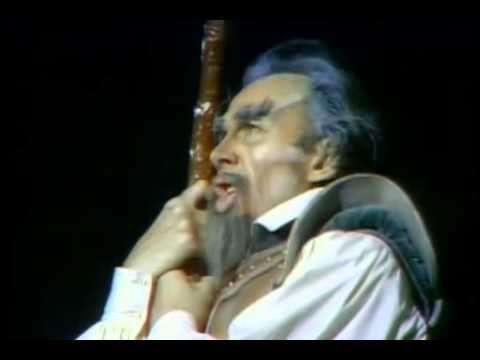
Next, that “man in the arena” passage has always reminded me of the climax tune of the musical Man of Lamancha about Don Quixote, “The Impossible Dream”.  When I was pretty young I saw Richard Kiley, who created the role on Broadway, and it has stuck in my head for that last half century.

YouTube thumbnailYouTube icon

Decades of terrible education, both secular and from the church, dreadful catechesis and feckless preaching, temporizing, compromising, enervating leadership, caving in to the Zeitgeist with enthusiasm…

Are there men with chests anymore.

Damn straight there are!  But for men of chests to discover themselves, they will need trumpet calls.

Not to devolve this into a musical review, but in the spirit of clarion, I am also reminded of a song from a Christian “rock” group called “Courageous”, which serves as the theme of a movie.  HERE USA BlueRay+DVD HERE.  Just DVD HERE. UK DVD HERE.

We were made to be courageous
We were made to lead the way
We could be the generation
That finally breaks the chains
We were made to be courageous

We were warriors on the front lines
Standing, unafraid
But now we’re watchers on the sidelines
While our families slip away

Where are you, men of courage?
You were made for so much more
Let the pounding of our hearts cry [chest]
We will serve the Lord

We were made to be courageous
And we’re taking back the fight
We were made to be courageous
And it starts with us tonight

The only way we’ll ever stand
Is on our knees with lifted hands
Make us courageous [grace… and elbow grease]
Lord, make us courageous

This is our resolution
Our answer to the call [trumpet]
We will love our wives and children
We refuse to let them fall

We will reignite the passion
That we buried deep inside
May the watchers become warriors
Let the men of God arise

We were made to be courageous
And we’re taking back the fight
We were made to be courageous
And it starts with us tonight

The only way we’ll ever stand
Is on our knees with lifted hands
Make us courageous
Lord, make us courageous

Seek justice [women sing this in the background]
Love mercy
Walk humbly with your God

In the war of the mind
I will make my stand
In the battle of the heart
And the battle of the hand

[“chest” is the liaison of the intellective and affective which leads to action]

In the war of the mind
I will make my stand
In the battle of the heart
And the battle of the hand

We were made to be courageous
And we’re taking back the fight
We were made to be courageous
And it starts with us tonight

The only way we’ll ever stand
Is on our knees with lifted hands
Make us courageous
Lord, make us courageous

We were made to be courageous
Lord, make us courageous

Posted in Just Too Cool, The Drill | Tagged , , , , ,
15 Comments