UPDATE:
I just saw reports that the lib Left had a meltdown over 1st Lady Melania Trump’s shoes when she was on her way to Houston. I can’t help but wonder about a connection between the Left’s obsessions and their amazing ability to hate.
___
There are several things I want to address, but separate posts would be too much. So here is an omnium gatherum, just for fun.
1) The best Catholic weekly in the UK, the Catholic Herald has, astonishingly, a piece about our ol’pal and perennial crusader (crusadrix?) for the ordination of women, Phyllis Zagano. She was appointed last y ear to a panel that meets in Rome a couple times a year to look into the historical and theological questions about deaconesses (aka female deacons, deaconettes). The panel doesn’t have the task or competence to make recommendations to the Pope on the topic, but rather to drill into some of the thorny issues. And they are both thorny and fraught with obscurity. In any event, Zagano, who generally says that her main interest to promote only the ordination of deaconettes, let her deeper agenda show through in a talk at Yale as reported by the Catholic Herald: the ordination of women as priests. Here is what she said, with my emphases:
During the question-and-answer session after her talk, Zagano was asked [warning: that’s links a video]: “Why do you not promote the ordination of women as both deacons and priests?”
She replied that these were “two separate ministries”, before adding: “That’s part of it. The other part of it is, I don’t know. I just don’t see it at this point. I think that the priest, when we look at the priest, it’s not the ‘icon of Christ’ problem, it’s the icon of what we’ve made of the priest. So I just don’t think that if I walked down the centre aisle of St Patrick’s Cathedral, waving my – this is my Yale ID card, but waving my “I’m a priest” card … I think I’d be stoned. I just don’t think our Church is ready for that.”
In the talk, which took place in 2013 at Yale’s Thomas E. Golden Jr. Center, Zagano said: “I cannot find evidence that women have been ordained as priests. And the historical argument seems to carry the day right now.”
“At this point… ready… right now….”
Phyllis has a deft pen and uses words well. She has answered these questions, no doubt, quite a few times. She said what she thinks.
One of the problems with the ordination of women as deacons is that the Church says that the ordination to the diaconate is the conferral of the Sacrament of Holy Orders. Only men can receive that sacrament.
Another problem, going way back into ancient times, is that – while we do know that there were women called deacons – we don’t know who ordained them or why or what they were supposed to do. It wasn’t a universal practice. Also, the fact that they disappeared early on suggests that they weren’t main-stream at all. So, which heretical sects might have had them? Moreover, over the centuries it has always been possible to find some bishop who would try just about anything. Saying that a bishop “ordained” women isn’t much of a case. And there are problems with terminology, too. What did “ordain” mean to them? So, anyway, I don’t see anything coming out of this deaconette panel, except, perhaps, some scholarly papers when it is finally disbanded. That’s not nothing.
2) Over at Fishwrap (aka National Sodomitic Reporter), the Wile E. Coyote of the liberal catholic Left took a laughably cheap shot at me and at the Extraordinary Ordinary, Bishop Robert Morlino of Madison. Wile E., (aka Michael Sean Winters) often posts a daily round up of links to internet stuff that he wants people to see, and he often posts comments about the link. That is the format in which Wile E. attacked converts and kindly said that (when he doesn’t agree with them) they should not be allowed an opinion.
In any event, this time Wile E. linked to the fundraising campaign I posted for the 501(c)(3) organization of which I am the prez, the Tridentine Mass Society of the Diocese of Madison (TMSM), and made reference to the fact that, in photos I posted, the Bishop, as celebrant of the Mass, is wearing white shoes.
White shoes! Well, that’s newsworthy! Clearly he wanted to stir his readers up to their usual spittle-fleck nutty of uncharitable comments in the fever-swamp that is their combox. And the commentators, true to form, posted their customary fare of inuendos and falsehoods.
However, if you do go to look – which is sort of like examining roadkill rotting in the sun – bring with you the irony that Winters pays soooo much attention to the bishop’s shoes.
His readers might not sense the humor in that right away.
BTW… take note of what the Fishwrap posts above its combox: “National Catholic Reporter uses Civil Comments. Please keep your comments on-topic, focus on the issue and avoid personal insults, harassment and abuse.” But personal insults is about all they have.
In any event, this gives me the opportunity to explain something about those shoes.
When a bishop vests for a Solemn Mass in the older, traditional form of the Roman Rite, to be celebrated at the throne/cathedra or at the faldstool, he wears some additional vestments. All the vestments, the pontificalia, have symbolic meanings.
The first thing the bishop puts on, or rather endures to have put on him as he patiently sits, are the buskins. These are sort of half boots of cloth which are laced or tied on. They have their origin in ancient Greek and Roman footwear. The churchy buskin usually consists of a kind of sandal encased inside a stocking-like affair that gets laced or tied up the lower leg. They can entirely enclose the shoe portion of the gizmo. However, I have to admit that these are a bit of a pain. Bishops I have put these things on will bear that out. So, Bp. Morlino has buskins which are open on the bottom so that he can wear regular shoes. Since buskins are supposed to be the color of the vestments (except black… no black buskins). If the Mass is in white vestments, the buskins should be white. Hence, when the bishop vested for Mass, he had white buskins over white shoes. This really isn’t that hard. The TMSM had made white, green, red and violet buskins for the pontificalia.
We haven’t had yet a Pontifical Mass in Red when we also had the red buskins. However, the next one is on 14 September for the Feast of the Exaltation of the Cross.
Perhaps we should get some red shoes for the bishop. Red shoes will without question bring MSW swiftly to his fainting couch and get his readers all a-titter.
So, here is the prayer which the bishop says at the buskins are put on him.
Calcea, Domine, pedes meos in praeparationem evangelii pacis, et protege me in velamento alarum tuarum.
Shod my feet, Lord, unto the preparation of the gospel of peace, and protect me under the cover of thy wings.
This prayer echoes Ephesians 6:15 and Psalm 60:5.
Compare the sentiment of that prayer with the nastiness of Bp. Morlino’s detractors. It makes me think of the prayer that all priests say when putting on the amice: “Impose, O Lord, the helmet of salvation upon my head, to overthrow all diabolic deceits, overcoming the savagery of all my enemies.”
These vesting prayers are of great service for a priest and his identity. They remind him of who he is and what he is up against. They put his life and role into perspective. They keep him mindful of his complete dependence on the true Priest. They ground him in the knowledge that he is both priest and, simultaneously, the victim offered up.
So, here I’ll make a pitch for the fundraiser which the seriously nasty libs at Fishwrap are mocking and insulting. You can make a TAX DEDUCTIBLE donation to help us with our many projects…
>>HERE<<
Also you can send generous checks to:
Tridentine Mass Society of the Diocese of Madison
733 Struck St.
PO BOX 44603
Madison, WI 53744-4603
This is another one of those instances when they insult us over at Fishwrap, I gain a chance to raise more money! Please! Insult us some more!
UPDATE:
Thanks to SV and JL for their new donations! Sticking it to the libs one donation at a time.
3) Next, a friend of mine in KC has sent, back to back, a couple of fascinating links.
First, there was an ordination for a tiny splinter group called the The North American Old Roman Catholic Church. Yep.
An ordination in Downtown St. Joseph Friday has helped launch a local mission of the North American Old Roman Catholic Church, a valid, [?] autonomous and canonically independent Roman Catholic denomination.
“It’s been a real historical factor for over 1,000 years. [Such a factor that I’ll bet many of you haven’t heard of it.] Informed Catholics are aware of a number of independent Catholic groups — the Society of St. Pius X and other churches that fall under the Roman Catholic purview,” said the Rev. David L. Jones. “But it’s probably not well known here in Northwest Missouri, and that’s sort of why I’m trying to help people understand who we are and why we exist.”
Jones was ordained as a priest in the North American Old Roman Catholic Church on Friday evening at Christ Episcopal Church in Downtown St. Joseph. He plans to establish the Our Lady of Mount Carmel Mission, a mission of the North American Old Roman Catholic Church, in St. Joseph. A similar mission is located in Atchison, Kansas.
“Many folks that I’ve talked to are very interested,” Jones said. “I think it’s fresh air now that’s coming into St. Joseph. Once they see it as an alternative, I think they will be attracted to it.”
NAORCC
The North American Old Roman Catholic Church is a valid, autonomous and canonical American expression of the worldwide Old Roman Catholic Church, which grew out of the Church of Utrecht, established around 1100 AD. [Ummmm…. ?!?] It follows the beliefs of the Roman Catholic Church.
“We were granted our freedom, our independence from the Holy Father, from the Pope himself,” Jones said. “We don’t fall directly under the Pope, but we pray for the Holy Father at Mass. Our sacraments, our apostolic succession, our lineage, our ministries, actually come from Roman Catholic history.”
They are “very conservative theologically and liberal sacramental-ly,” said the Rev. Joseph Vellone, [contradicting himself within the same utterance] presiding archbishop of the Archdiocese of California. Priests can be married, and there are fewer requirements for the sacraments, he said.
“We don’t have a vow of celibacy,” he said. “We are not quite so strict as sometimes the Catholic church is. We follow the Pope and reverence him, and acknowledge his position, but we really feel called by the Lord to do stuff that they can’t do or won’t do.”
[…]
Stuff, indeed.
But wait! There’s more.
My friend at the same time sent another link, to the Progressive Catholic Church, which had a consecration! The PCC seems to be an offshoot of the Old Catholics (above). They made one guy into a bishop and another into a deacon and then (scroll down) they went to a favorite spot The Hungry Drover:
ON THE MENU:
PORK BBQ, MAC N CHEESE, COLLARDS, BEANS, SLAW, TEA, CHICKEN, TOMATO PIE, WINE AND CAKE.
Sounds pretty good, though I’m puzzled at the placement of the “tea”. Any thoughts?
I like some of the titles of their clergy. For example, they have a “Metropolitan of the Deep South”. Their clergy page is really interesting.
Either one of these groups would be thrilled to welcome Wile E. and Phyllis into their burgeoning ranks.
The more I read about them the more it seems that their goals and ambitions coincide.
4) Lastly, be sure to go back to the UK’s best catholic weekly and read this delightful piece about an amazing woman. HERE It’s about Anna Margaret Haycraft and it’s entitled:
The Catholic bohemian who mocked feminists
It includes the great line:
“I believe that if forced to choose with whom I would prefer to spend a few hours, I would opt for football hooligans rather than face the malignant ferocity of a roomful of would-be lady priests and discontented nuns”.
And also…
For Anna, the new Mass and the “renewal” (a word she loathed) of the Church demeaned all Catholics, but especially the priest who, as he fussed around the altar preparing the Eucharist in both kinds for the congregation, looked “more like a napkin-flapping maître d’ than someone communicating with God”.
The first translation of the Mass into English, with its obsequious gestures to Protestantism, rendered the Latin description of transubstantiated wine, potus spiritális, to “spiritual drink”. For Anna, the “housewife”, the word “drink” was deeply suspicious, a “word that manufacturers use when they want to put one over on you … it is not the real thing”. But the purveyors of this new spiritual cuisine weren’t listening. For decades Anna took her fight to the closed doors of the liberal hierarchy, demanding: “Is it the Blood of Christ or not?”
You won’t stop once you start.


 Robert Card. Sarah has corrected homosexualist activist Jesuit James Martin, SJ., in the pages of the Wall Street Journal.
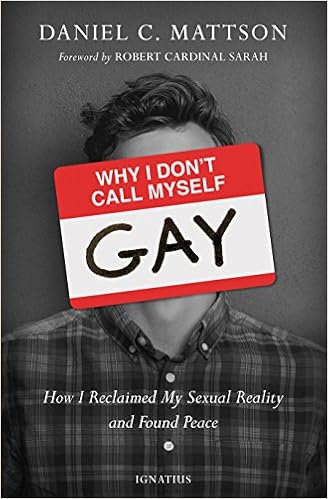 It is my prayer that the world will finally heed the voices of Christians who experience same-sex attractions and who have discovered peace and joy by living the truth of the Gospel. I have been blessed by my encounters with them, and their witness moves me deeply. I wrote the foreword to one such testimony, Daniel Mattson’s book, “Why I Don’t Call Myself Gay: How I Reclaimed My Sexual Reality and Found Peace,”
  His Holiness of Our Lord has made an interesting revelation. See the story at the UK’s best Catholic weekly (for which I also write), the
  One of my perennial tropes is that generations of Catholics have been robbed. They have been cheated out of their patrimony. They have been defrauded of their inheritance. When the libs “reformed” the Church’s liturgical worship with little regard for the few true mandates of the Council Fathers, they both slammed the treasury doors shut and hide the key and then brought edifice down to hide its existence from sight.
 Some of my friends in our SMS exchanges will at times long for the big meteor to put us out of our misery.
 First, we need an exclusively masculine sanctuary.
  We need many more celebrations of Holy Mass in the traditional Roman Rite side by side with the Novus Ordo. Happily, younger priests and seminarians really want to use the traditional Roman Rite. This will create a tremendous knock on effect through their revitalized ars celebrandi. The spreading use of the traditional forms – along with the strong priestly identity advocated by the writer above – will be like the introduction of clotting agents, transfusions of blood, mending of nerves, application of antibiotics, better diet and supplements, and supportive therapy. The effect will surely be beneficial.
 There is to be an interesting liturgical conference in W. Peabody, Mass, in September. Priests and seminarians should pay particular attention.

 ear to a panel that meets in Rome a couple times a year to look into the historical and theological questions about deaconesses (aka female deacons, deaconettes). The panel doesn’t have the task or competence to make recommendations to the Pope on the topic, but rather to drill into some of the thorny issues. And they are both thorny and fraught with obscurity. In any event, Zagano, who generally says that her main interest to promote only the ordination of deaconettes, let her deeper agenda show through in a talk at Yale as reported by the Catholic Herald: the ordination of women as priests. Here is what she said, with my emphases:
 Lastly, be sure to go back to the UK’s best catholic weekly and read this delightful piece about an amazing woman.
 fac on ASK FATHER: After Benediction why were the “Divine Praises” not in Latin?: “Back in the day, when I was a little girl, my mother belonged to the Altar and Rosary Society at…”