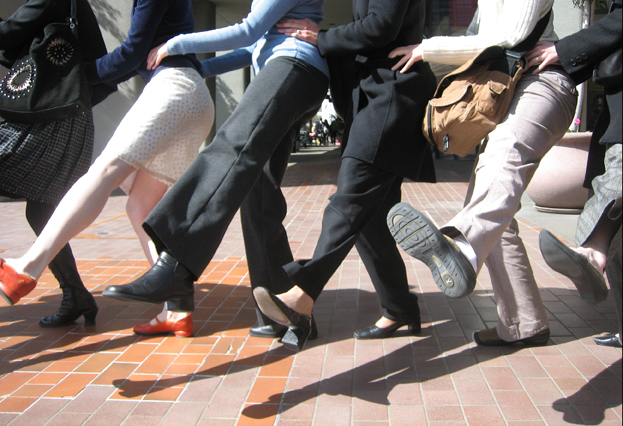
“Don’t take offence if they have to decline your invitation.”

There is a great post over at my friend Fr. Finigan’s blog, The Hermeneutic of Continuity about lay people and their weddings and inviting priests… and concelebration.

Remember, I think concelebration should be safe, legal and rare.

Fr. Finigan seems to agree.


Posted in "How To..." - Practical Notes, Liturgy Science Theatre 3000, Mail from priests | Tagged ,
3 Comments

“Stir Up Sunday” 2013! – UPDATES

The Collect from Holy Mass today in the traditional Roman Rite is:

Excita, quaesumus. Dómine, tuórum fidélium voluntátes: ut, divíni óperis fructum propénsius exsequéntes; pietátis tuæ remédia maióra percípiant.

Or…

Stir up the will of your faithful, we pray, O Lord, that, seeking more eagerly the fruit of your divine work, they may find in greater measure the healing effects of your mercy.

I need a nap… but…

This is “Stir Up Sunday!”

It is time for me to get the 2013 Christmas Pudding underway.

But I really want that nap.

More later.

UPDATE:

I am back from the shops.  I have obtained the ingredients.

However, I cannot find my very large stock pot in which I have in the past steamed the puddings.  Grrr.  These things don’t just grow legs and wander off down combox rabbit holes.

UPDATE:

Okay… I have prepared the first two puddings.

I used small basins, because I can’t find the big pot.  When I do, I’ll make a bigger one.

ACTION SHOTS!

My mise en place…

20131124-202119.jpg

Sifting in the flour.

20131124-202133.jpg

Adding the bread crumbs.

20131124-202147.jpg

SPICE!

Paul: Stilgar, do we have wormsign?
Stilgar: Usul, we have wormsign the likes of which even God has never seen.

20131124-202157.jpg

Adding the almonds and the chopped candied peel.

20131124-202207.jpg

Omnibus permixtis, I am adding the currents.

20131124-202215.jpg

Sugar.  Lots of sugar.

20131124-202224.jpg

Chopped apple.

20131124-202234.jpg

Time for the liquids.  Stout.  Rum. BARLEYWINE.

And eggs.  Yes, I use a graduated cylinder for my metric measurement of liquid.

20131124-202245.jpg

Combining the dry and the wet.

20131124-202259.jpg

Into the grease pudding basins.

When I filled these basins, I said a prayer for the wonderful readers here who sent them to me a couple years back.  I do not forget you.  I don’t remember your names, but the angels know you.  May God reward you for your kindness.  Whenever I use or enjoy something you send, I remember the kindness and that it was a gift… like everything I have.

Anyway… greased basin.

20131124-202310.jpg

Ooops. Basins.

20131124-202318.jpg

I wrapped them up and tied string about in order to make it easier to extract them from the pot in which I must steam them.

And just a glimpse of the PX4, newly cleaned.

20131124-202328.jpg

Tomorrow I will steam.

It was fun to do this.  I haven’t been cooking.  It just wasn’t… there.

In the midst of the prep, I walked down the hall to the suite of the Monsignor (a PA!) who is my neighbor, and asked him to stir the pudding a few times.

Puddings should be shared.


Posted in "How To..." - Practical Notes, Fr. Z's Kitchen, Lighter fare | Tagged ,
31 Comments

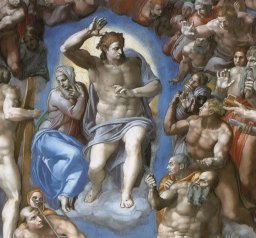
WDTPRS: Christ the King (2002MR): the elements will be dissolved with fire, the earth will be burned up

We have come back to the last Sunday of the liturgical year.  In the post-Conciliar calendar of the Roman Church this is the Solemnity of Christ the King.  In the older calendar, this is celebrated (with a rather different meaning!) at the end of October.

Each year Holy Church presents to us the history of salvation, from Creation to the Lord’s Coming (the First and also the Final).

Today’s Solemnity is an anticipation of the season of Advent, which  focuses on the different ways in which the Lord comes to us, especially in the Second Coming.

At this time of year (November) we are also considering the Four Last Things: death, judgment, heaven and hell.   We are praying for the Poor Souls in Purgatory in a special way this month.

The Solemnity of Christ the King brings to our attention the fact that the Lord is coming precisely as King and Judge not merely as friend or brother or favorite role-model.

In the great Dies Irae prayed at Requiem Masses for so long (and still today), Christ is identified as “King of Fearful Majesty” and “Just Judge”.

Consider today’s feast in light of what we read in 2 Peter 3: 10-12:

“But the day of the Lord will come like a thief, and then the heavens will pass away with a loud noise, and the elements will be dissolved with fire, and the earth and the works that are upon it will be burned up. Since all these things are thus to be dissolved, what sort of persons ought you to be in lives of holiness and godliness, waiting for and hastening the coming of the day of God, because of which the heavens will be kindled and dissolved, and the elements will melt with fire!”

Not exactly hugs and fluffy lambs for everyone.

Christ Jesus will judge us all, dear friends, and submit all things to the Father (cf. 1 Cor 15:28).  Having excluded some from His presence, our King, Christ Jesus, will reign in majestic glory with the many who accepted His gifts and thereby merited eternal bliss.

COLLECT – (2002MR):

Omnipotens sempiterne Deus, qui in dilecto Filio tuo, universorum Rege, omnia instaurare voluisti, concede propitius, ut tota creatura, a servitute liberata, tuae maiestati deserviat ac te sine fine collaudet.

While this Collect is of new composition for the Novus Ordo, it is similar to what was in the 1962 Missale Romanum for this feast with variations in the second part: Omnipotens sempiterne Deus, qui dilecto Filio tuo universorum Rege, omnia instaurare voluisti: concede propitius; ut cunctae familiae gentium, peccati vulnere disgregatae, eius suavissimo subdantur imperio… “so that all the families of peoples, torn apart by the wound of sin, may be subject to His most gentle rule.”  That’s a different message by far.  Today’s Collect demonstrates the theological shift in many of the Latin prayers in the Novus Ordo.  But that is the stuff of other posts.

Universus is an adjective and universorum a neuter plural, “all things.”  Since we have another “all things” in omnia I will make universorum into “the whole universe.”  Our Latin ears perk up when we hear compound verbs (verbs with an attached preposition like sub or de or cvm).

In our own copies of A Latin Dictionary. Founded on Andrews’ edition of Freund’s Latin dictionary. revised, enlarged, and in great part rewritten by. Charlton T. Lewis, Ph.D. and. Charles Short, LL.D. – (aka Lewis & Short or L&S) we find that de-servio expands the meaning of servio to mean “serve zealously, be devoted to, subject to.”  Col-laudo, more emphatic than simple laudo, means “to praise or commend very much, extol highly.”

You veterans of WDTPRS know how maiestas is synonymous with gloria which in early Latin writers such as Hilary of Poitiers, Ambrose and in early liturgical texts, the equivalent of biblical Greek doxa and Hebrew kabod.   This “glory” and “majesty” is God’s own transforming power, a sharing of His life, that transforms us into what He is in an everlasting “deification”.

Instauro is a wonderful word which deserves more attention: “to renew, repeat, celebrate anew; to repair, restore; to erect, make”.  It is synonymous with renovo.  Etymologically instauro is related to Greek stauros. Turning to a different L&S, the immensely valuable Liddell & Scott Greek Dictionary, we find that stauros is “an upright pale or stake.”   Stauros is the word used in the Greek New Testament for the Cross of Jesus.  Also the word immediately makes us think not only of the motto on the coat-of-arms of Pope St. Pius X, but also the origin of that motto Ephesians 1:10: “For he has made known to us in all wisdom and insight the mystery of his will, according to his purpose which he set forth in Christ as a plan for the fullness of time, to unite all things in him, things in heaven and things on earth.” (Eph 1:9-10 RSV).  There have been, by the way, some changes in the Latin texts of this passage.  The older Vulgate says “instaurare omnia in Christo” while the New Vulgate says “recapitulare omnia in Christo”.

Recapitulare is related to Latin caput (“head”) and was deemed by the scholars behind the New Vulgate as a better translation of the Greek anakephalaioô, “to sum up the argument.”  This harks to the headship of Christ over the Body of the Church and expresses that He is the Final Statement, the Conclusion of All Things.  At any rate, in 1925 and in the 1960’s when the older version of Vulgate was in use, the Collect had instaurare and not recapitulare.

Why all this about recapitulare?

The phrase, “renew/reinstate all things in Christ” points to the Kingship of Jesus.  In everything that Jesus said or did in His earthly life, He was actively drawing all things and peoples to Himself.  In the time to come, when His Majesty the King returns in gloria and maiestas this act of drawing-to-Himself (cf. John 12:32) will culminate in the exaltation of all creation in a perfect unending paean of praise.  In the meantime, by virtue of baptism and our integration into Christus Venturus (Christ About-To-Come), we all share in His three-fold office of priest, prophet, and also king.  We have the duty to proclaim His Kingship by all that we say and do.  We are to offer all our good works back to Him for the sake of His glory and the expectation of His Coming.  This glorious restoration (instaurare) is possible only through the Lord’s Cross (Greek stauros).  The Cross is found subtly in the midst of this Collect, where it is revealed as the pivot point of all creation (creatura).

LITERAL VERSION:

Almighty eternal God, who desired to renew all things in Your beloved Son, the King of the universe, graciously grant that the whole of creation, having been freed from servitude, may zealously serve Your majesty and praise You greatly without end.

The first objective of our participation in the Church’s sacred rites is to praise God, Father, Son and Holy Spirit, and give God glory.  This is what we owe by the virtue of religion.

Liturgical and Biblical Latin is rich with words and phrases which exalt and express praise of God.  In fact, the concepts of “glory” and “majesty” are nearly interchangeable in this light.  We, on the one hand, render up honor and glory to God in a way external to God.  On the other hand, glory and majesty are also divine attributes which we in no way give Him, which He has – or rather is – in Himself by His nature.

When we come into His presence, even in the contact we have with Him through the Church’s sacred mysteries, His divine attribute of splendor or glory or majesty, whatever you will, has the power to transform us.  His majestic glory changes us.  This MYSTERY changes us.  So, it is right to translate these lofty sounding attributions for God when we raise our voices in the Church’s official cult.

OBSOLETE ICEL (1973):

Almighty and merciful God, you break the power of evil and make all things new in your Son Jesus Christ, the King of the universe. May all in heaven and earth acclaim your glory and never cease to praise you.

CURRENT ICEL (2011):

Almighty ever-living God, whose will is to restore all things in your beloved Son, the King of the universe, grant, we pray, that the whole creation, set free from slavery, may render your majesty service and ceaselessly proclaim your praise.
Posted in Liturgy Science Theatre 3000, WDTPRS | Tagged ,
14 Comments

Again HUGE news: Pope Francis explicitly endorses Benedict XVI’s “hermeneutic of continuity”

You will want to read this carefully and put it in your “IMPORTANT” file.

This is, again, HUGE news.

The 450th anniversary of the closing of the Council of Trent is coming up on 4 December.  We like to celebrate these great milestones in salvation history.  So, there are great doings in Trent, in the northern area of Italy which is part of the (also) German-speaking Tirol.  As is customary, Pope Francis will send a Cardinal as his personal representative.  Who better than His Eminence Walter Card. Brandmüller?

When the Pope sends a Cardinal off on one of these missions, he sends him a formal letter, charging him with his task and indicating something of his own hopes for the occasion.  The anniversary of the closing of the Council of Trent is no exception.

In his letter to Card. Brandmüller, Pope Francis explicitly cites Pope Benedict XVI pontificate-defining address in 2005 to the Roman Curia in which he spoke about the “hermeneutic of discontinuity and rupture” (e.g., the Karl Rahner crowd and their descendants, still active today) and the “hermeneutic of reform”, or “hermeneutic of continuity”.

In this explicit reference Francis is aligning himself with Benedict and that key moment and concept underlying Benedict’s pontificate.

This comes in the wake of Francis writing to Archbishop Marchetto (refresh your memory HERE), a critic of one of the powerhouses of the “hermeneutic of discontinuity and rupture”, the so-called “Bologna School” of interpretation of the Council.  Francis surely broke a lot of liberal hearts when he referred to Marchetto (who in this matter is completely aligned with Benedict) as one of the best interpreters of the Council that he knows.

The letter of Francis to Card. Brandmüller is available in the Latin original in the Bollettino.  Here is my rapid translation of the first part of the letter, which is the important part.  I scaled down some of the flowery stuff. The second part is the usual boilerplate and of less interest.

To our Venerable Brother
Walter Cardinal (of the Holy Roman Church) Brandmüller
Deacon of St. Julian of the Flemish

Since the 450th anniversary of the day on which the Council of Trent drew to its favorable end, it is fitting that the Church recall with readier and more attentive eagerness the most rich doctrine which came out of that Council held in the Tyrol. It is certainly not without good reason that the Church has for a long time given such great care to that Council’s decrees and canons which are to be recalled and heeded, seeing that, since extremely grave matters and questions sprang up in that period, the Council Fathers employed all their diligence so that the Catholic faith should come into clearer view and be better understood. Without a doubt as the Holy Spirit inspired and prompted them, it was the Fathers’ greatest concern not only that the sacred deposit of Christian doctrine be defended, but also that mankind be more brightly illuminated, in order that the saving work of the Lord could be diffused throughout the entire globe and the Gospel be spread through the whole world.

Harking closely to the same Spirit, Holy Church in this age renews and meditates on the most abundant doctrine of the Council of Trent. In fact, the “hermeneutic of renewal” [interpretatio renovationis] which Our Predecessor Benedict XVI explained in 2005 before the Roman Curia, refers in no way less to the Council of Trent than to the Vatican Council. To be sure, this mode of interpretation places under a brighter light a beautiful characteristic of the Church which is taught by the Lord Himself: “She is a ‘subject’ which increases in time and develops, yet always remaining the same, the one subject of the journeying People of God” (Address of His Holiness Benedict XVI to the Roman Curia offering them his Christmas greetings – 22 December 2005).

[…]

This is a significant letter.

First, it affirms that we can indeed, and rightly, Read Francis Through Benedict.

Second, it affirms that Francis is, and rightly, reading Francis Through Benedict.

Third, it strikes me that Pope Francis is making some course corrections.  He may have perceived that some in “the world” (e.g., liberals, the MSM) are not reading him accurately.  His experience with the “interview” by Scalfari ought to have made that evident.  In addition to liberal misperceptions and distorted interpretations, he has also been misjudged by many on the more conservative side of the spectrum.

As I have said all along, Pope Francis – like every Pope – has to learn how to be Pope.  He had less of an advantage coming to the See of Peter because he had not been in or around the Roman Curia.  But he is adjusting, learning, transforming.  Francis, as you can see everyday, is not static in his job.  He isn’t simply on cruise control.

Continue to pay close attention to Pope Francis, not just in sound-bites, but in the larger arcs of his talks and speeches and written documents.

This is not a bone thrown to conservatives.  This is the real deal.  This is Francis.

Posted in Benedict XVI, Brick by Brick, Francis, Hard-Identity Catholicism, New Evangelization, Our Catholic Identity, Reading Francis Through Benedict, The Drill, Vatican II | Tagged , , , ,
41 Comments

A lesson from Our Lady in our use of social media.

Paolo VenezianoMy good friend, the Dean of Bexley, the PP of Blackfen, His Hermeneuticalness, Fr Timothy Finigan, has a good post useful for our reflection:

The book of meditations which I am using at the moment looks at the person of Our Lady in relation to her dedication which is celebrated in today’s feast of the Presentation of the Blessed Virgin. The author, relying on the doctrine of Our Lady’s Immaculate Conception and her freedom from any actual sin, speculates:

“We must necessarily suppose that Mary bears patiently every annoyance caused her by others without, on her part, causing them the least pain: she excuses their defects, pardons their obvious faults, and in all circumstances shows herself tender, affable, gracious, and considerate.”

We can give the author the benefit of the doubt here in presuming that he is referring to the ordinary ups and downs of daily life, rather than to grave injustice. In the latter case, we might need to make people at least uncomfortable. Rather than quibbling over such things, we could take a lesson from Our Lady in our use of social media. (And let me acknowledge unequivocally that I need to apply this to myself.)

You should be following Fr. Finigan daily. Also, the blogger Mulier Fortis often posts photos of what is going on at Fr. Finigan’s parish.

Posted in "How To..." - Practical Notes, Blogs You Might Consider, Mail from priests, Our Catholic Identity | Tagged ,
6 Comments

Reading Francis through Francis

When the liberals gush and gush and ooze about Pope Francis, the most wonderfullest, fluffiest Pope ehvurrrrr, they smear another brush-stroke of paint on the floor as their place in the corner gets smaller and smaller.



One of these days, Pope Francis is going to do something that ends the liberal conga line.   For example, he will issue a document along the lines of Ordinatio diaconalis.   They will turn on Pope Fluffy, but it’ll cost ’em.

In any event, I saw this from Sandro Magister:

Even the Pope Critiques Himself. And Corrects Three Errors
He is lowering the “rating” of his interview with Scalfari.

Rectifying his judgments on Vatican Council II. Distancing himself from the progressive currents that have applauded him until now. But the media are silent on this change of pace

ROME, November 22, 2013 – In the span of a few days Pope Francis has corrected or brought about the correction of a few significant features of his public image. At least three of them.

The first concerns the conversation that he had with Eugenio Scalfari, set down in writing by this champion of atheistic thought in “la Repubblica” of October 1.

The transcript of the conversation had in effect generated widespread dismay, because of some of the statements from the mouth of Francis that sounded more congenial to the dominant secular thinking than to Catholic doctrine. Like the following:

“Each one has his idea of good and evil and must choose to follow the good and fight the evil as he understands them.”

At the same time, however, the interview was immediately confirmed by Fr. Federico Lombardi as “faithful to the thought“ of the pope and “reliable in its general sense.”

Not only that. A few hours after it was published in “la Repubblica,” the interview was reproduced in its entirety both in “L’Osservatore Romano” and on the official website of the Holy See, on a par with the other discourses and documents of the Pope.  [Goat rodeo.]

[…]

But even the calibrated and thoroughly studied interview with Pope Francis in “La Civiltà Cattolica” – published on September 19 by sixteen magazines of the Society of Jesus in eleven languages – has in recent days been taken into the shop of things to be corrected. [The Big Interview™]

On a key point: the interpretation of Vatican Council II.

[Don’t forget the letter to Archbp. Marchetto!] This has been made clear by a passage of the letter written by Francis himself to Archbishop Agostino Marchetto on the occasion of the presentation on November 12 of a volume in his honor, against the solemn background of the Campidoglio. A letter that the pope wanted to be read in public.

The passage is the following:

“You have demonstrated this love [of the Church] in many ways, including by correcting an error or imprecision on my part – and for this I thank you from my heart – but above all it has been manifested in all its purity in your studies of Vatican Council II. I have said this to you once, dear Archbishop Marchetto, and I want to repeat it today, that I consider you the best hermeneut of Vatican Council II.

The definition of Marchetto as “the best hermeneut” of the Council is striking in itself. Marchetto has in fact always been the most implacable critic of that “school of Bologna” – founded by Giuseppe Dossetti and Giuseppe Alberigo and today directed by Professor Alberto Melloni – which has the worldwide monopoly on the interpretation of Vatican II, in a progressive vein.

The hermeneutic of the Council upheld by Marchetto is the same as that of Benedict XVI: not of “rupture” and “new beginning,” but of “reform in the continuity of the one subject Church.” And it is this hermeneutic that Pope Francis has wanted to signify that he shares, in bestowing such high appreciation on Marchetto.

But if one rereads the succinct passage that Francis dedicates to Vatican II in the interview with “La Civiltà Cattolica,” one gets a different impression. “Yes, there are hermeneutical lines of continuity and of discontinuity,” the pope concedes. “Nonetheless,” he adds, “one thing is clear”: Vatican II was “a service to the people” consisting in “a reinterpretation of the Gospel in the light of contemporary culture.”

In the few lines of the interview dedicated to the Council, Bergoglio defines its essence this way three times, also applying it to the reform of the liturgy.

[…]

The third correction is consistent with the two previous ones. It concerns the “progressive” tone that Pope Francis has seen stamped upon the the first three months of his pontificate.

One month ago, on October 17, Bergoglio seemed to have confirmed this profile of his once again when in the morning homily at Santa Marta he directed stinging words against Christians who turn the faith into a “moralistic ideology,” entirely made up of “prescriptions without goodness.”

But one month later, on November 18, in another morning homily the pope played a completely different tune. [Which in itself is problematic.  But always remember that those daily sermons are off-the-cuff, non-magisterial, musings.]

He used the revolt of the Maccabees against the dominant powers of the age as the point of departure for a tremendous tongue-lashing of that “adolescent progressivism,” Catholic as well, which is disposed to submit to the “hegemonic uniformity” of the “one form of thought that is the fruit of worldliness.” [I have been busy for a few days.  Does anyone know if the Fishwrap, the National Schismatic Reporter, quoted their Pope Fluffy?]

It is not true, Francis said, that “in the face of any choice whatsoever it is right to move forward regardless, rather than remain faithful to one’s traditions.” The result of negotiating over everything is that values are so emptied of meaning as to end up merely “nominal values, not real.” Even more, one ends up negotiating precisely over “the thing essential to one’s very being, fidelity to the Lord.”

The one form of thought that dominates the world – the pope continues – legalizes even “death sentences,” even “human sacrifices.” “But you,” he asked, “do you thing that there are no human sacrifices today? There are so many, so many! And there are laws to protect them.”

It is difficult not to see in this pained cry of Pope Francis the countless human lives mown down before birth with abortion, or cut off with euthanasia.

[…]

With the exception of a few Catholic outlets, the media of the entire world ignored this homily of Pope Francis, which in effect starkly contradicts the progressive or even revolutionary framework within which he is generally described.

But now it is part of the record. And there it remains. [Though we are not sure which record it is on.]

[…]


Posted in Francis, Reading Francis Through Benedict, The Drill | Tagged ,
9 Comments

Thanks, once again, to all of you who stayed home rather than vote

He sure can pick ’em.

From LifeSite:

Gay teen activist honored by Obama charged with sex crimes against a 14-yr-old boy

PHOENIX, November 20, 2013 (LifeSiteNews.com) – An openly homosexual teenager, who was given a position as an “adviser” to Phoenix Mayor Greg Stanton and honored by President Barack Obama at a White House “gay pride” dinner, has been indicted on more than a dozen counts of sexual misconduct with a minor under the age of 15.

[…]

From American Thinker:

Gloria Steinem Gets Medal of Freedom for Abortion Advocacy

How fitting that abortion zealot and self-proclaimed Marxist Gloria Steinem received the Presidential Medal of Freedom on Wednesday from Barack Hussein Obama. The male-bashing, anti-family, anti-American Steinem beamed as the guy who voted three times against a partial-birth abortion ban while in the Illinois state Senate placed the medal around her neck.
What exactly is the meritorious contribution Steinem has made to our national interests that would warrant such an honor?
Ever since the radical feminist attended an “abortion speak-out” in 1969 hosted by the radical man-hating group Redstockings, she was “instantly committed” to the abortion movement.
As one of the architects of the abortion holocaust, Steinem summed up her philosophy in a 2005 New York Observer interview. The 71-year-old was asked what her advice to young women in the 21st century would be. She replied, “To do whatever they f—ing well please.” Six years after that statement, a young Florida woman named Angie tweeted her own abortion in real time after using the drug RU-486.
No one should underestimate Steinem’s part in the murder of 55 million babies and counting. Her mainstream good looks, media savvy, and Smith College degree landed her on talk shows, lecture circuits and magazines in the 1960s — something the dowdy, militant-looking Shulasmith Firestone, leader of the Redstockings, could only dream about. Steinem looked all-American, making her message more palatable to the masses.

[…]

I want to thank, once again, all the people who stay home rather than vote.

Thanks. Thanks a lot.

Posted in Dogs and Fleas, The Drill, The future and our choices, You must be joking! | Tagged ,
47 Comments

PBJ = RACISM

Here is something for your “You Must Be Joking!” file.

From Portland comes this bizarre story.

Portland school sees racism in peanut butter and jelly sandwiches [You can’t make this … stuff up.]

In an effort to combat perceived discrimination, one Portland school seems to have gone off the deep end by suggesting peanut butter and jelly sandwiches carry racist connotations, Twitchy reported Monday.

According to the Portland Tribune, Verenice Gutierrez, principal of Harvey Scott K-8 School, “picks up on the subtle language of racism” on a daily basis.

“Take the peanut butter sandwich, a seemingly innocent example a teacher used in a lesson last school year,” the Tribune said.

What about Somali or Hispanic students, who might not eat sandwiches?” Gutierrez asked. [?!?] “Another way would be to say: ‘Americans eat peanut butter and jelly, do you have anything like that?’ Let them tell you. Maybe they eat torta. Or pita.”

“Insert flabbergasted face,” the Twitchy staff wrote.

One person asked on Twitter: “[W]hat’s the verdict on grilled cheese? Racist? Sexist?” [YES!  Clearly, that’s racist.  Any food that does not include all possible ethnic connotations is RACIST. Otherwise, perhaps we should start serving the kiddies Soylent Green.]

The food at my kids’ schools hates everyone,” tweeted Melissa Clouthier.

With the suggestion that a sandwich is racist, Twitchy said the discussion on race “has moved beyond slack-jawed incredulity into total self-parody territory.”

“What is racist about a child’s lunch, one might ask? Peanut butter and jelly, of course! You racists probably even use black currant jelly sometimes. On white bread,” Twitchy added.

The Tribune noted that the school started the new year with “intensive staff trainings, frequent staff meetings, classroom observations and other initiatives,” to help educators understand their own “white privilege,” in order to “change their teaching practices to boost minority students’ performance.” [I wonder what the student test scores are in that school.]

[…]

“Guess what? When everything is racist, then nothing actually is,” Twitchy said.

This is crazy stuff.

To think that my old friend Archbp. Sample has to try to function in that town.

Posted in Pò sì jiù, You must be joking! | Tagged ,
25 Comments

Bp. Paprocki performs exorcism after Illinois governor signs same-sex “marriage” bill

First, Fr. Z kudos to Bishop Thomas Paprocki of Springfield in Illinois.

Bishop Paprocki reacted to the evil decision in Illinois in the way that a Catholic bishop can and ought to react: he prayed.  He fought back against the Enemy.

The “father of lies”, Satan, is surely behind the human agents working for the distortion of the natural order in the promotion of same-sex “marriage”.

Bp. Paprocki’s full sermon, HERE.

Here is one secular outlet’s coverage of what Bishop Paprocki did with the story.

Catholic bishop performs ‘exorcism’ with armed officers over Illinois same sex marriage [Not too subtle.  The mention of the “armed” officers… in headline.]

Roman Catholic Bishop Thomas John Paprocki kept his promise on Wednesday and performed an “exorcism” on the state of Illinois after Gov. Pat Quinn (D) signed a bill legalizing same sex marriage.

According to the Chicago Sun-Times, Paprocki kicked off his exorcism service only 30 minutes after Quinn’s bill-signing ceremony had ended. [Good!  Why waste time.  More bishops should do this.]

“In an unusual use of public services, [What an unusual thing to say.  Why is this an “unusual use”?  I would say this is a “usual” use. What is unusual is that more bishops don’t fight evil in this way more often.  This is what they are supposed to do.] the exorcism included two armed Springfield police officers stationed inside the church vestibule where parishioners entered from the street,” the Sun-Times noted. “At one point during the service, one of the officers strode to the front of the church, though his purpose was unclear. There were no disruptions during the hourlong event.” [What the Sun-Times and this outlet are doing is try to paint Bp. Paprocki as being menacing, threatening.  What I suspect is really the case is that the bishop’s office received threats of violence if he opened his mouth in public against the signing of the bill.  The officers were more there for the safety of the congregation than anything else.]

In front of 500 followers, Paprocki asked God to “deliver us from evil” caused by same sex marriage.

“I exorcise you, every unclean spirit, every power of darkness, every incursion of the infernal enemy, every diabolical legion, cohort, and faction, in the name and power of our Lord Jesus Christ,” he said. “Be uprooted and put to flight from the Church of God from souls created in the image of God and redeemed by the precious blood of the divine lamb.

“Dare no more, oh cunning serpent, to deceive the human race, to persecute the church of God, to shake the chosen of God and sift them like wheat.”

“Be gone Satan, father of lies, enemy of human salvation,” Paprocki said at the conclusion of the exorcism. “Give way to Christ, in whom you found no trace of your works. Give way to the one, holy, Catholic and apostolic church, which Christ himself won by his blood.”

Although no cameras were allowed in the church, the bishop spoke to WICD following the service.

I’m not just singling out any one issue here, but it could be. It depends again on your intention, why are you voting for that person and if you’re, in a sense, voting for someone precisely because you are — you have the intention of trying to promote something that is gravely sinful,” he explained. “Well then, you are putting your salvation in jeopardy.”

Again, Fr. Z kudos to Bp. Paprocki.

Here is a video.

Bp. Paprocki fought back against the Devil and you can bet that the Devil didn’t like it very much.  Watch for an increase in attacks on both him and his brother bishops.  The enemy will seek to intimidate them into either silence or more happy-gas talk.  We have to support our bishops so that they have the courage to fight the Devil with spiritual weapons in the public square.


Posted in "How To..." - Practical Notes, Biased Media Coverage, Fr. Z KUDOS, Hard-Identity Catholicism, Mail from priests, Our Catholic Identity | Tagged , ,
15 Comments

A closing abbey rescued by lay people

Good story from the STrib.

Blue Cloud Abbey monastery sold to group of Catholic buyers from South Dakota and Minnesota
Article by: CARSON WALKER , Associated Press
Updated: November 20, 2013 – 6:50 PM
SIOUX FALLS, S.D. — Six Catholic couples from South Dakota and Minnesota have purchased a 108-bedroom rural monastery and now hope to raise enough money to keep it open as a quiet place of renewal.

Blue Cloud Abbey near Marvin in northeast South Dakota, just miles from the Minnesota border, housed Benedictine monks from 1950 until it closed in May 2012. The remaining 14 residents, most of them aging, voted to sell the 80-acre property.

“We can’t reproduce the Benedictines but can continue that tradition of helping everybody who needs help,” said Wade Van Dover, one of its new co-owners.

“There’s 100,000 square feet. It’s a big facility.”

The buyers have signed a purchase agreement that does not allow them to release the sale price, and they have applied for a nonprofit license to accept donations, Van Dover said. They will develop a specific purpose in the coming months that will likely preserve the site’s Catholic identity and continue the monks’ mission of using the monastery as a corporate and individual retreat and a place to host events and faith activities, he said.

“There have been 50 great ideas of what to do with it. We have to define the mission and the vision and move forward,” Van Dover said.

The abbey will likely have side businesses to support the nonprofit, he said. Use of the monks’ wood shop, greenhouse, garden and land for natural beef grazing are among the possibilities.

Besides Van Dover and his wife, Cindy Van Dover, of Big Stone City, the five other couples are: Val and Paula Rausch, of Big Stone City; Jim and Kala Heller, of Aberdeen; Roman and Carol Taffe and Paul and Julie Treinen, of Ortonville, Minn.; and Dan and Michelle Moberg, of Clinton, Minn.

The Mobergs will live at the abbey initially because Dan Moberg knows how to operate boilers and other parts of the operation.

Jerry Klein, spokesman for the Catholic Diocese of Sioux Falls, said the monastery will continue operating separately but with the bishop’s blessing, support and gratitude for the couples’ effort to maintain the mission.

Wade Van Dover said more people will have to step up because the heating bill alone this winter will be about $90,000.

“This group has really stuck their neck out to do this,” he said. “To get this thing bought, we did what we had to do. But there is going to be a fundraising attempt, and there will be a need for people to give their time and talents.”

Fr. Z kudos.

My imagination is running: what could be done there?

Posted in Brick by Brick, Fr. Z KUDOS, Just Too Cool | Tagged ,
19 Comments