Your Sunday Sermon Notes

septuagesima_matthew_20_smWas there a good point made in the sermon you heard during your Mass of Sunday Obligation?

Let us know.

I didn’t preach today, since I was the deacon for the Mass and I didn’t have another scheduled Mass.  Had I preached today, I think I would have spoken about the dignity of work, especially the menial tasks we perform.  I would have tied together the parable of the man who hires workers at different times of the day and also the Epistle in which Paul uses sports imagery.  It takes menial, repetitious, boring work to become proficient in a sport, so that you can finish the race or match and win the prize.  Some come by their prizes more easily than others, but we can all get to the finish line.  God does not offer challenges that we can’t attain.  It takes work.  We can make progress toward the finish line even in our boring, menial tasks.  By offering brief prayers while working and by offering the work itself as a sacrifice, we ready ourselves for the trial which we face in our desire for heaven.

Posted in SESSIUNCULA |
17 Comments

FOLLOW UP PHOTOS – Septuagesima: Burying the Alleluia for Pre-Lent

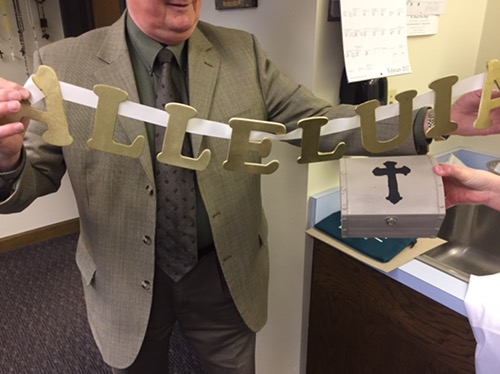
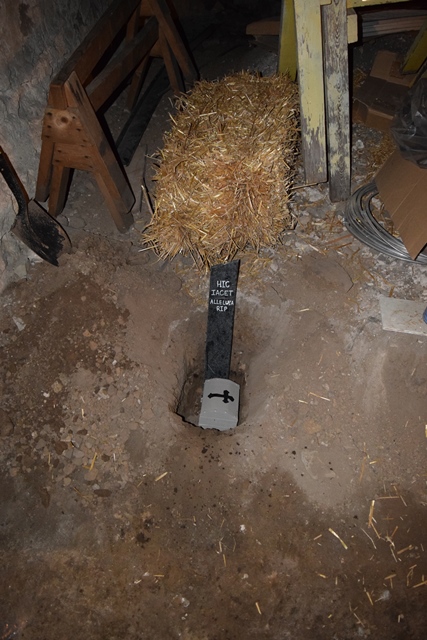
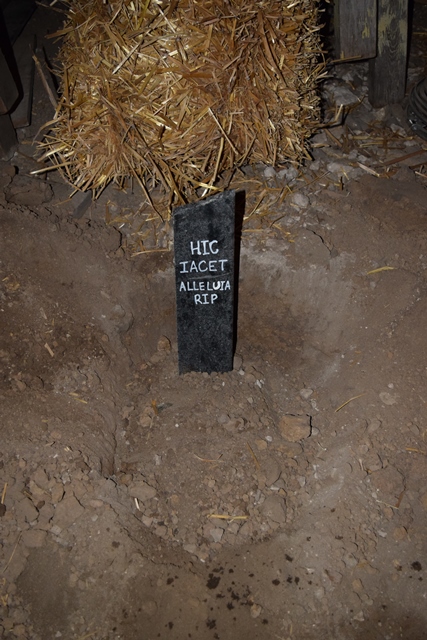
The other day I posted about burying the Alleluia on Septuagesima Sunday.  As Pre-Lent (aka Fore-Lent) begins, in the traditional Roman Rite we sing the Alleluia for the last time at 1st Vespers of Septuagesima.  There was a custom of yore of burying the “Alleluia” as if to entomb it until the Sunday of the Resurrection, Easter.

Our Alleluia and its coffin was made by a great family in the parish.

FOLLOW UP PHOTOS - Septuagesima: Burying the Alleluia for Pre-Lent

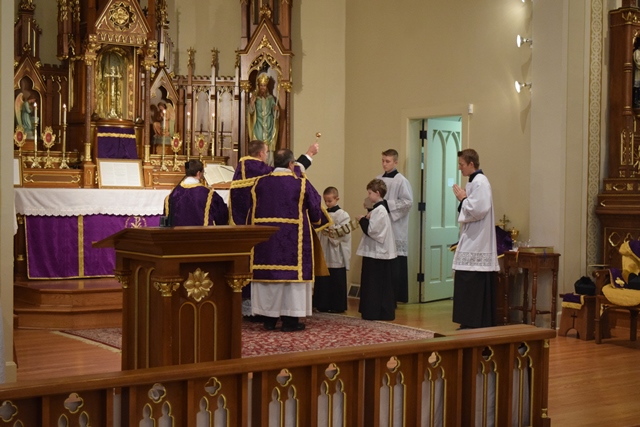
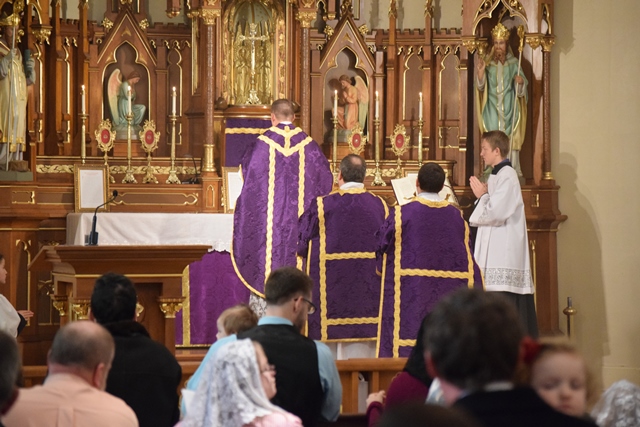
At the time of the Asperges, it got splashed with a little holy water.

17_02_12_Sept_Alleluia_01

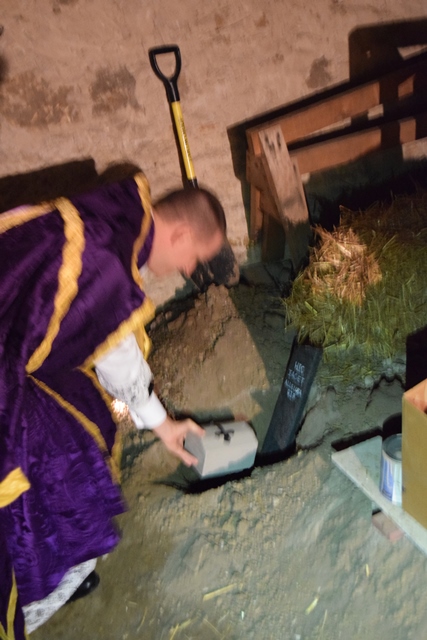
FOLLOW UP PHOTOS - Septuagesima: Burying the Alleluia for Pre-LentOff we go… outside… into a side door… down into the undercroft or “crypt” which has a dirt floor.

17_02_12_Sept_Alleluia_01b

Father puts Alleluia into its not-so-final resting place.

17_02_12_Sept_Alleluia_02 17_02_12_Sept_Alleluia_03 17_02_12_Sept_Alleluia_04

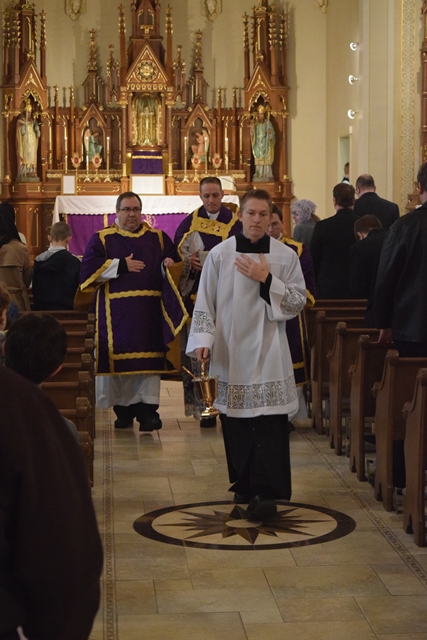
Back into church for Mass.  It happened to be the first time our celebrant, who is the Vocations Director of the diocese for the Extraordinary Ordinary.

17_02_12_Sept_Alleluia_05

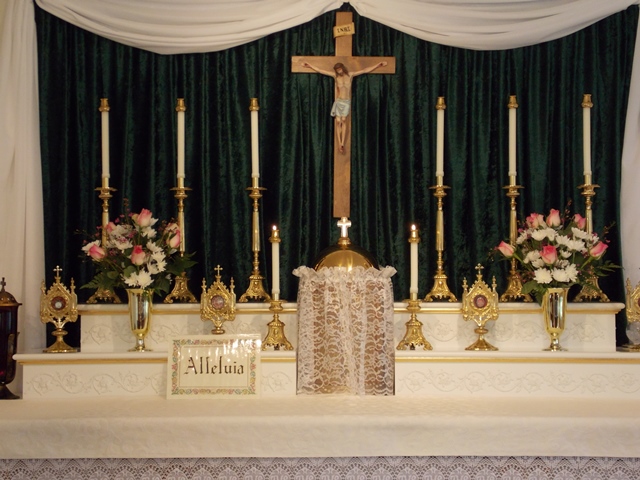
So… the Alleluia is buried for Pre-Lent, Lent, Passiontide and the Sacred Triduum.

UPDATE 14 Feb:

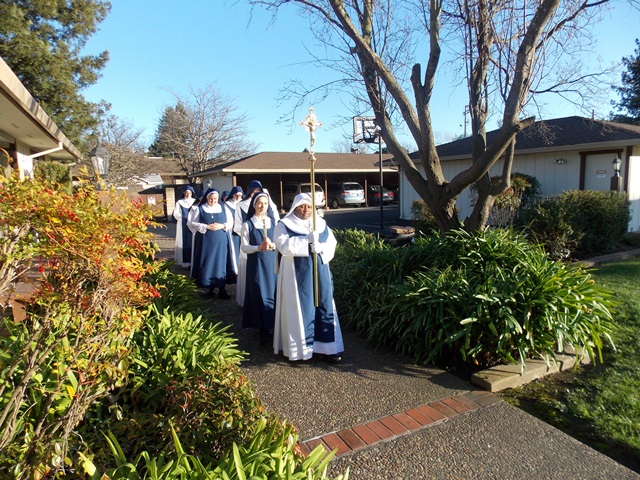
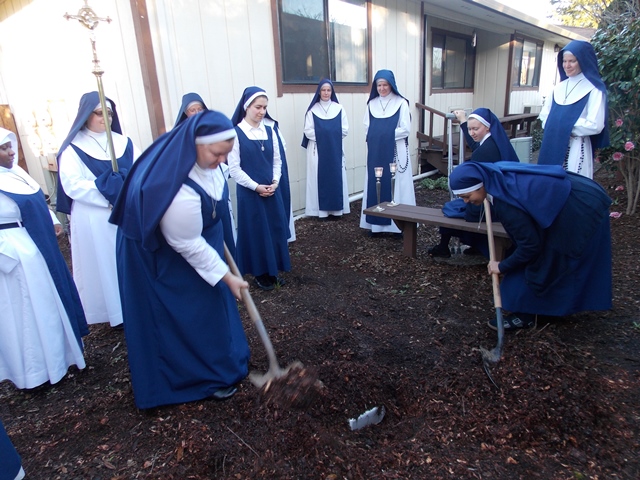
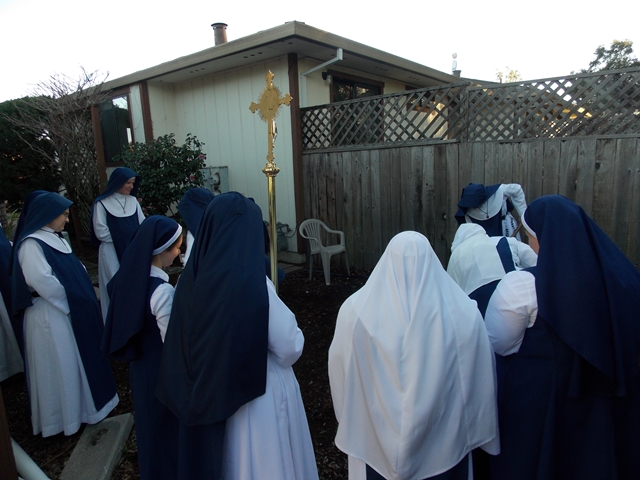
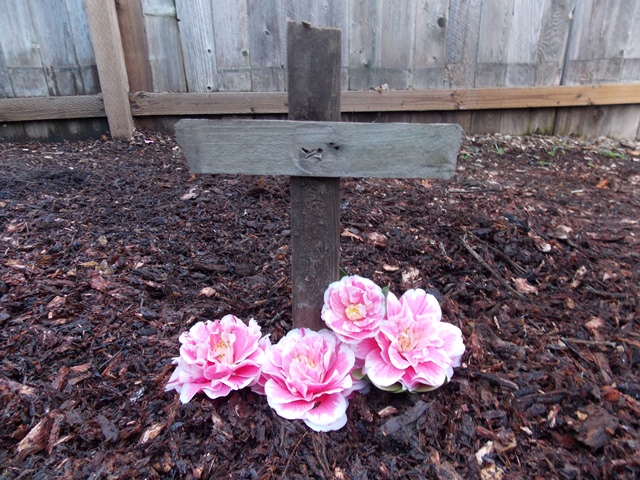
I received some photos from the wonderful Marian Sisters of Santa Rosa.

DSCN4589

DSCN4594

DSCN4612

DSCN4614

DSCN4617

Posted in ¡Hagan lío!, Just Too Cool, Liturgy Science Theatre 3000 |
18 Comments

Good books for Lent

In another entry, the book The Heresy of Formlessness by Martin Mosebach came up.  I warmly recommend it.  I mentioned that book together with some others back in December.

Good books for Lent

US HERE – UK HERE

Some other books I’ve recently mentioned, in case you are looking for good reading material.

Good books for Lent

US HERE – UK HERE

Good books for Lent

US HERE – UK HERE

Good books for Lent

US HERE – UK HERE

Hey, Fathers!


Good books for Lent

US HERE – UK HERE

Are you thinking about Lent?

Try…

Good books for Lent

US HERE – UK HERE

Fathers and … Fathers!

Good books for Lent

US HERE – UK HERE

Good books for Lent

US HERE – UK HERE

Good books for Lent

US HERE – UK HERE

Everything by Vonier is great, by the way.

Posted in The Campus Telephone Pole | Tagged
15 Comments

More on the “mutual enrichment” theme: West meets East Edition

More about “mutual enrichment” comes from Catholic World Report.

More on the "mutual enrichment" theme: West meets East EditionFirst there was a piece Fr. Peter Stravinskas, who made suggestions about how the older, traditional form of Mass should be altered.  HERE I think he was wrong in the very notion of adaptations… now, at least. We need a long period of stability before the organic development of worship can take place in a healthy way. We need at least a generation, a life time, for the Usus Antiquior to become normal again.  Fr. Stravinskas has made some great contributions over the years (e.g., he was a staunch ally in the trenches during the first “new translation” war… a second is looming – TWI & TWII?), but I think he put his foot wrong in this topic. Let’s move on.

Now at Catholic World Report we see a piece by Dr. Adam A. J. DeVille, a prof at the University of Saint Francis in Fort Wayne, IN. He offers Eastern Catholic liturgical rites as a source of mutual enrichment.  NB: DeVille isn’t talking about Eastern enrichment of the traditional Roman Rite specifically.  His is a more general East meets West presentation, what we Latins can learn from the East in the midst of our manifold liturgical woes.

DeVille hits the nail squarely several times.  As a matter of fact, he makes many of the points that I have been making for years.  For example, concerning the use of Scripture at Mass, the three year v. one year cycle, DeVille stresses that liturgy isn’t pedagogy and that the one year cycle, with its repetition (an important point for DeVille) ensures that people will remember the pericopes.   Right!  Back in 1993 I did an interview with Augustine Card. Mayer (founder of Sant’Anselmo, Prefect of the CDW, 1st President of the Pontifical Commission “Ecclesia Dei”) for the journal Sacred Music.  Mayer said: 

CARDINAL MAYER:
I would say to a certain extent. Generally liturgy grows through the life
of the Church which is especially her prayer life. Now they sit down and
write it. First, I said it was very positive that we have this new richness
of scripture readings. On the other hand, I think nevertheless, one should
also say that we have done a bit too much. It somewhat surpasses the priest
and the faithful, especially some of the readings of the Old Testament.
Yes, in the old order of Mass the readings were restricted, but this also
guaranteed that certain readings would be heard, understood, and
remembered
.

FR. ZUHLSDORF:
And these readings were tied to the sacred music for the Mass. The
antiphons and chants were tied to the readings.

CARDINAL MAYER:
Yes. Yet, it seems to me that in the selection of the pericopes, there was
an exegetical approach rather than a liturgical approach in the choices
made. Liturgy is always a serving of and adoration of God. We must adore
God. The exegetical point of view can be different. The Novus Ordo has a
strongly didactic element. We have to admit that the liturgy has also this
purpose, but to put it first is wrong
. First, is the cultic, understood
correctly of course. We have to concede that the didactic intention often
dominates now, no? But the first important aspect remains adoration,
latria
.

More on the "mutual enrichment" theme: West meets East EditionRepetition is the essence of liturgy.

DeVille describes the attitude of many liturgists as “condescending” towards lay people, or anyone who doesn’t have a degree.  This was a constant problem in the first translation war.  It continues today.  How true is his rhetorical question: “Have you… ever seriously consulted the people God about liturgical reform? Or was it imposed from the top down by a papal fiat beholden to a commission of ideologues?”  Bingo.

I read with great relish his devastating comment about “noble simplicity”.  Perpend:

The first kataphatic or positive way [NB: I am constantly banging on about the apophatic dimension of the traditional Roman Rite, so the introduction of these categories is welcome indeed.] the East might enrich the West is by helping it answer anew the question: what is liturgy for? If a Western liturgist observes Eastern liturgy, he will not have to wait long for the answer: it is for the glorification of God in the most beautiful manner possible. In the East, the Divine Liturgy is called that for a reason: it is about worshipping God in the beauty of holiness.  [I must add that the point of participation in sacred liturgical worship is because, one day, we are all going to die and go before The Judge.  We go to Mass because we want to go to heaven.  More on that elsewhere.]

To learn from the elaborate, complex beauty of Byzantine liturgy, you must first stop believing all the fantasies foisted on people in the 1960s, when it was put about that the liturgies of Christian antiquity were supposedly pristine examples of  simplicity, accessibility, and transparency (a “community meal”) until they were cluttered up with “medieval accretions” that Vatican II had to remove. Read Catherine More on the "mutual enrichment" theme: West meets East EditionPickstock’s magisterial reversal (in After Writing: On the Liturgical Consummation of Philosophy) of this romantic guff.   [Pickstock, while good, is not Mosebach, who is wonderful.  You MUST read The Heresy of Formlessness.]

In this spirit, stop assuming that young people today want “simple” liturgy using “relevant” or “modern” music patterned on concerts or Protestant mega-churches. They don’t. For almost a decade now, I have been sending hundreds of students a year to Byzantine liturgy as part of a class assignment. Every single time they come back staggered by what they see. Time and time again they confess, almost in a stammer, “these people are serious about worshipping God!”

[…]

Hatred of repetition is invariably justified by self-congratulatory talk about “noble simplicity.” It is neither. “Noble simplicity” is just a sanctimonious display of bourgeois iconoclasm, with its fetishes for “cool, clean lines” and “decorative sparseness.”

Do I hear an “Amen!”?

How about this one:

Abandon the mania for fake jobs: stop the scandal of a dozen lay people traipsing up to the front to hand out the Eucharist to a few dozen parishioners like biscuits at a parish tea.

Keep the “Amen” comin’, brothers and sisters!

And there’s this, about fasting and about feasting, including the really bad idea of transferring important feasts to Sundays:

[D]emand more of people before the Eucharist by restoring the ancient requirement of fasting from midnight, [See my posts on that and the POLL on the sidebar!] as the East still does. In fact, restore more serious fasting throughout the year. Stop assuming people can’t fast today or don’t need to. Many of us spend too much of our time sitting in front of screens—not hauling coal out of the ground, or thousand-pound nets of fish out of the sea. A little fasting for us with our bloated existence is eminently suitable.

The other side of fasting, of course, is feasting. Stop treating feasts like playthings to be yanked around—Epiphany is January 6th. Not 5th or 9th or 3rd. January sixth. Ascension is forty (40) days after Pascha—not 43 or whatever Fr. Spadaro’s new math would have us believe.  [heh]

He goes on to talk about the restoration of Octaves.  Do I hear an “Amen!”?

DeVille also touches on the disdain that Easterners, especially the Orthodox, experience when they see what we dopey Latins are doing to our churches and worship.  The horror! The horror!

Toward the end of his excellent offering – and these are hardly exhaustive of the good points he makes – we have to remember that our liturgical live costs money.  We need to sacrifice to build beautiful churches, make beautiful vestments, foster beautiful music.  On that note, please donate to the TMSM (501(c)(3))!

Lastly, I will expand on a superb suggestion: restoration of Communion rails.

DeVille takes the restoration of Communion rails a little farther, proposing even rood screens (the Western parallel of the Eastern iconostasis).  He states clearly: “These need not necessarily be Byzantine-style icons for there are plenty of beautiful Western liturgical artistic styles. But there is nothing preventing the West from fully adopting Byzantine imagery.”

True.  Nothing prevents Westerners, Latins, Romans, from using also Byzantine art and imagery.

However, I say “Let Romans be Romans”!

At the top of his essay, DeVille makes the important point that no Rite is pure and without outside influences.  The Roman Rite has strong strains of the Gallican uses, which were imported.  They were imported and absorbed and made Roman.  Something inherent in Romanitas is the ability to adopt and absorb. This is part of the Roman genius.  So, fine, we can also adopt and absorb Eastern elements.

More on the "mutual enrichment" theme: West meets East EditionThat said, when it comes to adopting Byzantine elements now… no, I have to resist that.  What I want is a full-blown and fair restoration of the Roman Rite in all its potential.  That means, of course, restoration of the older, traditional form of the Roman Rite.

Modern people are rightly all agog when they attend splendid and grand Eastern Divine Liturgy.  I am too.  It is grand and unapologetic and precisely what it ought to be.  That has its effect, especially on those who are only partially churched, are low-church protestants, or are your typical, Novus Ordo suburban Catholic parishioners.

The Roman Rite in all its possibility has nothing to apologize for either.  When it is executed with all the stops pulled out, it is grand and precisely what it ought to be.

Thus, while I adore the Eastern Divine Liturgy (as a matter of fact for a couple of summers I sang for Ukrainian Divine Liturgy every day), I want Romans to be Romans.  Let’s bring our liturgical standards all the way up to what they can be. Yes, we can learn from the attitude of the East.  We don’t have to become quasi-Eastern in order to have worthy sacred liturgical worship.  DeVille doesn’t say that we do.  He is careful to distance himself from that.  But there are those who do think that way.  No.  A hundred times, No.

Hence, I am all in favor of DeVille’s piece.  You must rush quickly over there to read it in its entirety.

Fr. Z kudos to Dr. DeVille.

Posted in "How To..." - Practical Notes, Both Lungs, Fr. Z KUDOS, Hard-Identity Catholicism, Liturgy Science Theatre 3000, Our Catholic Identity, The future and our choices | Tagged , , , ,
33 Comments

Where were you 4 years ago?

Where were you four years ago.  This is the fourth anniversary of Pope Benedict’s announcement that he would abdicate.

My blog that day HERE

You might also remember that on 11 February 2013 lightning struck St. Peter’s Basilica.

The photo from Agence France-Presse:

Where were you 4 years ago?

Posted in Benedict XVI | Tagged ,
43 Comments

ASK FATHER: Mass texts for Pope Benedict

benedict_xvi_emeritusFrom a priest…

QUAERITUR:

While I mourn the resignation of Pope Benedict I also mourn the fact that there is no particular Mass text with which I can pray for his health. If there were to be a Mass for a retired pope, what might that look like?

Good question.

I’ll confine myself to the older, traditional Roman Rite.

I think you could during a Votive Mass simply add the orations Pro Papa.  I say this because they are virtually identical with the prayers Pro Episcopo, with the exception that in the latter you also name the bishop’s church.  Benedict remains a bishop, after all, and his church was The Church.  Also, were you to say Mass for him on the anniversary of his episcopal consecration (28 May), you could use – mutatis mutandis – the Mass In anniversario Episcopi.

Perhaps others have solutions.

Posted in Benedict XVI | Tagged
3 Comments

WDTPRS – Septuagesima Sunday: “What am I getting myself into?!?”

WDTPRS - Septuagesima Sunday: "What am I getting myself into?!?"In the traditional Roman calendar this Sunday is called Septuagesima, Latin for the “Seventieth” day before Easter.  Already!  It is quite early this year. The Roman Station today is St. Lawrence outside the walls.

This number, 70, is more symbolic than arithmetical. The Sundays which follow are Sexagesima (“sixtieth”) and Quinquagesima (“fiftieth”) before Ash Wednesday brings in Lent, called in Latin Quadragesima, “Fortieth”.  One of our frequent commentators here enriched my view of the numerical adjectives:

Comment:
A fairly literal interpretation of the terms Septuagesima, Sexagesima, and Quinquagesima:

• Septuagesima Sunday is the 63rd day before Easter and thus falls in the 7th (septimus) decade or 10-day period consisting of the 61st to 70th days before Easter;
• Sexagesima Sunday is the 56th day before Easter and falls in the 6th (sextus) decade consisting of the 51st to 60th days before Easter; and
• Quinquagesima Sunday is the 49th day before Easter and falls in the 5th (quintus) decade consisting of the 41st to 50th days before Easter.

These pre-Lenten Sundays prepare us for the discipline of Lent, which once was far stricter.

Septuagesima gives us a more solemn attitude for Holy Mass.

Purple is worn on Sunday rather than the green of the time after Epiphany.  These Sundays have Roman stations.   The station today is St. Lawrence outside the walls.  St. Gregory the Great preached a fiery sermon here, which we have, and which is read in part for Matins in the traditional Office.  The traditional Office also presents three figures over the three pre-Lent Sundays, all foreshadowing Christ: Adam, Noah and Abraham.

When we want to follow what Holy Church is giving us in our sacred liturgical worship we should remember that Mass is only part of the picture.  We also have the Office, the “liturgy of the hours”.  They mesh together and reinforce and complete each other.  PLEASE don’t say “the liturgy” when you mean “the Mass”.  Say “Mass”.

Alleluia is sung for the last time at First Vespers of Septuagesima and is then excluded until Holy Saturday.  There was once a tradition of “burying” the Alleluia, with a depositio ceremony, like a little funeral.  A hymn of farewell was sung.  There was a procession with crosses, tapers, holy water, and a coffin containing a banner with Alleluia.  The coffin was sprinkled, incensed, and buried. In some places, such as Paris, a straw figure bearing an Alleluia of gold letters was burned in the churchyard.  Somehow that seems very French to me.  We will do this tomorrow at the parish where I am on Sundays, between the Asperges and the Solemn Mass to follow.

The prayers and readings for the Masses of these pre-Lenten Sundays were compiled by St. Gregory the Great (+604), Pope in a time of great turmoil and suffering.  Looking at Gregory’s time, with the massive migration of peoples, the war, the turmoil, you are reminded of our own times.

I like to imagine the Romans who were aspiring to be brought into the Church at Easter. They were brought out to St. Lawrence for today’s Mass, only to hear in the antiphons about suffering and crying out to God, and then to hear the reading in which Paul says that God wasn’t pleased with everyone who drank from the rock.  They might have exclaimed:  “What am I getting myself into?!?”   Indeed, I think that was the intended effect of the formulary. But, if throughout the Mass formulary there are grim messages, there are also signs of great hope.  God does hear the cry of those who invoke him.

In the Novus Ordo of Paul VI there is no more pre-Lent.

A terrible loss.

We are grateful that with Summorum Pontificum the pre-Lent Sundays have regained something of their ancient status.  May they through “mutual enrichment” correct the Novus Ordo.

The antiphons for the first part of Mass carry a theme of affliction, war, oppression.  We hear from 1 Corinthians on how Christians must strive on to the end of the race.  The Tract (which substitutes the Gradual and Alleluia) is the De profundis.

COLLECT:

Preces populi tui, quaesumus, Domine, clementer exaudi: ut, qui iuste pro peccatis nostris affligimur, pro tui nominis gloria misericorditer liberemur.

This prayer, as well as the other two we will see, is in versions of ancient sacramentaries, such as the Gregorian. Our wonderful Lewis & Short Dictionary says ex-audio means “listen to” in the sense of “harken, perceive clearly.” There is a greater urgency to exaudi (an imperative, or command form) than in the simple audi. Clementer is an adverb from clemens, meaning among other things “Mild in respect to the faults and failures of others, i.e. forbearing, indulgent, compassionate, merciful.” We are asking God the omnipotent Creator to listen to us little finite sinful creatures in a manner that is not only attentive but also patient and indulgent.

LITERAL TRANSLATION:

We beseech You, O Lord, graciously to hark to the prayers of Your people: so that we who are justly afflicted for our sins, may mercifully be freed for the glory of Your Name.

The first thing you who attend mainly the Novus Ordo will note, is the profoundly different tone of this prayer. The focus on our responsibility and guilt for our sins is alien to the style of the Ordinary Form.  Such direct references to our sinful state were systematically excised from the ancient prayers which survived, in some form, in the post-Conciliar Missale Romanum.   We need them back.

It is just as succinct as most ancient Roman prayers.  It has the classic structure.  But the focus on our responsibility and guilt for our sins is very alien to the style of the Novus Ordo.  For the most part, such direct references to our sinful state were systematically excised from the ancient prayers which survived in some form on the post-Conciliar Missale Romanum.

SECRET:

Muneribus nostris, quaesumus, Domine, precibusque susceptis: et caelestibus nos munda mysteriis, et clementer exaudi.

This ancient prayer was also in the Mass “Puer natus” for 1 January for the Octave of Christmas.  The first part of the prayer is an ablative absolute. In the second part there is a standard et…et construction.  The prayer is terse, elegant.

LITERAL TRANSLATION:

Our gifts and prayers having been received, we beseech You, O Lord: both cleanse us by these heavenly mysteries, and mercifully hark to us.

In the first prayer we acknowledge our sinfulness and beg God’s mercy.  In this prayer we show humble confidence that God is attending to our actions and we focus on the means by which we will be cleansed from the filth of our sins, namely, the Sacrifice of Jesus on the Cross, about to be renewed upon the altar.

As the Mass develops there is a shift in tone after the Gospel parable about the man hiring day-laborers.  An attitude of praise is introduced into the cries to God for help.

POSTCOMMUNIO (1962MR):

Fideles tui, Deus, per tua dona firmentur: ut éadem et percipiendo requirant, et quaerendo sine fine percipiant.

Glorious.

In an ancient variation we find per[pe]tua, turning “by means of your…” into “perpetual”. That éadem (neuter plural to go with dona, “gifts”) is the object of both of the subjunctive verbs which live in another et…et construction.  Requiro means “to seek or search for; to seek to know, … with the accessory idea of need, to ask for something needed; to need, want, lack, miss, be in want of, require (synonym: desidero)”.  Think of how it is used in Ps. 26(27),4: “One thing I have asked of the Lord, this will I seek after (unum petivi a Domino hoc requiram); that I may dwell in the house of the Lord all the days of my life.”  Quaero is another verb for “to seek”, as well as “to think over, meditate, aim at, plan a thing.”  The first meaning of the verb percipio is “to take wholly, to seize entirely” and then by extension “to perceive, feel and “to learn, know, conceive, comprehend, understand.”

Notice that these verbs all have a dimension of the search of the soul for something that must be grasped in the sense of being comprehended.

The New Roman Missal – 1945:
May Thy faithful, O God, be strengthened by Thy gifts,
that receiving them they may still desire them
and desiring them may constantly receive them.

The New Marian Missal – 1958:
May Thy faithful people, O God, be strengthened by Thy gifts;
that in receiving them, the may seek after them the more,
and in seeking them, they may receive them for ever.

Saint Andrew Bible Missal – 1962:
O Lord, may your faithful people be made strong by your gifts.
By receiving them may they desire them.
And by desiring them, may they always receive them.

Just to show you that we can steer this in another direction, let’s take those “seeking/graping/perceiving” verbs and emphasize the possible dimension of the eternal fascinating that the Beatific Vision will eventually produce.

A LITERAL ALTERNATIVE:

May Your faithful, O God, be strengthened by Your gifts: so that in grasping them they will need to seek after them and in the seeking they will know them without end.

In this life, the closest thing we have to the eternal contemplation of God is the moment of making a good Holy Communion.  At this moment of Mass, which so much concerned struggling in time of oppression, we strive to grasp our lot here in terms of our fallen nature, God’s plan, and our eternal reward.

I don’t believe this prayer, like Septuagesima Sunday, made it into the Novus Ordo, to our great impoverishment.

Posted in Liturgy Science Theatre 3000, WDTPRS | Tagged , ,
3 Comments

CQ CQ CQ – #HamRadio Saturday : On a Catholic note

A DX contact from a fellow Ham Radio Operator…*

Remember that one of our readers here has made his Echolink node available to us: 554286 – WB0YLE-R  (Thanks!) Remember: You must be licensed to use Echolink. BTW… there is a great iPhone app for Echolink. I can see quite a few hams using that method to connect.

I created a page for the List of YOUR callsigns.  HERE  Chime in or drop me a note if your call doesn’t appear in the list.

73!

CQ CQ CQ – #HamRadio Saturday : On a Catholic note

*.. / .- — / …- . .-. -.– / .– — .-. .-. .. . -.. / – …. .- – / .–. — .–. . / ..-. .-. .- -. -.-. .. … / .. … / -.. .-. .- –. –. .. -. –. / -.-. …. .-. .. … – … / -.-. …. ..- .-. -.-. …. / .. -. – — / …. . .-. . … -.– .-.-.- / .- — / .. / .– .-. — -. –. / — .-. / .– …. .- – ..–..

I respond:

… – / – . .-. . … .- / — ..-. / .- …- .. .-.. .- / .– .-. — – . —… / .-.. . – / -. — – …. .. -. –. / -.. .. … – ..- .-. -… / -.– — ..- .-.-.- / .-.. . – / -. — – …. .. -. –. / ..-. .-. .. –. …. – . -. / -.– — ..- .-.-.- / .- .-.. .-.. / – …. .. -. –. … / .- .-. . / .–. .- … … .. -. –. / .- .– .- -.– .-.-.- / –. — -.. / -. . …- . .-. / -.-. …. .- -. –. . … .-.-.- / .–. .- – .. . -. -.-. . / — -… – .- .. -. … / .- .-.. .-.. / – …. .. -. –. … .-.-.- / .– …. — . …- . .-. / …. .- … / –. — -.. / .-.. .- -.-. -.- … / -. — – …. .. -. –. .-.-.- / –. — -.. / .- .-.. — -. . / … ..- ..-. ..-. .. -.-. . … .-.-.- / -… -.-. -. ..- / — -… / –… …– / -.. . / .– —-. ..-. .-. –.. / –.- .-. –

Posted in Ham Radio | Tagged , , ,
7 Comments

WDTPRS – 6th Sunday of Ordinary Time: “kissing the porch”

kiss of peaceFor this Ordinary Form calendar Sunday, we have reached the 6th Sunday of Ordinary Time.  In the Extraordinary Form this Sunday is the purple-draped, pre-Lent Septuagesima Sunday (Alleluia Buh-bye!).

In the Ordinary Form we have a Collect based on a prayer in the 8th c. Liber sacramentorum Gellonensis (but not in the 1962 Missale Romanum) for the Sunday after Ascension Thursday… yes, Thursday, not Ascension Thursday Sunday.

Deus, qui te in rectis et sinceris manere pectoribus asseris,
da nobis tua gratia tales exsistere,
in quibus habitare digneris.

Pectus signifies a range of things from “the breast bone, chest”, “stomach” and therefore moral concepts like “courage” and other “feelings, dispositions”.  If we talk about a man having “chest”, he has a noble spirit and is brave, upright.  Pectus also refers to the “spirit, soul, mind, understanding.” In the ancient world, the heart was thought in some ways to be the seat also of the mind and understanding, not just of feelings and emotions. It is reasonable to translate this as “upright and pure hearts”. Exsisto “to step out, emerge” and also “spring forth, proceed, arise, become.” It also means “to be visible or manifest in any manner, to exist, to be.”

LITERAL RENDERING:

O God, who declared that You remain in upright and pure hearts, grant us to manifest ourselves to be, by Your grace, the sort of people in whom You deign to abide.

NEW CORRECTED ICEL (2011):

O God, who teach us that you abide in hearts that are just and true, grant that we may be so fashioned by your grace as to become a dwelling pleasing to you.

I think they did a back-flip here to avoid using the word “deign”.  We need more “deigning”.

OBSOLETE ICEL (1973):

God our Father, you have promised to remain for ever with those who do what is just and right. Help us to live in your presence.

No reference to “grace”, even though it is at the heart of the original.

In today’s Collect the distinction between “be” and “show forth” is tissue thin.

We must be on the outside what we are inside. 

Or rather, outwardly pious and practicing Christians must be sincerely and truly on the inside what we strive to show on the outside.

At baptism the Holy Spirit enters our lives in the manner of one coming to dwell in a temple.

WDTPRS - 6th Sunday of Ordinary Time: “kissing the porch”

Click!

With the indwelling of the Holy Spirit comes “habitual” or sanctifying grace and all His gifts and fruits by which we live both inwardly and outwardly in conformity with His presence. We manifest His presence outwardly when He is present within. There is nothing we do to merit this gift of His presence and yet, mysteriously, we still have a role to play in His deigning to dwell in our souls.

We can make choices about our lives. We can make use of the gifts and graces God gives, allow Him to make our hands strong enough to hold on to all He deigns to bequeath, and then cooperate in His bringing all good things to completion.

That phrase in today’s prayer, in the literal rendering, “the sort of people in whom you have deigned to dwell” forces us to reflect on our treatment of and conduct towards our neighbor, whom Christ commands us to love in accord with our love of God and self.

Paul writes in 2 Cor 13:11-13:

“Finally, brethren, farewell. Mend your ways, heed my appeal, agree with one another, live in peace, and the God of love and peace will be with you. Greet one another with a holy kiss. All the saints greet you. The grace of the Lord Jesus Christ and the love of God and the fellowship of the Holy Spirit be with you all.”

Of this verse St. John Chrysostom (+407) said,

“What is a holy kiss? It is one that not hypocritical, like the kiss of Judas.  The kiss is given in order to stimulate love and instill the right attitude in us toward each other.  When we return after an absence, we kiss each other, for our souls hasten to bond together.  But there is something else which might be said about this.  We are the temple of Christ, and when we kiss each other we are kissing the porch and the entrance of the temple.”  (Homilies on the Letters of Paul to the Corinthians 30.2).

When we reflect on our treatment of other as temples, we might think about our comportment when “kissing the porch” within temples, our churches.

In the Ordinary Form, the “sign of peace” before Communion is an option a priest can chose or not chose to invoke.  Given its proximity to Communion, and given that the Blessed Sacrament is upon the altar, avoid long, distracting, undignified “signs of peace”, which are the formal liturgical echo of the “holy kiss” of which Paul speaks.

In Roman liturgical practice, the “kiss of peace” has a dignity which we must strive to reclaim.  Otherwise, let’s not do it at all.

Posted in Liturgy Science Theatre 3000, WDTPRS | Tagged , ,
3 Comments

ASK FATHER: Father doesn’t make Sign of the Cross when giving absolution

16_04_23_Francis_confession_01

Priest making Sign of the Cross when giving absolution

From a reader…

QUAERITUR:

Whether an absolution is valid if the priest prays the form of the sacrament correctly, but does not make the sign of the cross.

This might just be scruples, but recently, I went to confession to a priest who had a physical limitation and could not use his right arm.

Also, he has difficulty using his left arm. (He may have had a stroke.) Unfortunately, there was no way to go behind the grill, so when it came time for the absolution, I noticed he just prayed the words, and did not move either of his arms. He is a very good and faithful priest, so this is not a critique of him. Now, after several days, I have not been able to find an answer to this question, or to even if he can use his left arm in absolution.

Lastly, as a regular reader and prayer for this blog, I want to add my name to the many others who are grateful to you for promoting confession regularly. Thank you, Father Z.

Thanks for that last part. You are welcome.

All sacraments have both matter and form.  The matter of the Sacrament of Penance is the telling, to the best of the penitent’s ability, all mortal sins with sorrow and a purpose of amendment.  The form of the sacrament are the essential words of absolution spoken by the priest (with faculties to absolve).

The confessor’s gesture of the sign of the Cross is not essential to valid absolution.

FATHERS! This question reveals how attentive your penitents are to what you say, or don’t say, do, or don’t do.  They have the right not to doubt or to be confused, especially in that important moment of exposure and encounter with Christ.   In this case the priest probably can’t use his arm.  No one is held to do that which he cannot do.  However, you able-bodied priests should make the sign of the Cross at the place indicated in the Form.

Also, FATHERS!, use the proper form of absolution, either in the newer, post-Conciliar form or the older, traditional form.  SAY IT PROPERLY.  Don’t insert stuff, leave things out, or ad lib.  Just shut up and absolve!

And GO TO CONFESSION yourselves, Fathers!

Posted in "How To..." - Practical Notes, ASK FATHER Question Box, GO TO CONFESSION, Liturgy Science Theatre 3000, Priests and Priesthood | Tagged , , ,
7 Comments