All around Rome there is buzz that soon we may be seeing something from the Holy See about the issue of Communion for divorced/remarried couples. Of course there would be, right? There is a synod on the family coming up.
This is a burning issue. The flames of the issue were recently fanned when a second rate official of a new vacant (lacking a bishop) diocese in Germany issued on his own a statement contrary to the Church’s laws that the d/remarried would be given Communion, no problemo. See canonist Ed Peters This is why we have Canon 428.
I am told by those who know things that next week we may see something in L’Osservatore Romano on the questions. I doubt it will be an official document. It’ll probably by just an essay, which is not uncommon for L’O. But it would not be nothing. [UPDATE: I should I have look at today’s – rather, tomorrow’s (23 Oct) – issue. Thanks to a reader who caught it and posted in the combox. Archbp. Müller of CDF, no less. HERE The next day’s issue of L’O is released the afternoon before, Rome time. I wrote this before that hour.]
Furthermore, before I left the states for the Italian pilgrimage and this subsequent time in Rome, I had been told by a bishop somewhere or other that one of the ideas that was being explored was something that then Card. Ratzinger had advanced back in the 1990’s. I was going to write about this back then, but … I got busy.
At Vatican Insider there was something about this back in 2012 HERE:
Benedict XVI himself admits that communion for divorced and remarried persons is an open question. He spoke about it in a meeting with the priests of the diocese of Aosta on July 25, 2005 and, more officially, in his speech to the Roman Rota, on 28 January 2006. Both times, the Pope urged them to “deepen” a particular case: the possible invalidity of a marriage in the Church celebrated without faith, for those who, having passed to a second union, have returned to the practice of Christian life and request communion.
More on that Ratzingerian essay from Magister: HERE
The idea is this: if putative marriages can be said to have been null on the basis of psychological immaturity or inability to make a commitment, etc. (a common rubber-stamp reason in Canon Law used by marriage tribunals far and wide for a long time – happily now abating), then perhaps we might be able to say the same thing about putative marriages in which the couple really had no concept of or knowledge of or intention of faith.
Think about this: we are in a post-Christian society in many places in the world. Many who were baptized, perhaps children of parents to baptized for the sake of appeasing gramma and who themselves had no idea of what the Catholic Faith is, who never had either the faith by which we believe (qua – the virtue) or faith in which we believe (quae – the content of doctrine, etc.), might not actually be married sacramentally even though they married another baptized Catholic and went through the form of the sacrament of matrimony without a single flaw in the form.
You could look at all the documents and say that, yes, they are married and there ought to be a sacrament binding them. But… really? Juridically yes. More deeply, theologically? And, if so, can that be determined with moral certitude?
This is an old argument. Like I said, Ratzinger tossed this out there back in the 1990’s.
However, as I was catching up on email and blogs after our anabasis in Italy, I noted this posted on an Italian blog I look at… back on 9 October.
E Ratzinger risponde: 5 obiezioni e 5 risposte dell’ex-Papa sulla pastorale dei divorziati risposati … And Ratzinger responds: 5 objections and 5 responses from the ex-Pope on the pastoral (approach to) the divorced and remarried.
Lo and behold, the blog post begins with the very issue I have been hearing rumblings about for several weeks.
The game’s afoot, friends.
I can’t imagine what would happen in tribunals far and wide were some “solution” like this adopted and somehow enshrined in a change to the Code of Canon Law.
I can picture sweat breaking out on the brows of canonists who are reading this. They will need to stock up on their midnight oil and Mystic Monk Coffee.
There are seriously theological thorns in the proposal that “incapacity” due to insufficient faith might be somehow identifiable in such a way that a tribunal (for there would still have to be a tribunal process – marriages have juridical effects and the proper process of discernment and judging has to be involved) could declare a sacrament never took place on the basis of the lack of faith of two proven baptized Catholics who, even though they were psychologically mature in every respect, were insufficiently mature from the point of view of faith (both fides qua and quae).
 From the
 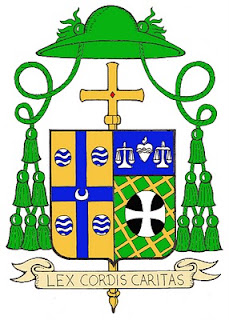 Bp. Paprocki seems to be a “hard identity” Catholic. We need “hard identity” Catholicism.
 People wearing a rainbow sash or who otherwise identify themselves as affiliated with the Rainbow Sash Movement will not be admitted into the cathedral and anyone who gets up to pray for same-sex marriage in the cathedral will be asked to leave,” Paprocki said.


 Over at Fishwrap (aka National Schismatic Reporter), the editor is already starting to wring his hands.