We have been cheated of the beauty of our Catholic worship in Latin, which is our common patrimony.
In fact, the swindle is far deeper. People have been denied the opportunity to learn Latin, which pretty much every more or less schooled person had as something so fundamental that it wasn’t even questioned.
At a certain point, those who wanted to subvert the Church (and society with it) had enough power to strike. They knew that Latin, which helped people learn how to think if nothing else, had to go. It has now been a long time since Latin was commonplace in schooling. After such a gap of time, it will be difficult for many to grasp these tightly woven ancient Latin Collects with their lovely rhythms, their clarity of thought, their force. After many centuries they still communicate the profound intellectual formation and the faith of their composers, our Christian family ancestors.
Alas, the treasury doors were slammed in people faces. And ears! By getting rid of Latin, they got rid of the sacred music! And since there was nothing written in the vernacular, they quickly glommed onto the lowest possible denominator of music – popular ditties, poorly played and without substance.
The erosion began and still goes on.
We have arrived at a point where hardly any of our bishops can pronounce Latin much less read it. What does that mean for our identity as Roman Catholics of the Latin Church? (Yes, I know that not all of you are Romans.) This may be one of the reasons why certain bishops are so hostile to Mass being celebrated in the Church’s official language of prayer: they don’t know Latin themselves and, therefore, they suppress it contra legem (that’s Latin, btw).
I digress.
The Collect for the 16th Ordinary Sunday, Novus Ordo, is not in any pre-Conciliar Missale Romanum. It has its antecedent in a 9th century manuscript. Enjoy the fine clausula (rhythmic ending).
Propitiare, Domine, famulis tuis, et clementer gratiae tuae super eos dona multiplica, ut, spe, fide et caritate ferventes, semper in mandatis tuis vigili custodia perseverent.
I like that cusTOdia perseVErent. If memory serves, I think that’s called cursus velox. It’s been a long time.
Famulus and feminine famula appear frequently in our Mass orations. Famulus is probably from Latin’s ancient cousin, the Oscan faama, “house.” A Latin famulus or famula was a household servant or hand-maid, slave or free. They were considered members of the larger family under the paterfamilias.
Custodia is “a watching, guard, care, protection” and has the military overtone of “guard, sentinel”. Vigil is “wakeful, watchful”, and, like custodia, can also be “a watchman, sentinel”. Liturgically, a “vigil” is the evening and night before a great feast day. In ancient times vigils were times of fasting and penance. Men who were to be knighted kept a night’s vigil. They were watchful against the attacks of the world, the flesh and the Devil. They fasted, prayed, and examined their consciences in order to be pure for the rites to follow. In the ancient Roman churches there were great vigils before ordinations when the whole people would wake during the night for prayers and readings.
LITERAL VERSION:
Look propitiously on Your servants, O Lord, and indulgently multiply upon them the gifts of Your grace so that, burning with faith, hope and charity, they may with vigilant watchfulness persevere always in your commands.
OBSOLETE ICEL (1973):
Lord, be merciful to your people. Fill us with your gifts and make us always eager to serve you in faith, hope, and love.
Notice any concept missing?
It’s like they were trying to make entire generations quit going to church.
CURRENT ICEL (2011):
Show favor, O Lord, to your servants and mercifully increase the gifts of your grace, that, made fervent in hope, faith and charity, they may be ever watchful in keeping your commands.
Scripture often gives us images of watches during the night. At the birth of the Lord shepherds “were keeping watch over their flock by night (vigilantes et custodientes vigilias noctis)” (Luke 2:8). Jesus said, “Watch (vigilate) therefore, for you do not know on what day your Lord is coming. But know this, that if the householder had known in what part of the night the thief was coming, he would have watched (vigilaret) and would not have let his house be broken into. Therefore you also must be ready; for the Son of man is coming at an hour you do not expect” (Matthew 24:42-44). Our Lord explains that servants should keep watch in order to open the door for the master of the house even if he returns in the dead of the night (cf Luke 12:37-39).
St Paul constantly urges Christians to be “watchful”. In 1 Peter 5:8 we read sobering, “Be sober, be watchful. Your adversary the Devil prowls around like a roaring lion, seeking someone to devour”.
The Enemy is seeking you!
In the ancient Roman countryside there were great estates (latifundia) having many buildings for family, household servants, the various workers, storage, etc. These dwellings were often self-sufficient, and were surrounded with walls against attacks by brigands. Even into Renaissance times, a great house in a city (domus) might be fortified with watch towers. The householder or the lord of the estate was the head or father of the larger “family”. Kind or cruel, the paterfamilias was judge, protector and provider to everyone under his care.
Simple ancient famuli had to work to produce good fruits in order to survive with a good quality of life and a safe place to belong. We sophisticated modern famuli, marked with the family name “Christian”, marked permanently with the family seal through baptism and confirmation, must produce fruits according to our vocations.
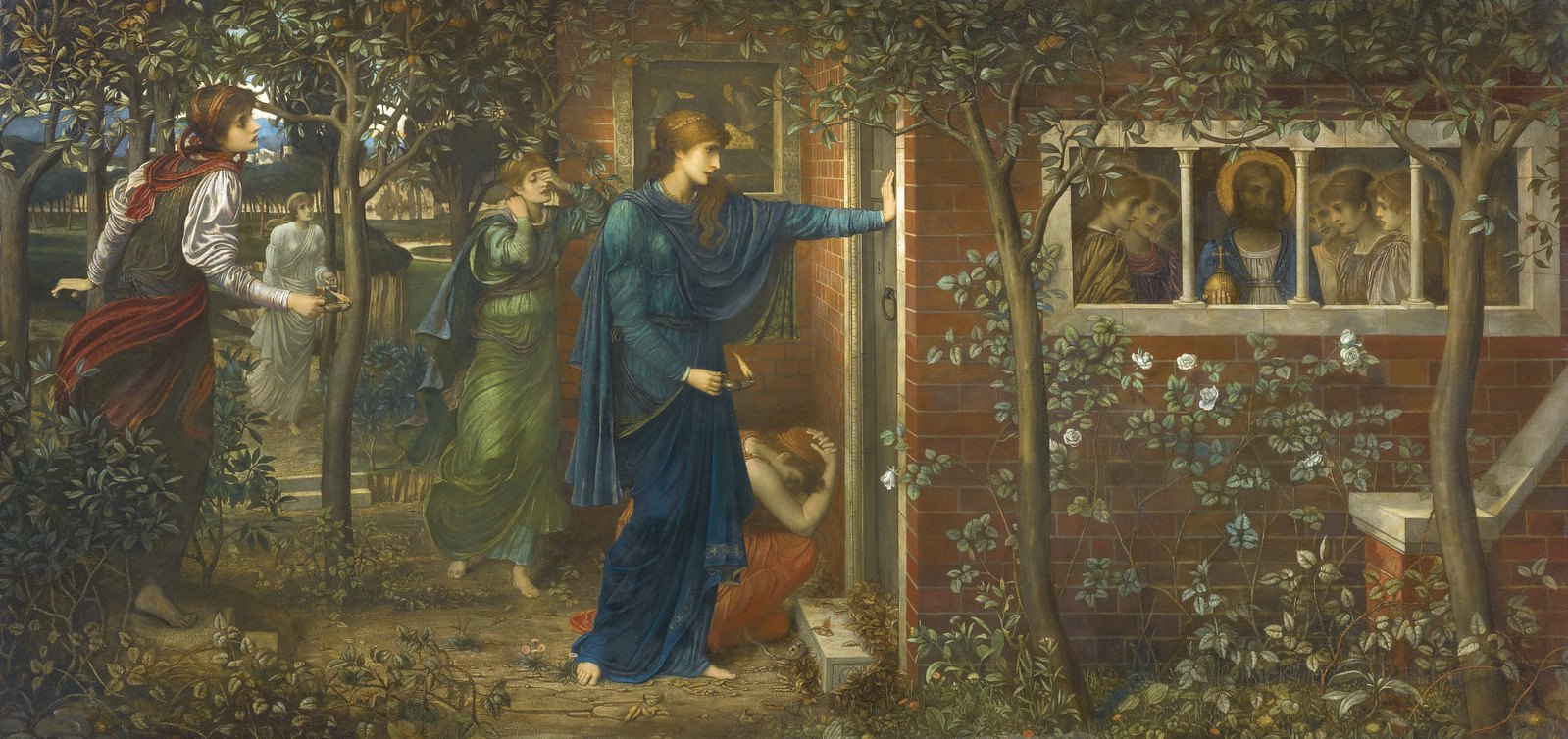
When life’s reckoning comes, will we be like the foolish virgins? They watched all night for the arrival of the Bridegroom, but they didn’t have enough oil for their lamps. They were locked out of the house in the dangerous night with no place to go, no work to do, no purpose to fulfill. They no longer belonged. They were… out.
“Vigilate… Watch therefore, for you know neither the day nor the hour” (Matthew 25:13).
When you hear the priest pronounce this Collect, beg our Lord – so gracious and patient with us even when we are lazy and sinful – to continue to give us the gifts of faith, hope and charity that we need for salvation.































I have been missing Latin since my youth. Last autumn I started to learn – with a teacher and some schoolbooks (l am 74). Based on my knowledge of other languages, I had always been able to understand much of it – but I wanted to see the structure, the connections – the grammar. I cannot describe how much did I win. Thank you, Father! (And you ought to hear how it is sung in our church… please visit us once.)
To paraphrase Christopher Walken on SNL, I need MORE puppet shows!
Yes, the overall loss of Latin is sad, but the loss in the Church is tragic. When I attended a Catholic high school in 1966 – 1970 we had four years of Latin and were reading the Latin classics in the original language, as well as some religious texts. How much Latin do current seminarians study?
Canon 249.
Institutionis sacerdotalis Ratione provideatur ut alumni non tantum accurate linguam patriam edoceantur, sed etiam linguam latinam bene calleant necnon congruam habeant cognitionem alienarum linguarum, quarum scientia ad eorum formationem aut ad ministerium pastorale exercendum necessaria vel utilis videatur.
The Charter of Priestly Formation is to provide that the students are not only taught their native language accurately, but are also [VERY] well versed in Latin, and have a suitable knowledge of other languages which would appear to be necessary or useful for their formation or for the exercise of their pastoral ministry.
In England we had an Education Act in 1944 offering every pupil a secondary education up to age 16 based on their aptitude, either a classical grammar (Latin implied) school, or a technical school, or a ‘secondary modern’. The County paid for my education at a Benedictine day school from 1949.
50 years later my wife was teaching Latin just to those Westminster (Allen Hall) seminarians who were aspiring to degrees from a Belgian Catholic University.
Arnold Toynbee’s monumental ‘A Study of History’ (1934-1961) assumes that the reader does not need translations of quotations in Latin, Greek, German, French,… .
Just got around to checking what’s new at “Let’s Sing with the Pope”: interesting choice for 2 July.
“they don’t know Latin themselves and, therefore, they suppress it contra legem”
A point I’d not considered though I am familiar with situations where someone’s behavior/refusal to act turned out to be due to ignorance. They pursue only what they are familiar with and fail to go beyond that.
I will be honest. The only Latin I know is from the Mass.
That is from years of reading the Latin on one side and the English on the other in my Missal.