I just had a nice long visit with an old friend, Fr Reginald Foster. You may know him as a famous Latinist. I’ve know him for just shy of 30 years, we figured out.
A glimpse of a spiffy book he showed me. You can tell me what it is.


I just had a nice long visit with an old friend, Fr Reginald Foster. You may know him as a famous Latinist. I’ve know him for just shy of 30 years, we figured out.
A glimpse of a spiffy book he showed me. You can tell me what it is.
Just before abdicating, Benedict XVI (the Pope of Christian Unity) approved a decree to make a change to the Novus Ordo or Ordinary Form Rite of Baptism:
In the decree published in “Notitiae”, 557-558, Ian.-Feb. 2013, 1-2, pagg. 54-56, “communitas christiana” is changed to “Ecclesia Dei” in paragraphs 41, 79, 111, 136, and 170 of the second “editio typica,” or normative, in Latin, of the 1973 rite for the baptism of children.
Paragraph 41 concerns properly speaking the “Ordo Baptismi pro pluribus parvulis” (the rite of baptism for multiple children).
Paragraph 79 the “Ordo Baptismi pro uno parvulo” (the rite for one child).
Paragraph 111 the “Ordo Baptismi pro magno numero parvulorum” (the rite for a large number of children).
Paragraph 136 the “Ordo Baptismi parvulorum absente sacerdote et diacono a catechistis adhibendus” (the rite celebrated by catechists in the absence of a priest or deacon).
Paragraph 170 the “Ordo deferendi ad Ecclesiam parvulum iam baptizatum” (the rite for bringing into the Church a child already baptized).
Here is the text of the decree:
CONGREGATIO DE CULTU DIVINO ET DISCIPLINA SACRAMENTORUM
Prot. N. 44/13/L
DECRETUM
Vitae et regni ianua, Baptismus est sacramentum fidei, quo homines incorporantur unicae Christi Ecclesiae, quae in Ecclesia catholica subsistit, a Successore Petri et Episcopis in eius communione gubernata.
Unde Congregationi de Cultu Divino et Disciplina Sacramentorum visum est variationem quandam in editionem typicam alteram Ordinis Baptismi Parvulorum inducere, eo ut in eodem ritu melius in lucem ponatur tradita doctrina de munere et officio Matris Ecclesiae in sacramentis celebrandis. Dicasterium proinde ea, quae sequuntur, disponit:
Ordo Baptismi Parvulorum in posterum sic recitet:
1. “41. Deinde celebrans prosequitur dicens:
N. …, N. (vel Filioli), magno gaudio Ecclesia Dei vos excipit. In cuius nomine ego signo vos signo crucis; et parentes vestri (patrinique) post me eodem signo Christi Salvatoris vos signabunt.
Et signat ununquemque parvulum in fronte, nihil dicens. Postea invitat parentes et, si opportunum videtur, patrinos, ut idem faciant”.2. “79. Deinde celebrans prosequitur dicens:
N. …, magno gaudio Ecclesia Dei te excipit. In cuius nomine ego signo te signo crucis; et parentes tui (patrinique vel et matrina) post me eodem signo Christi Salvatoris te signabunt.
Et signat parvulum in fronte, nihil dicens. Postea invitat parentes et, si opportunum videtur, patrinum (matrinam), ut idem faciant”.3. “111. Celebrans prosequitur dicens:
Filioli, magno gaudio Ecclesia Dei vos excipit. In cuius nomine ego signo vos signo crucis.
Producit signum crucis super omnes infantes simul, et ait:
Et vos, parentes (vel patrini), infantes in fronte signate signo Christi Salvatoris.
Tunc parentes (vel patrini) signant parvulos in fronte”.4. “136. Catechista prosequitur dicens:
Filioli, magno gaudio Ecclesia Dei vos excipit. In cuius nomine ego signo vos signo crucis.
Producit signum crucis super omnes infantes simul, et ait:
Et vos, parentes (vel patrini), infantes in fronte signate signo Christi Salvatoris.
Tunc parentes (vel patrini) signant parvulos in fronte”.5. “170. Deinde celebrans prosequitur dicens:
N. …, magno gaudio Ecclesia Dei, cum parentibus tuis gratias agens, te excipit testificaturque te iam ad Ecclesia fuisse receptum. In cuius nomine ego signo te signo Christi, qui tibi in Baptismate vitam largitus est et Ecclesiae suae te iam aggregavit. Et parentes tui (patrinusque vel et matrina) post me eodem signo crucis te signabunt.
Et signat infantem in fronte, nihil dicens; postea invitat parentes et, si opportune videtur, patrinum, ut idem faciant”.Ego infrascriptus Congregationis Praefectus, haec Summo Pontifici Benedicto XVI exposuit, qui, in audientia die 28 mensis ianuarii 2013 eidem concessa, textum praesentem editionis typicae alterae Ordinis Baptismi Parvulorum modo sopradicto posthac variari benigne statuit.
Quae statuta de Ordine Baptismi Parvulorum statim ab omnibus, ad quos spectant, serventur et inde a die 31 mensis martii 2013 plenum habeant vigorem.
Curae autem Conferentiarum Episcopalium committitur ut variationes, in Ordine Baptismi Parvulorum factae, in editiones eiusdem Ordinis lingua vernacula apparandas inducant.
Contrariis quibuslibet minime obstantibus.Ex aedibus Congregationis de Cultu Divino et Disciplina Sacramentorum, die 22 mense februarii 2013, in festo Cathedrae sancti Petri Apostoli, datum.
Antonius Card. Cañizares Llovera, Praefectus
Arturus Roche, Archiepiscopus a Secretis
From Life Site:
NYC mayor candidate: Middle schools should give 11-year-olds morning after pill
BY BEN JOHNSONNEW YORK CITY, August 21, 2013 (LifeSiteNews.com) – Christine Quinn, a Democratic candidate for mayor of New York City, [I’m looking at that name and indulging in some profiling…. “catholic”? ] has said she would be open to having middle schools distribute the morning after pill to girls as young as 11 without parental notification.
Quinn made the announcement on Tuesday while receiving the endorsement of Planned Parenthood. [That’s right, let’s keep big-business-abortion happy!]
The city council speaker admitted the idea “can make some people uncomfortable” [and it can probably make some children raped and pregnant as well, but… hey!… when the habit of contraception fails, there’s always Planned Parenthood!] according to the New York Post, but providing abortifacients to preteens in public schools is “a really important option we need to make accessible.”
“If the data shows us that that is what would be most helpful, that is what we’ll do,” she said. [for big-business-abortion?]
Thanks to a ruling from New York Judge Edward Korman, Plan B is available to all girls of reproductive age without a prescription. However, Quinn would have taxpayers foot the bill. [I think she should at least offer to pay for it herself, if she believes in it so strongly. Wait… why can’t big-business-abortion pay for it?]
Under state law, schools do not need to obtain parental consent to dispense the drugs.
Contraception is already available in a number of high school “health centers,” located mostly in poor and minority neighborhoods.
New York City schools distributed 12,721 doses of the morning after pill to students last year, according to documents obtained through a Freedom of Information Act request.
The schools administered another 2,117 shots of the long-acting contraceptive Depo-Provera. Students also received hormone injections, or were implanted with the Nuva Ring or IUDs, in addition to receiving 10,462 packets of birth control. [What could possibly go wrong?]
The 40 school “health centers” have now increased to more than 50.
Quinn and two of her Democratic challengers, Controller John Liu and former City Councilman Sal Albanese, would further extend the morning after pill distribution. [So… the Party of Death members: “Free (tax payer paid) stuff for ALL!”]
Republican John Catsimatidis said he would require parental consent before distributing such drugs. [So… the GOP guy: “Wait, maybe parents should be involved.” But… who pays for it again? Tax payers?]
The New York Daily News reports that Joe Lhota, another GOP hopeful, said furnishing emergency contraception to 11-year-olds was “ridiculous.” [Do I hear an “Amen!”?]
[…]
At Harvesting the Fruit of Vatican II Louie Verrecchio posted a provocative piece about Ralph Martin’s recent article about the Church’s institutional collapse since Vatican II.
Here is a taste, and you can read the rest there. There is some food for thought here.
Dr. Ralph Martin’s recent article in the theological journal Nova et Vetera, The Post-Christendom Sacramental Crisis: The Wisdom of Thomas Aquinas, has garnered considerable attention for its relatively sober assessment of the current condition of the Catholic Church.
“There is something like an institutional collapse going on, evidenced by the vast numbers of schools closing, parishes merging, clustering and closing and the multiple assignments that many young priests now are asked to manage. Besides the institutional collapse, there is evidence of a widespread repudiation of the teaching of Christ and the Church by vast numbers of Catholics,” Martin observed. [The natural law truth about marriage and the Church’s careful, accurate teaching about marriage is a case in point.]
The article, especially noteworthy for having been published in a journal that Archbishop Chaput called “an outstanding resource for the renewal of theology in line with the New Evangelization,” certainly deserves kudos. That said, the main reason it has been so well received among traditionalists is simply because Martin states what so many other “new evangelists” are determined to deny; namely, that the visible structures of the Catholic Church are rapidly deteriorating before our very eyes.
Martin makes a number of important observations, but even as he holds a veritable x-ray up to the light, revealing a nasty ecclesial tumor; ultimately, he leaves the disease undiagnosed.
The article begins with a thesis:
This article argues that, given the collapse of a societal consensus that is supportive of the Judaeo-Christian [sic] moral tradition, the Church is facing a sacramental crisis. [Therefore also liturgical.] The crisis consists in fewer and fewer baptized Catholics participating in the post-baptismal sacraments and fewer and fewer of the Catholics who do participate in further sacraments effectively realizing the fruits of these sacraments. [If they don’t go to confession, how could they? If they don’t participation in worship pleasing to God, how could they?] Part of the solution to this crisis is to consider carefully the wisdom of St. Thomas Aquinas on how to identify (and remove) obstacles to sacramental fruitfulness.
Martin goes on to cite statistics from an unnamed Midwestern diocese that reveal a problem that is far more fundamentally important: In just a ten year period (2000 to 2010), Catholic baptisms and marriages are down nearly 50%.So, while it is certainly true that “fewer baptized Catholics” are living a fully Catholic life, and addressing the matter of sacramental fruitfulness is a noble idea, we would do well to concern ourselves first and foremost with the underlying causes that have led to this time when so few are even approaching the sacraments in the first place.
Yes, the two problems of lower numbers and a lack of sacramental fruitfulness are interrelated, but while some may be tempted to get caught up in a chicken-and-egg debate, Martin comes frustratingly close to putting his finger on the actual disease that lies at the heart of the matter:
With the intellectual currents of the Enlightenment, the subsequent anti-religion rebellion of the French Revolution, and the profound intellectual rejection of the Christian worldview symbolized by Marx, Nietzsche, and Freud, forces were unleashed in Western culture that eventually led to not only a repudiation of the church-state relationships that had evolved over many centuries but a repudiation of religion itself as a legitimate shaper of culture.
What Martin leaves unaddressed is the degree to which these “intellectual currents” were unleashed, not only in Western culture at the hands of determined secularists, but in the very heart of Catholicism via the Second Vatican Council at the hands of determined churchmen.Archliberal Cardinal Leo Jozef Suenens hailed the Council, and with no little accuracy, as “1789 in the Church” for a reason:
[…]
There’s more.
I will repeat what I have assert many times here.
No true and lasting renewal of the Church can take place until we revitalize our sacred liturgical worship of God. The virtue of religion requires this first and foremost. No other initiative we take in any sphere of the Church’s life will undergo a sound and lasting renewal without also a revitalization of our worship of God.
Reason #4 for Summorum Pontificum.
By complete coincidence I think it is social media day here at The Friendly Confines!


Alas the EAMUS CATULI sign didn’t show up very well.
UPDATE:
Full moon rising!


UPDATE:
Cubs imploded, right on schedule.
Then off to Chinese on the South Side… the incredible Lao Sze Chuan. Best Chinese I’ve had … just about anywhere.
Cabbage and hot oil.

Lamb and cumin.

Eggplant in garlic sauce.

“Tony’s Chicken”… 3 kinds of pepper.

These are unreal. Shrimp fried with a coating of orange and mayonnaise. Odd sounding, but try one and you can’t stop eating them


From The Catholic Herald , the UK’s best Catholic weekly, comes this great news about the Nashville Dominicans:
American Dominican Sisters move to Scotland
By MADELEINE TEAHANOne of the most flourishing religious congregations in America is to establish itself in a medieval convent in northern Scotland.
Four Dominican Sisters of St Cecilia from Nashville, Tennessee, will be formally welcomed this weekend by the Diocese of Aberdeen during a celebratory Mass at Greyfriars Convent in Elgin. The four Sisters, popularly known as “Nashville Dominicans”, will reside at the convent in Elgin, formerly home to the Sisters of Mercy who left in 2010.
[…]
They can expand because they have vocations.
They have vocations because they are faithful to the Church and their identity.
It’s not rocket science.
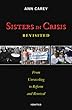
Click to buy Ann Carey's excellent book.
In the National Catholic Register the expert on what has happened to women religious in the last few decades, Ann Carey, comments on the LCWR.
LCWR 2013 Assembly: Little Evidence Yet of Any Reforms
[…]
Now the question is: How long is the CDF willing to have the apostolic delegates continue those conversations when the LCWR has not yet agreed to any of the reforms mandated in the doctrinal assessment?
That eight-page mandate is very explicit and readily available on the Internet, even though some LCWR members have claimed that they don’t know the details of the document. Among issues identified in the mandate are areas of “corporate dissent,” “serious theological, even doctrinal errors,” various “theological interpretations that risk distorting faith in Jesus and his loving Father,” and commentaries that “undermine the revealed doctrines of the Holy Trinity, the divinity of Christ, and the inspiration of Sacred Scripture.”
The mandate directs the bishop delegates to take no more than five years to direct a revision of the LCWR’s statutes; review and reform LCWR plans and programs; create LCWR programs to help member congregations receive deeper formation in Church doctrine; review and guide application of liturgical norms and texts; and review LCWR links with the affiliated organizations NETWORK and Resource Center for Religious Institutes.
Reportedly, several meetings and/or teleconferences between the bishop delegates and LCWR leaders took place over the past year, but no information has leaked out. From all indications, none of the mandated reforms have yet begun, even something as simple as taking the LCWR Systems Thinking Handbook off the LCWR website. The CDF mandate had directed that publication to be “withdrawn from circulation pending revision.”
Rather, this sentence in the Aug. 19 LCWR press release indicates that the sisters continue to look for a “third way” to avoid reform of the LCWR while still retaining status as a canonically erected superiors’ organization:
“Although we remain uncertain as to how our work with the bishop delegates will proceed, we maintain hope that continued conversations of this depth will lead to a resolution of this situation that maintains the integrity of LCWR and is healthy for the whole Church.”
A similar message was issued at the end of the LCWR 2012 assembly: “The [LCWR] officers will proceed with these discussions [with the apostolic delegates] as long as possible, but will reconsider if LCWR is forced to compromise the integrity of its mission.”
[…]
Read the rest there.
Here is some food for thought from the The Catholic Gift Shop via the blog Acts of the Apostasy:

I have to admit, there have been times when I have realized that my phone (aka The Precious) was not nearby and my inner Gollum got pretty nervous. There was the nightmare of losing my phone in an airport a few years ago on my way to Wyoming Catholic College. It all ended well, but… that wasn’t good.
I use my phone a lot, even to manage this blog when I’m out and about, or when I travel and don’t have a good internet connection for the laptop.
 Aware of my attachment, I will now occasionally leave The Precious switched off for while and even leave it at home when I make an errand dash.
As far as carrying around the Bible is concerned, I and other clerics recite the Roman Breviary or the Liturgy of the Hours.
Of course, I usually use my phone for that now… but I digress.
Can you imagine what sort of dysfunction young people will go through when TEOTWAWKI takes place, probably from a massive EMP?
Their whole lives are lived on screens, large and small. Those of us of a certain age didn’t grow up with all screens, and even we feel a bit uncomfortable without The Precious nearby. But young people? I’ll bet they truly struggle to adjust.
Just to track back to Wyoming Catholic College for a moment, the students there cannot have mobile phones and internet connections for their laptops. I loved the phrase on a shirt I saw on their display at a conference I attended:

If true, this is interesting.
From Jihad Watch.
Obama’s brother: Muslim Brotherhood leader?
Speaking yesterday on Bitna al-Kibir, a live TV show, Tahani al-Gebali, Vice President of the Supreme Constitutional Court in Egypt, said the time was nearing when all the conspiracies against Egypt would be exposed—conspiracies explaining why the Obama administration is so vehemently supportive of the Muslim Brotherhood, whose terrorism has, among other atrocities, caused the destruction of some 80 Christian churches in less than one week. [The count has climbed.]
Al-Gebali referred to “documents and proofs” which Egypt’s intelligence agencies possess and how “the time for them to come out into the open has come.” In the course of her discussion on how these documents record massive financial exchanges between international bodies and the Muslim Brotherhood, she said: “Obama’s brother is one of the architects of investment for the international organization of the Muslim Brotherhood.” [?]
Here the confused host stopped her, asking her to repeat what she just said, which she did, with complete confidence, adding “If the matter requires it, then we must inform our people”—apparently a reference to Obama’s support for the Brotherhood against the state of Egypt, which is causing the latter to call all bets off, that is, causing Egyptian officials to spill the beans as to the true nature of the relationship between the U.S., the Brotherhood, and Egypt.
She did not mention which of the U.S president’s brother’s she was referring to, but earlier it was revealed that Obama’s brother, Malik Obama, was running an African nonprofit closely linked to the Brotherhood as well as the genocidal terrorist of Sudan, Omar al-Bashir.
Hard to substantiate this. We’ll see if any of this is reported in the US MSM.
From The Guardian (which I take with a grain or two of salt when it comes to the Church):
Ex-pope Benedict says God told him to resign during ‘mystical experience’
Pope Francis’s predecessor breaks silence to contradict explanation he gave to cardinals when he stepped down
Tom Kington in RomeThe former pope Benedict has claimed that his resignation in February was prompted by God, who told him to do it during a “mystical experience“.
Breaking his silence for the first time since he became the first pope to step down in 600 years, the 86-year-old reportedly said: “God told me to” when asked what had pushed him to retire to a secluded residence in the Vatican gardens.
Benedict denied he had been visited by an apparition or had heard God’s voice, but said he had undergone a “mystical experience” during which God had inspired in him an “absolute desire” to dedicate his life to prayer rather than push on as pope.
The German ex-pontiff’s comments, which are said to have been made a few weeks ago, were reported by the Catholic news agency Zenit, which did not name the person Benedict had spoken to.
A senior Vatican source said the report was reliable. “The report seems credible. It accurately explains the spiritual process that brought Benedict to resign,” he said.
Benedict said his mystical experience had lasted months, building his desire to create a direct and exclusive relationship with God. Now, after witnessing the “charisma” of his successor, Pope Francis, Benedict said he understood to a greater extent how his stepping aside was the “will of God”.
Benedict’s reported remarks contrast with the explanation he gave to cardinals when he announced his resignation on 11 February. “My strengths, due to an advanced age, are no longer suited to an adequate exercise of the Petrine ministry,” he said then.
[…]
Zenit reported that Benedict has stuck to his plan to live a life of secluded prayer, receiving very few visitors at his house in the Vatican’s gardens, which enjoys views across Rome to the Apennine mountains beyond.
“During these meetings, the ex-pontiff does not comment, does not reveal secrets, does not make statements that could be understood as ‘the words of the other pope’, but is as reserved as he has always been,” wrote Zenit.
[…]

Coat of Arms by D Burkart









A Daily Prayer for Priests


They find you a pro-life agent in your area who commits to giving a portion of the fee to a pro-life group!

PLEASE subscribe via PayPal if it is useful. Zelle and Wise are better, but PayPal is convenient.
A monthly subscription donation means I have steady income I can plan on. I put you my list of benefactors for whom I pray and for whom I often say Holy Mass.
In view of the rapidly changing challenges I now face, I would like to add more $10/month subscribers. Will you please help?
For a one time donation...



Help Monks in Wyoming (coffee – UPDATED LINK) and Norcia (beer) and the wonderful "Soap Sisters" of Summit, NJ!


Please follow me on Twitter!










Visits tracked by Statcounter
since Sat., 25 Nov. 2006:

