GUEST POST: Gregorian Chant Will Save the World

Save The Liturgy – Save The Word has been a by word around this blog for a long time.

I saw this on the blog The Back Of The World:

Gregorian Chant Will Save the World

Click to buy!

A few weeks ago, I was sitting at the computer while my two-year-old son noisily played with some tupperware behind me. I clicked on a link to listen to a song from “Angels and Saints at Ephesus”, a new CD by the Benedictines of Mary, Queen of the Apostles (which, incidentally, has been tearing up the Classical music charts). The beautiful, a capella voices of the Sisters came softly over the computer speakers as they began a Gregorian chant in Latin.Suddenly, I noticed that the banging of tupperware behind me had stopped.

I turned to see my two-year-old, standing, staring at the computer, eyes wide open and mouth slightly agape. He took a few steps forward, and then said, breathlessly: “Dada…that’s Jesus music.”

I was stunned. How on earth did he know that? (Our parish certainly doesn’t do any chanting at the N.O. Mass we attend…). He crawled up into my lap, and we listened to the rest of the chant together. And then we listened to it again. And then again. And then again. My boy was totally captivated, totally transfixed, totally enraptured…each time the chant would come to an end, he would look up at me and plead “again, Dada?”

I bought the album, and now every night my son asks to listen to the “Jesus music” as he falls asleep…

***

Fyodor Dostoyevsky once said: “Beauty will save the world.”

Cardinal Ratzinger once said: “The encounter with beauty can become the wound of the arrow that strikes the soul and thus makes it see clearly, so that henceforth it has criteria, based on what it has experienced, and can now weigh the arguments correctly.”

Mother Theresa once said: “You have to learn from the Heart of Jesus. That is why Jesus said ‘learn of me’–not from books.”

And somehow, in ways I will never understand, my two-year-old boy is listening to the beat of the Sacred Heart. He is encountering beauty, and listening to it with childlike ears of faith. He’s learning lessons that only the gentle notes and chords of Heaven can teach him. And all I can do is sit back and treasure up all of these things in my heart…
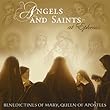
Ex ore infantium!

Fr Z Kudos to the 2 year old and his father!

If you are in Canada or the UK, copy and paste the CD title (above) into my amazon searchboxes at the bottom of the page.  Easy.  Otherwise, the UK link is HERE and Canada HERE.

A brief sampling!

Posted in "How To..." - Practical Notes, Just Too Cool, Liturgy Science Theatre 3000 | Tagged , , ,
10 Comments

My view for a while

I am in flight delay limbo, languishing in a lounge.

20130603-181620.jpg
UPDATE

STILL in limbo. But I think the flight may be en route!

20130603-200120.jpg

UPDATE:

Five Hours and endless excuses later…

20130603-223851.jpg

UPDATE:

I finally got home, after 1 a.m., hours after the schedule.

Posted in On the road, What Fr. Z is up to | Tagged
15 Comments

Of Latin and Sunday collections

I was alerted to an interesting point found in a parish bulletin.

Old Saint Mary’s in Cincinnati provides information about the weekly totals for the collections at Masses.  The totals for 26 May were interesting.  HERE

Given that the 11 o’clock is in German, the 9:15 is the more likely candidate to be the principle Mass than is the 12:30.  Still, there is quite a contrast in the collections at those Sunday Masses…. aren’t there Fathers?

And compare the attendance numbers.  The attendance is not exactly high for any of these Masses, but the per capita giving is markedly higher for one mass than for the others.

“But Father! But Father!”, some one is sure to interject. “That’s just one parish.  People will send you bulletins that show that the lowest collection of the day was for the ‘Latin Mass’.  So there!  You hate Vatican II!”

Maybe they will and maybe they won’t.

Posted in "How To..." - Practical Notes, Our Catholic Identity | Tagged , ,
51 Comments

QUAERITUR: Is enduring a migraine a substitute for Friday penance?

From a reader:

Would enduring a headache or migraine constitute a proper substitute for a Friday penance?

I’ve seen in others how intense the suffering is.

Enduring any illness can be penitential. Suffering can be offered up for the good of one’s soul (and for other intentions).

That said, it seems to me that sacrificial dimension involved in Friday penance requires not just acceptance of suffering, but also some act of giving up some “good”.  For example, for my Friday penance I may give up eating meat, listening to the radio, reading for pleasure, watching a baseball game.  My simply enduring something unpleasant is not a sacrifice.  You can offer up something unpleasant that it is your duty to perform, but that doesn’t make doing that thing a sacrifice.  Johnny, for example, is required by his parents to mow the lawn on Friday after school.  He does it, but he would rather be down at the sand lot playing baseball with his friends.  He offers it up.  On the other hand, he then sees that his neighbor 80-year old Mrs. McGillicuddy’s lawn really needs mowing.  He gives up going to the sandlot and mows her lawn.  There is an element of sacrifice in that gesture.

Provided that one doesn’t seriously endanger one’s health, perhaps offering up a headache or migraine without taking any painkiller to relieve the suffering could be along the lines of the penance we are asked to perform.  In that case it is the giving up of the good of the painkiller that makes enduring the suffering more sacrificial.

At the same time, migraines can be pretty bad.  In some cases giving up the good of the painkiller would be a serious gesture indeed.

You could take the painkiller on Friday and then not eat meat, not read that novel, not go to the sandlot….

In any event, it is good to see that someone is thinking about what Friday penance means and why we are obliged to it.  Sadly, when overly-optimistic Paul VI relaxed the obligations in the hope that people would on their own accord seek to do penance willingly in a deeper way, human nature trumped optimism and people stopped doing any penance at all.


Posted in "How To..." - Practical Notes, ASK FATHER Question Box, Our Catholic Identity | Tagged
24 Comments

External (TLM) Observance of Corpus Christi on Sunday… yes? no?

Today I had qualms… qualms I say… about the 2nd Sunday after Pentecost for the traditional celebration of the Roman Rite.   Why?  “External celebration”?

One of the long-time readers here posted in a comment (tossing some of my words back into my very teeth… pesky things, words…):

“In the Novus Ordo many people are celebrating Corpus Christi today”

As are many in TLM communities, in accordance with he 2013 FSSP Ordo provision as follows: [The FSSP doesn’t get to make provisions… but let that pass…]

Regarding the Feast of Corpus Christi when it falls on a weekday, it is still celebrated on that week day. In addition, “the external solemnity of the feast must be transferred in the United States and celebrated on the following Sunday, when this feast falls on a week day (Indult of Nov. 25, 1885). Hence, where on Sundays the principal Mass is usually a sung Mass, on the Sunday following this feast this sung Mass in churches and public oratories must, and in semi-public oratories may, be of the transferred external solemnity (S.R.C. 2974, IV; 4269, IX).” A procession of the Blessed Sacrament must follow the Mass.

Reading at face value, it might even appear a violation of this provision to celebrate the Mass of the 2nd Sunday after Pentecost instead of the external solemnity of Corpus Christi in a community with only a single Sung Mass on Sunday. Or is it?

OR. IS. IT?

I decided to consult with trusted sources.

The best answer I got back says something that contradicts what I had thought (though I will defend myself with the reminder that I wasn’t heavily invested in the issue).

I’ll edit the “subjunctive of CYA” (“it would seem”, etc.) from post a reply I received:

The principal Mass today, in the EF, in the United States, should be the external solemnity of Corpus Christi. [Here is the salient point… and I refer readers to Universae Ecclesiae.] The indult of 1885 was still in effect in 1962, and, mutatis mutandis with the Novus Ordo, remains in effect today. Therefore, it is a violation to omit the external solemnity and celebrate the Mass of the second Sunday after Pentecost.

Okay!

I think we need a discussion of this.

But I am ready to shift my position.


Posted in "How To..." - Practical Notes, ASK FATHER Question Box, Linking Back, Liturgy Science Theatre 3000, The Drill | Tagged ,
48 Comments

Just Too Cool… and too sweet

A reader alerted me to something at the blog Atlas Obscura.

Despite the religious divide of the lives and cemeteries, the gravestones of Colonel J.C.P.H. of Aeffderson and noblewoman J.W.C. Van Gorkum clasp hands across the divide.
In the 19th century, the Dutch lived with Pillarisation, a policy which seperated public establishments by religious and political affiliations. Yet Colonel Aeffderson was a Protestant, and Van Gorkum was a Catholic, were married for 40 years, a union that likely caused some scandal in the 19th century Netherlands.
The Protestant husband died first, and then Van Gorkum. They wanted to be buried alongside each other, but the policies of Pillarisation made that impossible. Instead two stone hands were added to the back of their gravestones, clasping across the wall that separates them.

Posted in Just Too Cool | Tagged , ,
25 Comments

BRICK BY BRICK: New TLM in a small town

Pope Benedict gave us a great gift in the provisions of Summorum Pontificum.

Get out there and USE THEM!

Now is not the time to fall back or hesitate or wring hands.

Organize! Stop whining! Make it happen!

From a reader:

The small town of Veneta, Oregon (population less than 5,000), which is 20 or so minutes from Eugene is home to an SSPX parish and St. Catherine of Siena Catholic church. Starting this Sunday, the TLM will be celebrated at St. Catherine’s every Sunday and on Holy Days. There is no TLM offered in the area and there are many large parishes in Eugene, but this priest has decided to take up this cross in order to allow a licit option (at least for the celebration of Mass) for those who want to practice and worship traditionally.

The New Evangelization.

Give that SSPX chapel some competition and bring those people back to greater manifest unity with the Roman Pontiff and the local bishop.

Fr Z Kudos to the priest.

Posted in "How To..." - Practical Notes, Brick by Brick, Fr. Z KUDOS, Just Too Cool, Liturgy Science Theatre 3000, New Evangelization, Our Catholic Identity, SUMMORUM PONTIFICUM, The future and our choices | Tagged , ,
20 Comments

QUAERITUR: Is Mass valid if the priest is in mortal sin?

From a reader:

Sometime ago, I was told by a priest that if the priest is in mortal sin, the mass (primarily Holy Communion) is still valid, his argument being that you wouldn’t know that he was in mortal sin. I was taught if a priest is in mortal sin, he should not celebrate mass, but if he were, would it be valid?

It is a great mystery and a sign of God’s unfathomable love that He entrusts the most sacred thing imaginable to the hands of the most unworthy sinners.

The older form of Mass in the Roman Rite often reminds the priest that he is a sinner.  The newer form…. not so much.  Perhaps this is part of our problem today.  But I digress….

The efficacy of our sacraments and rites do not depend on the holiness of the human priest.  Christ is the true actor in the liturgy.  The holiness and efficacy of the rites depend on Christ’s holiness and action.   The priest, by his ordination, acts in Christ’s person, but Christ is the only Holy One.

So, even when a sinful priest, even a very sinful priest, says Mass or absolves sins, the Mass is valid and the sins are forgiven.

Would it be better were the priest only to fulfill his priestly duties when in the state of grace?  Sure.  But this is real life, friend.  Priests have work to do and they can’t always get to confession.  As a matter of act, for lots of reasons it can be harder for priests to get to confession than it is for most lay people.

Should the priest, a frail human being like everyone else, refuse to say Mass for the congregation who come to church on schedule to fulfill their own obligations?  Of course not.  He should make as perfect an act of contrition as he can and say Mass on schedule.  He should then try to get to confession as soon as he can…. just like everyone else who is aware of mortal sins.

Priests have to face judgment too, you know.  Their judgment will be more exacting because of what is entrusted to them.

I want to add a warning:

Don’t attach too much to the person of the priest or to his own holiness.  Priests don’t transmit their holiness to you.  This was an error that St. Augustine dealt with during the Donatist controversy in the 4th and 5th centuries.  Priests are God’s instruments and the holiness is entirely HIS.

The bottom line: When a priest who has committed mortal sins says Mass, Mass is valid.

Posted in "How To..." - Practical Notes, ASK FATHER Question Box, Liturgy Science Theatre 3000, Priests and Priesthood | Tagged , ,
33 Comments

Pope Francis heard confessions in a parish before Mass

On several occasions Pope Francis has spoken about the importance of the Sacrament of Penance.

Remember: Our Lord Himself established the Sacrament of Penance.  This is the ordinary means by which JESUS desires you to ask for forgiveness of sins.

During Pope Francis first visit to one of the parishes in the outskirts of Rome, he heard confessions.  HERE

It is also possible and entirely licit, and even a very good idea, where more than one priest is available, to hear confessions during Mass.   We’ve been over this ground here on the blog many times, so I won’t repeat myself.  Check this HERE.

Fathers!  Hear confessions!

Bishops!  Teach about the sacrament and ask your priests to hear confessions!  Hear confessions yourselves!


Posted in "How To..." - Practical Notes, Francis, GO TO CONFESSION, Liturgy Science Theatre 3000, Our Catholic Identity | Tagged , , ,
9 Comments

QUAERITUR: Is a priest forbidden to be in the congregation?

Under another entry I posted an email from a priest about his experience of being in the congregation during the celebration of Mass according to the Novus Ordo, the Ordinary Form.  HERE

This raised, again in email, questions from priests about the propriety, or liceity, of priests participating at Mass in the congregation, in the manner of the lay faithful.

There is a paragraph in the Congregation for Divine Worship’s document Redemptionis Sacramentum which deals with this.

[128.] Holy Mass and other liturgical celebrations, which are acts of Christ and of the people of God hierarchically constituted, are ordered in such a way that the sacred ministers and the lay faithful manifestly take part in them each according to his own condition. It is preferable therefore that “Priests who are present at a Eucharistic Celebration, unless excused for a good reason, should as a rule exercise the office proper to their Order and thus take part as concelebrants, wearing the sacred vestments. Otherwise, they wear their proper choir dress or a surplice over a cassock.” It is not fitting, except in rare and exceptional cases and with reasonable cause, for them to participate at Mass, as regards to externals, in the manner of the lay faithful.

First, this says “not fitting” not “not licit”.

Second, a reasonable cause can be that a) the priest is not in the state of grace, b) he already said Mass that day c) he forgot his cassock, d) he got there late, e) etc.

So, as a general and important rule, priests should not be in the congregation unless they have a reasonable cause to be.

The flip side of the coin is that lay people should not be in the sanctuary unless they have a reasonable cause to be, a role to fulfill that requires their presence.

We must avoid the “laicization” of priests and the clericalization of the laity.

St. Augustine of Hippo taught that Christ speaks in every word of the psalms.  Sometimes Christ speaks at the Head, sometimes as the Body, sometimes as Head and Body together, Christus Totus.   This is a useful paradigm for understand our liturgical roles and also for the design of a church building.

The priest stands in persona Christi as the Head of the Body, the Church.  When the priest speaks on his own, Christ the Head is speaking.  The laity have their role as the Body.  When they respond, Christ the Body responds.  At times priest and people speak together.

The sanctuary is where the Head is found.  The nave is where the Body is found.   There is a meeting point where Communion is distributed and received.  The presence of a Communion rail helps to underscore this theological point: it brings special attention to that place where the Head and Body are in closest union.

But I digress….

In general, priests should not be in the congregation, particularly if they are in clerical clothing.  Sometimes it happens and, when it does, the world doesn’t crumble.

Posted in "How To..." - Practical Notes, ASK FATHER Question Box, Liturgy Science Theatre 3000, Mail from priests, Our Catholic Identity, Priests and Priesthood | Tagged , , , ,
32 Comments
























