Fr. Z’s Day Off

With the exception of a few great days in Boston, the three weeks or so have been less than optimal.

Isn’t it amazing how much smaller your world becomes when you are ill?  And how quickly?

Yesterday, finally feeling better after the breaking of a nasty fever (still don’t know what that was all about), I did some driving in the beautiful spring (finally) day and changed my view.

First, the day started well with the resumption of fountain activity in the southern “cloister”, below the Steam Pipe Trunk Distribution Venue.

20130508-230027.jpg

Yes, it’s sort of modern, but its nice, it’s our Blessed Mother, and the water babbles appropriately.

I then went to a new range – quite a hike but part of the plan – in order to kill some very dangerous paper.  First time in a while.  This was my first time out with my Springfield XD-S .45.

20130508-230038.jpg

My first five rounds at 15 feet.

20130508-230045.jpg

I need not hang my head in shame.  The one at 2 o’clock was the first.

This XD-S is on the compact side and is a bit harder to keep under control.   But even at 20”, rapidly firing and with a mag change, I was keeping within the C ring.  I wanted to test myself when I was still physically on the weak side from that mysterious crud I had, even a little shaky.  At first I was fine, but my unsteadiness became more apparent after a few mags in the .45 and then half a dozen with Glock 19, a .9mm.  But γνῶθι σεαυτόν, right?

After all the paper was dead, in hopeless tatters suitable only for recycling, I stopped at a parish in the region of the range and visited a priest friend, who did the civil.  Two things of note: the gigantic willow is in full spring curliness and  – alas I missed the pic – a spiffy male Cardinal landed in a nearby flowering crab apple tree, red against the white.

20130508-230100.jpg

Click to change your reading habits once and for all.

More driving, while enjoying an audiobook reading of The Surgeon’s Mate, by Patrick O’Brian (read by Simon Vance) and some of the Twins @ Red Sox Game.

I explored a “Rustic Road”.  I don’t know if other states in these USA designate them too, but in Wisconsin, I was delighted to discover these short scenic tracks.  People who think they have something pretty special in their area can submit them to the state for this designation.  A map is HERE.

20130508-230106.jpg

If only I could get a map to decent Chinese food in this state, I would be a happier man.

That said, having returned from my gasoline peregrination, I laid out appetizer and dessert. You may guess which is which.

20130508-230117.jpg

Then fresh fettucine and a tomato and basil concoction, brightened up with lemon zest and some juice, grated Parmigiano-Reggiano and olive oil.  Yes, pepper.

20130508-230123.jpg

A fine day, wrapped up by a skype chat with a friend in Rome at the break of his dawn.

Finally, for my friends in Minneapolis SWAT (whom I thought of as I slew one target after another), I can’t resist sharing this which I saw on Facebook. HERE

Ah yes!

Who among us has not been here?

Indeed, sometimes we have a tough day or a string of tough days.

Eventually things will brighten up.

Posted in Lighter fare, O'Brian Tags, What Fr. Z is up to | Tagged , ,
34 Comments

QUAERITUR: What to do with occult objects?

From a reader:

When you discover you have an occult or new age object in your house, do you burn it or do you douse it with Holy Water and throw it away? I know you are busy, but a response would be greatly appreciated.

Destroy them.

Destroy them.

Destroy them.

Then get Father to come to bless the house, going from room to room, with Holy Water.

I suggest always that Father use the older Rituale Romanum with the whole rite of exorcism of water and salt and then the blessing of a home.

It would be good for everyone in the house to make a good confession, because sacraments are more terrifying and painful for demons than sacramentals, which already open up a can of whoop-ass on them.

You can also keep Holy Water in your house and the exorcized bless salt, which you might distribute in rooms and even outside.

“But Father! But Father!”, some of you might be saying, with little quivers of doubt about your modernist, immanentist, fluffy catholic view, “You sound positively medieval!  We’ve outgrown all this nonsense! Demons?  Blessings?  Salt?  Give us a break!”

The demonic world is real and it is no joke.  You ignore them are your great peril.

The demonic modus operandi concerns itself with attachment to material things.  Their activity can be quite localized and entrenched.  These material beachheads can then lead to greater spiritual invasion.

Do not underestimate the Enemy, lest, you wind up rotting in Hell with them for eternity.

At the same time, in our Savior, the holy angels, the intercession of the saints, our Blessed Mother, Joseph, Terror of Demons, and the use of sacramentals and, especially, the sacraments of Penance and reception of the Eucharist, we have a magnificent and holy fortress.

Posted in "How To..." - Practical Notes, ASK FATHER Question Box, Liturgy Science Theatre 3000, Our Catholic Identity | Tagged , , ,
32 Comments

“feeeelings… wo wo wo feeeeeeeelings….”

It took them a few hours to get organized, but Fishwrap (aka National Schismatic Reporter), in its capacity of LCWR spin surrogate, has started to twist Pope Francis’s address to the UISG (HERE) into something that it is not.

Here is an example.

In my own quick translation of the meat of the Pope’s remarks, I commented that translation of the phrase (in Italian, but also in Latin) “sentire con la Chiesa… sentire cum ecclesia“, can be tricky to render into English.  In Italian, “sentire” has a stronger line of meaning in the senses and feeling, hearing, smelling, so forth.  But the phrase is not originally Italian.  It is Latin, sentire cum Ecclesia.  In Latin sentio means, yes, to discern by the senses, be sensible of”, like percipio, but it also has the “sense” sense of intellego: “to observe, notice” and “to judge, deem”.  For example, there is construction – exactly the construction we are interested in here – sentire cum aliquo, which means “to agree with one in opinion”. If you want to say, “I agree with you!” you can say “Tecum sentio!”, and you would be speaking exactly, like Plautus, Cicero, Quintillian, and writers of Latin through the ages.

If you have to cast your lot with one English word for sentire in the phrase sentire cum ecclesia, you would have to pick “think” or “agree”, and decidedly not feel.  That is not to say that emotions are excluded and this is all über-rationalist.   No.  But the governing concept is the mind, not emotions.  Emotions come along under the tutelage of the mind and will.

And so to the NSR piece where I read this HOWLER of a mistake, which conveniently fits the NSR’s and LCWR’s goal of twisting what the Pope said into something he did not say.  Read and be amazed:

The pope focused on three themes, telling the sister leaders to keep their lives centered on Christ, to think of authority in terms of service, and that they must hold a “feeling with the church [‘sentire’ con la Chiesa] that finds its filial expression in fidelity to the magisterium.”

Citing Pope Paul VI, Francis said, “It is an absurd dichotomy to think of living with Jesus but without the church, of following Jesus outside of the church, of loving Jesus without loving the church.”

Feel the responsibility that you have of caring for the formation of your institutes in sound church doctrine, in love of the church and in an ecclesial spirit,” the pope said.

Dominican Sr. Margaret Ormond told NCR after the pope’s talk that she thought he recognized the sisters “play a part in the church too, and there’s something to be learned from us.”

“I thought he inserted delicately the whole thing about feeling with the teachings of the church,” [Not. A. Clue.] said Ormond, the prioress of the Ohio-based Dominican Sisters of Peace and an elected regional representative to the sisters’ group from North America.

Ormond said she thought Francis’ use of the word “feel” regarding obedience to the church meant the pope “got his point in, but he wasn’t admonishing.”

Wasn’t admonishing?  That is exactly what he was doing!

The liberal nuns and their supporters are going to try to use this “feel” mistranslation thing to their advantage.

Keep this in mind.

The phrase “sentire cum Ecclesia” has its origins in Ignatian spirituality, with which we can assume Francis is familiar.  Many of the sisters whose institutes have Ignatian roots will get this, too.

Sentire cum Ecclesia is straight out of the Spiritual Exercises.

If you want a crash course in St. Ignatius’ own 18 Rules for “thinking” with the Church, check this out HERE or HERE.

Read the following.  In some translations it might be “Rules to have the true sentiment of the Church”.  My emphases:

  1. Always to be ready to obey with mind and heart, setting aside all judgement of one’s own, the true spouse of Jesus Christ, our holy mother, our infallible and orthodox mistress, the Catholic Church, whose authority is exercised over us by the hierarchy.
  2. To commend the confession of sins to a priest as it is practised in the Church; the reception of the Holy Eucharist once a year, or better still every week, or at least every month, with the necessary preparation.
  3. To commend to the faithful frequent and devout assistance at the holy sacrifice of the Mass, the ecclesiastical hymns, the divine office, and in general the prayers and devotions practised at stated times, whether in public in the churches or in private.
  4. To have a great esteem for the religious orders, and to give the preference to celibacy or virginity over the married state.
  5. To approve of the religious vows of chastity, poverty, perpetual obedience, as well as to the other works of perfection and supererogation. Let us remark in passing, that we must never engage by vow to take a state (such e.g. as marriage) that would be an impediment to one more perfect…
  6. To praise relics, the veneration and invocation of Saints: also the stations, and pious pilgrimages, indulgences, jubilees, the custom of lighting candles in the churches, and other such aids to piety and devotion.
  7. To praise the use of abstinence and fasts as those of Lent, of Ember Days, of Vigils, of Friday, Saturday, and of others undertaken out of pure devotion: also voluntary mortifications, which we call penances, not merely interior, but exterior also.
  8. To commend moreover the construction of churches, and ornaments; also images, to be venerated with the fullest right, for the sake of what they represent.
  9. To uphold especially all the precepts of the Church, and not censure them in any manner; but, on the contrary, to defend them promptly, with reasons drawn from all sources, against those who criticize them.
  10. To be eager to commend the decrees, mandates, traditions, rites and customs of the Fathers in the Faith or our superiors. As to their conduct; although there may not always be the uprightness of conduct that there ought to be, yet to attack or revile them in private or in public tends to scandal and disorder. Such attacks set the people against their princes and pastors; we must avoid such reproaches and never attack superiors before inferiors. The best course is to make private approach to those who have power to remedy the evil.
  11. To value most highly the sacred teaching, both the Positive and the Scholastic, as they are commonly called…
  12. It is a thing to be blamed and avoided to compare men who are living on the earth (however worthy of praise) with the Saints and Blessed, saying: This man is more learned than St. Augustine, etc…
  13. [This, everyone, is what the Pope was referring to…] That we may be altogether of the same mind and in conformity with the Church herself, if she shall have defined anything to be black which to our eyes appears to be white, we ought in like manner to pronounce it to be black. For we must undoubtedly believe, that the Spirit of our Lord Jesus Christ, and the Spirit of the Orthodox Church His Spouse, by which Spirit we are governed and directed to Salvation, is the same;…
  14. It must also be borne in mind, that although it be most true, that no one is saved but he that is predestinated, yet we must speak with circumspection concerning this matter, lest perchance, stressing too much the grace or predestination of God, we should seem to wish to shut out the force of free will and the merits of good works; or on the other hand, attributing to these latter more than belongs to them, we derogate meanwhile from the power of grace.
  15. For the like reason we should not speak on the subject of predestination frequently; if by chance we do so speak, we ought so to temper what we say as to give the people who hear no occasion of erring and saying, ‘If my salvation or damnation is already decreed, my good or evil actions are predetermined’; whence many are wont to neglect good works, and the means of salvation.
  16. It also happens not unfrequently, that from immoderate, preaching and praise of faith, without distinction or explanation added, the people seize a pretext for being lazy with regard to any good works, which precede faith, or follow it when it has been formed by the bond of charity.
  17. Not any more must we push to such a point when the preaching and inculcating of the grace of God, as that there may creep thence into the minds of the hearers the deadly error of denying our faculty of free will. We must speak of it as the glory of God requires… that we may not raise doubts as to liberty and the efficacy of good works.
  18. Although it is very praiseworthy and useful to serve God through the motive of pure charity, yet we must also recommend the fear of God; and not only filial fear, but servile fear, which is very useful and often even necessary to raise man from sin… Once risen from the state, and free from the affection of mortal sin, we may then speak of that filial fear which is truly worthy of God, and which gives and preserves the union of pure love.

Some will say that these are a little dates.  Okay, let’s stipulate.   But we cannot twist “sentire cum Ecclesia“, when spoken by a Pope who is a Jesuit into something that it is not!

Now you know what Francis really said.

Of course this is what the NSR heard:

YouTube thumbnailYouTube icon

Or if you prefer:

YouTube thumbnailYouTube icon


Posted in Francis, Liberals, Magisterium of Nuns, Our Catholic Identity, The Drill, Women Religious | Tagged , , , , ,
16 Comments

Innovative Reform of the Novus Ordo: Vigil of Ascension (2002MR)

In some places the Feast of the Ascension (which since the 4th century has fallen on a Thursday) has been transferred to next Sunday, thus making it “Ascension Thursday Sunday”.   I’ll rant about the transfer in another entry.

The 3rd edition of the Missale Romanum of 2002 now provides us with a Mass for the Vigil of Ascension, which wasn’t in previous editions of the Novus Ordo.

The prayers for the new Vigil of Ascension are not the same as those found in the pre-Conciliar Missale for the Vigil.

In case you don’t have the Latin texts, here are the antiphons for the Vigil. Ant. ad introitum: Regna terrae cantata Deo, psallite Domino, qui ascendit super caelum caeli; magnificentia et virtus eius in nubibus, alleluia. (Ps 67:33,35)  Ant. ad communionem: Christus, unam pro peccatis offerens hostiam, in sempiterum sedet in dextera Dei, alleluia. (Cf. Heb 10:12)

COLLECT (2002MR):
Deus, cuius Filus hodie in caelos,
Apostolis astantibus, ascendit,
concede nobis, quaesumus,
ut secundum eius promissionem
et ille nobiscum semper in terris
et nos cum eo in caelo vivere mereamur.

This was modified from a prayer in ancient sacramentaries such as the Liber Sacramentorum when it was used on Ascension Thursday having its Station Mass at St. Peter’s Basilica.

The eucological formulas (the collection of prayers), for the Ascension are the probably oldest prayers we have in the Roman liturgy!  They are found in what was once often called the Leonine Sacramentary, which survived in one 7th c. manuscript in Verona, thus making it what modern scholars call it: the Veronese Sacramentary.

You might not immediately recognize astantibus as being from asto or adsto, which that ascendant lexicon of Latin lemmata, the Lewis & Short Dictionary, says means, “to stand at or near a person or thing, to stand by”  The L&S will also inform you that asto has the synonym adsisto.

If you have ever heard the phrase “to assist (adsisto) at Holy Mass” this is the concept: you are present and actively participating.

Also, during the Roman Canon, the priest describes the people as circumstantes, “standing around”.  This doesn’t mean they there around the altar with their hands in the their pockets (though I admit I have seen that happen). Rather, they are there morally and spiritually “around” the altar, participating each according to their vocation and capacity.  So, circumstantes is used to identify the baptized who are present.

The Apostles, who were adstantes, actively participating in the Lord’s Ascension before, during and after the actual moment if the Ascension, both listened to the Lord and watched the Lord.  Similarly, at Holy Mass we actively participate before, during and after the consecration, both by listening to the Lord speak through the texts and watching what the Lord does in the liturgical action.

LITERAL VERSION:
O God, whose Son today ascended
into the heavens as the Apostles were standing close by,
grant us, we beseech You,
that, according to His promise,
we may be worthy both that He lives with us on earth,
and that we live with Him in heaven.

NEW CORRECTED ICEL (2011):
O God, whose Son today ascended to the heavens
as the Apostles looked on,
grant, we pray, that, in accordance with his promise,
we may be worthy for him to live with us always on earth,
and we with him in heaven
.

When the Second Person took up our human nature into an indestructible bond with His divinity we were thereby destined to sit at God’s right hand, first in Christ and then on our own.

Christ makes us worthy, no one else.  Christ alone.  It’s all His.

Because it’s His, it’s ours.

Our Lord’s Ascension brought our humanity to the right hand of the Father in glory, a first-fruit and token of what awaits us.


Posted in Liturgy Science Theatre 3000, WDTPRS | Tagged
16 Comments

Shades of Notre Shame! Jesuit-run Boston College to honor pro-abortion ‘catholic’ Irish PM

Did you see that Jesuit-run Boston College is going to have the Irish Prime Minister Enda Kenny as their commencement speaker and then give him an honorary degree?  HERE

Shades of Notre Shame!

Enda Kenny, catholic, promoted abortion in Ireland.  Enda Kenny has repeated shown spectacular disrespect to the Catholic Church.  He pushed legislation to prosecute priests who refuse to violate the Seal of Confession.  He threatened to expel Catholics from parliament if they didn’t support a bill permitting abortion in all 9 months of pregnancy.

This is whom Boston College wants to honor with a doctorate?  Really?

BC aligns their image with him?  I know that BC was founded for Irish Catholic immigrants, but…. what is this?  Is this some kind of Irish Catholic self-loathing guilt thing?  Is this a protest against the Church’s unwaivering teaching about the evil of abortion?  What is this?

What does the USCCB have to say about this event?  What of their document Catholics in Political Life?

ADDENDUM:

I especially recall Kenny’s texting during an audience with Benedict XVI.

Classy!

This in itself should disqualify Kenny for a doctorate in anything.  Doctorates are generally not to be given to the thick.

If you are a major political figure, and you don’t have the slightest interest in what the Pope says or thinks, let your aide have your phone during papal audiences where you are sure to be recorded on video for the news, lest you be caught on camera doing something abysmally, stupidly crass.  Duh!

Are you ready for a variation of this stellar moment for Catholic universities in America?

Posted in Blatteroons, Dogs and Fleas, Liberals, Our Catholic Identity, Pò sì jiù, Religious Liberty, The future and our choices, You must be joking! | Tagged , , ,
38 Comments

Pope Francis’ outstanding address to international leaders of women religious

Today Pope Francis met with some 800 leaders of women’s religious institutes from around the world in an organization called the International Union of Superiors General (UISG). Think of an international version of the LCWR.

This meeting of women religious in Rome has been injected with controversy by American nuns of the LCWR who went there, and who have openly tried to draw attention to their own difficulties with the Congregation for the Doctrine of the Faith. The LCWR is under doctrinal scrutiny. More controversy was introduced by the strange remarks made to the international group by the Prefect of the Congregation for Religious (the title is longer than that, but I am not going to write it out all the time), His Eminence João Card. Braz de Aviz, who claimed – perhaps through a momentary memory lapse – that the CDF had not kept Religious in the loop in the doctrinal investigation. Those remarks got the liberal sisters and their camp-followers all worked up yesterday as they sensed a rift which they could exploit, if only they cold pour some noise and energy into it.

Today, however, I think their hopes are greatly diminished.

As you read my quick translation (I haven’t seen anything official), keep a few things in mind.

  • A couple weeks back Pope Francis approved of what the CDF was doing in regard to the LCWR, thus prompting the LCWR types and their pets in the catholic media to wonder whether the Prefect of the CDF hadn’t maybe lied to Francis, or had not shared enough information with him.
  • The sisters of the LCWR, as well as all the expounders of the “Magisterium of Nuns” (the gals who seek to place their own pronouncements over and against that of the Magisterium of the bishops), have been droning mantra-style that focus on being obedient to God rather than to the Church.  That’s as fine as goes, in an ultimate sense, but the sisters wind up pushing the Church out of the picture completely.
  • The other day Card. Braz de Aviz said some incomprehensible things about “obedience” in his address to this UISG group.  In effect, from what I read, obedience became so vague that it could mean almost anything.
  • It is my bold bet that the CDF contributed in a major way to Pope Francis address to the UISG.
  • That said, here are two excerpts from Francis address to this international group of leaders of women’s religious institutes, the UISG.

From the first part of Francis’ talk:

Obedience as listening to the will of God, in the interior movement of the Holy Spirit authenticated by the Church, accepting that obedience passes also through human mediation. Remember that the relationship of authority-obedience is contextualized in the much larger context of the ministry of the Church and it constitutes a special fulfillment of its mediating function (cf Congregation for Institutes of Consecrated Life… The service of authority and obedience, 12)

To my mind, this runs over what Card. Braz de Aviz said the other day. Francis reminds the sisters that, yes, you do have to obey your human superiors, and the Church – no individuals – gets to authenticate the motions of the Spirit.

Note that Francis quoted a curial document.

And now this, which will make this a pretty bad day for the LCWR types (once someone tells them what Francis said).  Note that the phrase in Italian “sentire con la Chiesa” is very tricky to translate.  “Sentire” means a whole range of things, but it points to “sensing your way, trying to discern, feel, apprehend with the Church”.  It has to do aligning your mind, heart and will with what the Church thinks and wills.  I chose “think with the Church”, to underscore that we must keep the rational dimension of the “sensing” front and center.  That said:

Finally, the ecclesial aspect (ecclesialità) as one of the constitutive dimensions of the consecrated life, a dimension which must be constantly recovered and deepened in life. Your vocation is a fundamental charism through the journey of the Church, and it is not possible that a consecrated woman or man do not “think” with the Church, which gave birth to us in Baptism; a “thinking” with the Church which finds its filial expression in fidelity to the Magisterium, in communion with the Shepherds and the Successor of Peter, Bishop of Rome, visible sign of unity. The announcement of and the witness to the Gospel, for every Christian, is never an isolated act.  This is important, the announcing of and the witnessing to the Gospel for every Christian is never an isolated act or that of a group, and no evangelizer whosoever acts, as Paul VI recalled so well, “under the force of his own inspiration, but in union with the mission of the Church and in her name” (Ap. Ex. Evangelii nuntiandi, 80) [sic… probably should be par. 60]. Paul VI continued: “It is an absurd dichotomy to think to live outside the Church, to love Jesus without living the Church (cf ibid., 16). Feel strongly the responsibility that you have to care for the formation of your Institutes in the sound doctrine of the Church, in the love of the Church and in the ecclesial spirit.

In sum, the centrality of Christ and of the Gospel, authority as a service of love, to “think” in and with Mother Church: these are the three main points I desire to leave with you, to which I join once again my gratitude for your work, which is not always easy.

1) Christ and the Gospel are central
2) authority as a service of love (which is charity)
3) aligning one’s heart, mind and will with the Church

That is what I had time to render for you this morning.  I think these are the more important sections of Francis’ address.  No doubt the whole thing will be available soon in English.

Bottom line:

In this address, Francis gently but effectively said “No” to what the LCWR has been doing and saying and he again, publicly, gave support to what the CDF has undertaken.

UPDATE: 15:53 GMT:

What to make of Cindy Wooden’s under-reporting of Pope Francis address for CNS?  HERE

Is it my imagination or does her article leave out the real meat of Pope Francis’ message to the sisters?

Take a look for yourselves.

UPDATE: 17:23 GMT:

It is now after Noon in Kansas City, MO, where the National Schismatic Reporter has its offices.

Do we find on their fishwrappy site anything precise or accurate about Pope Francis’ address to the UISG?  I can’t see it.  Maybe I missed it?

On the other hand, the report of what the Pope has been available on the Vatican website for over 5 hours.  I found it easily enough, and I’m recovering from a fever.

Perhaps, so far, all NSR has depended on is Cindy Wooden’s story.

What gives?  Fishwrap was beating an excited drum about this audience for days.


Posted in Francis, Magisterium of Nuns, Our Catholic Identity, The Drill, Women Religious | Tagged , , , , , ,
39 Comments

Why do liberals try to make religious life so … small?

Since there is a great deal of liberal hooting at the latest women religious, LCWR, Bus-Nun type goat rodeo, let’s turn the clock back a bit and look at something at Religion and Politics about the Nashville Dominicans.

The article is longish, and at times it drifts over to the lefty-LCWR-secular religion line, but here are some good quotes.  The title itself say a lot:

The Nuns Not on the Bus
By Mark Oppenheimer | October 26, 2012

[…]

“There’s no recruiting,” Sister Catherine Marie told me. Curious women, including many college students, stay with the Dominicans for short retreats; otherwise, the sisters’ outreach is just existing, publicly. “It’s about being visible and available,” she said. “We usually get two master’s degrees, one in theology and one in the field of education. So we have a lot of contact with young people.”

[…]

They resisted my insinuation that they cared only about the church’s “conservative” positions. “If you don’t care about the dignity of the human person, it makes no sense to talk about education or war in Iraq,” said Sister Hannah, an African-American woman who majored in philosophy at Notre Dame. “So pro-life is foundational that way. But we do care about other issues.”
They got animated when I asked about the habit. “At the hospital, I can’t tell you how many times I’ve been approached,” said Sister Catherine Marie. “A woman once asked me, ‘My mother just died. Will you pray over her body?’ They unzipped the body bag right there. If I weren’t wearing the habit, that wouldn’t happen.”
But what of their cloistered existence, their regimented prayer life, their periods of mandatory silence, their jobs chosen for them?
“Kids today have a thousand friends on Facebook, and they feel totally isolated,” said Sister Ann Dominic, who was completing her second, or novice, year, a year spent of no interaction with outsiders. “I’ve been cloistered all year, and I’ve never felt freer.”

[…]

THE SAME WEEK I WENT to Nashville, I visited the Sisters of St. Joseph, in Holyoke, Mass., a congregation that belongs to the Leadership Conference of Women Religious. They had arranged for me a program almost identical to the Dominican treatment: a tour, lunch, casual chats. These women were as articulate as the Dominicans, as mirthful, as indifferent to worldly goods. Their simple, sensible-shoe, old-lady garb was, in its way, more modest than the bright white habits of the Dominicans. Many of these sisters were teachers, too, although they were permitted other careers, and some worked in parish houses, in charities, or as social workers. There are 257 Sisters of St. Joseph, about as many sisters as in Nashville.
But the Sisters of St. Joseph were old: they range in age from 53 to 100. This summer brought one new member, a once-divorced, once-widowed woman of 54. The halls of their home, Mont Marie, are filled with walkers, wheelchairs and canes, congregating in loose formation outside the chapel, the living rooms, the dining hall.

[…]

The Vatican looks at Sister Anna, the Dominican, and sees the future; it looks at Sister Jane, and her fellow Sisters of St. Joseph, and figures their only hope is to emulate the Dominicans. The Vatican is right, up to a point: the liberal, more elderly congregations are dying. But then again, so are the vast majority of conservative groups. [Ehem…. they are?  The “vast majority of conservative groups”? Whom does the writer consider “conservative”?  It seems from this piece that the “conservative” groups like the Nashville Dominicans are doing pretty well.] Five or ten youthful, growing congregations will not reverse the geriatric, and ultimately mortal, trend. And forcing some liberal groups to become more conservative won’t necessarily increase the number of women interested in being nuns[It won’t?  Who says?  On one side, traditional groups are growing in numbers of young women.  On the other side, liberal groups are shrinking and getting the occasion late vocation.  It stands to reason that if more women were out there with a strong and faithful Catholic identity, all the groups with a strong, faithful identity would benefit.  Don’t believe for a moment that God is not calling women to religious life.  It’s just that they have fewer good groups to turn to.  They get frustrated, distracted, side-tracked.] Church conservatives “want to give you the sense that if all groups went back into the habit, they’d all have the success the Nashville Dominicans are having,” Patricia Wittberg, a nun who teaches sociology at Purdue University, in Indianapolis, told me. “Not true!” A few young women “would just all be flowing into more orders. It’s a very small pie.”

[…]

See what I mean? That last point is interesting in itself. “It’s a very small pie.” Spoken like a liberal, no?

Liberals tend to see the pie as static. That means that if you get some of the pie, there is less for me. We are, therefore, in unhealthy competition which ultimately produces haves and have-nots.

Instead, perhaps the pie isn’t static. Perhaps the pie itself can be expanded. Just because I get some, you can still have as much as you want.  This isn’t a zero sum game.

When religious orders or bishops in diocese start thinking that there are only so many vocations out there, so it really doesn’t pay to work any harder than we already are… that’s the day we start to starve for vocations.

My old pastor, Msgr. Schuler, use to talk about the priestly vocations crisis in light of the ridiculous discussions going on in the diocese at that time.  They were just making plans about how to starve to death instead of actually getting out and planting crops and doing some fishing.  In his 33 years as pastor, there were 30 First Masses at his parish.  The secret? Strong identity Catholicism, superior traditional liturgical worship, an open door.

Were some of those older dying orders to undergo true reforms and get back to what they are supposed to be, not necessary giving up everything they have taken on over the decades, but reintegrate a real religious sense in light of the charism of the group and the founder’s vision, as well as taking on a more visible role in society – yes with habits – I suspect their numbers would grow in a way that the more traditional groups are growing. They could make the pie bigger. In other words, everyone, even more people could benefit.

In the article, above (read the whole thing) there is a paragraph which describes what some of the older, liberal-group sisters are reading:

 In the small, cushion-filled room on the third floor of her group home in Springfield, where she and four other sisters pray every morning, I saw copies of “The Te of Piglet” and works by the Buddhist monk Thich Nhat Han, in addition to Francis of Assisi.

Wow.  That’ll inspire a young idealist to join up!  “Isn’t that great?  Sr. Randi is reading Buddhists! I think I’ll join.”

Look.  I think we should be widely read.  But … that stuff in their “prayer room”?  Fail.

I suspect that young women are like young men in that they want to give themselves over to something that has a goal, defined edges, a clear mission and identity.  They are ready to set aside cushions in favor of a kneeler.

Posted in Brick by Brick, Liberals, Magisterium of Nuns, New Evangelization, Our Catholic Identity, The Drill, The future and our choices, Vocations, Women Religious | Tagged , , , , ,
39 Comments

When Vortices meet Hermeneutics – great video too

Over at the blog The Hermeneutic of Continuity there is a great shot of my friends Fr. Finigan, His Hermeueticalness himself, and Michael Voris of Church Militant.   Voris has Father – the Dean of Bexley! – doing the pencil thing.

Not to be outdone, I have photos of myself and Voris dining, but we don’t have Dr. Pepper on the table.

The best line from Fr. Finigan’s post (and be sure to go there for the rest of the story) is:

I just enjoyed watching one of the latest of Michael’s short programmes. It is the “Boretex” in which he extols the Church of Nice and the importance of not being divisive or offending anyone.

Posted in Just Too Cool, Lighter fare | Tagged ,
6 Comments

New CD from Benedictines of Mary is getting air time!

Click to buy!

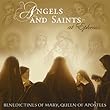
As you may recall, the wonderful Benedictines of Mary, Queen of Apostles (real  women religious in the Diocese of Kansas City-St. Joseph) have another music CD.

Angels and Saints at Ephesus

The disk is out and around and people are taking notice.

A reader alerted me that he heard tracks from the sisters album on their local NPR radio station.  He sent a link to story about them on the site of WQRX.  There is a great little twist in this.. see if you can spot it…:

Benedictine Nuns from Missouri Keep Ancient Hymns and Chants Alive

Nuns and monks are one together of the sure cyclical forces in the classical recording business. Every few years, the quiet, otherworldly sounds of their centuries-old chants and hymns are seemingly rediscovered and marketed as a soothing balm for harried, stressed-out urbanites. While some listeners may find spiritual enlightenment in the chants’ religious texts, many others are drawn to their aesthetic or New Age qualities. [New Age qualities? Blech!  What would those be?  There is nothing stupid or syncretistic about this album.  But let’s move on.]

The latest chant boomlet comes via the Benedictines of Mary, Queen of Apostles, a monastic order in rural Gower, Missouri. The Benedictines drew national attention last year with “Advent at Ephesus,” a Decca recording of Gregorian chants and hymns that topped the Billboard classical charts for over a month (unseating a companion CD to the novel Fifty Shades of Grey). The sisters’ follow up release, “Angels and Saints at Ephesus,” features 17 selections in English and Latin associated with the feasts of holy saints and angels.

[…]

Buy some CDs!

If you are in Canada or the UK, copy and paste the CD title (above) into my amazon searchboxes at the bottom of the page.  Easy.  Otherwise, the UK link is HERE and Canada HERE.

To motivate you, here is  short collage of excerpts.

Posted in Brick by Brick, Just Too Cool, Linking Back, The Campus Telephone Pole, Women Religious | Tagged ,
4 Comments

You Scream, I Scream, we all Scream for more Scream

From History comes an interesting story: today in history, in 1994 the painting by Edvard Munch “The Scream” was recovered, three months after it was boosted from a museum.

Here is the story from History… watch for the interesting bit…

On May 7, 1994, Norway’s most famous painting, “The Scream” by Edvard Munch, was recovered almost three months after it was stolen from a museum in Oslo. The fragile painting was recovered undamaged at a hotel in Asgardstrand, about 40 miles south of Oslo, police said.

The iconic 1893 painting of a waiflike figure on a bridge was stolen in only 50 seconds during a break-in on February 12, the opening day of the 1994 Winter Olympics in Lillehammer. Two thieves broke through a window of the National Gallery, cut a wire holding the painting to the wall and left a note reading “Thousand thanks for the bad security!”

A few days after the theft, a Norwegian anti-abortion group said it could have the painting returned if Norwegian television showed an anti-abortion film. The claim turned out to be false. […]

Okay… you got me. That was the interesting part.

Every time some loon shoots up a town or office building, I brace myself for the liberal MSM (redundant, actually) to rush to opine – with no evidence – that it was a white male conservative belonging to an organization suspected of domestic terrorist ties (read: the Catholic Church).

Posted in Liberals | Tagged , ,
1 Comment