Was there a good point in the sermon you heard for your Sunday Mass of obligation?
Let us know.
Reminder: Even if you know you must not go forward to receive Holy Communion, you are still obliged to go to Mass!

Was there a good point in the sermon you heard for your Sunday Mass of obligation?
Let us know.
Reminder: Even if you know you must not go forward to receive Holy Communion, you are still obliged to go to Mass!
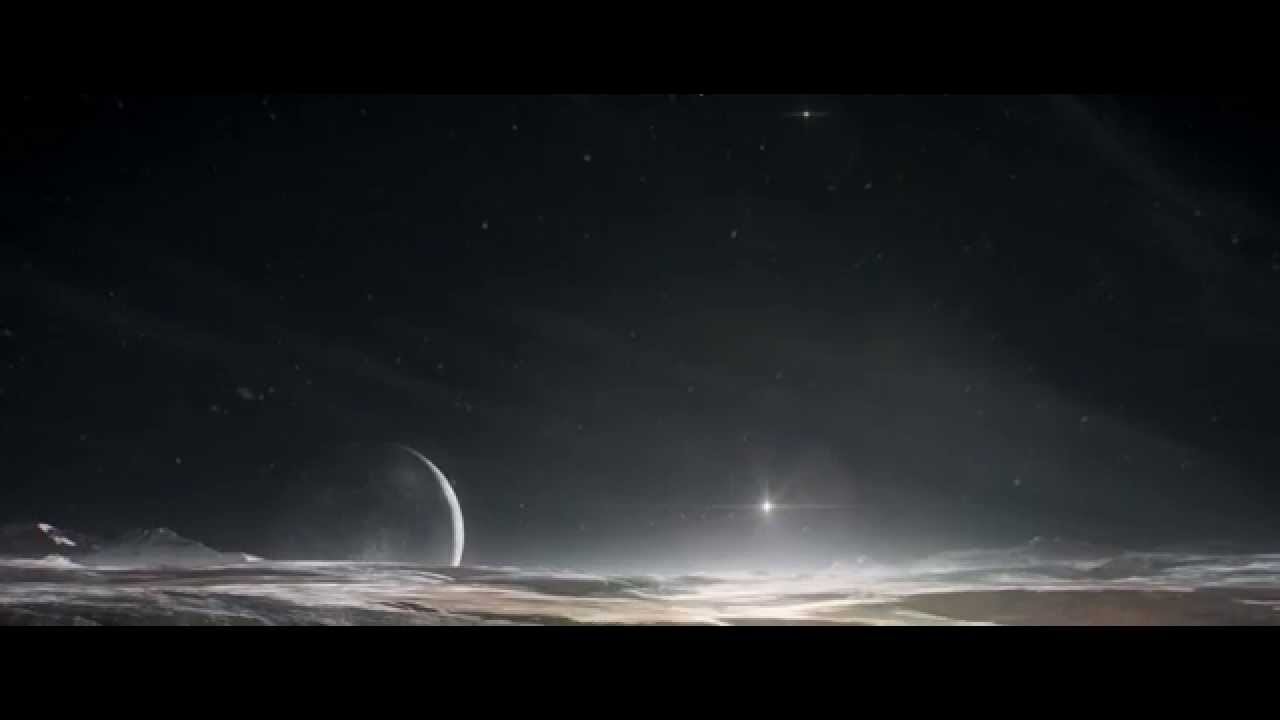
Biretta tip to APOD, this comes from NASA:
NASA’s New Horizons – the fastest spacecraft ever created – will speed past Pluto on July 14, 2015, beaming back high resolution photos (and invaluable data) of the dwarf planet’s surface for the first time in human history.

 From a reader…
QUAERITUR:
Our local Extraordinary Form group was preparing for Mass and we found left on the altar a stuffed koala bear apparently from an earlier Novus Ordo Mass. One of the members wondered aloud if a stuffed koala should be situated on the Epistle or Gospel side of the altar.
We immediately knew who to ask such questions of liturgical import.
Clearly, the koala should be on the liturgical south (Epistle) side. He’s native to Australia.
Also, the south side is where the priest prays the Lavabo inter innocentes, and what’s more innocent than the cuddly (but poisonous) koala.
Or… is that the cuddly but poisonous platypus?
In Rome there a vast throng of lay people turned out to defend the family and human ecology in the public square… in front of Rome’s Cathedral, St. John Lateran.
Some snaps from The Great Roman Fabrizio™.
Perhaps has many as 1 million people.


There were no bishops.
There were Jews, Muslims and even homosexual groups!
There were no bishops.
Marco Tossati has some point comments. HERE
 Here is a wonderful prayer to sing! It is stark and lavish and carefully balanced and quintessentially Roman.
This week’s Collect, in 1962 Missale Romanum for the 2nd Sunday after Pentecost, was in the ancient Gelasian Sacramentary for the Sunday after the Ascension (Thursday). It is also prayed after the Litany of the Most Holy Name of Jesus.
Sancti nominis tui, Domine, timorem pariter et amorem fac nos habere perpetuum, quia numquam tua gubernatione destituis, quos in soliditate tuae dilectionis instituis.
Gubernatio means “a steering, piloting of a ship” or “direction, management”, which is where we get the word “government”. A gubernator is the pilot of a ship. Perpetuus, –a, -um is the adjective for “continuing throughout, continuous, unbroken, uninterrupted; constant,…” etc.
LITERAL TRANSLATION:
Make us to have, O Lord, constant fear and in equal degree love of Your Holy Name, for You never abandon with Your steering those whom You establish in the firmness of Your love.
Note the balancing of ideas: timor/amor (fear/love) and instituo/destituo (establish/abandon). In instituo I hear a “setting down” in the sense of how God made us and by that making He takes us upon Himself. He has our care and our governance. God sets us down next to Himself, under His watchful eye, so that we don’t go wrong. In destituo I hear a “setting down” in the sense of a setting to one side away from Himself, an abandonment of interest. In gubernatio God is, our pilot, our steersman, keeping his hand on the wheel of our lives. We are solid because His loving hand is firm. Were He to abandon us, our ship would wreck and we would be “destitute”. Amidst the vicissitudes of this world we depend in fear and love on His Holy Name. We stand in the proper place before God’s fearful glance and under His guiding hand of love only through both love and fear His Name which points to His Person.
A name, in biblical and liturgical terms, refers to the essence of the one named. The Divine Name made Moses put off his shoes. Moses learned God’s Name to tell the captive Jews that the one who is Being Itself – “I AM” – would set them free (cf Exodus 2). Once destitute, they were instituted as His People. So sacred was the terrible Name of God for the Jews that they would not pronounce the four Hebrew letters used to indicate it in Scripture, substituting instead “Adonai”, “Lord”.
What does Our Lord says about His own Name? In John 16:23 Jesus – Hebrew/Aramaic Yeshua from Yehoshua, “Yahweh saves” – reveals His unity with the Father and the power of His Name saying, “Truly, truly, I say to you, if you ask anything of the Father, he will give it to you in my name.” In Mark 9:38-39 there is an exchange between the beloved disciple and the Lord about people casting out demons in Jesus’ name. Jesus said, ‘No one who does a mighty work in my name will be able soon after to speak evil of me.’” The Name “Jesus” can change hearts. John 20:31 says, “these [signs] are written that you may believe that Jesus is the Christ, the Son of God, and that believing you may have life in his name”.
His Name – His Person – is our path to everlasting life.
The Name of God, of God the Father, God the Son Jesus Christ, God the Holy Spirit, is worthy of our fear and our love. Many today want to stress only the love of the Name of Jesus without the holy fear which is its due. We must not exclude reverential awe and fear of that which God’s Name implies. In Scripture forms of words for “fear” occur hundreds and hundreds of times. Scripture is imbued with loving fear of God, indeed, a fear leading to love and wisdom.
God’s Holy Name is sacred. How we use or react to the Holy Name indicates our interior disposition. Do we use it with reverential love? Do we speak it with respect? Is His Name, uttered by another during the day or by ourselves in the recesses of the night, a source of dread because we are destitute in our sins, terrified of the Judge? Rather than deal with His Name, do we fill our lives with noise and clamor so that we need never hear a deep “GOD”, with all that God implies? “God fearing” men and women need not have terror of the Lord. His Name is a consolation.
Today’s prayer reveals a way out of the terror for God. Through reverential fear of His Name and of who He is and what He has done, we move to the love that knows no fear (cf 1 John 4:16-18).
 Today’s prayer is found in ancient sacramentaries, such as the Veronese and the “Hadrian” version of the Gregorian, and the so-called Gelasian. It is unchanged in the “Tridentine” form of the Missale Romanum as my trusty copy of the 1570MR shows. It survived the Consilium’s hackers and grafters who pieced together the Novus Ordo as the Collect for the 8th Sunday of Ordinary Time.
COLLECT: (1962 Missale Romanum):
Da nobis, quaesumus, Domine, ut et mundi cursus pacifico nobis tuo ordine dirigatur: et Ecclesia tua tranquilla devotione laetetur.
Some vocabulary from the mighty Lewis & Short Dictionary. Cursus can mean anything from “course, way, journey” to “course of a ship”, the “flow of conversation” and “postal route”. Dirigo is “to give a particular direction” or “to lay or draw a straight line”. It was used, among other things, to indicate ordering an army to march to a certain point or to direct or steer a ship on its course. Ordo means too many things to get into in depth. Suffice to say that it can refer to the “methodical arrangement, class or condition.” By extension it is applied to everything from the “orders” of the clergy, the way trees are planted, the lines of an army, or the banks of rowers in a ship. Pacificus is a composite of pax and facio meaning “peacemaker” or “peaceable”. The problem with that laetetur is that it could be from the deponent laetor or passive from laeto. Because of those ablatives in that clause, I am opting here for the passive, like dirigatur. Among the things that devotio means are “fealty, allegiance, piety, devotion, zeal.”
LITERAL ATTEMPT:
Grant us, we beg, O Lord, both that the course of the world be set by Your methodical peace-producing plan for us and that Your Church may be made joyful by means of tranquil devotion.
Despite the wordy literal translation I have given this time, I will later lend to this a rather poetic aspect.
Notice that in our collect’s vocabulary there are traces of military and nautical imagery.
Try reading this prayer with the mental image of a ship.
Its great Captain sets its course upon the sea. So great is the Captain that He can command calm waters and a favorable wind as well. The ship can be seen as the world. In this case I see the ship as the Church in the world, the Church Militant, which is not an unfamiliar image to those familiar with the Barque of Peter. The sea it sails upon is the deep and turbulent world we live in. The Captain is our Lord Jesus Christ, who calmed the stormy waters and commanded Peter to walk to Him upon them. He entrusted His ship to Peter, to steer it in His stead. Once all has been put into proper order, made “ship-shape and Bristol fashion”, our own sense of loyal zeal, our devotion, is the wind that the Captain uses to steer the ship upon the course He sets, carrying us its crew to the port and safe haven.
The word pacificus brought to mind an antiphon of First Vespers of Christmas: “Rex pacificus magnificatus est, cuius vultum desiderat universa terra… The peacemaker King, whose glance the whole world longs for, has been exalted.” Is not the sight of God, “in whose will is our peace”, our true desire? Is that not the port and safe haven we journey towards in the turbulence of this world?
We must look more intently at devotio… devotion.
According to St. Thomas Aquinas (+1274) writing in his monumental Summa Theologiae, devotio is an “active” virtue. The Angelic Doctor wrote:
“The intrinsic or human cause of devotion is contemplation or meditation. Devotion is an act of the will by which a man promptly gives himself to the service of God. Every act of the will proceeds from some consideration of the intellect, since the object of the will is a known good; or as Augustine says, willing proceeds from understanding. Consequently, meditation is the cause of devotion since through meditation man conceives the idea of giving himself to the service of God” (STh II-II 82, 3).
The Jesuit preacher Louis Bourdaloue (1632-1704) translates this into “a devotion to duty”. What we do, including our “devotions”, must help us keep the commandments of God and stick to the duties of one’s state in life before all else.
In other words, there is an interplay between our devotions and our devotion.
Each of us has a state in life, a God-given vocation we are duty bound to follow. We must be devoted to that state in life, and the duties that come with it, as they are in the here and now.
That “here and now”, hic et nunc, is important.
We must not focus on the state we had once upon a time, or wish we had, or should have had, or might have someday: those are unreal and misleading fantasies that distract us from reality and God’s will.
If we are truly devoted and devout (in the sense of the active virtue) to fulfilling the duties of our state as it truly is here and now, then God will give us every actual grace we need to fulfill our vocation. Why can we boldly depend on God to help us? If we are fulfilling the duties of our state of life, then we are also fulfilling our proper roles in His great plan, His design from before the creation of the universe. God is therefore sure to help us. And if we are devoted to our state as it truly is, then God can also guide us to a new vocation when and if that is His will for us.
Faithful in what we must do here and now, we will be open to something God wants us to do later.
This attachment to reality and sense of dutiful obedience through the active virtue devotio is a necessary part of religion in keeping with the biblical principle in 1 John 2:3-5:
And by this we may be sure that we know Him, if we keep His commandments. He who says ‘I know Him’ but disobeys His commandments is a liar, and the truth is not in him; but whoever keeps his word, in him truly love for God is perfected. By this we may be sure that we are in Him: he who says he bides in Him ought to walk in the same way in which He walked.
Before the creation of the universe God knew each one of us and desired us and loved us.
He called us into existence as a precise point in His great plan, His economy of salvation. He gives us a part to play in that plan and gives each of us the tools and talents we need to fulfill it. If we devote ourselves with real devotio to our state-in-life and strive to carry out His will, God will give us every actual grace we need since we are furthering His great plan.
This is why I suggest above that our devotion can be like the wind that the Captain uses to direct our great ship. More than just being the “hands on deck”, we play a vital part in the actual forward motion of the ship. We are not merely being hauled along upon the “alien merits” of Christ, as some Protestants call God’s saving intervention. While we truly depend on Him and Him alone, while we truly do not merit what He provides, mysteriously it is part of His plan. He brings it to pass that His work becomes ours and ours His. He “makes it so”.
A Somewhat Smoother Version:
Grant, we beseech you, O Lord, that the course of the world be steered by your plan for peace and that your Church be filled with joy from tranquil devotion to that plan.
Or a bit more poetic:
O Lord, we beg Thee to grant that the peaceful steerage of the world’s course be set according to Thy plan and that Thy Church be made full with joy from our tranquil devotion.
OBSOLETE ICEL (1973):
Lord, guide the course of world events and give your Church the joy and peace of serving you in freedom.
It is hard to strike a balance between the literal, which can be awkward and wordy, and the simple, which can be banal and miss the real impact of the prayer.
CURRENT ICEL (2011):
Grant us, O Lord, we pray, that the course of our world may be directed by your peaceful rule and that your Church may rejoice, untroubled in her devotion.
You decide.
I taught, on Friday, the final day, about the Christian statesmen in the “city of God”. Having an eye on how the civil virtues will be lived in the heavenly city, the statesman must, in this earthly city, govern through the civic virtues as transformed by the virtues of faith, hope and love. His concern is for the eternal happiness of his subjects. Thus, temporal benefits, while important, must at times be sacrificed for the sake of eternal benefits.
Someone sent a photo of me in action.

Something went a little crazy with my stats yesterday.
I’m not kidding. This is strange.

In a 24 hour period, ending at 7pm on Friday, I had 1,334,768 visits and 2,494,191 page views. Since then, to the time of this writing (several hours in the time frame yet), 1,308, 118 visits and 2,494,191 page views.
Maybe I’m not charging enough for ads!
Maybe something I don’t understand is going on. It’s sure is strange.
Fr. Robert Sirico addressing the crowd on the last night of Acton U.

Meanwhile, the heavens were putting on a show of their own. A beautiful crescent moon, Venus and Jupiter all together.

Viewed with an iPhone app.

Then it was off with some of the faculty and AU vets for cigars and libations (which I did not pour out to the Moon, Venus and Jupiter).

As always, Acton as exhilarating. It is a great experience.
From the release of the encyclical, to teaching for the first time for AU, to eating sandwiches with a table full of Southern Baptists, this week is never dull, listening to the trials of a Pakistani Christian, chatting with Argentinians about the Pope, and meeting an 18 year man from the Philippines who signed up and got a scholarship because last year he saw my tweets… unbeatable experience.
I was alerted to a great video about the priesthood in which a friend of mine is interviewed. Fr. Jonathan Martin is a priest of the Diocese of Arundel and Brighton in England. We lived together in Rome. He was completing his canon law degree. Now he is in Lewes (whence Thomas Paine hails).
Enjoy!
Modern Lives : The Priest from Brogan Martin on Vimeo.
His comment about the barber was great.
If nothing else, tune in at 4:30 for a while.
In the whirl of opinions (informed and non) in the MSM about Laudato si’, I’m tempted to put down my copy and wait for the official, Latin text in Acta Apostolicae Sedis.
I remember how, years ago, when Veritatis splendor came out, I found in the Latin text in AAS zillions of changes compared to the Latin version that was originally published in L’Osservatore and given to us journalists before the release. Changes in the Latin, mind you.
In the meantime, we get to read Laudato si‘ in an unofficial translation.
Think about this for a moment. Ponder the implications.
When big documents come out these days, they are released in many languages. It also happens that they don’t release a Latin version, as they once did even when the document wasn’t originally penned in Latin. Mind you, papal docs haven’t been composed in Latin for a loooong time now, friends. However, the official version of a document is the version that appears in Acta Apostolicae Sedis… usually in Latin.
So, what does this mean?
Since the texts are amended and adjusted and changed after the initial public release (in multiple vernacular languages), people who refer to the vernacular versions (from the initial time of release) are not actually referencing the official, final document! They don’t go back to redo the vernacular translations in light of the changes in the official, final Latin!
Students, church officials, bishops when they write pastoral letters… they aren’t reading the real thing.
Thus, I hope there will be an official, Latin version Laudato si’, to which one can refer.
I’m especially looking forward to how certain things will be translated! I remember in my work with Fr. Foster having to do a simultaneous translation exercise from an article in TIME on economics. I pretty much fell apart when I got to “marginal propensity for change”. If the concepts in Laudato si‘ are comprehensible, they should be able to be expressed in Latin.
We also need the official Latin.
Otherwise, this pontificate risks having a Magistweeterum rather than a Magisterium.
Remember the secretive, liberal, French, Swiss, German meeting of the circle around Card. Kasper’s proposal at the Gregorian University? They met to strategize about how to use the upcoming Synod, et al.
Remember the recent meeting of presidents of African bishops conferences who strongly defended perennial Catholic teaching?
Now I see this from NCRegister:
Polish and Eastern Bishops Discuss Need to Uphold Catholic Teaching Ahead of Synod
ROME — During recent meetings which were held separately, both the Polish bishops and the Eastern Catholic bishops from Europe have discussed the family in view of the upcoming synod on the family and are likely to uphold Catholic pastoral care for families.
The bishops from Poland will be on the front line at the synod, giving an overall view of the family and not focusing merely on the contentious issues of access to Communion for the divorced and remarried and pastoral openings to homosexual relationships.
A source in a congregation at the Roman Curia told CNA that “the feeling of the Polish bishops is that John Paul II’s teaching on marriage and family has been betrayed” by the “shadow council” led by some German bishops at the Pontifical Gregorian University on May 25.
The lecture delivered the last week of May to the Polish bishops’ conference’s general assembly by Jesuit Father Dariusz Kowalczyk illustrates the issues at stake for the Polish bishops.
Grounded in St. John Paul II’s pastoral care and speaking about granting access to Communion for the divorced and remarried, Father Kowalczyk indicated two criticisms.
“The first question we should ask ourselves,” he said, “is this: Does the Church have the authority to give sacramental absolution and holy Communion to divorced persons cohabiting in non-sacramental unions? This question of Communion for those people is comparable to the issue of the mandatory celibacy of priests, or, on another the level, to that of ordaining women.”
He then continued: “If we answer the question of Communion for remarried divorcees by saying that a change in the Church’s current doctrine and practice is possible, then a second question can be asked: From the pastoral viewpoint, would the new, proposed sacramental practice be useful? Would it edify the Church or not? After all, the fact that something could be possible from the doctrinal point of view does not necessarily imply that it would be good for the Church from a pastoral point of view.”
[…]
Read the rest there. It’s good.
And then…

Click me to buy!
The more than 40 bishops met in Prague June 4-7 to further develop their responses to the many challenges facing families. Among the participants were Archbishop Cyril Vasil’, secretary of the Congregation for the Oriental Churches. Archbishop Vasil’ contributed a chapter to Remaining in the Truth of Christ, in which he argued that there is no coherent position among the Eastern Orthodox Churches that favors oikonomia, a practice which some, including Cardinal Walter Kasper, have cited as a justification for admitting the divorced and remarried to Communion.
At the conclusion of their meeting, the Eastern Catholic bishops stated that the Church, including particularly Eastern Catholic Churches, “gives its Yes to the family, the fundamental cell of human society, where every person becomes more and more him / herself.”
“The family, the domestic church spoken of by St. John Chrysostom and repeated by the Second Vatican Council, as a workshop and training ground for humanity, is not just the place where the transmission of faith happens, but where the fundamental principles of living together are learned. … Husbands and wives, parents and children, brothers and sisters are called to love each other: Everyone in the family has a unique and important role.”
The Eastern Catholic bishops added, “In preparation for the synod of bishops … the episcopal participants at the meeting were committed to promoting an evermore careful preparation for the sacrament of matrimony, so that husband and wife, with the strength of grace [of God], might generate a true communion of life welcoming children and educating them.”
[…]
Si vis pacem, para bellum.

Coat of Arms by D Burkart









A Daily Prayer for Priests


They find you a pro-life agent in your area who commits to giving a portion of the fee to a pro-life group!

PLEASE subscribe via PayPal if it is useful. Zelle and Wise are better, but PayPal is convenient.
A monthly subscription donation means I have steady income I can plan on. I put you my list of benefactors for whom I pray and for whom I often say Holy Mass.
In view of the rapidly changing challenges I now face, I would like to add more $10/month subscribers. Will you please help?
For a one time donation...



Help Monks in Wyoming (coffee – UPDATED LINK) and Norcia (beer) and the wonderful "Soap Sisters" of Summit, NJ!


Please follow me on Twitter!










Visits tracked by Statcounter
since Sat., 25 Nov. 2006:

