ASK FATHER: Inviting children to stand around the altar? Fail!

From a reader…

QUAERITUR:

My wife and I have been taking our young children to “children’s Masses” in our diocese for several years, [WHY?!?] and it has become common at every church we have attended (including the cathedral) at Sunday Mass for the priest to tell the kids and their parents to circle the altar while holding hands to say the Our Father.
Needless to say, these are all N.O. Masses. [Indeed.] I believe the priests are well intentioned, in the sense that they want to make the Mass and prayer seem interesting and active for the kids, and yet my “Catholic radar” tells me there may be something inappropriate about this practice. May I ask, is what I’ve described a liturgical abuse? [Yes.]
Because I feel uncomfortable about this practice, I don’t let my kids do it, and I’m thinking that in the future we may go to a “regular” Sunday Mass and avoid the “children’s Masses.” [D’ya think?] The only problem with that is that we then miss out on the experience of parish life of being at Mass with other families. Thanks for your reply, and God bless you!

You would think that, by now, this sloppy sentimentalism would be gone as the aging hippies disappear.

For example, in GIRM 295 we read.

The sanctuary is the place where the altar stands, where the word of God is proclaimed, and where the priest, the deacon, and the other ministers exercise their offices. It should suitably be marked off from the body of the church either by its being somewhat elevated or by a particular structure and ornamentation.

Lay people are not to be in the sanctuary unless they have a ministerial role.  “Standing around” is not a ministerial role!

Furthermore, in these USA people are to kneel – not stand – from the Sanctus until after the Amen at the end of the Eucharistic Prayer.

Back in 1981 the Congregation for Divine Worship’s official publication Notitiae (No. 17 (1981) p. 61) responded to a question about this matter.

Query: At the presentation of gifts at a Mass with congregation, persons (lay or religious) bring to the altar the bread and wine which are to be consecrated. These gifts are received by the priest celebrant. All those participating in the Mass accompany this group procession in which the gifts are brought forward. They then stand around the altar until communion time. Is this procedure in conformity with the spirit of the law and of the Roman Missal?

Reply: Assuredly, the Eucharistic celebration is the act of the entire community, carried out by all the members of the liturgical assembly. Nevertheless, everyone must have and also must observe his or her own place and proper role: ‘In liturgical celebrations each one, minister or layperson, who has an office to perform, should do all of, but only, those parts which pertain to that office by the nature of the rite and the principles of liturgy’ (SC 28). During the liturgy of the Eucharist, only the presiding celebrant remains at the altar. The assembly of the faithful take their place in the Church outside the ‘presbyterium,’ which is reserved for the celebrant or concelebrants and altar ministers.

Again, “standing around” isn’t a ministerial role.

Furthermore, at no point is there an indication in the rite for the priest or anyone else to invite people to come into the sanctuary and stand (against the Church’s clear direction during the Eucharistic prayer) near the altar.

In 1997 several offices of the Roman Curia cooperated in an authoritative document called Ecclesia de mysterio, called in English “Instruction On Certain Questions Regarding The Collaboration Of The Non-Ordained Faithful In The Sacred Ministry Of Priest. This instruction clarified the distinct roles of laypeople and of priests. In that document, we find:

In liturgical celebrations each one, minister or layperson, who has an office to perform, should do all of, but only, those parts which pertain to that office by the nature of the rite and the principles of liturgy.” (SC art. 29). During the liturgy of the eucharist, only the presiding celebrant remains at the altar. The assembly of the faithful take their place in the Church outside the “presbyterium,” which is reserved for the celebrant or concelebrants and altar ministers. [Notitiae 17 (1981) 61]

Bottom line: the lay faithful (except those in liturgical serving roles) are not permitted to be inside the sanctuary, that is, “standing around the altar” during Holy Mass.

Moreover, the Ceremonial of Bishops 50 states,

“A minister who is not wearing a vestment, a cassock or surplice, or other lawfully approved garb may not enter the sanctuary during a celebration.”

The priest who is doing this should be dissuaded, perhaps over a couple mugs of rich and aromatic Mystic Monk Coffee If he will not be dissuaded, then he should be compelled.  Either his superior if he is a religious and/or the local diocesan bishop, whose task it is make sure that the Church’s liturgical directives are followed, should be informed.

One could also explain the situation to the Congregation for Divine Worship and Discipline of the Sacraments and ask for advice.


Posted in "How To..." - Practical Notes, ASK FATHER Question Box, Liberals, Liturgy Science Theatre 3000 | Tagged ,
34 Comments

Reader Check-up: Testing a new mobile theme

I’m trying a new mobile theme. Check your smart phones.

If it does not function for you, let me know. Include what sort of phone you have and what the problem is.


Posted in SESSIUNCULA |
32 Comments

ASK FATHER: Seminarians required to stand for Communion. Wherein Fr. Z rants.

Okay… this is going to be hard.

From a seminarian:

I am currently a ___ year seminarian attending ___ .

antecently, a new ‘policy’ was adopted here: all must receive Holy Communion standing.

The Holy See has made it absolutely clear that we all have the right to receive the Blessed Sacrament kneeling and on the tongue.

Some of my brothers are afraid to kneel due to being labeled “traditionalist”… and eventual grounds for seminary dismissal.

I want to humbly ask, what is the best response to this situation?


Your best response?

Shut up.  Smile.  Stand for Communion.

And the next day?

Shut up.  Smile.  Stand for Communion … until you get ordained.

I am not going to get into the merits of standing or kneeling.  That is irrelevant where you are.  You have to live in the real world, the here and now.

Standing for Communion in seminary is not your battle.

You men could fight this, with your bishops or with the Congregation in Rome.  You might… might… win the battle.  The victory would be Pyrrhic.

You men are now experiencing a smidgen of what it was like for us in the 80’s, when a man could be expelled for kneeling, wearing black pants, having a statue of Mary in his room, not condoning homosexual sex, saying that women can’t be ordained.  Receiving on the tongue?  You’re toast.

As you contemplate your bitter lot, young padawan, consider that we were forbidden from using the word “priest”, to which we referred as “the P Word”.  There were only “ministers”, ordained or non-ordained.  Everyone’s a “minister”.

Ahhh… those were the days.

Many of our seminaries were entirely staffed by liberals, aging hippies, modernists, even deviants.  They were able to hang on in sufficient numbers for a few decades.  Also, there are now some staff around who weren’t around before, of another generation.  But they are weak-willed, their identity is thin gruel, they go with what they perceive is prevailing trend.  They are ambitious. Right now the prevailing trend is “eradicate tradition”.

Hunting season is open, my young friends, and you’re the prey.

It is time to toughen up.  Get seriously tough, spiritually tough.

You need to develop a prayer life that will keep you calm in the face of injustice and profound stupidity.  You will need that anyway in your lives as priests, especially in the times to come.  You may as well learn now. Burnish your spiritual armor now.

Also, you must quietly – discreetly – read the right books, learn the “rite” stuff.  Form strong friendships among your brethren and agree together to smile and shut up and get ordained.  Find support among faithful priests who are also savvy, discreet, even who have bled in the past and who have their scars.

Finally, and this comes in part from a priest friend with whom I shared this, don’t become cynical.  That’s the kiss of death for a (future) priest.

Rejoice that you are not being asked to deny the faith (as we were in the 80’s).  If you were, there would be no choice but to stand and fight.

Use this as an occasion to grow in empathy. Resolve never to bully people into giving up the legitimate exercise of their freedom.

Meanwhile, use your God-given brains to figure out what is important in the big picture, the long run.  If they tell you to stand, do it and shut up.  Offer the whole mess to God as an act of reparation, of self-abnegation, of humility, and then don’t complain, even among your friends unless you are at least 300 miles from the seminary and under the influence of a good cigar and adult beverages in moderation.

The moderation queue is ON, but I doubt that I will let any comments through that aren’t expressions of support in prayer and wise advice from priests.

Posted in Cri de Coeur, Liberals, Seminarians and Seminaries, The Coming Storm, The future and our choices, The Olympian Middle, Wherein Fr. Z Rants | Tagged , , ,
25 Comments

Have a brainy happy birthday Roma! (Father Z’s Kitchen)

As if I needed any reminder, my Roman Curia calendar alerted me to the fact that today is the 2768th Birthday of Rome.

My friend the Great Roman Fabrizio™ decided, given the terrible news lately, to celebrate with a tasty plate of fried brains!  Yum.

I am debating what to make for supper. It should be in the Roman line. Perhaps spaghetti or bucatini alla gricia or all’amatriciana.

Decisions.

UPDATE:

I decided on bucatini all’amatriciana

Yah yah.. I didn’t wind up using the salt, but I like the salt cellar.

I couldn’t get guanciale but I could get pancetta.  I didn’t have fresh tomatoes so I worked with the antepenultimate can of San Marzanos that you readers sent me.  Also, that’s the last package of bucatini that you readers sent me.  Also present are pepper, hot pepper, and pecorino.

Sauté the pork.

Remove to a dish and continue with the tomatoes.

Add some white wine.  Sorry about the shadow.

Put the pork in again.

Add the hot stuff.  I amped it up more after this.

I added a ladle of the pasta water and put in the pasta to finish cooking in the sauce.

With grated pecorino.

With ground pepper.  Like being in Rome.

Happy birthday Roma.

Posted in Fr. Z's Kitchen, SESSIUNCULA | Tagged
18 Comments

SWISS GUARD ARMOR UPDATE!

ANOTHER UPDATE BELOW!

Original post 15 April.

You will remember that we had a project to obtain armor for an officer of the Swiss Guard. HERE

I was sent some photos, so you can see the progress made.

15_04_15_armor_01

15_04_15_armor_02

15_04_15_armor_03

15_04_15_armor_04

15_04_15_armor_05

15_04_15_armor_06

So, the armor is underway and nearing completion.

UPDATE 20 April:  

I received more photos of the armor, which is now being engraved with the images of St. Joseph and St. Joan of Arc!

IMG_3740


IMG_3745

IMG_3750IMG_3755

Even their tape measures are Swiss!


Posted in Just Too Cool, Linking Back | Tagged ,
8 Comments

ASK FATHER: St. Michael Prayer after Novus Ordo Masses

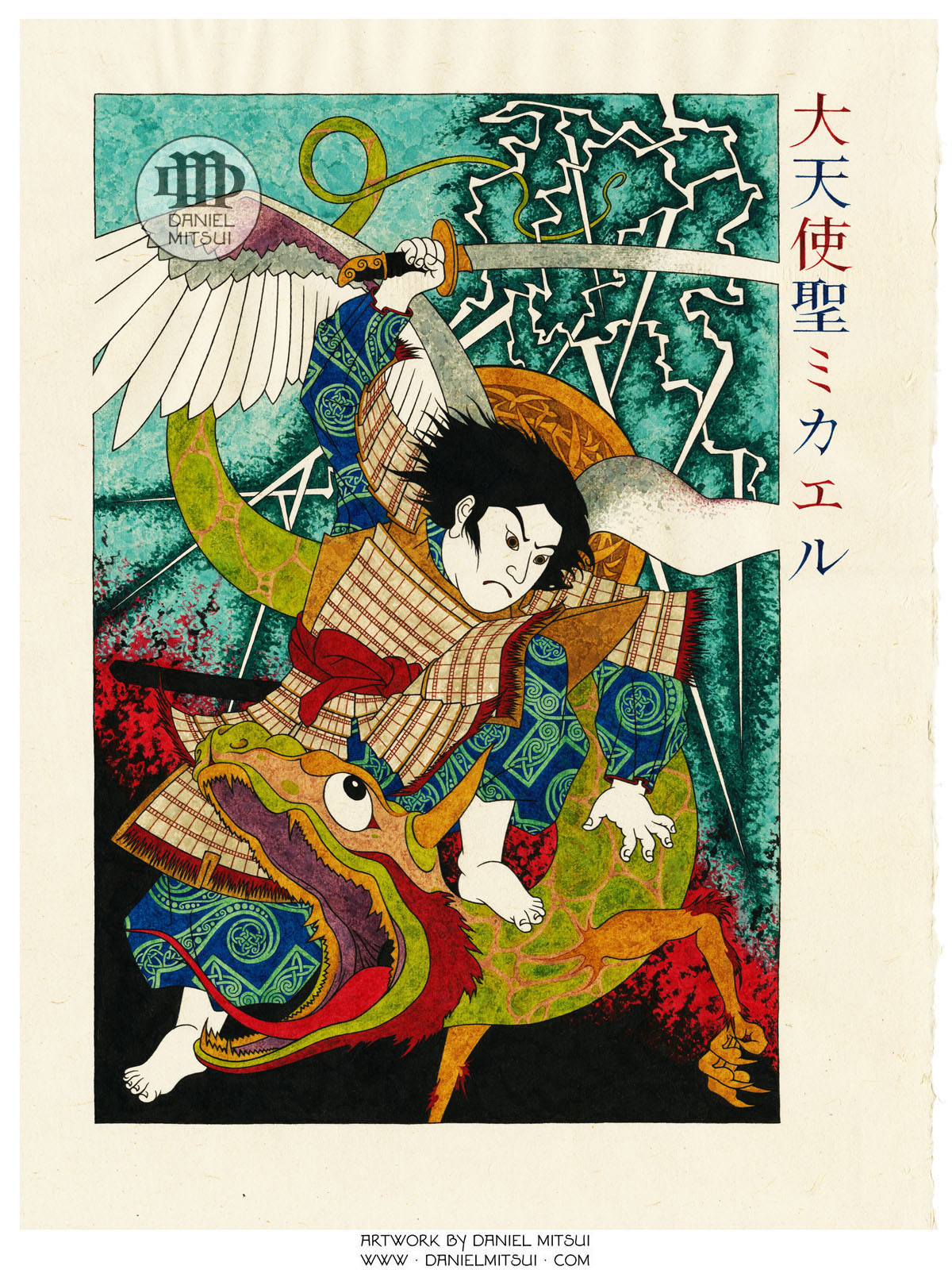
St. Michael by Daniel Mitsui. Click for more.

From a reader…

I am a parishioner at ___. In general, we have been blessed … with clergy who are either traditionally-minded, or at least not hostile to tradition.
Several years ago, one of the priests started us praying the Prayer to St. Michael after daily Mass. It really caught on and some of the congregation took to starting it themselves as the celebrant processes out of the sanctuary. Last summer, we got a new parochial vicar who is not as friendly to tradition. Even though he is theologically orthodox and as far as I can tell politically conservative, he has done some questionable things with the liturgy, which I won’t get into here. He has tried on many occasions to “quash” (his word) the Prayer’s being recited because he sees it as part of some “ultra-conservative agenda.” Whenever someone starts it after Mass, he follows up with that person later and asks them not to. He says that the recitation of the prayer was initiated for a specific purpose, which is no longer applicable, [?!?] though he encourages us to pray whatever we want in the silence of our hearts. What do you make of this?

What do I make of this….?

I wonder if this young man knows that St. John Paul II – who should be named Doctor of the Church – during a Regina Caeli address in 1994 recommended that people pray the St. Michael prayer for the Church.

It is crazy to think of people in church praying a traditional prayer such as the Prayer to St. Michael as being part of an “ultra-conservative agenda”.  Who even knows what that means?  “Ultra-conservative” like… what?  The SSPX?  They don’t say the Leonine Prayers after Mass as far as I know.

If people are moved to pray such a prayer, why should they be stopped?   Is there some other important official business that has to be conducted at that very moment?

It isn’t as if people were attempting glossalalia.  They aren’t babbling incoherently.  The St. Michael was written by a Pope.  Leo XIII had a frightening vision the battle between the Church and Satan. He wrote the prayer and ordered that it be added to the prayers Pius IX had commanded to be recited after Low Masses (Pius X added the three-fold invocation of the Sacred Heart), which continued until the time of Vatican II.

One must ask: Does anyone think that Satan has stopped waging war on the Church?   We still need to say prayers precisely like this.  Is there a better time than when people are together in church?  It doesn’t take very long.  People can have their moment of silent prayer and say their thanksgiving prayers directly after.

Prayers after Mass were commanded by Popes for various reasons, such as defense of the temporal goods of the Papal States against secular aggression.  That intention is outdated.  So what?  They were recited for the “conversion of Russia”.  Some say Russia has been converted.  I am not one of them.  Does anyone think that everything is hunky-dory with a Christian Russia these days?  Even if some say that that intention is no longer a concern, so what?   Pray them for another reason.

How about defense of our Christian brethren in the Middle East and Africa from the hellish attacks by Islamic terrorists?  Is that a good enough reason?  How about defense of religious liberty in these United States?  Is that a good enough reason?

Specific intentions come and go.  The prayers we recite can be reapplied for other intentions.  You could have a different intention each day of the week.

I think that people should pray not only the St. Michael Prayer, but the whole of the so-called Leonine Prayers, including the collect:

O God, our refuge and our strength, look down with mercy upon the people who cry to Thee; and by the intercession of the glorious and immaculate Virgin Mary, Mother of God, of Saint Joseph her spouse, of the blessed Apostles Peter and Paul, and of all the saints, in Thy mercy and goodness hear our prayers for the conversion of sinners, and for the liberty and exaltation of the Holy Mother the Church. Through the same Christ Our Lord. Amen.

What’s wrong with that prayer?  It even mentions mercy, which is quite fashionable these days.  It mentions mercy twice.

We need prayers like these now more than ever.

Bishops everywhere, and the Holy Father too, should reinstate the Leonine Prayers after Masses.  There are urgent and burning intentions to pray for and these prayers are just the thing.

Then I would start a movement for people spontaneously to recite after the Leonine Prayers also a Memorare for their bishop.  Would our young assistant object to that?

Finally, it strikes me that this young assistant is not the pastor. He has no authority on his own. He would do better to pray with the people rather than trying to snuff out what the Holy Spirit could be moving them to do.  He should kneel down at the steps of the altar and lead the prayer.  Don’t beat them.  Join them.  It’s not as if they are praying to Gandhi or are making up stuff.


Posted in "How To..." - Practical Notes, ASK FATHER Question Box, Modern Martyrs | Tagged ,
55 Comments

ASK FATHER: Shoulder cape on cassocks for priests

simar cassockFrom a priest:

A priest in the olden days was permitted to wear such a shoulder cape (look at pics of St Don Bosco – [A founder of a religious order]) and it was built together as a simar cassock, as you know. As you also know the simar cassock was abrogated by Pope Paul VI with the reforms. So prelates just used their house cassock and attached a shoulder cape to it, so as to manifest their jurisdiction or authority as a solution to the abrogation of the simar (I got all this info from William James Noonan’s book on customs and dress in the Church) I wear a shoulder cape from time to time, but ALL BLACK not the monsignor-ish types with colors which bespeaks authority. [Purple and red are not signs of authority.  Simple secular priests are pastors and can be administrators of dioceses.]  A priest who saw me once wearing the plain black shoulder cape told me I shouldn’t because shoulder capes NOW are only for those who hold jurisdictional authority of sorts.

I consulted with some of my priest friends and they basically told me that just to “ignore” Paul VI reforms and just wear one if I wish. One even told me that since there is not a strict document “explaining” the “purpose” per se of the shoulder cape by the Vatican then he will keep using it even though he bears no jurisdictional authority.

I would hope I can get a better answer and hopefully a quote of sorts from Vatican or at least to have evidence of its doubt so that i can comfortably continue to wear it from time to time even though I bear no jurisdictional authority or office. Can you help me?

A simar is sometimes used to describe a cassock with a pellegrina (elbow length cape).  However, usually, even with the shoulder cape, they are just called cassocks.

In the legislation about ecclesiastical dress, there is very little to go on for diocesan priests.  The Directory for Ministry and the Life of Priests clearly indicates that the default dress for the priest worldwide is the cassock.  The Directory also says that conferences can approve other dress, in addition to the cassock.  That’s important in places hostile to the Catholic Church.

So, we enter into some ambiguity.  Cassock can mean just the cassock without the pellegrina or with the pellegrina.  There is no agreement on this among various writers and there is nothing definitive in any Church document.

Another element which must be taken into consideration is the shabby way that many priests dress.  I’m not talking just about when they wash their car or go to a ballgame or zip off to the hardware store on an errand.  I mean when they are in their parishes or at official functions.  Look at a group of priests and you will see quite a few variations of dress without any reference to custom or decorum.  Some of them never learned how to dress properly, alas, because they were in formation when all the libs churlishly thought that this stuff was both outdated and beneath them.

I am all for reintroducing decorum among our clerical brethren.

As far as I am concerned, go ahead and wear the cassock with the pellegrina.

Really, in the midst of the chaos we are all now caused to embrace, who cares?   I wouldn’t put on any strips of color that you shouldn’t wear, however.  Stick to black.

Of course there is the old custom that priests ordained by the Roman Pontiff were privileged to have red buttons on their cassocks, just buttons, not piping, etc.  You weren’t ordained by the Pope were you?  You could add a dash of color, even though that might puzzle some people.  (I’d dig mine out of storage, but I wouldn’t be able to get into it: the darn things shrink!)

Posted in "How To..." - Practical Notes, ASK FATHER Question Box, Mail from priests, Our Catholic Identity, Priests and Priesthood | Tagged , , , , ,
23 Comments

ASK FATHER: Using the traditional offertory prayers in the Novus Ordo. Wherein Fr. Z rants.

traditional-latin-massFrom a reader…

I know a who uses the Old Offertory Prayers when he says an Ordinary Form Mass. Is this okay for a priest to do? Is it a liturgical abuse?

The legislation which covers the use of the Extraordinary Form spells out that there is to be no mixing of the two rites (I say “rites”, because I don’t think that they are, liturgically, the same rite… juridically there are two “forms”, but liturgically and in many points theologically there seem to be two… but this is a digression).

Yes, I think it is an abuse to use the older offertory prayers in the newer form of Mass.

Is it okay?  Not really.

However, that brings up the question of how the desired “mutual enrichments” which Benedict XVI aimed at is to take place unless there are these “mutual enrichments”.   In the short term they are illicit.  In the long run they become legitimate developments.  That said, the present legislation says you are not to do things like this.

Another point to add is that in the approved rite of Holy Mass for Anglicans who have come into union with the Church through Anglicanorum coetibus have the older offertory prayers.  This is now a rite of the Catholic, Latin Church.  Mutual enrichment.

The substitution of the traditional offertory prayers in the Novus Ordo was a monumental change that went against the mandates of the Fathers of the Second Vatican Council in Sacrosanctum Concilium.

The Council Fathers said that, in reforming the liturgy, there should be no change unless the good of the faithful surely required it.  The change to the offertory prayers in no way was required for the good of the people and the the people have not in any way benefited from that change.  As a matter of fact, it has undermined over decades understanding of what is about to happen during the Eucharistic Prayer.  Sacrosanctum Concilium 23 says (my emphasis):

That sound tradition may be retained, and yet the way remain open to legitimate progress Careful investigation is always to be made into each part of the liturgy which is to be revised. This investigation should be theological, historical, and pastoral. Also the general laws governing the structure and meaning of the liturgy must be studied in conjunction with the experience derived from recent liturgical reforms and from the indults conceded to various places. Finally, there must be no innovations unless the good of the Church genuinely and certainly requires them; and care must be taken that any new forms adopted should in some way grow organically from forms already existing.

No one will deny that the Offertory Prayers in the Novus Ordo are innovations.  They are dramatic innovations.  As Fr. Aidan Nichols, OP, wrote in The Catholic Herald (3 July 2009),

“the most striking textual difference between the Mass of St Pius V and the Mass of Paul VI will be the Offertory prayers of the former with their reiterated concern with the Sacrifice being offered or about to be offered.”

Did “the good of the Church genuinely and certainly” require these dramatic innovations?  I can’t see how.

The Offertory prayers used in the traditional form of the Roman Rite, the Extraordinary Form, are not from the time of the ancient Church, but are rather from the medieval period.  So, they had a pedigree of over 1000 years.

The post-Conciliar prayers, based on Jewish blessings, were pasted together by experts.

In the Extraordinary Form of Holy Mass there are two distinct prayers for the host or hosts and the chalice.  They developed into something like the modern forms by perhaps the 8th century.

Over the host the priest prays (in translation):

“Receive, O holy Father, almighty and eternal God, this spotless host, which I, thy unworthy servant, offer unto Thee, my living and true God, for mine own countless sins, offenses and negligences, and for all here present; as also for all faithful Christians living and dead, that it may avail both for my own and their salvation unto everlasting life. Amen.”

This prayer evolved over a long time and under many influences.  By the time it was codified in Pius V’s 1570 Missale Romanum, the Roman way of worshiping was polished under the influence of the theologically clear Council of Trent.  The prayer over the host expresses specific intentions and the priest’s characteristic recognition of his sinful nature and humility.  There is a clear reference to our salvation, the reason why we are at Mass in the first place.

In offering of the chalice in the Extraordinary Form the priest prays:

“We offer unto Thee, Lord, the saving chalice, beseeching Thy clemency: that it may go up with an odor of sweetness in sight of Thy Divine Majesty, for our and the whole world’s salvation.  Amen.”

The prayer over the host is in the first person, “I”.  This new, innovation prayer has the plural “we”, which might reflect that the deacon, who had prepared the chalice, traditionally said the prayer together with the priest.  In the prayer for the chalice, the reference to rising sweetness is biblical, found in the Old Testament and New (cf. Gen 8:20-21, Eph 5:2).  There is, again, the clear and all-important reference to salvation.

For the Novus Ordo it was decided to jettison these millennium-plus-old prayers in favor of new compositions.  They are based on Jewish blessings taken not from the Old Testament, but rather from the 5th century Babylonian version of Talmud (T.B.), a central Jewish text which codified oral law and teaching.

Jews were/are required to pronounce many blessings, well over a hundred, in the course of a day including the famous Shema of Deuteronomy 6 and, more controversially now, the three blessings, “Blessed art thou … for not having made me a gentile (variously “godless”) … a woman… a am ha-aretz (slave, or ignorant rube)” (T.B. Menahoth 43b).  They were also – laudably – “forbidden to enjoy anything in the world without saying a blessing” (cf. T.B. Tractate Berekoth 35a).  Thus, if they put on a piece of new clothing they said a blessing, if they saw lightning they said a blessing, if they studied they said a blessing, etc.  There are bewildering variations in the spelling of the Hebrew words, due to different forms of transliteration and possibilities of vowels.  You might see in your own research forms such as Berakhot, Brachot, Brochos, Berakhah, Bracha, Brokhe, Birkot, etc.

The Novus Ordo Offertory prayers are based on the Berekoth in the category of “enjoyment blessings” or B. HaNehanin (again with variants): HaMotzi said when eating bread and HaGafen for wine.  They are among the most frequent uttered and are used during the Sabbath meal Kiddush.  After washing his hands the head of the household raises two loaves of bread, challah, and says the HaMotzi blessing.  Two loaves of challah are used because the Lord’s manna didn’t fall on the Sabbath when the Israelites wandered in the wilderness.  Instead, a double portion fell on Friday (cf. Exodus 16).
The Novus Ordo Offertory prayers were cobbled up from these Berekoth:

Baruch atah Adonai eloheynu melech ha-olam ha-mo-tzi lechem min ha-aretz … Blessed are You, Eternal our God, Ruler of the Universe, who brings forth bread from the earth” and “Baruch atah Adonai eloheynu melech ha-olam bo-ray p’ree ha-gafen … Blessed are You, Eternal our God, Ruler of the Universe, Creator of the fruit of the vine.”

These blessings are perhaps inspired from Ps 24:1: “The earth is the Lord’s and the fullness thereof” (cf. 1 Cor 10:26) and also Ps 115(114):16: “The heaven of heaven is the Lord’s: but the earth he has given to the children of men.”  Humans make bread and wine, but ultimately they came from God.

I suspect the liturgists who assembled the Novus Ordo of Mass under the aegis of the Consilium and Fr. Bugnini, et al., hoped these prayers, obvious innovations, would remind us of our “Jewish roots” so to speak, and inspire a mental connection with the Passover and Exodus which foreshadowed the Paschal Mystery of the Lord’s Passion and Resurrection.

If we were to remain focused on the literal meaning of the innovative Offertory in the Novus Ordo, one could conclude that all they express is an offering of the bread and wine which will become the “bread of life”, and “spiritual drink”.   If we use John 6 as an interpretive lens for these new prayers we can bolster them a bit.  “Bread of Life” can certainly be taken as a Christological title.  Christ said “I am the Bread of Life” (John 6:35).  “For my flesh is meat indeed: and my blood is drink indeed.” (6:56).  On the other hand, it is sadly possible to take these new prayers as merely referring to bread and wine we might eat and drink each day.  “Bread of life” is not unlike the famous description of bread as “the staff of life”.  “Bread” is sometimes used by metonymy to mean all food in general.  After the Original Sin of our First Parents, human beings ever after would eat their “bread” by the sweat of our brow (Gen. 3:19).  The little insertion what it would become “nobis… for us” has its own problems, since in it some have recognized in it the hint perhaps the consecration of the elements may in some way depend on the spiritual disposition or faith of the one who receives it.

Before the imposition of the Novus Ordo innovations in 1969, there was enough concern on the part of a not inconsiderable number of bishops and theologians that adjustments had to be made to it so that it would express at least at key points adequate and clear theological distinctions about what Holy Mass is.  In 1967 a Synod of Bishops was held in Rome.  The newer form of Mass was celebrated in the Sistine Chapel for the first time in the presence of the bishops of the synod.  Afterward, these bishops were asked to vote about its implementation.  The vote was 71 Yes, 62 Yes with reservations, and 43, or a third, voted No.  To assuage the concerns of those who were troubled by the newer Mass, two of the priest’s quiet Offertory prayers from the older, traditional form of Mass were incorporated back into the order, but not the prayers for the bread and wine.

Before the official release of the Novus Ordo, two important Roman Cardinals, Alfredo Ottaviani (+1979) and Antonio Bacci (+1971) lent their support in 1969 to a group of theologians protesting the theological problems they perceived in the Novus Ordo.  In what is now usually called the “Ottaviani Intervention” the new Offertory prayers were thought not to express adequately the “ends of Mass”:

“The three ends of the Mass are altered; no distinction is allowed to remain between Divine and human sacrifice; bread and wine are only “spiritually” (not substantially) changed… Not a word do we find as to the priest’s power to sacrifice, or about his act of consecration, the bringing about through him of the Eucharistic Presence. He now appears as nothing more than a Protestant minister.”

The French liturgist and converted Protestant minister Louis Bouyer (+2004), who was a key figure in the liturgical reform, wrote in his work Eucharistie that the old prayers were abandoned in order to situate “the words of institution of the Eucharist back into their own context which is that of the ritual berakoth of the Jewish meal.”

So, you can see why some priests would want to say the older, traditional Form of the Roman Rite and also use the older, traditional Offertory Prayers during the Novus Ordo.
Posted in "How To..." - Practical Notes, ASK FATHER Question Box, Benedict XVI, Liturgy Science Theatre 3000, Wherein Fr. Z Rants | Tagged , , ,
33 Comments

More about my post: “When they come to destroy your business because you are pro-traditional family”

Do you remember my 2 April post about a strategy to defend Christian, pro-family businesses from being targeted for destruction by homosexualist activists?  HERE

I wrote (as a refresher):

When some homosexual couple comes to your Christian business for services at their immoral event, don’t panic.  Go ahead and take their business!

Then explain what is going to happen next.

Tell them that the food and services will be just fine.  And then inform them that all of the money that they pay for the services will be donated to a traditional pro-family lobby.   If it is something like catering, where your employees have to be there to provide services, tell them that all your people will smile, be professional, and everyone of them will be wearing crucifixes and have the Holy Family embroidered on their uniforms.  Then show them pictures of your uniforms.  When the truck pulls up, speakers will be playing Immaculate Mary.  Show them the truck and play the music.

“Oh, you would be offended by that?  I’m so sorry.  You approached us because we are Christians. Right?  We are happy to provide services for you and we are grateful that you chose to come to our Christian catering business.  We just want to be of help.”

Then tell them that you will take out an ad in the paper to let everyone know what you did with their money, thanking them by name for their business so that you could make the contribution.

I suspect this approach, if adopted far and wide, would put an end to attacks on Christian businesses.

At The Federalist I just read something that is verrrry familiar in a 20 April post.

Sample:

Rules For Traditionals: How People In Wedding Trades Can Defend Themselves

People who believe it a sacrilege to participate in a gay wedding can keep themselves from being persecuted out of business with some savvy marketing.

[…]

Imagine driving around town with a service van that reads:

Adam and Eve Photography
Specializing in Traditional Biblical Weddings

Below that, a favorite Bible verse: “So God created man in his own image, in the image of God created he him; male and female created he them . . . And God blessed them, and God said to them, ‘Be fruitful and multiply.’”—Genesis 1:27, 28

If you suspect such a mobile billboard will mark you as a ripe and immediate target for the gay-marriage mafia, you’re right. And at this point a game of chicken begins.

When you’re contacted to shoot the photos for a gay engagement or marriage, and know that TV cameras are waiting outside the shop to capture your evil, horrible, discriminatory response, you’ve got to be willing to say, with composure and sincerity: “Sure, Adam and Eve Photography will shoot any wedding, anywhere, anytime. It’s the law!”

Cake Baker? “Bread of Life” Bakery or perhaps “Manna from Heaven” Bakery. There are plenty of other Bible verses to put on your service van, as well, such as Romans 1:26-28, or Leviticus 20:13.

DJ? “Here at ‘Hetero Harmonies,’ we believe in the traditional union of one man and one woman, and our music library reflects the biblically sanctified roles God created in Eden. It’s all we do.” Throwing in a “Praise the Lord!” might not hurt, either.

Ideally, you’ll come up with some combination of overt biblical references that will both express your genuine religious convictions and repel those who expect you to bend to their will simply because they exist—while making it clear that you follow all applicable laws and regulations on the diversity of customers you are obligated to serve.

Would any gay couple actually hire you to show up in your Bible-thumping van? They could, and you’d have them sign an agreement that makes it clear that for marketing purposes you always wear a T-shirt with your business name and favorite Bible verse and distribute flyers under the windshield wipers of wedding guests—flyers that both summarize your services and outline your traditional-marriage beliefs.

Would gay-marriage-sympathetic hetero couples then boycott, or badmouth you enough to tank your business? Perhaps. But you will also attract other couples who agree with traditional marriage and want to stick it to the social engineers as much as you do.

Follow the Money
Donating some percentage of profits to environmental organizations has become a widespread marketing practice to attract lefties, those with a vague sense of guilt about Western prosperity, and even non-political consumers who think, “I like camping! Yay, streams and bears!” You, too, can use such affinity marketing to attract the customers you want and avoid the ones you don’t.

If you’re not currently a member of or contributor to national or state organizations that lobby for and promote traditional marriage, it’s time to join. And your business card, service van, website, estimate sheet, and invoices should all make it clear that you donate some percentage of profits to such organizations.

[…]

Okay…. is it just me or does this sound familiar?


Posted in Lighter fare, Linking Back, One Man & One Woman, Our Catholic Identity | Tagged ,
10 Comments

Remembering Card. George with the Canons of St. John Cantius

I hope you are all remembering Card. George in your prayers.  RIP

Bishop with long terms leaving lasting legacies.

For the Archdiocese of Chicago – indeed for the whole of these USA – one this that Card. George did stands head and shoulder above other laudable contributions.

He established the Canons of St. John Cantius.

The Canons have fine tribute to the late Cardinal at their site, which I urge you to visit.  There are many fine images and anecdotes.

HERE

Meanwhile, here is a statement from the head of the Canons, Fr. Philips:

Statement of Rev. C. Frank Phillips. C.R.
Founder of the Canons Regular of St. John Cantius

Canons Regular Cardinal George

Today our spiritual father and founder bishop ended his earthly pilgrimage. For me personally, the loss is something difficult to describe as Cardinal George was one who listened, directed, corrected, encouraged, and confronted but always gave hope to this tiny community of men dedicated to the restoration of the sacred.

The Canons Regular of St. John Cantius is the first men’s community founded in the Archdiocese of Chicago. We are a living legacy of this shepherd of souls.

“I want you to grow, I want this to succeed. Live your constitutions. Be men of prayer,” were short directives he would often repeat to me.

Cardinal George will always be remembered for his annual visit with our community. The men whom he ordained will always have a special bond to him as they offer Mass, hear confessions, and make available the other sacraments to restore broken souls.

Cardinal George is now placed in our daily prayers for the deceased and in our Perpetual Masses. Rest in peace my spiritual father. May the Angels lead him into Paradise.


Rev. C. Frank Phillips, C.R.

Posted in Hard-Identity Catholicism, Our Catholic Identity, Priests and Priesthood, Seminarians and Seminaries | Tagged ,
4 Comments