ASK FATHER: Can’t get baptism certificate. Can we still get married?

traditional marriage certificateFrom a reader…

QUAERITUR:

My fiance was baptised (as well as communion and confirmed) in a catholic church in Sicily and is unable to obtain his baptism certificate. What do we do in this situation? Can we still get married in the Church?

A recently-issued copy of the baptismal record is required for a Catholic marriage for a couple reasons.

First, and most importantly, it establishes the fact that the person in question is indeed a baptized Catholic.

Secondly, it demonstrates that the person is presumably free to marry. Had the person been married in the Catholic Church, notice of the wedding should/would have been sent to the parish of baptism. The fact of the marriage would have been recorded in the parish registers and, therefore, on the baptismal certificate.  That’s why certificates have to have been issued fairly recently.

Thirdly, it provides information where this notice should be sent once the wedding is complete.

Baptismal records are sometimes difficult to get. Language barriers, destruction of buildings and record books, war, lack of knowledge of where one was baptized … all of these and other reasons, not to mention lazy priests, hinder attempts.

If a record is impossible to obtain, there are a couple possible solutions.

Someone who was actually at the baptism can provide testimony. If the one baptized was an adult, he could attest to his own baptism. Photographs, notices, family letters can sometimes be used to prove the fact of baptism. In some cases, proof of First Holy Communion or a confirmation certificate can be used.

There would be an explanation of why a certificate was not obtained. Just because the baptism took place overseas is not a good reason. ALL Catholic parishes, through the entire world, are required to keep these records.  There would also need to be testimony taken from people who knew the person during his marriageable years, who could attest that the person had not been previously married.

In a worst-case scenario, if there is absolutely no objective proof forthcoming that the person had been baptized, and no witnesses who can attest to this, the person could be conditionally baptized. This is a last-resort option, since we really should do everything we can to avoid giving conditional sacraments.

This is also a reason why marriages at SSPX chapels and completely independent and fringe chapels are so problematic.  There are questions not only of validity but also of record keeping.

Posted in "How To..." - Practical Notes, ASK FATHER Question Box, SSPX | Tagged , ,
26 Comments

ASK FATHER: TLM form for Communion during Novus Ordo

MassCommunionFrom a reader…

QUAERITUR:

I go to both the older and newer forms of the Roman Rite at my parish church and receive Holy Communion kneeling / on the tongue at the new form.

Instead of saying “?Body of Christ” when I go up to receive, Father gives Says ” Corpus Dómini nostri Jesu Christi custódiat ánimam tuam in vitam ætérnam. Amen” JUST FOR ME!

Is this a liturgical abuse? (albeit from the best of intentions) found it odd but haven’t spoken to him about it because I’m not sure.

I’m torn.

On the one hand, this is how a “mutual enrichment” of the two Forms of the Roman Rite will eventually come about.

On the other hand, and especially at this time, I think we need to hold pretty close to the “Say the Black, Do the Red.”

Using the older distribution form in the newer form of Mass is, objective, not in keeping with the rubrics of the newer form, wherein the distribution form is spelled out pretty clearly. From that point of view it is a violation of the rubrics. Is it a liturgical abuse? Yes, and no. No one, not even a priest, has the right to change the texts. And yet, it isn’t as if the priest is making up his own form for distribution. He is using a time honored form that is presently used in the Extraordinary Form.

How serious is this as an abuse?  Not very.  And if this is a one off, that is, he has done this for one person and isn’t doing it for everyone at every Mass, I think it can be set aside.

Were I this priest’s bishop, and this were reported to me as an abuse, I would punish him by suggesting that he use blended Scotch instead of a single malt for one week.

UPDATE:

I had a couple emails about the reverse: using the simple, Novus Ordo form, “Corpus Christi” during a TLM or, worse, the vernacular “The Body of Christ”.

It is slightly wrong for to use the older form during the newer Mass.  It is much more wrong to use the newer form during the older Mass.

Not only are the sensibilities of those who attend regularly the TLM more finely attuned, but the very nature of the rites call for this more exacting formula of distribution.  For one thing, the form is intimately tied to the form the priest says for his own Communion.  That is not the case in the Novus Ordo, where the forms are entirely different.  No solidarity there.

I have no time for the lame excuse whined up by priests that the older form for distribution is toooo haaaard.  B as in B.  S as in S.  Just. Learn. It.

Remember, according to Universae Ecclesiae 24 and 28, in the TLM we don’t have altar girls, we don’t have Communion in the hand, and we priests must stick to the older, full formula for distribution of Communion rather than use the innovation, the simple Novus Ordo form.

Posted in "How To..." - Practical Notes, ASK FATHER Question Box, Liturgy Science Theatre 3000 |
16 Comments

ASK FATHER: Can someone excommunicated go to Mass?

From a reader…

QUAERITUR:

The Catholic Encyclopedia entry on excommunication (from 1908) says an excommunicated person can’t participate in any liturgies, i.e. he can’t even be present. The CIC only says he can’t minister or administer the sacraments. Is the CE out of date or is the CIC not giving all applicable law?

The old Catholic Encyclopedia, while a good source to start with for certain things, is out of date.

According to the law currently in force, an excommunicated person is not excluded from attending Holy Mass. In fact she is obliged to attend Mass on Sundays and Holy Days just like everyone else.

She may not, however, receive Holy Communion.  And depending on the reason for the excommunication and the faculties of the confessor, she may not receive sacramental absolution until the censure is lifted… except in danger of death.

We no longer have the category of excommunicate who is also vitandus, to be avoided, shunned.  That was rarely imposed and was done away with in the 1983 Code.  There was also, once, a tolerandus category I believe.  I can’t help of thinking of Card. Kasper’s odd solution for the divorced and civilly remarried, to be seen as “tolerated but not accepted” insofar as Communion is concerned.  How odd.

A handy resource is Dr. Peter’s book HERE

Posted in "How To..." - Practical Notes, ASK FATHER Question Box, Liturgy Science Theatre 3000 | Tagged ,
21 Comments

Archbp. Sample on a “house divided”. Tune in, trads and liberals alike!

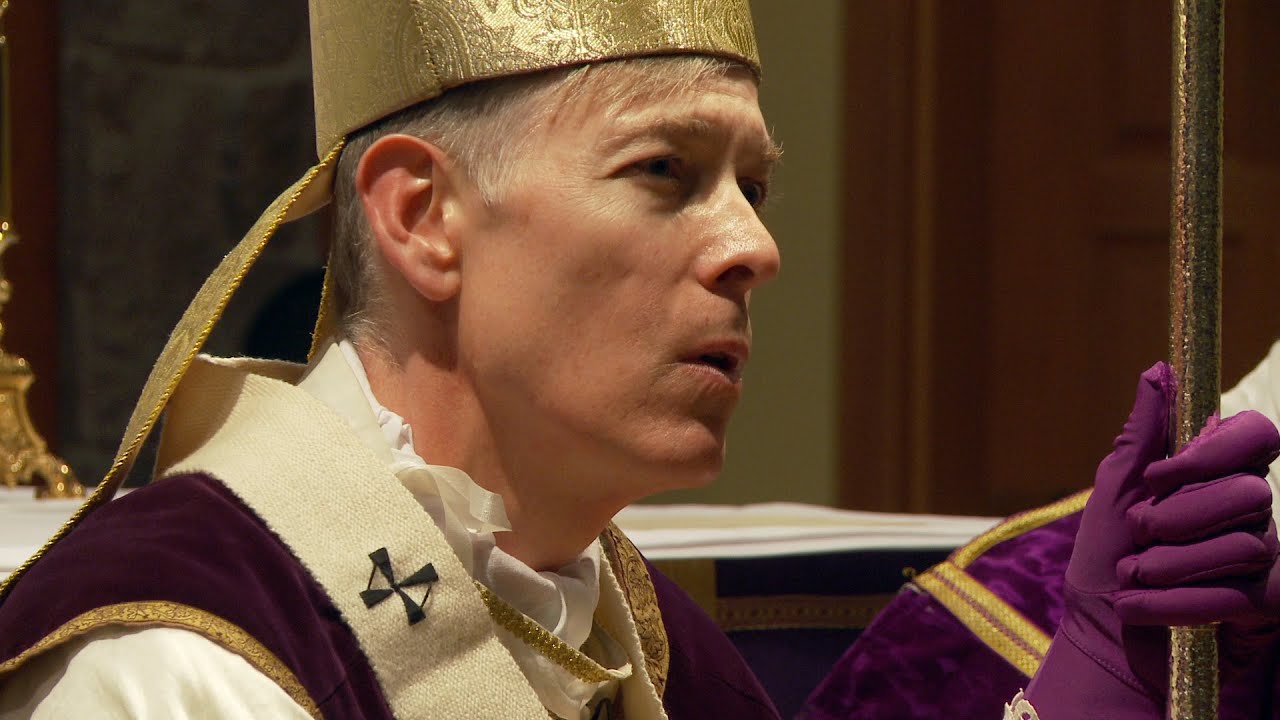
I direct the attention of the whole readership to a video of a sermon of my old friend His Excellency Most Reverend Alexander Sample, Archbishop of Portland.

He is celebrating a Pontifical Mass at the Throne.  He preaches about the unity of the Church, about a “house divided”.

Every single one of you who desire the Extraordinary Form (and those who hate it) ought to listen carefully to the Archbishop’s message.

I echo with him… imagine what we could accomplish were we to set aside some of our minor differences and work together in a more unified way.

YouTube thumbnailYouTube icon

Posted in "How To..." - Practical Notes, Liturgy Science Theatre 3000, New Evangelization, SUMMORUM PONTIFICUM, The Coming Storm | Tagged , ,
50 Comments

Is Pope Francis turning away from Kasper and to Caffarra?

Sandro Magister has some analysis of the lead up to next October’s Synod on the Family.

It might surprise you.

The Synod Market Index. Kasper Down, Caffarra Up

Even Pope Francis is distancing himself from the former and taking sides with the latter. And staying on good terms with Cardinal Müller. And promoting the African Sarah. All unyielding defenders of the Catholic doctrine on marriage

ROME, March 20, 2015 – “This does not resolve anything,” Pope Francis has said with regard to the idea of giving communion to the divorced and remarried. Much less if they “want” it, demand it. Because communion “is not a badge, a decoration. No.”

In his latest big interview Jorge Mario Bergoglio threw cold water on the expectations for substantial change in the doctrine and practice of Catholic marriage, which he himself had indirectly fostered:

“Overblown expectations,” he called them. With no more references to the innovative theses of Cardinal Walter Kasper, which he had repeatedly extolled in the past but now seems to be keeping at a distance.

Click to buy!

On the other hand, for some time now Pope Francis has looked with growing attention and esteem at another cardinal theologian, who upholds ideas on the “Gospel of marriage” that are perfectly in line with tradition: the Italian Carlo Caffarra, archbishop of Bologna. [Caffarra was a contributor to the Five Cardinals Book™.]As a professor of moral theology, Caffarra was a specialist in marriage, family, procreation. And this is why John Paul II wanted him at the head of the pontifical institute for studies on marriage and the family that he created in 1981 at the Lateran university, following the 1980 synod dedicated precisely to these themes.

So a stir was created last October by the exclusion of any representative of that institute[!] – which since its foundation has spread all over the world – from the first session of the synod on the family.

But now this gap has been filled, because last March 14 Pope Francis appointed among the advisers of the general secretariat of the second and last session of the synod, scheduled for October of this year, none other than the vice-president of the pontifical John Paul II institute for studies on marriage and the family, Professor José Granados. [Although we have to look at the other people who were appointed.]

As for Caffarra, if the Italian episcopal conference does not elect him this May among its four delegates at the synod, the pope will certainly see to including him among the synod fathers, as he did for the previous session.

The archbishop of Bologna is one of the five anti-Kasper cardinals who assembled their ideas in the book “Remaining in the Truth of Christ” published in Italy by Cantagalli on the eve of the last synod and now translated into ten languages. [Buy in USA HERE Buy in UK HERE]

And right from the start he was one of the most determined and incisive critics of the bombshell speech read by Kasper at the consistory of February 2014:

In this extensive interview with “Il Foglio” published on March 15, 2014, Caffarra said among other things, with regard to communion for the divorced and remarried:

“Those who advance this hypothesis do not have an answer to a very simple question: what about the first marriage, ratified and consummated? The proposed solution leads one to think that the first marriage remains intact, but that there is also a second form of cohabitation that the Church legitimizes. Therefore there is an extramarital exercise of human sexuality that the Church considers legitimate. But with this comes a denial of the cornerstone of the Church’s teaching on sexuality. At this point one could ask oneself: so why not approve cohabitation at will? So why not relationships between homosexuals? This is not only a question of practice, it also touches upon doctrine. Unavoidably. One may say that it doesn’t, but it does. Not only that. It introduces a custom that in the long run determines this idea in the people, and not only among Christians: there is no such thing as an absolutely indissoluble marriage. And this is certainly against the Lord’s will.”

Further below, in its entirety, is Caffarra’s latest position statement on marriage and family: a conference he gave last March 12 in Rome at the Pontifical University of the Holy Cross.

But first it will be helpful to recall other facts that highlight the growing approach of Pope Francis toward Kasper’s critics.

[…]

Read the rest there.

Is the tide turning, or is this a tactic?

Posted in One Man & One Woman, The Drill | Tagged , , ,
38 Comments

Both kind and number

12_10_04_confessionalFrom a reader:

A positive anecdote from the penance service from my parish last night (a different parish than the aforementioned one):
The retreat master (a Jesuit) was prepping the penitents for confession and said “…AND I DON’T WANT TO HEAR ANY NUMBERS! DON’T FOCUS ON THAT SORT OF THING! START WITH SOMETHING YOU ARE GRATEFUL FOR” [face palm] and all of the local priests (good men but none of whom are famous for their orthodoxy or traditional leaning) as one rolled their eyes and shook their heads. It was a great moment.

Another Jesuit.  What a gift they continue to be.

We are obliged to confess all our mortal sins in both kind and number.  That means, what sort of sin and how many times or some indication of frequency if you can’t be precise (which is fairly common).

Everyone, repeat after me…

both kind and number

both kind and number

both kind and number

The Sacrament of Penance, or Reconciliation, is not for a chat about the great things going on in your life, how you’ve been “pretty much a good person”, or making excuses.  Cut through the fog and confession SINS.  Add just the circumstances that might make a real difference (such as, I stole the sandwich because my daughter and I are homeless and starving, or I stole the milk bottle from an elderly woman on a fixed income).  Do not chat, do not hesitate, do not be afraid.

Examine your consciences and GO TO CONFESSION!


Posted in "How To..." - Practical Notes, GO TO CONFESSION, Liberals, Liturgy Science Theatre 3000 | Tagged , ,
15 Comments

VATICAN: No. You can’t use the 1998 English translation.

I saw this at The Pill (aka The Tablet aka RU-486), which makes it all the more enjoyable to read.

Vatican liturgy secretary rules out possibility of Catholics using 1998 Mass translation

A Vatican archbishop has ruled out the possibility of Catholics being able to use a different English translation of the Mass.
There have been growing calls for the 1998 version to be made available [Right… growing.  Tens of people have cried out for the rejected 1998 version.] as critics are unhappy with the current missal text which is judged clunky, awkward, and a too literal translation of the Latin.
The 1998 text was approved by English-speaking bishops’ conferences after 17 years of work. It was, however, rejected by the Vatican and a revised translation, introduced in November 2011, was then implemented.
But Archbishop Arthur Roche, Secretary to the Congregation for Divine Worship, said using a different English version of the missal could not happen.
The archbishop told The Tablet[which makes in so much better] that the Roman liturgy “expresses the unity of the entire Church” and that while the 1998 version translated the 1975 Roman Missal, a new Latin Missal was introduced in 2002 thus making the 1998 edition outdated. [It must be admitted, however, that the necessary adjustments could have been made to the 1998 version.  However, there were translation norms published in Liturgian authenticam.]
Archbishop Roche, who as Chairman of the International Commission on English in the Liturgy (ICEL) oversaw the introduction of the current English Mass text, also said that “the principles governing the translation of liturgical texts of the Roman Rite had altered by 2001 which would have, in any case, required a new translation of the Roman Missal.”
He was referring to the document Liturgiam Authenticam [as I said] whch called for translations to convey the “integral manner” of the original Latin “even while being verbally or syntactically different from it.”
This week, a former chairman of ICEL said many Catholics are dissatisfied with the current Mass text and should be allowed to use the 1998 version.
The Bishop Emeritus of Galloway, Maurice Taylor, who was in charge of ICEL from 1997-2002 said: “Many people are dissatisfied and unhappy with the present translation which we have to use. Our bishops have an opportunity to remedy the situation by asking the Holy See to grant its recognitio of the 1998 translation, a text that was approved by all the English speaking bishops’ conferences which are full members of ICEL.”
He added: “A precedent for having a choice of approved translations of the Missal already exists. Those who prefer to continue with the [2011] Missal, on grounds of either taste or expense, would do so; others would opt for the 1998 translation.” [Out of curiosity, I wonder how many of those who want for the opportunity to use the 1998 version are supportive of those who want the opportunity to use the 1962 Missale Romanum.]
In The Tablet earlier this month Jesuit theologian Fr Gerald O’Collins wrote an open letter to English-speaking bishops, urging them to press for adoption of the 1998 text.

I haven’t posted this for a while.

Tabula delenda est.

Posted in Liturgy Science Theatre 3000 | Tagged ,
34 Comments

Sad. Former SSPX Bp. Williamson consecrates a bishop. Both now excommunicated.

Former SSPX Bp. Williamson consecrated another bishop. They both have incurred the late sententiae excommunication foreseen in Canon Law.

The SSPX issued an official statement HERE:

On March 19, 2015, Bishop Richard Williamson performed the episcopal consecration of Fr. Jean-Michel Faure at the Benedictine Monastery of the Holy Cross in Nova Friburgo, Brazil.

Bishop Williamson and Fr. Faure have not been members of the Society of St. Pius X since 2012 and 2014, respectively, [NB] because of their violent criticisms of any relations with the Roman authorities. According to them, such contacts were incompatible with the apostolic work of Archbishop Lefebvre. [I suspect that Lefebvre would be horrified.]

The Society of St. Pius X regrets sincerely that this spirit of opposition has led to an episcopal consecration. [May the come soon to regret other spirits of opposition.] In 1988 Archbishop Lefebvre had clearly indicated his intention to consecrate auxiliary bishops [NB] who would have no jurisdiction, because of the state of necessity in which the Society of St. Pius X and faithful Catholics found themselves at that time. His sole goal was to make available to the faithful the sacraments which priests ordained by the bishops would offer.  [There is no question that Holy Orders, Mass and baptisms and confirmations are valid.] After having done everything conceivable to gain permission from the Holy See, Archbishop Lefebvre proceeded with the solemn consecrations on June 30, 1988 before several thousand priests and faithful and hundreds of journalists from around the world. It was abundantly clear from all the circumstances that, despite the lack of authorization from Rome, this action done in the most public manner was for the good of the Church and of souls. [It was not abundantly clear… but read on.]

The Society of St. Pius X denounces this episcopal consecration of Fr. Faure, which, despite the assertions of both clerics concerned, is not at all comparable to the consecrations of 1988. [True.] All the declarations of Bishop Williamson and Fr. Faure prove abundantly that they no longer recognize the Roman authorities, except in a purely rhetorical manner.  [Like admitting that Francis is indeed Pope, and then not submitting to his authority?  Say his name in the Roman Canon and put a photo up?  What do they do, exactly?]

The Society of St. Pius X still maintains that the present state of necessity renders legitimate its action throughout the world, without denying the legitimate authority of those for whom it continues to pray at every Mass. [The Roman Pontiff and, I suppose, the local bishop.  I wonder: Do the priests of the SSPX include the name of the local diocesan bishop in the Canon during Mass?] The Society intends to continue its work of priestly formation according to its statutes. It has every intention to keep the deposit of the Faith and the purity of the Church’s moral teaching, in opposition to errors, from wherever they may come, in order to pass on such Faith and morals in the traditional liturgy and by preaching, in accordance with the missionary spirit of its founder: Credidimus caritati [1 John 4:16].

Menzingen, March 19, 2015

I pray that Williamson and the other fellow will be reconciled before they die.

Posted in Dogs and Fleas, Pray For A Miracle |
20 Comments

20 March: Total Eclipse of the Sun AND Aurora Borealis

From SpaceWeather:

ARCTIC ECLIPSE: On March 20th, the first day of northern spring, Arctic sky watchers could witness something rare and wonderful:  Northern Lights during a total eclipse of the sun.  Earth’s magnetic field is reverberating from a CME strike on March 17th that sparked the strongest geomagnetic storm of the current solar cycle.  Days after the impact, auroras are still dancing around the Arctic Circle.  Those auroras could emerge in “broad daylight” this Friday when the new Moon passes in front of the Arctic sun, producing a total eclipse visible from Svalbard, the Faroe Islands, and many ships at sea.  Visit Spaceweather.com for a preview and updates during the eclipse.

Total Solar Eclipse viewed through Aurora Borealis near the Arctic?

How cool is that?

Posted in Just Too Cool, Look! Up in the sky! | Tagged ,
6 Comments

John Allen, Crux, and Why 1 Million Catholics Don’t Matter

John L. Allen, Jr. at Crux wrote about the SSPX and the former SSPX Bp. Williamson, a renegade who has by now consecrated another bishop.

There is something pretty chilling in Allen’s tone, when you read him carefully.  You’ll see what I mean.

Here the title, and then I’ll skip down:

Why détente between Rome and traditionalists was always a pipe dream

[…]

[… there’s a LOT to take exception to in the top part of the article, but this is where Mr. Allen really shows how that segment of the Church thinks….]

[…]

The head of the society, Bishop Bernard Fellay, is viewed as a realist who sees his movement’s future eventually in coming in from the cold. His freedom of action, however, has been constrained by the more intransigent elements in the fold.

It’s conceivable that without Williamson and his following, Fellay may be able to move more boldly. [HEY! Williamson has been out of the SSPX since 2012!  But who would expect the MSM to get this right.  After all, these are just a bunch of kooks, right?  Hardly worth the time.]

[This is where you need to pay attention!] One might wonder why any of this matters to the Vatican. The Society of St. Pius X claims a global following of around 1 million, which, if true, would represent .01 percent of the full Catholic population of 1.2 billion. [.1%] Investing resources in trying to lure such a relative footnote back might seem disproportionate.

[…]

“relative footnote“?  “disproportionate“?   Right… it’s only a million people.

There’s more, along with Allen’s strange moral equivalence between traditionalists and the terrorist Yasser Arafat, and, later on, conjectures based on his assumption about SSPX being schism, yadda yadda.  Whatever.  I, too, am not super optimistic these day about what might happen between the Holy See and the SSPX.  I’d like to think that a Pope for the “peripheries” might show some mercy and compassion but I won’t hold my breath.

The take away from Allen’s piece is that 1 million followers of the SSPX – or, I suppose, all others who stay close to our Catholic tradition – don’t merit attention or pastoral care from the Church.

That’s like saying that they don’t count.  They’re nobodies.

Could anyone get away with saying that about any other marginalized group in the Church?

Apply that to pet groups of the marginalized whom liberals lionize and see how they react.

Divorced and civilly remarried who actually still go to church regularly and want to receive Communion? Nah, they’re a tiny number compared to the universal Church of over 1 billion.  They don’t merit our resources and time.  Active open homosexuals who denounce the Church’s teaching concerning morals but who go to Mass regularly and want to receive Communion?  Nah, there aren’t many of them.  We shouldn’t waste our resources.   Wacky women religious into cosmic consciousness and moving beyond the Church with their dying orders and institutes?  Nah, not many of them left, so let’s put our resources somewhere else.

Within the Church, the only “periphery” that matters are those which either explicitly reject Catholic tradition or who have no contact with it.

Could some Cardinal please argue for a “tolerated but not accepted” status for Catholics who embrace the Catholic tradition?

Moderation queue is ON

UPDATE:

Fr. Thomas Rosica, who has in the past threatened to sue a Canadian blogger, immediately piled on by retweeting Allen’s link. HERE

Moderation queue is ON

Posted in Liberals, Our Catholic Identity, SSPX, The Last Acceptable Prejudice | Tagged ,
34 Comments