ENGLAND Friday 29 June is a Holy Day of Obligation

My friend Fr. Tim Finigan, His Hermeueticalness, has on his parish’s website a good reminder for his readers in the UK that Friday 29 June, the Feast or Solemnity of Sts. Peter and Paul is, for them, a Holy Day of Obligation.  Since I have quite a few readers across the pond, it seemed a good idea to help H.H. with this reminder.

Moreover, a plenary indulgence may be gained on Sts. Peter and Paul, under the usual conditions.  Fr. Finigan describes the conditions: by devoutly praying with a pious object (rosary, holy card etc.) which has been blessed by the Pope or any Bishop, or by visiting a (Catholic) Cathedral Church. In either case, the Our Father and the Creed should be said.

Also, Sts Peter and Paul is a on the post-Conciliar liturgical calendar “Solemnity”.  Therefore, people in England and Wales are free if they wish to eat meat on that Friday.  Fr. Finigan adds: “It would be a devout practice (though not obligatory) to abstain from meat on the day before, on the Vigil of the feast.”  Fr. Z nods approvingly.

For an explanation of indulgences, see the Catechism of the Catholic Church n.1471 ff.

For an explanation of the conditions for gaining a plenary indulgence, see fr. Finigan’s article Plenary indulgences not impossible.

In the United States, we observe six Holy Days of Obligation in addition to all Sundays of the Year (yes, Sundays are “days of precept”).

  1. Solemnity of Mary, the Mother of God
  2. The Ascension of Our Lord
  3. The Assumption of the Blessed Virgin Mary
  4. All Saints Day
  5. The Solemnity of the Immaculate Conception
  6. Christmas

The Latin Church’s 1983 Code of Canon Law lists 10 Holy Days of Obligation.  However, bishops’ conferences can reduce that number. In the USA, some days are routinely moved to Sunday, such as Epiphany and Corpus Christi – which is a bad idea, but they didn’t ask me.  The US bishops removed the obligation – and this was also a bad idea -for St. Joseph, and Sts. Peter and Paul.

Posted in "How To..." - Practical Notes, Liturgy Science Theatre 3000, Our Catholic Identity, The Drill, The future and our choices | Tagged , , , , ,
11 Comments

The Holy Father on active participation and worth, reverent liturgical worship

The Holy Father, in his video address to the Eucharistic Congress in Ireland, made some statements about our liturgical participation.

POPE BENEDICT XVI’S MESSAGE AT CLOSING MASS

[…]

Based upon a deepening appreciation of the sources of the liturgy, the Council promoted the full and active participation of the faithful in the Eucharistic sacrifice. At our distance today from the Council Fathers’ expressed desires regarding liturgical renewal, and in the light of the universal Church’s experience in the intervening period, it is clear that a great deal has been achieved; but it is equally clear that there have been many misunderstandings and irregularities.

The renewal of external forms, desired by the Council Fathers, was intended to make it easier to enter into the inner depth of the mystery. [The signa we are presented with in liturgical worship should bring us to the res.] Its true purpose was to lead people to a personal encounter with the Lord, present in the Eucharist, and thus with the living God, so that through this contact with Christ’s love, the love of his brothers and sisters for one another might also grow. [Is that what liturgical worship at your parish does for you?] Yet not infrequently, the revision of liturgical forms has remained at an external level, [Tell me if this sounds familiar…] and “active participation” has been confused with external activity. Hence much still remains to be done on the path of real liturgical renewal. [The widespread implementation of Summorum Pontificum is of great importance.] In a changed world, increasingly fixated on material things, we must learn to recognize anew the mysterious presence of the Risen Lord, which alone can give breadth and depth to our life. [We must return to ad orientem worship to facilitate this.]
The Eucharist is the worship of the whole Church, but it also requires the full engagement of each individual Christian in the Church’s mission; it contains a call to be the holy people of God, but also one to individual holiness; it is to be celebrated with great joy and simplicity, but also as worthily and reverently as possible; it invites us to repent of our sins, but also to forgive our brothers and sisters; it binds us together in the Spirit, but it also commands us in the same Spirit to bring the good news of salvation to others.

[…]

Posted in "How To..." - Practical Notes, Benedict XVI, Liturgy Science Theatre 3000 | Tagged ,
36 Comments

QUAERITUR: Can any priest hear a Confession on an airplane or ship?

From a reader:

Can any priest hear a Confession on an airplane or ship? I know jurisdiction is automatic in emergencies, but what if a passenger was not in immediate danger and simply wanted to confess?

In general, yes.  In the Latin Church, so long as the priest has faculties to receive sacramental confessions in either his diocese or his religious institute of incardination, the priest can validly absolve your sins anywhere you happen to be, even if you are not in immediate danger and even if one or both of you are not from the place where you run into each other.

If there is danger of death, as you mention, any validly ordained priest can validly absolve, even if he does not have faculties – for whatever reason.  Even a “laicized” priest, out of ministry for whatever reason, can validly absolve in danger of death.  The law itself gives him the faculty to absolve in cases of danger of death.

But in the normal case you are describing, that of running into a garden-variety priest in an airport or at a conference, yes, a priest can hear your confession and absolve you.

Posted in "How To..." - Practical Notes, ASK FATHER Question Box, GO TO CONFESSION, Liturgy Science Theatre 3000, Our Catholic Identity, Priests and Priesthood | Tagged , ,
18 Comments

A little more about Sr. Sandra Schneiders

More about Sr. Sandra Schneiders.

I wrote about her and her ideas HERE.

In the Sunday Times of Malta there is a piece about this divisive figure, whom the LCWR (a subsidiary of the Magisterium of Nuns) wants to honor at the same August assembly in which they will probably reject any remnant of fidelity and obedience to the Holy See.

The article that follows is panegyric, but informative. My emphases and comments.

This lady is not for turning
Former UK Prime Minister Margaret Thatcher [It is offensive to see Margaret Thatcher’s name anywhere near that of Sandra Schneiders.] said this about herself during a particularly fraught time during her premiership: a well fitting attribute. But she is not the only iron lady deserving of this title.

I met another formidable woman last week at the retreat house the Carmelites have in Lunzjata, limits of Rabat. She is, I venture to guess, in her mid-seventies, a university professor by profession and a religious sister by vocation. Within her frail physical frame resides a spirit of steel: [I would call it: sklerokardía.] Sr Sandra Schneiders.

When I said she didn’t fit the ste­reotype of an obedient, subservient, nun she objected, saying that she is both obedient and subservient.

I am obedient and subservient to God, not to the bishops. Our constitution is the Gospels, not some edict written by a Vatican bureaucrat. [This is the sort of thing that she has pushed for a long time.  They owe no obedience to bishops or what bishops teach either.] Our task as Church is to make Jesus a reality to contemporary men and women. [And she thinks they can do that without bishops and, therefore, priests.] We have to resist the corrupting tendencies that affect institutions, even ecclesiastical ones. Like the Apostles in the Acts I declare my obedience to God and not to men.” [This is the attitude that she touts as “prophetic”.]

She buttresses her arguments by frequent references to the Gospels and Catholic theology. Schneiders is more than qualified to present such arguments. Her high theology qualifications were earned at the Istitut Catholique de Paris and the Pontifical Gregorian University in Rome. [Oooooo!]

About Scripture and spirituality she knows a thing or two. Sister Sandra is professor emerita of scripture spirituality at the Jesuit School of Theology in Berkeley, California, and gives courses in biblical spirituality, Christian spirituality and religious life. She is also a bestselling scholar who has followers even in Malta.

When I told her religious sisters in many countries, including ours, hard­ly play a leadership role in the life of the Church, [Okay, now we know that the writer is more than just sucking up for the sake of the interview.] she said: [And here is what I am talking about when I use the phrase “Magisterium of Nuns”, which is against and over that of bishops of the Holy Father.]

“Sisters in the US, on the contrary, play a very vital role… we are the US Church’s most credible body. We have more credibility than the bishops and the priests because we are closer to the people, particularly to those who are oppressed by society and are discriminated against by the institutional Church.”   [She sounds rather like a socialist community organizer, no?  And note the distinction she makes about the “institutional” Church.   Schneiders belongs to a different Church, a “ministerial” Church.]

We then speak of the Leadership Conference which incorporates more than 80 per cent of the 60,000 sisters of the US. [No, it doesn’t.  It represents the leaders of religious communities, not all the members of those communities.] This body has been for some time in a spot of trouble (a bit of an understatement) with the Vatican. The latter has embarked on both a visitation and a doctrinal evaluation of the Leadership Conference. Schneiders looks at these initiatives as a wholesale inquisitorial investigation aimed at undermining the credibility of the sisters. [So that’s what’s going on!]

Schneiders laments that the sabotage of Vatican II has now been going on for years by the appointment of bishops, described by her as both conservative and inefficient. Many Catholics don’t consider these bishops as their leaders, she adds.  [And the LCWR is going to honor her in August.  Unless they change the plan, that is.]

Some months ago a Maltese missionary had given me a similar negative appreciation while commenting on the episcopal ap­point­ment in Latin America, where he had served the Church for decades. [Imagine what sort of bishops would be acceptable to the writer… or Schneiders.]

[And now liturgical translation!] Another challenge to Vatican II, Schneider says, is the new translation of the English missal which has been mired in controversy: “This is a terrible translation not reflecting the language of the people. [Daft.  The “language of the people”.  What is that, exactly?] It is ushering in an unintelligible liturgy.  [Then she isn’t as bright as she thinks she is.] This is in total contrast to the simplicity Jesus taught and lived.” [Lemme get this straight.  Schneider’s things that what Jesus said and did was “simple”?]

I broadened the subject of our conversation to the current conflict between Barack Obama and the US bishops on what is being called the contraceptive mandate. [If it is being called that, then the people using that phrase don’t have a clue about what the real issue is.  The real issue is NOT contraception.] The bishops are accusing Obama of undermining religious liberty. The controversy has been going on for some time. I had addressed it in my commentary of April 29 titled ‘Politicians, good Catholics and dissenting opinions’.

Is it an issue of religious liberty as the bishops are saying? I asked.  [Gosh!  Do you think Schneiders will say that it is?]

Schneiders answers with a resounding No. She categorically states that Obama’s efforts to legislate universal healthcare should have been staunchly supported by all Catholics, particularly by the bishops, since 13 million US citizens were not covered by any health insurance – a great obscenity if there ever was one. “Such support was not always forthcoming,” she said. [BTW…  Schneiders dances around the gold calf which is the ultimate feminist sacrament (abortion).  After reading all the nuanced blather she says on the matter (e.g., HERE) it is hard to conclude that she isn’t pro-abortion.]

Turning to the current controversy on the contraceptive mandate, [No, that isn’t what it is…] Schneider thinks the compromise offered by Obama provided an acceptable basis for agreement. [What a surprise!  She supports the Obama Administration’s positions.  I’ll bet you didn’t see that one coming!]

I mentioned that 12 lawsuits were recently filed against the US government on behalf of 43 distinct Catholic organisations, charging that the Health and Human Services Department’s contraception edict violates statutory and constitutional law.

She is definitely not in agreement with such a strategy. [Say it ain’t so!]

I pointed out that Bishop Stephen Blaire of Stockton, chairman of the US bishops’ Committee on Domestic Justice and Human Development, had expressed concern about the strategy of filing lawsuits, adding that “there is a concern among some bishops that there ought to have been more of a wider consultation”.

America Magazine reported that Mgr Blaire was worried that some groups “very far to the right” are trying to use the conflict as “an anti-Obama campaign”.  [And, even if we accept that premise about the “far right”, and we don’t, the ] (Since then Mgr Blaire has issued a clarification stating his solid support for the other bishops as he believes this is an issue of “unacceptable intrusion of government into the life of the Church by the Mandate”.)

Asked whether she would vote for Obama, Schneiders said she does not like everything about the Obama administration for it is too trigger happy, and some civil rights are being eroded because of security concerns. However, she declared without hesitation that she would vote for him as Obama’s vision and policies are much better when compared with Mitt Romney’s.  [More abortions and fewer jobs for everyone!]

“If the bishops defeat Obama it will be a very sad day. Romney is a greedy, selfish man. He is on the side of the rich,” she concluded. [I think she has probably slipped her trolley.]

The issue has deeply divided the Catholics in the United States and even some Obama supporters think he has not always treated the Catholic Church well.

Back to Sr Sandra Schneiders…

When I asked her about the possibility of the ordination of women, [Anyone want to guess in advance what she thinks?] Schneiders said that she believes this would eventually happen. She does not yearn for it, however.  [She would see priesthood as something “patriarchal”.  She hates anything having to do with men.  For Schneiders, “every aspect” of the Catholic faith “is not just tainted but perverted by the evil of patriarchy. It is not that the tradition has some problems; the tradition is the problem.” HERE.]

She then went on to make a striking point: “Sisters should remain sisters. This is our vocation and our strength. They can take nothing away from us, unlike the priest. [Which suggests that she should be defending priests and bishops as an oppressed class.]

“If a priest’s clerical state should ever be removed by the Church, he would lose his identity and raison d’être. As we are we would never lose our identity, prophetic charisma, and freedom.” [Yadda yadda… she still craves approval from the men in Rome.]

One may agree or disagree with her, but throughout our meeting I could not but notice that her comments were motivated by her love for the Church, as she perceives it. [Indeed.]

Posted in Magisterium of Nuns, Religious Liberty, The Drill | Tagged
22 Comments

Catholic Health Ass.’s proposal (about what a religious institution is) could make things worse, not better.

Please use the sharing buttons!  Thanks!

I am sure you have heard that Sr. Carol “GIVE BACK THAT PEN!” Keehan of the Catholic Health Ass., which gave cover to pro-abortion catholic Democrats so they could vote for Obamacare, pushed back at the First Gay President’s HHS mandate.

Here is some analysis of the CHA’s reverse course from the Cardinal Newman Society:

Sister Keehan, CHA Push Dangerous Compromise on HHS Mandate (Again)

No, it’s not all great news.

The Catholic Health Association (CHA) and its leader, Obamacare advocate Sr. Carol Keehan, DC, have apparently reversed their position and now stand in opposition to the Obama administration’s inadequate “accommodation” on the HHS contraceptive mandate. Kudos for that!

[NB] But as is becoming a tiresome habit for CHA, they aren’t standing entirely with the bishops. CHA says in today’s letter to HHS that it wants the contraceptive mandate’s exemption “broadened to cover all ministries of the Church,” just as the bishops have argued. Yet in direct contradiction to the bishops, CHA is pushing for a new definition of religious organizations that could prove even worse than the Obama administration’s current language. And if accepted, the CHA definition could be a disaster for the cause of religious liberty and for Catholic higher education.

The Cardinal Newman Society has been warning about this since last December, after CHA and the University of Notre Dame both recommended to HHS Secretary Kathleen Sebelius similar solutions, drawing on language in Section 414(e) of the Internal Revenue Code that exempts church-related pension plans from the Employee Retirement Income Security Act (ERISA).

We explained in our press release last December:

Under Section 414(e), exemption from federal law is available only to an organization that is “controlled by or associated with a church or a convention or association of churches,” meaning that the organization must at least share “common religious bonds and convictions with [its] church or convention or association of churches.”  In 2001 the U.S. Court of Appeals for the Fourth Circuit said that three factors bear primary consideration when deciding whether an organization shares “common religious bonds and convictions” with a church:

1) whether the religious institution plays any official role in the governance of the organization; 2) whether the organization receives assistance from the religious institution; and 3) whether a denominational requirement exists for any employee or patient/customer of the organization.

[NB] We warned that such a definition of religious organizations could exclude many Catholic institutions, depending on how strictly the courts apply the Fourt Circuit test, and would certainly exclude nondenominational Christian schools, colleges, charities and other organizations that are not affiliated with a recognized “church.”

Nevertheless, CHA is at it again. Today’s letter to HHS states:

We reiterate our suggestion contained in our September 22nd letter that the concepts contained in Section 414(e) be used instead to develop a broader and more appropriate religious employer exemption to the contraceptive mandate. Under those principles, an organization would be covered by the exemption if it “shares common religious bonds and convictions with a church.”

[And here we get to the part where I add that Sr. Keehan and the CHA are acting as the Magisterium of Nuns… setting themselves over and against the US Bishops…] Never mind that the U.S. Conference of Catholic Bishops clearly rejected the 414(e) languagein its own letter to HHS last September:

…[S]uch an exemption would be inadequate, because it would fail to protect many stakeholders with a moral or religious objection to contraceptives or sterilization, including individuals, insurers, and even many religiously affiliated organizations.

[So, is the 414(e) language really that bad?] For further explanation, today we asked religious liberty expert Matt Bowman of the Alliance Defense Fund what is so dangerous about the Section 414(e) language?

In the courts, “bonds and convictions” involve asking “(1) whether the religious institution plays an official role in the governance of the organization, (2) whether the organization receives assistance from the religious institution, and (3) whether a denominational requirement exists for any employee or patient/customer of the organization.” See, e.g.Lown v. Cont’l Cas. Co., 238 F.3d 543, 547 (4th Cir. 2001). There are lots of religious and probably even Catholic colleges that would share convictions, but not bonds, with a church. And that’s not to mention other kinds of religious non-profits, much less any religious stakeholder.

A “religious employer” definition limited to only entities with “bonds and convictions” of a church is actually smaller in significant ways than the “accommodation” and “safe harbor” proposed by the Obama administration itself, which only specify the kind of organization that qualifies by whether it is a non-profit with religious beliefs. Granted, their “accommodation” doesn’t actually accommodate in how it treats those organizations. But the standard for who is and who isn’t such an organization includes organizations even if they don’t share “bonds and convictions” of a church.

Truly it’s exciting news that CHA finally is opposing President Obama’s hairbrained “accommodation” that would make things even worse for the Catholic Church. Kudos for that.

But CHA’s own solution could worsen matters beyond the President’s worsened plan. [QUAERITUR:] One has to wonder why the CHA would continue to press for a solution that might protect its own institutions but would leave many others out in the cold.

Indeed, why?

I am sure that none of you readers will have any opinions.

Posted in "How To..." - Practical Notes, One Man & One Woman, Religious Liberty | Tagged , , , , , ,
8 Comments

A couple of good books

Better than any other approach a free market helps to raise large groups of people out of poverty and promotes happiness through earned rewards.

During the recent Acton University I think an overarching theme of the talks and presentations was that those who believe in a free market economy must get better at making moral arguments.

May I recommend a couple books?

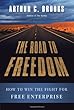
The Road to Freedom: How to Win the Fight for Free Enterprise by Arthur C. Brooks.

US KINDLE – UK: BOOK and KINDLE

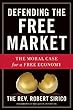
Defending the Free Market: The Moral Case for a Free Economy by Robert A. Sirico

US KINDLE and UK: BOOK and KINDLE.

Also, have a look at Poverty Cure.

Posted in "How To..." - Practical Notes, Brick by Brick, Our Catholic Identity, REVIEWS, The Drill, The future and our choices | Tagged , , , , ,
17 Comments

WDTPRS 11th Ordinary Sunday: God begins and completes the meritorious things we do

This week’s Collect is effectively the same as one in the ancient Gelasian Sacramentary and the prayer in the 1962 Missale Romanum used during the week after Trinity Sunday.


Deus, in te sperantium fortitudo, invocantibus nostris adesto propitius, et, quia sine te nihil potest mortalis infirmitas, gratiae tuae praesta semper auxilium, ut, in exsequendis mandatis tuis, et voluntate tibi et actione placeamus.

Because of the word pairings fortitudo and infirmitas, voluntas and actio, a possible source for this Collect could be the anti-Pelagian writings of St Augustine of Hippo (d 430).

In classical Latin fortitudo rarely means just physical strength.  Instead, it is “firmness, manliness shown in enduring or undertaking hardship; fortitude, resolution, bravery, courage, intrepidity”.  In the Latin Vulgate of the Old Testment the Lord is often described as “my strength… fortitudo mea”.  Latin and Greek Old Testament versions translate Hebrew maw’oz and ‘oz which indicate a place or means of safety, a refuge or stronghold.  You probably know the great “battle hymn” of the 16th Protestant revolt in Germany, “Ein feste Burg ist unser Gott … A Mighty Fortress is our God”, the translation of a psalm by Martin Luther (d 1546).   Since ancient times the battle of orthodox Catholicism with various heresies and schismatic movements has involved the use of hymns and songs.  They help people learn and remember things.  St Augustine of Hippo (d 430) composed a song with sound theological points to combat the Donatists who had set up their schismatic altars against those of Catholics.  This is true in more modern times as well.  If the Lutherans had “A Mighty Fortress is our God” we Catholics had “Grosser Gott, Wir Loben Dich … Holy God, We Praise Thy Name” composed in 1774 as a paraphrase of the Te Deum going back to the late 4th or early 5th century, perhaps having a connection to St Ambrose (d 397).

Auxilium is “help, aid, assistance, support, succor”.  The obsolete ICEL versions constantly had us asking for some “help” from God (who is, after all, really nice).  In those now outdated prayers “help” was nearly always inadequate because the concept of “grace” was obliterated along with the word “grace” itself.  Voluntas is mainly “will, freewill, wish, choice, desire, inclination”.  This is the power of our free will which together with our intellect distinguishes us from brute beasts.   It can also be more simply an “intention” or something we interiorly “will”.

LITERAL TRANSLATION:

O God, strength of those hoping in You, graciously be present to us as we are invoking You, and, because without You mortal weakness can do nothing, grant always the help of Your grace, so that, in the performance of Your commands, we may please You both in will and in action.

OBSOLETE ICEL (1973):

Almighty God, our hope and our strength, without you we falter. Help us to follow Christ and to live according to your will.

That was a good example of why we needed a new translation.

CURRENT ICEL (2011):

O God, strength of those who hope in you, graciously hear our pleas, and, since without you mortal frailty can do nothing, grant us always the help of your grace, that in following your commands we may please you by our resolve and our deeds.

In the fall of our First Parents, we were wounded and weakened in our intellect and will.  It is hard for us to reason to what is good and true.  After we figure them out with our reason or we learn about them from authority, because of our passions and appetites it can be hard for us to will to choose them.  Our intellects and wills must be disciplined through the repetition of choices and actions in the right times, moments, and measures so that we develop good habits, virtues.

In our prayer voluntas is set in juxtaposition with actio “action”.   We have “inclinations” to this or that thing. In actions our inclinations become concrete.  Some actions are entirely mental or spiritual, in that they are actions of the mind.  We have an initial idea or inclination and then we use our free will to grasp or refuse that idea.  We can bring an inclination to a deeper thought, contemplate it.  There are intellectual acts (for good or ill).  There are also physical acts.  We get an idea and then, with our intellects and wills, we figure out how to do it and choose to act (for good or ill).  Because of the weakness in us from Original Sin, in order to will and act properly we must have the help of grace.

God begins and completes in us all the meritorious things we do.  He gives us the strength to carry through with all good acts.

Posted in WDTPRS | Tagged , , , , ,
2 Comments

Vocations for Women Religious up in England

Here is some good news via CNS and The Catholic Herald.

The number of women joining religious orders in England and Wales has almost tripled in the last three years, according to a June 13 article in England’s Catholic Herald newspaper that said 17 women joined religious orders in Britain last year, up from six in 2009.

Something is definitely happening,” said Father Richard Nesbitt, Westminster diocesan vocations director, when asked if this could be the sign of a revival for women religious in Britain.

Sister Cathy Jones, who works for the National Office for Vocation in London, also said there has been a “significant increase in those thinking of entering religious life.”

Sister Cathy, who took her final vows more than a year ago as a member of the Religious of the Assumption, said there was a record number of women at the Westminster Diocese’s “Come and See” event in February, which gives women the chance to learn more about consecrated life.

She said more than 30 women attended the event , far exceeding the number that would have been drawn to a similar function 20 or 30 years ago.

Posted in Brick by Brick, Just Too Cool, Our Catholic Identity, The Drill, The future and our choices | Tagged ,
8 Comments

Sr. Sandra Schneider’s NunThink, or, Why The CDF Is Picking On The Magisterium of Nuns

NunThink 

In the recent interview in the Fishwrap with the CDF’s Prefect Card. Levada, there were some fascinating things.

He revealed quite a lot about the manner of work of the CDF, he admitted that he made a mistake, he described the slow process, he explained how Sr. Margaret Farley of “self-pleasuring” fame … and no doubt many many others we have not yet heard about … came to their attention.  He basically said that when the LCWR decides not to cooperate, the CDF has alternative plans.

Levada spoke in clear language and he spoke it to the NCR.  I’ve gotta say that he hit it out of the park.

Can you say preemptive strike?

I was quite interested in his admission of the mistake in allowing the LCWR to honor Sr. Sandra Schneiders, IHM, at their August meeting.

Sr. Schneiders – like so many of these liberal nun exponents of the Magisterium of Nuns – has put out some really bad books.

For example, there is her line of thought – NunThink – in the 2009 essays Fishwrap published (see links below).

sandra schneidersSr. Schneiders has taught her sister women religious that, since Lumen gentium confirms that nuns aren’t actually members of the hierarchy, then nuns don’t have to pay attention to the teachings of the hierarchy which they don’t like or promote or enforce the teachings that come from the hierarchy.
Furthermore, according to NunThink, they now make their vows to God, not the Church.  Basically, Schneiders exalts the sisters who defy the hierarchy and she runs down those who are in the “CMSWR-type communities continuing the older form”.  For Schneiders, the women religious of her preference have evolved away from consecrated religious life, into ministerial religious life.  They see themselves as “ministers”.  But they are not members of the hierarchy.

Therefore have a kind of prophetic ministerial church authority over and against the official institutional church.

Get it?

According to Schneiders, the hierarchy considers women religious a kind of work force, foot soldiers, who will promote official teaching, etc.

But Schneiders sees religious as being freed from that role by the Spirit of Vatican II.

There is actually an entire planet between her thought and Vatican II on religious. 

The more you read what Schneiders’ writes and says, the more you understand the context of Card. Levada’s recent explanations and the CDF’s hostile takeover of the LCWR.

On a side bar, have you noticed that the group of dissident Irish priests has piped down?   I can imagine the scene down at the Pink Shamrock Pub: “Hey, Paddy.  Did you see what the CDF is doing to the Irish-American nuns of the LCWR?”  “Sean, I did.  And if the ******** can do that to them, imagine what they could do to us!”

Take a look at Schneider’s essays – a cri de coeur in five parts against the Apostolic Visitation – which were made into a really bad book.  Here are links to the essays:

Do you want to know how screwy Sr. Schneiders’ ideas on religious life really are?  Read how Fishwrap‘s Richard McBrien lavishes praise on her HERE.

Posted in "How To..." - Practical Notes, Brick by Brick, Dogs and Fleas, Our Catholic Identity, The Drill, Throwing a Nutty | Tagged , , , , ,
34 Comments

Card. Burke on the SSPX (video)

I am a little behind the curve on this, but I thought you might like to hear what His Eminence Raymond Card Burke has to say about the future (hopefully) reconciliation of the SSPX with the Roman Pontiff.

[wp_youtube]fRcoaytPCa0[/wp_youtube]

Benedict XVI is the Pope of Christian Unity.

Posted in Benedict XVI, Brick by Brick, Our Catholic Identity, SSPX, The future and our choices | Tagged , , , , ,
6 Comments