The Feeder Feed: back from the cruise edition

Some shots from the Feeder.

The Chickadees were on a cruise, I think.  They are back now, and in large numbers.

I don’t know how they get those sunflower seeds open, but they do.

Still life with flying life.

Ray.

You can tell it is getting chilly out there, especially in the morning.

Goldfinch alla Puffball.

More than “tuppence a bag”.


Posted in The Feeder Feed | Tagged ,
11 Comments

Cheap eats and a contest

Over at Sancte Pater we find this from the Beeb:

Britain’s ‘cheapest’ lunchtime meal was unveiled by scientists on Wednesday – the toast sandwich.

The Royal Society of Chemistry (RSC) is reviving the mid-Victorian dish, which, unsurprisingly, consists of two slices of bread around a slice of toast.

The society is so confident in the repast, it will offer £200 to anyone who can create a cheaper alternative.

The meal, costing 7.5 pence, was first promoted by Victorian food writer Mrs Beeton.

[…]

Easy peasy lemon squeezy… I have the an even cheaper offering.

The Open-Face Toast Sandwich!

HA!

How about the Toast Wrap, with a lettuce leaf around that piece of toast?

Posted in Fr. Z's Kitchen, Lighter fare |
17 Comments

Bl. Carl Lampert: ” ‘I love my Church. I remain faithful to my Church and to the priesthood. I am on Christ’s side and I love His Church.”

I had determined last year that this year I would during Advent read a book Advent of the Heart, reflections by a priest who died in Dachau, Fr. Alfred Delp – a fellow Lutheran convert. (Kindle version. UK book.)  Remember: Advent is less about ho ho ho and Merry Christmas and more about your personal encounter with the Lord at the Second Coming (or your death, which ever comes first.. and they will come.  Ho ho ho about that for a while, Fishwrap readers… but I digress.)

I saw this on CNA. Great article.

Benedict XVI praises newly beatified priest killed by Nazis

Vatican City, Nov 17, 2011 / 01:15 pm (CNA/EWTN News).- After praying the Sunday Angelus, Pope Benedict praised the example of Father Carl Lampert, an Austrian priest who was killed by the Nazis in 1944 and beatified in his native country Nov. 13.

“In the dark time of National Socialism,” the Pope said, Fr. Lampert “clearly understood the meaning of the words of St. Paul: ‘We do not belong to the night or to the darkness.’”

“During one interrogation which could have led to his release, he testified with conviction:

‘I love my Church. I remain faithful to my Church and to the priesthood. I am on Christ’s side and I love His Church,’” the Pope recalled.

Pope Benedict entrusted those gathered with him in St. Peter’s Square on Nov. 13 to the intercession “of the new Blessed that we may participate with him in the joy of the Lord.”

Fr. Lampert was a diocesan priest who worked as the vicar general of the Diocese of Innsbruck Feldkirch in Austria.

After the Nazi persecution began in full force in 1939, he was arrested three times for “alleged activity against the State” and was sent to the Dachau concentration camp. He was watched by the Gestapo, and his phone calls and correspondence were under continual surveillance.  [I wonder if we shall see these times again.]

On Feb. 4, 1943, he was arrested along with 40 others and accused of high treason, espionage, undermining army morale and aiding the enemy.

Together with two other priests, Father Herbert Simoleit and Father Friedrich Lorenz, he was beheaded on Nov. 13, 1944. He died speaking the names of Jesus and Mary.

At his inaugural Mass as Sovereign Pontiff Pope Benedict begged for prayers.

“Pray for me, that I may not flee for fear of the wolves.”

Pray for your priests.  Bl. Carl, pray for us.

Posted in Global Killer Asteroid Questions, Modern Martyrs, New Evangelization, Our Catholic Identity, Saints: Stories & Symbols, The future and our choices, The Last Acceptable Prejudice | Tagged , , , ,
14 Comments

QUAERITUR: When during Mass should people strike their breasts?

From a reader:

For those of us who attend the Tridintine form of the Holy Mass, we see the servers striking their breasts at several points in the liturgy.

In the Novus Ordo, where are appropriate points for the servers (or faithful) to do the same? In the upcoming revised translation, we have the restored “mea culpa” in the Gloria, but anywhere else? The recitation of “Lord have mercy,” or, “have mercy on us,” comes to my mind.

My bearded-Spock side suggests that during the Novus Ordo – especially considering how it is often celebrated – the faithful should be striking their breasts constantly.

That said, I think there is only one point at what the faithful are directed to strike their breasts: during the Confiteor in the penitential rite at the beginning of Mass.  New, corrected translation:

I confess to Almighty God,
and to you, my brothers and sisters,
that I have greatly sinned
in my thoughts and in my words,
in what I have done and in what I have failed to do,
And, striking their breast, they say:
through my fault, through my fault,
through my most grievous fault;
Then they continue:
therefore I ask blessed Mary ever-Virgin,
all the Angels and Saints,
and you, my brothers and sisters,
to pray for me to the Lord our God.

But in the Novus Ordo, there are various options for the penitential rite.  I’m afraid that this isn’t always used.

That rubric about continuing, by the way, suggests to me that the people should strike thrice, and not just once.  Could one surmise that perhaps a good point at which to strike the breast might be the word “fault”?  Perhaps?  Three times?  I digress.

I suspect the servers, during the Novus Ordo, are imitating the priest who must also strike his breast at a point during the Roman Canon (1st Eucharistic Prayer).  Also, many priests have integrated from the older, traditional form of the Roman Rite, striking their breasts during the Agnus Dei and perhaps also the Domine non sun dignus, just before their own Communion.

St. Augustine said that at the mention of words such as “mercy” or “confess… confiteor his flock would beat their breasts so hard that the sound rumbled in the church.  Romano Guardini (d. 1968) wrote in his 1955 work Sacred Signs:

“To brush one’s clothes with the tips of one’s fingers is not to strike the breast.  We should beat upon our breasts with our closed fists. … It is an honest blow, not an elegant gesture.  To strike the breast is to beat against the gates of our inner world in order to shatter them.  This is its significance. … ‘Repent, do penance.’  It is the voice of God.  Striking the breast is the visible sign that we hear that summons. … Let it wake us up, and make us see, and turn to God”.

The future Pope Benedict XVI wrote in Spirit of the Liturgy (p. 207):

“We point not at someone else but at ourselves as the guilty party, [which] remains a meaningful gesture of prayer. … When we say mea culpa (through my fault), we turn, so to speak, to ourselves, to our own front door, and thus we are able rightly to ask forgiveness of God, the saints, and the people gathered around us, whom we have wronged.”

We oh-so-modern Catholics will benefit from clear talk about sin and the physical action of beating our breast to counteract the “I’m Okay, You’re Okay” rubbish so prevalent today.

We need Mass precisely because we are not “okay”.

Sinners need a Savior.

A realistic recognition of who we are and who we are not is a necessary starting point for all worthy prayer and liturgical worship.

Posted in "How To..." - Practical Notes, ASK FATHER Question Box, Liturgy Science Theatre 3000, Our Catholic Identity, The Drill, The future and our choices | Tagged ,
22 Comments

Blessed Waters and You.

In another entry I answered a question about water suitable for valid baptism.  Someone asked about Holy Water.  Here are a few notes about different blessed waters we Catholics use and enjoy.  This is not meant to be exhaustive, of course.  I just want to give a snapshot to those of you who haven’t heard of these things before.

The blessing and use of Holy Water goes back to very early Christian times.  Using the traditional Roman Ritual, the water for Holy Water is first exorcised.  Exorcised salt is mixed with the water.  In both exorcisms the water and salt are addressed directly, as if they were almost sentient, “O you creature of salt, be thou a blessed salt”, and so forth.  The salt has symbolic value, of course, but sure the saltiness of the water helps retard algae growth.

EasterBaptismal Water or Easter Water is blessed at Easter and at Pentecost.  Easter Water is blessed while mixing in Oil of Catechumens and Sacred Chrism.  The Paschal Candle is also held in the water.   There is a rite for blessing Baptismal Water apart from Easter or Pentecost.  This is the water we generally use for baptism, though in a pinch, other true water may be used.
There is a blessing of water for the reconciliation of a church, or for the blessing of an altar at the time of the consecration of a church called Gregorian Water, which involves the admixture of blessed ashes and blessed salt and blessed wine.

There is also a blessing of water at Epiphany which involves the basic salt and water combination of Holy Water.  However, there is a nice rite which can be performed in the context of, say, Vespers which involves some grand marching around and singing psalms.  This water would be used to bless houses, along with the blessed chalk, of course.  I would like to do this one someday, in the context of sung vespers!

On different feast days priests could bless water in honor of such and such a saint, for example, St. Raymond Nonnatus or St. Ignatius.  Lots of these.

And we mustn’t forget the Benedictio maris, blessing of the sea, wherein, I believe God has already mixed in the salt.  Spectacular prayers.  I’d love to do that one sometime, preferably with a procession with a statue of the Blessed Mother to the shoreline, with the city’s oompa band.  There are blessings of a spring and a well, as well.  When you don’t get your water from a tap, a state to which we may all soon be returning, you want a priest around to bless your water source.  The blessing for the well includes the serious “repulsis hinc phantasmaticis collusionibus, ac diabolicis insidiis, purificatus atque emendatus semper hic puteus perseveret.”  Nice clausula.

Anyway, we Catholics are deeply interested in water and we like our water blessed, thank you very much.  A thousand and one uses!

The devil hates this stuff.

Posted in "How To..." - Practical Notes, ASK FATHER Question Box, Just Too Cool, Our Catholic Identity | Tagged , , , , ,
17 Comments

QUAERITUR: Valid matter, water, for baptism

From a reader:

Several months ago, we attended a violin recital in a Methodist church (did not attend their service) and the pastor announced that he would be doing a “beach baptism”, and I imagine that he used the salt water from the ocean. According to my Angelus Press missal, “Salt water should only be be used when necessary, but should be used then (i.e. in danger of death), and the same applies to melted ice or snow.” Because the pastor announced this, it didn’t sound like a case of extreme necessity.

That said, would such a baptism (using salt water) be valid if there was no danger of death?

Salt water is really water.  Melted ice is, last time I checked, water.  Melted snow is, last time I checked, water.  Valid baptism is conferred using true liquid water, sweet or salt.

Yes, salt water can be used.    As a matter of fact, the Holy Water blessed by the priest using the older, traditional form of the Roman Ritual has salt in it, exorcised salt.   Were a priest to use Holy Water to baptize, surely that would be valid matter.

Baptismal Water, blessed on Easter or Pentecost, does not have exorcised salt in it, as does Holy Water.

In any event, it is always best to follow the official books given to us by the Catholic Church for the conferral of valid sacraments, no?  The only reason why we would care what a Methodist minister might say about the water she is going to use for a baptism is that, when the baptized person wants to become a Catholic, we want to be sure that valid matter was used.

Posted in "How To..." - Practical Notes, ASK FATHER Question Box, Liturgy Science Theatre 3000, Our Catholic Identity, SUMMORUM PONTIFICUM, The future and our choices | Tagged , ,
14 Comments

There should be market consequences for Benetton: make it happen

I picked this up from Catholic Vote and share it now with you.  I think the suggestions below are good.  Remember that the Christmas “buying” season is coming up.  Make a dent.

I won’t post the disgusting photo in question.

International clothing retailer Benetton pulled a provocative ad featuring Pope Benedict XVI kissing a Muslim cleric on Wednesday after the Vatican threatened legal action to protect the pope’s image.

Vatican spokesman Rev. Federico Lombardi had called the Benetton campaign a “totally unacceptable” show of “grave disrespect.”

The image of Benedict kissing Sheikh Ahmed Mohamed El-Tayeb, imam of the renowned al-Azhar Mosque in Cairo, was pulled almost immediately after the Vatican protested.

“We reiterate that the meaning of this campaign is exclusively to combat the culture of hatred in all its forms,” a Benetton Group spokesman said in an official statement. [USA Today]

That’s a start, but I want you to join me in demanding Benetton go farther. Why? Because Benetton has a long track record of doing things like this (a previous ad of theirs depicted a priest kissing a nun) and second, because Benetton is going to make a lot of money off of this advertising campaign. It’s designed to be offensive and will attract sales among people who endorse mocking the pope.

Here’s my simple plan: let’s all get together and say “bye, bye” to buying Benetton until they make a donation to the papal foundation.

Benetton claims its “UNHATE” campaign is dedicated to “the creation of a new culture of tolerance.” Fine. The Papal Foundation, the pope and the Catholic Church are at the forefront of creating a peaceful and loving culture worldwide. Instead of trying to make money by offending those who actually promote love and peace, Benetton should help them out for a change by donating a chunk of change to them.

Here’s three things you can do now to join the “bye bye, Benetton” movement:

1. Join facebook.com/boycottbenetton

2. Retweet this status announcing you’re joining the boycott

3. Tell your friends.

In the meantime, there’s a Benetton store a few miles from where I live. I won’t be darkening their door again until I see Benetton change course.

Let’s turn this offensive example of mocking the pope into positive support for the pope’s mission!

UPDATE 1: An observant reader notes that Benetton still references the pope and this photo in their online press materials.

Posted in Biased Media Coverage, The Last Acceptable Prejudice | Tagged ,
39 Comments

Pope Benedict: Everyone should pray the psalms, Liturgy of the Hours

Pope Benedict during his Wednesday Audience said:

“I would like to renew my call to everyone to pray the Psalms, to become accustomed to using the Liturgy of the Hours, Lauds, Vespers, and Compline.”

From VIS:

Wednesday, November 16, 2011
PRAYING THE PSALMS ENRICHES OUR RELATIONSHIP WITH GOD

VATICAN CITY, 16 NOV 2011 (VIS) – During today’s general audience in St Peter’s Square, attended by over 11,000 pilgrims, the Holy Father imparted the final catechesis of his cycle dedicated to the Psalms. He focused on Psalm 110, which “Jesus Himself cited, and which the authors of the New Testament referred to widely and interpreted in reference to the Messiah. … It is a Psalm beloved by the ancient Church and by believers of all times”, which celebrates “the victorious and glorified Messiah seated at the right hand of God”.

The Psalm begins with a solemn declaration: “The Lord says to my lord: ‘Sit at my right hand until I make your enemies your footstool”. Benedict XVI explained that “Christ is the Lord enthroned, the Son of man seated at the right hand of God. … He is the true king who by resurrection entered into glory, … higher than the angels, seated in the heavens over all other powers, … and with all His adversaries at His feet until the last enemy, death, is definitively defeated by Him”.

God and the king celebrated in the Psalm are inseparably linked. “The two govern together, to the point that the Psalmist confirms that God Himself grants the regal sceptre, giving the king the task of defeating his adversaries. … The exercise of power is a task the king receives directly from the Lord, a responsibility which involves dependence and obedience, thus becoming a sign to the people of God’s powerful and provident presence. Dominion over enemies, glory and victory are gifts the king has received, that make him a mediator of divine triumph over evil“.

The priestly dimension, linked to that of regality, appears in verse four. “The Lord has sworn and will not change his mind ‘You are a priest forever, according to the order of Melchizedek'”. This priest, the king of Salem, had blessed Abraham and offered bread and wine following the victorious military campaign conducted by the patriarch to save Lot from the hands of his enemies. The king of the Psalm “will be a priest forever, mediator of the divine presence among His people, a catalyst for the blessing of God”. Jesus Christ “is the true and definitive priest, Who will complete and perfect the features of Melchizedek’s priesthood”. In the bread and wine of the Eucharist, Christ “offers Himself and, defeating death, brings life to all believers”.

The final verses portray “the triumphant sovereign who, with the support of the Lord, having received power and glory from Him, opposes his enemies, defeating adversaries and judging nations”.

The Church traditionally considers this Psalm as one of the most significant messianic texts. “The king as sung by the Psalmist is Christ, the Messiah Who establishes the Kingdom of God and overcomes the powers of the world. He is the Word generated by God before any creature, the Son incarnate, Who died and rose to heaven, the eternal Priest Who, in the mystery of the bread and wine, grants forgiveness for sins and reconciliation with God; the King Who raised his head in triumph over death by His resurrection”.

The Psalm invites us to “look to Christ to understand the meaning of true regality which is to be lived as service and the giving of self, following a path of obedience and love ‘to the end’. Praying this Psalm, we therefore ask the Lord to enable us to proceed along this same journey, following Christ, the Messiah, willing to ascend with Him on the hill of the cross to accompany Him in glory, and to look to Him seated at the right hand of the Father, the victorious king and merciful priest Who gives forgiveness and salvation to all mankind”.

Finally, the Pope explained that, in the course of his catechesis dedicated to the Psalms, he had sought to focus on those “that reflect the different situations in life and the various attitudes we may have towards God. I would like to renew my call to everyone to pray the Psalms, to become accustomed to using the Liturgy of the Hours, Lauds, Vespers, and Compline. Our relationship with God can only be enriched by our journeying towards Him day after day”.

Posted in "How To..." - Practical Notes, Brick by Brick, Our Catholic Identity | Tagged , ,
96 Comments

On the preparation of Christmas Pudding: advice sought

Since Stir-Up Sunday is upon us and it is time to make the Christmas Pudding, I thought consult in advance with some of you who have experience.  I made one last year, of course.  It was wonderful.  I shared it at the end of a nice meal with my literary group which gathers on roughly a monthly bases.  It was a real hit.  It had a nice sprig of holly sent by a reader here and also took the fire well when the moment came.

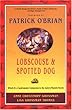
I will be using once again the Christmas Pudding recipe from a cookbook for food mentioned in O’Brien’s books. Lobscouse and Spotted DogWhich it’s called Lobscouse and Spotted Dog: Which It’s a Gastronomic Companion to the Aubrey/Maturin Novels. I want to use this book because it was given to me by a reader of this blog!

This year, I was thinking about using dark bread bread-crumbs this year.  Does anyone have any thought about this?  For example, pumpernickel?

Last year I thought the pudding was a bit light in color.  I opined at the time that this was partly a result of using a lighter color brown sugar.

Last year’s pudding.  It seemed light in color.

Also, since I will making a meal before the use of this pudding, I decided to add a couple jars of brandy butter sauce to my wishlist.  That said… any tips about making it from scratch?

UPDATE 15 Nov 1637 GMT:

One of the commentators, below, suggested this recipe, which I believe I shall try.  Intriguing, but I need to gather additional ingredients.

In that recipe there is an ingredient called “mixed spice”.

That seemed a bit vague, so I looked it up.  Sure enough, there is something called – keep in mind that I am no baker – “mixed spice”, which is pretty much analogous to a “pumpkin pie spice” mix, involving your expected cinnamon, clove, nutmeg, ginger, etc.  That mix brought two things to mind.

First, many people these days are ordering Mystic Monk Coffee in the “Pumpkin Spice” flavored version.  You can order some too.  Now, as a matter of fact!  It’s swell!

Second, speaking of Pumpkin Pie, which may be my favorite, there is this ditty entitled “Farewell O Fragrant Pumpkin Pie”:

Farewell, O fragrant pumpkin pie!
Dyspeptic pork, adieu!
Though to the college halls I hie.
On field of battle though I die, my latest sob, my latest sigh
shall wafted be to you!
And thou, O doughnut rare and rich and fried divinely brown!
Thy form shall fill a noble niche in memory’s chamber whilst I pitch
my tent beside the river which rolls on through Kingston town.
And my Love—my little Nell,
the apple of my eye to thee how can I say farewell?
I love thee more than I can tell;
I love thee more than anything—but—pie!

I will now squash this digression and return us to our Christmas Puddings.

And you can help me make them!

UPDATE 1432 GMT:
Posted in Fr. Z's Kitchen, Lighter fare, O'Brian Tags | Tagged , , , , ,
33 Comments

Looking for gift ideas for priests? Here’s one!

I have had a few notes from people asking for ideas about what to give to priests for Christmas.  Yes, I know it is early, but getting these things done early is better than leaving them to the last minute… sort of like confession.

Because the great Vincenzo, official WDTPRS photoshoper, has been so good to me over the years, I want to push his fun Pius Clock.  I have one.

A clock with the Popes Pii as the numbers.  Fun.

I got the large wall clock.

This CD gives you a sense of the scale.

On the wall over my desk area.

I encourage you to check out Vincenzo’s online Pope Pius Clock store and “give him the business”.

Vincenzo has often amused us here with his good humor in the images he has created and posted in comments. He has been of help to this blog with some graphics work.

We can’t know if we will ever see a Pius XIII. Until such time, the Popes Pius are serving in yet another role!

Posted in The Campus Telephone Pole | Tagged
18 Comments
























