Dr. Peter’s responds to Dr. Kreeft

I posted a piece by Peter Kreeft who opined that it would be good for one hundred anti-abortion-graphic-image-totin’ bishops to be thrown in jail as a witness against abortion.  Among other consequences, the press could not ignore the message.

I thought that was pretty edgy.  I posted about that here.  Peter Kreeft’s original piece is on Youth Defense.

Here is a reaction to Dr. Kreeft’s view by Dr. Peters, the Canonical Defender on his blog, In The Light Of The Law.  Alas, Dr. Peter’s doesn’t have an open combox.  Do add him to your RSS feed reader.

My emphases and comments.

I have learned far more from the great Dr. Peter Kreeft than he has ever learned (or had need to learn!) from me, but I think his recent remark that it would be good to see one hundred bishops thrown in jail for carrying graphic images of aborted babies need some nuance. His comment also lets me make a few points regarding the use of graphic imagery by pro-lifers.

1. Abortion is brutal, ugly, and downright disgusting. But, pro-lifers didn’t make abortion that way, it already is that way. The vast majority of the adult population in the US does not appreciate how violent abortion is; they have a sanitized impression of abortion, fostered by such words as “clinic” and “procedure” and “choice”. Pictures contextualize those words in an instant. If memory serves, the greatest progress against “partial-birth abortion” came when (wholly accurate) diagrams of scissors being jammed into the base of nearly-born babies’ skulls began to circulate.

2. I’ve always been more amenable to the use of graphic images of abortion than have some other, quite sound and amply dedicated, pro-lifers I know of, but at least some of my ‘tolerance’ can be ascribed to simple things like a sterner stomach. In any case, one’s degree of openness to the use of graphic abortion pictures should not be regarded as a measure of one’s dedication to saving lives or as a test of one’s pro-life machismo. [Good point.]

3. Good arguments against the use of such photos, especially in certain contexts, exist and should be heeded. No one I know of thinks, for example, that photos of aborted babies should be paraded through grade-schools in the hopes that, say, it will frighten 8-year-olds away from seeking abortions ten years later. But the use of such these images in public venues and easy-access websites threatens exactly this sort of premature and traumatizing exposure.

4. Pictures of abortion victims must never, ever, be used for any purpose except to directly and prudently educate adults about abortion. Using dead baby photos to, say, influence bystanders into pressuring Church officials to make personnel decisions about their clergy who are working in one of many worthy pro-life apostolates is, besides everything else that is wrong about that, to exploit the death of the very victims one claims to love.

Now to Kreeft’s comment, distinguens.  [Qui bene distinguit, bene docet.]

It is one thing to say that “It would be good if one-hundred bishops were thrown in jail for carrying pictures of aborted babies,” and another thing to say “Good could be drawn from having one-hundred bishops thrown in jail for carrying pictures of aborted babies.” The second claim is wholly defensible, I think, the first is less so.

It is never “good” for the coercive power of the State to be applied against individuals, let alone against bishops, striving to proclaim the Gospel and/or to witness to the demands for Christian living. Such coercion is wrong itself, of course, but it also, as history shows time and again, feeds the appetite of the State to inflict yet more suffering on the Body of Christ. [Thus…] Nothing, however casually offered, should be said to encourage such actions. Yes, I know, sanguis martyrum, semen christianorum. Amen to that, but Tertullian did not call good the infliction of suffering on the faithful, rather, he showed how God could bring great good from sufferings accepted for his name.

Put another way, I hope and pray that we have one hundred bishops (or philosophy profs, or canon lawyers) willing to be thrown in jail for undertaking any number of good and holy works, but I also hope that we never find out for sure.

I doubt Kreeft would disagree with any of my observations, but I didn’t see these points being made elsewhere, so. . .

Now a few more people will see them.

An interesting and well-reasoned response.

I am sure we will see more.

What do you think?

Posted in Emanations from Penumbras, Linking Back, The Drill, The future and our choices | Tagged , ,
36 Comments

CARA study on trends for parishes, Mass attendance

Over at the Fishwrap, their elder-dissenter Richard McBrien posted a column about shifts in Mass attendance.  He works from a study about the “‘Supersizing’ the U.S. Catholic Parish Life” conducted by the Center for Applied Research in the Apostolate (CARA) at Georgetown University in Washington, D.C.

Among the findings the study came up with we read that more Catholics are attending Mass at fewer parishes staffed by a rapidly declining number of priests, one in three parishes (29 percent) has Masses at least once a month in a language other than English, household contributions are higher in smaller parishes than in larger, parishes are likely to get bigger because the number of Catholics continues to grow, and smaller parishes are being closed.

I hate to admit it, but McBrien offers a pretty good precis of the information in the report.  He should stick to stuff like this.  Of course the reason why he reports on this is that he wanted to push his notion of leadership in the Church.

Reading about this CARA study reminded me of another CARA study a couple years ago which I wrote about HERE.

That study showed that of Catholics in the USA having any opinion at all on the topic favor the availability of Masses in the the Extraordinary Form of the Roman Rite by a two to one margin, with the majority having no opinion.

When asked “Do you favor as an alternative to the newer Mass, bringing back the Traditional Latin Mass for those who would prefer this option?”

25% favored the option, 12% opposed it, and 63% had no opinion.

Support for the TLM option wass higher among older Catholics, those who attend Mass weekly, political independents, and those with graduate degrees.

We need a Marshall Plan.

Posted in New Evangelization, Our Catholic Identity, The Drill, The future and our choices | Tagged , , , , , , ,
21 Comments

An NLM collaborator ordained priest today!

NLM reports that their collaborator Br. Lawrence Lew of Blackfriars, Oxford, was ordained priest today.

WDTPRS kudos to Fr. Lew!

Posted in Fr. Z KUDOS, The Campus Telephone Pole | Tagged , , ,
3 Comments

FR. FINIGAN is up for a “new media” award.

My friend Fr. Tim Finigan’s blog, The Hermeneutic of Continuity, is up for an award.

Will you show some appreciation for the work he does?

He is in the Most Inspiring Leadership category.

On the award site we read:

The final stage of the judging process is now underway to decide a winner and runner-up in each category that will be announced at the Awards Ceremony on 14th October.

So, you can’t vote, but you can visit.

In the hope that one of the criteria for the judges is traffic to the site…

Visit His Hermeneuticalness.

Use his combox as well.

Here is the awards page, where he is listed.

Posted in The Campus Telephone Pole | Tagged
4 Comments

Driving somewhere? WWJD

From a priest friend:

The Light turned yellow

The light turned yellow, just in front of him. He did the right thing, stopping at the crosswalk, even though he could have beaten the red light by accelerating through the intersection.

The tailgating woman was furious and honked her horn, screaming in frustration, as she missed her chance to get through the intersection, dropping her cell phone and makeup.

As she was still in mid-rant, she heard a tap on her window and looked up into the face of a very serious police officer. The officer ordered her to exit her car with her hands up..

He took her to the police station where she was searched, fingerprinted, photographed, and placed in a holding cell.

After a couple of hours, a policeman approached the cell and opened the door.  She was escorted back to the booking desk where the arresting officer was waiting with her personal effects.

He said, “I’m very sorry for this mistake. You see, I pulled up behind your car while you were blowing your horn, flipping off the guy in front of you and cussing a blue streak at him. I noticed the ‘What Would Jesus Do’ bumper sticker, the ‘Choose Life’ license plate holder, the ‘Follow Me to Sunday-School’ bumper sticker, and the chrome-plated Christian fish emblem on the trunk, so naturally….I assumed you had stolen the car.”

Posted in Lighter fare | Tagged
28 Comments

A reader’s story of an emergency room confession and advice to readers

From a reader:

Yesterday (Friday) and I was rushed to the E.R. with a possible aortic dissection. It turned out that it was just muscle pain. I asked for a Catholic priest, and, to my great fortune, my regular parish priest was on call! He was extremely nice! He gave me the Anointing of the Sick, and heard my Confession. I got some things of my chest, and I am glad that I did. I just wanted to write to recommend to all your readers that if they go to the E.R. or hospital, it helps to get Anointing and have Confession. It comforts the soul. Thank-you for ministry, Father, and may God Bless You!

“It helps.”

I should say it does!

One of our most earnest prayers as Catholics in the Litany of Saints is “from a sudden and unprovided death, deliver us O Lord”!  We don’t know the day or the hour.

“But Father! But Father!”, some of you may be saying.  “You ask this once in a while.  Do you want to scare the hell out of us?”

Yes.  I do.

  • There is a good alternative to being scared, however.
  • Reflect frequently on the reality of death.
  • Examine your consciences daily.
  • Make a good confession as frequently as you need to of all mortal sins in number and kind.

Parish priests, bishops, please hear confessions, preach about confession, teach about confession, make your own confession.  It is going to happen to you to, Fathers.  You also are all going to die.

Posted in "How To..." - Practical Notes, Brick by Brick, New Evangelization, Our Catholic Identity, TEOTWAWKI, The future and our choices | Tagged , , ,
15 Comments

QUAERITUR: Re-blessing things with older Rituale Romanum

blessing a rosaryFrom a reader:

The prayers in the old Roman Ritual are sometimes much richer than the prayers found in the current Book of Blessings. Since the added exorcisms and petitions in the older prayers might make a sacramental more effective, is it ever permitted to have something blessed a second time according to the older ritual? If so, would this have to be a conditional blessing?

Well… I guess so.  I think you would have to examine the prayers for the things in question and then make a determination.

The newer Book of Blessings (De benedictionibus) is filled with texts that don’t seem actually to bless things, in the sense of a constitutive blessing.  The Book of Blessings has in the introductory section some theological comments which seem to eliminate any notion of the constitutive blessing.

While there are certain sacraments we cannot repeat, such as baptism, confirmation and holy orders (because they impart an indelible character which remains… even in hell or heaven), we are talking about sacramentals, not sacraments.

The bottom line is that, were you to have a thing blessed with the older Rituale Romanum that was already “blessed” (or not), no harm would be done.  At worst you would have started with something already blessed which was blessed again.  At best, you have something that wasn’t blessed that it now blessed.  I don’t think a “conditional” form has to be used, as in the case of a doubtfully conferred sacrament.

Be careful, however, with re-blessings.  My experience is that when you bless things over and over, they start to glow in the dark and float.  Do this only indoors.  You don’t want them to get away from you.

Posted in "How To..." - Practical Notes, ASK FATHER Question Box | Tagged ,
9 Comments

Saints of pots and pans, shipwrecks, beheading, and music both mystical and sublime

I bring to your attention four saints on the calendar listed in the 2005 Martyrologium Romanum.

1. Sancti Roberti Bellarmino, episcopi et Ecclesiae doctoris, e Societate Iesu, qui praeclare de theologicis temporis sui controversiis peculiari ac subtili habitu disputavit; cardinalis renuntiatus, ad ministerium pastorale in Ecclesia Capuana magnopere sese impendit et tandem Romae ad Apostolicae Sedis et fidei doctrinae defensionem plurimos suscept labores.

This great theologian, whose writings have not all been translated into English, had much to do with Galileo, whom I mention elsewhere today.  As a cardinal living at the Roman College he used to scrub pots and pans with the students.

2. Mediolani in Liguria, depositio sancti Satyri, cuius insignia merita sanctus Ambrosius, frater eius, commemorat.  Nondum Christi initiatus mysteriis, cum in naufragium incidisset, mortem non metuit, sed, ne vacuus mysteriis exiret, ex undis servatus Dei Ecclesiam requisivit; quem intima et mutua caritas fratri Ambrosio coniunxit, a quo iuxta sanctum martyrem Victorem sepultus est.

St. Ambrose (+397) was inspired by the death of his brother to write one of the works which have come down to us from his pen.  De bono mortisOn the good of death… forms part of a chain of literature, a literary genre called Consolatio, Consolation Literature, from the ancient world to our own times.  This was a common topic of ancient rhetoric and orations and writings of this type revolve around the fact that we are all going to die.  This has been a common theme I have tackled on this blog and in preaching and conferences, especially in view of the Cross and our encounter with awesome but alluring mystery during Holy Mass.

5. Cordubae in Vandalicia Hispaniae regione, sanctae Columbae, virginis et martyris, quae in Maurorum persecutione sponte coram iudice et satrapum collegio fidem professa est et continuo ane fores palatii gladio decollata est.

Like Sts. Nunilo and Alodia, Columba was slain because she professed her Christian faith in the presence of leaders belonging to the “Religion of Peace”.  Sts. Nunilo and Alodia have their feast on the same day as Bl. John Paul II… coming up in October.

7. In monasterio Montis Sancti Ruperti prope Bingium in Hassia, sanctae Hildegardis, virginis, quae, scientia rerum naturae et medicinae necnon arte musica perita, quam mystica contemplatione experta erat, pie in libris exposuit ac descripsit.
I knew an Abbess Hildegard, one of the most impressive women I have ever met.  She was Abbess at Rosano in Italy, near Florence, forever and virtually ruled the Church in that area, including more than one bishop.  Rosano was/is the largest community of enclosed Benedictine nuns.  Listening them sing Tenebrae one year, 60 of them, entirely with the older books, was an amazing experience.  What can one say about Hildegard of Bingen?  You can read something about here in an article in First Things… HERE.  Excerpt:

It’s an age of widespread cultural and ecclesial malaise: the State encroaches ever more into the affairs of the church; the clergy is indolent and ineffective, oft corrupt and unchaste; the laity is poorly catechized; and Gnosticism advances. It’s the twelfth century, into which a Teutonic prophetess stepped, prepared to confront the spirits of the age with visions from on high. Nihil sub sole novum, and thus it’s worth considering on the occasion of St. Hildegard of Bingen’s feast day….

You will want to put down your WDTPRS mug of Mystic Monk Coffee when reading so that you don’t lose it at Prof. Huizenga’s phrase: “Pope Benedict, himself confronted by millions of armchair antipopes…”.

There are eight other entries, all fascinating, and I could do this all day, everyday.

Listen to some texts by Hildegard:

[wp_youtube]dMR9wZ5JwHA[/wp_youtube]

Posted in Just Too Cool, Non Nobis and Te Deum, Our Catholic Identity, Saints: Stories & Symbols | Tagged , , , , , , , , ,
10 Comments

About Galileo, churches and the sun

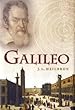
I was recently alerted to a blog, The Deeps of Time, which deals with science and the Catholic faith.  Even as I am starting at a book on my desk about Galileo (sent by a kind reader from my wish list) by J.R. Heilbron I found this great quote on the aforementioned blog:

“In a generation which saw the Thirty Years’ War and remembered Alva in the Netherlands, the worst that happened to men of science was that Galileo suffered an honorable detention and a mild reproof, before dying peacefully in his bed.”

Alfred North Whitehead

All liberals, anti-Catholics, and even many sensible people have the oddest ideas about Galileo.  There is a general myth that the Church treated Galileo cruelly or that he was tortured by the Inquisition or that his ideas were simply rejected because the Church hates science.

Not so.

Santa Maria degli AngeliBTW… Heilbron has another book on churches and cathedrals as solar observatories.  It is called The Sun In The Church. I am putting that on my wishlist immediately.  This is clearly in the Just Too Cool category as well as Look! Up In The Sky!  I have in mind church in Rome, such as Santa Maria Degli Angeli, where there is a solar clock in the form of a narrow shaft of sunlight streaming to the floor to trace its analemma over the course of the year across a 45 meter long meridian line.  It also could track certain stars, such as Sirius, the Dog Star.  Clement XI (+1721) commissioned it to check the accuracy of the Gregorian Calendar.  That sun clock was used to determine solar noon for all of Rome.  A signal would be sent from that church by means of a flag, watched for across town from the Gianicolo Hill where a canon … make that cannon… would be fired to sound noon.   Not exactly sextants on the quarterdeck, and the striking of eight bells, but they did make it noon.  On a couple days of the year, the sun streams directly into the main doors of St. Peter’s Basilica and the ancient Egyptian obelisk in the square is the gnomon of a great solar calendar.

Okay… I’ll stop now.

I will now…

[CUE MUSIC]

… read Heilbron on Galileo and drink some Mystic Monk Coffee!

Other than the fact that I like coffee when I read in the morning, the connection of coffee in this post should be obvious, even to readers of the Bitter Pill and the Fishwrap.  Even they should be inspired to use my link to buy themselves some beans or tea leaves.

Think about it.  What do coffee beans need to grow?  They need…. ummmm….. time.  That’s it!  They need time!  I was going to say sun of course.  But, now that I think of it, a great deal of coffee is grown in the shade.  Some coffee is grown in the sun, but that method requires more resources.   No matter.

When you buy Mystic Monk Coffee you are helping the Carmelites in Wyoming build their churchChurch… get it?  Sun?  Churches?  Coffee?

But wait… there’s more!

Turning the glass and striking the bell at noon, after taking the altitude of he sun, was a common practice on board HMS Surprise and all the other ships in the Aubrey/Maturin books.  And their steward, Preserved Killick, made them exceptionally good coffee… when it wasn’t tainted with rat droppings.

I hope the Carmelites, when they build their great church for their monastery, will include a small hole for a shaft of light to sketch its bright analemma on the pavement.

Mystic Monk Coffee!

It’s sunny!

Posted in Just Too Cool, Look! Up in the sky!, Preserved Killick | Tagged , , , , ,
18 Comments

Great photos of Card. Burke’s Mass at Fontgombault

NLM has some spiffing eye-candy photos of Holy Mass celebrated by His Eminence Raymond Card. Burke in the beautiful medieval church at the French monastery of Fontgombault.  There are beautiful vestments as well.

Card. Burke

And yes, there is a cappa magna.

cappa magna

Look at the other photos over there.

Posted in Brick by Brick, Just Too Cool | Tagged , ,
18 Comments
























