To aid me in keeping my online time down today, here is something from a couple years back.
It’s Good Friday! Here are a couple of recipes for good food for this day of fasting and abstinence.
Fr. Z’s Kitchen: Lentils from the Benedictine Monks of Norcia. IMPROVISE – ADAPT – OVERCOME
Fr. Z’s Kitchen: Pasta e ceci alla Romana
On only two days of the year we modern Latin Church Catholics are asked both to fast and to abstain from meat.
According to the 1983 Code of Canon Law for the Latin Church, Latin Church Catholics are bound to observe fasting and abstinence on Ash Wednesday and Good Friday.
Here are some details. I have posted them before, and I am sure you know them already, but they are good to review.
FASTING: Catholics who are 18 year old and up, until their 59th birthday (when you begin your 60th year), are bound to fast (1 full meal and perhaps some food at a couple points during the day, call it 2 “snacks”, according to local custom or law – two snacks that don’t add up to a full meal) on Ash Wednesday and Good Friday.
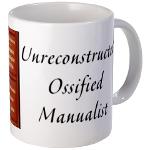
 Since we are Unreconstructed Ossified Manualists, we pay attention to old manuals. Prümmer suggests that for the morning snack a piece of bread and 2 ounces of nourishing food is sufficient, and that for the afternoon or evening snack, 8 ounces of nourishing food is permitted to all. “Sufficient” for what is not entirely clear. There is a difference between working construction and working at a computer. This is greatly simplified by taking Good Friday off… if possible.
There is no scientific formula for this. Figure it out.
ABSTINENCE: Catholics who are 14 years old and older are abound to abstain from meat on Ash Wednesday and on all Fridays of Lent… and Good Friday in the Triduum.
In general, when you have a medical condition of some kind, or you are pregnant, etc., these requirements can be relaxed.
For Eastern Catholics there are differences concerning dates and practices. Our Eastern friends can fill us Latins in. As I understand, the Byzantine (Ruthenian) Catholic Church in these USA has followed the Latin rite to a certain extent. Abstinence from meat is required on all Wednesdays and Fridays of Great Lent, with the the strict fast (abstinence from meat and dairy) on Clean Monday and Good Friday.
The question always comes up….
How about in between?
The other day I had a question via email about vaping. Vaping! One can, indeed, “vape”. However, wouldn’t it be a wonderful thing to give it up for a day?
Click!
The old axiom, for the Lenten fast, is “Liquidum non frangit ieiunium … liquid does not break the fast”, provided you are drinking for the sake of thirst, rather than for eating. Common sense suggests that chocolate banana shakes or “smoothies”, etc., are not permissible, even though they are pretty much liquid in form. They are not what you would drink because you are thirsty, as you might more commonly do with water, coffee, tea, wine in some cases, lemonade, even some of these sports drinks such as “Gatorade”, etc.
Again, common sense applies, so figure it out.
Drinks such as coffee and tea do not break the Lenten fast even if they have a little milk added, or a bit of sugar, or fruit juice, which in the case of tea might be lemon.
Coffee would break the Eucharistic fast (one hour before Communion), since – pace fallentes – coffee is no longer water, but it does not break the Lenten fast on Ash Wednesday or Good Friday.
You will be happy to know that chewing tobacco does not break the fast (unless you eat the quid, I guess), nor does using mouthwash (gargarisatio in one manual I checked) or brushing your teeth (pulverisatio – because tooth powder was in use back in the day).
If you want to drink your coffee and tea with true merit I suggest drinking it from one of my coffee mugs. I’d like to offer an indulgence for doing so, but that’s above my pay grade.
There’s always the Liquidum non frangit ieiunium mug.


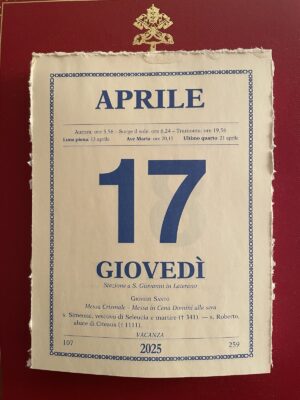 On good Friday the Roman Sun rose at 06:23 and it set at 19:57. Little by little our days lengthen which is welcome.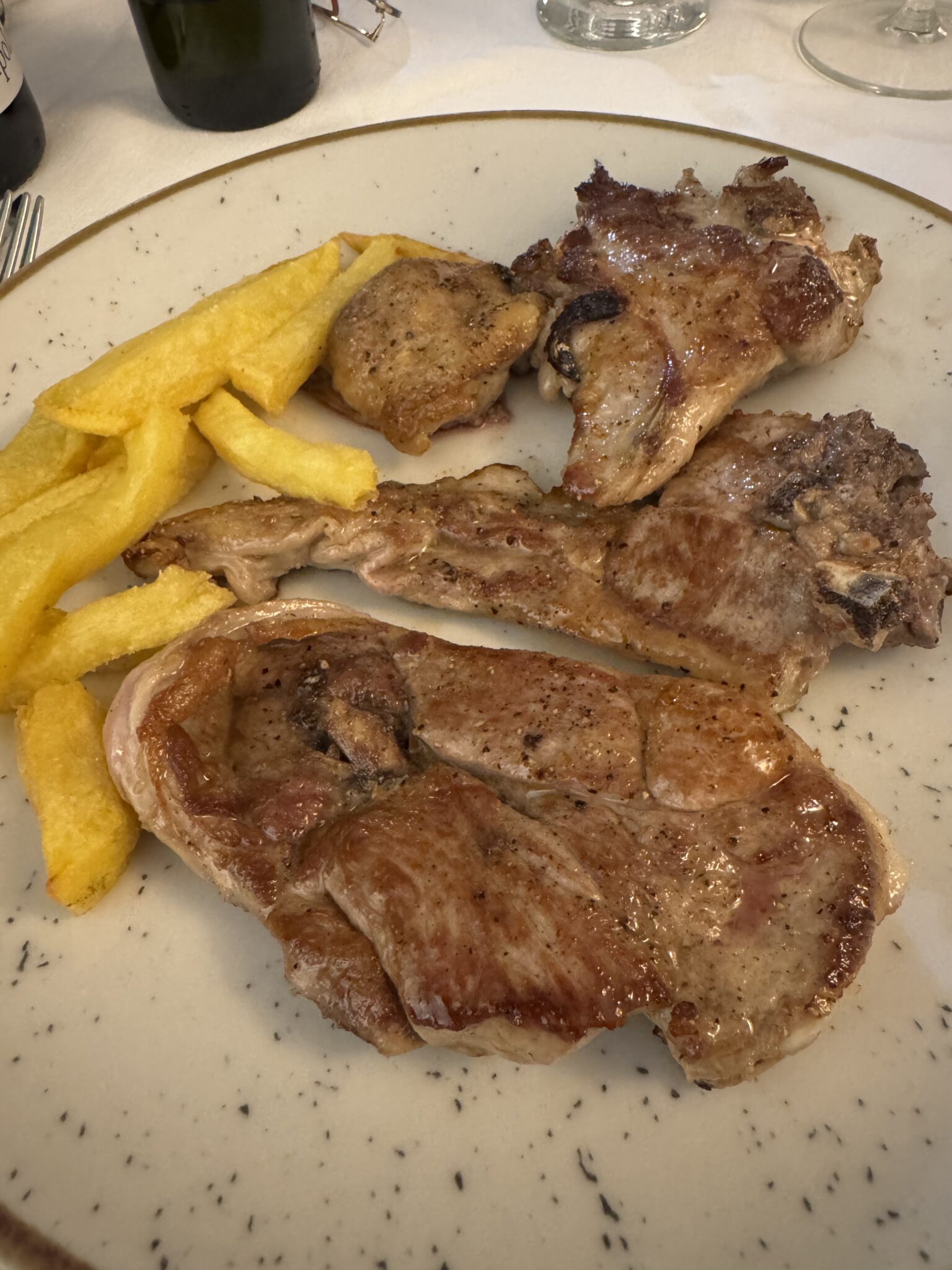
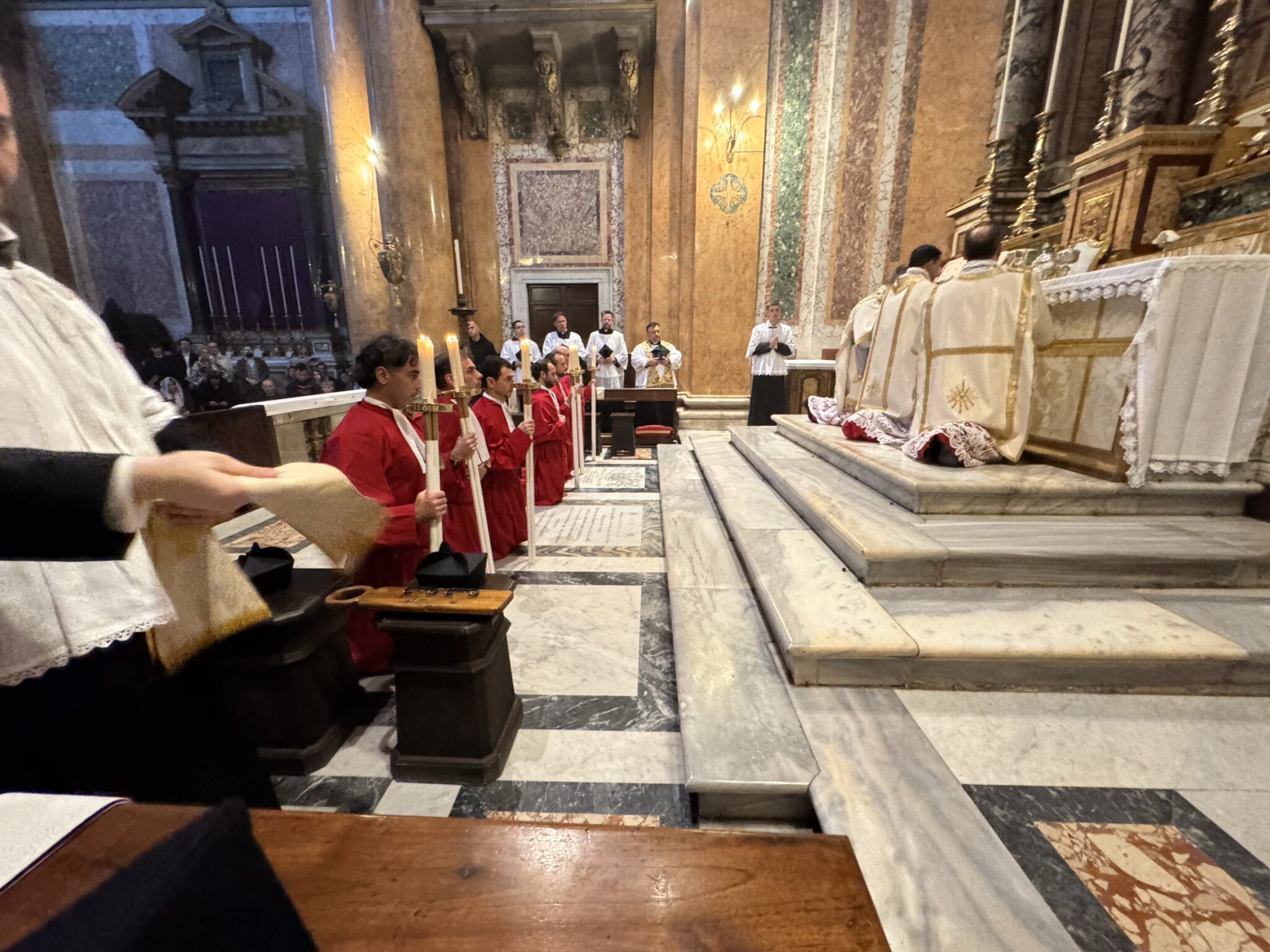
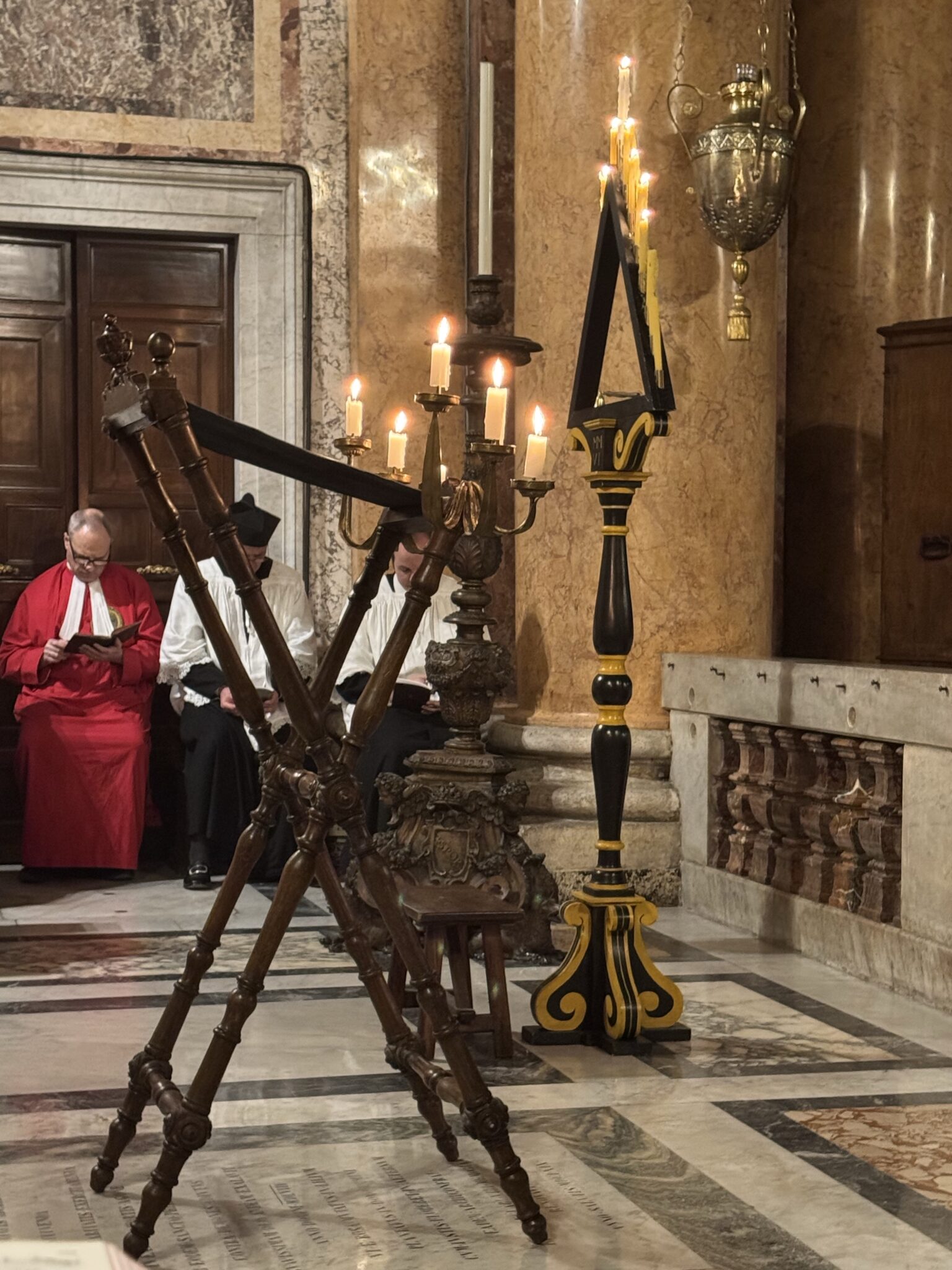









 Today the Sun rose upon Rome at 6:28. It will inevitably set at 19:53.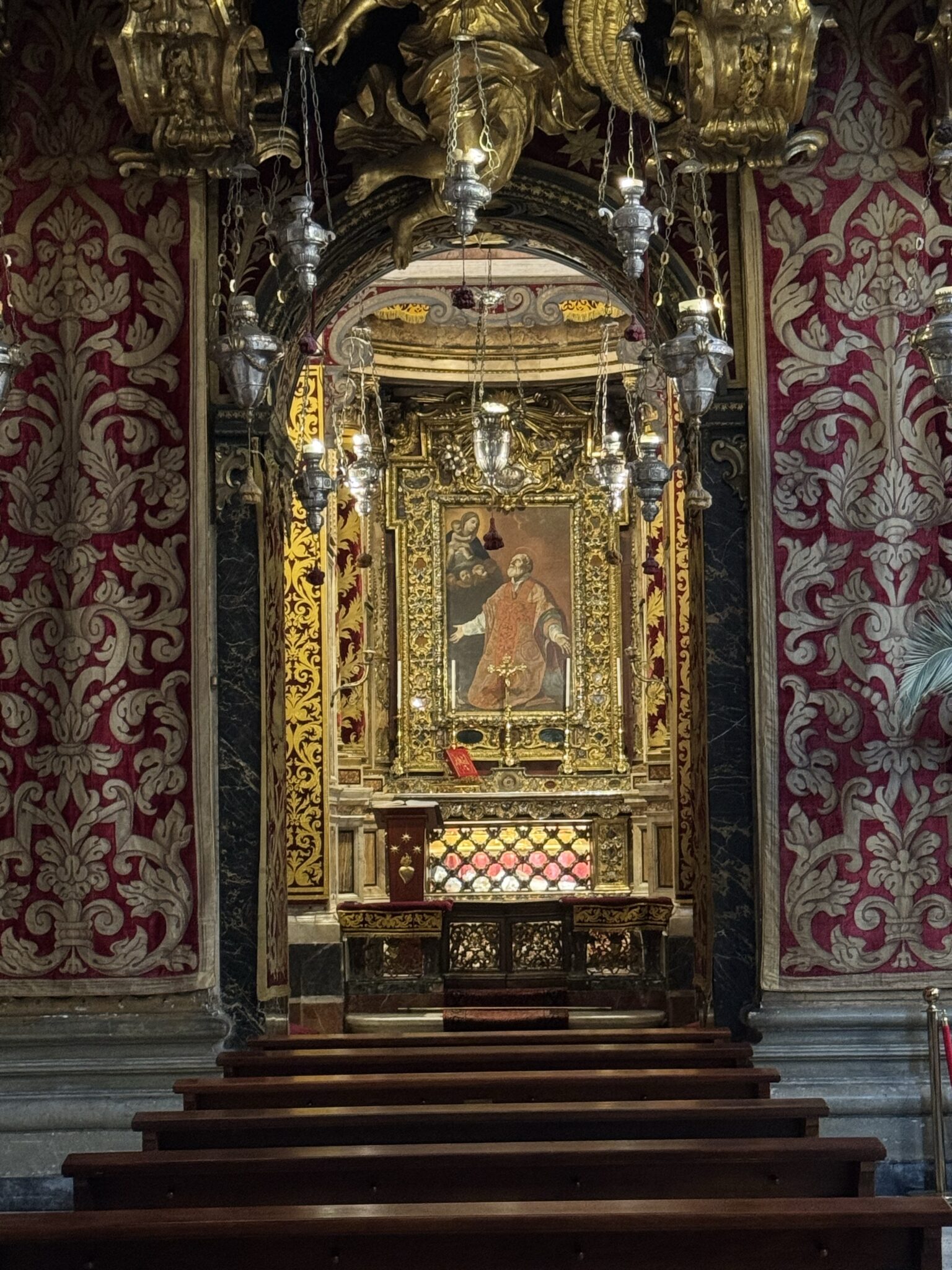



 Fr. Reader on Summorum Pontificum Pilgrimage 2026… *sigh*… Vatican Bars Annual TLM Pilgrimage from ENTERING St. Peter’s Basilica: “They can just enter individually, at the same time to st Peters, without the banners. “We are not a pilgrimage,…”



























