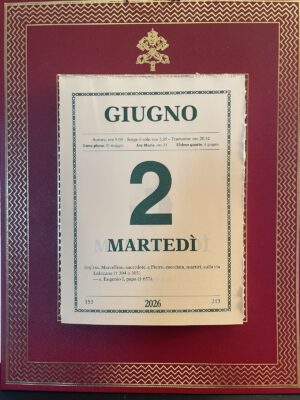
On this First Friday of June the sun broke the plain at 5:33.
Not that long ago as I write, it sank again below at 20:44.
The Ave Maria Bell is in the 21:00 cycle still. But we know the truth.
Happy Feast of St. Boniface.
Please remember me when shopping online and use my affiliate links. US HERE – WHY? This helps to pay for health insurance, utilities, groceries, etc.. At no extra cost, you provide help for which I am grateful.
What excitement was there today?
In no specific order of excitement…
I wrote my weekly piece for One Peter Five.
I got a haircut.
I did laundry.
I started my apartment shut down process.
I sweated through my vestments during Mass.
I had a “caprese” for lunch.
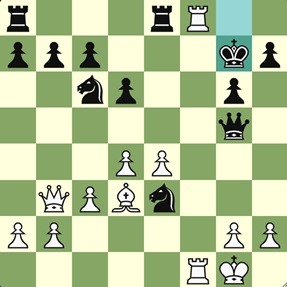
I did my language lessons and chess exercises.
White to move. Mate in 4.
NB: I’ll hold comments with solutions ’till the next day so there won’t be “spoilers” for others.
It was 26 minutes to 0600 when the sun rose in Rome.
It was 16 minutes to 2100 when the sun set.
The Curia is still in the 21:oo cycle for the Ave Maria Bell.
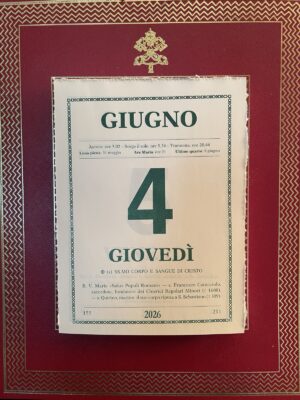
Today is the real Feast of Corpus Christi, though it is often transferred – lock and stock – to Sunday or, in more traditional celebrated again on Sunday so more people can partake.
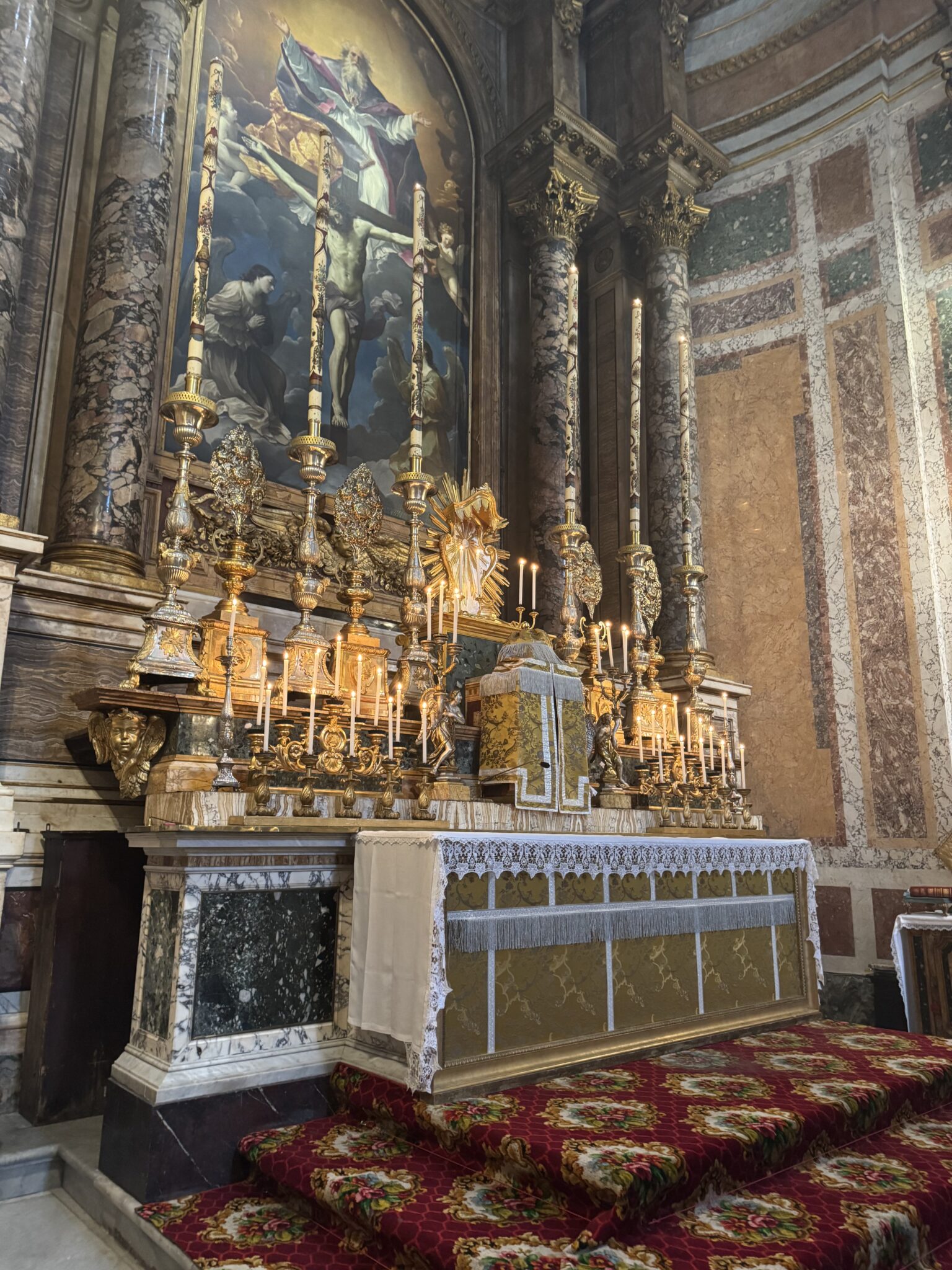
Tonight we had a lovely Mass with good music and a Eucharistic procession inside the church.
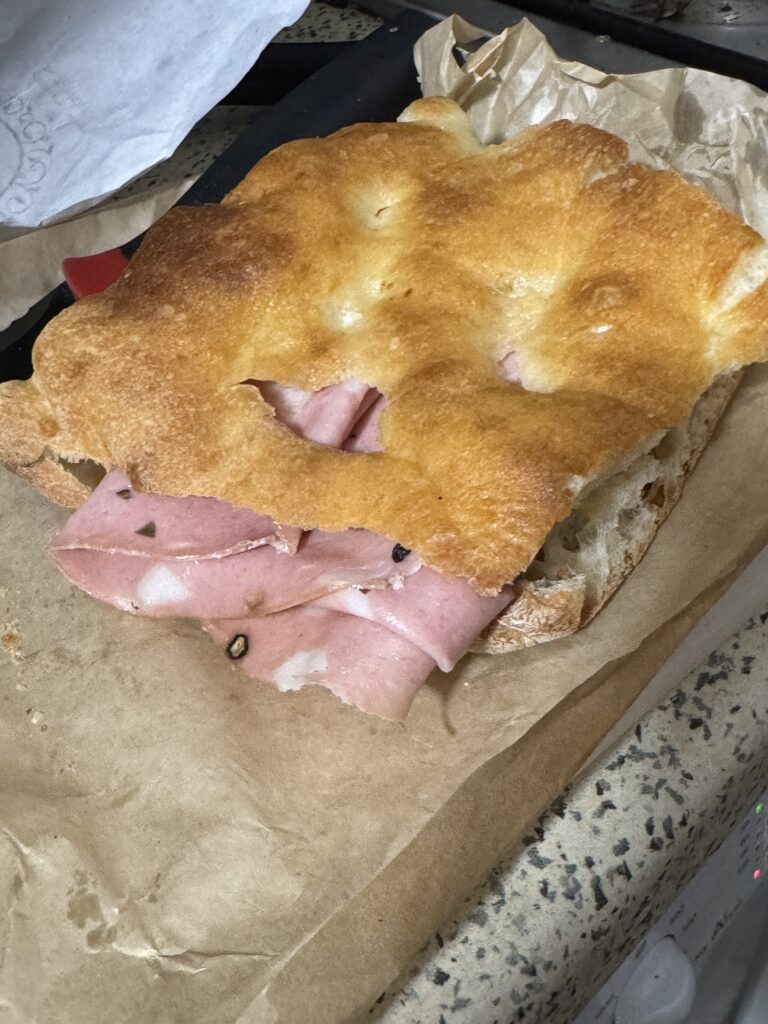
First… what did I have, you wonder, for lunch?
An oldie but goodies. My final pizza bianca and mortadella with truffle panino.
What a great combination and good for a hot day with cold Roman water.
NB: I’ll hold comments with solutions ’till the next day so there won’t be “spoilers” for others.
Mate in 4. White to move.
In church tonight…
Please remember me when shopping online and use my affiliate links. US HERE – WHY? This helps to pay for health insurance, utilities, groceries, etc.. At no extra cost, you provide help for which I am grateful.
Also, Wesley BEAT Magnus… again, at Norway Chess. YAY
The evils which afflict us are well known, even if we do not now mention them, for long since have they been re-echoed through the whole world. The teachings of the Fathers are scorned; the apostolic traditions are set at naught; the fabrications of innovators are in force in the churches; these men, moreover, train themselves in rhetorical quibbling and not in theology; the wisdom of the world takes first place to itself, having thrust aside the glory of the Cross. The shepherds are driven away, and in their places are introduced troublesome wolves who tear asunder the flock of Christ. The houses of prayer are bereft of those wont to assemble therein; the solitudes are filled with those who weep. The elders weep, comparing the past with the present; the young are more to be pitied, since they know not of what they have been deprived.
Basil of Caesarea, Letter 90 (tr. Roy J. Deferrari):
Here’s the caption (I was sent this via Instagram):
This Sunday, at the Children’s Pentecost Mass, we all received the fruits of the Holy Spirit together. We discovered what the Spirit gives us in each of these fruits: love, joy, peace, patience, and kindness, which fill our hearts and help us live closer to Jesus. ??? And, as a sign of all that we shared, we prepared a large fruit salad, full of colors, flavors, and also the love of our beloved Holy Spirit, who unites us and invites us to bear good fruit every day. ??? We experienced a Pentecost full of joy, faith, and community! ??
Here it is.
Remember… the big problem that needs to be dealt with is … lace.
How – I ask you – HOW can anyone justify the suppression of the Traditional Latin Mass when THIS can go on?
This jackass is in MASS VESTMENTS with a “Minions” hat. He clearly has an affinity for fruit. I can imagine his sermons are also fruit salad. Can you imagine what else goes on in there.
What do you suppose the people in that geographic parish believe regarding the Catholic Faith? Maybe not a fair question? Oh YEAH? Having had this sort of crap for who knows how long, what do you think they believe about the Eucharist?
But… lace. That’s a real problem. It means that… you know… Vatican II…
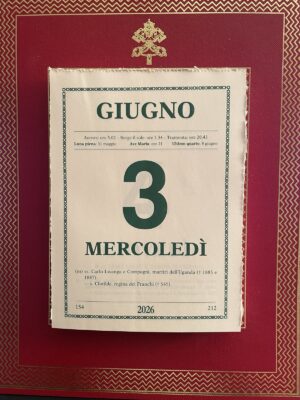
At 20:43 we shall wave the sun farewell for another night.
Ave Maria for the Curia is in the 21:00 cycle.
It is the feast of the great St. Charles Lwanga.
Welcome Registrant:
MarianRose
Please remember me when shopping online and use my affiliate links. US HERE – WHY? This helps to pay for health insurance, utilities, groceries, etc.. At no extra cost, you provide help for which I am grateful.
It has been terribly hot here in Rome, exacerbated by high humidity. It’s making cassock life pretty miserable.
Today could begin your Novena to the Sacred Heart of Jesus
Out with priests last night for supper hosted by a fine lay gentlemen. It was very pleasant.
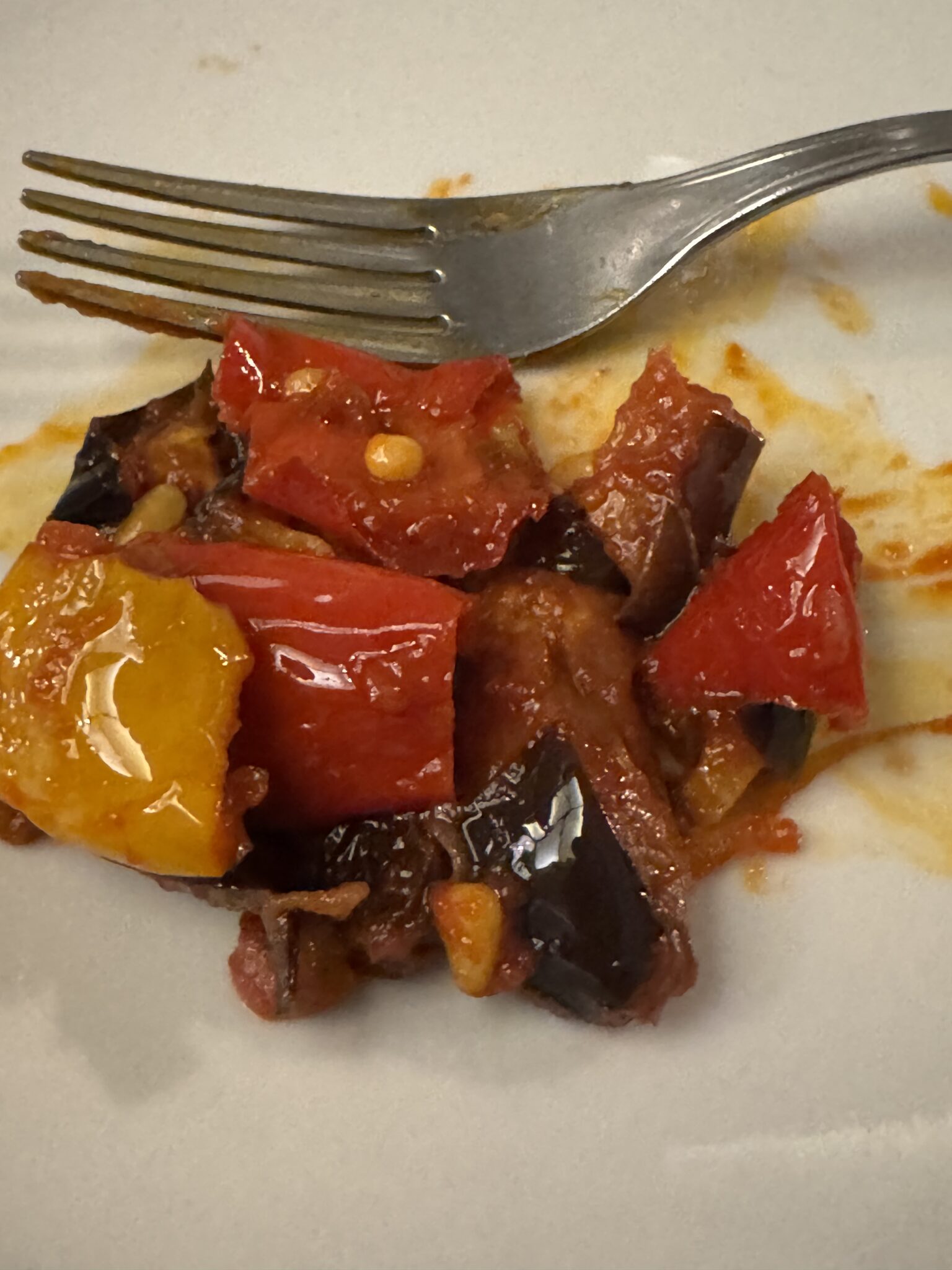
The best caponata in Rome.
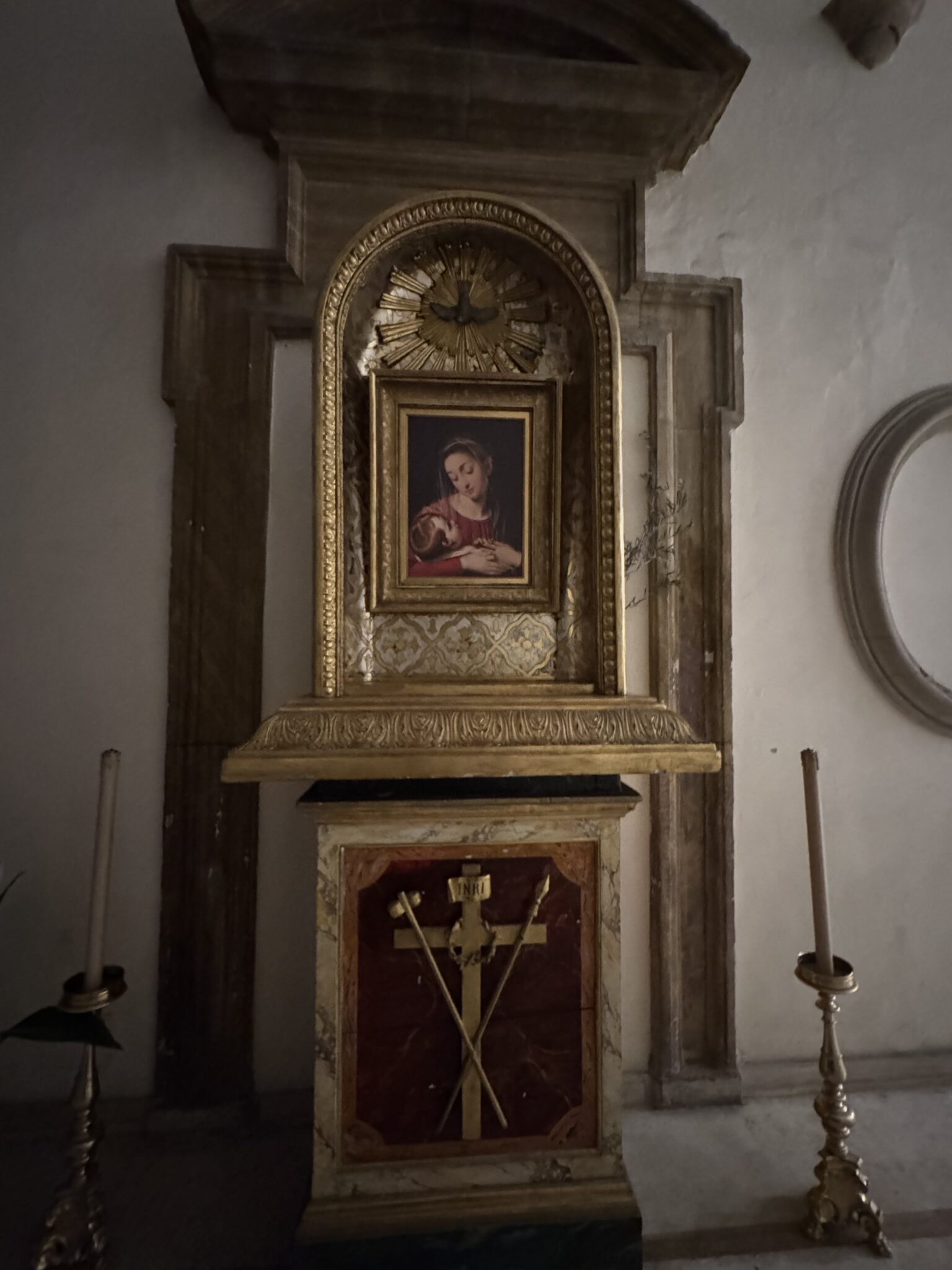
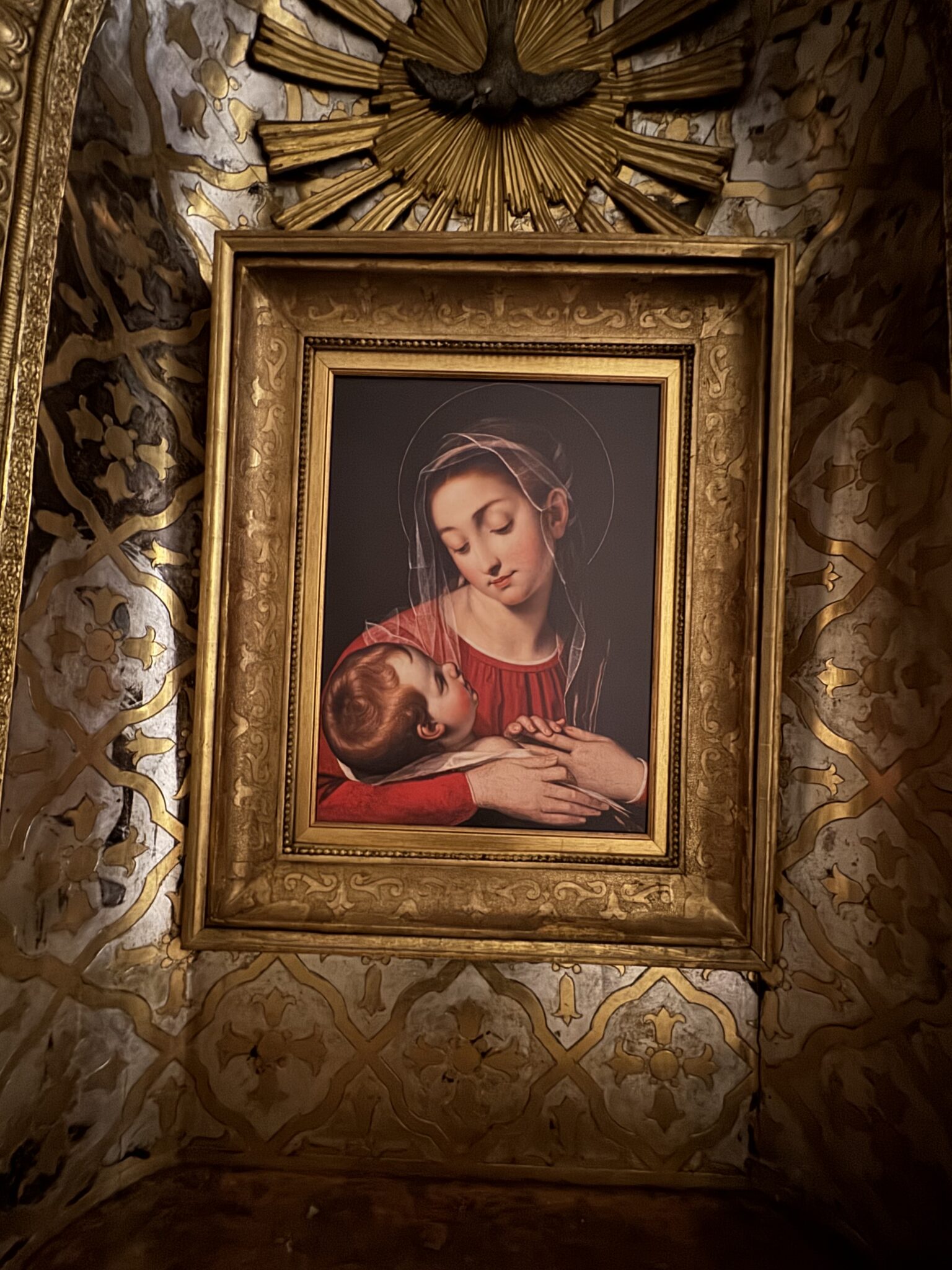
The other day the Archconfraternity had a social with a recital over at San Carlo ai Catinari, which has been closed for years from earthquake damage. There is a beloved image of Mary and Child in the church… it’s not in the church now because of construction… and people can’t see or venerate it. It’s presently in the corridor outside the church.
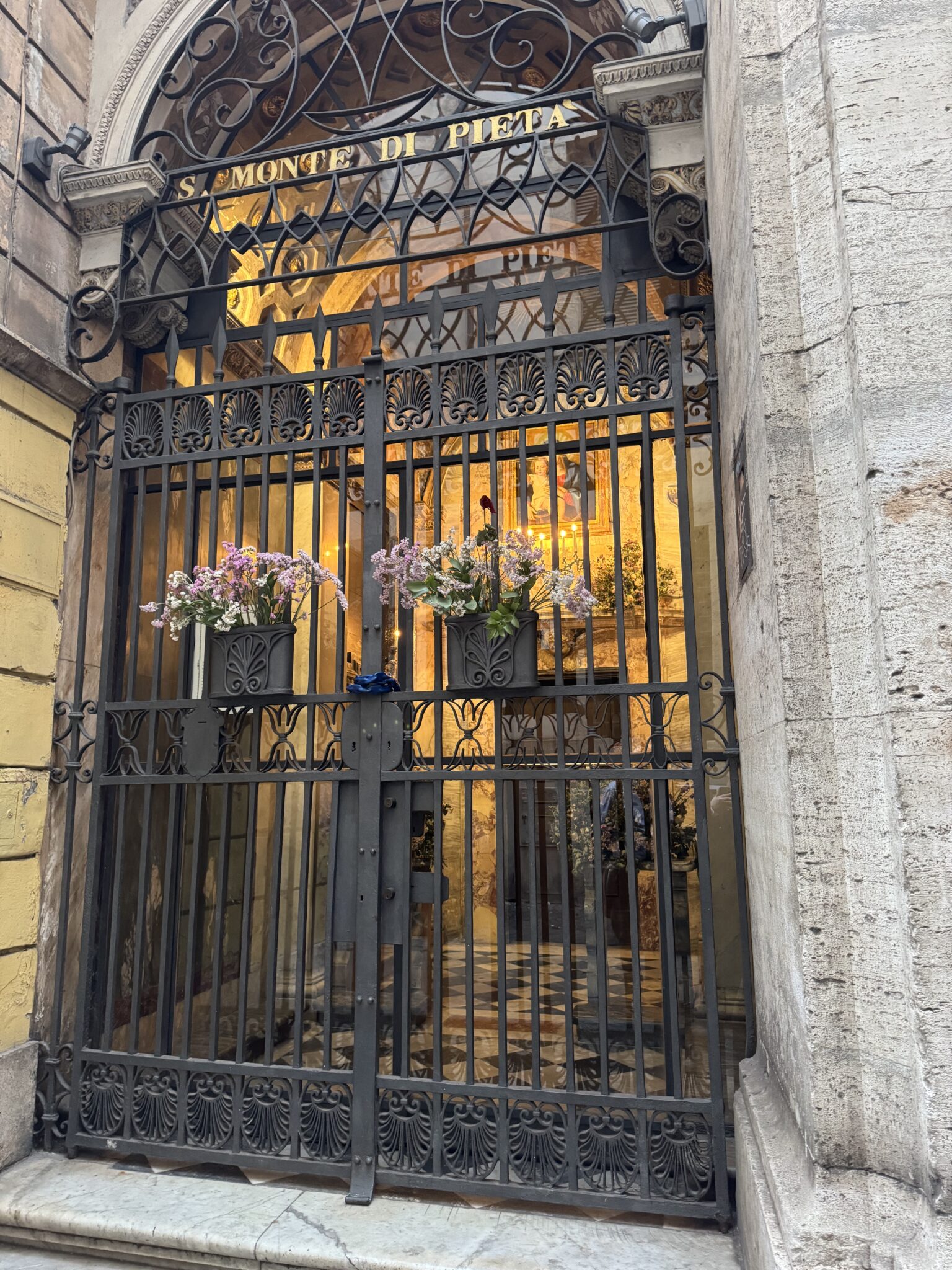
Speaking of sweet, the priests of The Parish™ have been fixing up a street Shrine to Our Blessed Mother, just up the way a bit. They put in new lights and flowers and a replica of the image of Mary (the original is in the church).
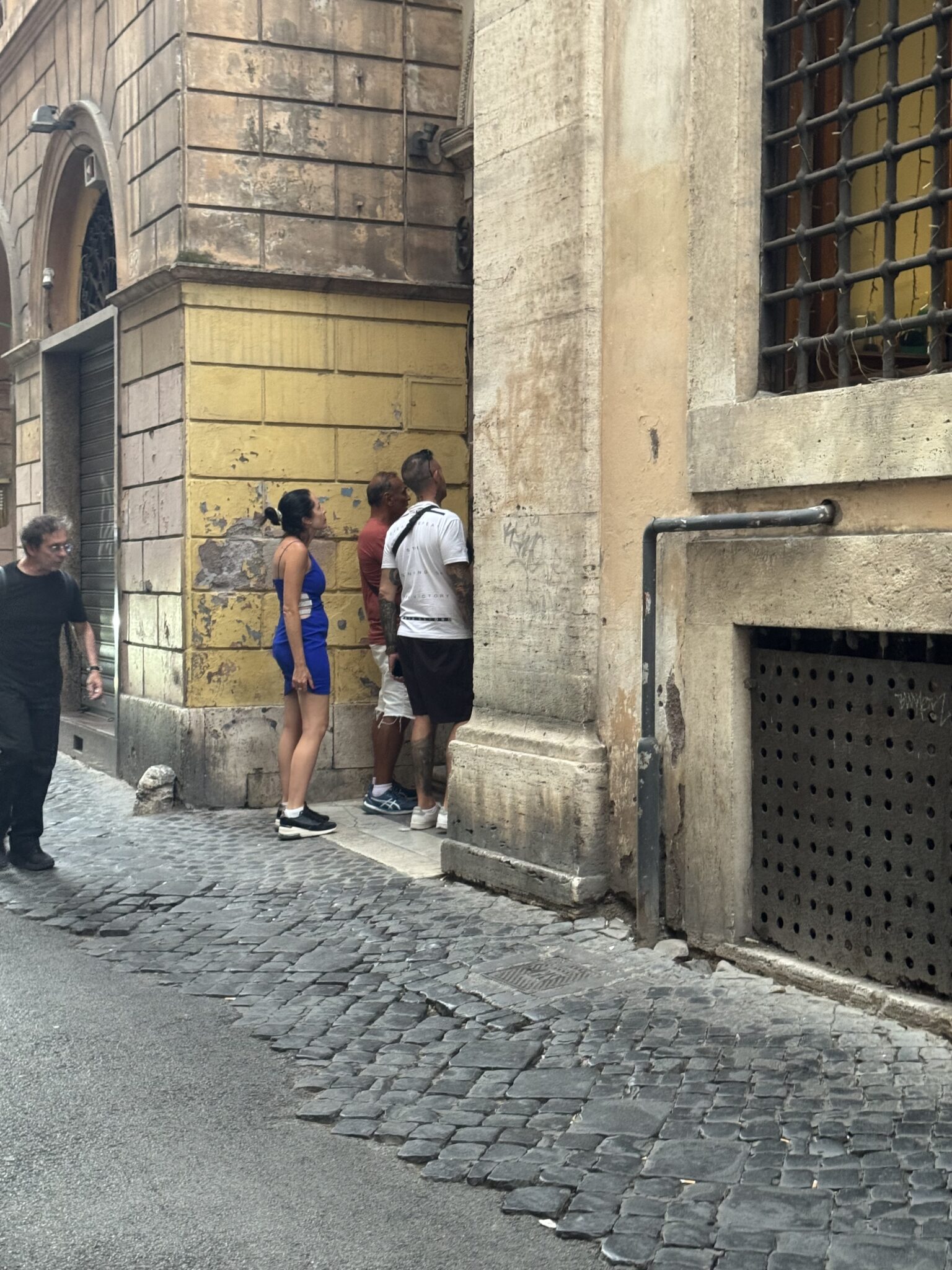
We walked by it last night on the way to supper. I looked back just as a few tourists noticed it. They stopped, made the Sign of the Cross, and went over to see it more closely.
It was a great moment. It confirmed that “if you build it/clean it/restore it/love on it, they will come”.
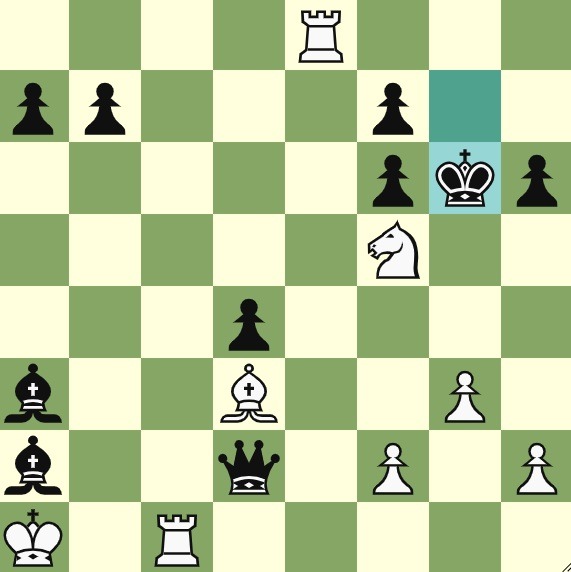
White to move and mate in 4.
NB: I’ll hold comments with solutions ’till the next day so there won’t be “spoilers” for others.
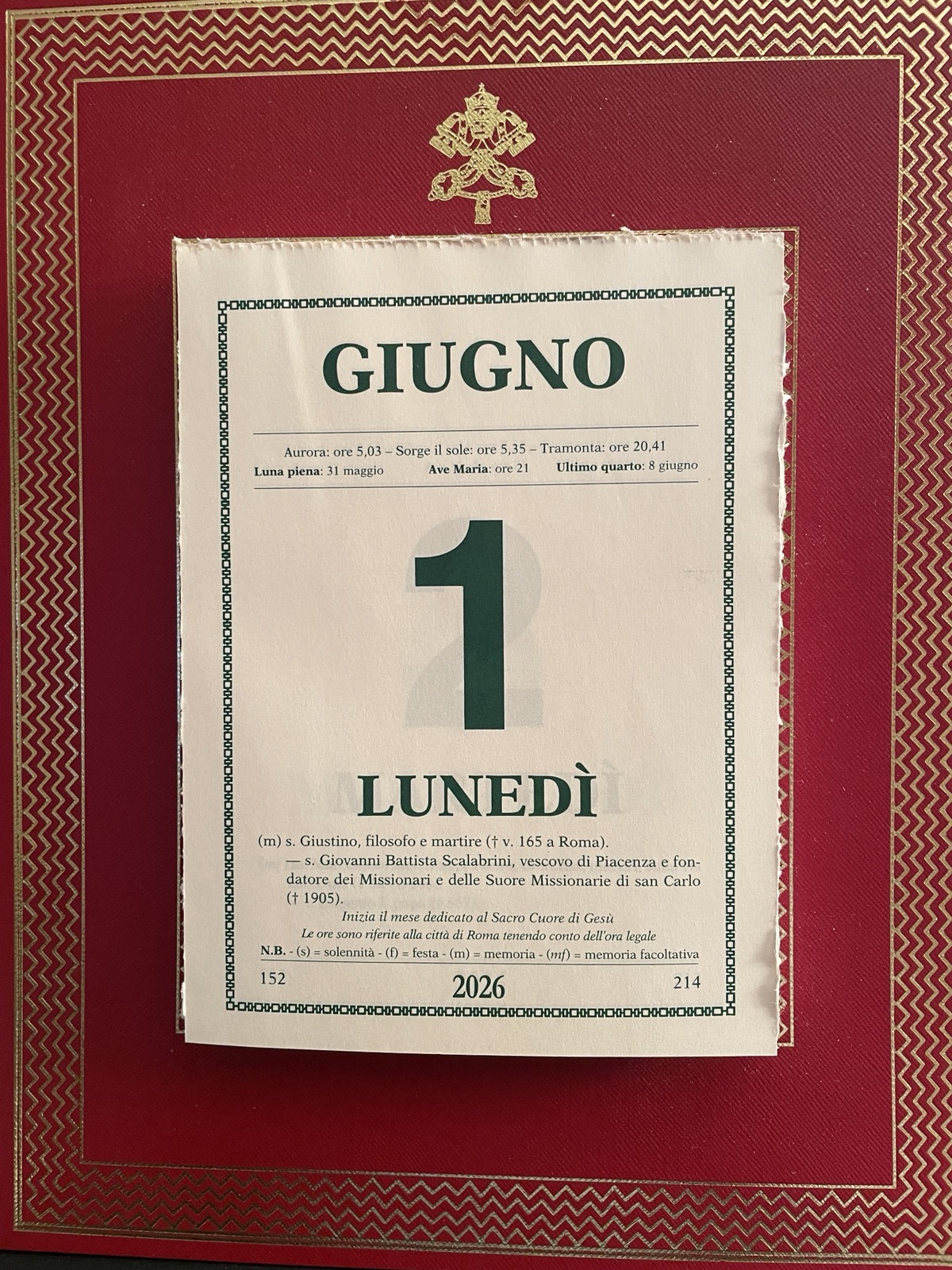
The sun rose on Rome with every intention of making every man woman and child feel the heat. That time was 05:35. While clouds have provided a little relief, the cooling won’t begin in earnest until sunset at 20:41.
The Ave Maria Bell is in the 2100 cycle for the Roman Curia. However, those of us who are happy to have the amazing Ave Maria Clock app will enjoy the ringing (not dissimilar to the Angelus) according to the solar reckoning.
Mass on Sunday was offered for all my Benefactors.
Mass on Monday was offered specifically for my Roman Donors.
Thank you to all of you. Please pray for me.
And speaking of the Ave Maria Clock app,
Welcome New Registrants:
AveMariaClock
Franciscus24
Today is the Feast of St. Justin Martyr. I have a 1st class relic of him in an antimension.
With this 1st of June we begin the month dedicated in a special way to the Most Sacred Heart.
Remember, this Friday is a 1st Friday.
There are 214 days left in the year.
Because at The Parish™ we observed the Octave of Pentecost, the Feast of St. Philip Neri, 1st class for The Parish™ for obvious reasons, was transferred to today. Alas, poor Justin.
Tonight we will have solemn Vespers and a Solemn Mass followed by a reception for members of the Archconfraternity founded by St. Philip.
(As I write this, the Italian military 9-plane flying team, the “Frecce” are going over, a national holiday. There’s a fan going, too.)
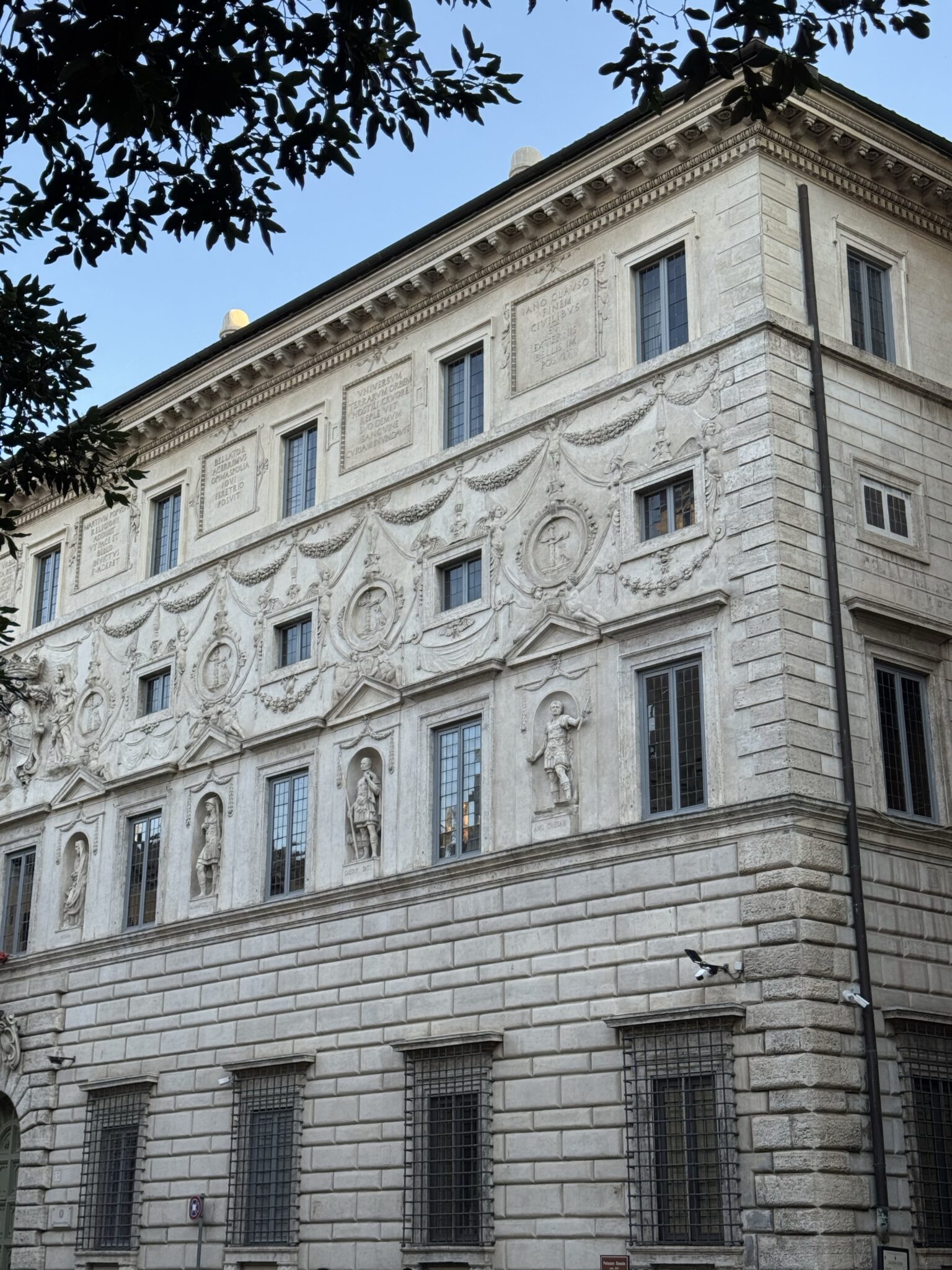
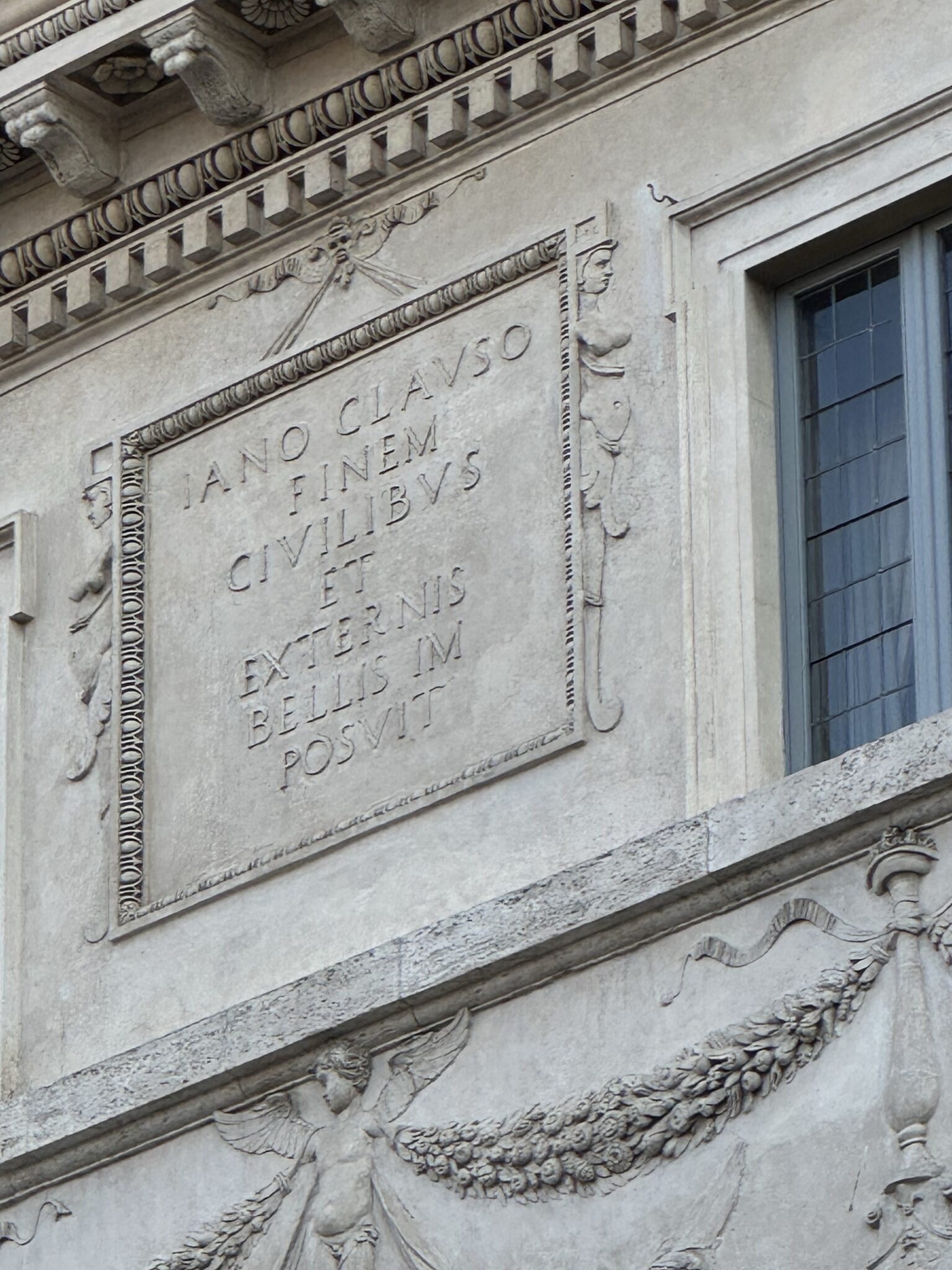
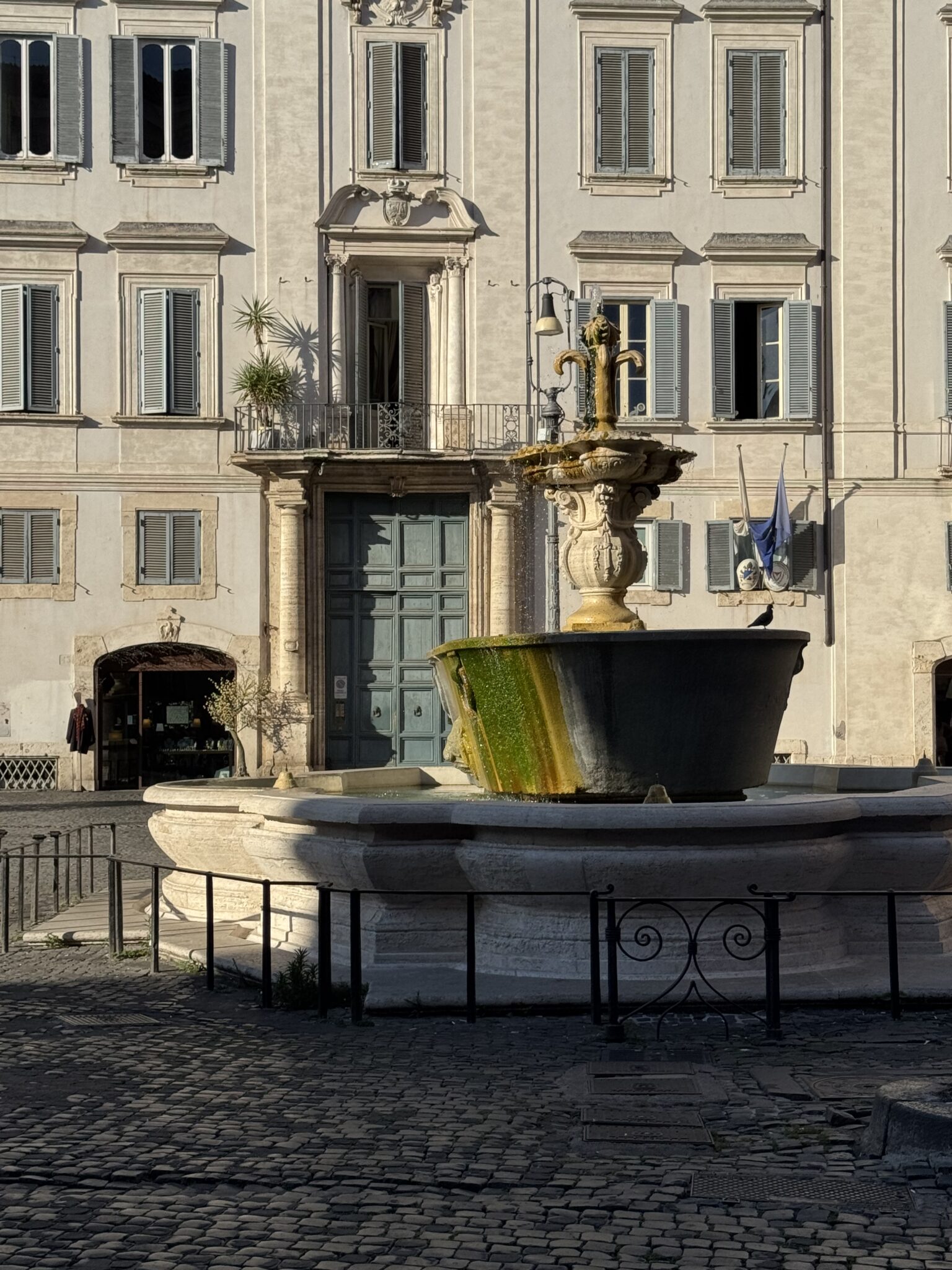
Here is part of the facade of the Palazzo Spada, which I walk past at least twice a day.
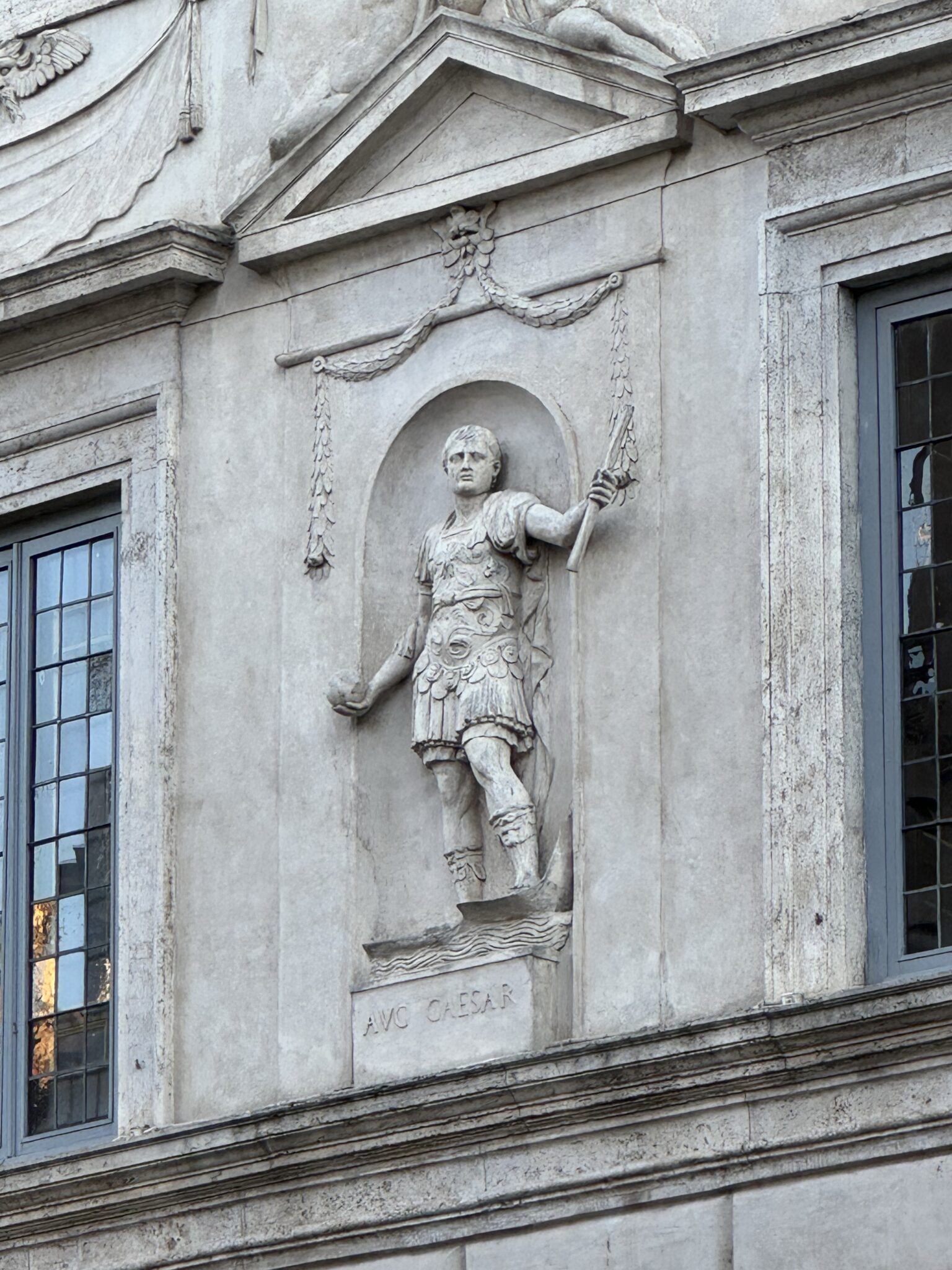
The figures depicted are from ancient Roman history. This one, to the right, is Augustus.
Here is the plaque to describe him.
“The door being closed, he put an end to civil and foreign wars.”
The “closed door” is reference to the Temple of Janus. The doors of that temple were only closed when there was peacetime. In the Res Gestae of Augustus, entirely embedded in bronze letters along the supporting wall of the enclosure of the Ara Pacis, we can read of Augustus’ deeds as related by himself. One of the is that he close the doors of the Temple of Janus. That would have been the moment of the “fullness of time” when the world was at peace in Galatians 4:
4 But when the time had fully come, God sent forth his Son, born of woman, born under the law, 5 to redeem those who were under the law, so that we might receive adoption as sons. 6 And because you are sons, God has sent the Spirit of his Son into our hearts, crying, “Abba! Father!” 7 So through God you are no longer a slave but a son, and if a son then an heir.
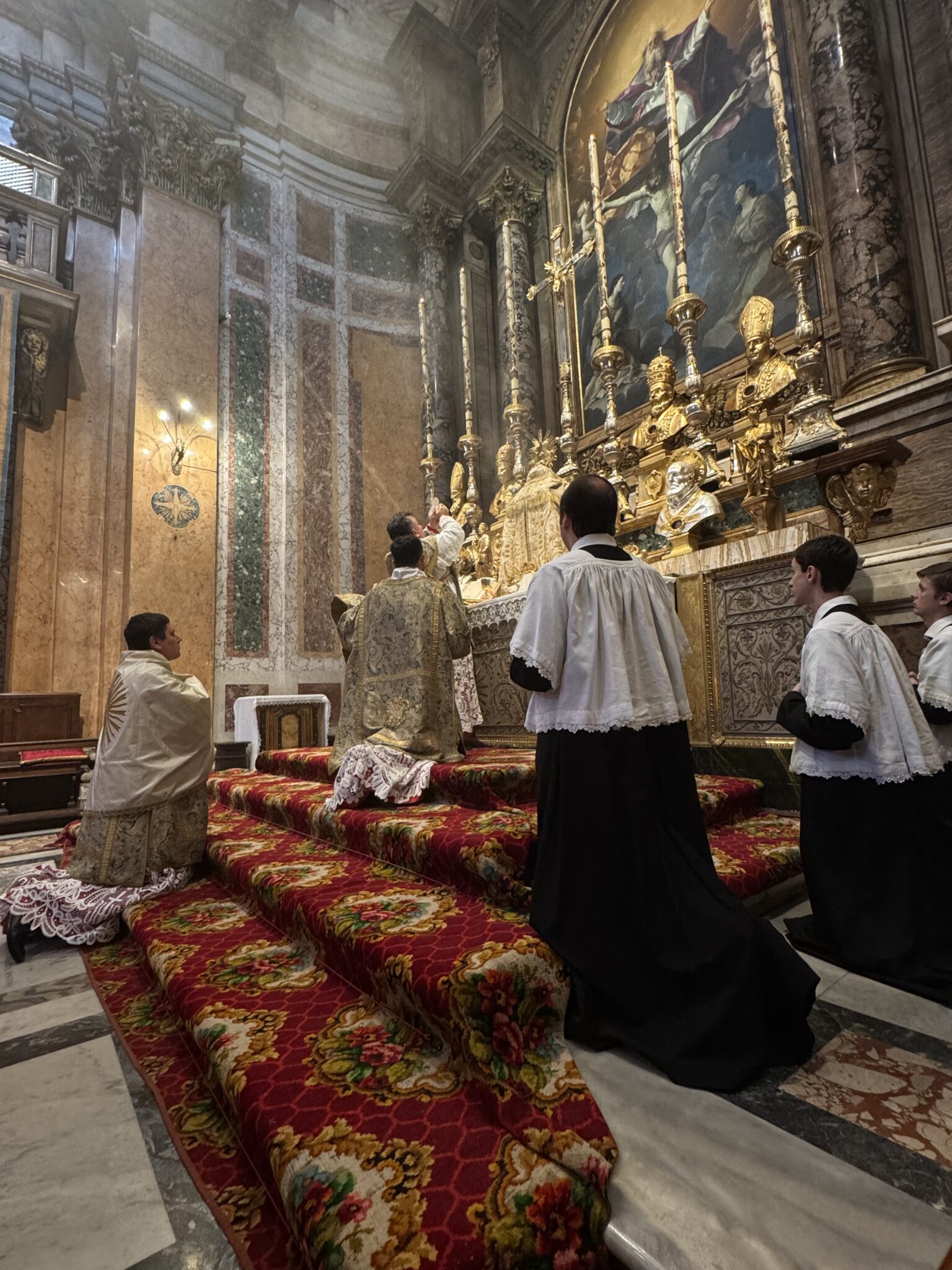
We had a wonderful Solemn Mass for St. Philip Neri at The Parish™. Some moments. This may take a moment to load.
Here’s the end of Mass with a hymn to St. Philip, Last Gospel (quiet) and Salve Regina with an interruption by The World’s Best Sacristan:
After the Mass, we had a pleasant social moment of members of the Archconfraternity, including a lovely recital of vocal music from the time of St. Philip Neri. More on that later.
Please remember me when shopping online and use my affiliate links. US HERE – WHY? This helps to pay for health insurance, utilities, groceries, etc.. At no extra cost, you provide help for which I am grateful.
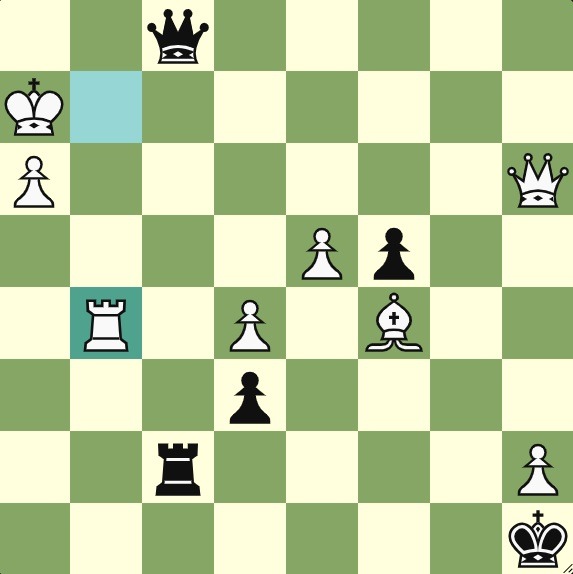
Black to move and mate in 4.
NB: I’ll hold comments with solutions ’till the next day so there won’t be “spoilers” for others.
It was the Feast of the Visitation of the Blessed Virgin.
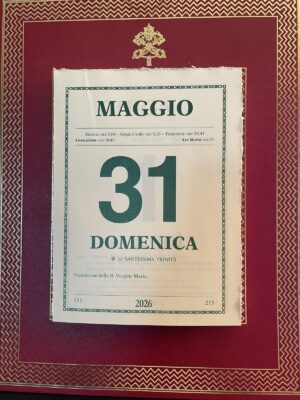
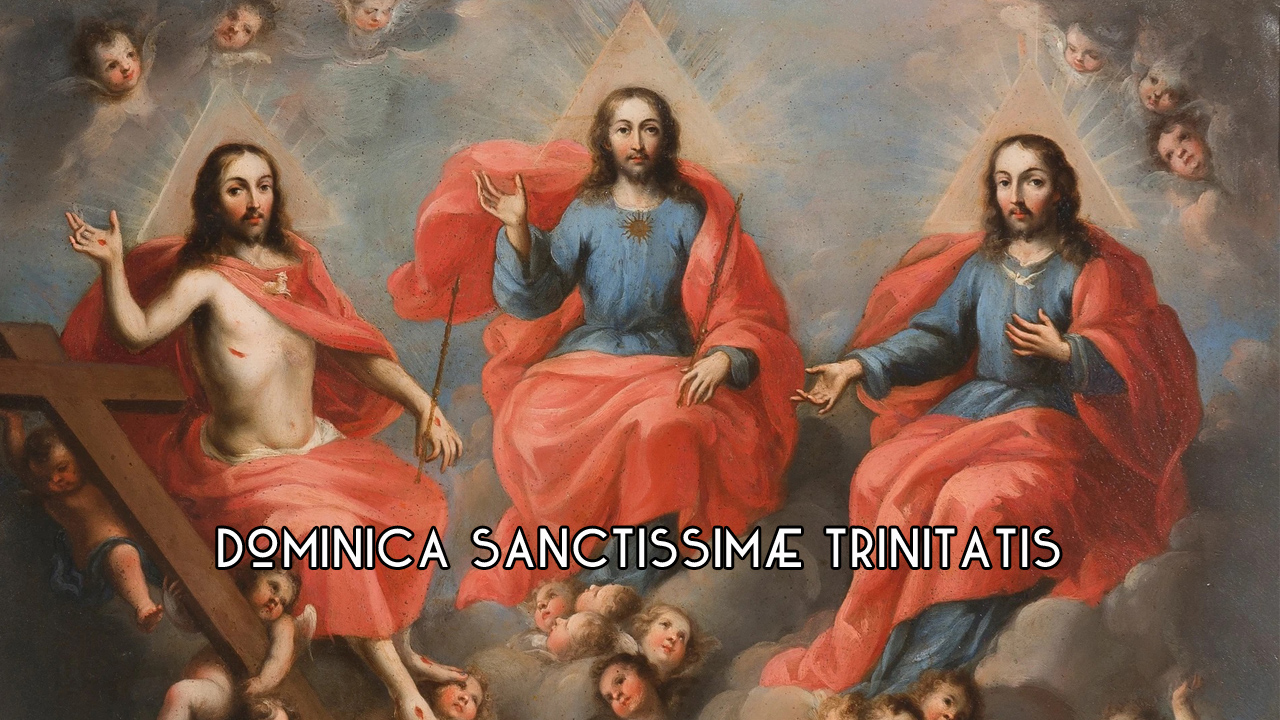
It was the patron Feast of The Parish™, Trinity Sunday.
Because of the Octave, the Feast of St. Philip Neri was transferred to tomorrow. There had been a Triduum of prayer before the Feast.
Pippo Bbono!
Remember everyone… be good, if you can.
Tonight at 2nd Vespers of the Trinity, we had the commemoration of the 1st Vespers of St. Philip.
During Mass today I watched as a spider, probably from the ceiling – a long way – came zzzzzzeeeeeeeeeiop – all the way down to the floor. I was reminded of the rubrics that instruct priests about what to do if a spider winds up in the chalice after the consecration. That really did happen to me once.
That was a long way to come down. I wonder what it did then.
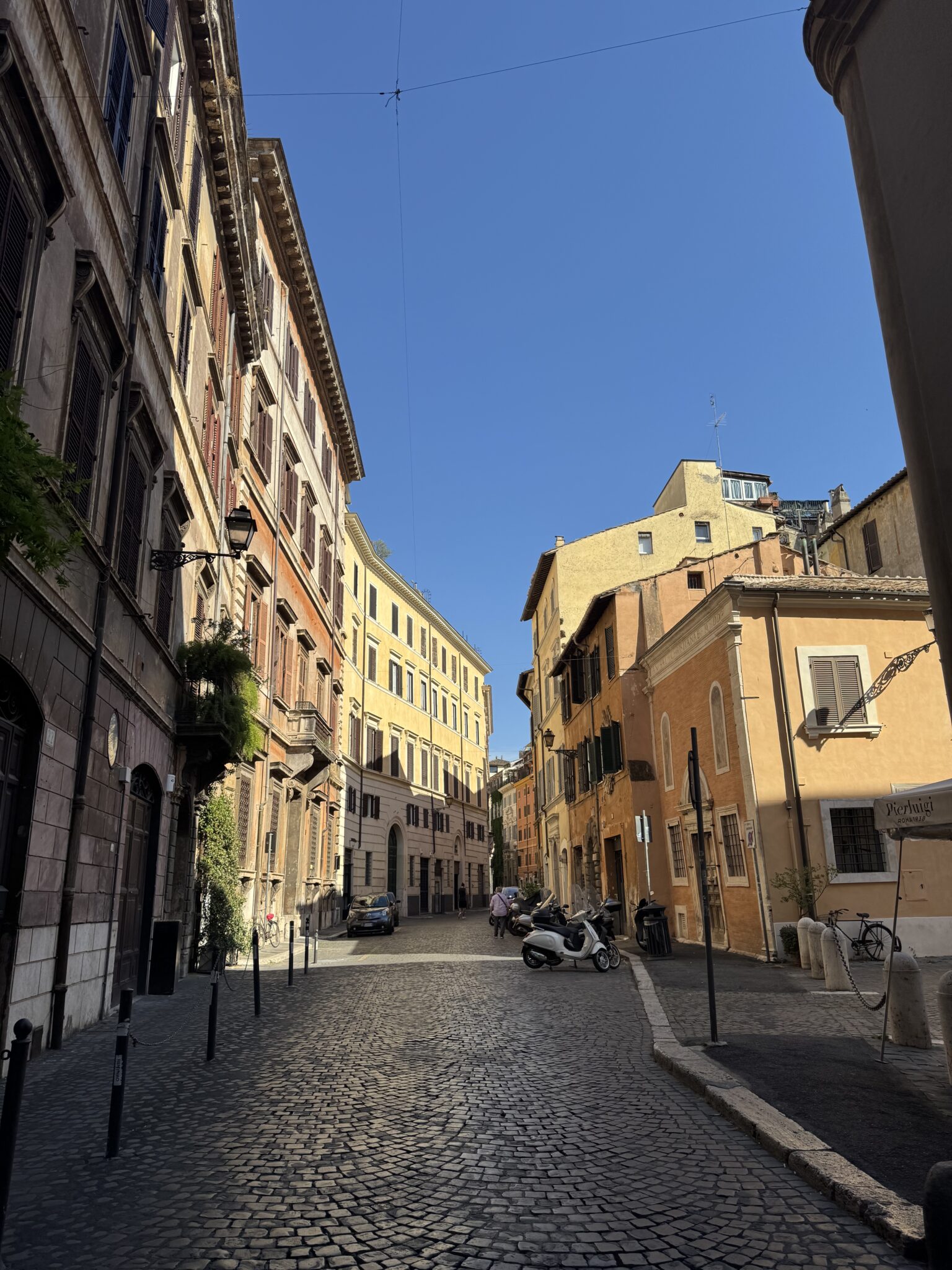
The street I often walk is still old Rome.
They were just cleaned!
The heat has really come. People are grumbling about August. However it is a humid heat. It is absolutely PUNISHING in Church, which is where – at this time of year – all the moisture goes.
Me, after vespers. Maybe hard to see: virtually transparent from sweat.
I’m pretty sure that I could literally have wrung out my shirt. My surplice was soaked. My cassock… heavens. I used three hankies during Vespers and Benediction for constant mopping out of my eyes and then, after, drank about a liter of water. The others were similarly affected as it went on.
For all the heat outside, “Sub Aquilis” (my apartment) maintains a pretty constant cool temperature. Because of the Giro d’Italia today finishing in Rome, the Centro was mainly blocked out. So, between Mass and Vespers The Great Roman™ came to hang out at my place. He remarked on it right way. No AC but cool. [Lunch, spaghetti with basil pesto and bread.] It helps to have a fan. However, the fan was not for cool, but rather to dry out my cassock. I wanted to hang it out in the patio, but this morning I saw three people, including a priest in a cassock, who had received special gifts from the ******** seagulls, now very active because of their pestilential, verminous hatchlings from hell. They are active in their relentless pursuit of garbage and tourists to dump on. I discern little seagull activity were I am, thanks be to God, but I figured… nah… I’ll use the fan. Tutior pars. In the past, I have tented over the cassock to be sure. But, today, why take a chance?
There was a time when this Sunday after Pentecost was, in the Roman arrangement, liturgically rather empty, because the night from Ember Saturday and the morning had been spent in vigil at St. Peter’s Basilica. In 1334, however, John XXII, the second and longest reigning of the Avignon Popes, extended the Feast of the Most Holy Trinity to the universal Church. John XXII was a complicated figure. He centralized power in his own person, which helped provoke William of Ockham to write against limitless papal claims, and he also preached an erroneous opinion about the beatific vision, which he retracted before death. He also canonized St. Thomas Aquinas and may have composed the Anima Christi: “Soul of Christ, sanctify me, Body of Christ, save me, Blood of Christ, inebriate me.” Sort-of-Good Pope John XXII was not all bad.
It is the Feast of St. Ferdinand, King of Castile and St. Petronilla, virgin martyr, and the wonderful St. Joan of Arc.
WELCOME REGISTRANTS:
JoeSt SaintInTheMaking
A reminder to those who register. I take that “bio information” spot seriously. What you put in there doesn’t have to be elaborate. It just has to underscore that you are a real person. Confirmation names are pretty good as is favorite saint or prayer or the name of your parish even without the city. Get the idea? Ignore it or put something meaningless in there… I’ll delete the registration.
Here’s a good thing…
On Thursday May 28th I was in Omaha, Nebraska, where I ordained 12 priests for the FSSP in the Usus Antiquior of the Roman Rite. pic.twitter.com/AfZ0AlLoi1
In 1933, Eugenio Cardinal Pacelli (the future Pope Pius XII) gave a prophetic warning concerning the tampering of the liturgy:
“This persistence of the Good Lady in face of the danger that threatens the Church is a divine warning against the suicide that the alteration of the… pic.twitter.com/fGQv08NeF0
Please remember me when shopping online. Your use of my Amazon affiliate link is a major part of my income. It helps to pay for insurance, groceries, everything. Thanks in advance.
“This blog is like a fusion of the Baroque ‘salon’ with its well-tuned harpsichord around which polite society gathered for entertainment and edification and, on the other hand, a Wild West “saloon” with its out-of-tune piano and swinging doors, where everyone has a gun and something to say. Nevertheless, we try to point our discussions back to what it is to be Catholic in this increasingly difficult age, to love God, and how to get to heaven.” – Fr. Z
Federated Computer… your safe and private alternative to big biz corporations that hate us while taking our money and mining our data. Have an online presence large or small? Catholic DIOCESE? Cottage industry? See what Federated has to offer. Save money and gain peace of mind.
“Until the Lord be pleased to settle, through the instrumentality of the princes of the Church and the lawful ministers of His justice, the trouble aroused by the pride of a few and the ignorance of some others, let us with the help of God endeavor with calm and humble patience to render love for hatred, to avoid disputes with the silly, to keep to the truth and not fight with the weapons of falsehood, and to beg of God at all times that in all our thoughts and desires, in all our words and actions, He may hold the first place who calls Himself the origin of all things.”
Everyone, work to get this into your parish bulletins and diocesan papers.
The most evident mark of God’s anger and the most terrible castigation He can inflict upon the world are manifested when He permits His people to fall into the hands of clerics who are priests more in name than in deed, priests who practice the cruelty of ravening wolves rather than the charity and affection of devoted shepherds.
St. John Eudes
Your support is important. Thanks in advance.
To donate monthly I prefer Zelle because it doesn't extract fees. Use
frz AT wdtprs DOT com
Donate using VENMO
GREAT BEER from Traditional Benedictine Monks in Italy
Good coffee and tea. Help monks.
I use this when I travel both in these USA and abroad. Very useful. Fast enough for Zoom. I connect my DMR (ham radio) through it. If you use my link, they give me more data. A GREAT back up.
Help support Fr. Z’s Gospel of Life work at no cost to you. Do you need a Real Estate Agent? Calling these people is the FIRST thing you should do!
They find you a pro-life agent in your area who commits to giving a portion of the fee to a pro-life group!
Don’t rely on popes, bishops and priests.
“He [Satan] will set up a counter-Church which will be the ape of the Church because, he the devil, is the ape of God. It will have all the notes and characteristics of the Church, but in reverse and emptied of its divine content. It will be a mystical body of the anti-Christ that will in all externals resemble the mystical body of Christ. In desperate need for God, whom he nevertheless refuses to adore, modern man in his loneliness and frustration will hunger more and more for membership in a community that will give him enlargement of purpose, but at the cost of losing himself in some vague collectivity.”
“Who is going to save our Church? Not our bishops, not our priests and religious. It is up to you, the people. You have the minds, the eyes, and the ears to save the Church. Your mission is to see that your priests act like priests, your bishops act like bishops.”
“The modern habit of doing ceremonial things unceremoniously is no proof of humility; rather it proves the offender's inability to forget himself in the rite, and his readiness to spoil for every one else the proper pleasure of ritual.”
- C.S. Lewis
This blog has to earn its keep!
PLEASE subscribe via PayPal if it is useful. Zelle and Wise are better, but PayPal is convenient.
A monthly subscription donation means I have steady income I can plan on. I put you my list of benefactors for whom I pray and for whom I often say Holy Mass.
In view of the rapidly changing challenges I now face, I would like to add more $10/month subscribers. Will you please help?
For a one time donation...
To donate monthly I prefer Zelle because it doesn't extract fees. Use
frz AT wdtprs DOT com
As for Latin…
"But if, in any layman who is indeed imbued with literature, ignorance of the Latin language, which we can truly call the 'catholic' language, indicates a certain sluggishness in his love toward the Church, how much more fitting it is that each and every cleric should be adequately practiced and skilled in that language!" - Pius XI
"Let us realize that this remark of Cicero (Brutus 37, 140) can be in a certain way referred to [young lay people]: 'It is not so much a matter of distinction to know Latin as it is disgraceful not to know it.'" - St. John Paul II
Let us pray…
Grant unto thy Church, we beseech Thee, O merciful God, that She, being gathered together by the Holy Ghost, may be in no wise troubled by attack from her foes. O God, who by sin art offended and by penance pacified, mercifully regard the prayers of Thy people making supplication unto Thee,and turn away the scourges of Thine anger which we deserve for our sins. Almighty and Everlasting God, in whose Hand are the power and the government of every realm: look down upon and help the Christian people that the heathen nations who trust in the fierceness of their own might may be crushed by the power of thine Arm. Through our Lord Jesus Christ, Thy Son, who liveth and reigneth with Thee in the unity of the Holy Ghost, God, world without end. R. Amen.

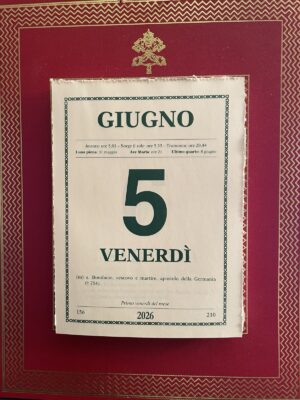 On this First Friday of June the sun broke the plain at 5:33.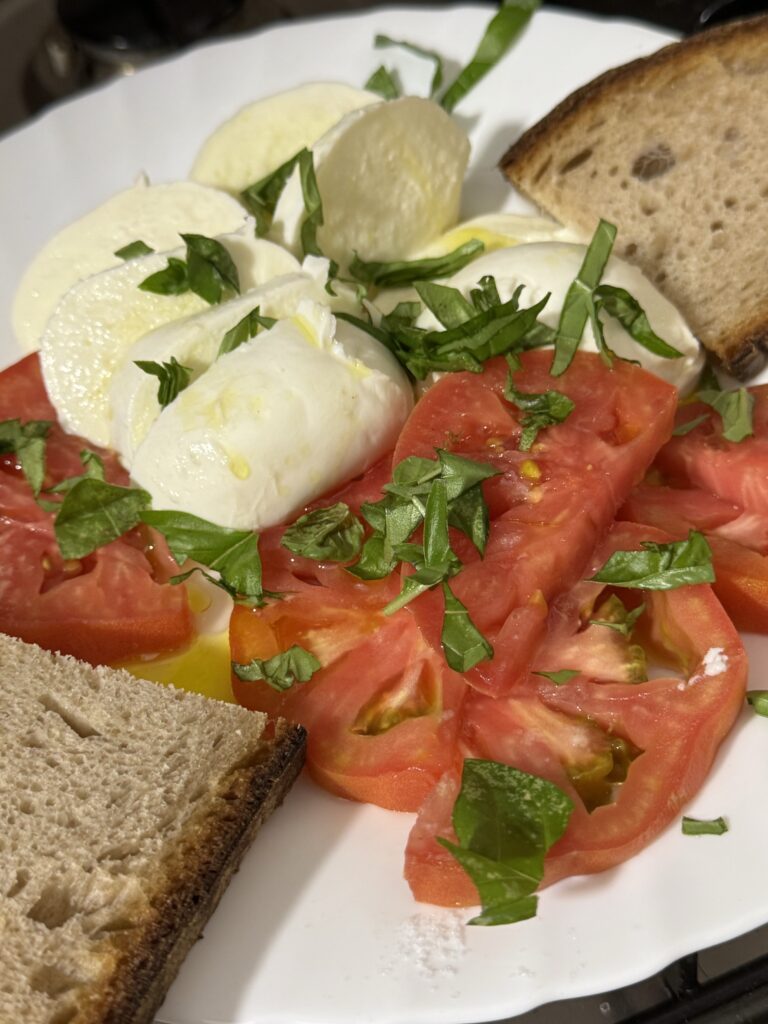
 It was 26 minutes to 0600 when the sun rose in Rome.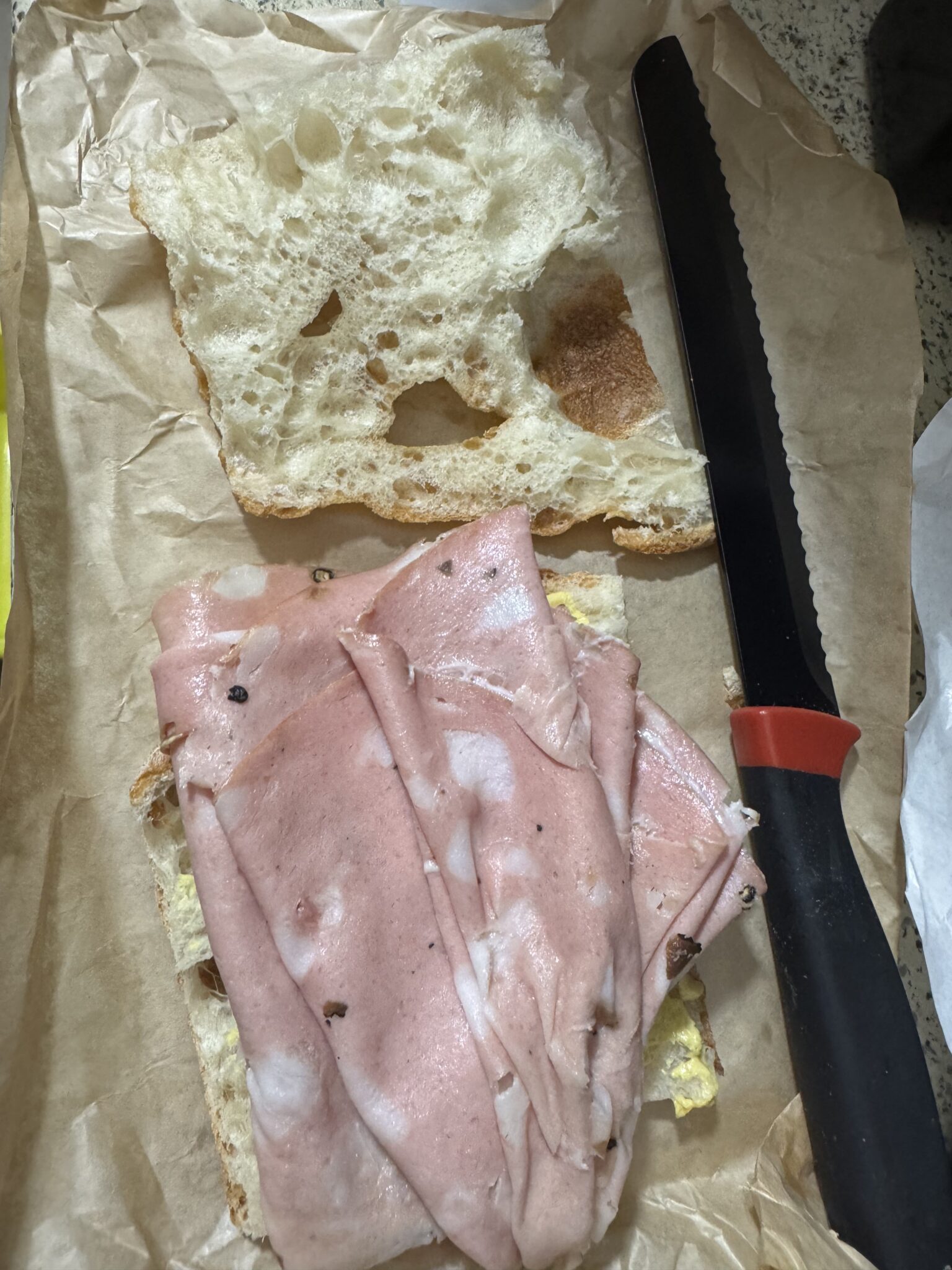
 What a great combination and good for a hot day with cold Roman water.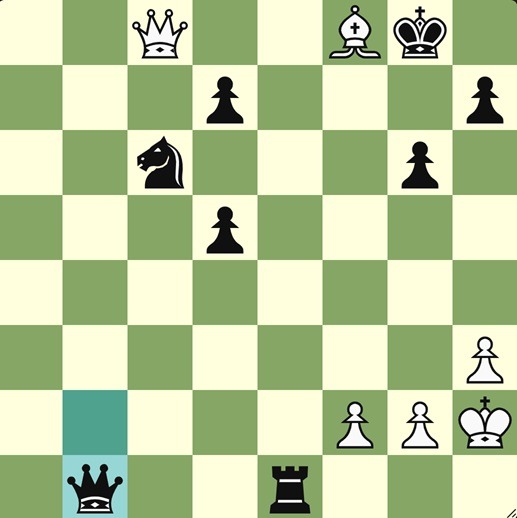

 At 5:34 the sun rose upon the Eternal City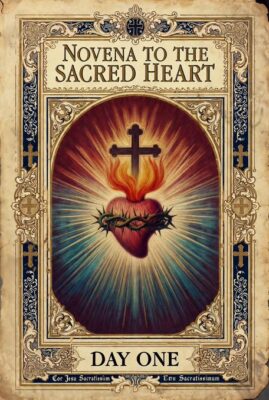
 The sun rose on Rome with every intention of making every man woman and child feel the heat. That time was 05:35. While clouds have provided a little relief, the cooling won’t begin in earnest until sunset at 20:41.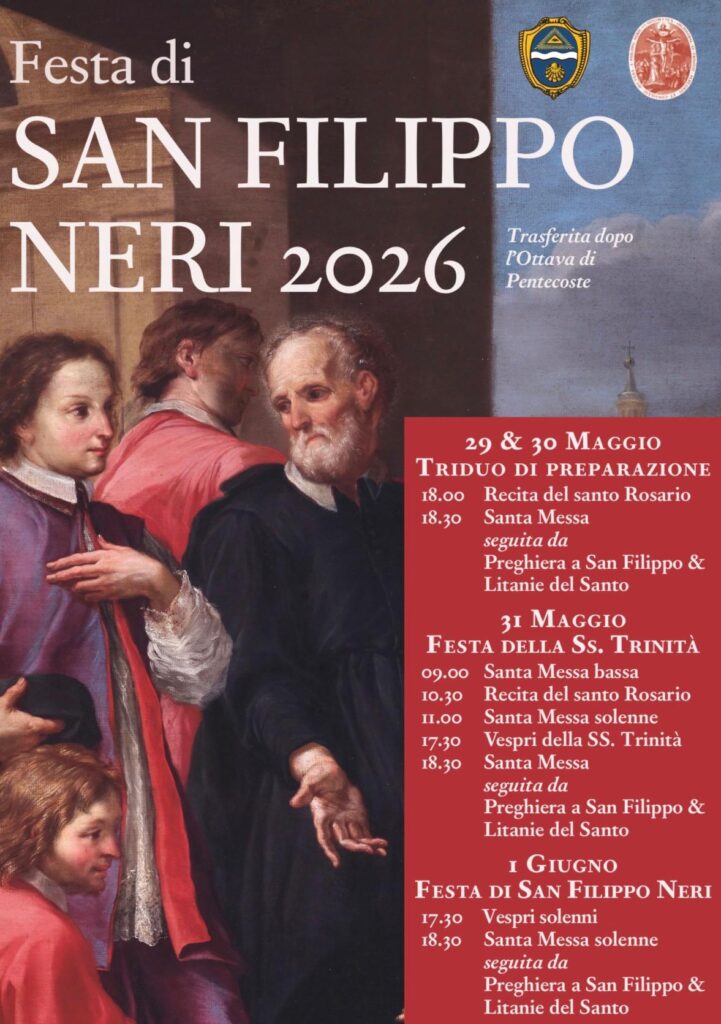
 Ready or not, up came the sun at 5:36.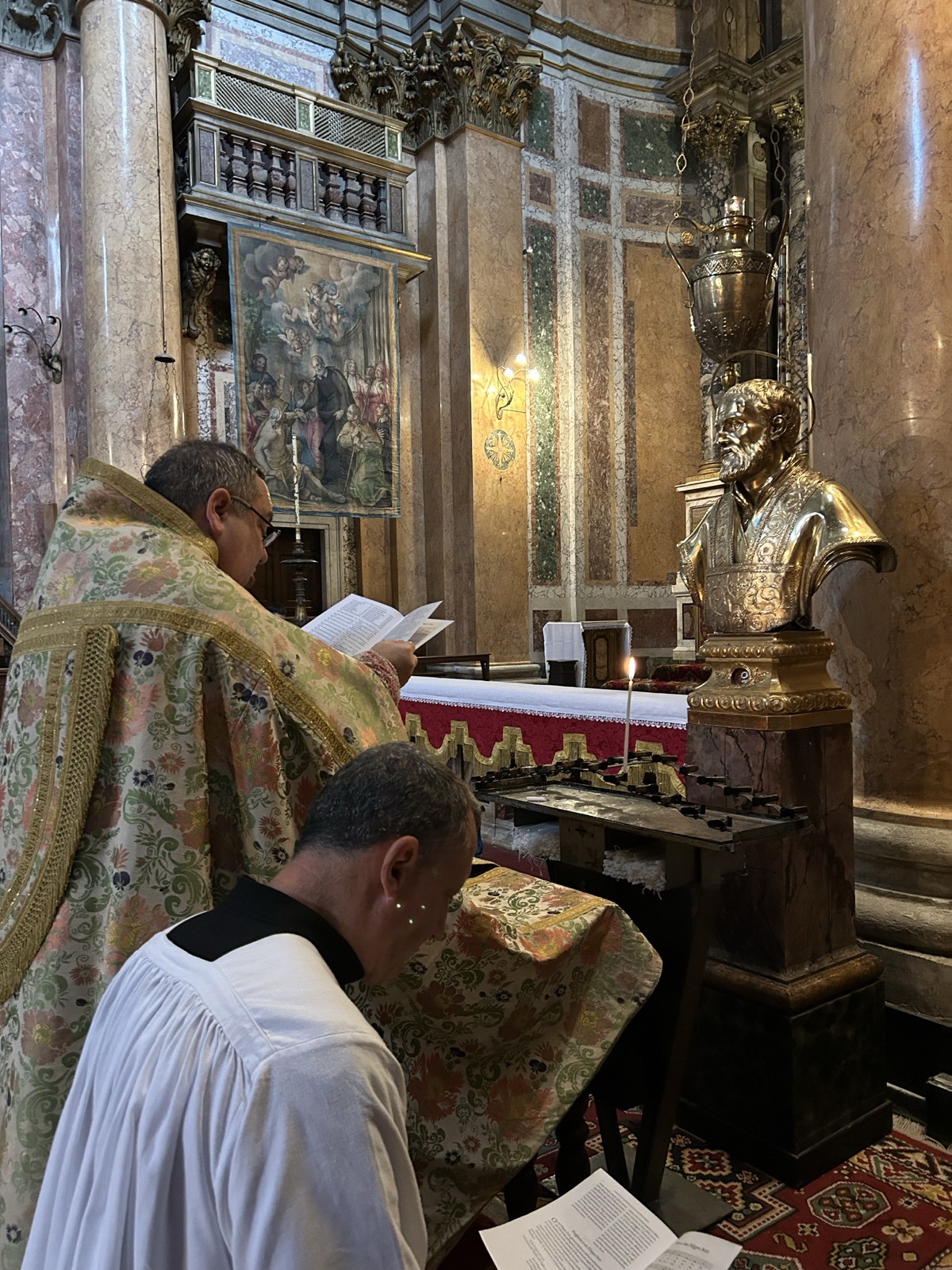
 Up went the sun at 05:36.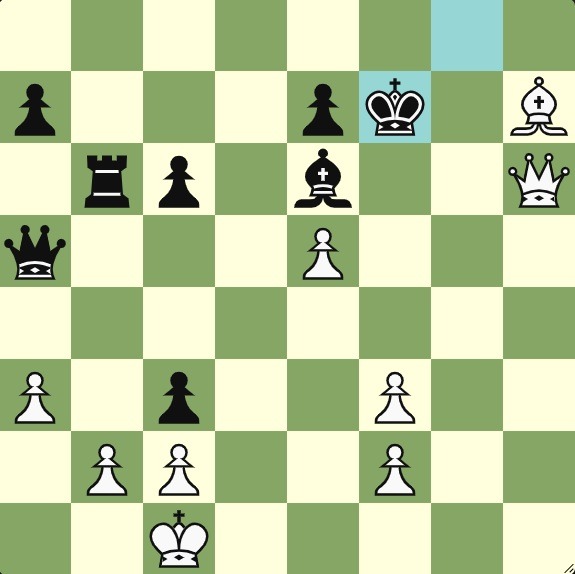

 Servant on “…the young are more to be pitied, since they know not of what they have been deprived.”: “Was this written yesterday?”






























