Capital suggestions of minuscule importance

From a reader:

I have noticed that when you cite documents you are inconsistent with how the titles are written.  For example, you wrote “Lumen gentium” with a small g, but “Redemptionis Sacramentum”.  What gives?  Typos?  You also stick superfluous apostrophes in at times, too!

Allow me to apostrophize now: “O Lord, grant me patience!”

Yes, I sometimes interpolate stray apostrophes.  My bad.  Sometimes I use rented fingers in my attempt to churn out entries which you can read … for free.  But we can remedy that.

The issue of titles of documents is another matter.

It is a common “mistake” to capitalize all the words of the title of a Church document.  You find this even on the Holy See’s website’s collection’s of Popes’ document’s’.  I write “mistake”,  though that word is too strong.   Different publications or publishers have their own style sheets.  However, conventionally we ought to capitalize all the words which are to be capitalized, and not those which don’t merit the distinction.

First, it must be remarked that documents are normally named from the first few words of the document.  Therefore the orthography of the title should reflect the orthography of the text.

For example, the Council’s document on the Church is sometimes entitled Lumen Gentium. However, more properly – again according to a long-established convention – it should be Lumen gentium, for gentium is not properly capitalized in its own right and needs a minuscule rather than the majescule.  The same goes for Gaudium et spes or Paul VI’s encyclical Humanae vitae.

On the other hand we write Sacrosanctum Concilium, not Sacrosanctum concilium, because the word Concilium is capitalized in its own right.

Some other majescular examples.  The encyclical Mystici Corporis Christi or Divino afflante Spiritu.  We write Summorum Pontificum, not Summorum pontificum.   We write Universae Ecclesiae and not Universae ecclesiae.

Chose one convention or another when writing, but be consistent within your work.

Of minuscule importance to most people, but of capital importance to others.

Posted in "How To..." - Practical Notes | Tagged , , , ,
16 Comments

QUAERITUR: “our sacrifice” and “my sacrifice and yours”

From a reader, edited:

I sometimes wonder about the part of the prayer of the priest at Mass which goes “Pray, Brethren, that our sacrifice will be acceptable to the Lord our God.” And to which the people respond (I am sorry I do not know the Latin) “May the Lord accept the sacrifice at your hands…

I am curious as to what this prayer is about and how best to pray it meaningfully in our lives.

Here is something I wrote for my column And With Your Spirit which appears in the UK’s weekly, The Catholic Herald, along with some additional observations.

The gifts of bread and wine are now on the altar.  They have been prayed over and incensed.  The priest turns to the people (the rubric says, “versus ad populum”) and invites everyone to even more intense prayer.  The form of the invitation, the “Orate, fratres” we use today first appears in 12th century Italian manuscripts. It developed from an appeal by the bishop to the clergy nearby to pray for him.  It is now a request from the priest to the congregation to join their sacrifice to his own.

LATIN (2002MR):
Orate, fratres, ut meum ac vestrum sacrificium acceptabile fiat apud Deum Patrem omnipotentem.

I’ll add emphases to make the changes easier to spot.

LAME-DUCK VERSION:
Pray, brethren, that our sacrifice may be acceptable to God, the almighty Father.

NEW CORRECTED VERSION:
Pray, brethren (brothers and sisters), that my sacrifice and yours may be acceptable to God, the almighty Father.

The new translation has the option of saying “brothers and sisters”.  This is not without precedent.  The liturgical scholar Joseph Jungmann identified 28 old manuscripts with “fratres et sorores”.  Furthermore, Latin fratres can include both sexes.

The most important change is the correct translation of “meum ac vestrum… my and yours”.  That “our” in the outgoing version distorted the theology of the text.

There are various Latin conjunctions for “and”.  Ac is used to join two different but related words into a single complex concept.  This is what ancient orators called hendiadys (Greek for “one through two”).  In Latin, an ac in hendiadys generally gives the first word more importance than the second.

The Second Vatican Council in its Dogmatic Constitution on the Church Lumen gentium 10 defined that the priesthood given in baptism is a true participation in the priesthood of Christ, but that it differs qualitatively from the ministerial priesthood conferred by the sacrament of Holy Orders.  The ordained don’t merely receive more priesthood.  They receive a priesthood different from that which they already had from baptism.

These two modes of priesthood, distinct but sharing a common source, relate to each other as a single person’s head does with the body.

In the Council’s the Decree on the Ministry and Life of Priests we read that, by Holy Orders, priests are configured in their being to Christ the Priest so that they are able to act in the person of Christ who is the Head of the Body, the Church (cf. Presbyterorum ordinis 2).

Priests are ordained for their own sake (to help them save their own souls by doing God’s will) and for all the faithful (who must be directed to God through teaching, governance and sanctification).
Priests offer gifts and sacrifice to God for the people (cf. Hebrews 5).

Lay people, with the priesthood of the baptized, are the vanguard of the Church’s mission in the world.

Priests, set apart by ordination, concern themselves mainly with that which is sacred.

Lay people are primarily concerned with the secular.

Priests form and inform, nourish and strengthen, heal and guide lay people for their indispensable work.

Lay people do what no priest can: through deeds and words they bring Christ to every sphere of daily life in the world.

The complementary – not competing – roles and states of life of the ordained and of the laity must be respected.  This is especially important in our liturgical worship.

At the Offertory the priest says “my sacrifice and yours”.  He acts and speaks in the person of Christ, the Head of the Body, the Church.  He calls the people, Body of the Church, into complementary unity.  He invites them to pray that his sacrifice, according to his manner of offering sacrifice as an ordained priest, and their (“your”) sacrifice, according to how the baptized offer gifts and sacrifices, will be accepted.

What the priest does is done is for service.  A priest is not less in need of a Savior than anyone else present.

St. Augustine of Hippo (d 430), speaking of his role as bishop, described his relationship with his flock in the best way when he said, “I am a bishop for you, but a Christian with you” (s. 46.2).

Were ten thousand baptized men, women and children to pronounce the words of consecration over their bread and wine, the offerings would remain bread and wine.  One priest, alone or with a congregation, by God’s power changes the people’s bread and wine into the Body and Blood of Christ.  The baptized unite their way of offering sacrifice to his way.

“My sacrifice and yours” is an important and long-needed improvement.

Here is something I can recommend for your deeper active participation in this invitation by the priest.

It can help to identify ourselves with the gifts placed on the altar for consecration.

The congregation is  invited by the priest to unite their sacrifices to those he offers in his manner of offering.

We all have both burdens and reasons to rejoice.  Therefore, when the priest or deacon is preparing the chalice, when he puts drops of water (the symbol of the human) into the wine (the symbol of the divine) to be mingled – the lesser being transformed within the greater – try consciously to  place into that chalice all your cares, aspirations, sentiments of gratitude, petitions, and all that you are.  Let it all be joined, before they are stupendously transformed by God.

This may make the invitation and then the response ring with something new each time you hear it and respond in turn.

Pray, brethren, that my sacrifice and yours may be acceptable to God, the almighty Father.

May the Lord accept the sacrifice at your hands for the praise and glory of his name, for our good and the good of all his holy Church.

Posted in ASK FATHER Question Box, Our Catholic Identity, The Drill, WDTPRS | Tagged , , , , , , ,
19 Comments

Editions of the new, corrected Roman Missal – UPDATED & CORRECTED

Msgr. James Moroney on his blog Dignum et iustum has put together a handy page indicating the editions of the Roman Missal with the new, corrected ICEL translation.  These are the editions in the USA.  The UK editions are not included. Msgr. Moroney says…

Over the past few months I have been asked about the various editions of the Roman Missal which are available, so I have created the following chart to give you an idea what is available.  If you click on the various editions it will bring you to the description of the product on the Publisher’s website.
Publisher
Edition
Prices
Before Discounts
Catholic Book pastedGraphic.pdf
Deluxe Genuine Leather Altar Edition (8.5 x 11)
$159
Altar Clothbound Edition
(8.5 x 11)
$129
Chapel Clothbound Edition (7 x 9)
$89
Liturgical Press
pastedGraphic_1.pdf
Altar Edition (8.5 x 11)
$169
Chapel Edition (6.5 x 9)
$115
Liturgy Training Pubs
pastedGraphic_2.pdf
Classic Edition (8.5 x 11)
$350
Ritual Edition (8.5 x 11)
$175
Magnificat
pastedGraphic_3.pdf
Altar Edition (8.5 x 11)
$199
Chapel Edition (6.5 x 9)
$99
Midwest Theological
pastedGraphic_4.pdf
Regal Edition (8.5 x 11)
$500
Classic Edition (8.5 x 11)
http://www.ltp.org/p-2385-the-roman-missal-classic-edition.aspx
$350
USCCB
pastedGraphic_5.pdf
Altar Edition (8.5 x 11)
$169
Chapel Edition (6.5 x 9)
$115
World Library Publications
pastedGraphic_6.pdf
Deluxe Edition (Genuine Leather Cover)  (9 x 12)
$395
Value Edition
(9 x 12)
#195
Posted in "How To..." - Practical Notes, Brick by Brick | Tagged ,
22 Comments

Holy Mass “free of time or geography”

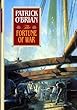
In Patrick O’Brian’s The Fortune of War Capt. Jack Aubrey and Dr. Stephen Maturin are prisoners of war in Boston.

At one point, Stephen goes to Sunday Mass, though he is running a bit late!

He hurried into his clothes, but even so the priest was on the altar by the time they reached the obscure chapel in a side-alley, and crept into the immensely evocative smell of old incense. There followed an interval on a completely different plane of being: with the familiar ancient words around him, always the same, in whatever country he had ever been (though now uttered in a broad Munster Latin), he lived free of time or geography, and he might have walked, a boy, into the streets of Barcelona, blazing white in the sun, or into those of Dublin under the soft rain.

Reason #3 for Summorum Pontificum.

Posted in Lighter fare, Linking Back, O'Brian Tags, Our Catholic Identity, SUMMORUM PONTIFICUM | Tagged , , ,
24 Comments

HE > I

I have been quoting 1 Peter 5: 8-9 these days, and I believe for good reason. Repetita iuvant:

“Be sober, be watchful! For your adversary the devil, as a roaring lion, goes about seeking someone to devour. Resist him, steadfast in the faith.”

From The Catholic Herald, diocesan paper of the Diocese of Arlington comes this by Mary Beth Bonacci with my emphases and comments.

Reflections on Catholic ‘celebrity’
Mary Beth Bonacci
7/13/11

In the past month, two rather high-profile priests have been in the news over allegations of misconduct. [Two?  I can think of Corapi…] That follows a year in which at least three others have left active ministry in the midst of scandal. And going back another year, I can think of several more.

Is it just me, or does anyone else get the impression that Satan is picking off priests like clay pigeons at target practice?

Each case is unique, of course. Some have admitted to wrongdoing, while others have steadfastly maintained their innocence. Some have cooperated with investigations, and others have not. Some have been exonerated and resumed active ministry, while others “resigned” from their ministry and even the priesthood.

What they all have in common is that these “high profile” priests have a lot of followers. (A “fan base,” as one such priest’s media company referred to them.) And thus their situations — whether they are rightly or wrongly accused — “scandalize” the faithful and risk driving them away from the Church. That is exactly what would motivate the Evil One to incite it all in the first place[And The Enemy has had a lot of help, it seems, from human agents.]

[…]

Some men brought woes on themselves.  I am still sad and sick to heart about Corapi.  I confess that I am now also not a little angry at him. May God have mercy on him.

On the other hand, there are some who have been dreadfully attacked and falsely accused of all manner of things.  I know a few.

In all these cases – self-inflicted or enemy-inflicted – I remember the the fate of the soldier who claimed to have struck down Saul and then ran vaunting to David.

No matter what the circumstances of the fall, the the fate of those who strike at the Lord’s anointed will not be pretty.

The anointed of the Lord may be flawed but they are the Lord’s anointed.

But I digress.

Bonacci follows in her article with some comments about being well-known and keeping the focus on Christ, Christ and his Church.

Perhaps as a counterbalance to 1 Peter 5: 8-9 there is one of my favorites found in John 3:30:

Illum oportet crescere, me autem minui.  He must increase, but I must decrease.”

John 3:30

Posted in Non Nobis and Te Deum, Our Catholic Identity | Tagged , , ,
16 Comments

John 14:1 – “Do not let your hearts be troubled.”

Noli timere!  Fear not!  Do not be afraid!”

No matter how we might phrase it, this confident reliance on God, which seeks to look beyond the present moment, is at the heart of the Christian message.

With that in mind, I was sent a fine quote which could be helpful in our times for many people who have written to me lately, and for myself as well:

Don’t be frightened; don’t fear any harm, even though the circumstances in which you work are terrible, worse even than those of Daniel in the pit with all those ferocious beasts. God’s hand is as powerful as ever and, if necessary, he will work miracles. Be faithful! With a loving, responsible and cheerful faithfulness to the teaching of Christ. Be convinced that our times are no worse than those of other centuries, and that Our Lord is always the same.

St Josemaría Escrivá

Posted in "How To..." - Practical Notes | Tagged , , ,
17 Comments

For the readers: Google +

Okay… educate me and the readers.

What is Google Plus about?

I understand it is supposed to be an alternative to Facebook.

What is this new thing from Skynet… er um…. you know what I mean.

Posted in "How To..." - Practical Notes | Tagged , ,
25 Comments

Austria… poor Austria: scrub priests rebel

From CWN.  My emphases and comments.

Over 300 Austrian priests join ‘Call to Disobedience’

Catholic World News
July 13, 2011

Over 300 of Austria’s 4,200 priests have pledged to take part in Aufruf zum Ungehorsam (Call to Disobedience), an initiative launched in June.

The Call to Disobedience document cites “the Roman refusal of a long-overdue Church reform and the inaction of bishops.” Priests who support the document pledge

•to pray for Church reform at every liturgy, since “in the presence of God there is freedom of speech” [liturgy = freedom of speech?]
•not to deny the Holy Eucharist to “believers of good will,” including non-Catholic Christians and those who have remarried outside the Church [So, effectively, no criteria at all for the meaning of “Communion”.]
•to avoid offering Mass more than once on Sundays and holy days and to avoid making use of visiting priests–instead holding a “self-designed” Liturgy of the Word [Because they are at heart really Protestants.]
•to describe such a Liturgy of the Word with the distribution of Holy Communion as a “priestless Eucharistic celebration”; “thus we fulfill the Sunday obligation in a time of priest shortage” [Every man his own priest, after all… though that’s sexist, isn’t it…]
•to “ignore” canonical norms that restrict the preaching of the homily to clergy [Freedom of speech… remember?]
•to oppose parish mergers, insisting instead that each parish have its own individual leader, “whether man or woman” [To hell with the Christ-founded hierarchy.]
•to “use every opportunity to speak out openly in favor of the admission of the married and of women to the priesthood” [Heretics.]

“The open call to disobedience shocked me,” Cardinal Christoph Schönborn of Vienna said in a July 7 letter, [REALLY, Your Eminence? Really?] noting that many professionals would have “long since lost their jobs” if they had called for disobedience. [So… Your Eminence… do something about it.] Reminding priests that they had freely promised obedience to their bishop at ordination, he asked, “Can I rely on you?”

“Christian obedience is a school of freedom,” the cardinal added. “It is about the concrete translation into life of what we pray in every Our Father, when we ask the Father that His will be done in heaven and on earth … This willingness is made concrete in religious obedience to the Pope and bishops.”

Those who truly in conscience believe that they must disobey the hierarchy, and that “‘Rome’ is on the wrong track [and] gravely contradicts the will of God,” ought in consequence to “travel the way no more with the Roman Catholic Church. I believe and hope, however, that this extreme case does not occur here.” [Otherwise….. what?]

“The one who gives up the principle of obedience dissolves unity,” the cardinal continued, as he pledged to meet with the initiative’s leaders and point out its “inconsistencies,” such as “priestless Eucharist.”

The new initiative’s web site is registered in the name of Father Hans Bensdorp, until 2010 the parish priest of the Church of the Rosary in Hetzendorf in the Archdiocese of Vienna. [Isn’t Card. Schoenborn the Archbishop of Vienna?] A YouTube video, [See below.] uploaded in 2009, shows an excerpt from the Mass commemorating the 35th anniversary of Father Bensdorp’s priestly ordination, according to the video’s description.

Tensions between the papacy and segments of the Church in Austria are not novel, as witnessed by the advent of Josephinism in the 18th centry, the fin-de-siècle Los von Rom (Free from Rome) movement, and disagreements between the Vatican and Vienna Cardinal Theodor Innitzer in the face of the Nazi Anschluss.

Scrubs.

Two words for them:

GET. OUT.

FWIW: Fr. Bensdorp’s celebration.

[wp_youtube]NPVpqoM2vLw[/wp_youtube]

Posted in Liturgy Science Theatre 3000, Our Catholic Identity, TEOTWAWKI, The Drill, The future and our choices, Throwing a Nutty | Tagged , , , ,
60 Comments

Sometimes I like the blogosphere

I noticed over at the blog Sober Inebriation – a great phrase with deep spiritual implications – that the undersigned was mentioned in a post about cooking.

I did some memorable fishing as a kid.  I shot this photo of this photo with my phone, but here’s the undersigned a loooong time ago.

20110713-080615.jpg

I had blonde hair then.

Therefore, it was a real pleasure to see this fellows photo with his son.  The kid’s grin and that fish are what summer should be about.

Quintillian, the 2nd century teacher of rhetoric, said that if, during the summer children are healthy, they have learned enough.  Kids are over scheduled and over managed, when they are not parked in front a video game.  I digress.

But at the end of his entry, he wrote over there:

I am hoping that Father Z will run a Salmon recipe on his blog.
If he lived closer I certainly would provide the fish for him.

“Aha!”, quoth I.  “I have posted about salmon at least once.  Here.

A shots from that entry.

Sometimes I really like the blogosphere.

Posted in Fr. Z's Kitchen, Lighter fare, Linking Back | Tagged , , , ,
19 Comments

Being overly touchy

Posted in Lighter fare | Tagged
18 Comments