Doubling it up in TV commercials

I have noticed a recent trend in TV commercials. It seems that companies are joining forces to have their products in one same commercial.

For example, yesterday, I saw a Jeep in a new video game.  I saw a diamond ring company together with the Geico car insurance lizard.  There is a primary product and a secondary.

Someone sent me a link to this.   This isn’t a mockery of a Catholic practice specifically, but it shows gross disrespect for all Christians.

Pepsi and Doritos make light of someone very important for the Sunday practice of many churchgoing Christians.

The Youtube title suggests that this is intended for the 2011 Superbowl coverage.

Of course there are two issues here…

1) the trend of joining forces for commercials

2) the use of religious symbol to sell products

Posted in Biased Media Coverage, The Drill | Tagged ,
45 Comments

QUAERITUR: How to explain devotion to TLM to people who don’t like it

From a reader:

Do you have any tips for charitably explaining one’s devotion to the
TLM with those members of the Church, who, having attended the TLM in
their youth, remember it as something dreadful or imposing?

I think this will depend on the person and the place.

Also, your devotion is to the Lord made present in the TLM, and the reverence in the manner of celebration, and the clarity of the texts and doctrine.

However, a general principle should be, at all times – and I cannot stress this enough – show your joy at being able to attend.

Most of the time, people who object to the older form of Mass do so from emotional rather than rational reasons.  Some nun was mean to them 50 years ago (probably because they were goofing off in class), and they associate that with “the church” or the old Mass.  You will have a hard time arguing them out of their stance.

You can cut through, however, will a genuine demonstration of joy that you are able to benefit from the older forms.

Too often traditionalists get defensive or offensive and then go all long-face.

Happiness, however, can be disarming and attractive.

Posted in "How To..." - Practical Notes, ASK FATHER Question Box |
55 Comments

Brick by Brick in Marquette

Fr. John Boyle, of Caritas in Veritate, now in Marquette, MI has a great account of a Pontifical Low Mass celebrated by my old friend H.E. Most Rev. Alex Sample, Bishop of the same Marquette.

Here are a couple photos, but be sure to go to Fr. Boyle’s blog and look at the rest.

I have written about Bp. Sample before here and here.

Bp. Sample

I am not quite sure, but it looks as if that altar boy on the right may have either a high and tight or a mohawk.  OORAH!

Bp. Sample

Bishops don’t, or shouldn’t, say Low Mass in the manner of a priest.  They have their own ceremonial to observe.  For example, they are accompanied by their secretaries and they vest at the altar.

The underlying idea behind the different and more solemn Pontifical Low Mass seems to be theological.  They act for the diocese and the larger Church when they say Mass in a difference way than a priest would.

But wait!  There’s more!

According to Fr. Boyle:

He hopes to celebrate the Extraordinary Form Mass approximately once a month on Sundays.

WDTPRS kudos to Bp. Sample for desiring to do it right!

Posted in Brick by Brick, Fr. Z KUDOS | Tagged , ,
12 Comments

People Eating Tasty Animals

PETA deserves contempt.

Sadly, the more they are attacked, the more self-righteous they become.

I propose that you increase the amount of meat in your diet.

If you don’t eat it yourself, give it away.

Since it’s winter in the Northern Hemisphere, wear fur.

UPDATE 6 Dec 1755GMT:

The young papist has reminded us of

Acts 10:13

Facta est vox ad eum surge Petre et occide et manduca.

Posted in The Last Acceptable Prejudice, Throwing a Nutty | Tagged
74 Comments

Christian couple killed by “Arabs” in Baghdad

More worrisome news from Baghdad via CNN:

Iraq: Gunmen kill elderly Christian couple inside their Baghdad home
By the CNN Wire Staff
December 5, 2010

(CNN) — Attackers gunned down an elderly Christian couple late Sunday inside their Baghdad home, the latest in a string of religious-rooted violence that has spurred international outcry and a full-court press for justice from Iraqi authorities.
Gunmen broke into the couple’s residence in Baladiyat, a predominantly Shiite area in eastern Baghdad, during the night and shot them dead, an Iraqi Interior Ministry official said.
Hours earlier, Maj. Gen. Qassim Atta said in a press conference broadcast on state-run Iraqiya TV that 15 “Arabs” — in Iraq, a euphemism indicating they came from outside the country — were responsible for three deadly attacks in Baghdad in recent months, including a bloody church siege.
The spokesman for the Iraqi military command in Baghdad showed pictures of each of the men, whom he called “terrorists” and said they had entered Iraq from unidentified countries between June and August.
Ten of them had died while carrying out suicide attacks or had been killed by Iraqi security forces, Atta said. The other five remain at large, with Atta urging the public to help in tracking them down.
“According to our intelligence information, four of the five terrorists are still in Iraq and one of them has fled to Syria,” he said.
While Atta did not immediately link Sunday’s killings to the remaining suspects from the group of 15, he did tie the group to a deadly attack on a Christian church as well as two other incidents.
The first of the three attacks happened August 17, when suicide bombers killed at least 48 people at a military recruitment center in the Bab al-Moudham commercial area of central Baghdad. On September 5, at least eight people died in a suicide bombing at a military base in that same area.

[…]

May they rest in peace.

And may we who enjoy, for now, the blessings of liberty not forget to pray for our brethren in those places where the practice of one’s faith isn’t entirely free.

May we use well the freedoms we have.

Posted in The future and our choices, The Last Acceptable Prejudice | Tagged , ,
11 Comments

Photos of your Advent Wreaths

How about some photos of your Advent wreaths?

If you don’t have one, perhaps your parish does.

Posted in "How To..." - Practical Notes | Tagged ,
27 Comments

CHRISTMAS PUDDING UPDATE: UNDERWAY!

UPDATES! The Pudding Adventure is underway!

____

I am resolved: A Christmas Pudding

Yes, I am still resolved.

I will be using the Christmas Pudding recipe from a cookbook for food mentioned in O’Brien’s books.

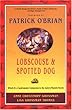
Lobscouse and Spotted DogWhich it’s called Lobscouse and Spotted Dog: Which It’s a Gastronomic Companion to the Aubrey/Maturin Novels.  I want to use this book because it was given to me by a reader of this blog through my amazon wishlist!  The use of the book, with the advice of those of you who have commented, will honor you.

This recipe doesn’t include the use of suet.  And I am determined to use suet.  Therefore, on studying the other recipes, I will adjust the aforementioned recipe for the addition of suet.

And I have determined the occasion for the consumption of said pudding: a meeting of my literary group at the end of January, which is within the Christmas limit of Candlemas.

I may make two.  One to test. One to consume later.

I will head out this evening to gather ingredients which I lack.

For my Sunday Supper, btw, I am going to try to reproduce a Steak, Bacon and Mushroom Pie I had in London at Rowley’s.

BTW… did you know that Agatha Christie wrote a book called The Adventure of the Christmas Pudding?  I didn’t!   I wonder if my adventure will be as exciting… and lethal.

UPDATE 5 Dec 22:01 GMT:

It has begun.

Christmas Pudding

I gathered the ingredients and set to this afternoon.

I decided to use a large food processor a lost friend gave me.  Just for some quick mixing of the first ingredients.

Christmas Pudding

Mixing some of the fruits.  I did this in stages so as to get them well covered.

Christmas Pudding

More stuff.

Christmas Pudding

And now the suet.  I got a huge chunk of the stuff.  I hacked off enough for this recipe and then lopped the rest of it into small pieces for ziplock freezer bags.

Christmas Pudding

I used the food processor to grate it, frozen.  It worked well and saved time.

Blending it it.

Christmas Pudding

Now the eggs.

Christmas Pudding

Once the brandy was joined to the gooey mass, it went into the greased 2 liter pudding basin.

Christmas Pudding

I covered it with a floured cloth and tied it down.

Christmas Pudding

Into the large kettle, which has a cover.

Christmas Pudding

The pudding is, as I write, steaming in its kettle.  This will take about 5 hours in all.

MORE LATER.

Posted in Fr. Z's Kitchen, Linking Back | Tagged , ,
41 Comments

PODCAzT 111: 4th Eucharistic Prayer; don Camillo (Part IX)

Herein we compare the lame-duck ICEL version of the 4th Eucharistic Prayer now still in use with the new, approved and corrected translation which we will soon be able to hear in our Churches.  I use the Latin original, and the lame–duck ICEL version and the new, correction version as found in the website of the USCCB.

The new translation of the Roman Missal will help the whole Catholic Church, whether people want to attend the newer form of Holy Mass or not.  When the tide rises all the boats rise with it.  Therefore, the implementation of the new translation is of paramount importance for the whole Church.

In the reading of the two versions of the Eucharistic Prayer, I try to keep my personality out of the way and not impose too much on the text.  I just want you to hear the text.  Besides, far too many priests try to read with meaning… it’s like water-boarding the faithful, but with syrup instead of water.

Peter Seewald

CLICK TO BUY

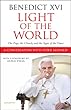
And since we learned in Light of the World, the new b00k-length interview of Pope Benedict, that the Holy Father watches movies made from the vignettes in the famous don Camillo books, we can hear another story from The Little World of don Camillo, the fictional not-quite-saint don Camillo Tarocci, (+ A.D. … ?), tough guy and parish priest.

Some time ago, I began a to read stories from The Little World of Don Camillo by Giovanni Guareschi.  There is a Don Camillo tag you can use to find the others easily.

Today we hear the story:

The Procession

UPDATE:  Here is a video of this vignette from the first (I think) don Camillo movie.  You can see that the substance is there, but there are variations.

You can pretend you are sitting with the Holy Father in the Apostolic Palace watching it … perhaps with popcorn.
https://zuhlsdorf.computer/podcazt/10_12_23.mp3

Posted in Lighter fare, PODCAzT, PRAYERCAzT: What Does The (Latin) Prayer Really Sound L, WDTPRS | Tagged , ,
17 Comments

WDTPRS 2nd Sunday of Advent (1962MR)

The 2nd Sunday of Advent harks to the City of David: Jerusalem.   Indeed the Roman Station is at Santa Croce in Gerusalemme.

Jerusalem is not just the physical place we might visit, where the historical events we commemorate took place.  Jerusalem is the symbol of the Church on earth.  It is also the heavenly kingdom for which we are preparing.

In the Gospel reading from Matthew, the Lord responds to the question of the Baptist: “Are you he who is to come?”  Jesus replies, “Go and tell John what you hear and see: the blind receive their sight and the lame walk…”.  Christ is describing not only what is physically happening in His presence, but also the spiritual coming of the Kingdom of God, the new Jerusalem.  The Jerusalem we desire is, furthermore, not just the place or Holy Church, or the Kingdom of heaven.  It is also the state of our own soul.

Listen to today’s

COLLECT (1962MR):
Excita, Domine, corda nostra
ad praeparandas Unigeniti tui vias;
ut, per eius adventum,
purificatis tibi mentibus servire mereamur
.

This ancient prayer was in the Gelasian and Gregorian Sacramentaries.  Our Lewis & Short Dictionary, from which we are not to be parted, informs us that excito, is in the first place “to call out or forth, to wake or rouse up”.  It is also, “to raise up, comfort; to awaken, enliven”. Praeparo, “to make ready beforehand”, is compound of prae and paro “to make ready”.  At the end of the Gospel, Jesus speaks of John with the words of Malachi: “Behold, I send my messenger before thy face, who shall prepare (praeparabit) the way before thee”.

A LITERAL VERSION:
Rouse up our hearts, O Lord,
to make ready the paths for Your Only-Begotten,
so that through His Coming
we may be worthy to serve You with minds made pure
.

In the Collect last week, we ask God to rouse up His might (Excita … potentiam tuam).  Today we ask him to stir our hearts; to comfort yes, but mainly to enliven and arouse.

Last week in the Lesson we were told by Paul that it was time to awaken from sleep (cf. Rom 13).  This week we ask the Father to makes our hearts worthy paths (viae) for the feet of Our Lord by rousing, and comforting them.  Our hearts, our interior life (mens) must reflect His beauty.  In the Gradual the Church sings: “Out of Sion the loveliness of his beauty: God shall come manifestly.” This “manifest” Coming is not only at the end of the world, in glory and might, as we hear Jesus describe on the 1st Sunday of Advent: it is also in the life of grace, which is manifest in our words and deeds.

I hear this all come together in the prayer lay people cannot hear, the

SECRET (1962MR):
Placare, Domine, quaesumus,
humilitatis nostrae precibus et hostiis,
et, ubi nulla suppetunt suffragia meritorum
tuae nobis indulgentiae succurre praesidiis
.

Succurro is “to be useful for, good against”, but it has the root verb curro, “to run”, which is why it has an element of haste.  However, in it I hear ringing also the Coming of the Lord on the paths we have prepared ahead of time.

LITERAL VERSION:
Be Thou appeased, O Lord, we beseech Thee,
by the prayers of our humility and by our sacrificial offerings,
and, where no favorable points of merits suffice for us,
succor us by the helps of Thy indulgence
.

Can we hear the spirit of John?  We must decrease so that God can increase, and increase us by coming to us.  This is what many priests discover in a new way when they learn to celebrate the TLM.

Our Advent preparation, our diminishing, aims both at the Kingdom of God coming to us, and our coming to the Kingdom.  The greatest realization of and anticipation of the Coming of the Lord we can have here on earth is when the Real Presence, present and yet truly still to come, finds the paths of our hearts prepared for Holy Communion.

POSTCOMMUNION (1962MR):
Repleti cibo spiritualis alimoniae,
supplices te, Domine, deprecamur:
ut, huius participatione mysterii,
doceas nos terrena despicere,
et amare caelestia
.

This was adapted from a prayer in the ancient Gelasian Sacramentary. In turn it was adapted for the Post Communion in the Novus Ordo.  Despicio is “to look down upon; despise; to look away, not to regard.”

LITERAL TRANSLATION:
Having been filled, with the food of spiritual nourishment,
we suppliants beg you, O Lord,
that, by participation in this sacramental mystery,
you may teach us to disregard earthly things,
and to love heavenly things
.

I am guessing nearly all your hand missals say “despise earthly things” or the like.  Given the exhortations by Paul in the Lesson, could we choose “look away from, disregard earthly things”? Paul urges the flock to be patient with each other and to be unified in giving glory to God.  None of that can take place unless we look away from earthly faults.

The good things God created are not despicable.  They become so when their allure makes us close or defile the paths of the Lord’s coming.  We must disregard them when they become stumbling blocks.  Paradox: in our material life we stumble when we disregard stumbling blocks, while in the spiritual life we stumble by lending them undue attention.

Since the Lord comes to us also in the person of our neighbor, let not their faults and worldly attachments be either tricky allurements or reasons to treat them without charity.  In the Coming of the Lord, all shall be made straight and smooth.  We must see our neighbor also, in anticipation, in the way our Lord has destined them to be.

The 2nd Sunday of Advent harks to the City of David: Jerusalem. This is not just the physical place we might visit, where the historical events we commemorate took place. Jerusalem is also the symbol of the Church on earth. It is also the heavenly kingdom for which we are preparing. In the Gospel reading from Matthew, the Lord responds to the question of the Baptist: “Are you he who is to come?” Jesus replies, “Go and tell John what you hear and see: the blind receive their sight and the lame walk…”. Christ is describing not only what is physically happening in His presence, but also the spiritual coming of the Kingdom of God, the new Jerusalem. The Jerusalem we desire is, furthermore, not just the place or Holy Church, or the Kingdom of heaven. It is also the state of our own soul. Listen to today’s

COLLECT (1962MR):
Excita, Domine, corda nostra
ad praeparandas Unigeniti tui vias;
ut, per eius adventum,
purificatis tibi mentibus servire mereamur.

This ancient prayer was in the Gelasian and Gregorian Sacramentaries. Our Lewis & Short Dictionary, from which we are not to be parted, informs us that excito, is in the first place “to call out or forth, to wake or rouse up”. It is also, “to raise up, comfort; to awaken, enliven”. Praeparo, “to make ready beforehand”, is compound of prae and paro “to make ready”.
At the end of the Gospel, Jesus speaks of John with the words of Malachi: “Behold, I send my messenger before thy face, who shall prepare (praeparabit) the way before thee”.

LITERAL VERSION:
Rouse up our hearts, O Lord,
to make ready the paths for Your Only-Begotten,
so that through His Coming
we may be worthy to serve You with minds made pure.

In the Collect last week, we ask God to rouse up His might (Excita … potentiam tuam). Today we ask him to stir our hearts; to comfort yes, but mainly to enliven and arouse. Last week in the Lesson we were told by Paul that it was time to awaken from sleep (cf. Rom 13). This week we ask the Father to makes our hearts worthy paths (viae) for the feet of Our Lord by rousing, and comforting them. Our hearts, our interior life (mens) must reflect His beauty. In the Gradual the Church sings: “Out of Sion the loveliness of his beauty: God shall come manifestly.” This “manifest” Coming is not only at the end of the world, in glory and might, as we hear Jesus describe on the 1st Sunday of Advent: it is also in the life of grace, which is manifest in our words and deeds.

I hear this all come together in the prayer lay people cannot hear, the

SECRET (1962MR):
Placare, Domine, quaesumus,
humilitatis nostrae precibus et hostiis,
et, ubi nulla suppetunt suffragia meritorum
tuae nobis indulgentiae succurre praesidiis.

Succurro is “to be useful for, good against”, but it has the root verb curro, “to run”, which is why it has an element of haste. However, in it I hear ringing also the Coming of the Lord on the paths we have prepared ahead of time.

LITERAL VERSION:
Be Thou appeased, O Lord, we beseech Thee,
by the prayers of our humility and by our sacrificial offerings,
and, where no favorable points of merits suffice for us,
succor us by the helps of Thy indulgence.

Can we hear the spirit of John? We must decrease so that God can increase, and increase us by coming to us. This is also perhaps what the priest in the America article learned, as he discovered himself as a “speck” when saying the TLM.

Our Advent preparation, our diminishing, aims both at the Kingdom of God coming to us, and our coming to the Kingdom. The greatest realization of and anticipation of the Coming of the Lord we can have here on earth is when the Real Presence, present and yet truly still to come, finds the paths of our hearts prepared for Holy Communion.

POSTCOMMUNION (1962MR):
Repleti cibo spiritualis alimoniae,
supplices te, Domine, deprecamur:
ut, huius participatione mysterii,
doceas nos terrena despicere,
et amare caelestia.


This was adapted from a prayer in the ancient Gelasian Sacramentary. In turn it was adapted for the Post Communion in the Novus Ordo. Despicio is “to look down upon; despise; to look away, not to regard.”

LITERAL TRANSLATION:
Having been filled, with the food of spiritual nourishment,
we suppliants beg you, O Lord,
that, by participation in this sacramental mystery,
you may teach us to disregard earthly things,
and to love heavenly things.

I am guessing nearly all your hand missals say “despise earthly things” or the like. Given the exhortations by Paul in the Lesson, could we choose “look away from, disregard earthly things”? Paul urges the flock to be patient with each other and to be unified in giving glory to God. None of that can take place unless we look away from earthly faults. The good things God created are not despicable. They become so when their allure makes us close or defile the paths of the Lord’s coming. We must disregard them when they become stumbling blocks. Paradox: in our material life we stumble when we disregard stumbling blocks, while in the spiritual life we stumble by lending them undue attention.

Since the Lord comes to us also in the person of our neighbor, let not their faults and worldly attachments be either tricky allurements or reasons to treat them without charity. In the Coming of the Lord, all shall be made straight and smooth. We must see our neighbor also, in anticipation, in the way our Lord has destined them to be.

Posted in ADVENT, WDTPRS | Tagged
3 Comments

Secularist hypocrites against reason and free speech

I picked this up from Sancte Pater to whom a biretta tip   o{]:¬)   is owed.   The original is at EWTN.

Are you ready for this sort of thing where you are?

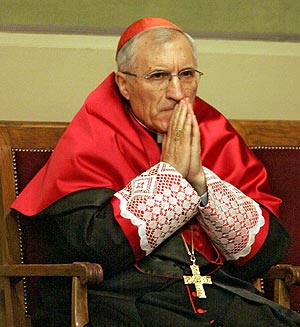
http://jonkepa.files.wordpress.com/2008/01/roucovarela.jpgActivists forced the Archdiocese of Madrid, Spain to cancel a speech Cardinal Antonio Maria Rouco Varela planned to give at the Autonomous University of Madrid on Dec. 1.

The Spanish radio network, COPE, criticized the “aggressive secularism” of such activists in an editorial on its website.

Cardinal Rouco was scheduled to give a lecture titled, “The God who is unknown to 21st century Spaniards.” However, several days ago activist groups began calling for the event to be disrupted. The Spanish government said it could not guarantee the cardinal’s security, and Church officials therefore decided to cancel the speech.

“What happened here is another example of the cultural paradigm that seeks to impose aggressive secularism,” the editorial stated, while denouncing the activists’ “efforts to silence anyone who would speak of God and the meaning of man’s existence.”

And there is the added irony that freedom and truth have become a nuisance at the place which is supposed to be the pillar of knowledge – the university,” the editorial continued.  [Like the experience of the Holy Father when he could not go to La Sapienza.]

Because of these threats, COPE said, students will not hear the cardinal speak “about ‘the God who is unknown’ to the Spaniards of our day, like St. Paul did at the Areopagus of Athens.”

“The difference is that while 2,000 years ago, St. Paul could freely speak of the ‘unknown God,’ now an entire democratic system has caved in to the threats of violence, refusing to guarantee freedom and order on the university campus,” COPE stated.

The editorial also criticized the Spanish government for its unwillingness to “defend the liberties guaranteed by the Constitution,” and university officials “who also have done nothing to defend their own students.”

Hypocrites.

Posted in The Last Acceptable Prejudice, Throwing a Nutty | Tagged , , ,
24 Comments