Benedict XVI on liturgical worship and our identity

Please use the sharing buttons!  Thanks!

This is GREAT.

The Holy Father’s Wednesday Audience with my emphases and comments:

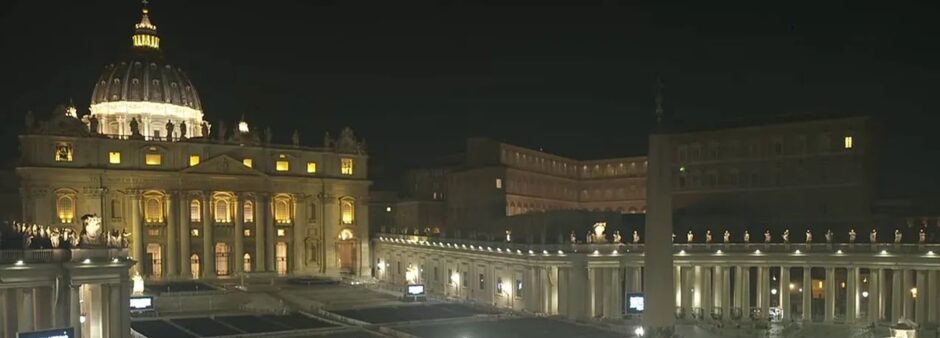
VATICAN, OCTOBER 3, 2012 (Zenit.org).- Here is a translation of the address Benedict XVI gave today in St. Peter’s Square. The Holy Father continued his new series of catecheses on prayer in the Sacred Liturgy by reflecting upon the ecclesial nature of liturgical prayer.
* * *
Dear brothers and sisters,
In the last catechesis I began to speak about one of the privileged sources of Christian prayer: the sacred liturgy, which – as the Catechism of the Catholic Church states – is “a participation in Christ’s own prayer addressed to the Father in the Holy Spirit. In the liturgy, all Christian prayer finds its source and goal” (n. 1073). [Therefore, we need a good understanding of what “participation” is.] Today I would like for us to ask [QUAERITUR:] ourselves: in my life, do I reserve sufficient space for prayer and, above all, what place does liturgical prayer have in my relationship with God, especially the Holy Mass, as the participation in the common prayer of the Body of Christ, which is the Church?
In responding to this question, first we must remember that prayer is the living relationship of the children of God with their Father who is good beyond measure, with his Son Jesus Christ and with the Holy Spirit (cf. ibid. n. 2565). Therefore, the life of prayer consists in abiding habitually in the presence of God and being aware of this, in living in relationship with God as we live the normal relationships of our lives, with the dearest members of our family and with our truest friends; indeed, it is our relationship with the Lord that enlightens all our other relationships. This communion of life with God, One and Triune, is possible because by our Baptism we have been inserted into Christ. We have begun to be one with him (cf. Romans 6:5).
In fact, it is only in Christ that we may converse with God the Father as children; otherwise it is not possible, but in communion with the Son we too may say, as he did: “Abbà”. In communion with Christ we can come to know God as a true Father (Matthew 11:27). Therefore, Christian prayer consists in looking constantly and ever anew to Christ, in speaking with him, being silent with him, listening to him, acting and suffering with him. The Christian discovers his truest identity in Christ, “the first born of all creation” in whom all things subsist (cf. Colossians 1: 15ff). In identifying myself with him, in being one with him, I discover my personal identity as a true child who looks to God as to a Father full of love.   [Note the connection to identity.  I have been maintaining for years that our Catholic identity will not be revitalized until we revitalize our liturgical worship.]
But let us not forget: We discover Christ, and we come to know him as a living Person in the Church. She is “his Body”. This corporality can be understood in light of the biblical words about man and woman: the two will be one flesh (cf. Genesis 2:24; Ephesians 5:30ff; 1 Corinthians 6:16 ff). The unbreakable bond between Christ and the Church, through the unifying force of love, does not destroy the “you” and the “I” but rather raises them to their most profound unity. To find one’s identityin Christ means attaining a communion with him that does not destroy me but rather elevates me to the highest dignity, that of being a child of God in Christ: “The love-story between God and man consists in the very fact that this communion of will increases in a communion of thought and sentiment, and thus our will and God’s will increasingly coincide” (Encyclical Deus caritas est, 17).

CLICK TO BUY

To pray means to be raised to the heights of God, through a necessary and gradual transformation of our being.
Thus, in participating in the liturgy, we make our own the language of our Mother the Church; we learn to speak in her and through her. Naturally, as I already said, this happens gradually, little by little. [Brick by brick?] I must gradually immerse myself in the words of the Church, with my prayer, with my life, with my sufferings, with my joys, with my thoughts. It is a journey that transforms us.
I think, then, that these reflections allow us to respond to the question we asked ourselves at the beginning: how do I learn to pray, how do I grow in my prayer? Looking to the model that Jesus taught us, the Pater noster [the Our Father], we see that the first word is “Pater” [Father] and the second is “noster” [our]. The answer, then, is clear: I learn to pray, I nourish my prayer, by turning to God as Father and by praying with others, by praying with the Church,by accepting the gift of her words, which little by little become familiar to me and rich in meaning. The dialogue that God establishes with each one of us and we with him in prayer always includes a “with”; we cannot pray to God in an individualistic manner. In liturgical prayer, especially the celebration of the Eucharist, and – formed by the liturgy – in every prayer, we do not pray alone as individual persons; rather, we enter into the “we” of the praying Church. And we must transform our “I” by entering into this “we”.
I would like to recall another important aspect. In the Catechism of the Catholic Church we read: “In the liturgy of the New Covenant every liturgical action, especially the celebration of the Eucharist and the sacraments, is an encounter between Christ and the Church” (n. 1097); therefore, it is the “whole Christ”, the whole Community, the Body of Christ united with her Head who celebrates. [GET THIS…] The liturgy then is not a kind of “self-manifestation” of a community; instead, it is a going out of simply “being ourselves” — of being closed in on ourselves — and the portal to the great banquet, the entrance into the great living community, in which God himself nourishes us. The liturgy involves universality, and this universal character must enter ever anew into everyone’s awareness. [Latin would help that.] The Christian liturgy is the worship of the universal temple, which is the Risen Christ. His arms are extended on the Cross in order to draw all men into the embrace of God’s eternal love. [Which is why the Cross should be where it is central to our focus.] It is the worship of heaven opened wide. It is never merely the event of a single community, with its own position in time and space. [The Extraordinary Form can help with that.] It is important that every Christian feel and really be inserted into this universal “we”, which provides the foundation and refuge for the “I” in the Body of the Christ, which is the Church.
In this, we must always be mindful of and accept the logic of the Incarnation of God: He has drawn close, become present, by entering into history and into human nature, by becoming one of us. And this presence continues in the Church, his Body. The liturgy then is not the memory of past events, but rather the living presence of Christ’s Paschal Mystery, which transcends and unites both time and space. If the centrality of Christ does not emerge at the forefront in the celebration, we will not have Christian liturgy, [!] which is totally dependent upon the Lord and sustained by his creative presence. God acts by means of Christ and we cannot act except through him and in him. Every day, the conviction must grow in us that the liturgy is not ours, my own “doing”; rather, it is God’s action in us and with us.
Therefore, it is neither the individual – priest or faithful – nor the group who celebrates the liturgy; [And should not just make it make up!] rather, it is primarily God’s action through the Church, who has her own history, her own rich tradition and her own creativity. This universality and fundamental openness, which is proper to the liturgy as a whole, is one of the reasons why it cannot be designed or modified by individual communities or by experts, but must be faithful to the forms of the universal Church.  [SAY THE BLACK – DO THE RED]
Even in the liturgy of the smallest communities, the entire Church is always present. For this reason, there are no “strangers” in the liturgical community. [Latin helps with that.  And the older Mass reaches across centuries and borders.] In every liturgical celebration the whole Church participates together, heaven and earth, God and men. The Christian liturgy, although it is celebrated in a concrete place and space and expresses the “yes” of a particular community, is by its very nature catholic; it comes from the whole and leads to the whole, in unity with the Pope, with the Bishops, with believers of all times and ages and from all places. The more a celebration is animated by this awareness, the more fruitfully will the authentic meaning of the liturgy there be realized.
Dear friends, the Church is made visible in many ways: in charitable works, in missionary endeavors, in the personal apostolate that every Christian should carry out in his own environment. [Mass concludes with “Ite!”]But the place where she is fully experienced as the Church is in the liturgy: it is the act, we believe, whereby God enters into our reality and we can encounter him, we can touch him. [No project of New Evangelization… no initiative of the Year of Faith… no undertaking of renewal will be successful if we do not also revitalize our liturgical worship!] It is the act whereby we enter into contact with God: He comes to us, and we are enlightened by him. Therefore, when in our reflections we focus our attention only on how we may render it attractive, interesting, beautiful, we risk forgetting the essential: the liturgy is celebrated for God and not for us; it is his work; he is the subject; and we should open ourselves to him and allow ourselves to be guided by him and by his Body, which is the Church.  [Christ is the true Actor in our sacred actions.  We must participate in all that He does for, in and through us especially by being actively receptive.  Active receptivity is the key.]
Let us ask the Lord to grant that we may learn each day to live the sacred liturgy, especially the Eucharistic Celebration, by praying in the “we” of the Church, who directs her gaze not to herself but to God, and by feeling that we are part of the living Church of all places and times. Thank you.

Thank YOU, Holy Father.


Posted in "How To..." - Practical Notes, Benedict XVI, Brick by Brick, Fr. Z KUDOS, Liturgy Science Theatre 3000, New Evangelization, Our Catholic Identity, The Drill, The future and our choices, Year of Faith | Tagged , , , , , , , ,
5 Comments

QUAERITUR: Face-to-face confession. Fr. Z rants.

From a reader:

I am trying to figure out what was the rationale to change the rite of confession to allow for face-to-face confessions. I have read the documents of Vatican II, but did not see anything there specifically addressing this, so I assume it was done later. Now it seems like face-to-face is the preferred option, although behind the screen is still “allowed”. I’m looking for ink – actual documents I can read – to understand the current usage.

The Latin Church’s law concerning where confessions can be heard:

Canon 964 §1: The proper place to hear sacramental confessions is in a church or oratory.

§2: The conference of bishops is to issue norms concerning the confessional, seeing to it that confessionals with a fixed grille between penitent and confessor are always located in an open area so that the faithful who wish to make use of them may do so freely. [Nota bene: fixed grill… also called a grate.]

§ 3: Confessions are not to be heard outside the confessional without a just cause. [This is pretty broad.  The idea here, however, is also to protect the priest.]

There was a craze for a while to make everything “meaningful”.  Therefore, we dumbed our worship down to the vernacular, then dumbed down the translation, started using dumber music, dumbed down catechism which resulted in catholicly dumber Catholics, dumbed down seminary resulting in catholicly dumber priests, etc.

We produced dumber priests, alas.  In seminary, one of the dumbest faculty members – quite a distinction in that crowd – actually told us that sacraments takes place when you look into the eyes of the other person.

Talk about dumb.  That might have been well-meaning, but that’s just plain stupid.

For a while seminarians and priests were being pushed or told or advised or urged actually to lay their hands on people while giving absolution.  Let’s picture this: in an enclosed room, the priest puts his hands on the penitent?!?  Again, that might have been well-meaning, but that’s just plain stupid.  I hope no priest is still doing that.  If there are any, I hope they have good lawyers.

The grate was included in confessionals for a reason: it keeps both people apart.  Priests must be protected from accusations.

The form of the grate, with or without a curtain, can help with anonymity too.

In my opinion any priest who gets into one of those enclosed rooms with a door that closes and that has no window of any kind culpably irresponsible.

In the USA we are/were used to the box style confessionals with doors and enclosed booths usually on either side of the priest.  In other places, however, we see a form of confessional that allows for people to have a modicum of screening, so that no one can read their lips or easily overhear, and also provides for the possibility of face-to-face confession but with a barrier in place.  Here is a shot of a confessional in Rome.

The center part, where the priest sits, also has a set of upper doors which can close.  The penitents can stand in front or kneel on either side where there is a grate.

In any event, back in 1994 the Pontifical Council for the Interpretation of Legislative Texts, with the Holy Father’s approval, published a note, responding to an inquiry posed by several conferences of bishops regarding confessionals. He said:

“If, according to Canon 964, paragraph 2, of the Code of Canon Law, the minister of the sacrament, for a just cause and excluding cases of necessity, can legitimately decide, even in the eventuality that the penitent ask for the contrary, that sacramental confession be received in a confessional with a fixed grille.”

So, the priest can refuse to hear a confession if there is no confessional with a fixed grate.  Even if the person insists that it be face-to-face, the priest can decline.  There may not be many situations wherein a priest would need to do that.  What this this response from the Holy See does, however, is underscore that a) confessionals are important and that b) there should be a grill or grate.  The Church considers the grate or grill to be important.

Sooooo much of the people’s money was wasted on wrecking churches and on stupid ideas like “reconciliation rooms”, with their ghastly little tables, pastel carpets, and boxes of tissues.   I urge all priests with parishes to rethink their rooms and, whatever the cost, to install more traditional confessionals.

Even more, I urge priests to get into the confessional and HEAR CONFESSIONS.  One of these days, Fathers, you will stop breathing.  Your heart will beat its last beat.   You will go to your judgment.  If you are pastor of a parish, you will go to your judgment as a priest who had the care of souls.   God is going to sort out your life, and God cannot be fooled.  If you are not offering reasonable confession times to the people of your parish, if you are not teaching people about mortal sin and the effects of the Sacrament of Penance, you are probably in serious danger of eternal separation from God.

Here is a little thought to brighten your day: Try to imagine what goes through the mind of the damned soul during his first 10 seconds in Hell.

How do you think, Fathers, God will look upon your lack of care for the Sacrament of Penance?  Hear confessions and/or get priests to help you with this obligation.  Preach about confession.  Teach about confession. Hear confessions.

Have a nice day!

Posted in GO TO CONFESSION, Liturgy Science Theatre 3000, Our Catholic Identity, Wherein Fr. Z Rants | Tagged , , , , , ,
57 Comments

An observation about Pres. Obama and the 1st debate

I was listening to Bill Bennett this morning (Hi, Dr. Bennett!) and heard one of his readers make a great but scary point.

The feckless Pres. Obama we heard last night in the debate is the same feckless Pres. Obama who talks to world leaders.

God Bless America.

November 2012.

UPDATE:

I love this explanation from Al Gore about why Romney mopped the floor with his opponent.

[wp_youtube]jm9BoM2Q81c[/wp_youtube]

Posted in Religious Liberty, The Drill, The future and our choices | Tagged , , , ,
27 Comments

You shall be as gods… well… not so much…

POSSIBLE SPOILERS
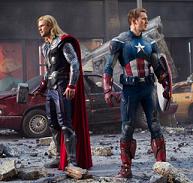
One of the movies available on the flight was the new (newest? not too old?) Avengers (Marvel Comics).  By coincidence, a very smart writer, Edward Feser, wrote something about this movie today on his blog.  He looks at the issue of “the divine” in the Avengers’ movie.  Here is an excerpt (you might want to avoid this if you don’t like “spoilers”).  Perpend:

Watched The Avengers again on Blu-ray the other night. In a movie full of good lines, a few stand out for (of all things) their theological significance. Take the exchange between Black Widow and Captain America after the Norse god Thor forcibly removes his brother Loki from S.H.I.E.L.D.’s custody, Iron Man gives chase, and Captain America prepares to follow:


Black Widow: I’d sit this one out, Cap.

Captain America: I don’t see how I can.

Black Widow: These guys come from legend, they’re basically gods.

Captain America: There’s only one God, ma’am. And I’m pretty sure he doesn’t dress like that.

Or consider the scene in which Nick Fury, director of S.H.I.E.L.D., exchanges words with the imprisoned Loki:

Loki: It burns you to have come so close. To have the Tesseract, to have power — unlimited power — and for what? A warm light for all mankind to share? And then to be reminded what real power is.

Nick Fury (walking away from Loki’s cell contemptuously): Well let me know if real power wants a magazine or something.

Finally, there is Loki’s defeat at the hands of the Hulk:

Loki: Enough! You are all of you beneath me. I am a god, you dull creature. And I will not be bullied by…

[The Hulk grabs him, repeatedly smashes him to the floor like a rag doll, then walks away as Loki lays there moaning]

Hulk: Puny god.

[…]

Read the rest over there.

Posted in Lighter fare | Tagged , ,
33 Comments

My view for a while

As my trip concludes, I was happy to have been able to see again so many nice people and was VERY glad to have had great weather while in London and Rome.

My view for a while will be less interesting.  But, I have a new book on the debates about the Council, I have my Kindle, I have a couple movies I haven’t seen, and I have two open seats next to me!

Posted in On the road |
12 Comments

Bp. Egan of Portsmouth’s interview with Vatican Radio

The new bishop of Portsmouth, Most Reverend Philip Egan, who gave such a great talk at the end of his consecration, also gave an interview to Vatican Radio.

Posted in Brick by Brick, Just Too Cool | Tagged , ,
Comments Off on Bp. Egan of Portsmouth’s interview with Vatican Radio

Weigel on the Nuns on the Bus v Real Nuns

From NRO:

The Sisters of Life were founded in 1991 by Cardinal John O’Connor and Mother Agnes Mary Donovan (a former Columbia psychology professor and clinician) as a new religious community of women dedicated to the defense of life at all stages and in all conditions. The Sisters of Life are wholly orthodox and wear the kind of modernized (and in their case, quite beautiful) religious habit envisioned by the Second Vatican Council. And unlike the religious orders represented by this summer’s “Nuns on the Bus” road show, which culminated in Sister Simone Campbell’s attempt to excommunicate Representative Paul Ryan at the Democratic National Convention (an effort that was, as President Obama might say, above Sister Simone’s pay grade), the Sisters of Life are growing, often attracting new recruits among highly educated and accomplished professional women.  [I wonder how many vocations Sr. Simone’s group has had in the last few years.]

A few weeks ago, two Sisters of Life were stopped on a New York street by a man who, seeing their habits and imagining that all nuns think (and dress) alike, rushed up and asked the sisters if they, too, weren’t proud of Sister Simone. The two sisters politely explained why they were emphatically not proud of Sister Simone and took the opportunity to explain the Church’s pro-life teaching, which Sister Simone had declined to endorse in Charlotte when pressed by a reporter.  [Remember that?  Go HERE.]

A small vignette, you might say. But Sister Simone’s 15 minutes of fame, which were the culmination of a series of distortions and plain mistruths advanced by “progressive” Catholics [usually pro-abortion] for months, seem now to have been something of a clarifying moment. And those two Sisters of Life in New York aren’t the only ones willing to explain, politely but firmly, that Sister Simone, Catholic University’s Stephen Schneck, and others in the Obama Amen Chorus are severely misrepresenting Catholic social doctrine, both in general and in their specific attacks on vice-presidential candidate Ryan.

[… he brings in Bp. Paprocki’s Red Mass talk in Green Bay and expands… we will cut to the end.]

As for those who play the Ayn Rand card in their attack on Paul Ryan, Bishop Paprocki had a few words of counsel:

The National Catholic Reporter columnist Michael Sean Winters has accused Mr. Ryan of “libertarianism” which he describes as a “heresy,” [pffft] since he sees it as being at odds with Christ’s admonition that we will be judged by how we care for the least of our brothers. Surely, Ryan does stress individual responsibility — which, not coincidentally, is a strong theme in Catholic social teaching — but Ryan’s proposed budget is hardly libertarian. That is, it is hardly libertarian to publicly guarantee the existing Medicare program for those who are 55 years of age or older, and to propose a government sponsored voucher program, in which citizens would receive $8,000 adjusted for inflation in the form of a voucher for the purchase of insurance. This is hardly the proposal of one who believes that all individuals should simply fend for themselves and that the government has no role in helping to ensure their well-being.

Bishops Paprocki’s purpose, it should be emphasized, was not to endorse the Ryan budget, which he explicitly stated was not within his remit. His purpose was to clear the air of the thick fog of obfuscation (and, in Sister Simone Campbell’s case, disinformation) that has befouled the Catholic debate during the 2012 campaign. That, in doing so, the lawyer-bishop whose cathedral is a few blocks from Abraham Lincoln’s old law firm might have given the boys in the back room in Boston a much more refined way of discussing personal responsibility and the economy: Well, that was an unintended bonus — but one that demonstrates that the Catholic Left has no monopoly on the Church’s social doctrine, its presentation, and its application.

Read the rest over there.

Posted in SESSIUNCULA | Tagged , , , , , ,
18 Comments

Obama Administrations attack on Catholics in healthcare

In these digital pages we have seen on other occasions His Excellency Most Rev. Robert Vasa, now Bishop of Santa Rosa.  He spoke recently at a meeting of the Catholic Medical Association in my native place, St. Paul. He raised an alarm.

From the National Catholic Register:

Catholic Doctors Tackle How to Survive in an ‘Increasingly Toxic Culture’

At the annual Catholic Medical Association conference, Bishop Robert Vasa says the current health-care crisis is ‘a clarion call’ for Catholic doctors in the U.S.
by TIM DRAKE

[…]

Papal biographer George Weigel spoke on the crisis of modernity, author Brian Gail spoke on the life sciences’ challenges, First Things editor Russell Reno spoke about bringing faith into the public square, and Jesuit Father Robert Spitzer, president of the Napa Institute, presented ways to use the new media for evangelization.

“The Catholic Church stands in the way of the sexual revolution — efforts to redefine marriage, access to abortion and reproductive technology and mercy killings,” said Reno. “Our increasingly aggressive adversaries will continue to use their political muscle to push us out of the way.”

These are critical times,” said Bishop Robert Vasa of Santa Rosa, Calif. “Whether or not a physician is practicing in line with the teachings of the Church, they’re going to be forced to do something they may not want to do.

This is a clarion call for America,” added Bishop Vasa. “American Catholics, and in particular American Catholic physicians, have to wake up to the fact that they can no longer presume that their individual choices about how they practice medicine in this country will be respected.”  [Pres. Obama is waging war on the 1st Amendment.]

“We are in a very dangerous crisis,” agreed John Brehany, executive director of the CMA. “We see a deeply hostile government entering into the health-care sphere. We see an increasingly toxic culture. We know we’re heading into a time of great challenges. The Western world is facing economic challenges built up by social programs combined with the aging baby-boom generation. That is daunting.”

Physicians, nurses and medical students at the conference expressed similar concerns and anxiety about their ability to carry out their work.

Dr. James Brooke from Dickinson, N.D., spoke about a doctor’s ability to provide authentic health care for women.

“I’m not interested in providing birth-control pills for everyone,” said Brooke. “It’s not quality care to provide birth-control pills for women. That’s a lie.”

“Yet if you stand up and talk about these things, you’re painted as a bigot.”

Dr. Jeff Blickenstaff, a rural family physician from Perham, Minn., admitted that he is very concerned about the HHS contraception mandate and how it will impact his practice. Blickenstaff said he hasn’t prescribed contraception since his conversion to Catholicism in 1999.

“Catholic doctors, nurses and hospital administrators are being attacked because others cannot hear the tiny cries of the defenseless,” said Teresa Collett, a professor of law at the University of St. Thomas in St. Paul. “The youngest of all is not a creature of value or concern, except for its utility for scientific experiments.”

Collett provided an overview of the conscience-protection rule put into place by the federal government in 2008, which was later rescinded by the Obama administration.

“The 2008 regulation offered a remarkably broad understanding of protection for all health-care personnel and volunteers,” described Collett. “One of the first acts of the new administration was to withdraw those protections. The new rule gutted the 2008 rule.

[…]

Read the rest, and there is quite a bit, over there.

Posted in Dogs and Fleas, Our Catholic Identity, Religious Liberty, The Drill, The future and our choices | Tagged , , , , , , , ,
17 Comments

Theme for World Communications Day 2014

From news.va:

Social Networks: portals of truth and faith; new spaces for evangelization

(Vatican Radio) – The theme for the next World Communications Day has been announced. Below the text of the statement released Saturday by the Pontifical Council of Social Communications. [Was that a sentence?]
One of the most important challenges facing the task of evangelization today is that which is emerging from the digital environment. Pope Benedict XVI calls attention to this particular topic, in the context of the Year of Faith, in his choice of the theme for the 47th World Communications Day, “Social Networks: portals of truth and faith; new spaces for evangelization”.
The theme suggests a series of important points for reflection. [and then… after reflection…. ummm… what comes next?] During a time in which technology has emerged as part of the fabric of connectivity of human experiences, such as relationships and knowledge, we need to ask: can it help men and women meet Christ in faith? [Did letter writing? Did the printing of books or creation of stained-glass?  When Jesus wanted to me let out from shore in a little boat on a line so that He could talk to more people at once, He used technology.  As a matter of fact, that was the first example of “on-line” ministry] It is not enough to find an adequate language, but rather, it is necessary to learn how to present the Gospel as the answer to that basic human yearning for meaning and faith, which has already found expression online.  [One way is through the promotion of sound liturgy and teaching those who begin grassroots movements in parishes the need for the sacraments to be celebrated properly according to the rites of the Church.]
Such an approach, which will serve to create a more dynamic and humane digital world, requires a new way of thinking. [Good luck.] It is not simply a question of how to use the internet as a means of evangelization, but instead of how to evangelize in a context where the lives of people find expression also in the digital arena.  [?]
In particular, we need to be attentive to the emergence and enormous popularity of the social networks, which privilege dialogical and interactive forms of communication and relationships.
World Communications Day, the only worldwide celebration called for by the Second Vatican Council (Inter Mirifica, 1963), is celebrated in most countries, on the recommendation of the bishops of the world, on the Sunday before Pentecost (May 12th in 2013). The Holy Father’s message for World Communications Day is traditionally published in conjunction with the Memorial of St. Francis de Sales, patron of writers (January 24).

Posted in "How To..." - Practical Notes, Brick by Brick | Tagged , ,
10 Comments

The Canonical Defender responds to a claim about the ordination of deaconesses

The Canonical Defender, Dr. Ed Peters, has on his fine blog about canon law again drilled into an aspect of the question of women deacons.

Further re female ordination to diaconate
by Dr. Edward Peters

I saw the recent comments here and here of Msgr John Alesandro—an accomplished canonist—in support of ordaining women to the diaconate. I disagree with him on the prospects of women’s ordination but, because some of Alesandro’s comments were directed against a claim that sounds similar to mine, I write to make sure that his defeat of that claim is not parlayed by others into a refutation of mine.  [Well said.]

Alesandro responded to the following claim: “There is no possibility that women will ever be ordained to the diaconate because canon law forbids it” (emphasis added). Of course he responded negatively to that claim: the fact that canon law forbids women’s ordination is—I won’t say irrelevant, but—certainly one of the weakest arguments against women’s ordination available. Canonical history is replete with examples of actions illegal in one generation, but legal in another. [NB] Rejection of what amounts to a purely positivistic [rooted mainly in law, by “fiat”] argument against women’s ordination is sound.
But, three things need noting:
canon law does not determine, but rather, upholds doctrine and theology; I base my rejection of the possibility of women’s ordination, even to the diaconate, on my understanding of the theology of Orders; Alesandro and I apparently disagree about that theology, but we agree that theology is ultimately where this issue must be settled;
• many canonical institutes have changed dramatically over the centuries, but the more closely institutes are tied to doctrinal points touching, say, the nature of a sacrament, the less they change; the enduring, strongly negative, even penal, stance of canon law against women’s ordination tends far more against the radical possibility of women’s ordination than for it;
• the current norms against women’s ordination (chiefly in c. 1024) mean that any current attempts at ordaining women—irrespective of women’s (alleged) ontological capacity for Orders—are utterly null, that is, they are of no sacramental effect in the Church. [That is a very tall cliff to overcome.]
Thus, Alesandro and I agree on the first point, I think that he would grant the plausibility of my second, and I am sure we agree on the third.

Not. Going. To. Happen.

UPDATE

Peters follows up with a post about the reporter who had contacted him and then wrote the story to which the canonist mentioned above later responded.   Good reading!

Posted in Liturgy Science Theatre 3000, Our Catholic Identity, The Drill | Tagged , , , , , , ,
53 Comments