QUAERITUR: Too many people for confession. Priest gives General Absolution.

QUAERITUR: Too many people for confession. Priest gives General Absolution.From a reader:

This past Saturday afternoon, I went to confession (or, rather, I tried to go to confession). The good news is that the line was full of penitents. There were at least 25 people waiting in front of me and a good number behind. After waiting nearly an hour, the priest came out of the confessional and assessed the line. He called everyone in line to gather close, distributed cards with an act of contrition printed on them, and explained that he had to get ready for Mass and would not have time to hear the remaining penitents’ confessions. He asked everyone to pray the act of contrition together and then he gave absolution (the official form) to everyone there. [i.e., General Absolution] I know that, even after receiving a general absolution, penitents are still bound to confess mortal sins if afforded the opportunity in future.

My question, Fr. Z, is whether the absolution was invalid, illicit, or neither. I had mortal sin to confess; I plan to confess it as soon as possible but I did receive the Eucharist at Mass this weekend. I approached communion with humility and begged the Lord to forgive me if it was displeasing to Him. I will probably not be able to confess my sins by number and kind until the weekend of Divine Mercy. Should I refrain from receiving the Eucharist in the interim, or was the absolution valid and can I consider myself properly disposed to communicate? What do you think?

I am sure the absolution was valid.  If you will not have have the opportunity to confess your mortal sins in the normal fashion until Divine Mercy weekend, you can nevertheless receive Holy Communion with clear conscience (provided you do not commit other mortal sin before that).  Do go to confession at the first opportunity as you are obliged by the fact that you received General Absolution.

It is unfortunate that, in many places, confessions are not heard during the Triduum.

Although the absolution was valid, what was done was illicit.

The priest should not continue this bad practice (which, sadly, is not uncommon).

If the priest was not able to hear all the confessions prior to Mass, he should have stated that he would be hearing them afterwards. If he was unable to hear confessions afterwards, he could have said when the next available time for confessions would be.

If the priest does this General Absolution thing regularly, because there are a few unshriven penitents left in line, a letter should be sent to the diocesan bishop or regional vicar simply stating clearly what happened (as you did in your email).

I want to give Father the benefit of the doubt and guess that he thought he was within the guidelines for General Absolution.  In most places, however, he was not within the guidelines for the licit imparting of General Absolution.

“But Father! But Father!”, some of you are saying. “Isn’t there a provision that priests can give General Absolution if there are too many penitents?  Isn’t that what this priest did?  You are mean.  You hate Vatican II.”

I respond saying that General Absolution is to be given in cases of grave necessity, emergencies (e.g., airplane about to crash, earthquake traps people under rubble, listeners in a hospital ward, battle about to begin, etc.).  Canon 961 establishes that a grave necessity exists (outside of the clear case of danger of death) when…

“given the number of penitents, there are not enough confessors available properly to hear the individual’s confessions within an appropriate time, so that without fault of their own the penitents are deprived of sacramental grace or of Holy Communion for a lengthy period of time.”

All those conditions would need to be present for general absolution to be given licitly.  Telling people to “come back next week” would NOT deprive them of sacramental grace for a “lengthy period of time,” which most manualists – and we like manuals – would say is a month or more.

Furthermore, the Motu proprio of 7 April 2002 Misericordia Dei, 5 clarifies that “judgment as to whether there exists the conditions required by canon 961 is [Note bene] not a matter for the confessor, but for the diocesan bishop who can determine cases of such necessity in light of the criteria agreed upon with other members of the Episcopal Conference.”

The local bishops lay down the conditions.  They may vary from place to place.  In Africa, for example, a missionary priest might arrive at a place to find a thousand people waiting.    That conference will lay down the proper conditions for the priest.  In the USA, these problems don’t exist and the bishops have laid down the conditions (more which repeats the point about a month or more).

Also to be abominated is the scheduling of General Absolution, which is as wrong wrong wrong as wrong can be!  You cannot reasonably schedule an emergency.

This whole scenario, in addition, underscores another problem.

Tell me if this sounds familiar. Confessions are scheduled from 3:00 pm to 3:45 pm, once a week, before a 4:00 pm Saturday Mass.  The priest sits, lonely in the confessional, until the first penitent shows up at 3:42.  She is immediately followed by 20 people who all want to get their sins shriven before this Mass.  When, at 4:03, the priest has to leave the confessional to start Mass late, they are mad… at the priest!

Keeping in mind my 20 Tips for Making a Good Confession, if you have grave sins you must confess, try to get to church for the beginning of confessions, not toward the end of the scheduled time.

And, everyone, avoid General Absolution.  You cannot receive General Absolution twice validly, except in danger of death, without having made a regular, auricular confession beforehand.  When you receive General Absolution, licitly or illicitly, you are bound to confess all your mortal sins in the normal manner as soon as you can.  If priests are scheduling General Absolution way in advance, blow the whistle on them.  This is a serious abuse of God’s people which has to be stopped.

Posted in "But Father! But Father!", "How To..." - Practical Notes, ASK FATHER Question Box, GO TO CONFESSION, Liturgy Science Theatre 3000, The Drill | Tagged , , , , ,
47 Comments

Of Tea and Coffee

From a reader:

Father Z, don’t forget to let everyone know that Mystic Monk has great tea!

I’m abstaining from coffee (decaf) until Obama leaves office!
I’ve been off for 2 months. God bless you!

Okay!

Did you know that the Wyoming Carmelites also have a variety of teas (real and herbal)?

Of Tea and Coffee

While some of you are buying your Pascha Java, others are choosing Earl Grey.

BTW… I noticed that some of you are opting for a coffee blend I had not seen before: Easter Sunrise Blend. (Higher caffeine!)

Of Tea and Coffee

Mystic Monk Tea… it’s swell!

Posted in The Campus Telephone Pole | Tagged , , , ,
5 Comments

Wear the black, wear the red, and then pray in front of abortion clinics.

There is a great photo on the blog of Philip Gerard Johnson, for whom I have sometimes requested your prayers.

These are seminarians of the Pontifical Seminary called the “Josephinum”. Because it is a Pontifical Seminary, and because it dates to the time when the USA was under Propaganda Fide, they use the cassock of Propaganda College in Rome.

Here are the seminarians praying the rosary in front of an abortion clinic.

Wear the black, wear the red, and then pray in front of abortion clinics.

OORAH!

Now if we could also get them to go pray in front of the White House or Health and Human Services.

Posted in "How To..." - Practical Notes, Brick by Brick, Emanations from Penumbras, New Evangelization, Our Catholic Identity, Priests and Priesthood, The future and our choices | Tagged ,
46 Comments

Summit “Soap Sisters” Sighting on TV. Involves also the Shroud of Turin. No. Really.

On FNC there was a great spot about the Soap Sisters in New Jersey, the Dominican Sisters of Our Lady of the Rosary.

I have written about the “Soap Sisters” quite a few times and I have link to them on the sidebar. I like their soap well enough that I have sent some to my mother.

Summit "Soap Sisters" Sighting on TV. Involves also the Shroud of Turin. No. Really.

Posted in Just Too Cool, Lighter fare | Tagged , , , , ,
2 Comments

What is your good news?

Do you have any good news?  Share it.

I am waiting for some news and I pray it will be good.

Will you please take a moment to say a prayer to the guardian angel of a particular person whom I have in mind and upon whom some things depend?  Thank you.

Now… to your good news…

Posted in SESSIUNCULA |
55 Comments

Your Sunday Sermon notes

It was a complicated Sunday!  Any good points from the Mass? From the homily?

Clue us in.

Posted in Liturgy Science Theatre 3000 | Tagged
17 Comments

A reader’s First Confession report!

From a readerette:

I know you are always urging people to go to Confession, so I thought you might like my first confession report. You can share this with readers.

How did it go? Not as scary as advertised! I prepared as best I could and wondered if it would be kind of grueling, but when I got there it seemed to go very fast. Did I feel some huge sense of relief right after? Not really. Instead, I have been thinking off and on since then, when certain things come up in my mind, “Wait – I’m forgiven!” [big grin]. That’s even better, I think.

So, pull on your big girl dress or big boy pants and go to Confession, everyone!

Keep up the good work, Fr. Z! I mention you in my daily Rosary for priests.

Great news and thanks for report and the prayers. They are appreciated.

And you all heard what the lady said: “Go to Confession, everyone!”

Posted in HONORED GUESTS, Liturgy Science Theatre 3000, Non Nobis and Te Deum | Tagged , ,
6 Comments

Pope Benedict’s sermon for Palm Sunday 2012

Pope Benedict XVI’s sermon for Palm Sunday. First, His Holiness gives us context and then he gives us some classic Ratzinger. My emphases and comments.

Pope Benedict's sermon for Palm Sunday 2012Dear Brothers and Sisters,

Palm Sunday is the great doorway leading into Holy Week, the week when the Lord Jesus makes his way towards the culmination of his earthly existence. He goes up to Jerusalem in order to fulfil the Scriptures and to be nailed to the wood of the Cross, the throne from which he will reign for ever, drawing to himself humanity of every age and offering to all the gift of redemption. We know from the Gospels that Jesus had set out towards Jerusalem in company with the Twelve, and that little by little a growing crowd of pilgrims had joined them. Saint Mark tells us that as they were leaving Jericho, there was a “great multitude” following Jesus (cf. 10:46).

On the final stage of the journey, a particular event stands out, one which heightens the sense of expectation of what is about to unfold and focuses attention even more sharply upon Jesus. Along the way, as they were leaving Jericho, a blind man was sitting begging, Bartimaeus by name. As soon as he heard that Jesus of Nazareth was passing, he began to cry out: “Jesus, Son of David, have mercy on me!” (Mk 10:47). People tried to silence him, but to no avail; until Jesus had them call him over and invited him to approach. “What do you want me to do for you?”, he asked. And the reply: “Master, let me receive my sight” (v. 51). Jesus said: “Go your way, your faith has made you well.” Bartimaeus regained his sight and began to follow Jesus along the way (cf. v. 52). And so it was that, after this miraculous sign, accompanied by the cry “Son of David”, a tremor of Messianic hope spread through the crowd, causing many of them to ask: this Jesus, going ahead of us towards Jerusalem, could he be the Messiah, the new David? And as he was about to enter the Holy City, had the moment come when God would finally restore the Davidic kingdom?

The preparations made by Jesus, with the help of his disciples, serve to increase this hope. As we heard in today’s Gospel (cf. Mk 11:1-10), Jesus arrives in Jerusalem from Bethphage and the Mount of Olives, that is, the route by which the Messiah was supposed to come. From there, he sent two disciples ahead of him, telling them to bring him a young donkey that they would find along the way. They did indeed find the donkey, they untied it and brought it to Jesus. At this point, the spirits of the disciples and of the other pilgrims were swept up with excitement: they took their coats and placed them on the colt; others spread them out on the street in Jesus’ path as he approached, riding on the donkey. Then they cut branches from the trees and began to shout phrases from Psalm 118, ancient pilgrim blessings, which in that setting took on the character of messianic proclamation: “Hosanna! Blessed is he who comes in the name of the Lord! Blessed is the kingdom of our father David that is coming! Hosanna in the highest!” (v. 9-10). This festive acclamation, reported by all four evangelists, is a cry of blessing, a hymn of exultation: it expresses the unanimous conviction that, in Jesus, God has visited his people and the longed-for Messiah has finally come. And everyone is there, growing in expectation of the work that Christ will accomplish once he has entered the city. [What occurs to me as I read this is that I, too, am so often “there”, saying “Hosanna!”, but like the multitude will in a few days, I, by sinning, also betray the Lord.]

But what is the content, the inner resonance of this cry of jubilation? The answer is found throughout the Scripture, which reminds us that the Messiah fulfils the promise of God’s blessing, God’s original promise to Abraham, father of all believers: “I will make of you a great nation and I will bless you … and by you all the families of the earth shall bless themselves” (Gen 12:2-3). It is the promise that Israel had always kept alive in prayer, especially the prayer of the Psalms. Hence he whom the crowd acclaims as the blessed one is also he in whom the whole of humanity will be blessed. Thus, in the light of Christ, humanity sees itself profoundly united and, as it were, enfolded within the cloak of divine blessing, a blessing that permeates, sustains, redeems and sanctifies all things.

Here we find the first great message that today’s feast brings us: the invitation to adopt a proper outlook upon all humanity, on the peoples who make up the world, on its different cultures and civilizations. The look that the believer receives from Christ is a look of blessing: a wise and loving look, capable of grasping the world’s beauty and having compassion on its fragility. Shining through this look is God’s own look upon those he loves and upon Creation, the work of his hands. We read in the Book of Wisdom: “But thou art merciful to all, for thou canst do all things, and thou dost overlook men’s sins, that they may repent. For thou lovest all things that exist and hast loathing for none of the things which thou hast made … thou sparest all things, for they are thine, O Lord who lovest the living” (11:23-24, 26). [This reminds me a bit of an image I use occasionally: to look at others through “resurrection glasses”, that is, to imagine them as God intends in the resurrection.]

Let us return to today’s Gospel passage and ask ourselves: what is really happening in the hearts of those who acclaim Christ as King of Israel? Clearly, they had their own idea of the Messiah, an idea of how the long-awaited King promised by the prophets should act. Not by chance, a few days later, instead of acclaiming Jesus, the Jerusalem crowd will cry out to Pilate: “Crucify him!”, while the disciples, together with others who had seen him and listened to him, will be struck dumb and will disperse. The majority, in fact, was disappointed by the way Jesus chose to present himself as Messiah and King of Israel. This is the heart of today’s feast, for us too. Who is Jesus of Nazareth for us? What idea do we have of the Messiah, what idea do we have of God? It is a crucial question, one we cannot avoid, not least because during this very week we are called to follow our King who chooses the Cross as his throne. We are called to follow a Messiah who promises us, not a facile earthly happiness, but the happiness of heaven, divine beatitude. So we must ask ourselves: what are our true expectations? What are our deepest desires, with which we have come here today to celebrate Palm Sunday and to begin our celebration of Holy Week? [I like this.  What do we intend to receive from participation in Holy Week?  Active participation is founded in active receptivity.  But we should always examine our expectations.  This means we have to have something clear in our understanding by which we can measure our expectations.  No?]

Dear young people, present here today, [Palm Sunday is, if I am not mistaken, an important day for the World Youth Day … thing.] this, in a particular way, is your Day, wherever the Church is present throughout the world. So I greet you with great affection! May Palm Sunday be a day of decision for you, the decision to say yes to the Lord and to follow him all the way, the decision to make his Passover, his death and resurrection, the very focus of your Christian lives. It is the decision that leads to true joy, as I reminded you in this year’s World Youth Day Message – “Rejoice in the Lord always” (Phil 4:4). So it was for Saint Clare of Assisi when, on Palm Sunday 800 years ago, inspired by the example of Saint Francis and his first companions, she left her father’s house to consecrate herself totally to the Lord. She was eighteen years old and she had the courage of faith and love to decide for Christ, finding in him true joy and peace.

Dear brothers and sisters, may these days call forth two sentiments in particular: [1] praise, after the example of those who welcomed Jesus into Jerusalem with their “Hosanna!”, and [2] thanksgiving, because in this Holy Week the Lord Jesus will renew the greatest gift we could possibly imagine: he will give us his life, his body and his blood, his love. But we must respond worthily to so great a gift, that is to say, with the gift of ourselves, our time, our prayer, our entering into a profound communion of love with Christ who suffered, died and rose for us. The early Church Fathers saw a symbol of all this in the gesture of the people who followed Jesus on his entry into Jerusalem, the gesture of spreading out their coats before the Lord. Before Christ – the Fathers said – we must spread out our lives, ourselves, in an attitude of gratitude and adoration. As we conclude, let us listen once again to the words of one of these early Fathers, Saint Andrew, Bishop of Crete: “So it is ourselves that we must spread under Christ’s feet, not coats or lifeless branches or shoots of trees, matter which wastes away and delights the eye only for a few brief hours. But we have clothed ourselves with Christ’s grace, or with the whole Christ … so let us spread ourselves like coats under his feet … let us offer not palm branches but the prizes of victory to the conqueror of death. Today let us too give voice with the children to that sacred chant, as we wave the spiritual branches of our soul: ‘Blessed is he who comes in the name of the Lord, the King of Israel’” (PG 97, 994). Amen!

Posted in Pope of Christian Unity | Tagged , , , , ,
10 Comments

Religious Liberty

1 April… and I’m not foolin’.

Pres. Obama isn’t foolin’.

The US bishops are NOT foolin’ either.

Religious Liberty

Biretta tip: Sword of Peter!


Posted in Religious Liberty | Tagged , , , , , , ,
5 Comments

Ever experience a priest who doesn’t say the correct words of absolution? UPDATE

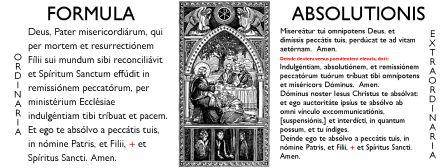
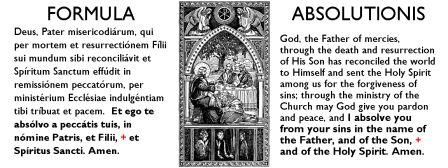
Ever experience a priest who doesn't say the correct words of absolution? UPDATEI get reams of email from people who, during confession, run into priests who don’t (or won’t) say the proper words of absolution, thus throwing them into doubts about whether or not they were validly absolved.

Under another entry I facetiously proposed that I should make a coffee mug with the formula absolutionis which people could give to these erring confessors.

No sooner did I post that, but I got a score or so of emails from people saying they would get one and pass it on.

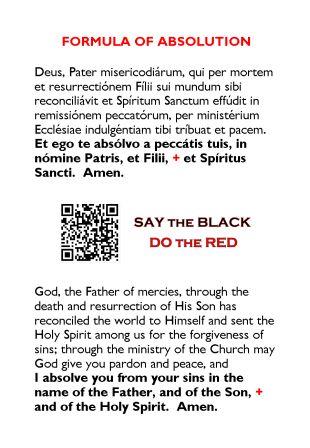
So, I am thinking about mugs, yes, but perhaps also a small poster and maybe note cards. The poster could go in the confessional and you could hand the note cards to the priest.

I could have two version.  One would be entirely in Latin, with both the Ordinary and Extraordinary Form formulas of absolution.  The other would be just for the Ordinary Form, but in both Latin and English

Anyone interested?

Samples:

Ever experience a priest who doesn't say the correct words of absolution? UPDATE

And also

Ever experience a priest who doesn't say the correct words of absolution? UPDATE

Ever experience a priest who doesn't say the correct words of absolution? UPDATEKeep in mind that the mug would give him something to look at an review every single day.  Be sure to give him a steady supply of Mystic Monk Coffee to go with it!

I am frankly vexed by hearing about priests who won’t or can’t use the proper form of absolution.

If they can’t get it right, they should go work as dish washers instead of confusing God’s people in a matter that is so important, solemn, and delicate.

So, in charity, to reduce my vexation and to keep them from the minimum wage, let’s give them some help!

In addition to the mug designs (above… and since Cafepress has changed the way products are created I can have more than one design in the same section…) I worked up some “post cards” which could be left behind for Father, handed to him, or even mailed:

Ever experience a priest who doesn't say the correct words of absolution? UPDATE

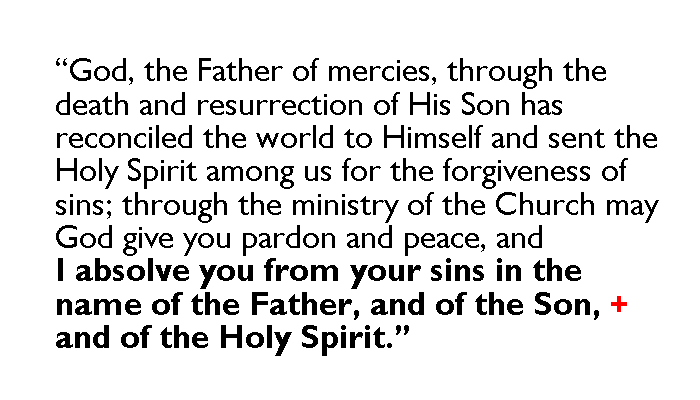
I also tinkered with business cards.  The request is on the front and the form for convenience is on the back.  A business card is small enough to slide even through most grates:

Ever experience a priest who doesn't say the correct words of absolution? UPDATE

Ever experience a priest who doesn't say the correct words of absolution? UPDATE

I am also thinking about something with the Apostolic Pardon.

Posted in GO TO CONFESSION, Liturgy Science Theatre 3000, Our Catholic Identity, SESSIUNCULA, The Campus Telephone Pole | Tagged , , , , ,
91 Comments