Queen Elizabeth II became Queen 60 years ago today.


 The other day I posted a quote about civil authority and freedom from an encyclical of Pope Leo XIII called Diuturnum illud. I was happy to see that Bp. Slattery also quoted that enecyclical in his outstanding response to Pres. Obama’s attack on religious liberty, the 1st Amendment and the Catholic Church.
Here is another passage from Leo XIII, from his 1888 encyclical Libertas praestantissimum.
John Paul II also quoted this encyclical. Libertas praestantissimum is about true and false freedom —how freedom relates to law, authority, and God, and how its abuse leads to individual and societal self-destruction.
It is all relevant to what is happening today in America. Here are a few excerpts (my emphases):
8. … [A]ll prescriptions of human reason can have force of law only inasmuch as they are the voice and the interpreters of some higher power on which our reason and liberty necessarily depend. …
9. … Of the laws enacted by men, some are concerned with what is good or bad by its very nature; and they command men to follow after what is right and to shun what is wrong, adding at the same time a suitable sanction. But such laws by no means derive their origin from civil society, because, just as civil society did not create human nature, so neither can it be said to be the author of the good which befits human nature, or of the evil which is contrary to it. …
10. From this it is manifest that the eternal law of God is the sole standard and rule of human liberty, not only in each individual man, but also in the community and civil society which men constitute when united. Therefore, the true liberty of human society does not consist in every man doing what he pleases, for this would simply end in turmoil and confusion, and bring on the overthrow of the State; but rather in this, that through the injunctions of the civil law all may more easily conform to the prescriptions of the eternal law. Likewise, the liberty of those who are in authority does not consist in the power to lay unreasonable and capricious commands upon their subjects, which would equally be criminal and would lead to the ruin of the commonwealth; but the binding force of human laws is in this, that they are to be regarded as applications of the eternal law, and incapable of sanctioning anything which is not contained in the eternal law, as in the principle of all law. Thus, St. Augustine most wisely says: “I think that you can see, at the same time, that there is nothing just and lawful in that temporal law, unless what men have gathered from this eternal law.” If, then, by anyone in authority, something be sanctioned out of conformity with the principles of right reason, and consequently hurtful to the commonwealth, such an enactment can have no binding force of law, as being no rule of justice, but certain to lead men away from that good which is the very end of civil society.
13. … But where the power to command is wanting, or where a law is enacted contrary to reason, or to the eternal law, or to some ordinance of God, obedience is unlawful, lest, while obeying man, we become disobedient to God. Thus, an effectual barrier being opposed to tyranny, the authority in the State will not have all its own way, but the interests and rights of all will be safeguarded—the rights of individuals, of domestic society, and of all the members of the commonwealth; all being free to live according to law and right reason; and in this, as We have shown, true liberty really consists.
30. Another liberty is widely advocated [in modern times], namely, liberty of conscience. If by this is meant that everyone may, as he chooses, worship God or not, it is sufficiently refuted by the arguments already adduced. But it may also be taken to mean that every man in the State may follow the will of God and, from a consciousness of duty and free from every obstacle, obey His commands. This, indeed, is true liberty, a liberty worthy of the sons of God, which nobly maintains the dignity of man and is stronger than all violence or wrong—a liberty which the Church has always desired and held most dear. This is the kind of liberty the Apostles claimed for themselves with intrepid constancy, which the apologists of Christianity confirmed by their writings, and which the martyrs in vast numbers consecrated by their blood. And deservedly so; for this Christian liberty bears witness to the absolute and most just dominion of God over man, and to the chief and supreme duty of man toward God. It has nothing in common with a seditious and rebellious mind; and in no tittle derogates from obedience to public authority; for the right to command and to require obedience exists only so far as it is in accordance with the authority of God, and is within the measure that He has laid down. But when anything is commanded which is plainly at variance with the will of God, there is a wide departure from this divinely constituted order, and at the same time a direct conflict with divine authority; therefore, it is right not to obey.
31. By the patrons of liberalism, however, who make the State absolute and omnipotent, and proclaim that man should live altogether independently of God, the liberty of which We speak, which goes hand in hand with virtue and religion, is not admitted; and whatever is done for its preservation is accounted an injury and an offense against the State. Indeed, if what they say were really true, there would be no tyranny, no matter how monstrous, which we should not be bound to endure and submit to.
I picked this up from the young Peters, who has been doing a great job of keeping track of developments.
A cartoon by Michael Ramirez:

And then there’s:

On 2 February, the Feast of the Purification of the Blessed Virgin Mary, there was a Pontifical Mass in Miami, celebrated by His Excellency Most Rev. Thomas Wenski.
Before I get to the liturgical eye-candy and some commentary on the meaning of this Mass, Archbp. Wenski said in his sermon:
Today, the witness of the Church on behalf of the dignity and right to life of the human person from the first moment of conception till natural death is itself a “sign that will be contradicted” – and is in fact contradicted in the present mandate of the Obama administration’s Department of Health and Human Services’ mandate to deny a religious exemption to Catholic institutions and thus force us to violate our consciences and to make us accomplices in evil.
WDTPRS kudos!
A couple shots from the website of the Archdiocese of Miami.

And

On the Archdiocesan website, there is some commentary from Father Chris Marino, pastor of St. Michael Church in Miami. Among the helpful things he said is this:
“What’s happening tonight should give us an indication of what should be happening in our parishes every Sunday — the dignity, the solemnity, the pageantry, if you will. But it’s not about entertaining people, it’s about worshiping God, along with the tradition and continuity of the faith throughout the ages.”
Spot on.
In a “liturgical aid” issued to clerics participating “in choir” there is an interesting note which touches on something I have been talking about ever since Summorum Pontificum was issued in 2007.
“”All priests are welcome to attend. This wonderful celebration is an opportunity to experience beautiful music in its intended spiritual setting, but also to be immersed in the rich symbolism of the Tridentine Mass. It is the Archbishop’s hope that this event will serve as a means for “mutual enrichment,” as Pope Benedict XVI has noted, between the Extraordinary and Ordinary Forms of the Roman Rite. By becoming more familiar with and deeply rooted in the Mass of the 1962 Missale Romanum, we can better understand the Missale Romanum of Pope Paul VI and its accompanying ars celebrandi.”
The provisions of Summorum Pontificum are needed today not just to promote the wide-spread use of the pre-Conciliar forms, but also to teach those who use mainly the Novus Ordo something about a proper ars celebrandi consistent with our Roman tradition, our Catholic identity.
In other words, as one of my correspondents put it, “the last sentence (in the quote above) crystallizes Pope Benedict’s primary reason Summorum Pontificum — to rescue the Mass of Paul VI from the ‘deformations’ to which it has almost universally been subjected.”
For a video of the Mass go HERE.

Podcast: Play in new window | Download
Subscribe: RSS
I like to have a big breakfast once in a while, usually Saturday.
Here is one with a few nice features.
First, I have Mystic Monk Coffee in a “Save The Liturgy Save The World” mug. I used a “French Press“, in honor of my English friends where these gizmos seem to be the preferred method of making coffee.

Also, I have two eggs in a coddler. You coat the inside with butter and add your seasoning together with the eggs (which I got from a nearby farm) and then, after screwing the cap onto the porcelain coddler, it is placed in simmering water. This is a slow method, which allows you to do some other things, such as fry your bacon and toast your English muffin. It seems to me that coddlers, since they are a slow prep method and keep the contents warm, would be ideal for a breakfast tray. I have written about this thing before.
I usually slam breakfast down in a hurry and not rarely even skip it. It is nice once in a while to take your time.
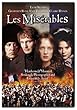 I am settling in for a movie and supper. Tonight I’ll watch an old favorite, the 1998 Les Miserables with Geoffrey Rush as Javert and Liam Neeson as Jean Valjean. No movie would get everything that Victor Hugo pressed into his pages (it is one of the only full novels I have ever read in French – I also read Notre-Dame de Paris and it was like torture, the French was so much harder), and there are lots of changes to the novel for its filmification.
Hugos’s digression about Waterloo in Les Miserables (not in the film) is amazing, up there with the mighty digression about the plague in Milan in I promessi sposi. But I digress.
There are pathetic moments in Les Miserables, in the sense of pathos, and the film captures the social conditions of the time, the tenuous nature of women in the era, the extremities of justice without mercy versus human and Christian mercy and compassion. And of course there is tale to be told here about what happens where there is hierarchy for the sake of hierarchy based on wrong notions entirely.
Great film. Geoffrey Rush is, as usual, brilliant. He captures rigid obsession with frightening impact.
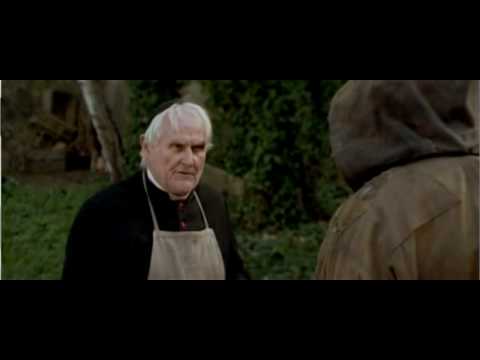
Here is an excerpt of a pivotal moment when the old bishop ransoms Valjean’s soul from bitterness and ultimate despair.
Valjean, a convict of 19 years of hard labor for stealing and just paroled, is taken in for a night by the bishop of a place. Valjean steals the bishop’s silver and knocks the bishop out when he comes to investigate. He flees.

BTW… later in the movie there are some liturgically incorrect (absurd) scenes of Mass and a clothing of postulants. And the actors/clergy sure ain’t French. You can tell that the people who made the film had no historical sense when it came to the Church. Thus, we see that pagans think the Church doesn’t change things very much over time and therefore the way we do things now must be the way they did things in the early 19th century. And thus, enters Claire Danes to replace the sweet little girl who played Cosette.
We have come to 1st Vespers of Septugesima Sunday already. It seems like just the day before yesterday that the Christmas cycle ended.
No. Wait… it did.
Here is something for the brethren if they need to fulfill their obligation and are weary.
This is the last time we hear the “Alleluia” for a while. The “Alleluia” is effectively buried after 1st Vespers of Septuagesima. Tomorrow we will say the “Laus tibi Domine” instead.
Podcast: Play in new window | Download
Subscribe: RSS

Coat of Arms by D Burkart









A Daily Prayer for Priests


They find you a pro-life agent in your area who commits to giving a portion of the fee to a pro-life group!

PLEASE subscribe via PayPal if it is useful. Zelle and Wise are better, but PayPal is convenient.
A monthly subscription donation means I have steady income I can plan on. I put you my list of benefactors for whom I pray and for whom I often say Holy Mass.
In view of the rapidly changing challenges I now face, I would like to add more $10/month subscribers. Will you please help?
For a one time donation...



Help Monks in Wyoming (coffee – UPDATED LINK) and Norcia (beer) and the wonderful "Soap Sisters" of Summit, NJ!


Please follow me on Twitter!










Visits tracked by Statcounter
since Sat., 25 Nov. 2006:



