QUAERITUR: Female altar servers

I received a question from a reader…. a very long, convoluted question (please keep them short or I just can’t wade through them), and so I edited it:

Dear Fr. Z,
                In my home parish we are trying to get some adult men to serve Mass; some of us behind the push want more reverence from the servers and believe that having adults will get that.  The idea is that not only will the adults be more reverent but it will give the children someone to imitate and hopefully keep them in line more.  My questions arise due to this situation.
… 2)    It is the opinion of a rather vocal woman in our parish that adult women can serve as well as adult men.  … If there anything we can do about this with the exception of actually having the adult men installed as acolytes?

First, I think a great solution would be if bishops would simply install more acolytes and lectors.   This would help to resolve many problems.

I remember visiting a parish, I believe in Texas, where the very smart priest had organized a fabulous cadre of altar boys.  Each "level" of service was clearly identified and the older boys helped to teach the younger boys.  If a boy went all the way through the cycle, quite a few years, the bishop installed him as an acolyte… I don’t remember if lector was included.  Great system.

That is probably not going to happen in many places.

Remember that canon 230 of the 1983 CIC has been so interpreted that females *may* substitute for installed acolytes.  It does not give females a *right*.  As a matter of fact, the Holy See said that priests cannot be forced to have female servers.  It clearly states there ought to be a preference for male servers, especially the service of boys.

Service of females of any age at the altar remains an exception to the rule of male only service.

It is important that when there is resistance to male only service never to accept the premise often underlying the arguments in favor of girls, namely, that this in an “equality” issue.  It is not.  Service at the altar must not be politicized.  The service of males at the altar is also not merely a practical issue, that is, that it helps vocations.   The deeper theological point is that service at the altar is, in a sense, an extension of male ordained priesthood and those orders and ministries that lead to it.

No layperson as any right to serve.  This is something granted.

What I would like to happen with this thread is for people to speak of their own experiences of shifting the practice at their parish.

I would like to hear from priests who fought the battles and lay people who promoted male altar service.

Let’s keep this entry focused.


Posted in ASK FATHER Question Box, SESSIUNCULA |
54 Comments

Prayer for Priests

Prayer for Priests

Lord Jesus, present in the Most Blessed Sacrament,
and living perpetually among us through Your Priests,
grant that the words of Your Priests may be only Your words,
that their gestures be only Your gestures,
and that their lives be a true reflection of Your life.

Grant that they may be men who speak to God on behalf of His people,
and speak to His people of God.
Grant that they be courageous in service,
serving the Church as she asks to be served.

Grant that they may be men who witness to eternity in our time,
travelling on the paths of history in Your steps,
and doing good for all.

Grant that they may be faithful to their commitments,
zealous in their vocation and mission,
clear mirrors of their own identity,
and living the joy of the gift they have received.

We pray that Your Holy Mother, Mary,
present throughout Your life,
may be ever present in the life of Your Priests. Amen.

Posted in SESSIUNCULA |
4 Comments

Vatican Cong. for the Clergy: World Day of Prayer for the Sanctification of Priests

Vatican Congregation for the Clergy
 
 Theme for World Day of Prayer for the Sanctification of Priests
  May 30, 2008
 
 by Cardinal Claudio Hummes

 
 Reverend and dear Brothers in the Priesthood,
 
 On the Feast of the Sacred Heart of Jesus let us fix the eyes of our minds and hearts with a constant loving gaze on Christ, the one Savior of our lives and of the world. Focusing on Christ means focusing on that Face which every human being, consciously or not, seeks as a satisfying response to his own insuppressible thirst for happiness.
 
 We have encountered this Face and on that day, at that moment, his Love so deeply wounded our hearts that we could no longer refrain from asking ceaselessly to be in his Presence. “In the morning you hear my voice; in the morning I prepare a sacrifice for you and watch” (Psalm 5).
 
 The Sacred Liturgy leads us once again to contemplate the Mystery of the Incarnation of the Word, the origin and intimate reality of this company which is the Church: the God of Abraham, Isaac and Jacob revealed himself in Jesus Christ. “No one could see his Glory unless first healed by the humility of his flesh…. By dust you were blinded, and by dust you are healed: flesh, then, had wounded you, flesh heals you” (St. Augustine, Commentary on the Gospel according to John, Homily, 2, 16).
 
 Only by looking again at the perfect and fascinating humanity of Jesus Christ — alive and active now — who revealed himself to us and still today bends down to each one of us with his special love of total predilection, can we can let him illumine and fill the abyss of need which is our humanity, certain of Hope encountered and sure of Mercy that embraces our limitations and teaches us to forgive what we ourselves do not even manage to discern. “Deep calls to deep at the thunder of your cataracts” (Psalm 42[41]).
 
 On the occasion of the traditional World Day of Prayer for the Sanctification of Priests that is celebrated on the Feast of the Sacred Heart, I would like to recall the priority of prayer over action since it is on prayer that the effectiveness of action depends. The Church’s mission largely depends on each person’s personal relationship with the Lord Jesus and must therefore be nourished by prayer: “It is time to reaffirm the importance of prayer in the face of the activism and the growing secularism” (Benedict XVI, "Deus Caritas Est," No. 37). Let us not tire of drawing on his Mercy, of letting him look at and medicate the painful wounds of our sin, in order to marvel at the ever new miracle of our redeemed humanity.
 
 Dear confreres, we are experts of God’s Mercy within us and only by so being, his instruments in embracing wounded humanity in a way that is ever new. “Christ does not save us from our humanity, but through it; he does not save us from the world but came into the world so that through him the world might be saved (cf. John 3:17)” (Benedict XVI, Urbi et Orbi Message, Dec. 25, 2006). Finally, we are priests through the Sacrament of Orders, the highest Act of God’s Mercy and, at the same time, of his special preference.
 
 In the second place, with an unquenchable thirst and longing for Christ, the most authentic dimension of our Priesthood is mendicancy, simple and continuous prayer that is learned in silent orison. It has always characterized the life of Saints and should be asked for insistently. This awareness of our relationship with him is subjected to the purification of daily testing. Every day we realize again and again that not even we Ministers who act "in Persona Christi Capitis" are spared this drama. We cannot live a single moment in his Presence without a gentle longing to know him and to continue to adhere to him. Let us not give in to the temptation to see being priests as a burden, inevitable and impossible to delegate, henceforth assumed, which can perhaps be carried out “mechanically” with a structured and coherent pastoral program. Priesthood is the vocation, the path and the manner through which Christ saves us, has called us and is calling us now to!  abide with him.
 
 The one adequate measure, with regard to our Holy Vocation, is radicalism. This total dedication with awareness of our infidelity can only be brought into being as a renewed and prayerful decision which Christ subsequently implements, day after day. The actual gift of priestly celibacy must be accepted and lived in this dimension of radicalism and full configuration to Christ. Any other approach to the reality of the relationship with him risks becoming ideological.
 
 Even the great mass of work that the contemporary conditions of the ministry sometimes impose on us, far from discouraging us must spur us to care with even greater attention for our priestly identity which has an incontrovertibly divine root. In this regard the particular conditions of the ministry themselves must impel us, with a logic opposed to that of the world, to “raise the tone” of our spiritual life, witnessing with greater conviction and effectiveness to our exclusive belonging to the Lord.
 
 We are taught total dedication by the One who loved us first. “I was ready to be found by those who did not seek me. I said, ‘Here am I, here am I’ to a nation that did not call on my name”. The place of totality par excellence is the Eucharist since, “in the Eucharist Jesus does not give us a ‘thing’ but himself; he offers his own body and pours out his own blood” ("Sacramentum Caritatis," No. 7).
 
 Let us be faithful, dear confreres, to the daily Celebration of the Most Holy Eucharist, not solely in order to fulfill a pastoral commitment or a requirement of the community entrusted to us but because of the absolute personal need we have of it, as of breathing, as of light for our life, as the one satisfactory reason for a complete priestly existence.
 
 In his Post-Synodal Apostolic Exhortation "Sacramentum Caritatis," the Holy Father reproposes to us forcefully St Augustine’s affirmation: “no one eats that flesh without first adoring it; we should sin were we not to adore it” (St. Augustine, "Enarrationes in Psalmos," 98,9). We cannot live, we cannot look at the truth about ourselves without letting ourselves be looked at and generated by Christ in daily Eucharistic Adoration, and the “Stabat” of Mary, “Woman of the Eucharist”, beneath her Son’s Cross, is the most significant example of contemplation and adoration of the divine Sacrifice that has been given to us.
 
 Since the missionary spirit is intrinsic in the very nature of the Church, our mission is likewise innate in the priestly identity, which is why missionary urgency is a matter of self-awareness. Our priestly identity is edified and renewed day after day in “conversation” with Our Lord. An immediate consequence of our relationship with him, ever nourished in constant prayer, is the need to share it with all those around us. The holiness we ask for daily, in fact, cannot be conceived according to a sterile and abstract individual acceptance but is necessarily Christ’s holiness, which is contagious for everyone: “Being in communion with Jesus Christ draws us into his ‘being for all’; it makes it our own way of being” (Benedict XVI, "Spe Salvi," No. 28).
 
 Christ’s “being for all” is realized for us in the Tria Munera by which we are clothed in the very nature of the Priesthood. These Munera which constitute the entirety of our Ministry, are not the place for alienation or, even worse, a mere functionalist reductionism of ourselves but rather are the truest expression of our belonging to Christ; they are the place of our relationship with him. The People which has been entrusted to us to be educated, sanctified and governed is not a reality that distracts us from “our life” but the Face of Christ that we contemplate daily, as the face of his beloved for the bridegroom and the Church his Bride for Christ. The People entrusted to us is the indispensable path for our holiness, in other words the path on which Christ manifests through us the Glory of the Father.
 
 “Whoever causes one of these little ones who believe in me to sin, it would be better for him to have a great millstone fastened round his neck and to be drowned in the depth of the sea… those on the other hand who send to perdition an entire people… what should they suffer and what punishment should they receive?” (St. John Chrysostom, "De Sacerdotio," VI, 1.498). In the face of the awareness of such a serious task and such a great responsibility for our life and our salvation, in which faithfulness to Christ coincides with “obedience” to the needs dictated by the redemption of those souls, there is not even room to doubt the grace received. We can only ask to surrender as much as possible to his Love so that he will act through us, for either we let Christ save the world, acting in us, or we risk betraying the very nature of our vocation. The measure of dedication, dear confreres, is totality, again and anew. Yes, “five loaves an! d two fishes” are not many but they are all! God’s Grace makes of all our littleness the Communion that satisfies the People. Elderly and sick priests who exercise the divine ministry daily, uniting themselves with Christ’s Passion and offering their own priestly existence for the true good of the Church and the salvation of souls, share especially in this “total dedication”.
 
 Lastly, the Holy Mother of God remains an indispensable foundation of the whole of priestly life. The relationship with her cannot be resolved in pious devotional practice but is nourished by ceaseless entrustment to the arms of the ever Virgin of the whole of our life, of our ministry in its entirety. Mary Most Holy also leads us, like John, to beneath the Cross of her Son and Our Lord in order to contemplate, with her, God’s infinite Love: “He who for us is Life itself descended here and endured our death and slew it by the abundance of his Life” (St. Augustine, "Confessiones," IV, 12).
 
 As a condition for our redemption, for the fulfillment of our humanity, for the Advent of the Incarnation of the Son, God the Father chose to await a Virgin’s “Fiat” to an angel’s announcement. Christ decided to entrust, so to speak, his own Life to the loving freedom of the Mother: “She conceived, brought forth, and nourished Christ, she presented him to the Father in the temple, shared her Son’s sufferings as he died on the Cross. Thus, in a wholly singular way she cooperated by her obedience, faith, hope and burning charity in the work of the Savior in restoring supernatural life to souls. For this reason she is a mother to us in the order of grace” ("Lumen Gentium," No. 61).
 
 Pope St Pius X said: “Every priestly vocation comes from the heart of God but passes through the heart of a mother”. This is true with regard to obvious biological motherhood but it is also true of the “birth” of every form of fidelity to the Vocation of Christ. We cannot do without a spiritual motherhood for our priestly life: let us entrust ourselves confidently to the prayer of the whole of Holy Mother Church, to the motherhood of the People, whose pastors we are but to whom are entrusted our custody and holiness; let us ask for this fundamental support.
 
 Dear confreres, the urgent need for “a movement of prayer, placing 24-hour continuous Eucharistic adoration at the centre so that a prayer of adoration, thanksgiving, praise, petition and reparation will be raised to God, incessantly and from every corner of the earth, with the primary intention of awakening a sufficient number of holy vocations to the priestly state and, at the same time, spiritually uniting with a certain spiritual maternity — at the level of the Mystical Body — all those who have already been called to the ministerial priesthood and are ontologically conformed to the one High and Eternal Priest. This movement will offer better service to Christ and his brothers — those who are at once ‘inside’ the Church and also ‘at the forefront’ of the Church, standing in Christ’s stead (cf. "Pastores Dabo Vobis," No. 16), and representing him as head, shepherd and spouse of the Church” (Letter of the Congregation of the!  Clergy, 8 December 2007).
 
 A further form of spiritual motherhood has recently been outlined. It has always silently accompanied the chosen ranks of priests in the course of the Church’s history. It is the concrete entrustment of our ministry to a specific face, to a consecrated soul who has been called by Christ and therefore chooses to offer herself, with the necessary suffering and the inevitable struggles of life, to intercede for our priestly existence, thereby dwelling in Christ’s sweet presence. This motherhood, which embodies Mary’s loving face, should be prayed for because God alone can bring it into being and sustain it. In this regard there are plenty of wonderful examples; only think of St Monica’s beneficial tears for her son Augustine, for whom she wept “more than mothers weep when lamenting their dead children” (St. Augustine, "Confessions," III, 11).
 
 Another fascinating example is that of Eliza Vaughan, who gave birth to 13 children and entrusted them to the Lord; six of her eight sons became priests and four of her five daughters became women religious. Since it is impossible to be true mendicants before Christ, marvelously concealed in the Eucharistic Mystery, without being able in practice to ask for the effective help and prayers of those whom he sets beside us, let us not be afraid to entrust ourselves to the motherhoods that the Spirit will certainly bring into being for us.
 
 St Thérèse of the Child Jesus, aware of the extreme need of prayer for all priests, especially those who were lukewarm, wrote in a letter to her sister Céline, “Let us live for souls, let us be apostles, let us save above all the souls of priests…. Let us pray and suffer for them and on the last day Jesus will be grateful” (St. Thérèse of Lisieux, Letter 94).
 
 Let us entrust ourselves to the intercession of the Blessed Virgin Queen of Apostles, our sweetest Mother, let us look to Christ with her, ceaselessly striving to be totally, radically his; this is our identity!
 
 Let us remember the words of the Holy Curé d’Ars, Patron of Parish Priests: “If I already had one foot in Heaven and I was told to return to the earth to work to convert sinners, I would gladly return. And if, to do this, it were necessary that I remain on earth until the end of the world, always rising at midnight and suffering as I suffer, I would consent with all my heart” (Brother Athanase, "Procès de l’Ordinaire," p. 883).
 
 May the Lord guide and protect each and every one, especially the sick and those who are suffering the most, in the constant offering of our life for love.
 
 Cardinal Cláudio Hummes
 Prefect
 
 Mauro Piacenza
 Titular Archbishop of Victoriana
 Secretary

Posted in SESSIUNCULA |
6 Comments

DECREE ON CELEBRATION OF THE CONVERSION OF ST. PAUL

DECREE ON CELEBRATION OF THE CONVERSION OF ST. PAUL

VATICAN CITY, 30 MAY 2008 (VIS) – The Congregation for Divine Worship and the Discipline of the Sacraments today published a decree authorising the celebration, on 25 January 2009, of Mass for the Feast of the Conversion of St. Paul, which falls on that Sunday, the third in Ordinary Time.

  The decree, signed by Cardinal Francis Arinze and Archbishop Albert Malcolm Ranjith, respectively prefect and secretary of the congregation, explains that the authorisation has been given because of the Pauline Year, due to be inaugurated by the Holy Father on 28 June 2008 to commemorate the 2000th anniversary of the birth of the Apostle of the Gentiles.

Posted in SESSIUNCULA |
5 Comments

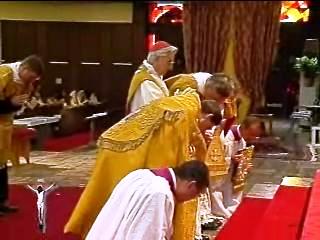
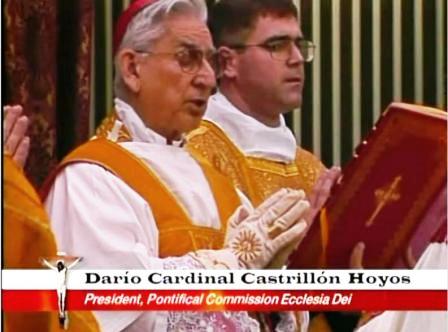
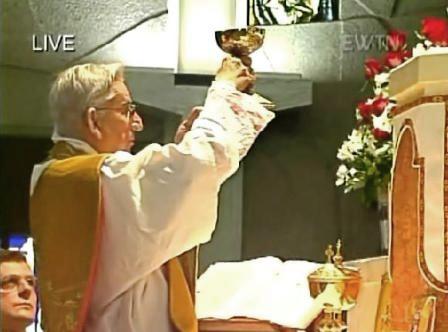
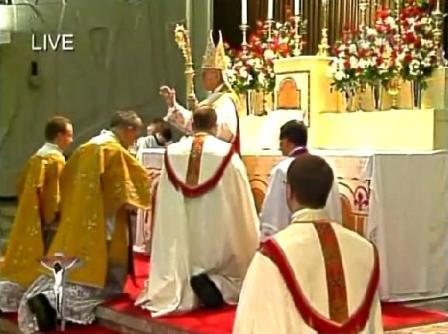
Card. Castrillon Hoyos ordains priests for the FSSP in Lincoln, NE – Extraordinary Rite

[uc]

I’ll begin putting up some images.  Comments to follow.

Let it be said that I am grateful grateful grateful that they simply broadcast the live feed, without commentary over it!

Thank you EWTN.  Thank you!

First, I don’t think Father should have his biretta on, though they are outside.

Card. Castrillon Hoyos ordains priests for the FSSP in Lincoln, NE - Extraordinary Rite
 

Card. Castrillon Hoyos ordains priests for the FSSP in Lincoln, NE - Extraordinary Rite


Card. Castrillon Hoyos ordains priests for the FSSP in Lincoln, NE - Extraordinary Rite
 

Very properly carrying their birettas.  This is what I call "birettiquette".

They have their stoles, for the imposition of hands and also for reception of Communion.

Card. Castrillon Hoyos ordains priests for the FSSP in Lincoln, NE - Extraordinary Rite
 

It looks like one of the deacons of honor is a Monsignor, probably a Domestic Prelate. 

Card. Castrillon Hoyos ordains priests for the FSSP in Lincoln, NE - Extraordinary Rite 
Card. Castrillon Hoyos ordains priests for the FSSP in Lincoln, NE - Extraordinary Rite
 
Card. Castrillon Hoyos ordains priests for the FSSP in Lincoln, NE - Extraordinary Rite

Confiteor Deo Omnipotenti…

Card. Castrillon Hoyos ordains priests for the FSSP in Lincoln, NE - Extraordinary Rite

For Cardinals, the MC wears the paonazza colored cassock, even if he is not a Monsignor.

Card. Castrillon Hoyos ordains priests for the FSSP in Lincoln, NE - Extraordinary Rite
 
Card. Castrillon Hoyos ordains priests for the FSSP in Lincoln, NE - Extraordinary Rite

 The Cardinal is incensed.

Card. Castrillon Hoyos ordains priests for the FSSP in Lincoln, NE - Extraordinary Rite
 

Not the prettiest cathedral I have ever seen, architecturally, but today, at this moment, it is the most beautiful place in the world. 

Card. Castrillon Hoyos ordains priests for the FSSP in Lincoln, NE - Extraordinary Rite

Keep in mind who is doing this! 

Card. Castrillon Hoyos ordains priests for the FSSP in Lincoln, NE - Extraordinary Rite

At the Holy Name…

Great tableaux!
 
Card. Castrillon Hoyos ordains priests for the FSSP in Lincoln, NE - Extraordinary Rite
 
Card. Castrillon Hoyos ordains priests for the FSSP in Lincoln, NE - Extraordinary Rite

In choro.

Card. Castrillon Hoyos ordains priests for the FSSP in Lincoln, NE - Extraordinary Rite

The Epistle.

Card. Castrillon Hoyos ordains priests for the FSSP in Lincoln, NE - Extraordinary Rite
 
Card. Castrillon Hoyos ordains priests for the FSSP in Lincoln, NE - Extraordinary Rite 

You can bet these fellows are focused.

Notice they carry the vestments which will be put on them and also lighted candles, as they or their godparents did at baptism.

Card. Castrillon Hoyos ordains priests for the FSSP in Lincoln, NE - Extraordinary Rite

The Cardinal preaches. 

Card. Castrillon Hoyos ordains priests for the FSSP in Lincoln, NE - Extraordinary Rite 

It is determined if the candidates are worthy.

Then they are called by name.

This is, technically, the moment of vocation.

Until this moment, vocation is theoretical, perhaps felt and reasoned through, but not actualized.

Card. Castrillon Hoyos ordains priests for the FSSP in Lincoln, NE - Extraordinary Rite

They respond Adsum, "I am present", and come forward.
 
Card. Castrillon Hoyos ordains priests for the FSSP in Lincoln, NE - Extraordinary Rite 
Card. Castrillon Hoyos ordains priests for the FSSP in Lincoln, NE - Extraordinary Rite

The rite begins.

Card. Castrillon Hoyos ordains priests for the FSSP in Lincoln, NE - Extraordinary Rite 
Card. Castrillon Hoyos ordains priests for the FSSP in Lincoln, NE - Extraordinary Rite

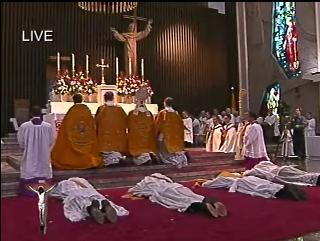
The litany of saints is sung with many intercessions.

Card. Castrillon Hoyos ordains priests for the FSSP in Lincoln, NE - Extraordinary Rite

During the litany the ordinandi prostrate themselves on the floor before the altar.
 
Card. Castrillon Hoyos ordains priests for the FSSP in Lincoln, NE - Extraordinary Rite
 
Card. Castrillon Hoyos ordains priests for the FSSP in Lincoln, NE - Extraordinary Rite

The Holy Spirit is called down on the men as they are consecrated. 

Card. Castrillon Hoyos ordains priests for the FSSP in Lincoln, NE - Extraordinary Rite

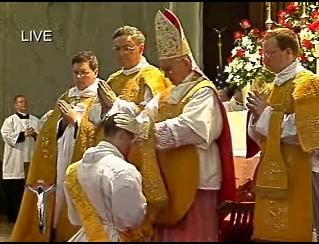
The Cardinal lays hands on them, according to Scripture and our apostolic tradition.
 
Card. Castrillon Hoyos ordains priests for the FSSP in Lincoln, NE - Extraordinary Rite

Card. Castrillon Hoyos ordains priests for the FSSP in Lincoln, NE - Extraordinary Rite

 Then the priests who are present also impose hands on them.

Card. Castrillon Hoyos ordains priests for the FSSP in Lincoln, NE - Extraordinary Rite
 
Card. Castrillon Hoyos ordains priests for the FSSP in Lincoln, NE - Extraordinary Rite
 
Card. Castrillon Hoyos ordains priests for the FSSP in Lincoln, NE - Extraordinary Rite
 
The ordination prayer continues.

Card. Castrillon Hoyos ordains priests for the FSSP in Lincoln, NE - Extraordinary Rite
 

They bishop puts the chasuble on them, but the back is folded up until the end of the Mass.

Card. Castrillon Hoyos ordains priests for the FSSP in Lincoln, NE - Extraordinary Rite

Their stoles are shifted from the manner of a deacon, diagonally, to the manner of a priest.
 
Card. Castrillon Hoyos ordains priests for the FSSP in Lincoln, NE - Extraordinary Rite
 
Card. Castrillon Hoyos ordains priests for the FSSP in Lincoln, NE - Extraordinary Rite

You can see how the chasuble is gathered up in back.

Card. Castrillon Hoyos ordains priests for the FSSP in Lincoln, NE - Extraordinary Rite

Card. Castrillon Hoyos ordains priests for the FSSP in Lincoln, NE - Extraordinary Rite
 
Card. Castrillon Hoyos ordains priests for the FSSP in Lincoln, NE - Extraordinary Rite
 

A gremial, apron like cloth is put on the cardinal’s lap for the annointing of the new priest’s hands.

The prayer speaks of their ability to bless and consecrate, to handle holy things.

Card. Castrillon Hoyos ordains priests for the FSSP in Lincoln, NE - Extraordinary Rite

Their hands are bound with a tergimanium, with which they will clean their hands of the chrism.

Many priests keep theirs and are buried with them.

Our were taken away from us, alas.
 
Card. Castrillon Hoyos ordains priests for the FSSP in Lincoln, NE - Extraordinary Rite 
Card. Castrillon Hoyos ordains priests for the FSSP in Lincoln, NE - Extraordinary Rite
 
Card. Castrillon Hoyos ordains priests for the FSSP in Lincoln, NE - Extraordinary Rite
 
Card. Castrillon Hoyos ordains priests for the FSSP in Lincoln, NE - Extraordinary Rite
 
Card. Castrillon Hoyos ordains priests for the FSSP in Lincoln, NE - Extraordinary Rite
 
Card. Castrillon Hoyos ordains priests for the FSSP in Lincoln, NE - Extraordinary Rite
 
Card. Castrillon Hoyos ordains priests for the FSSP in Lincoln, NE - Extraordinary Rite
 

In the traditio the priests receive a chalice with wine and the paten with a Host as the sign that they may consecrate the Eucharist.

Card. Castrillon Hoyos ordains priests for the FSSP in Lincoln, NE - Extraordinary Rite 
Card. Castrillon Hoyos ordains priests for the FSSP in Lincoln, NE - Extraordinary Rite

Usually you get chrism off your hands with lemons and bread with water.

Card. Castrillon Hoyos ordains priests for the FSSP in Lincoln, NE - Extraordinary Rite

Time for the Gospel of the Mass.

Card. Castrillon Hoyos ordains priests for the FSSP in Lincoln, NE - Extraordinary Rite

My friend Fr. Bisig incenses the Evangelarium. 

Card. Castrillon Hoyos ordains priests for the FSSP in Lincoln, NE - Extraordinary Rite
 
His Eminence.

Card. Castrillon Hoyos ordains priests for the FSSP in Lincoln, NE - Extraordinary Rite
 

The schola cantorum.

Card. Castrillon Hoyos ordains priests for the FSSP in Lincoln, NE - Extraordinary Rite
 

Card. Castrillon Hoyos ordains priests for the FSSP in Lincoln, NE - Extraordinary Rite
 

A great shot.

Card. Castrillon Hoyos ordains priests for the FSSP in Lincoln, NE - Extraordinary Rite
 

The Offertory.  Note the bugia… the candle near the missal stand.

Card. Castrillon Hoyos ordains priests for the FSSP in Lincoln, NE - Extraordinary Rite 

Card. Castrillon Hoyos ordains priests for the FSSP in Lincoln, NE - Extraordinary Rite
 
The Canon.

Card. Castrillon Hoyos ordains priests for the FSSP in Lincoln, NE - Extraordinary Rite

Card. Castrillon Hoyos ordains priests for the FSSP in Lincoln, NE - Extraordinary Rite
 

Card. Castrillon Hoyos ordains priests for the FSSP in Lincoln, NE - Extraordinary Rite
 

Card. Castrillon Hoyos ordains priests for the FSSP in Lincoln, NE - Extraordinary Rite
 

Card. Castrillon Hoyos ordains priests for the FSSP in Lincoln, NE - Extraordinary Rite
 

Pax tecum.  the newly ordained receive the pax from the Cardinal.

First, the kiss the altar.  They place their hands on it to kiss it, they can do that now.  Both the altar and their hands are annointed, consecrated, with chrism.

In a sense, kissing the altar shows the unity of the priest and the sacrifice.  He, too, is priest and victim as well.

Card. Castrillon Hoyos ordains priests for the FSSP in Lincoln, NE - Extraordinary Rite
 

Card. Castrillon Hoyos ordains priests for the FSSP in Lincoln, NE - Extraordinary Rite

The newly ordained receive Communion from the Cardinal. 

Card. Castrillon Hoyos ordains priests for the FSSP in Lincoln, NE - Extraordinary Rite

Sometime you must pray and wait for the end of something… like…

Card. Castrillon Hoyos ordains priests for the FSSP in Lincoln, NE - Extraordinary Rite

… the second Confiteor.

Card. Castrillon Hoyos ordains priests for the FSSP in Lincoln, NE - Extraordinary Rite

Ecce Agnus Dei.

Card. Castrillon Hoyos ordains priests for the FSSP in Lincoln, NE - Extraordinary Rite

Card. Castrillon Hoyos ordains priests for the FSSP in Lincoln, NE - Extraordinary Rite

Holy Communion.  Priests wear their stoles when receiving.

Card. Castrillon Hoyos ordains priests for the FSSP in Lincoln, NE - Extraordinary Rite

Card. Castrillon Hoyos ordains priests for the FSSP in Lincoln, NE - Extraordinary Rite

Waiting for Holy Communion to be completed.

Card. Castrillon Hoyos ordains priests for the FSSP in Lincoln, NE - Extraordinary Rite

At the end, the new priests approach the bishop, who lays hands on them again in a sign that they have received the power to forgive sins.

Card. Castrillon Hoyos ordains priests for the FSSP in Lincoln, NE - Extraordinary Rite

I think this is a good shot, with that window in the background, Christ working through the priest who sanctifies the flock.

Card. Castrillon Hoyos ordains priests for the FSSP in Lincoln, NE - Extraordinary Rite

Their chasubles are let down in back.

Card. Castrillon Hoyos ordains priests for the FSSP in Lincoln, NE - Extraordinary Rite

The priests put their hands between those of the bishop and promise obedience.

This is a promise, not a "vow", as many people often say.

Card. Castrillon Hoyos ordains priests for the FSSP in Lincoln, NE - Extraordinary Rite

They give each other the sign of peace, in the Roman fashion.

Card. Castrillon Hoyos ordains priests for the FSSP in Lincoln, NE - Extraordinary Rite

Card. Castrillon Hoyos ordains priests for the FSSP in Lincoln, NE - Extraordinary Rite

Card. Castrillon Hoyos ordains priests for the FSSP in Lincoln, NE - Extraordinary Rite

Hats on… hats off… it happens often in this rite.

Card. Castrillon Hoyos ordains priests for the FSSP in Lincoln, NE - Extraordinary Rite

Kissing the altar before the final blessing.

Card. Castrillon Hoyos ordains priests for the FSSP in Lincoln, NE - Extraordinary Rite

Card. Castrillon Hoyos ordains priests for the FSSP in Lincoln, NE - Extraordinary Rite

The priests are admonished gravely to make sure they know how to celebrate Mass before they actually do so.

They are admonished to say three Mass for certain intentions.

They are asked to pray for the bishop who just ordained them.

This is still all in Latin, of course.

Card. Castrillon Hoyos ordains priests for the FSSP in Lincoln, NE - Extraordinary Rite

Finally, they all solemnly sing the Te Deum.

Card. Castrillon Hoyos ordains priests for the FSSP in Lincoln, NE - Extraordinary Rite

Card. Castrillon Hoyos ordains priests for the FSSP in Lincoln, NE - Extraordinary Rite

During the Te Deum they kneel at a certain point near the end.

Card. Castrillon Hoyos ordains priests for the FSSP in Lincoln, NE - Extraordinary Rite

The recessional.

Card. Castrillon Hoyos ordains priests for the FSSP in Lincoln, NE - Extraordinary Rite

Card. Castrillon Hoyos ordains priests for the FSSP in Lincoln, NE - Extraordinary Rite

Card. Castrillon Hoyos ordains priests for the FSSP in Lincoln, NE - Extraordinary Rite

And a final blessing from the bishop/Cardinal outside… rather than in the sacristy.

Card. Castrillon Hoyos ordains priests for the FSSP in Lincoln, NE - Extraordinary Rite

Posted in SESSIUNCULA |
84 Comments

Get out your bells, books, and candles! Canada: another attempted ordination

Holy Church doesn’t promulgate laws about censures simply for the heck of it.  There is long experience behind censures.  Laws have theological grounding.

The tougher censures are applied when the matter concerns something closer to the heart of who and what the Church is. 

This is why the story I posted last night about the CDF confirming the excommunication of those involved in the attempted ordination of a woman.  Also, the CDF confirmed the excommunication of those involved in a rebel parish in St. Louis.

Now read this story from Victoria, Canada:

B.C. Catholic group ordains woman, married man
 
Katie DeRosa
Canwest News Service

Thursday, May 29, 2008

VICTORIA – The Roman Catholic Womenpriests Movement ordained two people, James Lauder of Victoria and Monica Kilburn-Smith of Calgary, as priests [Nooo… they didn’t….] Thursday at St. Aidan’s United Church in Victoria.

Lauder, who is married, is the first man ever ordained by Womenpriests.  [What a distinction!]

"The movement, on purpose, chooses to break an unjust law that discriminates against women," said the group’s spokesman Francois Brassard. While the group can ordain someone as a priest, the Roman Catholic Church does not legally recognize the appointment, he
said.

[Lot’s of confusion here.  First, what you find in Canon Law about ordination of men only, is not arbitrary.  This is divine law, which the Church knows to be infallibly taught.  It is impossible to ordain a woman because it is contrary to God’s will.  That is why there is a law.  The law is not just some arbitrary invention.  It reflects a deeper theological reality.  So, their bluster about "unjust" and "legally" and "appointment" (and that is not what an ordination is) seriously misses the mark.]

Once ordained, the individual can hold mass and practise the sacraments in small-faith communities outside the official walls of the church, he added. [No they can’t.  They can’t celebrate Mass because the are not priests.]  Brassard calls it a "new way of doing priestly ministry among the marginalized."  ["A new way of doing priestly minsitry".   Okay… look at that carefully.  Above, the spokesman called this an "appointment".  I am pretty sure that what we have here is a view of priesthood much like that the Eduard Schillebeeckx: the community calls forth people who best represent them, and effectively appoint them as their priest for however long necessary.  This undermines the sacramental understanding of priesthood, the ontological reality, what happens in the soul of the one ordained.  This reduces priesthood to a function.  Secondly, this statement smacks of a Marxist approach, which very often informs feminist views of the Church.]

Cardinal Joseph Ratzinger, now Pope Benedict XVI, excommunicated a group of women, called the Danube Seven, after they were ordained [No.]  in Europe in 2002. The group has ordained [No.] more than 50 women and has more candidates in training, said Brassard. Married or gay men, who would not otherwise be accepted as priests in the church, can also be ordained [No.] under the movement.

"I think we offer a sense of hope for those who do feel disenfranchised," said Lauder.  [And, while lying to them, lead them toward the eternal torments of hell.]

The group’s aim is not political mudslinging against the church, [B as in B.  S as in S.  I would wager there are strong Marxist tendencies amongst these people.  But, their thought is so shallow as to focus on the word "political", which they think is a :abd word".  Therefore, they claim they are not "political".]  but sending a message of inclusively and equality, he said.

The group will participate in the Catholic Network for Women’s Equality’s national conference – held for the first time in British Columbia – today and Saturday at the University of Victoria.  [They can read together the CDF decree!] Conference co-ordinator Michele Birch-Conery, herself the first female Roman Catholic priest [No.] in Canada, said she hopes it will raise interest in creating a B.C. chapter for the network. 

Be sure to check Edward Peter’s blog for more on the juridical details of the CDF’s decree. 

Posted in SESSIUNCULA |
37 Comments

CDF: Decree of Excommunication of those involved with attempted ordination of women

Congregation for the Doctrine of the Faith

General Decree
On the delict of attempted sacred ordination of a woman

The Congregation for the Doctrine of the Faith, in virtue of the special faculty granted to it by the Supreme Authority of the Church (cf. Can. 30, Code of Canon Law), in order to safeguard the nature and validity of the sacrament of Holy Orders, decreed, on the Ordinary Session of December 19, 2007:

In accordance with what is disposed by Can. 1378 of the Code of Canon Law, he who shall have attempted to confer holy orders on a woman, as well as the woman who may have attempted to receive Holy Orders, incurs in a latae sententiae excommunication, reserved to the Apostolic See.

If he who shall have attempted to confer Holy Orders on a woman or if the woman who shall have attempted to received Holy Orders is a faithful bound to the Code of Canons of the Oriental Churches, he is to be punished with the major excommunication, whose remission remains reserved to the Apostolic See, in accordance with can. 1443 of the same Code (cf. can. 1423, Code of Canons of the Oriental Churches).

The present decree enters in force immediately after its publication in L’Osservatore Romano.

William Cardinal Levada
Prefect
Angelo Amato, s.d.b.
Titular Archbishop of Sila
Secretary

(Published in L’Osservatore Romano of 29 May 29 2008)

Congregatio Pro Doctrina Fidei
Decretum generale

de delicto attentatae sacrae ordinationis mulieris

Congregatio pro Doctrina Fidei, ad naturam et validitatem sacramenti sacri ordinis tuendam, vigore specialis facultatis sibi a suprema Ecclesiae auctoritate in casu tributae (cfr can. 30 Codicis Iuris Canonici), in Congregatione Ordinaria diei 19 Decembris 2007, decrevit:
Firmo praescripto can. 1378 Codicis Iuris Canonici, tum quicumque sacrum ordinem mulieri conferre, tum mulier quae sacrum ordinem recipere attentaverit, in excommunicationem latae sententiae Sedi Apostolicae reservatam incurrit.
Si vero qui mulieri sacrum ordinem conferre vel mulier quae sacrum ordinem recipere attentaverit, christifidelis fuerit Codici Canonum Ecclesiarum Orientalium subiectus, firmo praescripto can. 1443 eiusdem Codicis, excommunicatione maiore puniatur, cuius remissio etiam reservatur Sedi Apostolicae (cfr can. 1423 Codicis Canonum Ecclesiarum Orientalium).
Hoc decretum cum in L’Osservatore Romano evulgabitur, statim vigere incipiet.

Gulielmus Cardinalis Levada
Praefectus
Angelus Amato, s.d.b.
Archiep. titularis Silensis
a Secretis

Posted in SESSIUNCULA |
38 Comments

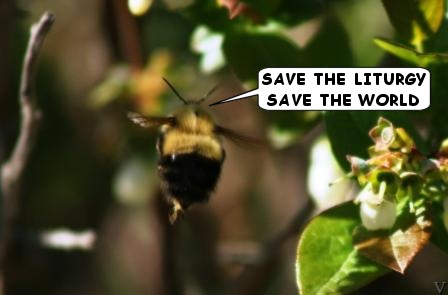
A bee has her say

Taking a hint from a recent entry, this is in from our WDTPRS photoshoper Vincenzo:

A bee has her say 

Posted in SESSIUNCULA |
9 Comments

Morning Sabine Report

Spring at the Sabine Farm seems at last to be in full swing, though the nights are still very chilly indeed.

The Red Bellied Woodpecker is getting some high nutrition snacks from the suet cage.

Yum.

Morning Sabine Report

This is not the only place where he dines, however.  I caught him later when I went to the mailbox.

Morning Sabine Report

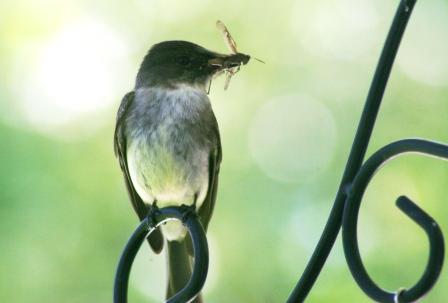
Once again, Mr. Sayornis phoebe, has a nice juicy bug!

Morning Sabine Report

In a comment, below, I was corrected about this bird, which I originally thought was a Pewee.

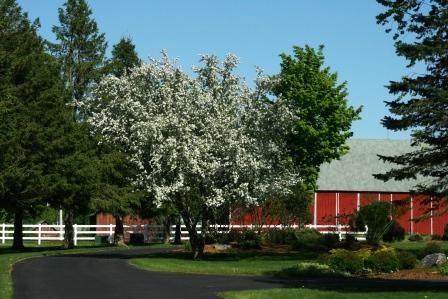
The crab in the front is grand.  I don’t know trees very, so I can’t tell you its variety.

Morning Sabine Report

I do know what strawberry blossoms are, however.

Morning Sabine Report

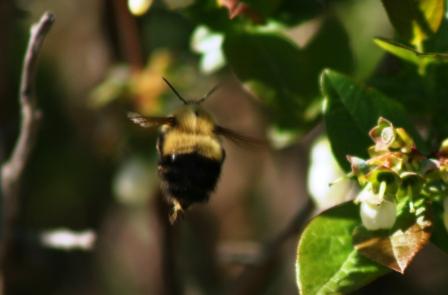
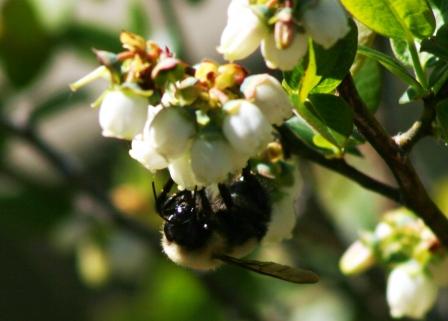
Mr. (Mrs? Miss?) Honey Bee is helping out with the blueberry patch.

Morning Sabine Report

He is very busy, along with a zillion of his friends.  The patch, and all the trees, utter a low but very discernible mmmmmm these days.

Morning Sabine Report

I am very glad for the bees, which will help us have plenty of berries and fruits and vegetables.

I favor bees, who are featured in the Exsultet.  If only I could get them to make candles.

Strolling down toward Sabine Pond…. we find…

Morning Sabine Report

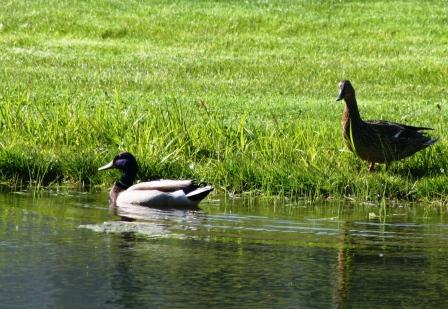
… The Mallards, Mister and Missus.

Morning Sabine Report

Ducklings are sure to follow.  This same pair comes back each year.

It just has to be said: ducks are hilarious.

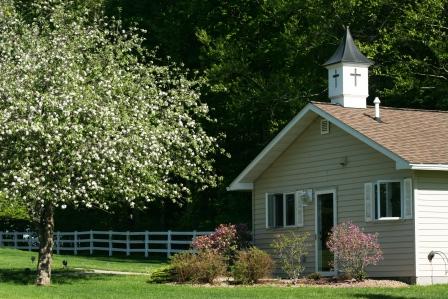
A view of one of the Sabine houses, with The Mallards, Anas platyrhynchos, Mister and Missus, in the foreground.

Morning Sabine Report

The chapel apple is doing nicely.  It too utters a low mmmmmm from the bees.

Morning Sabine Report

The blossoms on the tree are fabulous.  I took some of the little out-of-place "suckers" on the trunk and branches and put them together with lilacs for the altar this morning.  Every year this tree produces some of the best apples I have ever tasted, very firm and tart, perfect also for baking.

Morning Sabine Report

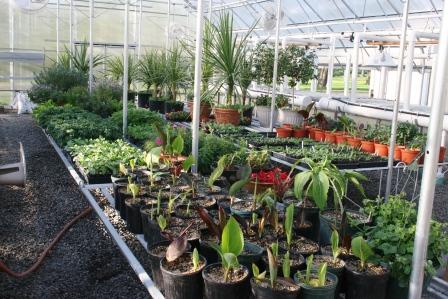
In the greenhouse. 

The ground is still too cold to start much planting outside.  It wouldn’t be prudent.  But the herbs and some veg are doing well.  I will start some more things from seed later today if I have a chance before my workout. 

Morning Sabine Report

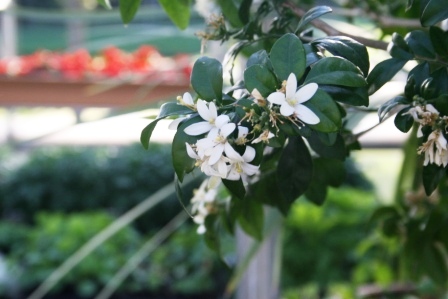
Here is the jasmine.  Later today I will cut some and put it in the chapel at Our Lady’s statue, as May draws to a close.

It should produce a fine fragrance in the evening, which I very much miss from Rome.

I am determined to eat spaghetti tonight, and perhaps drink a glass of cold white wine and reflect on the jasmine and my apartment.

Morning Sabine Report

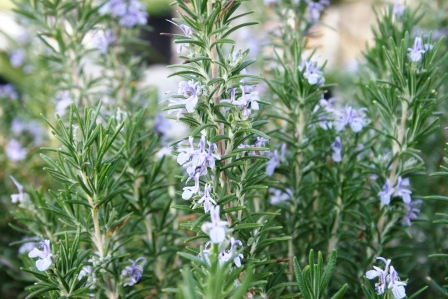
I always enjoy seeing the rosemary bloom.  In these parts that is not often experienced.

Morning Sabine Report

Rosemary is a material proof that God loves us.


Posted in My View, SESSIUNCULA |
46 Comments

Wonder what “schism” is? There is a good example in St. Louis.

People often use the word "schism" to describe the irregular situation of the bishops and priests of the SSPX.  They have reason to.  In his 1988 Motu Proprio Ecclesia Dei adflicta, Pope John Paul II used the word "schism". 

Today, the Holy See is backing away from applying "schism", saying that the 1988 consecration of bishops was a "schismatic act", but not stating clearly just what happened as a result. 

Okay fair enough.

So what do you have to do to get yourself officially identified as a schismatic?

Schism is defined in the 1983 Code of Canon Law:  "schism is the refusal of submission to the Roman Pontiff or of communion with the members of the Church subject to him." (1983 CIC 751)

Here is an interesting story from CNA with my emphases and comments:

Schismatic St. Louis parish loses appeal to Vatican

Wonder what "schism" is? There is a good example in St. Louis.St. Louis, May 29, 2008 / 01:03 am (CNA).- The Congregation for the Doctrine of the Faith has confirmed Archbishop of St. Louis Raymond Burke’s decree excommunicating the board of directors of a schismatic parish.  Archbishop Burke had excommunicated the leaders of the breakaway ethnically Polish parish for hiring a suspended priest to celebrate the Sacraments and sacramentals. 

The priest could be defrocked for remaining in schism, the Congregation for the Doctrine of the Faith has warned.

St. Stanislaus Kostka Parish had operated under a structure in which the pastor is subject to the authority of the parish governing board, in violation of canon law. [Effectively, what we call "trustee-ism"] Archbishop Burke sought to bring the parish into line with canon law, but the parish resisted his efforts.  In August the archbishop removed priests assigned to St. Stanislaus and moved Polish language masses to a nearby parish.  In January 2005 parishioners voted 299-5 to retain full control of the parish.  [So, they formally acted against the bishop.]

In December 2005 Archbishop Burke issued a decree of excommunication condemning the church’s board of directors and the priest they had hired to celebrate their sacraments at the church.

According to Archbishop Burke’s May 30 column in the St. Louis Review, the Congregation for the Doctrine of the Faith has taken two actions.  First, it has rejected the recourse (appeal) presented by the Board of Directors of Saint Stanislaus Kostka Corporation, including the recourse of suspended priest Reverend Marek B. Bozek. 

“In other words, it has found the recourse to be without foundation,” Archbishop Burke said.

The Congregation communicated its decision in a May 15 letter signed by its head, Cardinal William Levada.  The archbishop said the Congregation has confirmed his December 15, 2005 decrees declaring the board of directors had incurred the penalty of excommunication because of “persistence in schism.”  [There it is: schism.]

Archbishop Burke said the Congregation gave two reasons for its decision. First, the board of directors did not observe the time limits set for recourses and neglected to fulfill the formal requirements for a recourse. [So, this was a flaw in procedure which a canonist should have paid attention to.]  Second, it said the members of the Board of Directors of Saint Stanislaus Kostka Corporation have committed schism and continue to persist in it.  [This is the more substantive reason.]

The Congregation said in its letter that the board of directors had turned the former St. Stanislaus Kostka Parish into “an independent entity capable of appointing its own clergy apart from the hierarchy of the Church,” gradually removing it from the “jurisdiction of the local ordinary.”  [Does this not sound also like the SSPX?]

Archbishop Burke regretted that the controversy surrounding the board of directors had been presented by the media as a personal conflict between the board members and the archbishop.  

“As their pastor, I have been obliged to call them to reconciliation and repentance for the good of the salvation of their souls and the good of the whole Church. In doing so, I have acted in accord with what the teaching and discipline of the Catholic Church require. My actions have nothing to do with any personal conflict but, rather, with the integrity of the Catholic faith and its practice, which I have the solemn responsibility to safeguard and promote,” he said.

The archbishop said that members of the church’s board of directors could appeal the Congregation’s decision to its Ordinary Session of the Cardinals and Bishops, or they could reconcile with the Church and “withdraw from the state of schism.”  The Congregation’s letter said “reconciliation with the Church necessarily includes repentance for the grave harm which their schismatic actions have caused to individual souls and to the whole Church.”

Archbishop Burke pledged to offer the board of directors “special pastoral care and kindness” if they accept the Congregation’s decision.  He expressed his commitment to reconciliation and said he will continue to act on that commitment.

In a separate letter, the Congregation for the Doctrine of the Faith addressed the case of Father Marek Bozek, saying he could be defrocked if he does not renounce his schismatic acts and continues to celebrate the sacraments illicitly.  Unless the priest reconciles with the Church, the Congregation said it will “present his case to the Holy Father for his dismissal ex officio from the clerical state.”  [If the Congregation goes that far, it will probably happen.]

Father Bozek is a priest of the Diocese of Springfield-Cape Girardeau.  He had left his priestly assignment to join St. Stanislaus against the expressed will of his ordinary, Bishop John Leibrecht.

Archbishop Burke said the situation was “profoundly sad” and had caused “great spiritual harm” to the archdiocese.  He finished his column by asking for prayers from the faithful.


This is pretty interesting stuff.

So, in order to get yourself officially labelled a schismatic, you have to refuse to submit to the authority of the Pope, which is in part laid down in canon law, and refuse the authority of the local bishop in those things which he has the right to govern.

So, the sad situation of the many good and well-intentioned priests of the SSPX come to mind again.  The bishops involved violated a clear canon when they consecrated bishops and received consecration.  That wasn’t only the Code.  The Pope himself pled with them not to do it. 

So, on 1 July 1988, the Prefect of the Congregation for Bishops, which has competence in matters concerning bishops, Card. Gantin (who recently passed away) issued a formal decree of excommunication stating that Archbp. Lefebvre, Bp. Castro Mayer, and the four priests they consecrated in violating of law and the Pope’s expressed will, had performed a schismatic act.  They excommunicated themselves, latae sententiae, in accordance the Code of Canon Law which applies an automatic excommunication for episcopal consecration without Pontifical mandate and for schism.

Cardinal Gantin wrote:  "The priests and faithful are warned not to support the schism of Monsignor Lefebvre, otherwise they shall incur ipso facto the very grave penalty of excommunication".  This would be because they would be adhering to schism.  

On 2 July Pope John Paul II issued his Motu Proprio Apostolic Letter Ecclesia Dei adflicta in which he confirmed both the excommunications and the state of schism.  He said the consecrations were schismatic not just because they were without the necessary mandate, but also because they were disobedient.  He had specifically called for them not to do what they did (par. 3):

In itself this act was one of disobedience to the Roman Pontiff in a very grave matter and of supreme importance for the unity of the church, such as is the ordination of bishops whereby the apostolic succession is sacramentally perpetuated. Hence such disobedience – which implies in practice the rejection of the Roman primacy – constitutes a schismatic act.

Therefore,

In performing such an act, notwithstanding the formal canonical warning sent to them by the Cardinal Prefect of the Congregation for Bishops last 17 June, Archbishop Lefebvre and the priests Bernard Fellay, Bernard Tissier de Mallerais, Richard Williamson and Alfonso de Galarreta have incurred the grave penalty of excommunication envisaged by ecclesiastical law.

John Paul II warned against formally adhering to schism:  "Everyone should be aware that formal adherence to the schism is a grave offense against God and carries the penalty of excommunication decreed by the Church’s law".

So, back in 1988 it seems that the Lawgiver and interpreter of the law, the Pope, thought there was a schism and warned about adhereing to schism  which  is rooted in rejecting the primacy of the Holy and refusing unity.

You reject the primacy of the Holy See when you violate the law the Pope gives to the Church and when you violate formal unity with the Church.  This is manifested also when you refuse submission to the local bishop when he is applying the Church’s laws.

I have always found it really hard to figure out how lay people adhere to schism.   If…if… the 1988 consecration constituted an act of schism, and Card. Gantin and John Paul II thought it did at the time, then it seems to me fairly clear that priests who would receive ordination, a salary and take assignments from the SSPX would be adhereing to schism.  Lay people?  Harder to say.  Given money to the SSPX chapels?  If so, how much?  Acting on the board of their chapels?  Its a problem.

But now we read that the Holy See says lay people can be excommunicated for schism by a local bishop if they act in a body in a formal way against the authority not just of the Holy See but also of the local bishop.  Interesting.

Frankly, I think that if the SSPX claims they are not in schism, and if the Holy See isn’t ready to speak clearly about this one way or another, then the SSPX deserves a formal canonical hearing or trial to make a determination and the Holy See ought, in justice, give it to them. 

The SSPX ought to make a formal appeal to the decree of 1988 and the Holy See ought to consider the appeal.

Posted in SESSIUNCULA |
154 Comments