SHOPPING ONLINE? Please, come here first!
About this blog…
“This blog is like a fusion of the Baroque ‘salon’ with its well-tuned harpsichord around which polite society gathered for entertainment and edification and, on the other hand, a Wild West “saloon” with its out-of-tune piano and swinging doors, where everyone has a gun and something to say. Nevertheless, we try to point our discussions back to what it is to be Catholic in this increasingly difficult age, to love God, and how to get to heaven.” – Fr. Z
Coat of Arms by D Burkart
Fr. Z’s Podcasts RSS Feed
- The most evident mark of God’s anger and the most terrible castigation He can inflict upon the world are manifested when He permits His people to fall into the hands of clerics who are priests more in name than in deed, priests who practice the cruelty of ravening wolves rather than the charity and affection of devoted shepherds.
St. John Eudes
Recent Comments
- Imrahil on ROME 26/4– Day 35: Theatre of the Absurd: “(For those who have a feeling that in the “some people who apparently treat primitiveness as a virtue”, I might…”
- Imrahil on ROME 26/4– Day 35: Theatre of the Absurd: “Dear Veronica scriptor velum, I understand that if the Pope had no alternative but to meet her (because of unavoidable…”
- The Bruised Optimist on ROME 26/5– Day 41: Groovy: “You are more steeped in the city’s lore than I am, Fr. Z. However, I wonder whether the construction of…”
- PostCatholic on “I am the good shepherd”: “Thank you. I thought it might be a very different situation. Is it not analogous because this cannot be discerned…”
- A.S. Haley on ROME 26/5– Day 41: Groovy: “White mates in 4: 1. Re8+ Kh7 2. Rh8+ KxR 3. Qf8+ Kh7 4. Qxg7 mate”
Federated Computer… your safe and private alternative to big biz corporations that hate us while taking our money and mining our data. Have an online presence large or small? Catholic DIOCESE? Cottage industry? See what Federated has to offer. Save money and gain peace of mind.
“Until the Lord be pleased to settle, through the instrumentality of the princes of the Church and the lawful ministers of His justice, the trouble aroused by the pride of a few and the ignorance of some others, let us with the help of God endeavor with calm and humble patience to render love for hatred, to avoid disputes with the silly, to keep to the truth and not fight with the weapons of falsehood, and to beg of God at all times that in all our thoughts and desires, in all our words and actions, He may hold the first place who calls Himself the origin of all things.”
- Prosper of Aquitaine (+c.455), De gratia Dei et libero arbitrio contra Collatorem 22.61
Do you want to show some appreciation?
Polls
ABORTION PILL RESCUE NETWORK
Your support is important. Thanks in advance.
To donate monthly I prefer Zelle because it doesn't extract fees. Use
frz AT wdtprs DOT comDonate using VENMO
GREAT BEER from Traditional Benedictine Monks in Italy
Good coffee and tea. Help monks.
CLICK and say your daily offerings!
I use this when I travel both in these USA and abroad. Very useful. Fast enough for Zoom. I connect my DMR (ham radio) through it. If you use my link, they give me more data. A GREAT back up.
Help support Fr. Z’s Gospel of Life work at no cost to you. Do you need a Real Estate Agent? Calling these people is the FIRST thing you should do!
Don’t rely on popes, bishops and priests.
“He [Satan] will set up a counter-Church which will be the ape of the Church because, he the devil, is the ape of God. It will have all the notes and characteristics of the Church, but in reverse and emptied of its divine content. It will be a mystical body of the anti-Christ that will in all externals resemble the mystical body of Christ. In desperate need for God, whom he nevertheless refuses to adore, modern man in his loneliness and frustration will hunger more and more for membership in a community that will give him enlargement of purpose, but at the cost of losing himself in some vague collectivity.”
“Who is going to save our Church? Not our bishops, not our priests and religious. It is up to you, the people. You have the minds, the eyes, and the ears to save the Church. Your mission is to see that your priests act like priests, your bishops act like bishops.”- Fulton Sheen
Therefore, ACTIVATE YOUR CONFIRMATION and get to work!
Send Snail Mail to Fr. Z
Fr John Zuhlsdorf
Tridentine Mass Society of Madison
733 Struck St.
PO BOX 44603
Madison, WI 53744-4603
For email HERE
- “The modern habit of doing ceremonial things unceremoniously is no proof of humility; rather it proves the offender's inability to forget himself in the rite, and his readiness to spoil for every one else the proper pleasure of ritual.”
- C.S. Lewis
This blog has to earn its keep!
PLEASE subscribe via PayPal if it is useful. Zelle and Wise are better, but PayPal is convenient.
A monthly subscription donation means I have steady income I can plan on. I put you my list of benefactors for whom I pray and for whom I often say Holy Mass.
In view of the rapidly changing challenges I now face, I would like to add more $10/month subscribers. Will you please help?
For a one time donation...
To donate monthly I prefer Zelle because it doesn't extract fees. Use
frz AT wdtprs DOT comAs for Latin…
"But if, in any layman who is indeed imbued with literature, ignorance of the Latin language, which we can truly call the 'catholic' language, indicates a certain sluggishness in his love toward the Church, how much more fitting it is that each and every cleric should be adequately practiced and skilled in that language!" - Pius XI
"Let us realize that this remark of Cicero (Brutus 37, 140) can be in a certain way referred to [young lay people]: 'It is not so much a matter of distinction to know Latin as it is disgraceful not to know it.'" - St. John Paul II
-
Recent Posts
- ROME 26/5– Day 41: Groovy
- St. Monica, her incipient alcoholism, the intervention that saved her. WORLD HISTORY CHANGING in an INSTANT!
- Three Precious “Moments of Sharing” in Fr. Z’s Neighborhood
- I must post this. And then I have a mind experiment for you.
- Your Sunday Sermon Notes – 4th Sunday after Easter (N.O. 5th Sunday OF Easter)
- ROME 26/5– Day 39 & 40: A True Scoundrel
- WDTPRS – 5th Sunday of Easter (Novus Ordo): The prayer’s very word order reveals God’s love – UPDATED/CORRECTED
- WDTPRS – 4th Sunday after Easter (Vetus Ordo): “The smoke of Satan has entered into the temple of God”
- ROME 26/5– Day 39: Evviva San Giuseppe!
- ROME 26/4– Day 38: Jasmine news (not the Jesuit)
- Bishop wants to ordained married men because “pastoral emergency”. Could you repeat that?
- Report from the ground: Charlotte
- “I am the good shepherd”
- ROME 26/4– Day 37: trading places
- Fr. McTeigue asks for a novena of reparation for the Anglican … thing… in Rome
- ASK FATHER: Is religious liberty in “Dignitatis humanae” the same as before the Vatican II? Of SSPX relevance. Wherein Fr. Z also makes an impassioned plea to Leo.
- ROME 26/4– Day 36: Seeing red
- ROME 26/4– Day 35: Theatre of the Absurd
- ROME 26/4– Day 34: A good example
- Your Sunday Sermon Notes – 3rd Sunday after Easter (N.O. 4th Sunday OF Easter)
- ASK FATHER: If the Canon is inaudible, would it be invalid?
- ROME 26/4– Day 33: Here’s a little Latin for you
- ROME 26/4– Day 32: What a day
- ROME 26/4– Day 31: tired
- ROME 26/4– Days 30: R.I.P.
- “Masses scheduled at impossible times”… Where have I heard that before?
- ROME 26/4– Days 29: Happy Birthday Rome!
- Of Tolkien and a very young Fr. Z
- ROME 26/4– Days 27 & 28: Pope SAINT Leo IX lead an army
- Feast of St. Expeditus… belated
Let us pray…
Grant unto thy Church, we beseech Thee, O merciful God, that She, being gathered together by the Holy Ghost, may be in no wise troubled by attack from her foes. O God, who by sin art offended and by penance pacified, mercifully regard the prayers of Thy people making supplication unto Thee,and turn away the scourges of Thine anger which we deserve for our sins. Almighty and Everlasting God, in whose Hand are the power and the government of every realm: look down upon and help the Christian people that the heathen nations who trust in the fierceness of their own might may be crushed by the power of thine Arm. Through our Lord Jesus Christ, Thy Son, who liveth and reigneth with Thee in the unity of the Holy Ghost, God, world without end. R. Amen.
PLEASE RESPOND. Pretty pleeeease?
WDTPRS POLL
YOUR TRIDUUM SERMON NOTES and a POLL about Holy Thursday Washing of Feet
Were there any really GOOD points you heard in sermons at any of the Rites for the Sacred Triduum? Please share them with us. Sometimes there are real gems and people don’t always have strong preaching when they are.
Meanwhile, a poll about NOVUS ORDO Holy Thursday and foot washing.
You have to be registered and approved to comment, and I hope you will, but ANYONE can vote in the poll.
12 Comments
“HAPPY 95TH BIRTHDAY Santità Benedict XVI! And anniversary of baptism
Pope Benedict XVI was born on Holy Saturday of the Triduum in 1927. Joseph Aloisius Ratzinger was baptized that same day with the water blessed at the Vigil of Easter. Remember that ceremonies were held in anticipation in those days, so they had Baptismal Water and Easter Water on that same day Joseph was born.
There is a news piece in Italian at Vatican News.
Archbp. Gänswein said that there was not a party because it is Holy Saturday. Benedict won’t be principle celebrant for Easter because of his frailty, but he will concelebrate. Gänswein describes Benedict’s routine day: Mass and Office, breakfast, a break, correspondence and reading. There is time for music until lunch. A short rest in the afternoon and visits from guests. (I’d like to be one of those someday soon.) If he is up to it, a walk in the gardens and Rosary (seated). In the evening, the news and evening prayer.
WDTPRS and AUDIO: The Exsultet – explained, translated, sung – from 2005!
It’s hard to believe but this post goes back to 2005! 17 years ago! I get requests about the Exsultet, so here you are… again. It is about the Novus Ordo version, but in substance it applies across the board to 1962 and pre-55 (and I’ve done both of those, too, in my over 30 years).
___ Originally published in 2005

From an ancient “Exsultet Roll”, which was unfurled over the ambo showing the images in the text as the Exsultet was sung. Here we see the bees and the gathering of wax for the Paschal candle.
The EXSULTET is one of the most spectacular moments of all the Church’s liturgical life.
When it is sung well in Latin the Church is in her glory!
I have fond memories of singing the Exsultet. The first time, I was a deacon on retreat at a monastery in central Italy, where the largest community of Benedictine nuns in Italy sing every word of their office and Mass in Gregorian chant in their 12th c. abbey. Another time, I was asked by my bishop (of an ancient Roman Suburbicarian diocese) to sing the Exsultet in Latin. We started outside in the deep night in the square before an enormous fire. It took over 10 minutes to get everyone inside, with long pauses between each “Lumen Christi!” The candle was the size of a Scottish caber. Though there was still much movement and exuberance I started singing, and when they heard the rarely use Latin and chant the great crowd quieted. As I sang about the “red-glowing flame” being “divided into parts” I could see a thousand candles and hear the fire still crackling outside as it cast flickering glows through the main door.
Most precious, however, are the times I sang the Exsultet in my home parish.
Here is my rendering of the 1970 Missale Romanum version of the Exsultet. Alas, there is no space to give you the Latin also.
The Exsultet is also called the Praeconium Paschale. Paschale is an adjective of a Latinized Hebrew word pascha, for the Passover meal of the lamb. The sure and certain Lewis & Short Dictionary says the adjective praeconius, a, um is “of or belonging to a praeco or public crier” while the substantive praeconium is “a crying out in public; a proclaiming, spreading abroad, publishing.” In a Christian context this of course also infers the Good News! A praeconium is simultaneously a profession of faith and a call to faith extended to all who hear.
The Exsultet is a poem, elements of which go back to St. Ambrose (+397). It is to be sung by a deacon (or priest or cantor in the NO) during the Easter Vigil as a hymn of praise to God for the light of the Paschal Candle. The text became part of the Roman liturgy around the 9th century. The text is theologically packed. It contains a summary of Easter’s mystery. Christ is risen: we too can rise in Him. This was prepared for from the fall of man, directed by a loving Father, and awaits only the end of the world, although our baptismal character allows us to live the reality now: Already, but not yet!
There is an introductory invitation to “Exult!” (whence its name) given to three different groups: the angels, the Church on earth, and the whole Church together. There follows an account of works of God in the Paschal Mystery and the history of salvation. It begins with a dialog just like a Preface during Holy Mass.
Like a Eucharistic Prayer the Exsultet is a remembrance (anamnesis) which makes the past mysteries present to us. [WE ARE OUR RITES! – Fr. Z 2022] The singer deacon begs the congregation to pray for him as he tells the story of our family history of salvation with all the foreshadowing and “types” of our redemption. So great is God’s ability to turn evil to good that the deacon dares to call Adam’s fall our “happy fault… felix culpa” since because of it we were sent the gift of our Savior. You hear of the work of bees and the shattering of chains of sin. All evil is driven away.
The constant refrain is that this is a blessed night when heavenly and earthly realities merge together and become one.
Finally, there is a humble petition that God the Father will accept our Paschal candle, our evening sacrifice of praise, and make it into one of the lights of the heavens.
This poem/hymn/prayer is too much to grasp all at once. But year by year we have the chance to hear it renewed in the heart of the Church’s greatest night. The mysteries within it do not change, but we do. Each year we are a little different. We can hear it each year with new insight and understanding.
Consider the setting.
For forty days we have done penance. We participated at the anniversary of Holy Mass and the Priesthood on Holy Thursday with the mandatum and the procession to the altar of repose, Christ in agony in Gethsemane. On Good Friday, the day with no Mass, after our humble prostration before the Crucified Lord we stood for the singing of the Passion. Now we are in a dark church. The fire was kindled and the “Light of Christ” was thrice announced. The faithful have little candles sparked to life from the single flame of the Paschal candle, the “Christ candle”, now lighted as the symbol of His resurrection. The candle is incensed and then:
2002 Missale Romanum
Exult now O ye angelic throngs of the heavens:
Exult O ye divine mysteries:
and let the saving trumpet resound for the victory of so great a King.
Let the earthly realm also be joyful, made radiant by such flashings like lightning:
and, made bright with the splendor of the eternal King,
let it perceive that it has dismissed the entire world’s gloom.
Let Mother Church rejoice as well,
adorned with the blazes of so great a light:
and let this royal hall ring with the great voices of the peoples.
Wherefore, most beloved brothers and sisters,
you here present to such a wondrous brightness of this holy light,
I beseech you, together with me
invoke the mercy of Almighty God.
Let Him who deigned to gather me in among the number of the Levites,
by no merits of mine,
while pouring forth the glory of His own light
enable me to bring to fullness the praise of this waxen candle.Deacon: The Lord be with you!
Response: And with your spirit!
D: Raise your hearts on high!
R: We now have them present to the Lord!
D: Let us then give thanks to the Lord our God!
R: This is worthy and just!
Truly it is worthy and just
to resound forth with the whole of the heart, disposition of mind,
and by the ministry of the voice,
the invisible God the Father Almighty,
and His Only-begotten Son
our Lord Jesus Christ,
Who, on our behalf, resolved Adam’s debt to the Eternal Father
and cleansed with dutiful bloodshed the bond of the ancient crime.
For these are the Paschal holy days,
in which that true Lamb is slain,
by Whose Blood the doorposts of the faithful are consecrated.
This is the night
in which first of all You caused our forefathers,
the children of Israel brought forth from Egypt,
to pass dry shod through the Red Sea.
This is the night
which purged the darkness of sins by the illumination of the pillar.
This is the night
which today restores to grace and unites in sanctity throughout the world Christ’s believers,
separated from the vices of the world and the darkness of sins.
This is the night
in which, once the chains of death were undone,
Christ the victor arose from the nether realm.
For it would have profited us nothing to have been born,
unless it had been fitting for us to be redeemed.
O wondrous condescension of Your dutiful concern for us!
O inestimable affection of sacrificial love:
You delivered up Your Son that You might redeem the slave!
O truly needful sin of Adam,
that was blotted out by the death of Christ!
O happy fault,
that merited to have such and so great a Redeemer!
O truly blessed night,
that alone deserved to know the time and hour
in which Christ rose again from the nether world!
This is the night about which it was written:
And night shall be made as bright as day:
and night is as my brightness for me.
Therefore the sanctification of this night puts to flight all wickedness, cleanses sins,
and restores innocence to the fallen and gladness to the sorrowful.
It drives away hatreds, procures concord, and makes dominions bend.
Therefore, in this night of grace,
accept, O Holy Father, the evening sacrifice of this praise,
which Holy Church renders to You
in the solemn offering of this waxen candle
by the hands of Your ministers from the work of bees.
We are knowing now the proclamations of this column,
which glowing fire kindles in honor of God.
Which fire, although it is divided into parts,
is knowing no loss from its light being lent out.
For it is nourished by the melting streams of wax,
which the mother bee produced for the substance of this precious torch.
O truly blessed night,
in which heavenly things are joined to those of earth,
the divine to the human!
Therefore, we beseech You, O Lord,
that this waxen candle, consecrated in honor of Your name,
may continue unfailing to dispel the darkness of this night.
And once it is accepted as a placating sacrifice,
may it be mingled with the heavenly lights.
Let the morning star meet with its flame:
that very star, I say, which knows no setting:
Christ Your Son, who, having returned from the nether realm,
broke serene like the dawn upon the human race,
and now lives and reigns forever and ever.
Daily Rome Shot 470, etc. – and “Days in Rome” Project
From NLM.
In May I will be with a prolife pilgrimage group in Italy. I would like to stay longer after it is concluded (since I’ll already be there). So, I have my tin cup out in the form of the wavy flag. Click! (Full disclosure: I may have to go again in October.)
SO FAR… thanks to: ME, DH, WH, KG, FC, TG, AH, HL, AB, DS, MB (MI), MB (CA), LD, IG, Fr. PV, GR, MP, PO’F, JL, AR (OH), AR (MA), DD, AN, PG, DD (NY), RW, PT, HB, MT, JL, JS, TS, JR, GG, RG, EG,TO’R, MM, MA, MDeW, MG, PS, JV, PMcD, JF,
You’ve hit the goal. Additional contributions will be helpful, of course. I am so grateful. Now that I think of it, additional contribution will be welcome because PayPal takes fees, so I am actually short. 30 ? 30. More like 35 = 30. Still, this is very good.
I’ve made a specific list of donor emails for this project, although I couldn’t dig up the last, JF, which came via Venmo. I am forming a plan perhaps to have some “premium content” for those who contributed. Also, I will say Mass for their intention frequently during my Roman sojourn. Moreover, now that the goal is attained, any additional that come in will go onto a “roll over” list for if and when I try to do this again in October.

Use your phone’s camera!
ASK FATHER: On Good Friday should we venerate a Cross or a Crucifix?
UPDATE 16 April
From a reader…
Father, I know you’re not a fan of the Book of Blessings, [You’ve got that right!] but being an “official” ritual book, these two paragraphs from Chapter 35, “Order for the Blessing of a New Cross for Public Veneration” may be of interest:
#1234 “On Good Friday the cross is presented to the faithful for their adoration and on the feast of the Triumph of the Cross, 14 September, it is honored as the symbol of Christ’s victory and the tree of life. But the cross also is the sign under which the people gather whenever they come to church and in the homes of the baptized it holds a place of honor. When the times and local conditions permit, the faithful erect a cross in a public place as an attestation of their faith and a reminder of the love with which God has loved us.
#1235 The image of the cross should preferably be a crucifix, that is, have the corpus attached, especially in the case of a cross that is erected in a place of honor inside a church.
Originally Published on: Apr 16, 2022
From a reader…
QUAERITUR:
I’m engaging in a debate with our parish priests who state that the Roman Missal indicates that a cross (not crucifix) is used in the veneration at the Good Friday service. I say no, it is a crucifix and a cross is a) too Protestant and b) not what is intended in the Roman Missal. And aside from the fact that the Vatican’s own pictures show a crucifix being venerate by Pope Francis, I can’t get any movement on this.
Am I wrong that it should be a crucifix and not a Protestant cross?
First, let’s recall that in the ancient Church images of the Cross with the crucified Lord were rare. We find the first depiction in wood on the 5th c. doors of Santa Sabina. The first liturgical crosses were often highly decorated and are referred to as “crux gemmata”. While there are crucifixes all along the way in late antiquity to the medieval period, liturgical crucifixes really took off around the 11th c.
Then there is the Roman practice. In Rome there were the relics of the Cross which Helena brought from the Holy Land. Therefore, great emphasis was placed on them rather than, at first at least, on a figure of the Cross with the corpus, or body of the crucified Lord. It is understandable that in the Roman liturgy there remains on Good Friday – a day which preserves the most ancient traces of early Roman worship – an emphasis of the “lignum Crucis… the wood of the Cross” even though over time the crucifix was the primary symbol of adoration. Not every place could have a relic of the True Cross. Schuster says that in those places that did not have a relic of the True Cross, a crucifix was substituted, however the words used on Good Friday while unveiling the crucifix were the same as those used in Rome, “Ecce lignum crucis“.
Our liturgical rubrics help to clarify what to use.
In the Traditional Roman Rite, with the 1962 Missale Romanum, the rubrics require a crucifix, “crux satis magna, cum Crucifixo” and people are directed to adore the Cross by kissing “pedes Crucifixi … the feet of the Crucified”.
That is the Roman way. The manuals for ceremonies I consulted all have a crucifix.
How about the new-fangled Novus Ordo? What is meant by “cross” in the rubrics?
Just as “cross” in the older rubrics of the TLM, for the altar and processional … and Good Friday cross, I think … are clear: crucifix.
GIRM 117 explicitly mentions a “crux, cum effigie Christi crucifixi. … cross with a figure of Christ crucified” for the altar cross and the processional cross (cf. also GIRM 122, 308).
I think that this is not always followed, in that some processional crosses are in the style of the crux gemmata which often didn’t have a corpus. Those who are not “archeologizing” use a crucifix.
200MR for Good Friday states that the altar must not have the cross (“sine cruce” which rubrically means the altar crucifix). Crux means “crucifix”, not just “cross”. The “adoratio sanctae Crucis” takes place. As the altar cross is a crucifix, so too the cross of adoration is a crucifix.
Liturgical crosses are crucifixes in the Roman Rite, with the exception I think of consecration crosses on the walls of churches to mark the places of anointing. Those don’t seem to be liturgical crosses in the strict sense. They are, like the cross on a steeple, architectural elements that cannot be moved, as an altar cross or processional cross can be moved.
For Good Friday in the Novus Ordo the cross for exposition and adoration is brought “processionaliter … in a procession”. Processional crosses are supposed to be crucifixes.
The celebrant uncovers the “dexterum bracchium Crucis” and “Ecce lignum Crucis” is intoned. Yes, “arm” can describe one side of the horizontal beam of a cross, but more simply, there is also supposed to be an arm there, of the Crucified Lord. And we sing “Behold the wood of the Cross”, emphasis on wood, because in ancient Rome we venerated the wood of the True Cross. On these highest of holy days, liturgical practices remain stubborn.
I found this interesting tidbit from Durandus, a the 13th c. commentator on liturgy:
“The first unveiling, revealing one arm of the cross while keeping the face of the crucifix veiled, symbolizes the mockery and blows to the face that Christ received while blindfolded in the court of the chief priest. The second unveiling, revealing the face of the crucifix, represents the mockery he received when he was crowned with thorns in the Praetorium. The third and final unveiling, completely uncovering the crucifix, symbolizes the mockery he received from passersby who, wagging their heads, blasphemed him as he hung stripped of his clothes on the Cross.”
Here the concept of the cross and the Crucified Lord merge into one. The object is a crucifix but the cross as arms and a face.
Anyway, that 13th c. explanation of the symbolism flows from centuries of meditation on the Crucifixion of the Lord.
Can one say that in the Novus Ordo rubrics it is not explicitly stated that the cross for Good Friday exposition and adoration is to be a crucifix? I guess so. However, that would be a rupture with the Roman Rite going back a thousand years or so. Appeal to even more ancient ways and the crux gemmata smacks of the false archeologizing that Pius XII warned against. Moreover, that appeal would mean not a simple wooden cross but something magnificent of gold and gems, etc.
I think your parish priests are wrong in their guess that the rubrics call for a plain cross without the figure of the Crucified Lord. Our Roman tradition requires a crucifix and the preponderance rubrics of the Novus Ordo point to “crucifix” for the word “cross”.
STATIONS OF THE CROSS – Audio from Fr. Z
Here also are my audio projects of the Way of the Cross.
On 1st Fridays, do please pray the Act of Reparation.
What we need right now is PRAYER, especially now.
And remember to GO TO CONFESSION!
For priests, especially, try The Way Of The Cross For Priests from the Benedictines of Silverstream Priory. HERE. Would you consider getting copies of this for your priests where you are? Lay people: pray it for priests.
Below are readings of the Via Crucis, the Way of the Cross, composed by
- Joseph Card. Ratzinger, later Pope Benedict XVI, for the 2005 Good Friday observance at the Colosseum in Rome
- St. Alphonsus Liguori
- Bl. John Henry Newman
- St. Francis of Assisi (according to the method of…)
- Silverstream Priory – The Way Of The Cross For Priests
There are two versions of the Way by St. Alphonsus Liguori. One is plain with just my voice. The other is the same voice recording but with the Gregorian chant Sequence Stabat Mater interlaced between the stations.
Podcast: Play in new window | Download
Subscribe: RSS
You can gain a plenary indulgence, under the usual conditions of confession and Communion within a few days of the work and detachment even from venial sin. From the Handbook of Indulgences:
63. Exercise of the Way of the Cross (Viae Crucis exercitium)
A plenary indulgence is granted to the faithful, who make the pious exercise of the Way of the Cross.

The gaining of the plenary indulgence is regulated by the following norms:
-
The pious exercise must be made before stations of the Way of the Cross legitimately erected.
-
For the erection of the Way of the Cross fourteen crosses are required, to which it is customary to add fourteen pictures or images, which represent the stations of Jerusalem.
-
According to the more common practice, the pious exercise consists of fourteen pious readings, to which some vocal prayers are added. However, nothing more is required than a pious meditation on the Passion and Death of the Lord, which need not be a particular consideration of the individual mysteries of the stations.
-
A movement from one station to the next is required.
If the pious exercise is made publicly and if it is not possible for all taking part to go in an orderly way from station to station, it suffices if at least the one conducting the exercise goes from station to station, the others remaining in their place.
Those who are “impeded” can gain the same indulgence, if they spend at least one half an hour in pious reading and meditation on the Passion and Death of our Lord Jesus Christ.
For those belonging to Eastern Rites, among whom this pious exercise is not practiced, the respective Patriarchs can determine some other pious exercise in memory of the Passion and Death of our Lord Jesus Christ for the gaining of this indulgence.
If these recordings are helpful to you, please say a prayer for me, especially if you use the Way Of The Cross For Priests.
St. Alphonsus de Liguori with chant
Joseph Ratzinger – 2005 Good Friday at the Colosseum
St. John Henry Newman
Via Crucis For Priests from Silverstream Priory
Daily Rome Shot 469, etc. – and “Days in Rome” Project
In May I will be with a prolife pilgrimage group in Italy. I would like to stay longer after it is concluded (since I’ll already be there). So, I have my tin cup out in the form of the wavy flag. Click! (Full disclosure: I may have to go again in October.)
SO FAR… thanks to: ME, DH, WH, KG, FC, TG, AH, HL, AB, DS, MB (MI), MB (CA), LD, IG, Fr. PV, GR, MP, PO’F, JL, AR (OH), AR (MA), DD, AN, PG, DD (NY), RW, PT, HB, MT, JL, JS, TS, JR, GG, RG, EG,TO’R, MM, MA, MDeW, MG, PS
ROME: Good Friday Tenebrae: SS. Trinità dei Pellegrini
Comments Off on ROME: Good Friday Tenebrae: SS. Trinità dei Pellegrini
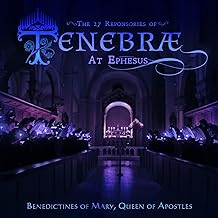
SPECTACULAR! New Gregorian Chant from the nuns of Gower Abbey: TENEBRAE
I am really happy to inform you that the wonderful nuns of Gower Abbey, the Benedictines of Mary, Queen of Apostles, have a new disc and digital download:
These are the RESPONSORIES of Tenebrae for all three days of the Triduum. They are, arguably, the most beautiful chants of the entire liturgical year.
You can order from the sisters directly also: HERE
I had the digital cuts a few days ago thanks to Mother Cecilia and I have included little tastes of them in my last few LENTCAzTs, e.g. for Spy Wednesday at the end. Ethereal.
When I did my canonical retreat for ordination, I went to the largest monastery of Benedictine nuns in Italy at Rosano. It was Holy Week and they sang Tenebrae. There were over 60 nuns and it was glorious. In these recordings, you can have a sense of what it is to be in a chapel live with these chants sung by women.
Imagine… this is what certain people want to suppress.
1 Comment