Your Sunday Sermon Notes: 3rd Sunday of Lent

Too many people today are without good, strong preaching, to the detriment of all. Share the good stuff.

Was there a GOOD point made in the sermon you heard at the Masses for the 1st Sunday of Lent?

Tell about attendance especially for the Traditional Latin Mass.  I hear that it is growing.  Of COURSE.

Any local changes or (hopefully good) news?

Those of you who regularly viewed my live-streamed daily Masses – with their fervorini – for over a year, you might drop me a line.

I have some written remarks about the TLM Mass for this Sunday – HERE


Posted in SESSIUNCULA | Tagged
9 Comments

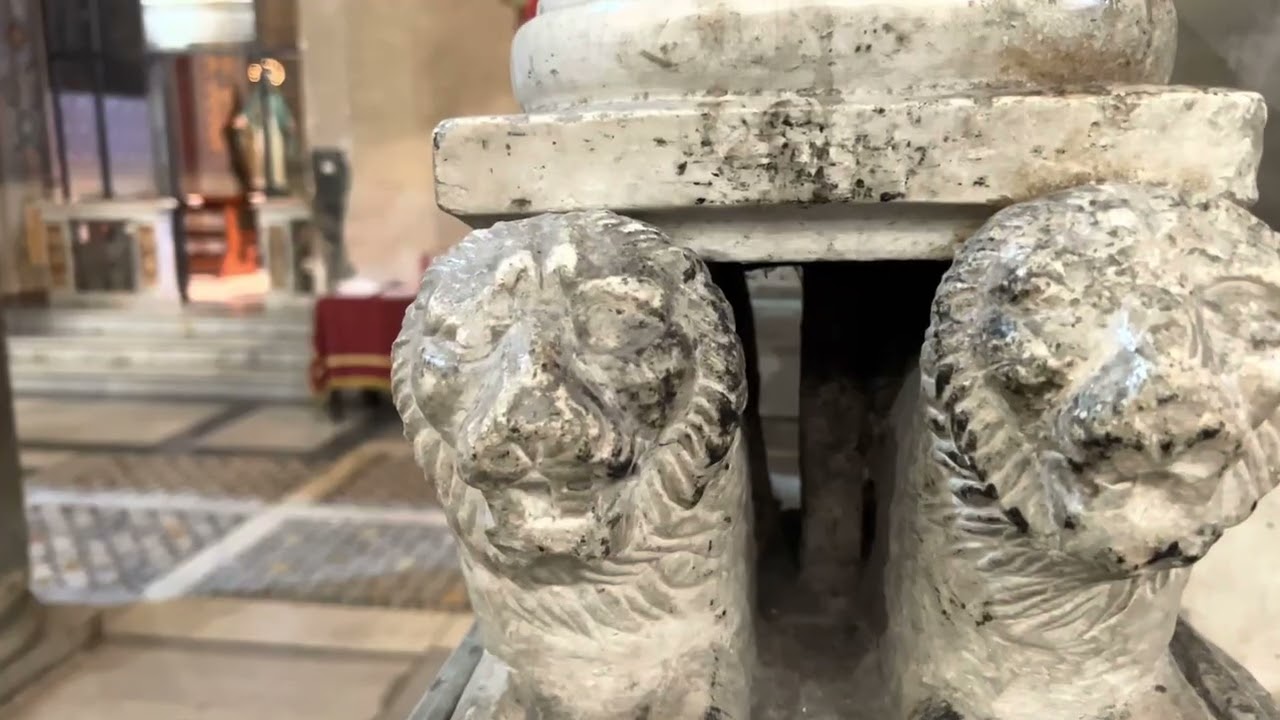
Daily Rome Shot 448, etc.

Photo by The Great Roman™

Daily streamed Mass fervorino.  HERE

Your use of my Amazon affiliate link is a major part of my income. It helps to pay for insurance, groceries, everything. Please remember me when shopping online. Thanks in advance.

US HERE – UK HERE

YouTube thumbnailYouTube icon

Posted in Sermons | Tagged ,
1 Comment

Buon Onomastico… Happy Name Day… Holy Father Benedict XVI and also another titan of the Church. BONUS: a short excursion of the imagination.

Today, the Feast of St. Joseph, is the baptismal name day of Joseph Ratzinger, who chose as his regnal name, Benedict.

Here is a tweet from a canceled titan of the Church. It is an honor to live at the same time as the great Card. Zen. It is also Card. Zen’s name day! Joseph Zen Ze-kiun!

Wouldn’t it be something if in the next conclave, which some say might not be too far off, the electors decided that someone unable to vote was elected?  Card. Zen. Imagine.  Could Zen, even at his age, do for China what Wojtyla did for the Soviet bloc?

Or…. speaking of elderly candidates how about…  remember these?

Imagine…

… the votes are counted and the results ring in the Sistine Chapel.  Stunned, awe-filled silence prevails.

There is a moment of bustling consultation at the main table of the officers of the conclave.  Several of the Cardinals and personnel slip out the door to the Gospel side of the main altar.

Time passes.  As the Cardinal Electors wait, some being to stir, to gather in small groups, and move about and the sound of voices slowly rises in the great painted barn.

There is a sudden tapping on the microphone to get their attention and everyone returns to his place.  The main door of the chapel opens.  A momentary swirl of porpora sacra and paonazza.  

A small figure dressed in white in a wheel chair is escorted into the nave surrounded by officials of the conclave.  As if from the sacral sense in the very marrow of the men whose burden it is to bear the color of martyrs, one by one they remove their birettas and bow to the man in the chair.

In the chair.

In the absence of the Dean of the College, who had been unable to enter the conclave due to age, the Vice Dean approaches the diminutive focus of their collective minds and hearts.

Vice Dean: “Acceptáste electiónem de te canónice factam de Summum Pontificem?” (Do you accept your canonical election as Supreme Pontiff?)

B16: Non accepto.  (No.)

Vice Dean: “Quo nómine vis … eehh… non acceptas? Ma.. come… cosa…?” (By what name do you wish … uh… you don’t? But… how… what…?)

B16: Acceptare nuper non possumus quod iam hic abhinc decima septima annos acceptavimus. Apud vos declaramus Nos iam Vicarium Christi esse. Ministerium actuosum Episcopi Sedis Romanae renuntiavimus sed non Christi munus Vicarii. Munus retinuimus illud et retinemus retinebimusque usque ad ultimum cordis saltum Nostrae. Acceptare idcirco hanc electionem modo a vobis factam in Summum Pontificem Nobis non licet. Iamdudum Sumus Pontifex, Christi iam Vicarius.

[Gasps.  All eyes turn back to the man in white.]

Aliquod autem mutare desideramus.

Eminentissime ac Reverendissime Domine Decane! Interoga Nos iterum, quo nomine volemus vocari.

Vice Dean: S…S… Sanctissime P.. Pater… quo nomine vis vocari… nunc?

B16: Vocabor nomine … Petri Romani.

PR (continuing): Priusquam Nos nuper aperte praebebimus, opportet nos multa et difficiliora prodigia Vobis adaperire. Solea mea extenta, facitote vero adorationem, non modo inurbano et saeculari sed ut Sanctae Romanae Ecclesiae Cardinalibus et omnium Clericis gradum decet. Tempus fugit. Incipitote et, adoratione expleta, una cum vobis magnam in renovationem incipiamus.

PR to the Vice Dean [quietly]: Verta, care frater, mea verba latina in linguam italicam. Iste Iesuita non capit quidquam. Et inveni, sodes, aurantii gusti Fantam. Areo.)

Posted in Benedict XVI, Lighter fare | Tagged , ,
6 Comments

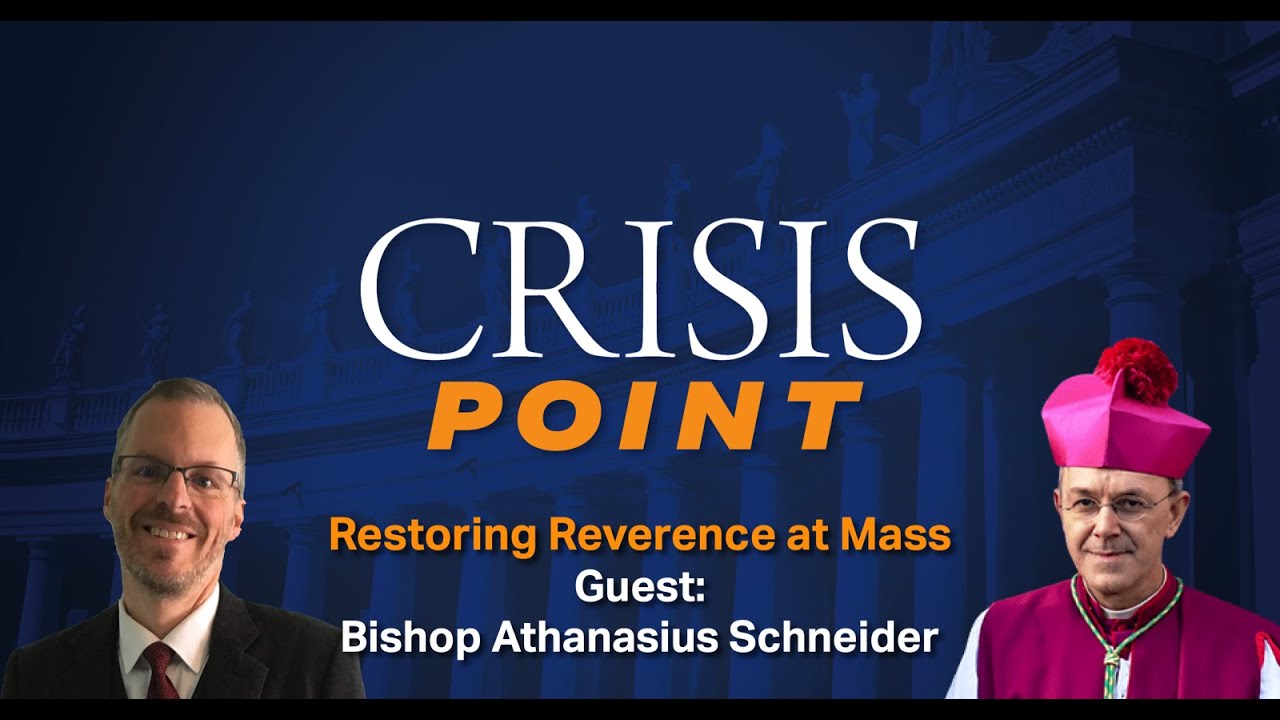
Bp. Schneider interviewed – VIDEO and new book, “The Catholic Mass”

We are our rites.

Liturgy is doctrine… is identity… is life choices.

The only way to turn things around is to turn our sacred liturgical worship around… including turning in back to God, in more than one way.

Attacks on the traditional Roman Rite is proof that this is the key that the modernists know must be used to lock the treasury and then broken.  Otherwise, they won’t succeed in forcing their agenda on the Church and the world through the Church.

His Excellency Most Reverend Athanasius Schneider was interviewed for a Crisis podcast.

YouTube thumbnailYouTube icon

His Excellency’s book from the ever more valuable Sophia Press

US HERE – UK HERE

Posted in Liturgy Science Theatre 3000, Pò sì jiù, Save The Liturgy - Save The World, The Coming Storm, The Drill, The future and our choices | Tagged
4 Comments

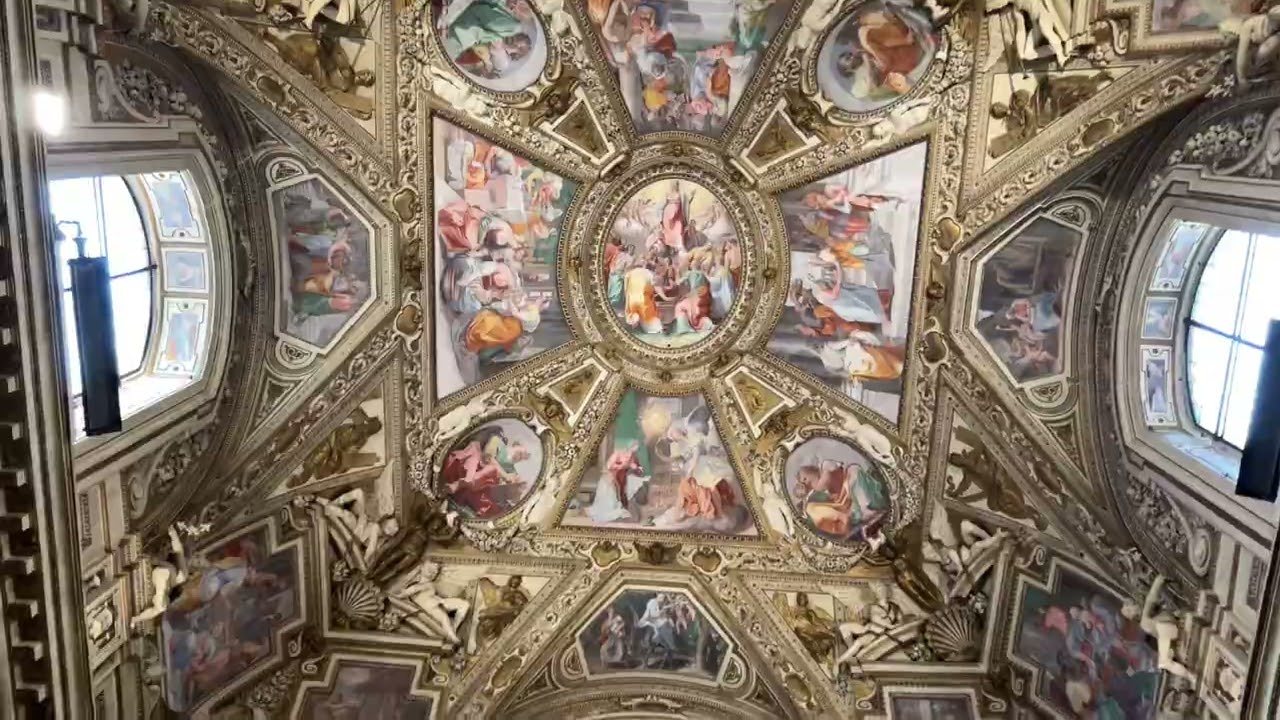
Daily Rome Shot 447, etc.

Daily Fervorino from live stream. HERE  With Litany of St. Joseph.

WORDLE


YouTube thumbnailYouTube icon

Posted in Liturgy Science Theatre 3000, Saints: Stories & Symbols | Tagged , , ,
Comments Off on Daily Rome Shot 447, etc.

ASK FATHER: Does Communion in the state of sin fulfill the “Easter Duty”?

From a reader…

QUAERITUR:

Since Sleepy Joe is likely committing sacrilege when the libs allow him to receive Communion, does his sacrilege count for Easter duty?

Or would he have to go to Confession and receive again for the Easter duty to be fulfilled? (We can pray but unfortunately we shouldn’t hold our breath).

GUEST PRIEST RESPONSE: Fr. Tim Ferguson
While I understand the interest, since the President is a public figure and his actions have broad implications, I am also reminded of Our Lord’s words in the Gospel of Matthew regarding taking the plank out of our own eyes before attending to the mote in another’s.

So lets turn the question around. If you were to receive Holy Communion unworthily, would it fulfill your Easter duty?

Short answer – don’t receive Holy Communion unworthily. Go to confession, straighten out your life, get back into a state of grace, and it’s not a problem.

Longer answer – if you’re in a state of sin and cannot receive Holy Communion, you shouldn’t receive Holy Communion. Let’s say that you’re in a second, civil marriage without having a declaration of the nullity of your first attempt at marriage. You’ve come back to the idea that you should practice the faith, but for various reasons (such as young children whose lives would be unjustly disrupted by the separation of their parents) you can’t regularize your situation. Don’t receive Holy Communion. While the Easter duty is binding upon all Catholics who have once received Holy Communion, there is an old principle in canon law that no one is bound to the impossible. You are in a state where it is not possible for you to receive Holy Communion, therefore you cannot fulfill your Easter Duty, but that is not imputable to you since you can’t do it. Let’s take another scenario and say, for example, that you’re a prominent person – let’s call you the Leader of the Free World. Your party supports broad access to abortion, and you value the support of your party more than you value the lives of innocent children in danger of being cruelly ripped from their mothers’ wombs. You speak out – frequently and enthusiastically about preserving “the rights of women to choose,” by which you mean – and everyone knows you mean – access to abortion and infanticide. You have placed yourself at odds with your Church, and, in virtue of canon 915, you are not able to receive Holy Communion. Then don’t. Unless and until you’re willing to repent of your position and return to the full practice of the faith (which is more than just going to Mass on Sunday and getting Ashed on Ash Wednesday), you can’t – and shouldn’t receive Holy Communion. Since it is then impossible for you, you are not imputed with failure to observe your Easter Duty.

Now let’s say that, tragically – for your soul and his – your pastor opts to ignore canon 915, and gives you Holy Communion. Your pastor has just allowed you to receive Holy Communion unworthily, and, in accord with what St. Paul teaches, you are now guilty of sinning against the Body and Blood of the Lord (1: Corinthians, 11:27). What an awful state of affairs! If you are blissfully ignorant of the teachings of the Church, your subjective sin might not be as grave. But if you’re a well-educated person, it would be hard to chalk your actions up to ignorance.

Have you fulfilled your Easter Duty by receiving a sacrilegious Communion? Well, because of your state of sin, we’ve already established that you’re not really bound to the Duty, since you can’t actually fulfill it. God is not an accountant who is going to say to you at the end of your life, “Well, you’ve allowed 10 million children to be slaughtered before they could take a breath, you’ve scandalized untold numbers of people by casually ignoring the reasonable laws of the Church, you had that one BLT on a Friday in Lent in 1986, but you did receive Holy Communion during the Lent and Easter Season each year, even if unworthily, so we’ll put those in the ‘plus’ column…” God is not mocked, and the Last Judgment – which will happen for us all – is not a time for bargaining with God.

All that to say – going back to the original, short answer. Don’t receive Holy Communion unworthily. Go to confession, straighten out your life, avoid sin, and receive that tremendous gift of His Body and Blood in a worthy manner.
Fr. Ferguson’s answer is great, from canonical and pastoral points of view.

Fr. Z ADDS:

Allow me to add a couple of comments.

First, regarding “Easter Duty”.

The Church has several positive laws or “precepts”, sometimes also called the Commandments of the Church. They are enumerated in the Catechism of the Catholic Church 2041:

  • Attendance at Mass on Sundays and Holy Days of Obligation
  • Confession of serious sin at least once a year
  • Reception of Holy Communion at least once a year during the Easter season (ordinarily
  • Easter Sunday through Pentecost Sunday)
  • Observance of the days of fast and abstinence
  • Providing for the needs of the Church

The 1983 Code of Canon Law says:

Can. 920 §1. After being initiated into the Most Holy Eucharist, each of the faithful is obliged to receive holy communion at least once a year.

§2. This precept must be fulfilled during the Easter season unless it is fulfilled for a just cause at another time during the year.

This goes hand in hand with the previous canon:

Can. 989 After having reached the age of discretion, each member of the faithful is obliged to confess faithfully his or her grave sins at least once a year.

In general, if a person goes for the reception of Holy Communion the minimum time of once a year, it is nearly certain that, during the course of a year, she has committed at least one mortal sin. Possibly not, but… it would be exceptional. So, yearly confession and Communion are pretty much bound up together.

The point of the law is, I think, gently to force people to amend their lives.

If a person must receive Communion, and she can’t receive unless she first sincerely confesses her sins with a firm purpose to amend her life, then amendment of life is a pre-requisite to receiving Communion. If some situations go on for more than a year, they are that much harder to amend. So, in her wisdom Holy Mother Church impels people toward the confessional and, subsequently the altar rail with that person’s soul always in view: amendment of a sinful life.

Yes, there are times when amendment is hard, as in the case of the cohabiting adulterers who must stay together for the sake of children. If they do NOT intend to live continently, no confession and absolution, and no Communion. They cannot fulfil their Easter Duty. I would say that they therefore violate that Precept of the Church and, someday, that also must be confessed because it is a sin not to fulfill that duty.

BTW… I think the not so subtle message of Amoris laetitia that amendment of life is an ideal that not all can attain is pernicious.  That whole thing must be read with caution and always in adherence to traditional Catholic spiritual and moral instruction.  It IS possible to live in the state of grace, with the help of grace. BUT… one must be willing to suffer.  I digress.

There are cases when it is impossible. For example you are a crewman on a ship heading to the Easter Islands in the late 18th century on His Majesty’s Ship Canon 920. Ports are far between and the voyage and return could last well over a years. It is impossible because there is no Catholic priest onboard (of course). It is impossible, so you are not bound.

In must cases, a person now can fulfill that duty, depending on their country, etc. The time to fulfill one’s duty is the season of Easter. I believe that that could be extended by legitimate authority or commuted. Indeed,

Can. 1245 Without prejudice to the right of diocesan bishops mentioned in can. 87, for a just cause and according to the prescripts of the diocesan bishop, a pastor can grant in individual cases a dispensation from the obligation of observing a feast day or a day of penance or can grant a commutation of the obligation into other pious works. A superior of a religious institute or society of apostolic life, if they are clerical and of pontifical right, can also do this in regard to his own subjects and others living in the house day and night.

There’s that famous can. 87, what a two-edged sword.

By the way, sometimes you will find in a confessional in an older church a little slot under the grate. That was used to slide through a card that the priest could sign to demonstrate that you had been to confession as part of your Easter Duty.

Lastly, there is great wisdom in can. 920, which looks towards what the last canon of the Code is all about: salvation of souls. The obligation of confession and Communion is for the good of the souls of those in the state of grace and to impel those who are not in the state of grace or who are in bad situations to amend their lives and get to confession before it is too late.

Too late – in that state – might mean Hell, if you have an unprovided death.
Posted in Canon Law, Hard-Identity Catholicism | Tagged , , ,
10 Comments

Daily Rome Shot 446, etc.

Daily Mass Fervorino.  HERE

WORDLE

Click!
There’s a back story, too.

My stuff on Soundcloud. HERE

Posted in Sermons | Tagged ,
1 Comment

“Christ with me, Christ before me, Christ behind me…” The mighty Lorica of Saint Patrick

During these dark days, we can benefit from the use of this prayer, called the Breastplate, or Loríca of St. Patrick, “The Cry of the Deer” (Latin Lorica is pronounced lo-REE-ka).  It is said that St. Patrick (+461) sang this when an ambush was set for him so that he could not go to Tara to evangelize.  Patrick and companions were then hidden from the sight of their enemies, who thought that they were deer when they passed by.  However, some scholars date the prayer to the 8th c.  Either way, this is a mickle, puissant prayer!

The Latin word loríca means “a leather cuirass; a defense of any kind; a breastwork, parapet”.  In effect, it means “armor”.   “Loríca” is also associated with an rhythmic invocation or prayer especially for protection as when going into battle.

The Lorica of St. Patrick is rooted in an un-confused belief in the supernatural dimension of our lives, that there truly is a spiritual battle being waged for our souls.  This prayer reflects our absolute dependence on the One Three-Personed God.

One could pray this prayer each and every morning, upon arising.

On St. Patrick’s Day, instead drinking green beer, pastors of parishes should invite people to come to Church for confessions, recitation of the Rosary, Mass, Exposition, the praying of the Lorica, Benediction.  Suggest it to your priests.

Latin English
Sancti Patricii Hymnus ad Temoriam. The Lorica, Breastplate, of St. Patrick (The Cry of the Deer)


Ad Temoriam hodie potentiam praepollentem invoco Trinitatis,
Credo in Trinitatem sub unitate numinis elementorum.
I arise today
Through a mighty strength, the invocation of the Trinity,
Through belief in the Threeness,
Through confession of the Oneness
of the Creator of creation.
Apud Temoriam hodie virtutem nativitatis Christi cum ea ejus baptismi,
Virtutem crucifixionis cum ea ejus sepulturae,
Virtutem resurrectionis cum ea ascensionis,
Virtutem adventus ad judicium aeternum.
I arise today
Through the strength of Christ’s birth with His baptism,
Through the strength of His crucifixion with His burial,
Through the strength of His resurrection with His ascension,
Through the strength of His descent for the judgment of doom.
Apud Temoriam hodie virtutem amoris Seraphim in obsequio angelorum,
In spe resurrectionis ad adipiscendum praemium.
In orationibus nobilium Patrum,
In praedictionibus prophetarum,
In praedicationibus apostolorum,
In fide confessorum,
In castitate sanctarum virginum,
In actis justorum virorum.
I arise today
Through the strength of the love of cherubim,
In the obedience of angels,
In the service of archangels,
In the hope of resurrection to meet with reward,
In the prayers of patriarchs,
In the predictions of prophets,
In the preaching of apostles,
In the faith of confessors,
In the innocence of holy virgins,
In the deeds of righteous men.
Apud Temoriam hodie potentiam coeli,
Lucem solis,
Candorem nivis,
Vim ignis,
Rapiditatem fulguris,
Velocitatem venti,
Profunditatem maris,
Stabilitatem terrae,
Duritiam petrarum.
I arise today, through
The strength of heaven,
The light of the sun,
The radiance of the moon,
The splendor of fire,
The speed of lightning,
The swiftness of wind,
The depth of the sea,
The stability of the earth,
The firmness of rock.
Ad Temoriam hodie potentia Dei me dirigat,
Potestas Dei me conservet,
Sapientia Dei me edoceat,
Oculus Dei mihi provideat,
Auris Dei me exaudiat,
Verbum Dei me disertum faciat,
Manus Dei me protegat,
Via Dei mihi patefiat,
Scutum Dei me protegat,
Exercitus Dei me defendat,
Contra insidias daemonum,
Contra illecebras vitiorum,
Contra inclinationes animi,
Contra omnem hominem qui meditetur injuriam mihi,
Procul et prope,
Cum paucis et cum multis.
I arise today, through
God’s strength to pilot me,
God’s might to uphold me,
God’s wisdom to guide me,
God’s eye to look before me,
God’s ear to hear me,
God’s word to speak for me,
God’s hand to guard me,
God’s shield to protect me,
God’s host to save me
From snares of devils,
From temptation of vices,
From everyone who shall wish me ill,
afar and near.
Posui circa me sane omnes potentias has
Contra omnem potentiam hostilem saevam
Excogitatam meo corpori et meae animae;
Contra incantamenta pseudo-vatum,
Contra nigras leges gentilitatis,
Contra pseudo-leges haereseos,
Contra dolum idololatriae,
Contra incantamenta mulierum,
Et fabrorum ferrariorum et druidum,
Contra omnem scientiam quae occaecat animum hominis.
I summon today
All these powers between me and those evils,
Against every cruel and merciless power
that may oppose my body and soul,
Against incantations of false prophets,
Against black laws of pagandom,
Against false laws of heretics,
Against craft of idolatry,
Against spells of witches and smiths and wizards,
Against every knowledge that corrupts man’s body and soul;
Christus me protegat hodie
Contra venenum,
Contra combustionem,
Contra demersionem,
Contra vulnera,
Donec meritus essem multum praemii.
Christ to shield me today
Against poison,
against burning,
Against drowning,
against wounding,
So that there may come to me an abundance of reward.
Christus mecum,
Christus ante me,
Christus me pone,
Christus in me,
Christus infra me,
Christus supra me,
Christus ad dextram meam,
Christus ad laevam meam,
Christus hinc,
Christus illinc,
Christus a tergo.
Christ with me,
Christ before me,
Christ behind me,
Christ in me,
Christ beneath me,
Christ above me,
Christ on my right,
Christ on my left,
Christ when I lie down,
Christ when I sit down,
Christ when I arise,
Christus in corde omnis hominis quem alloquar,
Christus in ore cujusvis qui me alloquatur,
Christus in omni oculo qui me videat,
Christus in omni aure quae me audiat.
Christ in the heart of every man who thinks of me,
Christ in the mouth of everyone who speaks of me,
Christ in every eye that sees me,
Christ in every ear that hears me.
Ad Temoriam hodie potentiam praepollentem invoco Trinitatis. I arise today
Through a mighty strength, the invocation of the Trinity,
Credo in Trinitatem sub Unitate numinis elementorum.
Domini est salus,
Domini est salus,
Christi est salus,
Salus tua, Domine, sit semper nobiscum.
Through belief in the Threeness,
Through confession of the Oneness
of the Creator of creation.
[Salvation is from the Lord,
Salvation is from the Lord,
Salvation is from Christ,
Let Your Salvation, O Lord, be with us always.]
Amen. Amen.

The Benedictines of Mary, Queen of Apostles of Gower Abbey have a Lorica of St Patrick on their Angels and Saints at Ephesus album.  US HERE – UK HERE

Concerning the translation of the Lorica, one of the most accurate translations of the original, 8th-century Old Irish is here: HERE


Posted in "How To..." - Practical Notes, Classic Posts, Linking Back | Tagged
10 Comments

Daily Rome Shot 445, etc.

Photo by Jacob Stein

Daily Fervorino.

WORDLE

YouTube thumbnailYouTube icon

Posted in Sermons | Tagged ,
2 Comments

Daily Rome Shot 444, etc.

Daily Mass Fervorino. Comments on clericalism, inter alia.

WORDLE

OPPORTUNITY
10% off with code:
FATHERZ10

Posted in Sermons, SESSIUNCULA | Tagged ,
1 Comment